




















Simhastha 2016 Crowd Statistics: Official Figures vs Ground Estimates Explained
How many people truly attended Simhastha 2016? A detailed analysis of official government figures versus independent ground estimates, and what these numbers mean for future Simhastha planning.


Simhastha 2016 Crowd Statistics: Official Figures vs Ground Estimates Explained
Simhastha 2016 in Ujjain is estimated to have attracted between 5 to 7 crore devotees based on official government figures, while independent ground-level assessments suggest the actual attendance may have been lower when measured through crowd density and logistical capacity analysis.
The variation exists because official data relies on cumulative administrative counting methods across multiple days, whereas ground estimates focus on real-time physical crowd presence. Both perspectives are valid within their own frameworks, but they represent different ways of measuring one of India’s largest spiritual gatherings.
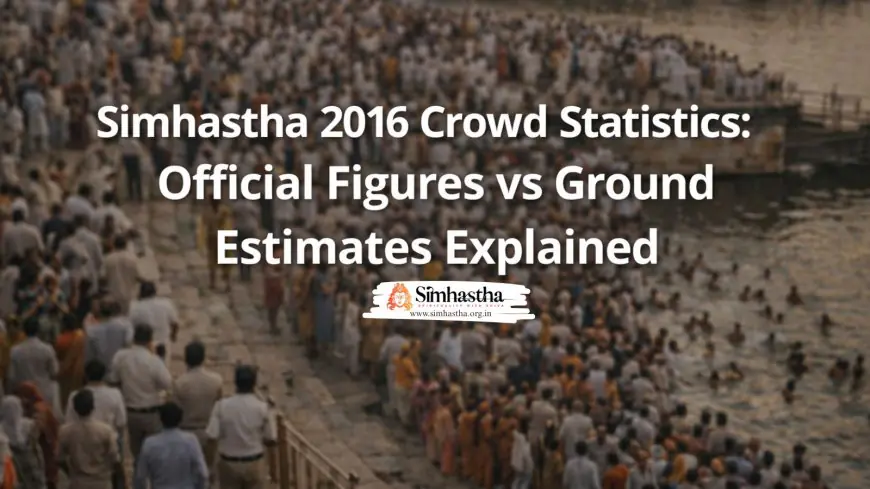
Simhastha 2016 crowd statistics are often quoted as proof of one of the largest religious congregations in central India, yet the numbers are more complex than they appear. During the event, headlines highlighted record-breaking attendance, government agencies reported crores of pilgrims, and visuals of densely packed ghats along the Kshipra River reinforced the scale of the gathering. However, these widely circulated figures combine multiple counting approaches, leading to confusion about the actual number of unique visitors.
To understand the reality, it is important to distinguish between official figures and ground estimates. Government data typically includes cumulative footfall recorded across the entire duration of the festival, counting repeat visits and daily influx patterns. In contrast, ground-level estimates are based on spatial analysis, crowd density per square meter, and infrastructure capacity at key locations like Ram Ghat and major bathing points.
Trending Guides Now
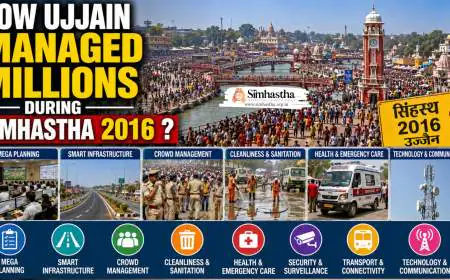
How Many People Attended Simhastha 2016? Official Estimates Explained

How Simhastha 2016 Prevented Stampedes: Crowd Safety Measures Explained
What Happened at Simhastha 2016 in Ujjain? Complete Overview

Health, Sanitation, and Medical Facilities During Simhastha 2016: A Complete Public Health Overview

Ujjain Railway Station to Mahakaleshwar Temple Distance (2026 Guide)

Ujjain Simhastha 2028 Dates Announced: Full Shahi Snan & Event Timeline

Mahakaleshwar Sandhya Aarti Online Booking 2026: Fee, Timings, Entry Gate and Step-by-Step Process
Mangalnath Temple Trip Budget: Puja, Local Transport, Food and Stay Planning
This difference does not imply inaccuracy but reflects two distinct measurement systems. For planners and researchers preparing for Simhastha 2028, interpreting these figures correctly is critical, as future infrastructure planning, safety management, and crowd control strategies depend heavily on how Simhastha 2016 attendance data is understood.
For readers seeking complete and authoritative coverage of Ujjain Simhastha, including its history, mythological significance, Shahi Snan rituals, dates, temples, Akharas, travel planning, and first-time pilgrim guidance, refer to our ultimate Simhastha guide for Ujjain. This detailed resource consolidates every essential aspect in one place and serves as the primary reference for understanding Simhastha holistically.
Why Crowd Statistics Matter Beyond Historical Records
Simhastha crowd data is not merely a historical curiosity. It forms the backbone of every major decision related to infrastructure, safety, transportation, river management, and urban planning. Every ghat expansion, bridge alignment, road width, holding area, and evacuation corridor is calculated using historical attendance benchmarks. This is why Simhastha 2016 crowd statistics continue to influence planning frameworks connected with Simhastha 2028 Development and infrastructure expansion .
For administrators and planners, the 2016 event represents the most recent full-scale stress test of Ujjain’s capacity. Any underestimation or overestimation of that crowd directly impacts how future Simhastha arrangements are designed. Thus, crowd numbers are not just retrospective data; they are predictive tools.
Official Government Figures for Simhastha 2016
According to statements released by district and state authorities during and after the event, Simhastha 2016 official figures indicated that approximately 5 to 6 crore pilgrim visits occurred across the full Simhastha period. These numbers were compiled from daily situation reports submitted by police sectors, transport authorities, and administrative control rooms.
On major bathing days, particularly during Shahi Snan, official briefings reported daily attendance ranging between 70 lakh and over 1 crore pilgrims. These peak-day numbers became the most frequently quoted indicators of Simhastha’s scale and were widely used in national and international media coverage.

How Official Crowd Numbers Are Calculated
To properly evaluate Simhastha government data, it is essential to understand how such figures are produced. Simhastha has no tickets, registrations, or controlled entry points. As a result, authorities rely on estimation frameworks rather than direct headcounts.
- Vehicle entry and exit data recorded at city checkpoints
- Railway and bus passenger movement statistics
- CCTV-based density sampling at major ghats
- Sector-wise police situation reports
While these systems provide structured oversight, they also introduce margins of error. During peak congestion, pilgrims frequently move between multiple ghats, overlap in counting zones, and arrive during night hours when monitoring density is lower. This makes official figures reliable as ranges, not as exact counts.
Independent and Ground-Level Crowd Estimates
Independent analysts, journalists, and researchers studying Simhastha 2016 crowd estimation have often suggested that the actual scale of participation may have exceeded official figures. By analyzing ghat length, riverfront width, average density per square meter, and bathing duration, some estimates place total attendance closer to 7–8 crore visits.
- Repeat bathing by the same pilgrim on multiple days
- Unregistered pedestrian inflow from surrounding districts
- Temporary settlements beyond official zoning
- Night-time and early-morning arrivals
These factors explain why Simhastha estimated crowd figures often appear higher than administrative numbers. They are not contradictions, but broader lenses.
The Role of Shahi Snan in Crowd Concentration
A disproportionately large share of Simhastha 2016 crowd concentration occurred on Shahi Snan days. These dates compress millions of arrivals into narrow time windows defined by ritual timing rather than convenience. Understanding this phenomenon is crucial, and the ritual structure behind it is explained in detail in Shahi Snan on The Kshipra River: order, meaning, and ritual logic .
This ritual compression is one of the primary reasons daily crowd figures spike dramatically, even when total unique attendance remains lower.
Peak-Day Crowds vs Total Attendance
One of the most common misinterpretations in Simhastha 2016 statistics is equating peak-day attendance with total unique visitors. A single day recording one crore pilgrim movements does not imply one crore individuals. Many pilgrims bathe multiple times and remain in the city for several days.
This distinction is critical for accurate analysis and future planning, particularly when comparing Simhastha with other Kumbh events or projecting requirements for Simhastha 2028 scheduling and crowd phasing .
What Simhastha 2016 Data Teaches for Future Planning
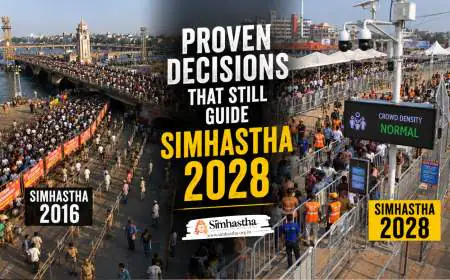
Planners preparing for upcoming events do not rely on a single number. They study both official statistics and independent estimates to build redundancy into infrastructure. Road expansion, ghat redevelopment, and riverfront circulation described in the Simhastha 2028 visiting and planning guide are all informed by patterns observed during 2016.
Why Simhastha 2016 Crowd Statistics Still Matter
Even years later, Simhastha 2016 records continue to influence media reporting, policy debates, and public understanding. When interpreted correctly, the difference between official figures and ground estimates provides clarity rather than confusion. It reveals the extraordinary complexity of managing one of the world’s largest open spiritual gatherings.
For anyone seeking to understand Simhastha beyond headlines, crowd statistics are not just numbers. They are lessons.
For broader historical context, readers often revisit why Simhastha can only happen in Ujjain , which explains the geographical and ritual factors that make such massive gatherings possible in the first place.
Ujjain Simhastha 2016: Facts, Crowd Records, and Key Learnings
The 2016 Ujjain Simhastha stands as one of the most closely examined religious gatherings in modern India. It is frequently cited not only for its scale, but for the administrative, social, and logistical lessons it produced. Unlike earlier Simhastha events, 2016 occurred in an era of real-time data collection, media scrutiny, and post-event audits, making it a critical reference point for future planning.
Verified Facts from Simhastha 2016
Simhastha 2016 was held over a concentrated period of approximately one month, with peak crowd surges occurring on Shahi Snan days. Attendance figures were released by multiple government agencies and later analyzed by independent observers.
Official records consistently place total footfall in the tens of millions, with daily peaks far exceeding normal urban capacity. What makes Simhastha 2016 notable is not just the number of pilgrims, but the density and timing of arrivals, particularly during early-morning ritual windows.
The event confirmed that Simhastha crowds do not distribute evenly across days or locations. Instead, they move in waves driven by astrology, Akhara schedules, and ritual hierarchy.
To understand the official attendance figures released for Simhastha 2016, including government estimates, source methodology, and how numbers were formally calculated, refer to How Many People Attended Simhastha 2016? Official Records. This record-based analysis provides the documented baseline against which ground-level crowd observations are evaluated.
Crowd Records and Ground Reality
One of the most important outcomes of Simhastha 2016 was the recognition of a gap between official crowd estimates and on-ground experience.
While government figures relied on infrastructure capacity, entry data, and transport inflow, ground observations highlighted:
-
Temporary congestion zones near ghats
-
Short-duration but extreme crowd compression
-
Variations in movement between saints, Kalpavasis, and general pilgrims
This contrast did not indicate failure. Instead, it revealed that crowd behavior during Simhastha follows religious logic, not linear flow models. This insight reshaped how authorities interpret numbers, shifting focus from total attendance to peak-hour management.
Key Administrative Learnings from 2016
Simhastha 2016 produced several lasting lessons that now guide all major religious gatherings in India.
First, flow management proved more effective than force. Directional movement, time-based access, and clear ritual sequencing reduced risk more successfully than heavy physical policing.
Second, coordination with religious institutions was essential. Akharas were not external participants but functional partners in crowd discipline. Their bathing order directly influenced safety outcomes.
Third, communication mattered more than control. Information dissemination, signage, volunteer guidance, and real-time updates helped prevent panic and confusion during peak moments.
Health, Safety, and Emergency Response Insights
From a safety perspective, Simhastha 2016 demonstrated that preparedness must be layered rather than centralized.
Medical response systems worked best when distributed close to high-density zones rather than concentrated in central facilities. Emergency access routes needed to remain fluid, even during ritual peaks.
The event also reinforced the importance of anticipatory planning, where potential pressure points are addressed before crowds arrive rather than after congestion forms.
How Simhastha 2016 Shaped Future Planning
Perhaps the most important outcome of Simhastha 2016 is its influence on long-term planning.
Many principles now associated with future Simhastha cycles, including Simhastha 2028, originate directly from 2016 learnings:
-
Sector-based planning instead of single-zone control
-
Separation of ritual movement and civic movement
-
Permanent infrastructure development informed by temporary stress points
Simhastha 2016 shifted the mindset from event-based management to legacy-based planning, where lessons are preserved rather than reset every twelve years.
Why Simhastha 2016 Remains a Reference Point
Unlike purely historical gatherings, Simhastha 2016 exists at the intersection of tradition and modern governance. It is referenced in planning documents, academic studies, and administrative frameworks because it provides measurable evidence of how ancient rituals operate at contemporary scale.
For this reason, Simhastha 2016 is not remembered only as a past event. It functions as a living case study, continuously informing how future Simhastha gatherings are understood, prepared for, and executed.
Frequently Asked Questions