

























How to Plan Your Simhastha 2028 Trip Before the Crowds Arrive
Complete guide on how to plan your Simhastha 2028 trip before the crowds arrive—from 12-15 month booking to Bhasma Aarti, transport, and crowd management. Start now.



How to Plan Your Simhastha 2028 Trip Before the Crowds Arrive
Let me be direct with you: if you are waiting until 2027 to plan your Simhastha 2028 trip, you are already late. ⏰
Simhastha 2028 is not a festival you "just show up to." It is the largest religious gathering on Earth—a temporary city of 30 to 40 crore pilgrims converging on Ujjain over two months from March 27 to May 27, 2028. On peak Shahi Snan (royal bath) days, millions will gather along the Shipra River within a 24-hour window.
The difference between a smooth, spiritually uplifting pilgrimage and a stressful, exhausting scramble comes down to one thing: planning before the crowds arrive.
This guide is your complete blueprint for beating the chaos—from booking accommodation 12-15 months in advance to understanding the three-tier holding system, from securing Bhasma Aarti tickets to navigating the brand-new infrastructure. Let's get you prepared. 🙏
Trending Guides Now

What Is Simhastha? Complete Explanation of Ujjain’s Sacred Kumbh
Why Simhastha Happens Only When Jupiter Enters Leo ?
Why is Ujjain Kumbh Called Simhastha?

How Simhastha 2028 Planning Uses Temporary Infrastructure Over Permanent Construction

Ujjain Railway Station to Mahakaleshwar Temple Distance (2026 Guide)

Ujjain Simhastha 2028 Dates Announced: Full Shahi Snan & Event Timeline

Benefits of Becoming a Simhastha Volunteer
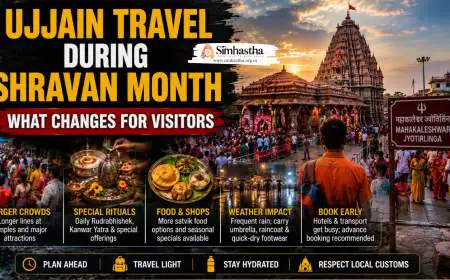
Ujjain Travel During Shravan Month: What Changes for Visitors
📅 Step 1: Know the Dates—And Plan Around Them
The Full Duration
Simhastha 2028 runs from March 27, 2028 to May 27, 2028—a 62-day spiritual marathon.
The Shahi Snan Dates – Your Red Alert Days
These are the three most crowded days of the entire event. If you can avoid these dates, do it. If you cannot, prepare intensely:
| Shahi Snan | Date | Significance |
|---|---|---|
| First Shahi Snan | April 9, 2028 (Sunday) | Somvati Amavasya – most auspicious |
| Second Shahi Snan | April 23, 2028 | Peak crowds |
| Third Shahi Snan | May 8, 2028 | Final royal bath |
On these days, hotel prices skyrocket, roads become impassable, and queues stretch for kilometers. If your schedule is flexible, arrive a week before the first Shahi Snan and leave a few days after the last one. You will experience the same spiritual energy with half the chaos.
The Sweet Spot: Early April or Mid-May
The best time for a peaceful Simhastha experience is:
-
Early April (before April 9): The energy is building, crowds are manageable, and you can witness the preparations.
-
Mid-May (after May 8): The peak has passed, but the spiritual atmosphere remains.


🏨 Step 2: Book Accommodation—Right Now
The Brutal Truth About Prices
A room that costs ₹1,000 on a normal day will cost ₹15,000 to ₹35,000 on a Shahi Snan day during Simhastha. This is not an exaggeration—this is what happened in 2016, and 2028 will be worse.
The Booking Timeline
| When to Book | What to Book | Why |
|---|---|---|
| Now – Mid 2026 | Premium hotels near Mahakal Temple | First to sell out; best rates |
| Late 2026 – Early 2027 | Mid-range hotels in Nanakheda area | Best value for families |
| Mid 2027 | Government tent city, private tent camps | Structured, close to rituals |
| Late 2027 | Homestays, dharamshalas | Budget-friendly, authentic experience |
Where to Stay: The Area Breakdown
| Area | Distance to Temple | Normal Price | Simhastha Price (Peak) | Best For |
|---|---|---|---|---|
| Mahakal Marg | 5-min walk | ₹1,000–3,000 | ₹15,000–35,000 | Elderly, convenience-seekers |
| Nanakheda | 2-3 km | ₹1,500–4,000 | ₹10,000–20,000 | Families (best value) |
| Indore Road/Ring Road | 3-4 km | ₹3,000–6,000 | ₹12,000–20,000 | Luxury seekers |
| Freeganj/Railway Area | 3-4 km | ₹500–1,500 | ₹6,000–12,000 | Budget pilgrims |
| Tent City (Official) | Near ghats | N/A | ₹1,500–25,000 | Immersive experience |
| Dharamshala | Various | ₹200–600 | ₹1,000–2,500 | Solo budget pilgrims |
The Government Tent City – Your Best Bet
The Madhya Pradesh government is developing a modern tent city for Simhastha 2028. This is your most reliable option because:
-
Location: Right next to the bathing ghats
-
Structure: Organized, secure, and managed by authorities
-
Availability: More units than hotels
-
Price: More stable than the hotel market
Book through the official MP Tourism website when bookings open.
The Homestay Option
18 Ujjain villages are being developed as tourist villages with 180 homestays to accommodate the influx. This is a budget-friendly, authentic experience—but quality varies. Book only through verified platforms.
🚆 Step 3: Secure Your Transport—Months in Advance
By Train (Most Reliable)
Ujjain Junction (UJN) is the main railhead. Trains from major cities:
| Route | Travel Time | Class | Approx Fare |
|---|---|---|---|
| Delhi to Ujjain | 10-12 hours | Sleeper/3AC/2AC | ₹450–2,500 |
| Mumbai to Ujjain | 12-14 hours | Sleeper/3AC/2AC | ₹450–1,500 |
| Varanasi to Ujjain | 14-16 hours | Various | Varies |
Indian Railways will operate special trains for Simhastha. Book at least 3-4 months in advance—preferably the moment the booking window opens.
By Air (Fastest)
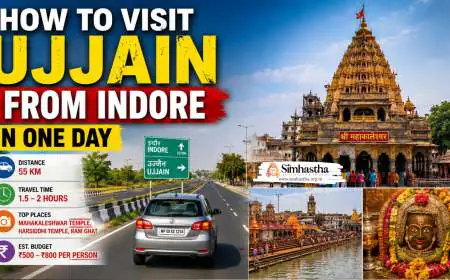
The nearest airport is Devi Ahilyabai Holkar Airport (IDR) in Indore, about 55 km from Ujjain.
-
Fly Delhi to Indore: ~1.5 hours
-
Road transfer Indore to Ujjain: ~75 minutes
Book flights 6-8 months in advance for the best rates. During peak Shahi Snan days, last-minute fares can be 3-5 times higher.
By Road (Flexible)
Ujjain is connected via National Highway 48 to Indore (1 hour), Dewas (45 minutes), and Ratlam (2 hours). If driving:
-
Book parking in advance—the city will implement a three-tier holding system across nearly 10 districts
-
Expect traffic restrictions on Shahi Snan days
-
Use the unified digital platform for real-time traffic updates
🛕 Step 4: Book Bhasma Aarti—Your Most Important Task
The Bhasma Aarti at Mahakaleshwar Temple is the single most sought-after experience in Ujjain. During Simhastha, demand will be 10 times higher than normal.
The Booking Window
Bookings open approximately 30-45 days in advance through the official portal: https://www.shrimahakaleshwar.mp.gov.in/
The Cost
| Type | Price |
|---|---|
| Online booking | ₹200 per person |
| VIP ticket | ₹500 per person |
The Strategy
-
Mark your calendar for the booking release date
-
Log in at 12:00 AM IST on the release day
-
Book for non-peak days if possible—the experience is equally divine with fewer people
-
Book for all members of your group in one transaction
📱 Step 5: Use Technology to Your Advantage
The Unified Digital Platform
The government is creating a unified digital platform providing real-time updates on:
-
Train schedules
-
Bus routes
-
Local transport availability
-
Traffic congestion
-
Alternate travel routes
-
Parking facilities
-
Ghat access points
Download the official Simhastha app when it becomes available.
AI-Powered Policing
For the first time, AI-based predictive analytics will be used for crowd management. Police will have:
-
Location-specific training
-
Memorized evacuation routes
-
Real-time crowd flow analysis
This means you can trust the official guidance on when and where to go.
Google Maps Integration
The police will use Google Maps for crowd management—blocking congested routes and showing alternatives. Follow the recommended routes.
🏥 Step 6: Prepare for the Ground Reality
The Three-Tier Holding System
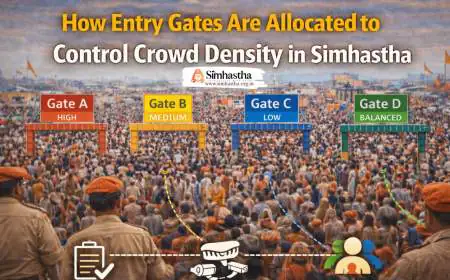
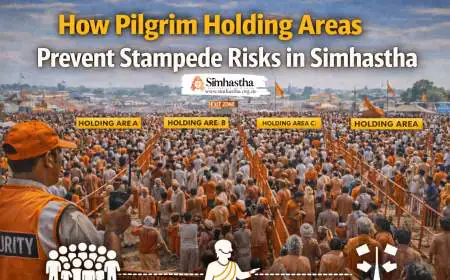
The government is planning a three-tier holding system to regulate pilgrim flow based on crowd levels. This means:
-
Tier 1: You may be held at entry points if Ujjain is too crowded
-
Tier 2: You may be directed to holding areas in neighboring districts
-
Tier 3: You may be asked to delay your arrival
This is for your safety. Do not argue with authorities—they are managing 30 crore people.
Entry and Exit Systems
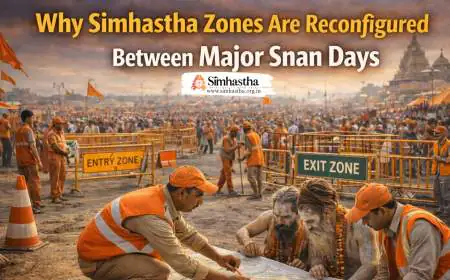
Officials are planning entry and exit systems on both the right and left banks of the Shipra River to improve crowd dispersal. Know your designated entry and exit points before you arrive.
Water Ambulances
For the first time, water ambulances will operate at 3–4 locations along the Shipra River. This is a significant safety upgrade.
Security Deployment
Approximately 42,000 police personnel will be deployed for crowd control and security. This is one of the largest police deployments in Indian history.
🎒 Step 7: What to Pack
Essentials
-
Comfortable walking shoes—you will walk more than you expect
-
Light cotton clothes—March-May in Ujjain is hot
-
Traditional attire—dhoti for men, saree/salwar for women (mandatory for temple entry)
-
Water bottle—stay hydrated
-
Power bank—long queues mean dead phones
-
Cash—auto drivers and small vendors prefer cash
-
ID proof—mandatory for Bhasma Aarti and hotel check-in
-
Printed copies of all bookings
For the Holy Dip
-
Spare set of clothes—you will get wet
-
Small towel
-
Waterproof bag for electronics
For Families
-
Snacks—queues can be long
-
Medications—carry a small first-aid kit
-
Contact details—designate a meeting point in case anyone gets separated
❌ Step 8: What NOT to Do
Don't Arrive on Shahi Snan Day
Unless you have booked everything months in advance and are prepared for extreme crowds, avoid the three Shahi Snan dates.
Don't Rely on Walk-In Accommodation
There will be no rooms available on peak days. Book everything in advance.
Don't Ignore the Dress Code
You will be turned away from the Mahakaleshwar Temple if you are not dressed appropriately.
Don't Assume Normal Transport Works
Auto-rickshaws will charge 5-10 times normal rates on peak days. Walk where possible.
Don't Follow the Crowd Blindly
If everyone is going to Ram Ghat and it looks overcrowded, go to a different ghat. The Shipra has multiple bathing spots.
📋 Your Pre-Arrival Checklist
| Task | Deadline |
|---|---|
| Confirm Simhastha dates | Now |
| Book accommodation | 12-15 months before |
| Book transport (trains/flights) | 6-8 months before |
| Book Bhasma Aarti | 30-45 days before |
| Download official app | When available |
| Print all bookings | 1 week before |
| Pack appropriate clothing | 1 week before |
| Check weather forecast | 3 days before |
💫 Final Thoughts: The Early Bird Gets the Blessings
Simhastha 2028 will be one of the most spiritually significant events of your life. But it will also be one of the most crowded.
The difference between a divine experience and a stressful ordeal is preparation.
Book early. Plan smart. Arrive calm.
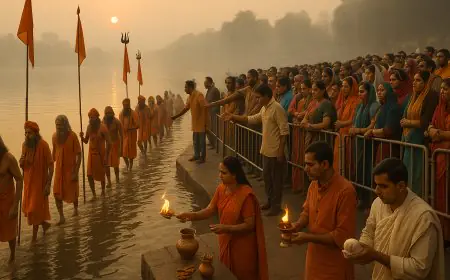
And when you finally stand on the banks of the Shipra River, watching thousands of lamps float into the night sky, listening to the thunderous chants of "Har Har Mahadev," you will know—every moment of planning was worth it. 🙏🌊🕉️
Har Har Mahadev!
Frequently Asked Questions