
























Why Simhastha Zones Are Reconfigured Between Major Snan Days
Learn why Simhastha zones are reconfigured between major Snan days to manage crowd flow, safety, and infrastructure efficiency for millions.

Why Simhastha Zones Are Reconfigured Between Major Snan Days
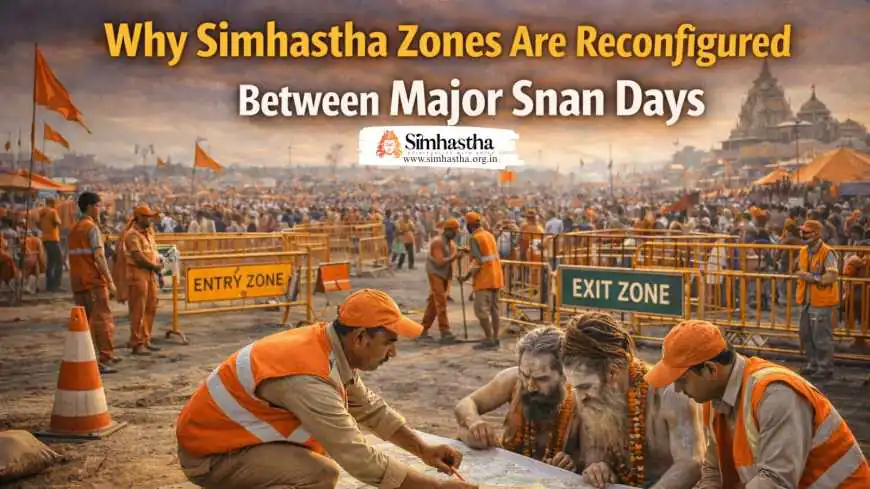
Simhastha is not a static city but a constantly evolving system designed to respond to changing crowd patterns, ritual priorities, and movement pressures. Between major Snan days, authorities reconfigure zones across the entire Simhastha area to adapt to new density levels, optimize routes, and ensure safety. This reconfiguration is not reactive but strategically planned, based on real-time data, past trends, and predictive models. By reshaping how space is used between peak bathing days, planners ensure that the temporary city remains efficient, balanced, and capable of handling massive surges without disruption.
For Every pilgrims, understanding Simhastha 2028 dates and the official Shahi Snan timeline is essential before booking flights or accommodation, as these sacred dates are completely non-negotiable
Understanding the Dynamic Nature of Simhastha Zoning
Unlike permanent urban layouts, Simhastha operates as a flexible spatial system.
The Simhastha zone reconfiguration process ensures that the city adapts continuously to changing conditions.
Trending Guides Now
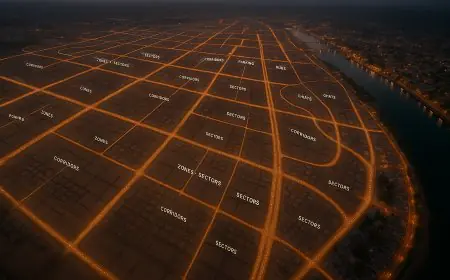
Expected Zones & Sectors of Simhastha 2028: A First Look at Ujjain’s Massive Layout
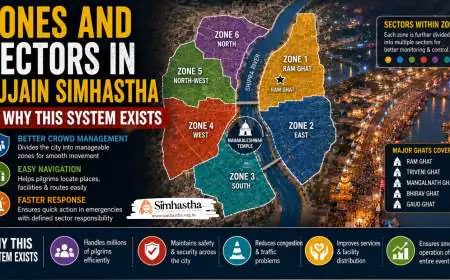
Zones And Sectors In Ujjain Simhastha & Why This System Exists
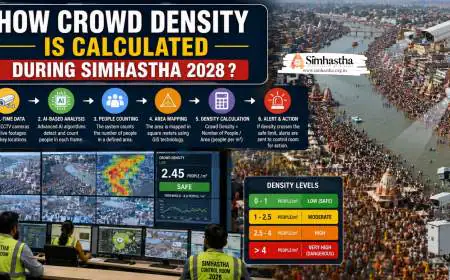
How Crowd Density Is Calculated During Simhastha 2028 ?

How Akhara Camps Are Allocated in Ujjain for Simhastha 2028

Ujjain Railway Station to Mahakaleshwar Temple: Distance, Fare & Route

Ujjain Simhastha 2028 Dates Announced: Full Shahi Snan & Event Timeline

Mahakaleshwar to Kal Bhairav Temple: Distance, Auto Fare, Travel Time and Route Options

Mahakaleshwar to Gadkalika Temple: Distance, Auto Fare and Best Route
Zones are not fixed boundaries. They are adjustable frameworks designed to:
- Respond to crowd density changes
- Optimize movement routes
- Support different phases of the event
This dynamic approach transforms Simhastha into a responsive environment rather than a rigid structure.
Why Major Snan Days Create Unique Pressure
Snan days are the peak moments of Simhastha.
During these days, millions gather within limited time windows, creating intense pressure on space and infrastructure.
The Snan day crowd management system must handle:
- Sudden influx of pilgrims
- High-density movement toward ghats
- Rapid dispersal after rituals
Once the peak passes, the spatial requirements change completely.
This shift makes reconfiguration essential.
A first time Simhastha guide is essential because without contextual understanding, pilgrims arrive prepared for devotion but unprepared for logistics, stamina, patience, and adaptability.
The Concept of Dynamic Zoning in Simhastha
Dynamic zoning allows authorities to redesign space usage between peak events.
The dynamic zoning Kumbh model ensures that zones are:
- Expanded where crowd density increases
- Reduced where demand decreases
- Redirected to support new movement patterns
This flexibility ensures optimal use of available space.
How Crowd Behavior Changes Between Snan Days
Crowd patterns are not consistent throughout Simhastha.
Between major Snan days:
- Pilgrim density reduces in certain areas
- Movement becomes more dispersed
- Ritual focus shifts
The crowd flow zoning Simhastha system adjusts to these behavioral changes.
This prevents underutilization of space and avoids unnecessary congestion.

Couples arriving during Ujjain Simhastha should spend their first few hours adjusting to the rhythm of the pilgrimage. Walking slowly through the city allows visitors to absorb the powerful spiritual atmosphere created by the gathering of saints and devotees attending the Ujjain Kumbh Mela.To deepen your understanding of the spiritual customs and sacred rituals practiced during Ujjain Simhastha, read our complete Simhastha rituals and sacred practices guide that explains their meaning, timing, and significance.
Redistribution of Crowd Pressure Across Zones
One of the primary goals of reconfiguration is redistribution.
The Simhastha crowd redistribution strategy ensures that:
- No single zone becomes overloaded
- Movement is evenly distributed
- Pressure points are minimized
This balance improves safety and efficiency.
Route Reconfiguration for Movement Optimization
Routes are redesigned based on updated crowd patterns.
The Simhastha route planning system modifies:
- Entry pathways
- Exit routes
- One-way movement corridors
This ensures that movement remains smooth even after major changes in crowd behavior.
Also Read | Best Time to Visit Ujjain Simhastha 2028
Adjustment of Akhara Zones and Their Impact
Akhara zones also undergo adjustments.
The Akhara zone adjustment process ensures that:
- Space allocation aligns with current needs
- Procession routes remain clear
- Interaction zones are optimized
These changes support both ritual activities and crowd movement.

Infrastructure Reallocation Between Snan Days
Infrastructure is not static. It is redistributed based on demand.
The Simhastha infrastructure planning system reallocates:
- Barricades
- Toilets
- Water points
- Lighting systems
This ensures that resources are available where they are needed most.
Data-Driven Decision Making in Reconfiguration
Reconfiguration decisions are based on data.
The Kumbh zoning system uses:
- Crowd density analytics
- Movement tracking
- Historical trends
This ensures that changes are precise and effective.
Also Read | Step-by-Step Guide to Shipra Snan at Ujjain Kumbh Mela
Role of Technology in Zone Reconfiguration
Technology enables real-time adjustments.
The Kumbh logistics reconfiguration system includes:
- Live monitoring dashboards
- Predictive analytics
- Communication networks
These tools help authorities implement changes quickly and efficiently.
Safety Considerations Behind Reconfiguration
Safety is the primary driver of zoning changes.
The Simhastha zone reconfiguration process ensures:
- Reduced congestion
- Clear emergency routes
- Better crowd control
Each adjustment is designed to minimize risk.
Managing Entry and Exit Points Dynamically
Entry and exit points are modified between Snan days.
The pilgrim movement control Kumbh system adjusts:
- Access gates
- Flow directions
- Checkpoint locations
This ensures controlled and efficient movement.
Temporary Infrastructure Flexibility
The temporary nature of Simhastha infrastructure allows rapid changes.
The temporary city planning India approach enables:
- Quick installation and removal
- Modular adjustments
- Scalable solutions
This flexibility is key to effective reconfiguration.
Learning from Previous Snan Day Patterns
Past data plays a critical role in planning.
The Kumbh spatial redesign system uses insights from previous days to refine zoning strategies.
This continuous learning improves efficiency over time.
Coordination Between Multiple Agencies
Reconfiguration requires collaboration.
The process involves:
- प्रशासन (Administration)
- पुलिस (Police)
- नगर निगम (Municipal Corporation)
The Simhastha infrastructure planning system integrates all agencies into a unified operation.
Balancing Ritual Needs with Spatial Efficiency
Zoning must support both logistics and spirituality.
The system ensures that:
- Ritual areas remain accessible
- Movement routes are not disrupted
- Spiritual activities continue smoothly
This balance defines successful planning.
Preventing Bottlenecks Through Proactive Design
Reconfiguration helps eliminate bottlenecks.
The crowd flow zoning Simhastha system identifies:
- High-pressure zones
- Movement conflicts
- Congestion points
Adjustments are made before problems arise.
Enhancing Pilgrim Experience Through Better Layouts
Efficient zoning improves overall experience.
Pilgrims benefit from:
- Easier navigation
- Reduced waiting time
- Safer movement
This enhances both comfort and satisfaction.
Environmental and Spatial Efficiency
Reconfiguration also improves resource utilization.
The system ensures:
- Optimal use of space
- Reduced environmental impact
- Efficient waste management
This aligns with sustainable planning goals.
Continuous Evolution of the Simhastha City
Simhastha is not built once. It evolves continuously.
Each reconfiguration transforms the city into a more efficient system.
This adaptability ensures that it can handle changing demands throughout the event.
Where Space Itself Becomes a Living Strategy
Simhastha 2028 redefines how a city functions.
Instead of fixed layouts, it operates through continuous adaptation.
Zones shift, routes evolve, and infrastructure moves in response to human flow.
In this dynamic system, space is not just occupied. It is managed, reshaped, and optimized every moment to ensure that millions can participate safely in one of the most sacred gatherings on Earth.
Frequently Asked Questions