


































Shahi Snan Dates for Ujjain Simhastha 2028 Official Schedule
Official Shahi Snan dates for Ujjain Simhastha 2028 explained with tithi significance, ritual sequence, spiritual meaning, and pilgrim guidance for all three royal bathing days.
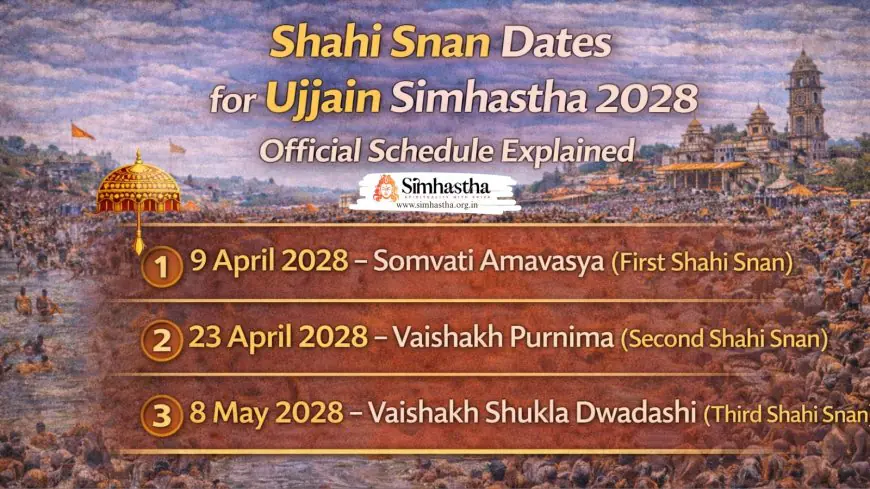


Shahi Snan Dates for Ujjain Simhastha 2028 Official Schedule Explained
The official Shahi Snan dates for Ujjain Simhastha 2028 are 9 April 2028 (Somvati Amavasya), 23 April 2028 (Vaishakh Purnima), and 8 May 2028 (Vaishakh Shukla Dwadashi). These three dates are the only Shahi Snan (Royal Bathing) days recognized during Simhastha 2028, when the akharas of Sanatan Dharma ceremonially enter the Shipra River first, followed by the general pilgrim community. Each Shahi Snan date is fixed strictly according to Jyotish tithi calculations, Shaiva ritual authority, and akhara tradition, making them the most spiritually potent and karmically significant days of the entire Simhastha cycle.
Also Read | Ujjain Simhastha - Meaning, History & Why It Matters
What Is Shahi Snan in Ujjain Simhastha?
In Sanatan Dharma, Shahi Snan does not mean a special bath for elites. It means a ritual-first bath governed by spiritual hierarchy.
Shahi Snan represents:
Trending Guides Now

Why Certain Rituals Are Allowed Only at Specific Ghats During Simhastha

Step-by-Step Guide to Shipra Snan at Ujjain Simhastha

Meditation Ritual At Ujjain Simhastha Complete Guide

What Is Shahi Snan in Ujjain Simhastha Kumbh Mela?

Ujjain Railway Station to Mahakaleshwar Temple Distance (2026 Guide)

Ujjain Simhastha 2028 Dates Announced: Full Shahi Snan & Event Timeline

Karkateshwar Mahadev: 22/84 Mahadev of Ujjain

Ujjain Simhastha Update: CM Mohan Yadav Reviews 2028 Works
-
Ascetic authority over ritual space
-
Activation of the tirtha before public participation
-
Preservation of Sanatan discipline
-
Transmission of tapasya energy to the collective
During Ujjain Simhastha, Shahi Snan is led by akharas, not administrators. This order ensures that spiritual purity flows from renunciation to society, not the other way around.
Also Read | Simhastha 2028 dates Officially Announced

Why Only Three Shahi Snan Days Exist in Simhastha 2028
Unlike Parva Snan or general bathing days, Shahi Snan dates are extremely limited.
Only three days qualify because:
-
They align with rare lunar tithis
-
They occur during the active Simhastha window
-
They meet Shaiva astrological requirements
-
They are accepted by all akharas
Adding more Shahi Snan days would dilute ritual authority. Sanatan Dharma prioritizes precision over frequency.
Every sacred act performed during Simhastha carries centuries of Sanatan tradition, from the timing of holy baths to the disciplined order of Akharas and temple rituals. To truly understand how these ancient practices unfold on the ghats of Ujjain, our detailed guide on Simhastha rituals explains each ceremony, its spiritual meaning, and its role in the larger flow of Ujjain Simhastha and the Simhastha Kumbh Mela, helping pilgrims experience the festival with clarity, devotion, and cultural authenticity.
First Shahi Snan – 9 April 2028 (Somvati Amavasya)
The first Shahi Snan of Ujjain Simhastha 2028 takes place on Somvati Amavasya, a tithi considered among the most powerful for karmic dissolution.
Why Somvati Amavasya Is Spiritually Supreme
-
Amavasya represents ego dissolution and karmic closure
-
Somvar (Monday) is dedicated to Lord Shiva
-
Their combination intensifies Shaiva purification
On this day:
-
All major Shaiva akharas participate
-
The ritual tone of Simhastha is established
-
Maximum ascetic presence is witnessed
-
The Shipra River is ritually activated
This Shahi Snan is regarded as the spiritual inauguration of Simhastha.
Also Read | Why the First Shahi Snan Holds Supreme Spiritual Authority
Second Shahi Snan – 23 April 2028 (Vaishakh Purnima)
The second Shahi Snan occurs on Vaishakh Purnima, a tithi symbolizing completeness, balance, and illumination.
Why Vaishakh Purnima Matters in Simhastha
-
Purnima represents fullness and stability
-
Vaishakh is ideal for snan and daan
-
Household and ascetic energies align
This Shahi Snan:
-
Attracts the highest number of family pilgrims
-
Is considered the most accessible
-
Balances ascetic rigor with grihastha devotion
Spiritually, this day represents integration rather than dissolution.
Also Read | Why Millions Take the First Shahi Snan: Spiritual Benefits, Science & Dharma Explained
Third Shahi Snan – 8 May 2028 (Vaishakh Shukla Dwadashi)
The third and final Shahi Snan is observed on Vaishakh Shukla Dwadashi, traditionally associated with completion of vows and sealing of spiritual intent.
Significance of the Final Shahi Snan
-
Marks the closure of the akhara bathing cycle
-
Is quieter but deeply introspective
-
Preferred by long-stay sadhaks
This Shahi Snan signals that the core karmic work of Simhastha has been completed.
Where Shahi Snan Takes Place in Ujjain
All Shahi Snan rituals are performed along the Shipra River, primarily at:
-
Ram Ghat
-
Gau Ghat
-
Narsingh Ghat
-
Dutt Akhara Ghat
Each ghat follows:
-
Fixed akhara allotment
-
Controlled timing windows
-
Ritual discipline
Pilgrims are allowed entry only after akharas complete the Shahi Snan sequence.
Also Read | Why Shahi Snan Is the Most Important Ritual of Simhastha 2028 ?
Difference Between Shahi Snan and Parva Snan
| Aspect | Shahi Snan | Parva Snan |
|---|---|---|
| Ritual Priority | Highest | Secondary |
| Participants | Akharas first | General pilgrims |
| Frequency | 3 days | Multiple days |
| Spiritual Weight | Maximum | Moderate |
Understanding this difference prevents unrealistic expectations.
Which Shahi Snan Is Best for You?
-
First Shahi Snan: High-intensity seekers
-
Second Shahi Snan: Families and elders
-
Third Shahi Snan: Serious sadhaks
Each Shahi Snan serves a distinct spiritual temperament.
Crowd Reality and Pilgrim Discipline on Shahi Snan Days
Shahi Snan days are not comfortable by design.
Expect:
-
Long walking routes
-
Early morning schedules
-
Strict crowd control
-
Limited personal freedom
These conditions are ritual tools, not failures. Sanatan Dharma uses discipline to reduce ego resistance.
Also Read | The Untold Reason Naga Sadhus Lead the First Shahi Snan at Simhastha 2028
Why Shahi Snan Dates Never Change
Shahi Snan dates are fixed years in advance because they are:
-
Astrologically locked
-
Ritually sanctioned
-
Akhara-approved
-
Spiritually non-negotiable
Administrative convenience does not override cosmic timing.
Frequently Asked Questions