

































Meditation Ritual At Ujjain Simhastha Complete Guide
Complete guide to meditation at Ujjain Simhastha covering ritual timing, spiritual purpose, practical techniques, and how pilgrims can deepen their Ujjain Kumbh Mela experience through mindful awareness.


Meditation At Ujjain Simhastha: Ritual, Timing, and Spiritual Purpose
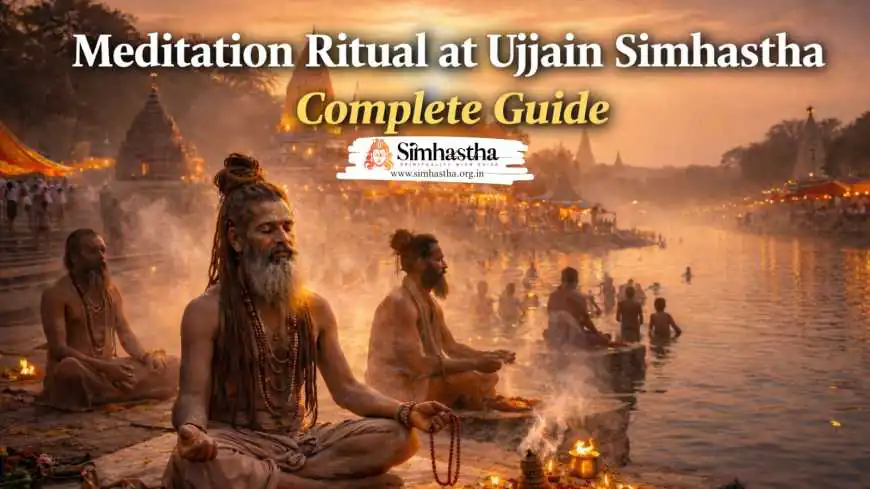
Meditation at Ujjain Simhastha is the inner dimension of the sacred gathering known as the Ujjain Kumbh Mela. While millions participate in ritual bathing, Shahi Snan processions, and spiritual discourses, meditation transforms these external acts into conscious personal growth.
The Simhastha Kumbh Mela is not only about ritual purification in the Shipra River. It is also about mental clarity, emotional balance, and spiritual maturity developed through mindful awareness.
For Every pilgrims, understanding Simhastha 2028 dates and the official Shahi Snan timeline is essential before booking flights or accommodation, as these sacred dates are completely non-negotiable.
Why Meditation Matters During Ujjain Simhastha
The environment of Ujjain Simhastha is intense and sacred. Large crowds, devotional chanting, and ritual activity create powerful impressions.
Trending Guides Now

Who Decides Ritual Timings in Ujjain Simhastha?

Why the First Shahi Snan Holds Supreme Spiritual Authority
How Ritual Processions Move Through Simhastha Mela Areas

Shahi Snan Dates for Ujjain Simhastha 2028 Official Schedule

Ujjain Railway Station to Mahakaleshwar Temple Distance (2026 Guide)

Ujjain Simhastha 2028 Dates Announced: Full Shahi Snan & Event Timeline

Mangalnath Temple Trip Budget: Puja, Local Transport, Food and Stay Planning

Omkareshwar Trip Budget Guide: Transport, Stay, Food and Local Travel Costs
Meditation helps pilgrims:
-
Set clear spiritual intention
-
Reduce stress in crowded spaces
-
Reflect after holy bathing
-
Strengthen emotional stability
-
Internalize the meaning of Simhastha


Without reflection, pilgrimage becomes an event.
With meditation, it becomes transformation.
Meditation practiced during Ujjain Simhastha is believed to become significantly more powerful due to the combination of sacred geography, planetary alignment, and collective spiritual energy created during the Ujjain Kumbh Mela.
If you want to understand the deeper reasons behind this phenomenon, read our detailed explanation: Why Meditation Becomes More Powerful During Simhastha
Best Timing for Meditation During Simhastha Kumbh Mela
Early Morning Before Sunrise
The calmest period during the Ujjain Kumbh Mela is before sunrise. This is the ideal time for breath awareness meditation. The mind is fresh and the environment quieter.
Before Shahi Snan or Holy Bath
Before entering the Shipra River during Ujjain Simhastha, pilgrims should pause briefly, take slow breaths, and set a simple intention.
After Holy Dip
After bathing, sitting silently for five to ten minutes helps internalize the experience. This reflection deepens the ritual’s spiritual meaning.
Evening Gratitude Practice
At the end of the day, short gratitude meditation supports emotional balance and mental calmness.
Simple Meditation Technique for Pilgrims
Pilgrims attending Simhastha Kumbh Mela do not require advanced techniques.
Follow these steps:
-
Sit comfortably with spine upright.
-
Close eyes gently.
-
Observe natural breathing.
-
If distracted, return attention to breath.
-
Continue for five to fifteen minutes.
This simple method works even in active environments at Ujjain Simhastha.
Also Read | Common Simhastha Mistakes Visitors Must Avoid
Meditation and Ritual Connection
Ritual bathing at the Ujjain Kumbh Mela symbolizes purification.
Meditation represents conscious purification.
The holy dip cleanses symbolically.
Meditation cleanses mentally and emotionally.
Together, they complete the pilgrimage.
Why Meditation at Ujjain Simhastha Is Different From Everyday Meditation
Meditation at Ujjain Simhastha is not the same as meditation at home.
At home, meditation is usually quiet and private. You sit alone. You control the environment. You choose the time and place.
During Ujjain Simhastha, meditation happens in a sacred public space. It happens near the Shipra River. It happens among thousands or even millions of pilgrims. The environment is active, not silent.
Yet many pilgrims say their meditation feels deeper during the Ujjain Kumbh Mela than anywhere else.
Why?
Because Simhastha is not just a gathering. It is a spiritual field created by collective devotion.
The Spiritual Atmosphere of Simhastha Kumbh Mela
The Simhastha Kumbh Mela is held when specific planetary alignments occur. These alignments are traditionally believed to increase spiritual energy.
But beyond astrology, something else happens.
Saints meditate.
Sadhus chant.
Pilgrims pray.
Devotees fast.
When millions focus on purification and spiritual growth, the environment becomes supportive for inner work.
This is why meditation during Ujjain Simhastha often feels natural. You are sitting inside a shared intention.
To deepen your understanding of the spiritual customs and sacred rituals practiced during Ujjain Simhastha, read our complete Simhastha rituals and sacred practices guide that explains their meaning, timing, and significance.
Sacred Geography of Ujjain
Ujjain has long been considered a sacred city. It is associated with ancient learning, timekeeping traditions, and spiritual practices.
During the Ujjain Kumbh Mela, the city transforms into a temporary spiritual capital. Ram Ghat becomes a center of ritual. The Shipra River becomes the focal point of devotion.
When pilgrims sit near the river before or after a holy bath, meditation becomes effortless. The sound of flowing water helps focus the mind. The early morning air supports calm breathing.
The place itself encourages stillness.
Meditation Does Not Require Silence
Many first-time pilgrims believe meditation requires total silence.
At Simhastha Kumbh Mela, silence is rare.
There are chants.
There are conch sounds.
There are announcements.
There are processions.
But meditation here is about awareness, not silence.
Instead of resisting sound, you observe it.
Instead of fighting movement, you allow it.
Instead of forcing stillness, you soften into it.
This approach makes meditation practical during crowded pilgrimage conditions.
A first time Simhastha guide is essential because without contextual understanding, pilgrims arrive prepared for devotion but unprepared for logistics, stamina, patience, and adaptability.
Collective Energy and Inner Stability
In daily life, meditation requires strong discipline. You must train your mind to focus.
At Ujjain Simhastha, the collective spiritual focus helps you.
When thousands wake before sunrise for prayer, you also feel encouraged to wake early.
When others sit quietly facing the river, you feel inspired to sit.
When chants begin at dawn, your breath naturally aligns with rhythm.
This shared environment reduces resistance.
Meditation becomes less about effort and more about participation.
The Purpose of Meditation During Ujjain Simhastha
Meditation during Ujjain Kumbh Mela serves three main purposes:
-
Mental purification
-
Emotional stability
-
Spiritual reflection
Pilgrims come for ritual bathing. But bathing alone is not the full journey. Meditation helps internalize the ritual.
The holy dip cleanses the body symbolically.
Meditation cleanses the mind consciously.
Without inner reflection, the outer ritual remains incomplete.
Simple Definition for Pilgrims
Meditation at Simhastha Kumbh Mela can be understood in simple terms:
It is sitting quietly with awareness before or after participating in rituals.
It does not require complex techniques.
It does not require advanced training.
It requires sincerity and attention.
Even five to ten minutes of calm breathing near the Shipra River can become meaningful.
Why First-Time Pilgrims Should Meditate
Many pilgrims focus only on bathing dates and rituals. They move quickly from one activity to another.
But Ujjain Simhastha is not only about movement. It is also about pause.
Meditation helps first-time visitors:
• Reduce travel fatigue
• Manage crowd stress
• Absorb spiritual atmosphere
• Reflect on personal intentions
Without meditation, the pilgrimage can feel overwhelming. With meditation, it becomes grounding.
A Practical Beginning
If you are visiting Ujjain Simhastha for the first time, begin simply:
Sit comfortably.
Keep your spine straight.
Close your eyes gently.
Breathe slowly and naturally.
Focus on the flow of the breath.
Do not try to control thoughts. Let them pass.
If sounds arise, observe them.
If emotions arise, observe them.
This simple practice is enough.
You are not trying to escape the environment.
You are learning to stay steady within it.
Historical Roots of Meditation in Ujjain
To understand meditation at Ujjain Simhastha, we must first understand Ujjain itself.
Ujjain is not only a host city for the Ujjain Kumbh Mela. It has been a spiritual center for thousands of years. Ancient texts refer to it as a place of learning, astronomy, devotion, and disciplined spiritual practice.
Long before the modern structure of Simhastha Kumbh Mela, seekers came to Ujjain for silence and contemplation. Hermits lived near the river. Scholars studied sacred sciences. Yogis practiced breath control and inner awareness.
Meditation was never separate from daily life here.
It was woven into it.
When pilgrims meditate during Ujjain Simhastha, they are participating in a living tradition that has continued for centuries.
Ujjain as a Center of Time and Cosmic Alignment
Ujjain has historically been associated with timekeeping and astrology. Ancient Indian astronomers used it as a reference point for calculations.
This connection with cosmic timing is important.
The Simhastha Kumbh Mela itself is organized according to planetary alignments, especially the position of Jupiter. The gathering does not happen randomly. It follows a cycle connected to celestial movement.
Meditation during Ujjain Simhastha therefore happens within a larger cosmic rhythm.
Pilgrims believe that when time, place, and intention align, spiritual practice becomes more powerful.
Even for someone who does not follow astrology deeply, there is a simple understanding:
When millions gather with shared purpose at a sacred time, the psychological and emotional atmosphere becomes elevated.
Meditation feels supported.
Saints and Meditation Traditions
During Ujjain Simhastha, many spiritual teachers and ascetics set up camps across the city.
Some practice silent meditation.
Some teach mantra repetition.
Some guide breath awareness.
Some focus on devotional singing.
Different paths, same goal: inner clarity.
For pilgrims, this creates an opportunity.
Instead of meditating alone without guidance, they can observe experienced practitioners. They can learn by watching.
Sometimes, just sitting near a group of disciplined meditators helps calm the mind.
You do not need to join a formal session. Presence itself can be instructive.
The Role of the Shipra River
Water has always played an important role in meditation traditions.
Flowing water supports mental calmness. Its rhythm helps regulate breathing. Its movement reminds us of impermanence.
During the Ujjain Kumbh Mela, the Shipra River becomes central to both ritual and reflection.
Pilgrims often meditate:
Before taking the holy dip
After completing the ritual bath
At sunrise
At sunset
The river becomes a natural focal point.
Instead of focusing on abstract ideas, meditators focus on something real and present: flowing water.
This makes meditation accessible even for beginners.
From Ritual to Reflection
One of the biggest misunderstandings about pilgrimage is that ritual alone brings transformation.
Ritual is powerful.
But reflection makes it meaningful.
At Simhastha Kumbh Mela, millions participate in sacred bathing. Yet the deeper purpose is internal cleansing.
Meditation bridges the outer ritual and inner transformation.
After bathing in the Shipra River, pilgrims often sit quietly. In that moment, the experience settles. The water cools the body. The breath slows down. The mind becomes open.
This is the ideal time for meditation.
Without reflection, the ritual remains external.
With reflection, it becomes personal.
Why Timing Matters in Meditation at Simhastha
Meditation can be done anytime. But during Ujjain Simhastha, certain times naturally support deeper focus.
Early morning before sunrise
Midday during quieter hours
Late evening after rituals
The early morning is especially powerful.
Before the main crowd movement begins, there is a short window of calm. The air is cooler. The sky is changing colors. Chants begin softly.
Meditating during this time helps pilgrims start their day with stability.
Even ten minutes can make a difference.
The Difference Between Personal Meditation and Pilgrimage Meditation
At home, meditation is about personal growth.
During Ujjain Simhastha, meditation includes collective intention.
When you sit in meditation at the Ujjain Kumbh Mela, you are aware that thousands around you are also seeking clarity, forgiveness, peace, or renewal.
This shared purpose creates emotional strength.
If your mind becomes distracted, you do not feel isolated. You remember you are part of something larger.
This reduces frustration.
Meditation becomes less about achieving perfection and more about participating sincerely.
Simple Historical Understanding for Pilgrims
You do not need deep historical knowledge to meditate at Simhastha Kumbh Mela.
But understanding that you are part of a long tradition adds meaning.
Generations before you sat near this river.
They also reflected on life.
They also sought forgiveness and strength.
When you meditate here, you continue that chain.
This awareness creates humility.
And humility makes meditation deeper.
Preparing the Mind Before Arrival
Many pilgrims prepare their travel and accommodation carefully. But mental preparation is equally important.
Before coming to Ujjain Simhastha, consider setting a simple intention:
Why am I going?
What do I want to reflect on?
What habit do I want to improve?
What gratitude do I want to express?
Meditation becomes more focused when intention is clear.
You do not need dramatic goals.
Even a simple thought like, "I want peace in my mind," is enough.
Meditation as Inner Pilgrimage
The outer journey to Ujjain Kumbh Mela may take hours or days.
But the inner journey takes silence.
Meditation allows you to travel inward.
The crowd, the rituals, the chants, the river — all of them support the outer journey.
But sitting quietly, even for a few minutes, completes it.
Without inner stillness, the pilgrimage remains incomplete.
With meditation, the experience becomes whole.
Meditation Before the Shahi Snan
During Ujjain Simhastha, the Shahi Snan is one of the most important events. It is the royal bath led by the Akharas. On these days, the energy of the Ujjain Kumbh Mela becomes intense. The crowds increase. The atmosphere becomes charged with anticipation.
Many pilgrims focus only on reaching the river at the right time.
But there is something equally important.
Mental preparation.
Meditation before the Shahi Snan helps calm excitement, reduce anxiety, and create clarity of intention.
Why Meditate Before the Holy Bath
The Shahi Snan is symbolic. It represents purification and renewal.
If you enter the river with a restless mind, the ritual becomes mechanical. If you enter with awareness, it becomes transformative.
Before approaching the Shipra River, sit quietly for a few minutes.
Stand aside from the crowd if needed.
Close your eyes.
Take slow breaths.
Observe your thoughts without reacting.
Ask yourself gently:
What am I releasing today?
What am I ready to begin again?
This short reflection prepares the mind.
Managing Crowd Pressure Through Awareness
On major days of Simhastha Kumbh Mela, crowd movement can feel overwhelming.
There may be pushing. There may be noise. There may be long waiting periods.
Meditation helps here in a practical way.
Instead of resisting the environment, focus on your breathing while waiting.
Inhale slowly.
Exhale slowly.
Keep your attention on the rhythm.
This transforms waiting into practice.
Rather than feeling impatient, you remain centered.
Meditation during movement is an important skill at Ujjain Simhastha.
Meditation Immediately After the Holy Dip
After completing the ritual bath at the Ujjain Kumbh Mela, most pilgrims quickly move away to change clothes or return to their camps.
But this is the most powerful moment for meditation.
The body feels cool.
The mind feels open.
Emotions feel sensitive.
Instead of rushing, find a safe and calm place nearby.
Sit quietly for five to ten minutes.
Do not speak immediately.
Do not check your phone.
Do not engage in discussion.
Simply sit.
Observe your breathing.
Notice how your body feels.
Let the experience settle inside you.
This simple pause deepens the meaning of the ritual.
Dawn Meditation at Ujjain Simhastha
Early morning meditation holds special value during Ujjain Simhastha.
Before sunrise, the environment is softer. The temperature is cooler. The sound level is lower compared to peak hours.
If possible, wake up early and sit near the Shipra River or at your accommodation.
Face east if comfortable.
Keep your spine straight.
Rest your hands gently on your knees.
Focus on your breath or silently repeat a simple mantra.
As the sun rises, observe the changing light.
This practice creates mental clarity for the rest of the day.
Even during crowded days of Simhastha Kumbh Mela, dawn offers a brief window of stillness.
Midday Reflection During Simhastha
Midday is often active and noisy. However, there are quieter pockets between major events.
If you feel mentally tired, use this time for short meditation.
You do not need a long session.
Sit for five minutes in shade.
Slow down your breathing.
Release physical tension.
Pilgrimage can be physically demanding. Meditation helps restore energy.
This is especially important for elderly pilgrims or first-time visitors to Ujjain Kumbh Mela.
Evening Meditation and Gratitude
Evening at Ujjain Simhastha brings a different atmosphere.
Lamps are lit.
Chants echo across the river.
The sky darkens slowly.
This is a natural time for gratitude meditation.
Sit comfortably and reflect on the day.
What did I learn today?
What moments touched me?
Where did I feel challenged?
Do not judge yourself. Simply observe.
End with gratitude.
Gratitude stabilizes the mind and prepares it for restful sleep.
Structuring Your Meditation Routine During Simhastha
Pilgrims often ask how frequently they should meditate during Simhastha Kumbh Mela.
There is no strict rule.
A simple structure could be:
Morning meditation before sunrise
Short breathing awareness before Shahi Snan
Quiet reflection after holy dip
Evening gratitude meditation
Even if each session is short, consistency matters more than duration.
The goal is not to meditate for hours.
The goal is to remain aware throughout the pilgrimage.
Balancing Ritual and Reflection
The beauty of Ujjain Simhastha lies in balance.
There is movement and stillness.
There is ritual and reflection.
There is devotion and discipline.
Meditation helps balance these elements.
Without reflection, the pilgrimage may feel rushed.
Without participation, it may feel incomplete.
Meditation connects both.
For Pilgrims Who Feel Restless
Not everyone finds it easy to sit quietly.
If your mind feels restless during meditation at Ujjain Kumbh Mela, try this:
Focus on sounds instead of breath.
Listen to chants without analyzing them.
Observe the flow of the river.
Let awareness rest on something external before turning inward.
Gradually, the mind settles.
There is no need to force silence.
A Gentle Reminder
Meditation during Ujjain Simhastha is not about achieving mystical experiences.
It is about clarity.
It is about steadiness.
It is about understanding your own thoughts and emotions in a sacred environment.
Even small moments of awareness can leave lasting impressions.
Practical Meditation Techniques for Crowded Conditions
Meditation at Ujjain Simhastha does not always happen in perfect silence. The Ujjain Kumbh Mela is vast. There are processions, announcements, devotional singing, and continuous movement.
Instead of waiting for ideal conditions, pilgrims can learn simple techniques that work even in active environments.
The goal is not to escape the surroundings.
The goal is to remain steady within them.
Below are practical methods that work well during Simhastha Kumbh Mela.
Breath Awareness Meditation
This is the simplest and most reliable method.
You do not need special training.
You do not need complex knowledge.
Sit comfortably.
Keep your back straight but relaxed.
Close your eyes softly.
Now bring attention to your breathing.
Do not change the breath.
Just observe it.
Notice the air entering your nose.
Notice the air leaving your body.
If thoughts arise, do not fight them. Simply return to the breath.
In crowded areas of Ujjain Simhastha, this method works well because breath is always available. No one can disturb it.
Even while standing in a queue for the holy dip during the Ujjain Kumbh Mela, you can practice breath awareness.
Mantra Repetition Meditation
Many pilgrims feel more comfortable using a mantra.
A mantra can be a sacred name, a short prayer, or a simple word with positive meaning.
You may repeat it silently in your mind.
For example:
Repeat gently with each breath.
Do not rush.
Keep it natural.
Mantra repetition is especially helpful during Simhastha Kumbh Mela because there are already chants around you. Your personal mantra blends into the larger devotional atmosphere.
It creates focus and reduces distraction.
Walking Meditation at Ujjain Simhastha
Sometimes sitting is not possible. Movement is constant during the Ujjain Kumbh Mela.
Walking meditation becomes useful in such situations.
As you walk:
Slow your pace slightly.
Feel your feet touching the ground.
Notice each step.
Do not look at your phone.
Do not rush unnecessarily.
Walking from your accommodation to Ram Ghat during Ujjain Simhastha can become a moving meditation.
Each step becomes deliberate.
Each breath becomes steady.
This reduces physical stress and prevents emotional overwhelm.
Observation Meditation Near the Shipra River
If you find a safe place near the Shipra River, you can practice observation meditation.
Sit facing the water.
Keep your eyes gently open.
Watch the flow of the river without analyzing it.
Notice the sound.
Notice the light reflecting on the surface.
Notice the movement.
Let your thoughts flow like the river.
This type of meditation is natural during Simhastha Kumbh Mela because the river itself becomes the teacher.
It reminds you that life is constantly moving.
Dealing with Distraction
During Ujjain Simhastha, distractions are normal.
Noise.
Crowds.
Announcements.
Heat.
Instead of becoming frustrated, change your attitude toward distraction.
When a sound arises, label it silently: “sound.”
When a thought arises, label it: “thought.”
Then return to your breath or mantra.
This simple method prevents mental struggle.
Meditation during the Ujjain Kumbh Mela is not about eliminating distraction. It is about responding calmly to it.
Short Meditation for Elderly Pilgrims
Many elderly pilgrims attend Simhastha Kumbh Mela with deep devotion. Long sitting sessions may not be comfortable for them.
A short method works well:
Sit on a chair or stable surface.
Keep both feet on the ground.
Place hands gently on your lap.
Take five slow breaths.
With each exhale, consciously relax your shoulders and face.
Even two to three minutes is beneficial.
Meditation does not require long duration. It requires attention.
Emotional Release During Meditation
Pilgrimage often brings emotional memories.
Some pilgrims feel gratitude.
Some feel regret.
Some feel relief.
If emotions arise during meditation at Ujjain Simhastha, do not suppress them.
Allow tears if they come.
Allow smiles if they appear.
Emotional release is part of inner cleansing.
The Ujjain Kumbh Mela is not only about ritual purification. It is also about emotional healing.
Meditation creates space for this healing.
Avoiding Common Mistakes
During Simhastha Kumbh Mela, some pilgrims make meditation complicated.
They try advanced techniques without preparation.
They compare themselves to experienced yogis.
They expect dramatic experiences.
Keep it simple.
Focus on breath.
Focus on awareness.
Focus on sincerity.
Meditation at Ujjain Simhastha is not a competition. It is a personal practice.
Maintaining Safety While Meditating
Safety is important during crowded events like the Ujjain Kumbh Mela.
Choose locations wisely.
Avoid sitting in high-traffic areas.
Stay aware of your surroundings.
Keep belongings secure.
Meditation does not mean becoming unaware of physical safety.
You can remain inwardly calm while staying outwardly alert.
Building Consistency During Simhastha
Even if your schedule changes during Ujjain Simhastha, try to meditate at the same time daily.
Consistency builds stability.
Morning practice creates clarity.
Evening practice creates reflection.
Small daily sessions are better than one long session followed by none.
The Deeper Spiritual Purpose of Meditation at Ujjain Simhastha
The Ujjain Simhastha is not only a gathering of people. It is a gathering of intentions.
Some come for ritual bathing.
Some come for blessings.
Some come seeking answers.
Some come carrying burdens.
Meditation gives space to all of these.
During the Ujjain Kumbh Mela, outer rituals are visible. Processions, chants, holy dips, offerings. But the real transformation happens quietly inside the mind.
Meditation is the bridge between the outer event and inner change.
Karma and Inner Cleansing
Many pilgrims believe that bathing in the Shipra River during Simhastha Kumbh Mela helps cleanse accumulated karma.
Whether one understands karma spiritually or psychologically, the idea is similar:
Actions leave impressions.
Experiences leave memories.
Regrets leave weight.
Meditation helps process these impressions.
When you sit quietly after a holy dip at Ujjain Simhastha, you may reflect on past actions.
Instead of feeling guilt, meditation encourages awareness.
Awareness leads to responsibility.
Responsibility leads to change.
In this way, meditation supports the deeper purpose of ritual cleansing.
The river may symbolize purification.
Meditation makes it conscious.
From Noise to Stillness
The Ujjain Kumbh Mela can feel overwhelming. There are crowds, movement, and constant activity.
Yet within that movement, meditation teaches stillness.
Stillness does not mean absence of sound.
It means stability of mind.
When you sit for meditation during Simhastha Kumbh Mela, you practice remaining steady even when life feels busy.
This skill is valuable beyond pilgrimage.
After returning home, life will again become active. Responsibilities will return. Pressures will appear.
Meditation at Ujjain Simhastha prepares you for that reality.
You learn that calmness is not dependent on location.
It can exist anywhere.
Collective Consciousness During Simhastha
There is something unique about meditating among thousands of spiritual seekers.
At the Ujjain Kumbh Mela, many people are focused on prayer, discipline, and devotion at the same time.
This shared focus creates what can be called collective consciousness.
Even if you sit alone, you are not isolated.
You are part of a larger intention.
For many pilgrims, this creates emotional strength.
They feel supported.
They feel connected.
They feel less alone in their struggles.
Meditation during Ujjain Simhastha therefore becomes both personal and collective.
It deepens individual awareness while strengthening a sense of unity.
Silence as Sacred Practice
Silence is rare in daily life.
Phones ring.
Notifications appear.
Conversations continue.
During Simhastha Kumbh Mela, silence becomes valuable.
Even short periods of silence feel meaningful.
If possible, choose one period each day during Ujjain Simhastha to remain silent.
No unnecessary speech.
No digital distraction.
No discussion.
Sit quietly.
Observe your thoughts.
Silence allows you to hear your inner voice.
Often, clarity comes not from external advice, but from inner reflection.
Facing Yourself Honestly
Pilgrimage can be emotional.
Some pilgrims realize mistakes they have made.
Some recognize habits they want to change.
Some discover strengths they did not notice before.
Meditation during the Ujjain Kumbh Mela creates space for honesty.
Instead of blaming circumstances, you observe your own reactions.
Instead of criticizing others, you examine your own patterns.
This honest self-reflection is the beginning of spiritual maturity.
Without meditation, these insights may not surface.
With meditation, they become clear.
Discipline and Inner Strength
One of the deeper purposes of Ujjain Simhastha is strengthening discipline.
Waking early.
Walking long distances.
Following ritual guidelines.
Meditation supports this discipline internally.
When you practice regular meditation during Simhastha Kumbh Mela, you strengthen:
Patience
Focus
Emotional control
Mental clarity
These qualities remain useful long after the pilgrimage ends.
Letting Go and Beginning Again
The idea of renewal is central to Ujjain Simhastha.
Pilgrims often come with a desire to begin again.
Meditation supports this intention.
During quiet reflection, you may decide to:
Release resentment
Reduce harmful habits
Improve relationships
Adopt healthier routines
The pilgrimage creates motivation.
Meditation creates direction.
Together, they create change.
Carrying Simhastha Beyond Ujjain
One important question pilgrims should ask is:
What will remain after I return home?
The Ujjain Kumbh Mela lasts for a limited time. But its impact can last longer.
If meditation becomes part of your daily routine after Ujjain Simhastha, the pilgrimage continues internally.
Even five minutes of daily breath awareness can maintain the clarity you experienced near the Shipra River.
In this way, meditation ensures that Simhastha is not only an event you attended.
It becomes an experience you carry.
The True Purpose in Simple Words
In simple terms, the spiritual purpose of meditation at Simhastha Kumbh Mela is this:
To understand yourself more clearly.
To release what burdens you.
To strengthen what supports you.
To return home lighter and wiser.
The river cleanses symbolically.
Meditation cleanses consciously.
Both together complete the journey.
Common Challenges in Meditation During Ujjain Simhastha
Meditation during Ujjain Simhastha can be powerful, but it is not always easy.
The Ujjain Kumbh Mela is large. The environment is active. Pilgrims travel long distances. Physical fatigue is common.
Understanding common challenges helps you respond calmly instead of becoming discouraged.
Physical Fatigue and Discomfort
Many pilgrims reach Simhastha Kumbh Mela after long travel by train, bus, or road.
There may be limited sleep.
There may be long walking distances.
There may be heat during the day.
When the body is tired, meditation feels difficult.
The solution is simple:
Do not force long sessions.
Choose short and comfortable practices.
Sit on a chair if needed.
Lean against a stable support.
Keep sessions brief but regular.
Five minutes of calm breathing is better than thirty minutes of struggle.
Meditation during Ujjain Simhastha should support the body, not strain it.
Restless Mind in a Crowded Environment
Crowds can stimulate the mind.
Movement, sound, color, and activity may increase mental restlessness during the Ujjain Kumbh Mela.
If your thoughts feel scattered, do not assume you are failing.
This is natural.
Instead of trying to silence thoughts, focus on something steady:
Your breath
A simple mantra
The sound of flowing water
Let the environment exist without resisting it.
Over time, your mind will adjust.
Meditation at Ujjain Simhastha becomes easier when you stop fighting the surroundings.
Expectations of Extraordinary Experiences
Some pilgrims come to Simhastha Kumbh Mela expecting dramatic spiritual experiences.
They may hope for visions, strong emotions, or sudden enlightenment.
When meditation feels ordinary, disappointment can arise.
It is important to understand:
True meditation is subtle.
It often feels simple.
Calm breathing.
Clear thinking.
Emotional balance.
These are meaningful results.
Do not measure your meditation by intensity.
Measure it by clarity and steadiness.
Comparing Yourself to Others
At Ujjain Simhastha, you may see experienced sadhus sitting motionless for long periods.
You may observe disciplined practitioners who appear deeply absorbed.
Comparison can create self-doubt.
Remember:
Your journey is personal.
The purpose of meditation during the Ujjain Kumbh Mela is not to imitate others. It is to understand yourself.
Even a beginner’s honest five-minute session has value.
Sincerity matters more than duration.
Emotional Overwhelm
The atmosphere at Simhastha Kumbh Mela can be emotional.
Devotional music.
Ritual immersion.
Spiritual teachings.
Some pilgrims feel intense emotions.
If strong feelings arise during meditation at Ujjain Simhastha, respond gently.
Do not suppress emotion.
Do not dramatize it.
Observe it like a passing cloud.
Breathe slowly.
Emotions often settle naturally when observed without reaction.
Lack of Private Space
Privacy can be limited during the Ujjain Kumbh Mela.
Finding a completely silent or isolated spot may not be possible.
In such cases, shift your understanding.
Meditation does not require isolation. It requires attention.
You can meditate:
While sitting at the edge of a ghat
While waiting in a queue
While resting in your accommodation
Even closing your eyes for a few moments creates inner space.
Privacy is helpful, but not essential.
Managing Time During Busy Schedule
Pilgrims often follow a packed schedule during Ujjain Simhastha.
Bathing times.
Temple visits.
Spiritual discourses.
Meditation may feel like an extra task.
Instead of adding it as a separate activity, integrate it into existing moments.
Before bathing, take five mindful breaths.
After rituals, sit quietly for three minutes.
Before sleeping, reflect for a short time.
Small moments add up.
Meditation does not need to compete with ritual. It complements it.
Fear of Doing It Incorrectly
Some pilgrims hesitate to meditate because they fear making mistakes.
They may wonder:
Am I breathing correctly?
Am I sitting correctly?
Am I focusing properly?
During Simhastha Kumbh Mela, simplicity is best.
There is no perfect posture required.
There is no special breathing pattern required.
Sit comfortably.
Breathe naturally.
Observe gently.
That is enough.
Building Confidence Through Practice
Confidence in meditation grows through repetition.
The more you practice during Ujjain Simhastha, the more natural it feels.
Even short sessions build familiarity.
After a few days, you may notice:
Reduced stress
Improved patience
Greater emotional balance
These changes confirm that your practice is meaningful.
Turning Challenges Into Practice
Every challenge during the Ujjain Kumbh Mela can become part of meditation.
Long queues become breathing practice.
Crowd noise becomes sound awareness practice.
Fatigue becomes body awareness practice.
When you change your perspective, obstacles become opportunities.
This is the deeper training of meditation during Ujjain Simhastha.
It teaches flexibility.
It teaches acceptance.
It teaches calmness within movement.
Meditation for Families and Group Pilgrims at Ujjain Simhastha
The Ujjain Simhastha is not only a personal journey. For many, it is a family pilgrimage.
Parents bring children.
Grandparents travel with grandchildren.
Friends come in groups.
The Ujjain Kumbh Mela becomes a shared spiritual experience.
Meditation can also be shared.
It does not always need to be a solitary act.
Why Group Meditation Is Helpful During Simhastha Kumbh Mela
When families meditate together during Simhastha Kumbh Mela, several benefits appear:
Children learn by observing elders.
Elders feel emotionally supported.
The group develops shared calmness.
Meditating together creates unity.
It strengthens relationships while deepening spiritual focus.
Even short sessions can have strong impact.
Simple Family Meditation Practice
Families attending Ujjain Simhastha can follow a simple routine:
Choose a quiet moment in the morning or evening.
Sit together in a circle or in a line facing the same direction.
Keep the session short, especially if children are present.
Start with five slow breaths together.
Then remain silent for two to five minutes.
After finishing, each person may share one positive thought or feeling.
This practice builds emotional connection.
It also helps children understand the deeper purpose of the Ujjain Kumbh Mela beyond ritual bathing.
Teaching Children Meditation During Ujjain Simhastha
Children may find it difficult to sit still for long periods.
Keep their practice simple.
Ask them to:
Close their eyes gently.
Listen carefully to surrounding sounds.
Count five slow breaths.
You can turn it into a small awareness exercise.
For example:
“Let us see how many different sounds we can hear calmly.”
This makes meditation interesting and natural.
During Simhastha Kumbh Mela, children are exposed to powerful spiritual impressions. Teaching them awareness helps them process what they experience.
Meditation for Elderly Pilgrims in Groups
Elderly pilgrims often travel with family support during Ujjain Simhastha.
For them, comfort and stability are important.
Group meditation can provide emotional reassurance.
Family members can:
Sit close for support.
Ensure physical comfort.
Keep sessions short and gentle.
Elderly participants may prefer mantra repetition rather than silent breath focus.
Respect individual comfort.
Meditation during the Ujjain Kumbh Mela should feel supportive, not demanding.
Strengthening Emotional Bonds Through Shared Reflection
After a day at Simhastha Kumbh Mela, families can gather in the evening for brief reflection.
Each person may answer simple questions:
What moment felt meaningful today?
What did you learn?
What are you grateful for?
This is a form of reflective meditation.
It transforms the pilgrimage into shared growth.
The Ujjain Simhastha then becomes not only a ritual journey but also a family memory built on awareness.
Meditation While Moving as a Group
Large groups often move together through the crowd during the Ujjain Kumbh Mela.
Walking meditation can be practiced collectively.
Agree to:
Walk calmly.
Avoid unnecessary rushing.
Stay attentive to surroundings.
Occasionally, remind each other to take slow breaths.
This keeps the group stable and reduces stress.
Meditation does not always require stopping. It can flow with movement.
Managing Stress Within Groups
Crowded events like Simhastha Kumbh Mela can create stress.
There may be misunderstandings.
There may be impatience.
There may be fatigue.
Meditation helps prevent emotional reactions.
If tension arises, suggest a short pause.
Sit quietly for a few minutes.
Take slow breaths together.
Often, calm returns quickly.
Meditation becomes a tool for harmony.
Respecting Individual Differences
Not everyone in a family or group will feel comfortable with the same meditation style.
Some prefer silence.
Some prefer mantra chanting.
Some prefer observation of the river.
Allow flexibility.
During Ujjain Simhastha, the goal is awareness, not uniformity.
Encourage each member to choose a method that feels natural.
Shared time does not mean identical practice.
Creating a Small Daily Routine During Simhastha
Groups attending the Ujjain Kumbh Mela can create a simple daily rhythm:
Morning: Short breathing meditation
After holy dip: Silent reflection
Evening: Gratitude sharing
Consistency builds depth.
Even three to five minutes at each point is meaningful.
This routine prevents the pilgrimage from becoming only an external activity.
It anchors the experience internally.
Lasting Impact After Returning Home
When families meditate together during Ujjain Simhastha, they often carry the habit home.
The pilgrimage becomes a starting point.
Children remember the calm moments.
Elders feel emotionally connected.
Parents feel spiritually strengthened.
The Simhastha Kumbh Mela then becomes more than a visit.
It becomes a shared transformation.
Preparing for Meditation Before Arriving at Ujjain Simhastha
Many pilgrims prepare carefully for the journey to Ujjain Simhastha.
They book travel.
They arrange accommodation.
They plan bathing dates.
But inner preparation is just as important.
The experience of meditation during the Ujjain Kumbh Mela becomes deeper when the mind is prepared before arrival.
You do not need months of training.
Simple preparation is enough.
Setting a Clear Intention
Before traveling to Simhastha Kumbh Mela, take some time at home to reflect quietly.
Ask yourself:
Why am I going to Ujjain?
What do I hope to experience?
What habit or thought pattern do I want to improve?
Write your intention down if possible.
It does not need to be complex.
Examples of simple intentions:
“I want inner peace.”
“I want to let go of anger.”
“I want clarity about an important decision.”
When you meditate during Ujjain Simhastha, this intention guides your focus.
Without intention, meditation can feel directionless.
With intention, it becomes meaningful.
Starting a Small Practice at Home
If you begin a short meditation routine before the Ujjain Kumbh Mela, your practice during Simhastha will feel natural.
Start with five minutes daily.
Sit quietly.
Observe your breath.
Allow thoughts to pass.
Do not aim for perfection.
Consistency matters more than intensity.
Even practicing for one or two weeks before arriving at Ujjain Simhastha creates familiarity.
When you sit near the Shipra River, your mind will recognize the process.
Reducing Mental Distraction Before Travel
In the days before Simhastha Kumbh Mela, life may feel busy.
Packing.
Coordination with family.
Work responsibilities.
Try to reduce unnecessary distraction.
Limit excessive screen time.
Avoid unnecessary arguments.
Keep conversations positive.
This creates mental space.
Meditation becomes easier when the mind is not overloaded.
Understanding the Purpose of Pilgrimage
The Ujjain Kumbh Mela is not only about physical presence. It is about spiritual growth.
Understanding this helps shift perspective.
Instead of treating the journey like a tourist visit, approach it as inner work.
Meditation supports this shift.
When you see Ujjain Simhastha as an opportunity for self-reflection, your behavior changes naturally.
Patience increases.
Awareness increases.
Humility increases.
Preparation begins with attitude.
Emotional Preparation
Some pilgrims carry emotional burdens when coming to Simhastha Kumbh Mela.
Unresolved conflicts.
Personal regrets.
Stress from daily life.
Meditation before travel helps stabilize emotions.
Spend a few quiet moments reflecting on what you want to release.
You do not need to solve everything before arrival.
Simply acknowledge your feelings.
Acknowledgment reduces emotional intensity.
Physical Preparation and Meditation
The body affects the mind.
Before attending Ujjain Simhastha, try to:
Sleep regularly.
Stay hydrated.
Walk daily if possible.
Physical stability supports meditation.
If your body feels strong, your mind remains clearer during the Ujjain Kumbh Mela.
Even light stretching before daily meditation at home can help.
Avoiding Unrealistic Expectations
Some pilgrims expect dramatic transformation at Simhastha Kumbh Mela.
While the atmosphere is powerful, real change requires steady effort.
Meditation teaches gradual growth.
Prepare yourself mentally to experience subtle improvement rather than sudden miracles.
Clarity often grows quietly.
Learning Basic Breathing Awareness
Before arriving at Ujjain Simhastha, practice simple breathing awareness.
Inhale slowly for four counts.
Exhale slowly for four counts.
Do not strain the breath.
Just become familiar with observing it.
When you practice near the Shipra River during the Ujjain Kumbh Mela, this skill will support you naturally.
Preparing for Crowded Conditions
Meditation during Simhastha Kumbh Mela often happens in public spaces.
Prepare your mind for noise and movement.
At home, occasionally practice meditation with light background sound instead of complete silence.
This trains you to remain calm in active environments.
You learn that focus is internal, not dependent on surroundings.
Building Patience Before the Pilgrimage
Patience is essential during Ujjain Simhastha.
There may be delays.
There may be waiting periods.
There may be unexpected changes in schedule.
Meditation builds patience gradually.
Before travel, practice responding calmly to small inconveniences.
This strengthens emotional stability.
When you reach the Ujjain Kumbh Mela, you will adapt more easily.
Arriving with a Calm Mind
When you finally reach Ujjain Simhastha, pause before beginning activities.
Stand quietly for a moment.
Take three slow breaths.
Observe your surroundings without rushing.
This first mindful moment sets the tone for your entire pilgrimage.
The journey begins not when you enter the city, but when you become aware.
Deepening Meditation Practice During Ujjain Simhastha
For some pilgrims, the experience of Ujjain Simhastha awakens a stronger desire for inner exploration.
They may begin with simple breath awareness.
But after a few days at the Ujjain Kumbh Mela, they feel ready to go deeper.
Deepening does not mean making meditation complicated.
It means increasing steadiness, awareness, and sincerity.
Extending the Duration Gradually
If your short meditation sessions feel stable, you may gently increase the time.
Instead of five minutes, sit for ten.
Instead of ten, try fifteen.
Do not force yourself.
If discomfort arises, reduce the duration again.
At Simhastha Kumbh Mela, even fifteen minutes of focused meditation can feel powerful because the spiritual environment supports concentration.
Long sessions are helpful only if the mind remains calm.
Quality is more important than length.
Deep Breath Regulation for Stability
During Ujjain Simhastha, emotions and excitement can rise easily.
A slightly deeper breathing practice can stabilize the nervous system.
Try this method:
Inhale slowly through the nose.
Pause gently for a moment.
Exhale slowly and completely.
Keep the rhythm smooth and natural.
Do not hold the breath forcefully.
This deeper breathing calms mental agitation and improves focus during the busy days of the Ujjain Kumbh Mela.
It is especially helpful before participating in major events like Shahi Snan.
Observing Thoughts Without Reaction
As meditation deepens at Ujjain Simhastha, you may begin noticing your thought patterns more clearly.
Instead of being carried away by thoughts, you begin observing them.
For example:
A memory arises.
A worry appears.
A judgment forms.
Instead of following the thought, simply notice it.
Say silently, “thinking.”
Then return to your breath.
This practice builds self-awareness.
During the intense environment of Simhastha Kumbh Mela, this skill prevents emotional overreaction.
Integrating Meditation with Spiritual Teachings
Many spiritual discourses take place during Ujjain Simhastha.
You may listen to teachings from saints and scholars at the Ujjain Kumbh Mela.
After attending a discourse, do not rush into conversation immediately.
Sit quietly for a few minutes.
Reflect on one idea that touched you.
Ask yourself:
How can I apply this in daily life?
What does this teaching mean personally?
Meditation after listening transforms information into insight.
Without reflection, teachings remain intellectual.
With reflection, they become practical.
Practicing Inner Silence
As meditation deepens during Simhastha Kumbh Mela, you may experiment with longer periods of silence.
Choose one part of the day to remain silent intentionally.
No unnecessary speech.
Minimal digital use.
Observe how silence affects your thoughts.
Initially, the mind may feel restless.
Gradually, it becomes clearer.
Silence at Ujjain Simhastha has special value because the outer environment is often active. Inner silence becomes a conscious choice.
This strengthens discipline.
Balancing Devotion and Awareness
The Ujjain Kumbh Mela includes devotional singing, chanting, and ritual participation.
Some pilgrims focus heavily on devotion. Others focus on meditation.
At Ujjain Simhastha, both can exist together.
During chanting, remain aware of your breath.
During rituals, observe your emotions.
During meditation, remember your devotion.
When devotion and awareness combine, practice becomes balanced.
Emotion is guided by clarity.
Clarity is softened by devotion.
Facing Inner Resistance
As meditation deepens during Simhastha Kumbh Mela, you may encounter resistance.
You may feel boredom.
You may feel impatience.
You may feel discomfort.
These are normal stages.
Do not interpret them as failure.
Simply observe resistance as another mental event.
Breathe slowly.
Stay present.
Often, resistance weakens when it is not fought.
Avoiding Overexertion
In the spiritual atmosphere of Ujjain Simhastha, some pilgrims try to do too much.
Long meditation sessions.
Continuous fasting.
Attending every discourse.
Balance is essential.
The body needs rest.
The mind needs recovery.
Deep meditation is effective only when energy is stable.
Respect your limits during the Ujjain Kumbh Mela.
Spiritual growth does not require exhaustion.
Recognizing Subtle Growth
As days pass during Simhastha Kumbh Mela, you may notice small changes:
Greater patience in crowds.
Less irritation during delays.
More gratitude for simple moments.
These are signs of inner growth.
Meditation at Ujjain Simhastha often works quietly.
Transformation may not feel dramatic.
But subtle improvements create lasting impact.
Letting Meditation Flow Naturally
Deep practice does not mean strict control.
It means allowing meditation to become part of your natural rhythm.
During Ujjain Simhastha, awareness may arise spontaneously:
While watching the river.
While listening to chants.
While walking in the early morning.
When awareness appears naturally, welcome it.
Meditation becomes less of a task and more of a way of being.
Carrying Meditation Beyond Ujjain Simhastha
The days of Ujjain Simhastha pass quickly.
The rituals end.
The tents are removed.
Pilgrims return home.
But the inner work should not end.
The real test of meditation during the Ujjain Kumbh Mela begins after the pilgrimage is over.
What remains when the crowd disappears?
What continues when daily life resumes?
Understanding the Temporary Nature of Simhastha Kumbh Mela
The Simhastha Kumbh Mela happens at specific intervals based on planetary alignment.
It is not permanent.
The spiritual atmosphere of Ujjain Simhastha is intense, but temporary.
If meditation depends only on that environment, it will fade.
If meditation becomes a personal discipline, it will continue.
The pilgrimage provides inspiration.
Daily practice provides transformation.
Creating a Simple Post-Simhastha Routine
After returning from Ujjain Simhastha, create a small daily meditation routine.
It does not need to be long.
Five to ten minutes each morning is enough.
Choose a quiet corner in your home.
Sit comfortably.
Focus on your breath.
You may remember the Shipra River while sitting.
You may recall the early morning light of the Ujjain Kumbh Mela.
These memories can support your practice.
But the focus remains on present awareness.
Using Simhastha Memories as Motivation
Memories from Simhastha Kumbh Mela can inspire discipline.
When you feel distracted or unmotivated, remember:
The calm mornings near Ram Ghat.
The silence after the holy dip.
The feeling of clarity during meditation.
These memories remind you why you began.
However, avoid becoming attached to nostalgia.
Meditation is about present awareness, not reliving the past.
Maintaining Inner Cleanliness
Many pilgrims believe that bathing during Ujjain Simhastha cleanses the body symbolically.
Meditation cleanses the mind continuously.
After returning home, daily life may bring stress.
Work pressure.
Family responsibilities.
Unexpected challenges.
Meditation becomes a daily cleansing practice.
Just as you bathe physically every day, mental cleansing through awareness keeps the mind clear.
Applying Lessons Learned During Ujjain Kumbh Mela
During the Ujjain Kumbh Mela, you may have practiced:
Patience in crowds.
Calm breathing during waiting.
Silence in busy surroundings.
Apply these lessons in ordinary situations.
While waiting in traffic, practice slow breathing.
During disagreements, pause before reacting.
During stress, observe thoughts calmly.
In this way, meditation extends beyond the pilgrimage.
Keeping Intention Alive
Remember the intention you set before attending Ujjain Simhastha.
Did you want inner peace?
Did you want to release anger?
Did you seek clarity?
Review that intention regularly.
Meditation keeps intention alive.
Without reflection, intentions fade.
With steady awareness, they grow stronger.
Avoiding Gradual Decline of Practice
After returning from Simhastha Kumbh Mela, enthusiasm may slowly reduce.
This is natural.
To maintain consistency:
Fix a specific time daily.
Keep sessions short and realistic.
Avoid skipping practice completely.
Even two minutes of focused breathing is better than none.
Small consistency prevents total decline.
Integrating Meditation with Daily Duties
Meditation does not require withdrawal from responsibility.
You can remain fully active in family and work life while maintaining awareness.
During conversations, listen carefully.
During meals, eat slowly and mindfully.
During walking, observe each step.
These simple practices extend the discipline developed during Ujjain Simhastha.
Meditation becomes a way of living.
Returning for Future Simhastha with Growth
If you attend the next Ujjain Kumbh Mela, your experience will feel different.
Because you have maintained practice.
The second visit will not feel like a beginning.
It will feel like continuation.
Each pilgrimage deepens when meditation continues between gatherings.
The True Continuation of Simhastha
The true success of Ujjain Simhastha is not measured by how many rituals you completed.
It is measured by how much awareness you carry forward.
If your patience improves, the pilgrimage continues.
If your emotional stability increases, the pilgrimage continues.
If your clarity deepens, the pilgrimage continues.
Meditation ensures that Simhastha Kumbh Mela becomes part of your inner life.
The Philosophical Meaning of Meditation at Ujjain Simhastha
The Ujjain Simhastha is not only a ritual gathering. It reflects a deeper philosophy about life, time, and self-awareness.
The Ujjain Kumbh Mela follows planetary cycles. It reminds pilgrims that human life is connected to larger cosmic movements.
Meditation helps us understand this connection more clearly.
When you sit quietly during Simhastha Kumbh Mela, you begin to see that life is not only about activity. It is also about observation.
This balance between action and awareness is central to the philosophy behind Simhastha.
Awareness as the Core Practice
In many spiritual traditions associated with Ujjain Simhastha, awareness is considered fundamental.
Awareness means:
Knowing what you are thinking.
Knowing how you are reacting.
Knowing what you are feeling.
Without awareness, life moves automatically.
During the Ujjain Kumbh Mela, rituals bring attention to sacred moments.
Meditation deepens that attention.
It shifts focus from outer ceremony to inner clarity.
The Idea of Self-Reflection
The philosophy behind Simhastha Kumbh Mela encourages self-reflection.
Pilgrimage creates physical movement toward a sacred place.
Meditation creates mental movement toward self-understanding.
When you meditate during Ujjain Simhastha, you may ask:
Who am I beyond my roles?
What drives my reactions?
What values guide my actions?
These questions are not answered quickly.
But simply asking them increases awareness.
Time, Cycles, and Inner Growth
The Ujjain Kumbh Mela occurs according to cosmic timing.
This reminds pilgrims that life moves in cycles.
There are periods of growth.
There are periods of difficulty.
There are periods of renewal.
Meditation teaches acceptance of these cycles.
When you observe your thoughts during Ujjain Simhastha, you notice that emotions also move in cycles.
Joy appears and fades.
Anger appears and fades.
Worry appears and fades.
Understanding this reduces attachment.
You begin to see that no emotion is permanent.
Discipline as Spiritual Strength
The philosophy of Simhastha Kumbh Mela emphasizes discipline.
Waking early.
Following ritual procedures.
Respecting tradition.
Meditation strengthens internal discipline.
It trains the mind to stay steady.
During Ujjain Simhastha, discipline is visible externally. Meditation builds it internally.
When external discipline and internal discipline align, growth becomes stable.
Unity Within Diversity
The Ujjain Kumbh Mela brings together people from different regions, languages, and traditions.
Despite differences, pilgrims share devotion.
Meditation helps recognize this unity.
When you sit quietly during Ujjain Simhastha, distinctions begin to soften.
You realize that all pilgrims seek peace, clarity, and renewal.
This understanding builds compassion.
Compassion is a natural result of deep awareness.
Letting Go of Ego
One philosophical purpose of meditation at Simhastha Kumbh Mela is reducing ego.
Crowds remind you that you are one among millions.
Rituals remind you of traditions older than any individual.
Meditation reminds you that thoughts and emotions are temporary.
Together, these experiences reduce self-centered thinking.
Ego softens when awareness grows.
Humility develops naturally during Ujjain Simhastha.
The Balance Between Devotion and Inquiry
The philosophy of Ujjain Simhastha includes both devotion and inquiry.
Devotion expresses faith.
Inquiry seeks understanding.
Meditation supports both.
When you chant or pray at the Ujjain Kumbh Mela, you express devotion.
When you sit quietly and observe your mind, you practice inquiry.
Balancing both creates maturity.
Devotion without awareness may become blind.
Inquiry without devotion may become dry.
Together, they support wisdom.
Inner Freedom Through Awareness
One of the deeper philosophical aims of meditation during Ujjain Simhastha is inner freedom.
Inner freedom does not mean escaping responsibilities.
It means responding consciously rather than reacting automatically.
When you observe your thoughts calmly, you gain space between impulse and action.
This space is freedom.
During the crowded and active days of Simhastha Kumbh Mela, practicing this freedom is powerful training.
Simhastha as a Mirror
The Ujjain Kumbh Mela acts as a mirror.
Crowds may trigger impatience.
Delays may trigger frustration.
Devotional atmosphere may trigger gratitude.
Meditation helps you see these reactions clearly.
Instead of blaming circumstances, you observe yourself.
This self-observation is the beginning of wisdom.
The True Meaning in Simple Words
In simple terms, the philosophy behind meditation at Ujjain Simhastha is this:
Know yourself.
Stabilize your mind.
Act with awareness.
Live with humility.
The outer pilgrimage takes you to a sacred river.
The inner pilgrimage takes you to clarity.
Both journeys are necessary.
How Meditation at Ujjain Simhastha Shapes Character
The experience of Ujjain Simhastha does not end at the riverbank.
The real value of the Ujjain Kumbh Mela can be seen in how it changes a person afterward.
Meditation plays an important role in this transformation.
It strengthens character quietly.
Not through dramatic moments.
But through steady awareness.
Developing Patience
Crowds during Simhastha Kumbh Mela require patience.
There may be long queues for bathing.
There may be slow movement through narrow streets.
There may be unexpected delays.
Meditation teaches you to breathe calmly in these moments.
Instead of reacting with frustration, you pause.
You observe your breath.
You notice your thoughts.
Gradually, impatience reduces.
This patience continues after returning home.
When facing traffic, workplace delays, or family disagreements, you remember the calm you practiced during Ujjain Simhastha.
Patience becomes part of your character.
Strengthening Compassion
The Ujjain Kumbh Mela brings people from all backgrounds.
Some are elderly.
Some are physically challenged.
Some travel with limited resources.
Meditation increases awareness of others’ experiences.
When you observe your own discomfort calmly, you become more sensitive to others’ struggles.
Compassion grows naturally.
Instead of pushing forward aggressively, you make space.
During Ujjain Simhastha, small acts of kindness become common.
Meditation supports this softness of heart.
Building Emotional Stability
Large gatherings like Simhastha Kumbh Mela test emotional balance.
Excitement rises.
Fatigue appears.
Unexpected changes occur.
Meditation trains the mind to remain steady.
You begin noticing emotions early.
Instead of being overwhelmed, you respond thoughtfully.
After the pilgrimage, this emotional stability remains valuable.
At home or work, you recognize stress signals sooner.
You pause before reacting.
This stability becomes part of your personality.
Increasing Self-Discipline
The routine during Ujjain Simhastha often includes waking early, following schedules, and managing time carefully.
Meditation strengthens internal discipline.
When you commit to sitting daily, even for five minutes, you strengthen your willpower.
Discipline practiced at the Ujjain Kumbh Mela can extend to:
Health habits
Time management
Communication
Personal goals
Meditation builds the habit of consistency.
Consistency builds character.
Reducing Reactivity
One of the greatest benefits of meditation during Simhastha Kumbh Mela is reduced reactivity.
Instead of reacting instantly to noise, discomfort, or disagreement, you observe first.
Observation creates space.
In that space, wiser choices become possible.
After Ujjain Simhastha, this skill supports healthier relationships.
Arguments reduce.
Misunderstandings decrease.
Communication improves.
Meditation trains response instead of reaction.
Developing Resilience
Pilgrimage can be physically and mentally demanding.
Travel challenges.
Crowded spaces.
Unpredictable conditions.
When you meditate regularly during Ujjain Simhastha, you develop resilience.
Resilience means the ability to remain stable during difficulty.
You learn that discomfort is temporary.
You learn that calm breathing reduces stress.
This resilience becomes useful long after the Ujjain Kumbh Mela ends.
Life’s challenges feel more manageable.
Cultivating Gratitude
Gratitude often arises naturally during Simhastha Kumbh Mela.
Gratitude for health.
Gratitude for family support.
Gratitude for spiritual opportunity.
Meditation strengthens this gratitude.
When you reflect quietly each evening during Ujjain Simhastha, you recognize small blessings.
Practicing gratitude daily improves mental well-being.
It shifts focus from problems to appreciation.
This habit transforms daily life.
Enhancing Clarity in Decision-Making
Meditation clears mental noise.
During the Ujjain Kumbh Mela, clarity may arise about personal decisions.
You may recognize habits that need change.
You may gain insight about relationships.
You may find direction in uncertain situations.
Because meditation calms emotional turbulence, decisions become less impulsive.
Clarity replaces confusion.
This benefit continues long after Ujjain Simhastha.
Living With Greater Awareness
The ultimate character change from meditation during Simhastha Kumbh Mela is increased awareness.
You begin noticing:
Your tone of voice
Your daily habits
Your reactions
Your motivations
Awareness improves behavior naturally.
You do not force change.
You understand yourself more clearly.
Understanding leads to improvement.
The Long-Term Impact of Ujjain Simhastha
The Ujjain Kumbh Mela is temporary.
Character development is long-term.
If meditation becomes part of your routine after Ujjain Simhastha, the pilgrimage continues internally.
The river may be far away.
But awareness remains close.
This is the lasting gift of meditation.
Meditation at Ujjain Simhastha and Yogic Principles
The traditions surrounding Ujjain Simhastha are deeply connected with ancient yogic practices.
The Ujjain Kumbh Mela is not only about ritual bathing. It is also about disciplined living, breath awareness, and mental clarity.
Yoga, in its original meaning, does not refer only to physical exercise.
Yoga means connection.
Connection between body and mind.
Connection between breath and awareness.
Connection between action and understanding.
Meditation during Simhastha Kumbh Mela naturally reflects these principles.
Breath as the Bridge Between Body and Mind
In yogic understanding, breath is central.
Breath connects the physical body with the mental state.
When breathing becomes fast and shallow, the mind often feels anxious.
When breathing becomes slow and steady, the mind feels calm.
During Ujjain Simhastha, breath awareness becomes especially useful.
Crowds, excitement, and movement can increase tension.
Conscious breathing reduces that tension immediately.
This simple practice reflects an important yogic idea:
Control of breath supports control of mind.
Even without advanced techniques, steady breathing during the Ujjain Kumbh Mela strengthens awareness.
Posture and Stability
Yogic teachings emphasize posture.
Not for appearance.
But for stability.
When meditating at Ujjain Simhastha, sit in a way that supports comfort and alertness.
Keep the spine upright.
Relax the shoulders.
Keep the head balanced.
You do not need complex positions.
A stable posture supports steady breathing.
Steady breathing supports focused awareness.
This alignment of posture and breath reflects yogic discipline within the environment of Simhastha Kumbh Mela.
Focus and Concentration
One important yogic principle is concentration.
During Ujjain Kumbh Mela, many distractions appear.
Processions.
Music.
Movement.
Meditation trains the mind to choose a focus point.
It may be the breath.
It may be a mantra.
It may be the sound of flowing water.
Returning to that focus repeatedly strengthens concentration.
Over time, this ability improves daily life.
Tasks become clearer.
Listening improves.
Memory strengthens.
The practice developed at Ujjain Simhastha continues beyond the pilgrimage.
Moderation and Balance
Yogic tradition encourages balance.
Balance in food.
Balance in speech.
Balance in activity.
During Simhastha Kumbh Mela, excitement can lead to overexertion.
Too much walking.
Too many activities.
Too little rest.
Meditation teaches self-awareness.
You begin noticing fatigue earlier.
You recognize when to rest.
Balance prevents exhaustion and supports steady practice.
This moderation is part of yogic wisdom present in Ujjain Simhastha.
Mindful Living During Simhastha
Mindfulness means paying attention to the present moment.
At the Ujjain Kumbh Mela, mindfulness can be practiced throughout the day.
While eating, notice taste and texture.
While walking, notice each step.
While listening, give full attention.
Meditation strengthens this awareness.
The more you practice sitting meditation during Ujjain Simhastha, the more natural mindfulness becomes in daily activities.
Life feels less rushed.
Moments feel fuller.
Simplicity as Spiritual Strength
Yogic teachings often emphasize simplicity.
Simple food.
Simple habits.
Simple thoughts.
During Simhastha Kumbh Mela, life becomes simpler in many ways.
Living in temporary camps.
Eating basic meals.
Following daily routines.
Meditation supports this simplicity.
When the mind becomes less cluttered, satisfaction increases.
You begin realizing that peace does not require complexity.
This understanding often continues after Ujjain Simhastha.
Discipline Without Rigidity
Yogic practice values discipline, but not harshness.
During the Ujjain Kumbh Mela, discipline appears in rituals and schedules.
Meditation adds flexibility.
If your session feels distracted, you do not criticize yourself.
If you miss a session, you resume gently.
Balanced discipline creates long-term stability.
Harsh discipline often leads to burnout.
The environment of Ujjain Simhastha encourages steady but compassionate practice.
Awareness of Inner and Outer Cleanliness
Bathing in the Shipra River during Simhastha Kumbh Mela symbolizes outer purification.
Meditation represents inner purification.
Yogic principles emphasize both.
Outer cleanliness supports health.
Inner awareness supports clarity.
When both are practiced together at Ujjain Simhastha, transformation feels complete.
Living Yoga Beyond the Pilgrimage
The deeper goal of meditation during Ujjain Simhastha is not limited to the event itself.
It encourages a yogic way of living.
Calm breathing during stress.
Thoughtful speech during conflict.
Balanced activity during busy days.
In this way, the Ujjain Kumbh Mela becomes a training ground.
Meditation becomes the tool.
Character becomes the result.
Advanced Reflection Practices During Ujjain Simhastha
For many pilgrims, Ujjain Simhastha begins with ritual and simple meditation.
But for some, the experience awakens deeper questions.
The atmosphere of the Ujjain Kumbh Mela encourages not only devotion, but also self-inquiry.
Self-inquiry means asking honest questions about your own life.
It is not about judging yourself.
It is about understanding yourself.
Meditation creates the space for this understanding.
What Is Self-Inquiry?
Self-inquiry is the practice of observing your thoughts, habits, and motivations clearly.
During Simhastha Kumbh Mela, this becomes powerful because the environment already supports reflection.
You may ask yourself:
Why do certain situations disturb me?
What habits weaken my peace?
What values guide my decisions?
Do not rush to answer.
Simply sit quietly with the question.
Let the mind respond slowly.
Sometimes insight appears immediately.
Sometimes it appears after repeated reflection.
Structured Daily Reflection During Ujjain Simhastha
You can create a simple structure for reflection during the Ujjain Kumbh Mela.
Each evening, sit quietly and ask:
What did I learn today?
Where did I lose patience?
Where did I act with awareness?
Do not criticize yourself.
Observe gently.
This daily reflection strengthens honesty.
During Ujjain Simhastha, days are full of activity. Reflection prevents experiences from becoming superficial.
Observing Reactions in Real Time
The crowded environment of Simhastha Kumbh Mela offers many opportunities to observe yourself.
If someone pushes in a queue, notice your reaction.
If plans change suddenly, observe your thoughts.
Instead of reacting immediately, pause.
Take one slow breath.
Ask silently:
Why am I reacting this way?
This real-time self-inquiry transforms ordinary situations into spiritual practice.
Reflecting on Personal Habits
The atmosphere of Ujjain Simhastha often inspires change.
You may recognize habits that no longer serve you.
Excessive anger.
Negative thinking.
Lack of discipline.
Meditation helps you examine these patterns calmly.
Instead of feeling guilt, ask:
What small step can I take to improve?
Growth begins with awareness, not self-criticism.
Asking Deeper Questions
For serious seekers attending the Ujjain Kumbh Mela, deeper questions may arise:
What truly brings me peace?
What is my responsibility toward others?
What kind of person do I want to become?
These questions may not have immediate answers.
But meditation at Ujjain Simhastha allows you to sit with them patiently.
Sitting with uncertainty is part of maturity.
Clarity develops gradually.
Writing as Reflection
If possible, keep a small notebook during Simhastha Kumbh Mela.
After meditation, write a few lines:
What did I feel?
What insight appeared?
What intention do I want to strengthen?
Writing clarifies thought.
It turns vague feelings into clear understanding.
This practice deepens the impact of meditation during Ujjain Simhastha.
Reflecting on Relationships
The Ujjain Kumbh Mela reminds pilgrims of community and connection.
Use meditation to reflect on your relationships.
Are you patient with family?
Are you honest with friends?
Are you respectful toward colleagues?
Awareness improves relationships naturally.
You may recognize areas needing improvement.
You may also feel gratitude for supportive people in your life.
Both realizations are valuable.
Letting Go Through Awareness
Sometimes reflection reveals regret.
Past mistakes may surface during meditation at Ujjain Simhastha.
Instead of avoiding these memories, observe them calmly.
Take slow breaths.
Acknowledge the lesson.
Decide gently not to repeat harmful patterns.
Meditation transforms regret into responsibility.
Responsibility leads to change.
Strengthening Personal Values
The spiritual atmosphere of Simhastha Kumbh Mela encourages reflection on values.
Honesty.
Kindness.
Discipline.
Humility.
Ask yourself:
Which value do I want to strengthen?
Choose one.
Focus on it during your meditation sessions at Ujjain Simhastha.
This focused reflection builds character step by step.
Reflection Without Pressure
Advanced reflection does not mean harsh self-analysis.
It means calm observation.
If difficult emotions arise, breathe slowly.
Do not force conclusions.
Growth takes time.
The purpose of self-inquiry during Ujjain Simhastha is clarity, not perfection.
Quiet Transformation
Many changes that begin at the Ujjain Kumbh Mela are quiet.
There may be no dramatic announcement.
But internally, you begin thinking differently.
Reacting differently.
Choosing differently.
Meditation makes this transformation steady.
A Complete Daily Meditation Schedule During Ujjain Simhastha
The days at Ujjain Simhastha can feel full and active.
Bathing rituals.
Temple visits.
Spiritual discourses.
Group movement.
Without structure, meditation may be forgotten.
A simple daily schedule helps maintain balance during the Ujjain Kumbh Mela.
This schedule is flexible. It can be adjusted according to your health, age, and travel conditions.
Early Morning Practice Before Sunrise
Morning is the most powerful time during Simhastha Kumbh Mela.
The air is cooler.
The mind is fresh.
The environment is calmer.
Suggested Practice (5 to 15 Minutes)
Sit comfortably facing east if possible.
Keep your spine upright.
Relax your shoulders.
Close your eyes gently.
Focus on your breath.
Observe each inhale and exhale without changing it.
If thoughts arise, gently return to the breath.
This morning practice creates mental clarity for the entire day of Ujjain Simhastha.
If you plan to attend Shahi Snan, this session prepares your mind before entering the crowd.
Short Awareness Before Ritual Bath
Before approaching the Shipra River during the Ujjain Kumbh Mela, pause.
Stand slightly aside if needed.
Take five slow breaths.
Set a clear intention:
May this ritual cleanse my negative habits.
May this experience strengthen my discipline.
Keep the intention simple.
Then proceed toward the river calmly.
This short awareness transforms ritual into meaningful practice.
Silent Reflection After Holy Dip
After bathing during Simhastha Kumbh Mela, most pilgrims quickly change clothes and move on.
Instead, take a few minutes for silent reflection.
Sit safely near the ghat or in your accommodation.
Close your eyes.
Observe how your body feels.
Observe your emotions.
Do not speak immediately.
This short silence allows the experience of Ujjain Simhastha to settle internally.
Even five minutes is enough.
Midday Stabilization Practice
By midday, fatigue may appear.
Crowds may increase.
Use a short midday practice to regain stability.
Suggested Practice (3 to 7 Minutes)
Sit or stand comfortably.
Take slow breaths.
With each exhale, relax your shoulders and face.
Bring awareness to your feet touching the ground.
This grounding technique reduces mental overload during the busy hours of the Ujjain Kumbh Mela.
Walking Meditation During Movement
Movement is constant at Ujjain Simhastha.
Instead of rushing, practice mindful walking.
Slow your pace slightly.
Notice each step.
Keep your breathing steady.
Avoid unnecessary phone use.
Walking becomes meditation.
The journey between locations during the Simhastha Kumbh Mela becomes part of your spiritual practice.
Evening Gratitude Meditation
Evening at Ujjain Simhastha often feels reflective.
After completing daily activities, sit quietly.
Suggested Practice (5 to 10 Minutes)
Close your eyes.
Reflect on the day.
What moment felt meaningful?
Where did I remain calm?
Where can I improve tomorrow?
End with gratitude.
Gratitude creates emotional balance.
It helps you sleep peacefully after a long day at the Ujjain Kumbh Mela.
Night Reflection Before Sleep
Before sleeping, take one minute of silent awareness.
Lie down comfortably.
Take three slow breaths.
Release any tension.
Let go of unresolved thoughts.
This simple practice prevents mental restlessness.
It prepares the mind for rest and recovery during Simhastha Kumbh Mela.
Adjusting the Schedule for Elderly Pilgrims
Elderly participants at Ujjain Simhastha may prefer shorter sessions.
Morning breathing for five minutes.
Evening gratitude for three minutes.
That is enough.
Consistency is more important than duration.
Adjusting for Families and Groups
Families attending the Ujjain Kumbh Mela can meditate together.
Morning group breathing.
Evening shared reflection.
Children may participate for shorter durations.
The goal is to create shared calmness.
Keeping Flexibility
This schedule is a guide.
During major days of Simhastha Kumbh Mela, such as Shahi Snan, timing may change.
If you miss a session, do not feel discouraged.
Resume gently.
Meditation at Ujjain Simhastha is about awareness, not strict perfection.
Simple Daily Summary
Morning: Breath awareness
Before ritual: Set intention
After bath: Silent reflection
Midday: Grounding breath
Evening: Gratitude
Night: Release tension
This rhythm keeps your pilgrimage balanced.
It ensures that Ujjain Simhastha becomes both an outer and inner journey.
Common Mistakes Pilgrims Make While Meditating at Ujjain Simhastha
Meditation during Ujjain Simhastha is simple in principle, but many pilgrims unknowingly make small mistakes.
These mistakes are natural.
They do not mean failure.
They simply require gentle correction.
Understanding them helps make meditation during the Ujjain Kumbh Mela more meaningful and stable.
Mistake 1: Trying to Force Silence
Many people believe meditation means stopping all thoughts.
During Simhastha Kumbh Mela, this expectation becomes even stronger because the environment feels sacred.
When thoughts continue, disappointment arises.
The truth is simple:
Meditation is not about stopping thoughts.
It is about observing them calmly.
If your mind feels active during Ujjain Simhastha, do not fight it.
Notice the thought.
Return to your breath.
That is meditation.
Mistake 2: Expecting Immediate Transformation
The atmosphere of the Ujjain Kumbh Mela feels powerful.
Some pilgrims expect instant spiritual change.
When meditation feels ordinary, they feel discouraged.
Transformation is gradual.
Even during Ujjain Simhastha, growth happens quietly.
Patience is essential.
Small changes in awareness are more valuable than dramatic emotions.
Mistake 3: Overexertion
The energy of Simhastha Kumbh Mela can inspire intense effort.
Long meditation sessions.
Little rest.
Skipping meals.
This often leads to fatigue.
Meditation works best when the body is balanced.
Short, consistent sessions are better than long sessions followed by exhaustion.
Respect your physical limits during Ujjain Simhastha.
Mistake 4: Comparing with Others
At the Ujjain Kumbh Mela, you may see advanced practitioners sitting motionless for long periods.
Comparing yourself to them creates doubt.
Your journey is personal.
Meditation during Ujjain Simhastha is about sincerity, not performance.
Five minutes of honest awareness has deep value.
Do not measure your practice against someone else’s experience.
Mistake 5: Ignoring Safety
Sometimes pilgrims close their eyes completely in crowded areas during Simhastha Kumbh Mela.
This can create safety risks.
Meditation does not require full disconnection from surroundings.
Choose safe spots.
Remain gently aware of your environment.
Inner calm should not reduce outer awareness.
Mistake 6: Treating Meditation as a Separate Activity
Some pilgrims think meditation must happen in a special location or posture.
During Ujjain Simhastha, this belief limits practice.
Meditation can happen:
While waiting in line.
While walking slowly.
While listening to chants.
Awareness can flow into daily movement.
The Ujjain Kumbh Mela offers many opportunities for informal meditation.
Do not restrict practice to formal sessions only.
Mistake 7: Being Too Critical of Yourself
If distraction happens, some pilgrims feel frustrated.
They think:
“I am not good at meditation.”
“My mind is too restless.”
Self-criticism creates tension.
During Simhastha Kumbh Mela, practice gentleness.
Every time you return to the breath, you succeed.
Even repeated distraction is part of training.
Progress is measured by returning, not by perfection.
Mistake 8: Neglecting Reflection After Rituals
Pilgrims often focus on completing rituals during Ujjain Simhastha.
They rush from one activity to another.
Without reflection, the experience remains external.
Always include a short silent pause after important moments at the Ujjain Kumbh Mela.
This pause allows understanding to grow.
Ritual plus reflection creates depth.
Mistake 9: Practicing Without Intention
Meditation becomes stronger when guided by intention.
Without intention, sessions may feel empty.
Before sitting during Simhastha Kumbh Mela, remind yourself:
Why am I practicing?
What quality do I want to strengthen?
Clear intention increases focus.
Mistake 10: Stopping Practice After Returning Home
The most common mistake happens after leaving Ujjain Simhastha.
Pilgrims feel inspired during the Ujjain Kumbh Mela, but stop meditating once daily life resumes.
To avoid this:
Keep sessions short at home.
Fix a regular time.
Remember the calm you experienced.
Consistency preserves the value of the pilgrimage.
Correcting Mistakes Calmly
The key message is simple:
Meditation at Ujjain Simhastha does not require perfection.
It requires awareness.
If you notice a mistake, gently adjust.
No guilt.
No pressure.
Each correction strengthens maturity.
Final Understanding
Meditation during the Simhastha Kumbh Mela is a training in calm awareness.
Mistakes are part of learning.
Crowds are part of learning.
Fatigue is part of learning.
Each challenge becomes part of practice.
A Guided Meditation for Ujjain Simhastha Pilgrims
This meditation is simple.
It does not require experience.
It does not require complex knowledge.
You only need willingness and calm attention.
Step 1: Prepare Your Body
Sit comfortably.
If you are at Ujjain Simhastha, choose a safe place near the ghat or in your accommodation.
Keep your spine straight but relaxed.
Rest your hands gently on your knees or in your lap.
Close your eyes softly.
Take one slow breath in.
And one slow breath out.
Allow your body to settle.
Step 2: Become Aware of the Present Moment
Notice the environment around you.
If you are at the Ujjain Kumbh Mela, you may hear:
Chants
Footsteps
The flowing Shipra River
Distant announcements
Do not resist these sounds.
Let them exist.
Now gently shift your focus inward.
Notice your breathing.
Feel the air entering your nose.
Feel the air leaving your body.
Stay with this natural rhythm.
Step 3: Release Physical Tension
Bring awareness to your shoulders.
Are they tight?
If yes, relax them gently.
Notice your face.
Relax your forehead.
Relax your jaw.
Let your body soften.
During Simhastha Kumbh Mela, physical tension can build without notice.
This step helps release it.
Step 4: Set a Simple Intention
Now, silently repeat a simple intention.
For example:
May I become more patient.
May I release negative thoughts.
May I live with greater awareness.
Choose one sentence that feels meaningful.
Repeat it slowly in your mind.
Let the intention feel calm and steady.
During Ujjain Simhastha, intention gives direction to meditation.
Step 5: Observe Your Thoughts
Now allow your mind to move naturally.
Thoughts may arise.
Memories.
Plans.
Emotions.
Do not fight them.
Observe each thought like watching clouds move across the sky.
If you become distracted, gently return to your breath.
Each return is success.
Meditation during the Ujjain Kumbh Mela is not about controlling the mind.
It is about understanding it.
Step 6: Connect With the Spirit of Simhastha
If you are near the Shipra River during Ujjain Simhastha, imagine the flow of the water.
If you are elsewhere, simply imagine calm flowing water.
Think of the millions who gather at the Ujjain Kumbh Mela seeking renewal.
Feel that shared intention.
You are not alone in your effort.
You are part of a larger spiritual movement.
Let this awareness create humility and gratitude.
Step 7: Practice Gratitude
Bring to mind one thing you are grateful for.
It may be:
Your health
Your family
The opportunity to attend Simhastha Kumbh Mela
The chance to meditate
Feel the gratitude quietly.
Gratitude softens the heart.
Step 8: Prepare to Conclude
Take three slow breaths.
With each exhale, feel your body grounded.
Gently become aware of your surroundings again.
If your eyes are closed, open them slowly.
Move your hands and feet gently.
Remain calm for a moment before standing up.
After the Meditation
Do not rush immediately.
Carry the calmness with you.
If you are attending rituals at Ujjain Simhastha, let this awareness guide your actions.
If you are returning home after the Ujjain Kumbh Mela, let this awareness continue in daily life.
How Often to Practice This Script
You can practice this guided meditation:
Before Shahi Snan
After holy bathing
In the early morning
In the evening before sleep
Even once daily is meaningful.
The Simplicity of True Practice
Meditation at Ujjain Simhastha does not require advanced techniques.
It requires:
Calm breathing
Honest reflection
Gentle awareness
The sacred environment supports you.
But the effort remains yours.
Meditation at Ujjain Simhastha and Mental Health
The experience of Ujjain Simhastha is powerful. The scale of the Ujjain Kumbh Mela is large. The crowds, the rituals, the movement, and the devotion create strong impressions on the mind.
For some pilgrims, this feels uplifting.
For others, it can feel overwhelming.
Meditation helps balance these experiences.
It supports mental clarity and emotional stability during Simhastha Kumbh Mela.
Reducing Stress in Crowded Environments
Large gatherings naturally increase stimulation.
Noise.
Heat.
Physical movement.
Waiting time.
During Ujjain Simhastha, stress can build slowly without notice.
Meditation reduces this stress in simple ways.
Slow breathing calms the nervous system.
Awareness prevents mental overload.
Short pauses reduce emotional tension.
Even three minutes of conscious breathing at the Ujjain Kumbh Mela can reduce anxiety.
Stress does not disappear instantly. But it becomes manageable.
Managing Anxiety During Simhastha
Some pilgrims feel anxious in large crowds.
They may worry about:
Losing contact with family.
Missing important rituals.
Unexpected changes in schedule.
Meditation helps manage anxiety.
When anxiety rises during Simhastha Kumbh Mela, pause.
Focus on your breath.
Inhale slowly.
Exhale slowly.
Shift attention from imagined problems to present reality.
Ask yourself calmly:
Am I safe right now?
Often the answer is yes.
This simple grounding technique stabilizes the mind during Ujjain Simhastha.
Emotional Healing During Pilgrimage
The spiritual atmosphere of the Ujjain Kumbh Mela often brings emotions to the surface.
Some pilgrims feel regret about past actions.
Some feel grief.
Some feel gratitude or relief.
Meditation provides space to process these emotions safely.
Instead of suppressing feelings, you observe them.
Observation reduces emotional intensity.
During Ujjain Simhastha, this emotional awareness becomes part of inner cleansing.
Healing does not always require dramatic expression.
Sometimes it requires quiet acceptance.
Reducing Anger and Irritation
Crowded situations can trigger irritation.
Long lines.
Heat.
Miscommunication.
Meditation helps reduce anger.
During Simhastha Kumbh Mela, if irritation arises:
Pause before reacting.
Take one slow breath.
Relax your shoulders.
This small pause prevents escalation.
Over time, this habit strengthens emotional control.
The discipline learned at Ujjain Simhastha becomes useful in daily life.
Improving Sleep During Simhastha
Travel and activity during the Ujjain Kumbh Mela can disturb sleep patterns.
Meditation before bedtime helps.
Lie down comfortably.
Take slow breaths.
Release tension in your body.
Let go of the day’s thoughts.
Even five minutes of calm breathing improves rest.
Good sleep supports both physical health and mental clarity during Ujjain Simhastha.
Preventing Emotional Exhaustion
Spiritual gatherings can be emotionally intense.
Continuous rituals, devotional music, and movement may create emotional fatigue.
Meditation acts as a reset button.
Short periods of silence during Simhastha Kumbh Mela restore balance.
You do not need isolation.
Even sitting quietly for a few minutes reduces emotional overload.
This prevents burnout.
Strengthening Mental Clarity
Meditation during Ujjain Simhastha clears mental confusion.
When the mind slows down, decision-making improves.
You think more clearly about:
Your schedule
Your health
Your interactions
Clarity reduces mistakes.
It also increases confidence.
At the Ujjain Kumbh Mela, clear thinking helps manage the dynamic environment safely.
Supporting Long-Term Mental Well-Being
The mental health benefits of meditation during Simhastha Kumbh Mela continue after returning home.
Regular practice reduces:
Chronic stress
Overthinking
Emotional reactivity
It increases:
Patience
Focus
Resilience
The pilgrimage becomes the starting point for healthier mental habits.
A Simple Mental Health Reminder
Meditation during Ujjain Simhastha is not a replacement for medical care.
If someone has serious anxiety or depression, professional support remains important.
Meditation is a supportive tool.
It strengthens awareness.
It reduces daily stress.
It improves emotional balance.
Calm Mind, Clear Journey
The Ujjain Kumbh Mela is an outer journey toward sacred water.
Meditation is the inner journey toward calm awareness.
When both journeys happen together, the experience becomes balanced.
Mental health improves quietly.
Emotional clarity grows steadily.
The result is not dramatic excitement.
It is steady peace.
Meditation at Ujjain Simhastha and Spiritual Maturity
The experience of Ujjain Simhastha often begins with devotion and excitement.
The scale of the Ujjain Kumbh Mela is impressive. The rituals are powerful. The atmosphere feels sacred.
But spiritual maturity is not measured by excitement.
It is measured by steadiness.
Meditation supports this steadiness.
It helps transform inspiration into lasting growth.
From Inspiration to Stability
During Simhastha Kumbh Mela, many pilgrims feel inspired.
They may promise themselves to change habits.
They may feel motivated to live more consciously.
They may experience strong emotional upliftment.
Inspiration is valuable.
But inspiration alone is temporary.
Meditation converts inspiration into discipline.
When you sit daily during Ujjain Simhastha, even for a few minutes, you build consistency.
Consistency leads to stability.
Stability leads to maturity.
Understanding Spiritual Maturity
Spiritual maturity does not mean withdrawing from life.
It means engaging with life calmly.
It includes:
Patience during difficulty
Humility during success
Compassion during conflict
Clarity during confusion
Meditation during the Ujjain Kumbh Mela trains these qualities.
By observing your thoughts, you become less controlled by them.
By calming your breath, you regulate emotions.
By reflecting honestly, you strengthen integrity.
Letting Go of External Dependence
The atmosphere of Ujjain Simhastha is powerful.
But spiritual maturity means not depending entirely on external conditions.
If calmness only exists near the Shipra River, it is incomplete.
Meditation teaches that peace can exist anywhere.
After leaving the Ujjain Kumbh Mela, daily life may feel ordinary.
Responsibilities return.
Challenges appear.
But if meditation continues, calmness continues.
True growth is tested outside the pilgrimage.
Accepting Imperfection
During Simhastha Kumbh Mela, you may feel peaceful one moment and restless the next.
Spiritual maturity accepts this fluctuation.
Meditation shows that emotions rise and fall naturally.
Instead of seeking constant bliss, you learn to accept change.
Acceptance reduces frustration.
It creates balance.
Developing Inner Responsibility
One important sign of maturity is responsibility.
Instead of blaming circumstances, you observe your reactions.
If irritation arises during Ujjain Simhastha, you examine it calmly.
If impatience appears at the Ujjain Kumbh Mela, you notice it without judgment.
This responsibility shifts focus inward.
Growth becomes self-directed.
Building Long-Term Discipline
Spiritual maturity requires discipline.
Not harsh control.
But steady effort.
Meditation builds this discipline gradually.
You choose to sit even when distracted.
You choose awareness even when tired.
During Ujjain Simhastha, this discipline is supported by the environment.
After returning home, maintaining it strengthens character.
Understanding the Temporary Nature of Experiences
Powerful moments during the Ujjain Kumbh Mela may feel unforgettable.
But all experiences are temporary.
Meditation teaches non-attachment.
You appreciate sacred moments without clinging to them.
You accept ordinary moments without rejecting them.
This balanced attitude reflects maturity.
Integrating Devotion With Wisdom
The devotion experienced at Ujjain Simhastha is meaningful.
But devotion combined with awareness becomes wisdom.
Meditation encourages thoughtful devotion.
Instead of following blindly, you reflect consciously.
Instead of reacting emotionally, you respond calmly.
Wisdom grows quietly through reflection.
Measuring Growth Honestly
Spiritual maturity is not measured by the number of rituals completed during Simhastha Kumbh Mela.
It is measured by inner qualities.
Ask yourself:
Am I more patient than before?
Am I less reactive?
Am I more compassionate?
If the answer is yes, even slightly, growth is happening.
Meditation supports this honest self-assessment.
A Quiet Transformation
The transformation that begins at Ujjain Simhastha is often subtle.
There may be no visible sign.
But internally, priorities shift.
Peace becomes more important than argument.
Clarity becomes more important than impulse.
Awareness becomes more important than distraction.
This is spiritual maturity.
The Real Gift of Ujjain Simhastha
The real gift of the Ujjain Kumbh Mela is not temporary emotion.
It is long-term awareness.
Meditation ensures that this awareness continues.
It turns a sacred event into a lifelong practice.
Bringing It All Together: The Complete Meditation Journey at Ujjain Simhastha
The experience of Ujjain Simhastha begins outwardly.
You travel.
You arrive.
You see the crowds.
You witness the rituals.
But slowly, something shifts.
The outer journey leads to an inner one.
The Ujjain Kumbh Mela becomes more than an event.
It becomes a mirror.
Meditation is what turns that mirror toward yourself.
Step 1: Arrival With Awareness
When you first arrive at Simhastha Kumbh Mela, everything feels large.
The scale.
The sound.
The devotion.
The first lesson of meditation is simple:
Pause.
Take a slow breath.
Observe before reacting.
This small pause begins the inner journey at Ujjain Simhastha.
Step 2: Ritual With Reflection
The holy dip in the Shipra River during the Ujjain Kumbh Mela symbolizes purification.
But without reflection, purification remains symbolic.
Meditation before and after the ritual adds depth.
Before bathing, you set intention.
After bathing, you sit quietly.
You allow the meaning to settle.
This transforms ritual into understanding.
Step 3: Awareness in Movement
The Simhastha Kumbh Mela is active and crowded.
Meditation teaches calmness in motion.
You breathe slowly in long queues.
You walk mindfully between locations.
You remain patient during delays.
Crowds become teachers.
Discomfort becomes training.
Every moment becomes practice.
Step 4: Self-Reflection and Growth
As days pass at Ujjain Simhastha, meditation reveals patterns.
Impatience.
Kindness.
Fear.
Gratitude.
Instead of judging yourself, you observe gently.
Awareness leads to small improvements.
Small improvements build character.
The Ujjain Kumbh Mela becomes a classroom.
Step 5: Emotional Healing
The spiritual atmosphere of Simhastha Kumbh Mela may awaken deep emotions.
Meditation provides space to process them.
You breathe through regret.
You observe sadness calmly.
You welcome gratitude fully.
Emotional healing happens quietly.
Not dramatically.
But steadily.
Step 6: Discipline and Balance
Meditation builds discipline.
Short daily sessions.
Regular reflection.
Gentle consistency.
At Ujjain Simhastha, discipline is visible in ritual schedules.
Internally, meditation strengthens that discipline.
Balance emerges.
Not too intense.
Not too relaxed.
Steady.
Step 7: Returning Home With Awareness
The Ujjain Kumbh Mela eventually concludes.
Pilgrims leave.
Life returns to normal routines.
This is the real test.
If meditation continues at home, the journey continues.
Five minutes daily is enough.
The river may be far away.
But awareness remains.
The True Meaning of Meditation at Ujjain Simhastha
In simple words, meditation at Ujjain Simhastha means:
Pause before reacting.
Observe before judging.
Breathe before speaking.
Reflect before deciding.
It is not about mystical experience.
It is about steady awareness.
The Simhastha Kumbh Mela provides the environment.
Meditation provides the method.
Together, they create transformation.
A Final Reflection for Pilgrims
If you attended Ujjain Simhastha, ask yourself:
Am I slightly calmer than before?
Am I slightly more patient?
Am I slightly more aware?
Even a small change matters.
The pilgrimage does not end at the ghat.
It continues in daily life.
Meditation is the bridge between sacred moments and ordinary days.
Final Integration: Meditation as the Heart of Ujjain Simhastha
The journey through Ujjain Simhastha begins with movement.
Travel.
Crowds.
Sacred rituals.
Holy bathing.
But the deeper journey begins when you sit still.
The Ujjain Kumbh Mela is vast and powerful. It carries centuries of tradition, cosmic timing, and collective devotion.
Yet without inner awareness, even the greatest ritual remains incomplete.
Meditation is what completes it.
The Three Layers of the Simhastha Experience
To understand the full meaning of meditation at Simhastha Kumbh Mela, we can see the experience in three layers.
1. The Outer Layer: Ritual
Bathing in the Shipra River.
Participating in Shahi Snan.
Listening to discourses.
Walking through the sacred city.
This is visible to everyone.
It is important and meaningful.
But it is only the beginning.
2. The Middle Layer: Reflection
After ritual comes reflection.
You ask yourself:
What does this experience mean for me?
What do I want to change?
What quality do I want to strengthen?
This reflection transforms activity into understanding.
Meditation during Ujjain Simhastha supports this layer.
Without reflection, ritual becomes memory.
With reflection, ritual becomes growth.
3. The Inner Layer: Awareness
The deepest layer is awareness.
Awareness of breath.
Awareness of thoughts.
Awareness of emotions.
This awareness does not depend on location.
It begins at the Ujjain Kumbh Mela, but it continues everywhere.
When awareness becomes steady, life itself becomes meditation.
The Complete Cycle of Transformation
The cycle of transformation during Ujjain Simhastha looks like this:
Inspiration from the sacred environment
Meditation to stabilize that inspiration
Reflection to understand personal lessons
Discipline to continue practice at home
This cycle repeats.
Each visit to Simhastha Kumbh Mela deepens understanding.
Each year of practice strengthens maturity.
What Pilgrims Should Remember
When you think of Ujjain Simhastha, remember:
The river cleanses symbolically.
Meditation cleanses consciously.
The crowd teaches patience.
Meditation strengthens patience.
The rituals inspire devotion.
Meditation deepens devotion with awareness.
Both outer and inner practices are necessary.
A Practical Closing Guidance
If you are planning to attend the Ujjain Kumbh Mela, remember this simple structure:
Before ritual: Set intention.
During movement: Practice awareness.
After ritual: Sit in silence.
At night: Reflect with gratitude.
This rhythm keeps the pilgrimage balanced.
It ensures that Ujjain Simhastha becomes more than an event.
It becomes a turning point.
The Spirit of Simhastha Lives Within
The tents will disappear.
The crowds will disperse.
The city will return to normal rhythm.
But the awareness you develop during Simhastha Kumbh Mela can remain.
Meditation ensures that the sacred experience does not fade.
It becomes part of your daily breathing.
Part of your decisions.
Part of your relationships.
Final Words for the Pilgrim
Meditation at Ujjain Simhastha is not about escaping the world.
It is about understanding it calmly.
It is not about perfection.
It is about steady awareness.
It is not about dramatic spiritual experiences.
It is about quiet transformation.
If you carry this awareness forward, the pilgrimage never truly ends.
The sacred river continues to flow within.
Related Simhastha 2028 Guides :
- Simhastha 2028 Dates Officially Announced: Full Event & Shahi Snan Timeline
- Top 10 Routes to Enter Ujjain During Simhastha 2028 Without Traffic Hassles
- How to Travel Inside Ujjain During Simhastha 2028: Routes, Maps and Movement Plans
- How to Travel in Ujjain During Peak Snan Days: Do’s & Don’ts for Simhastha 2028
- Solo Travel Guide for Simhastha 2028: Safety, Budget, Stay & Movement Tips
- Mumbai to Ujjain for Simhastha 2028: Fastest Routes & Budget Tips
- Bengaluru to Ujjain for Simhastha 2028: Night Travel vs Day Travel Comparison
- Delhi to Ujjain for Simhastha 2028: Fastest Same-Day Travel Plan for Pilgrims
- Ujjain Simhastha from New York: Best Travel & Stay Guide
- Ujjain Simhastha From London: Complete Travel & Stay Guide
Frequently Asked Questions