






























How to Travel in Ujjain During Peak Snan Days: Do’s & Don’ts for Simhastha 2028
Traveling in Ujjain during peak Snan days requires planning. Learn essential do’s and don’ts for transport, movement, and safety during Simhastha 2028.


How to Travel in Ujjain During Peak Snan Days: Do’s & Don’ts for Simhastha 2028
Traveling in Ujjain during peak Snan days of Simhastha 2028 is unlike normal city travel. Roads function differently, distances feel longer, and time behaves in unexpected ways. What looks like a short journey on a map can take hours on the ground if approached without understanding the system. This is why travel planning during peak Snan days is not optional; it is essential for safety, sanity, and spiritual focus.
During major bathing days, especially Shahi Snan, Ujjain shifts into a controlled movement city. Private vehicles are restricted, pedestrian corridors dominate, and transport priorities are aligned with crowd safety rather than convenience. Pilgrims who understand this system move smoothly. Those who ignore it experience exhaustion, confusion, and unnecessary risk. This guide explains exactly how to travel in Ujjain during peak Snan days, using clear do’s and don’ts rooted in real Simhastha planning logic.
Why Peak Snan Days Require a Different Travel Mindset
On peak Snan days, Ujjain is not operating as a tourist city. It functions as a temporary pilgrimage control zone designed to handle massive human flow. Simhastha peak days travel planning prioritizes ghat safety, ritual sequencing, and emergency access over speed. This means that normal assumptions about taxis, shortcuts, and parking simply do not apply.
The same crowd logic that governed previous events, including lessons drawn from Simhastha 2016 crowd statistics and movement patterns , is used to design travel restrictions for 2028. Understanding this context prevents frustration and helps pilgrims align expectations with reality.
Trending Guides Now

Ujjain Simhastha 7 Day Itinerary for Families

Best Time to Visit Ujjain Simhastha 2028 Crowd Levels & Pilgrim Guide

Is Phone Allowed in Mahakaleshwar Temple Ujjain?

How Many Days Are Enough for Ujjain? Complete Trip Planner

Ujjain Railway Station to Mahakaleshwar Temple Distance (2026 Guide)

Ujjain Simhastha 2028 Dates Announced: Full Shahi Snan & Event Timeline

Mangalnath Temple Trip Budget: Puja, Local Transport, Food and Stay Planning

Omkareshwar Trip Budget Guide: Transport, Stay, Food and Local Travel Costs
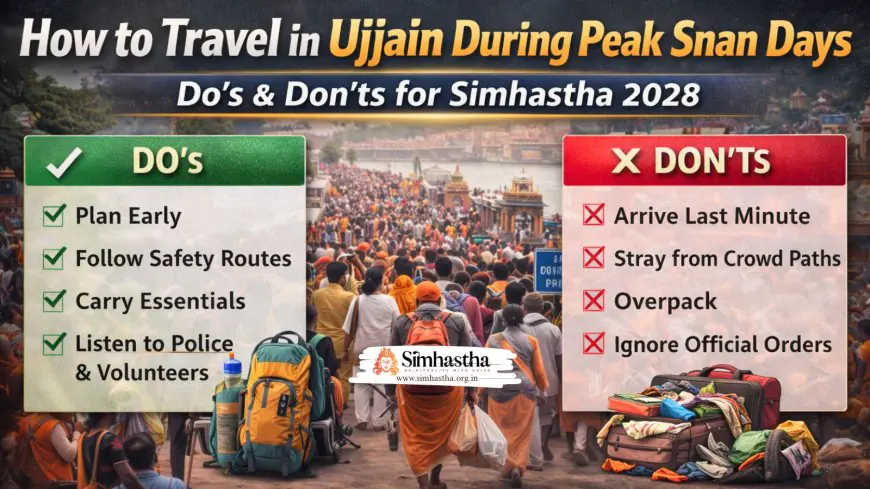
DO: Plan Arrival Timing Around Snan Schedules
One of the most important travel do’s for Simhastha is aligning your arrival with official Snan schedules. Peak congestion begins many hours before the actual bathing window. Arriving late at night or very early morning before movement corridors are sealed is often the smoothest option.
Snan timings are not arbitrary. They are based on ritual logic explained in Shahi Snan order and ritual timing on the Kshipra River . Travel plans that respect these timings naturally face fewer restrictions.
DON’T: Depend on Private Vehicles Near Ghats
During peak Snan days, private vehicle access in Ujjain is heavily restricted. Parking zones are placed far from the riverfront, and last-mile access is almost always pedestrian. Pilgrims who insist on reaching ghats by car often end up walking longer distances than those who planned correctly.
This restriction is intentional. It keeps emergency corridors open and prevents dangerous bottlenecks. Accepting this reality early makes travel significantly less stressful.
DO: Use Official Shuttle and Walking Corridors
Authorities design Simhastha shuttle routes and walking corridors after detailed crowd-flow simulations. These routes may appear indirect, but they are designed to distribute load evenly across the city. Using them is not just recommended; it is the safest option.
These systems are closely tied to broader infrastructure planning described in Simhastha 2028 Ujjain development planning , where transport, ghats, and crowd control operate as one integrated framework.

DON’T: Change Routes Mid-Walk
A common mistake during peak Snan days is abandoning assigned walking routes to take shortcuts. This disrupts crowd balance and can lead to sudden congestion. Once you enter a corridor, follow it fully, even if it feels longer.
What feels slow in the moment is often faster overall. Corridors are designed to keep movement continuous, not fast.
DO: Travel Light and Carry Essentials Only
Heavy bags slow movement and increase fatigue. During peak Snan travel, every extra item becomes a burden. Carry only essentials: water, basic medication, identification, and minimal offerings.
Travel light also improves safety during dense movement zones near ghats and bridges.
DON’T: Expect Real-Time Navigation Apps to Help
Standard navigation apps do not account for temporary restrictions, barricades, or pedestrian-only zones. Relying on them during Simhastha often leads to dead ends. Instead, follow on-ground signage and police guidance.
DO: Factor Walking Time Into All Plans
Walking is not a backup option during peak Snan days; it is the primary mode of travel. Even shuttle drops require extended walking. Plan your day assuming long walks, frequent pauses, and gradual movement.
This walking-first reality is also discussed in the broader context of pilgrim experience in the complete Simhastha 2028 visiting and movement guide .
DON’T: Panic When Movement Slows
Slow movement is not failure; it is crowd safety in action. Panicking, pushing, or attempting to overtake others increases risk. Peak Snan days require patience as a form of discipline.
Why These Do’s & Don’ts Exist
Every travel rule during peak Snan days is rooted in past experience. Events like Simhastha operate at a scale where individual convenience must yield to collective safety. Understanding this helps pilgrims cooperate rather than resist.
Travel discipline is not separate from spiritual discipline. It is part of it.
How Proper Travel Planning Improves the Spiritual Experience
Pilgrims who follow structured travel guidance arrive calmer, less exhausted, and more focused. They experience the Snan as a ritual, not a struggle. This mental state is essential for meaningful participation in Simhastha.
Traveling correctly is not about reaching faster. It is about arriving prepared.
Related Simhastha 2028 Guides :
-
-
- Simhastha 2028 Dates Officially Announced: Full Event & Shahi Snan Timeline
- Top 10 Routes to Enter Ujjain During Simhastha 2028 Without Traffic Hassles
- How to Travel Inside Ujjain During Simhastha 2028: Routes, Maps and Movement Plans
- How to Travel in Ujjain During Peak Snan Days: Do’s & Don’ts for Simhastha 2028
- Solo Travel Guide for Simhastha 2028: Safety, Budget, Stay & Movement Tips
- Mumbai to Ujjain for Simhastha 2028: Fastest Routes & Budget Tips
- Bengaluru to Ujjain for Simhastha 2028: Night Travel vs Day Travel Comparison
- Delhi to Ujjain for Simhastha 2028: Fastest Same-Day Travel Plan for Pilgrims
- Ujjain Simhastha from New York: Best Travel & Stay Guide
- Ujjain Simhastha From London: Complete Travel & Stay Guide
-
Frequently Asked Questions