

















Ujjain Simhastha 2028 Dates Announced: Full Shahi Snan & Event Timeline
Simhastha 2028 dates officially announced. View the complete Ujjain timeline with Shahi Snan dates, key events, and astrology-based scheduling explained clearly.


Ujjain Simhastha 2028 Dates: Shahi Snan, Tithi Calendar & Complete Guide
🔍 Quick Answer: Ujjain Simhastha 2028 Dates and Why They Matter
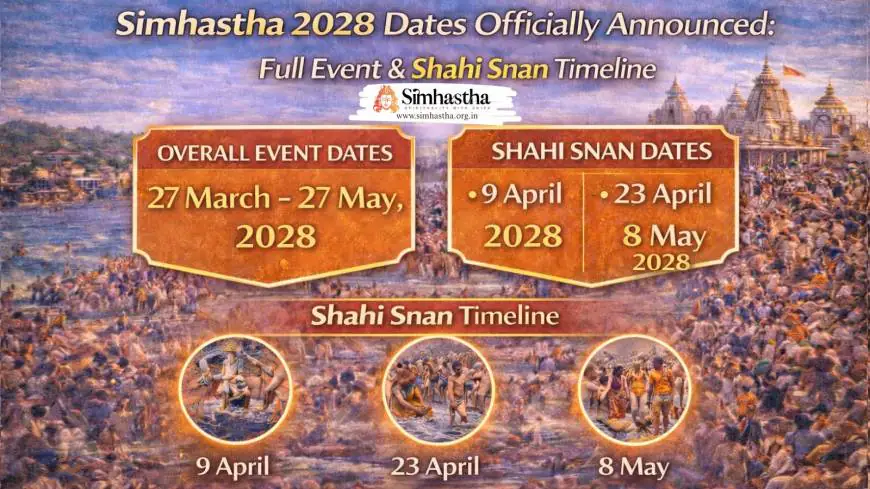
Ujjain Simhastha 2028 is currently planned from 27 March 2028 to 27 May 2028, creating an approximately 62-day spiritual and pilgrimage period in Ujjain, Madhya Pradesh.
The three most important Shahi Snan dates of Simhastha 2028, also referred to as the principal Amrit Snan dates, are currently listed as:
- First Shahi Snan: 9 April 2028, Sunday
- Second Shahi Snan: 23 April 2028, Sunday
- Final Shahi Snan: 8 May 2028, Monday
These are expected to be the most important Akhara-led ceremonial bathing days of the Ujjain Kumbh Mela 2028. Saints, Naga Sadhus, Akharas, pilgrims and visitors are expected to gather along the sacred Shipra River for ritual bathing, religious processions, prayer, darshan and spiritual observances.
The three dates are also expected to create the highest pressure on ghats, roads, railway services, parking areas, accommodation, medical facilities, public-information centres and pedestrian routes. Final bathing timings, Akhara sequence, procession routes and access arrangements will be announced through authorised administrative notifications closer to the event. The current event window and principal bathing dates are widely used as the advance planning framework for Simhastha 2028.
Trending Guides Now

What Is Simhastha? Complete Explanation of Ujjain’s Sacred Kumbh

How Simhastha 2028 Planning Uses Temporary Infrastructure Over Permanent Construction
Why Simhastha 2028 Is Expected to Be the Largest Ever?

What to Wear Carry Avoid at Ujjain Simhastha

Ujjain Railway Station to Mahakaleshwar Temple Distance (2026 Guide)

Mahakaleshwar Temple Entry Rules 2026: Dress Code, Mobile & Bag Policy

Ujjain Simhastha Update: CM Mohan Yadav Reviews 2028 Works

Karkateshwar Mahadev: 22/84 Mahadev of Ujjain
For readers new to the event, this guide also explains what Ujjain Simhastha is, why it is held approximately once in 12 years and why its sacred bathing dates matter.
Simhastha 2028 Dates: Current Schedule Window
Based on the currently published planning calendar, administrative preparations and public event information, Simhastha 2028 in Ujjain is planned from 27 March to 27 May 2028.
Simhastha 2028 Duration
| Schedule Detail | Date |
|---|---|
| Start Date | 27 March 2028 |
| End Date | 27 May 2028 |
| Inclusive Duration | Approximately 62 days |
| Location | Ujjain, Madhya Pradesh |
| Sacred River | Shipra or Kshipra River |
| Previous Ujjain Simhastha | 2016 |
| Next Ujjain Simhastha | 2028 |
Madhya Pradesh Tourism identifies Simhastha as the Kumbh gathering associated with Ujjain and the Shipra River, held according to a traditional astrological cycle connected principally with Jupiter’s position in Simha Rashi, or Leo.
Shahi Snan Dates: The Most Important Days
1. First Shahi Snan — 9 April 2028, Sunday
Hindu tithi at sunrise in Ujjain: Chaitra Shukla Purnima
The First Shahi Snan of Simhastha 2028 is currently scheduled for Sunday, 9 April 2028.
This date is expected to open the principal Akhara-led ceremonial bathing sequence. It may include:

- Grand movement of Akharas towards designated ghats
- Participation by saints and Naga Sadhus
- Ceremonial flags, religious insignia and processional formations
- Controlled movement around major ghats
- Temporary route diversions
- Heavy public-transport demand
- High demand for medical and lost-person assistance
- Increased crowd density around the Shipra River
The day falls on Chaitra Shukla Purnima according to the tithi prevailing around sunrise in Ujjain.
2. Second Shahi Snan — 23 April 2028, Sunday
Hindu tithi at sunrise in Ujjain: Vaishakha Krishna Chaturdashi
The Second Shahi Snan of Simhastha 2028 is currently listed for Sunday, 23 April 2028.
Because the date falls on a Sunday and sits near the middle of the main event period, it should be treated as one of the highest-preparedness dates for visitors, accommodation providers, transport operators and volunteer teams.
Likely conditions may include:
- Controlled entry into major bathing zones
- One-way pedestrian movement
- Longer queues at ghats and temples
- Restricted private-vehicle access
- Heavy railway and bus-station movement
- Increased pressure on drinking-water and sanitation facilities
- Greater demand at public help centres
- Additional medical and emergency deployment
Pilgrims should not rely on ordinary travel routes on this date. Temporary access systems may be introduced according to real-time crowd conditions.
3. Final Shahi Snan — 8 May 2028, Monday
Hindu tithi at sunrise in Ujjain: Vaishakha Shukla Purnima
The Final Shahi Snan of Simhastha 2028 is currently scheduled for Monday, 8 May 2028.
The date falls on Vaishakha Purnima, an important full-moon observance in the Hindu calendar. It is expected to conclude the principal Akhara bathing cycle while attracting large numbers of pilgrims for sacred bathing, temple darshan and concluding spiritual observances.
Visitors should expect:
- Major Akhara participation
- High activity at prominent Shipra ghats
- Extended pedestrian-control zones
- Increased Mahakaleshwar Temple visitation
- Pressure on road and rail transport
- High accommodation demand
- Hot daytime weather conditions
- Additional hydration and medical requirements
The final Shahi Snan should not be assumed to be less crowded merely because it occurs later in the festival period. All three principal bathing dates should be treated as extreme-crowd travel days.
What the Extended Simhastha Period Allows
The approximately two-month festival window provides space for:
- Multiple Shahi Snan and Parva Snan observances
- Akhara arrival and ceremonial processions
- Sacred bathing in the Shipra River
- Daily prayer, worship and river aarti
- Mahakaleshwar Temple darshan
- Akhara darshan and satsang
- Spiritual discourses
- Religious camps and community service
- Cultural and heritage programmes
- Managed movement of pilgrims across different sectors
- Medical, sanitation and public-assistance operations
- Arrival and departure of pilgrims in phases
Final operational notifications covering ghats, Akhara bathing sequence, road closures, parking, public transport, temple entry and emergency systems are expected closer to the event.
Also Read | Officially Announced Simhastha 2028 Dates and Shahi Snan Timeline
🕉️ Complete Simhastha 2028 Sacred Bathing Calendar at a Glance
While the three principal Shahi Snan dates receive the highest public attention, the current Simhastha planning calendar also lists several other spiritually significant dates.
The Hindu tithi in the following table is based on the tithi prevailing at sunrise in Ujjain. A lunar tithi can begin or end during a Gregorian day, which means another tithi may start later on the same date.
📅 Major Simhastha 2028 Bathing Dates
| Date and Day | Hindu Tithi at Sunrise in Ujjain | Current Festival Designation | Spiritual and Pilgrimage Context |
|---|---|---|---|
| 27 March 2028, Monday | Chaitra Shukla Pratipada | Opening Day and Pratham Pavitra Snan | Beginning of the current Simhastha planning window and opening religious observances |
| 4 April 2028, Tuesday | Chaitra Shukla Navami | Sacred Bathing and Spiritual Observance | Important Chaitra-period worship and pilgrimage day |
| 9 April 2028, Sunday | Chaitra Shukla Purnima | First Shahi Snan / Amrit Snan | First principal Akhara-led ceremonial bathing day |
| 14 April 2028, Friday | Vaishakha Krishna Panchami at sunrise | Sacred Bathing Day | Pilgrimage, prayer and sacred bathing during the early Vaishakha period |
| 19 April 2028, Wednesday | Vaishakha Krishna Dashami | Sacred Bathing Day | Religious observances and pilgrim bathing in the Shipra |
| 23 April 2028, Sunday | Vaishakha Krishna Chaturdashi | Second Shahi Snan / Amrit Snan | Second principal Akhara-led bathing day and expected peak-crowd date |
| 1 May 2028, Monday | Vaishakha Shukla Saptami | Ganga Saptami and Sacred Bathing | River worship, devotion and sacred bathing observances |
| 5 May 2028, Friday | Vaishakha Shukla Ekadashi | Mohini Ekadashi Observance | Fasting, Vishnu worship, prayer and pilgrimage |
| 8 May 2028, Monday | Vaishakha Shukla Purnima | Final Shahi Snan / Amrit Snan | Final principal Akhara-led ceremonial bathing day |
| 15 May 2028, Monday | Jyeshtha Krishna Saptami | Sacred Bathing and Spiritual Observance | Pilgrimage activity during the concluding phase |
| 27 May 2028, Saturday | Jyeshtha Shukla Tritiya at sunrise | Closing Ceremony and Purna Ahuti | Prayerful conclusion of the current festival schedule |
Location-based Panchang calculations are important because tithi timings depend on the relationship between sunrise and the positions of the Sun and Moon for a particular place. Drik Panchang and Prokerala both describe Panchang information as location-dependent, and the cited daily calculations are generated for Ujjain or comparable Indian Panchang conditions.
Calendar Note: Festival designations, bathing access, ceremonial timings and procession arrangements must follow the latest notification issued by the authorised Simhastha administration. The tithi shown above refers to the lunar day prevailing at sunrise in Ujjain.
🌊 Why Pilgrims Plan Around These Dates
Not every devotee needs to visit Ujjain during a Shahi Snan. Experienced pilgrims often select dates according to their spiritual goals, physical ability, travel requirements and tolerance for heavy crowds.
Other listed bathing dates may offer:
✅ Comparatively easier access to selected ghats
✅ Shorter waiting periods than Shahi Snan days
✅ Better chances of finding accommodation
✅ More time for prayer and temple visits
✅ Easier movement for families and senior citizens
✅ Reduced pressure around public facilities
✅ A quieter atmosphere for personal spiritual practice
However, even a comparatively lower-crowd Simhastha day can be much busier than an ordinary pilgrimage day in Ujjain.
Families travelling with children, senior citizens or persons with disabilities should consider:
- Distance from accommodation to transport points
- Availability of accessible routes
- Expected walking distance
- Weather and heat conditions
- Nearby medical facilities
- Availability of rest areas
- Family meeting points
- Official ghat-access instructions
📿 Expected Crowd Levels During Simhastha 2028
| Event Type | Planning-Level Crowd Intensity |
|---|---|
| Shahi Snan / Amrit Snan Days | Extremely High |
| Opening Day and Major Parva Snan | High |
| Purnima, Ekadashi and Saptami Observances | High |
| Other Listed Bathing Dates | Moderate to High |
| Regular Festival Days | Moderate |
| Weekdays Between Major Events | Comparatively Lower |
These categories are intended for travel planning and should not be treated as official crowd forecasts.
The presence of a religious tithi alone does not determine final crowd size. Attendance can also be affected by:
- Weekends and public holidays
- Weather conditions
- Akhara programmes
- Temple schedules
- Transport availability
- Government advisories
- Procession routes
- Accommodation capacity
- Road restrictions
- Public announcements
Shahi Snan: The Spiritual Heart of Simhastha 2028
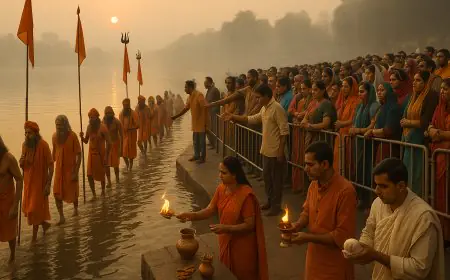
The Shahi Snan, also called Amrit Snan, is the principal ceremonial bathing tradition associated with Akharas during Simhastha.
The expression does not describe a private or luxury bath. It refers to a ceremonial order in which recognised Akharas and their saints proceed towards the designated bathing area according to established religious tradition and authorised arrangements.
On these days:
- Akharas assemble according to the designated sequence
- Saints and Naga Sadhus participate in ceremonial movement
- Religious flags and insignia may be displayed
- Access to procession routes may be restricted
- Akhara bathing may take place before general public access
- Police and administration may regulate entry and exit
- Pilgrims may be redirected towards different ghats
- Emergency lanes must remain clear
UNESCO describes the wider Kumbh Mela tradition as a peaceful congregation of pilgrims involving sacred bathing, ascetics, saints, sadhus, visitors and the transmission of cultural and spiritual traditions. Kumbh Mela was inscribed on UNESCO’s Representative List of the Intangible Cultural Heritage of Humanity in 2017.
Principal Shahi Snans in Simhastha 2028
First Shahi Snan
The First Shahi Snan on 9 April 2028 begins the principal royal-bathing sequence.
It is expected to:
- Establish the ceremonial bathing order
- Bring major Akharas to designated bathing zones
- Attract pilgrims seeking the first principal bath
- Create substantial pressure around riverfront routes
- Require early deployment of public services
- Generate major demand for accommodation and transport
Pilgrims should reach Ujjain well before the date rather than attempting to enter the city immediately before the bathing period.
Second Shahi Snan
The Second Shahi Snan on 23 April 2028 falls in the central part of the currently planned event window.
It may witness:
- Strong participation from Akharas
- High pilgrim movement throughout the city
- Long-duration road restrictions
- Major public-transport demand
- Intensive queue management
- Heavy movement near temples and ghats
- Higher demand for lost-person and medical services
It should be treated as one of the most demanding dates from the perspective of crowd movement and city operations.
Final Shahi Snan
The Final Shahi Snan on 8 May 2028 concludes the principal Akhara bathing cycle in the current schedule.
It is expected to carry:
- Strong spiritual importance
- Vaishakha Purnima observances
- Final principal Akhara bathing
- Large pilgrim participation
- Major temple and ghat activity
- Increased heat-related health risks
- Heavy departure pressure after the event
Visitors should prepare for high daytime temperatures and carry sufficient drinking water while following official restrictions on items permitted inside controlled zones.
Also Read | Why Millions Take the First Shahi Snan: Spiritual Benefits, Science and Dharma Explained
Peshwai Processions: Ceremonial Arrival of Akharas
The Peshwai is one of the most visually significant traditions associated with the arrival or public ceremonial presence of Akharas.
These processions may include:
- Akhara flags and traditional insignia
- Saints, Mahants and monastic leaders
- Naga Sadhus
- Religious chants and traditional music
- Decorated vehicles or ceremonial arrangements
- Disciples and organised processional groups
- Public darshan along authorised routes
Peshwai processions express the public identity and traditional order of the Akharas. They also require detailed coordination because large numbers of people may gather along procession routes.
Visitors must:
- Remain behind authorised barricades
- Avoid entering a moving procession
- Follow police instructions
- Keep emergency routes clear
- Avoid stopping in narrow passages for photography
- Respect restrictions on drones and professional equipment
- Never obstruct saints or procession vehicles
- Use only authorised crossing points
Specific Peshwai dates, routes and timings should be published only after confirmation by the responsible administration and Akhara bodies.
Also Read | The Arrival Procession of Akharas in Simhastha 2028: A Complete Explainer
Major Rituals and Events During Simhastha 2028
Simhastha is not limited to bathing in the Shipra River. During the wider gathering, Ujjain becomes a continuous landscape of worship, service, teaching, pilgrimage and cultural activity.
Akhara Darshan and Satsang
Pilgrims may visit authorised Akhara camps to:
- Attend spiritual discourses
- Observe monastic traditions
- Receive blessings
- Learn about different spiritual lineages
- Participate in devotional programmes
- Understand the role of renunciation and service
Visitors should respect camp rules and avoid photographing saints without permission.
Shipra River Aarti
Aarti at prominent Shipra ghats brings together priests, pilgrims and visitors in collective worship.
During peak festival days:
- Entry may be controlled
- Standing zones may be designated
- Photography restrictions may apply
- Ghats may close temporarily for crowd management
- Visitors may be redirected to alternative viewing areas
Aarti timings should be checked from current local or administrative information.
Mahakaleshwar Temple Integration
The Shri Mahakaleshwar Jyotirlinga is one of Ujjain’s most important pilgrimage destinations. Many Simhastha visitors are expected to combine Shipra Snan with Mahakaleshwar darshan.
The temple maintains official online services for offerings, darshan-related services, aarti booking and worship arrangements. During Simhastha, separate systems may be introduced for queues, bookings, security and crowd movement.
Visitors should not assume that ordinary temple-entry arrangements will remain unchanged on major bathing dates.
Vyasa Peeth and Spiritual Discourses
Saints, scholars and spiritual organisations may conduct discourses on:
- Vedanta
- Dharma
- Bhakti
- Yoga
- Meditation
- Sanatan traditions
- Sacred texts
- Social responsibility
- Environmental awareness
- Service and charity
Programme schedules may vary across Akhara camps, religious organisations and public stages.
Cultural and Heritage Programmes
Simhastha may also include:
- Classical and devotional music
- Folk performances
- Religious exhibitions
- Heritage presentations
- Traditional art and craft displays
- Spiritual literature events
- Yoga and wellness programmes
- Public-awareness campaigns
- Cleanliness and environmental activities
These programmes allow visitors to experience the cultural dimensions of Simhastha beyond the main bathing rituals.
Infrastructure and Crowd Management for Simhastha 2028
Preparations for Simhastha 2028 Ujjain are expected to focus heavily on safety, connectivity, visitor movement and public services.
Major areas of planning include:
- New and upgraded roads
- Bridges and approach routes
- Railway capacity
- Ghat and riverfront development
- Temporary pedestrian corridors
- Parking and shuttle systems
- Medical and emergency facilities
- Fire and disaster-response systems
- CCTV and digital monitoring
- Public-address systems
- Drinking-water facilities
- Temporary toilets and sanitation
- Waste collection and processing
- Lost-person assistance centres
- Volunteer and help-desk deployment
- Accessible facilities for persons with disabilities
The Ministry of Railways has publicly confirmed comprehensive preparation for the expected rush connected with Simhastha Kumbh Mela 2028, while government and tourism discussions have referred to work on roads, bridges, ghats, riverfront revival, safety, accessibility and crowd-management systems.
Visitors should wait for final official information covering:
- Railway special trains
- Bus and shuttle services
- Parking zones
- Vehicle restrictions
- Pedestrian routes
- Ghat entry and exit systems
- Temple booking procedures
- Emergency telephone numbers
- Lost-person centres
- Accommodation regulations
- Prohibited items
- Akhara-procession routes
Also Read | How Simhastha 2028 Will Transform Ujjain Forever
The Astrology Behind Simhastha 2028 Dates
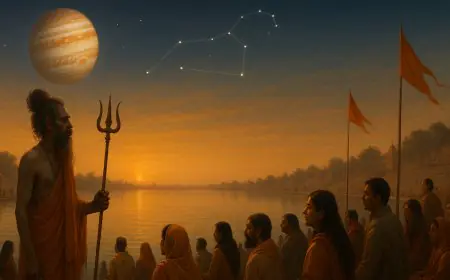
The name Simhastha is associated principally with Guru, or Jupiter, being positioned in Simha Rashi—Leo.
The word can be understood through:
- Simha: Leo
- Stha: Positioned, established or situated
Madhya Pradesh Tourism explains that the gathering is known as Simhastha because of Jupiter’s movement into the Leo zodiacal position. This is the central celestial condition traditionally associated with the Ujjain gathering.
Important bathing dates within the Simhastha period are then connected with additional factors such as:
- Solar transitions
- Lunar tithis
- Purnima and Amavasya
- Shukla and Krishna Paksha
- Traditional Jyotish calculations
- Religious deliberations
- Akhara customs
- Panchang interpretation
A more precise explanation is:
Jupiter’s position in Simha Rashi establishes the principal Simhastha condition, while specific bathing days are determined through additional solar, lunar, Panchang and traditional religious considerations.
This is why Simhastha is not planned solely like an ordinary cultural festival. Administrative arrangements must follow the sacred calendar rather than create it independently.
Also Read | How Astrology Determines Simhastha’s Location: Why Ujjain Becomes the Anchor
Not a Festival, but a Sacred Time Cycle
Choosing the right date can significantly shape a pilgrim’s Simhastha 2028 experience.
Pilgrims who want to witness the grandeur of:
- Akhara processions
- Naga Sadhu participation
- Ceremonial bathing
- Large-scale devotional gatherings
- Peak Simhastha energy
may plan around one of the three principal Shahi Snan dates.
Families, senior citizens, international visitors and travellers seeking easier movement may prefer another listed bathing date or a regular weekday between peak events.
Accommodation demand is expected to rise sharply around:
- 9 April 2028
- 23 April 2028
- 8 May 2028
Visitors should consider not only the distance between a hotel and the ghats but also:
- Road closures
- Pedestrian-only zones
- Shuttle availability
- Walking distance
- Bridge restrictions
- Railway-station access
- Temple-route controls
- Medical accessibility
A hotel that appears close on a map may require a much longer journey during temporary traffic restrictions.
Essential Planning Advice for Pilgrims
Before entering the main pilgrimage zone:
- Carry a valid identity document.
- Save accommodation details offline.
- Write emergency numbers on paper.
- Keep essential medicines with you.
- Decide a family meeting point.
- Carry sufficient drinking water.
- Wear comfortable footwear.
- Avoid unnecessary luggage.
- Follow authorised signs and announcements.
- Do not rely on unverified social-media messages.
- Avoid carrying prohibited items.
- Check weather and heat advisories.
- Respect ghats, temples, saints and religious processions.
Mobile connectivity may become slow or temporarily unavailable in dense crowds. Families should not depend entirely on phone calls for reunification.
Why Ujjain Simhastha Is Spiritually Unique
Ujjain is not merely an event venue. It is one of India’s historic sacred cities, closely associated with:
- Shri Mahakaleshwar Jyotirlinga
- The Shipra River
- Ancient pilgrimage traditions
- Jyotish and sacred timekeeping
- Saints and Akharas
- Temple worship
- Spiritual learning
- Sanatan cultural heritage
The approximately 12-year cycle gives each Simhastha a special place in the lives of pilgrims. For many devotees, participation is a rare spiritual opportunity that may occur only a few times in one lifetime.
The sacred bath represents different meanings for different pilgrims, including:
- Spiritual purification
- Prayer for divine grace
- Remembrance of ancestors
- Renewal of personal vows
- Charity and service
- Detachment from ego
- Participation in a living tradition
- Connection with saints and spiritual lineages
These meanings belong to faith and tradition and should be presented respectfully rather than as scientifically proven medical or physical outcomes.
Final Planning Note for Simhastha 2028
The current planning calendar places Ujjain Simhastha 2028 between 27 March and 27 May 2028, with principal Shahi Snan dates on:
- 9 April 2028
- 23 April 2028
- 8 May 2028
The calendar in this guide presents the Hindu tithi prevailing at sunrise in Ujjain for each listed date.
Before beginning a journey, pilgrims should verify:
- Latest government notification
- Final Shahi Snan timings
- Akhara bathing sequence
- Peshwai routes
- Ghat restrictions
- Traffic diversions
- Railway and bus arrangements
- Mahakaleshwar Temple instructions
- Parking and shuttle zones
- Official emergency contacts
Frequently Asked Questions