

































Difference Between Simhastha, Kumbh Mela, and Ardh Kumbh – Meaning, Significance & Comparison
Discover the key differences between Simhastha, Kumbh Mela, and Ardh Kumbh — their meanings, timings, locations, and spiritual significance.
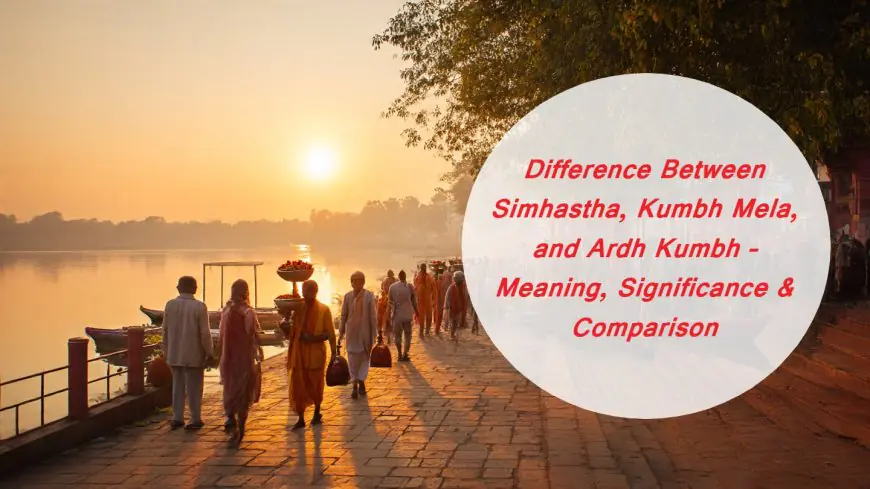


Difference Between Simhastha, Kumbh Mela, and Ardh Kumbh
Meaning, Significance, and Clear Comparison
India’s sacred pilgrimages are deeply connected to time, place, and cosmic order. Among them, Simhastha, Kumbh Mela, and Ardh Kumbh are often mentioned together, sometimes even used interchangeably. However, in Hindu tradition, these are not identical events. Each represents a distinct form of pilgrimage, governed by different astrological rules, locations, and historical practices.
Understanding the difference between Simhastha, Kumbh Mela, and Ardh Kumbh is essential for anyone seeking clarity about India’s great religious gatherings. This article explains these differences in a precise, structured, and culturally accurate manner.
Learn the complete Ujjain Simhastha Meaning, history, and religious importance in this detailed guide.
Understanding the Concept of Kumbh in Hindu Tradition
The word Kumbh means “pot” or “pitcher.” In Hindu cosmology, it refers to the Kumbh of Amrit, the nectar of immortality that emerged during the mythological event known as Samudra Manthan, the churning of the cosmic ocean by gods and demons.
Trending Guides Now

Why Ujjain Is One of the Four Kumbh Cities in India

Simhastha Kumbh Mela Explained for First-Time Visitors

What to Wear Carry Avoid at Ujjain Simhastha

Simhastha 2028 Preparation Timeline: What Happens Each Year

Ujjain Railway Station to Mahakaleshwar Temple Distance (2026 Guide)

Ujjain Simhastha 2028 Dates Announced: Full Shahi Snan & Event Timeline

Mahakaleshwar Sandhya Aarti Online Booking 2026: Fee, Timings, Entry Gate and Step-by-Step Process

Mangalnath Temple Trip Budget: Puja, Local Transport, Food and Stay Planning
According to tradition, drops of this nectar fell at four locations on Earth. These locations later became the sites of the great Kumbh gatherings. Over centuries, the idea of Kumbh evolved from mythology into a time-regulated spiritual system, where ritual bathing, ascetic discipline, and collective observance are performed in alignment with planetary movements.
From this broader Kumbh framework arise three distinct gatherings:
-
Kumbh Mela
-
Ardh Kumbh
-
Simhastha
Each serves a specific role within the same spiritual continuum.

Also Read | Official Simhastha 2028 Shahi Snan Dates
What Is Kumbh Mela?
Kumbh Mela is the umbrella term used for the major Hindu pilgrimage held in rotation at four sacred locations in India:
-
Prayagraj at the Triveni Sangam
-
Haridwar on the Ganga
-
Ujjain on the Shipra
-
Nashik on the Godavari
Each of these locations follows its own astrological conditions, based on the movement of the Sun, Moon, and Jupiter. A full Kumbh Mela at a given location typically occurs once every twelve years.
Kumbh Mela is characterized by:
-
Mass ritual bathing in a sacred river
-
Participation of Akharas and ascetic orders
-
Large public religious assemblies
-
Emphasis on purification, discipline, and renunciation
Although commonly referred to as a festival, Kumbh Mela is more accurately understood as a time-bound spiritual congregation regulated by cosmic alignment.
For a broader understanding of how Kumbh Mela functions across different locations, readers may refer to the dedicated resource at kumbhmela.org.in, which focuses exclusively on the wider Kumbh tradition.
What Is Ardh Kumbh?
Ardh Kumbh literally means “half Kumbh.”
It is held six years after a full Kumbh Mela, but only at two locations:
-
Prayagraj
-
Haridwar
Ardh Kumbh does not take place in Ujjain or Nashik.
While the scale of Ardh Kumbh is smaller than a full Kumbh, its spiritual merit is considered equal. Saints, Akharas, and devotees participate with the same seriousness of ritual observance, but within a shorter duration and reduced geographical spread.
Ardh Kumbh serves an important role in maintaining continuity between two full Kumbh cycles. It ensures that ascetic orders, ritual lineages, and pilgrim traditions remain active and disciplined during the long twelve-year interval.
A detailed exploration of Ardh Kumbh, its timing, locations, and significance is available at ardhkumbh.org.in, which focuses specifically on this mid-cycle pilgrimage.
What Is Simhastha?
Simhastha refers to the Kumbh Mela held in Ujjain, governed by a very specific astrological condition.
Simhastha occurs only when:
-
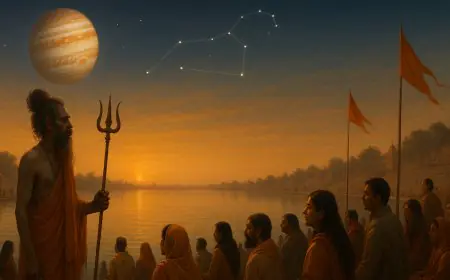
Jupiter enters the zodiac sign Leo (Simha Rashi)
-
The Sun aligns in Aries (Mesha Rashi)
This alignment takes place approximately once every twelve years. When it occurs, Simhastha becomes mandatory, meaning it cannot be postponed, advanced, or substituted.
Simhastha is inseparable from Ujjain and is deeply connected with Mahakaleshwar Jyotirlinga, where Shiva is worshipped as Mahakal, the lord of time. Because Simhastha itself is governed by time, this association is philosophical rather than ceremonial.
Although Simhastha is often called “Ujjain Kumbh,” the traditional name Simhastha remains significant because it directly reflects the astrological condition that activates the gathering.
Is Ujjain Simhastha Different from Kumbh Mela?
Yes, Ujjain Simhastha is different from Kumbh Mela, even though it belongs to the same broader tradition.
Kumbh Mela is a collective term used for large Hindu pilgrimages held at four sacred locations in India. Each location follows its own astrological rules and ritual structure. Simhastha refers specifically to the Kumbh Mela held in Ujjain and is governed by a single, non-negotiable condition: the entry of Jupiter into the zodiac sign Leo.
While all Kumbh Melas depend on planetary alignment, Simhastha is the most time-specific among them. Its occurrence is determined solely by Jupiter’s movement, not by a combination of multiple celestial factors. This makes Simhastha unique in both definition and execution.
Because of this distinction, traditional references continue to use the name Simhastha instead of treating it as a generic Kumbh Mela. The difference is not symbolic; it is structural and rooted in Hindu cosmology.
Ujjain Simhastha vs Kumbh Mela: Key Differences
Although Simhastha is part of the Kumbh framework, it differs from other Kumbh Melas in several essential ways.
The most important difference lies in astrological timing. Simhastha occurs only when Jupiter enters Leo, whereas other Kumbh Melas are governed by different planetary combinations involving the Sun, Moon, and Jupiter.
Location exclusivity is another defining factor. Simhastha is held only in Ujjain and cannot be transferred to any other city. In contrast, the term Kumbh Mela applies to gatherings held at multiple locations across India.
There is also a philosophical distinction. Simhastha emphasizes the concept of time and cosmic discipline, closely aligned with the presence of Mahakal, the lord of time, in Ujjain. Other Kumbh Melas are more strongly associated with sacred geography, such as river confluences or Himalayan transitions.
Finally, nomenclature matters. While “Kumbh Mela” is a general descriptor, “Simhastha” precisely defines the Ujjain gathering based on its astrological condition. This is why knowledgeable sources treat Simhastha as a distinct category within the Kumbh tradition.
Simhastha vs Kumbh Mela vs Ardh Kumbh: A Clear Comparison
| Aspect | Kumbh Mela | Ardh Kumbh | Simhastha |
|---|---|---|---|
| Core Meaning | Major Kumbh pilgrimage | Half-cycle Kumbh | Ujjain-specific Kumbh |
| Frequency | Every 12 years (per site) | Every 6 years | Every 12 years |
| Locations | Prayagraj, Haridwar, Ujjain, Nashik | Prayagraj, Haridwar | Ujjain only |
| Astrological Basis | Varies by location | Midway between two Kumbhs | Jupiter in Leo |
| River | Ganga, Sangam, Godavari, Shipra | Ganga, Sangam | Shipra |
| Deity Focus | Varies by site | Same as site | Mahakal (Shiva) |
| Scale | Largest | Moderate | Large but location-centric |
How Simhastha Differs from Other Kumbh Locations
Ujjain vs Prayagraj
Prayagraj Kumbh is centered on the Triveni Sangam and is associated with the concept of cosmic confluence. Simhastha, in contrast, is centered on time, not confluence.
Ujjain vs Haridwar
Haridwar is regarded as the gateway to the Himalayas and liberation. Simhastha emphasizes discipline within time cycles, rather than geographical transition.
Ujjain vs Nashik
Both Nashik and Ujjain host Kumbh gatherings linked to Jupiter, but Nashik’s timing rules differ, and its ritual focus is Vaishnavite-oriented. Simhastha remains distinctly Shaivite in atmosphere.
How Ujjain Simhastha Is Different From Prayagraj, Haridwar, and Nashik Kumbh
Although Simhastha is part of the broader Kumbh tradition, the Ujjain gathering follows a structure that is clearly distinct from the Kumbh Melas held at Prayagraj, Haridwar, and Nashik. These differences arise from astrological rules, sacred geography, and long-established religious orientation rather than from scale alone.
Ujjain Simhastha vs Prayagraj Kumbh
Prayagraj Kumbh is centered on the Triveni Sangam, the sacred confluence of the Ganga, Yamuna, and Saraswati rivers. Its spiritual focus lies in river confluence and purification through sacred geography. Ujjain Simhastha, in contrast, is governed primarily by cosmic timing. It occurs only when Jupiter enters Leo, making time rather than confluence the central principle of the gathering.
Ujjain Simhastha vs Haridwar Kumbh
Haridwar Kumbh is closely associated with the Ganga as it descends from the Himalayas and is traditionally viewed as a gateway to liberation. The emphasis in Haridwar is on sacred flow and transition. Simhastha in Ujjain emphasizes discipline within fixed time cycles and is deeply connected to the concept of Mahakal, the lord of time, rather than geographical transition.
Ujjain Simhastha vs Nashik Kumbh
Both Ujjain and Nashik host Kumbh gatherings linked to Jupiter, but their astrological conditions are not identical. Nashik Kumbh follows different planetary combinations and carries a stronger Vaishnavite orientation. Ujjain Simhastha remains distinct in its reliance on Jupiter’s entry into Leo and its Shaivite atmosphere, shaped by the city’s historical role in timekeeping and ritual continuity.
Why These Distinctions Matter
These differences are not academic. They shape:
-
Ritual order and bathing hierarchy
-
Movement of Akharas
-
Duration and scale of the gathering
-
Cultural and philosophical emphasis
Treating all Kumbh gatherings as identical leads to misunderstanding their purpose. Each exists to fulfill a specific role within Hindu cosmology.
The Role of These Pilgrimages in Hindu Civilization
Together, Simhastha, Kumbh Mela, and Ardh Kumbh represent a living system where:
-
Cosmic time governs human action
-
Geography anchors spiritual discipline
-
Continuity is maintained across generations
They are not isolated festivals, but recurring checkpoints in a civilization that measures time spiritually as well as materially.
In Summary
-
Kumbh Mela is the overarching pilgrimage system held at four sacred sites
-
Ardh Kumbh is the mid-cycle gathering that sustains continuity
-
Simhastha is the Ujjain Kumbh, activated solely by Jupiter’s entry into Leo
Understanding these distinctions brings clarity to one of the world’s most enduring spiritual traditions.
Final Note
For readers interested in:
-
The broader Kumbh framework across India, visit kumbhmela.org.in
-
The specific role and timing of Ardh Kumbh, visit ardhkumbh.org.in
For complete coverage of Ujjain Simhastha, including its history, rituals, Akharas, and spiritual structure, this comparison page should be read alongside the main Simhastha authority resource.
Frequently Asked Questions