






















Ujjain’s Heart Beats for Lord Shiva: How a City’s Collective Spirit Is Shaping Simhastha 2028
Madhya Pradesh CM Dr Mohan Yadav praises Ujjain residents for selflessly supporting Simhastha 2028 infrastructure. A deep editorial on faith, development, and community spirit.


The Unseen Bond Between a Pilgrim City and Its People
There’s a certain kind of magic that unfolds when a city prepares to host the divine. Not the magic of grand announcements or polished press releases — but the raw, unpolished, deeply human magic of ordinary people stepping aside for something far greater than themselves.
In Ujjain, that magic is happening right now. 🕉
While much of the world sees the Simhastha Kumbh as a massive logistical undertaking — crores of devotees, sprawling tent cities, endless movement — the people of this ancient city along the Kshipra River see it differently. They see it as an invitation. An invitation to pause their own routines, to tolerate the dust of construction, to reroute their daily commutes, and to smile at the chaos because they know what it means.
Lord Shiva is coming home. And they want to make sure his guests — tens of millions of them — feel that warmth the moment they arrive.
Trending Guides Now

Simhastha 2028 Mega Development Plan Revealed: How Ujjain Is Being Transformed Forever
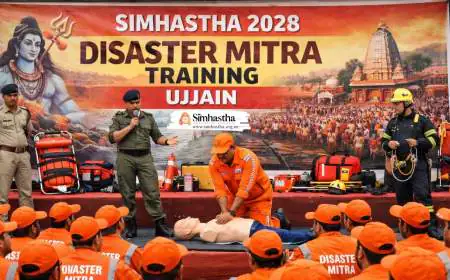
Simhastha 2028 Latest Update: Disaster Mitra Training Begins in Ujjain
Big Update: Who Will Handle the Ujjain–Maksi Four-Lane Road and When Does It Start?”
Ujjain Airport Project: A Historic Leap Before Simhastha 2028

Ujjain Railway Station to Mahakaleshwar Temple Distance (2026 Guide)

Ujjain Simhastha 2028 Dates Announced: Full Shahi Snan & Event Timeline

Mangalnath Temple Trip Budget: Puja, Local Transport, Food and Stay Planning
Omkareshwar Trip Budget Guide: Transport, Stay, Food and Local Travel Costs
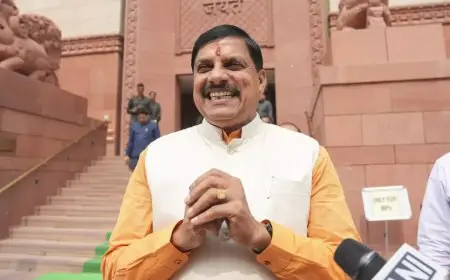
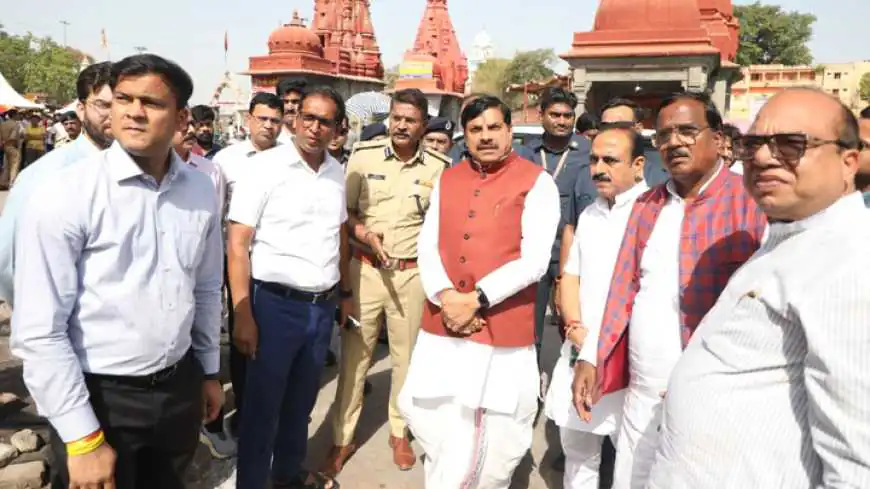
On May 15, 2026, Madhya Pradesh’s Chief Minister Dr. Mohan Yadav stood at the heart of this transformation. Not behind a podium. Not inside a conference room. But on the ground at Ramghat, inspecting the widening of the road from Harsiddhi Pal to Ramghat — a stretch that will soon carry the weight of countless pilgrim footsteps. And what he saw there, he said, is nothing short of a new national example.
👉 “Ujjain’s public representatives, followers of all faiths, and citizens are supporting development work and providing cooperation — setting a new example for the country.”
— CM Dr. Mohan Yadav
This is not merely a news update. This is a story about collective faith, political will, and what happens when a government and its people pull in the same direction — not for votes, but for civilizational continuity.
Let’s walk the ground together.
More Than a Road: The Harsiddhi Pal to Ramghat Widening Project
If you have ever visited Ujjain during a normal month — let alone a Simhastha year — you know the narrow, winding lanes around the ghats can feel like arteries struggling to keep up with the city’s heartbeat. Now imagine 4 crore pilgrims converging over weeks. The math simply doesn’t work without bold infrastructure changes.
That’s precisely why the state government has prioritized the widening of the Harsiddhi Pal to Ramghat corridor.

Why This Specific Stretch Matters
-
Harsiddhi Pal is one of Ujjain’s most revered Shaktipeeths. Devotees visiting Maa Harsiddhi temple often proceed toward the ghats for holy dips.
-
Ramghat is the crown jewel of Ujjain’s riverfront — where the bhasma aarti draws lakhs, and where pilgrims complete their ritual purification before temple visits.
-
The connecting road, historically congested and narrow, becomes a choke point during large gatherings.
During his inspection, Dr. Yadav didn’t just glance at blueprints. He walked the site, spoke to engineers, and issued crisp instructions: speed, quality, deadline. No compromise. Because every day of delay means another day of inconvenience for the very people who are willingly sacrificing their comfort today.
What makes this moment emotionally striking? 🧡
The Chief Minister openly acknowledged what many in power often forget: development is not done to people. It is done with them. And Ujjain’s citizens haven’t protested the dust, the detours, or the disruption. Instead, they’ve leaned in. Shopkeepers have temporarily adjusted. Families have accepted longer routes. Temples have coordinated with authorities. It’s messy. It’s inconvenient. But it’s also beautiful.
A City’s Emotional Contract With the Kumbh
Let’s pause the project updates for a moment and talk about something more intangible — trust.
Simhastha is not an event that Ujjain merely hosts. It is an event that Ujjain becomes. For weeks, the city transforms into a living, breathing pilgrimage ecosystem. Every home becomes a potential shelter. Every chai stall becomes a lifeline. Every auto-rickshaw driver becomes a guide.
But that kind of transformation doesn’t happen automatically. It requires preparation — and more importantly, it requires public buy-in.
What CM Dr. Yadav recognized in his statement is that Ujjain has already crossed that psychological threshold. The people aren’t waiting for 2028 to “deal with” the crowds. They are, right now in 2026, co-creating the conditions for a smoother, safer, more spiritual experience.
This is the Ujjain model of Kumbh preparation — and it deserves study. While other pilgrimage cities often see friction between development authorities and local residents, Ujjain appears to be writing a different story: one of patience, pride, and shared ownership.
Beyond Roads: The Quiet Work of Saving Lives
Roads and ghats are the visible face of Simhastha preparation. But beneath the surface — literally and figuratively — another kind of work is underway. And it might just be the most underappreciated part of the entire effort.
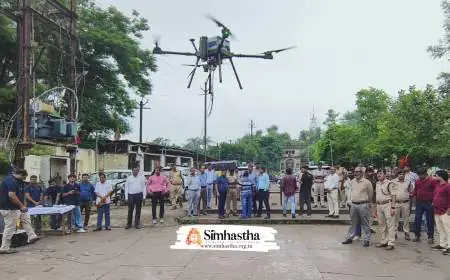
During the same visit, CM Dr. Yadav observed a 15-day flood rescue training camp organized by the Homeguard department near Ramghat.
Now, you might wonder: Why flood rescue training for a Kumbh fair? 🌊
The Logic of Preparation
-
The Kshipra River, while sacred, is still a river. Large gatherings near water bodies always carry potential risks — from accidental falls to sudden weather changes.
-
During Simhastha, the population density along the ghats skyrockets. In an emergency, response time is everything.
-
Trained personnel who can perform deep diving, underwater rescue, surface water rescue, and proper use of life jackets and rescue boats are not optional — they are critical infrastructure.
The Homeguard’s District Commandant Shri Santosh Kumar Jat informed that 250 Homeguard jawans are undergoing rigorous training in:
-
Deep diving techniques
-
Swimming and navigation
-
Life jacket protocols
-
Disaster and flood rescue equipment handling
-
Underwater and surface rescue operations
CM Dr. Yadav took time to boost the morale of these trainees. And here’s why that small gesture matters: trained personnel perform better when they feel valued. A government that shows up — not just with budgets but with presence — builds a resilient force that doesn’t just follow orders but takes ownership of safety.
When crores of pilgrims arrive in 2028, they will never know the names of these 250 jawans. But their safety will be guarded by them. That is the unsung heroism of Kumbh preparation.
The Leadership On the Ground: A Coordinated Effort
No large-scale development happens in isolation. And CM Dr. Yadav’s inspection was attended by a cross-section of leadership that signals genuine coordination — not just political photo-ops.
Present on site were:
-
Shri Ravi Solanki – Chairman, Ujjain Development Authority
-
Shri Balayogi Umeshnath Maharaj – Rajya Sabha MP
-
Shri Anil Jain Kaluheda – MLA
-
Shri Sanjay Agrawal – MLA
-
Shri Ashish Singh – Simhastha Mela Officer & Additional Commissioner
-
Shri Rakesh Gupta – ADGP
Why is this noteworthy? Because Simhastha cuts across departments: urban development, police administration, religious trusts, disaster management, and public works. When all these stakeholders stand together on a dusty road in Ujjain, it sends a signal that the government is treating this not as a “festival management” problem but as a state priority.
That signal reaches:
-
Contractors (who accelerate work)
-
Local residents (who trust the process)
-
National media (who report on progress)
-
And future pilgrims (who book travel with confidence)
Why Simhastha 2028 Is Different From Previous Kumbhs
Let’s step back and look at the larger arc. India has hosted countless Kumbhs — in Prayagraj, Haridwar, Nashik, and Ujjain itself. Each one has taught lessons. Each one has exposed gaps.
So what makes the 2028 Simhastha preparation qualitatively different?
1. Proactive, Not Reactive Infrastructure
Past events often saw infrastructure scramble in the final year. Here, in mid-2026, we are already witnessing road widening, ghat improvements, and rescue training. That two-year window allows for stress testing, community feedback, and mid-course corrections.
2. Emphasis on Year-Round Utility
CM Dr. Yadav explicitly noted that all works are being done in a way that Ujjain benefits long after Simhastha ends. Widened roads, better ghats, trained personnel — these are not temporary fixes. They become permanent assets for a city that welcomes pilgrims every single day, not just during Kumbh.
3. Public Cooperation as Official Metric
Most government reviews focus on budgets and timelines. Here, the Chief Minister elevated citizen cooperation as a measurable outcome. That is rare. And it changes the conversation from “What can the government do?” to “What can we do together?”
4. Integration of Disaster Resilience
The flood rescue training is not an afterthought. It is running in parallel with civil works. That indicates a maturity in event planning — a shift from “hoping nothing goes wrong” to “preparing as if something might.”
Walking the Ramghat: What a Pilgrim Will Experience in 2028
Let me take you on a small imaginative journey. Close your eyes for a moment (well, after reading this). 🤲
Year: 2028. Month: May (or the auspicious bathing dates).
You arrive in Ujjain after a long train journey. The air smells of incense, marigolds, and the distinct freshness of the Kshipra. You join a steady stream of pilgrims walking toward the river. The road from Harsiddhi Pal is wide now — no bottlenecks, no pushing. Families walk together. Elderly devotees move at their own pace. Street vendors are neatly arranged on designated shoulders.
You reach Ramghat. The steps are clean, well-lit, and properly barricaded where needed. Homeguard personnel in identifiable vests are stationed at intervals — not intimidating, just present. You see a boat in the water with a trained rescuer, just in case. You never need them. But their presence lets you surrender fully to the act of bathing — without a flicker of fear in your heart.
You take your dip. You say your prayers. And as you climb back up, you realize: none of this ease happened by accident.
It happened because in 2026, a Chief Minister walked this ground, a city tolerated months of dust, and 250 men and women learned to dive into dark water so you could dip into holy water in peace.
That is the unseen architecture of faith. And Ujjain is building it beautifully.
What Other Pilgrim Cities Can Learn From Ujjain’s Model
If you manage a large religious event — whether it’s the Ardh Kumbh in Haridwar, the Maha Shivaratri surge in Varanasi, or the Sabrimala season — the Ujjain approach offers actionable lessons.
📌 Start Early, Communicate Often
Ujjain began major infrastructure work nearly two years before the event. This reduces last-minute chaos and allows for community adaptation.
📌 Acknowledge Public Sacrifice
CM Dr. Yadav’s public praise of Ujjain residents is not just rhetoric. It’s psychological validation. When people feel seen, they cooperate longer.
📌 Train for Real Scenarios
Flood rescue training is often ignored until a tragedy occurs. Ujjain’s Homeguard program is a preventive investment — and it costs far less than post-disaster compensation.
📌 Integrate, Don’t Isolate
The presence of MLAs, MPs, development authority chiefs, and police officials at the same site ensures aligned execution. No department works in a silo.
📌 Design for Long Life
Every widened road and improved ghat should benefit the city for decades. Simhastha is the catalyst, not the sole purpose.
The Emotional Core: Why Ujjain Residents Are Different
Now, let’s talk about the soul of this story — the people of Ujjain themselves.
I’ve spent time in cities that host mega-events, from Olympic hosts to World Cup venues. Almost always, there’s a phase of resentment. Traffic jams. Construction noise. Temporary closures. Locals grumble. Social media fills with complaints. That’s human nature.
But in Ujjain — at least according to the Chief Minister’s assessment — something else is happening. Something spiritually mature.
Perhaps it’s because Ujjain is not a city that “hosts” Simhastha — it is a city that is Simhastha. The Kumbh is not an external event imposed upon it. It is an internal rhythm of its identity, like a heartbeat.
When a local family agrees to a detour for six months, they are not “bearing an inconvenience.” They are participating in a sacred duty. When a shopkeeper tolerates dust from roadwork, he is not “losing business temporarily.” He is offering a small sacrifice to Mahakal.
This is not romanticism. This is the emotional reality of faith-driven cities. And governments that understand this — that appeal to identity rather than just efficiency — unlock levels of cooperation that pure administrative orders can never achieve.
CM Dr. Yadav’s greatest strength in this moment may not be his policy expertise. It may be his willingness to name and honor this emotional contract.
“Ujjain ke janapratinidhi, sabhi dharm ke anuyayi, aur nagarik — desh ke liye ek nayi misaal bana rahe hain.”
(Ujjain’s public representatives, followers of all faiths, and citizens — are creating a new example for the nation.)
That is not a politician speaking. That is a witness speaking.
Beyond 2028: The Legacy of This Preparation
Let’s look ahead. Simhastha 2028 will come and go. Crores of devotees will bathe, pray, and return home. The media will move on to the next big event.
But what remains?
-
A widened Harsiddhi Pal–Ramghat road that serves daily pilgrims for decades.
-
Trained Homeguard personnel whose skills can be used for any flood or water emergency in the region.
-
A blueprint for religious event management that balances scale, safety, and sentiment.
-
And most importantly — a story of collective goodwill that future administrations can point to as proof that Indian cities can prepare for mega-events without breaking social harmony.
That last part is critical. In an era where news cycles are filled with friction, Ujjain offers a counter-narrative: one of alignment, sacrifice, and shared purpose.
Final Word: When Development and Devotion Dance Together
There’s a famous saying in Hindi: “Mahakal ki nagari mein, har kadam pe ek kahani.” (In the city of Mahakal, every step has a story.)
Today, the story being written is not about a minister or a contract or a budget line. It’s about a collective rising — a city that has decided to make its chaos sacred, its inconvenience an offering, and its preparation a form of worship.
CM Dr. Mohan Yadav’s words from May 15, 2026, are not just news. They are a mirror held up to Ujjain. And what that mirror reflects is a city that remembers who it is — even when the roads are torn open and the dust hasn’t settled.
Simhastha 2028 will be grand. That’s almost guaranteed given the scale of planning. But will it be loving? Will every pilgrim feel that they are welcome, not just managed?
If the spirit of today’s Ujjain continues — if the cooperation, patience, and pride hold — then yes. Thousands will come for the holy dip. But they will return home talking about the holy warmth of the people who received them.
And that, more than any road or any ghat, is the real infrastructure of faith. 🕉️
Reference: Official Madhya Pradesh Government News Portal – mpinfo.org
*(Original news published May 15, 2026 | Title: “Ujjain’s public is setting a new example by cooperating in Simhastha-related works: Chief Minister Dr. Yadav”)*
Frequently Asked Questions