






















How Akharas Preserve Ancient Traditions in Modern Times
Discover how Akharas preserve ancient traditions in modern times through sacred rituals, monastic discipline, and adapting to contemporary challenges.

The Living Bridge Between Ancient and Modern India 🌉
Let me ask you something that might surprise you. 🤔
In an age of smartphones, artificial intelligence, and instant everything, how do ancient traditions survive? How do rituals that date back thousands of years continue to thrive in a world that seems to change every single day? 📱
The answer lies in the Akharas—the ancient monastic orders of India that have been preserving the country's spiritual heritage for over a millennium. 🕉️
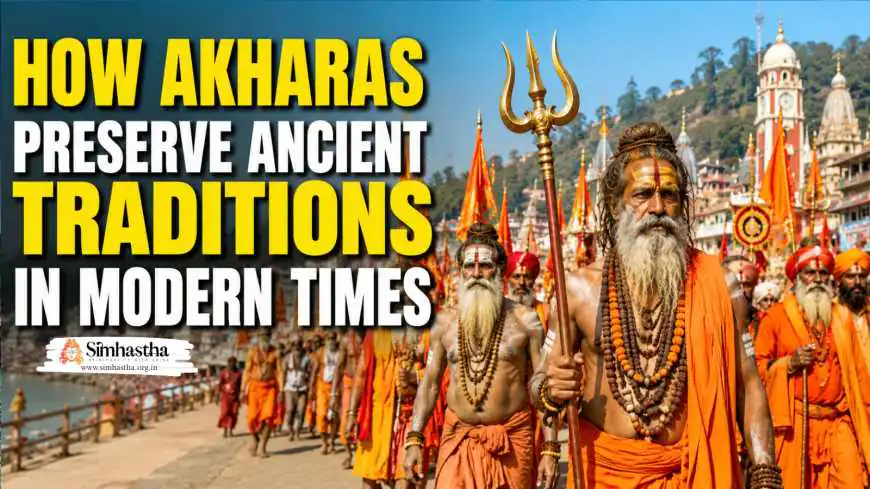
From the Naga Sadhus covered in ash to the scholars who recite the Vedas from memory, the Akharas are living museums of India's spiritual traditions. But they're not frozen in time. They've adapted, evolved, and found ways to thrive in the modern world while keeping the essence of their ancient practices intact. 🌟
Trending Guides Now

13 Akharas of Simhastha 2028: Names, Order & Their Role Explained

Why Only Akharas Are Allowed to Lead Shahi Snan (Ujjain Rule Explained)
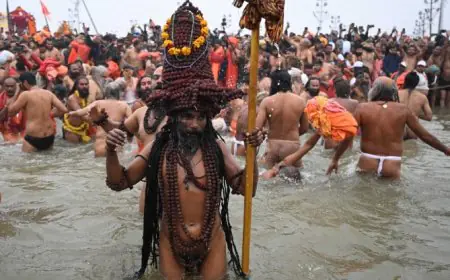
The Untold Reason Naga Sadhus Lead the First Shahi Snan at Simhastha 2028
Inside the 13 Akharas of Simhastha 2028: Hidden Rituals, Naga Sadhu Secrets & Real Traditions

Ujjain Railway Station to Mahakaleshwar Temple: Distance, Fare & Route

Ujjain Simhastha 2028 Dates Announced: Full Shahi Snan & Event Timeline

Mahakaleshwar to Kal Bhairav Temple: Distance, Auto Fare, Travel Time and Route Options

Mahakaleshwar to Gadkalika Temple: Distance, Auto Fare and Best Route
So, how do Akharas preserve ancient traditions in modern times? The answer is a fascinating blend of strict discipline, hierarchical governance, adaptation to contemporary challenges, and an unwavering commitment to spiritual values. In this article, we'll explore exactly how these remarkable institutions keep ancient traditions alive. Let's dive in! 🙏
The Foundation: What Makes Akharas Unique 🏛️
The 13 Akharas: Guardians of Tradition
The 13 Akharas are not just religious institutions—they are the custodians of India's monastic traditions. They are categorized into three groups based on their spiritual lineage and devotional focus:
The Shaivite (Sanyasi) Akharas — Seven Orders 🕉️
These Akharas are dedicated to Lord Shiva and follow the Dashnami tradition established by Adi Shankaracharya . They wear the sacred tripundra—a horizontal mark on their foreheads.
| Akhara Name | Distinctive Feature |
|---|---|
| Juna Akhara | The largest with ~5 lakh sadhus |
| Niranjani Akhara | Many educated members with doctorates |
| Mahanirvani Akhara | Associated with warrior ascetics |
| Atal Akhara | One of the oldest (7th century CE) |
| Avahan Akhara | Oldest monastic order |
| Anand Akhara | Second oldest |
| Agni Akhara | Brahmachari saints |
The Vaishnav Akharas — Three Orders 🙏
These Akharas are devoted to Lord Vishnu and trace their origins to the 18th century .
| Akhara Name | Distinctive Feature |
|---|---|
| Nirmohi Akhara | Preserves Vaishnava traditions |
| Digambar Akhara | Largest Vaishnav (~2 lakh sadhus) |
| Nirvani Akhara | Focus on physical fitness |
The Udasin Akharas — Three Orders ☮️
The word udāsīna means "neutral," reflecting their position between Shaivism and Vaishnavism .
| Akhara Name | Distinctive Feature |
|---|---|
| Bada Udasin Akhara | Follows Sri Chand (Guru Nanak's son) |
| Naya Udasin Akhara | Formed after a dispute in 1846 |
| Nirmal Akhara | Also known as Sikh Akhara |
The Panchayati System: Governance Through Consensus
Here's a fascinating detail: the word "Panchayati" appears in the names of several Akharas because decisions are made by a panchayat (council) through consensus . 🤝
How the governance works:
-
Eight Mahants (the "Ashtakaushal") run the Akhara's affairs
-
Eight Deputy Mahants assist them
-
This 16-member committee selects the secretary and other officials
-
All eight Mahants maintain complete financial accounts
-
Action against any ascetic is taken only through the panchayat
This democratic system ensures that traditions are not dictated by a single leader but preserved through collective wisdom.
Sacred Rituals: The Heartbeat of Tradition 🔥
The Shahi Snan: A Living Ritual
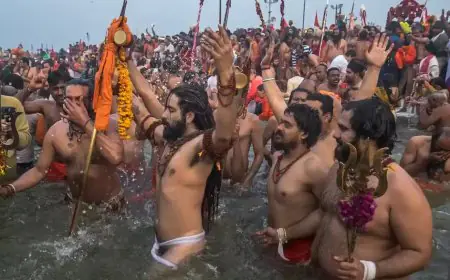
The Shahi Snan (Royal Bath) is the most sacred ritual of the Kumbh Mela, and the order in which Akharas enter the water is strictly codified. 📜
The precise order:

-
Mahanirvani Akhara leads, accompanied by Atal Akhara
-
Niranjani Akhara follows, paired with Ananda Akhara
-
Juna Akhara comes next, with Avahan and Agni Akharas
-
The Vaishnav Akharas march after the Shaivite Akharas
-
The Udasin Akharas follow
-
The Nirmal Akhara is last
This order was codified by the British in the late 19th century to prevent violent clashes between rival Akharas . Today, it represents the Akharas' commitment to harmony and tradition.
The Bhasma Aarti: A Ritual of Renunciation
The Bhasma Aarti at Mahakaleshwar Temple, performed by Shaivite Akharas, is a powerful example of how ancient traditions are preserved. 🔥
Key elements:
-
Sacred ash (bhasma) from cremation grounds is used
-
The ritual takes place before sunrise

-
It symbolizes the destruction of the ego and attachment
-
The same ritual has been performed for centuries

The Daily Routine: Discipline as Preservation
The daily routine of a Naga Sadhu is itself a form of tradition preservation. From waking up at 3 AM to performing prayers and meditation, every aspect of their life follows ancient guidelines. 📿
The initiation process requires:
-
At least 10 years of celibacy
-
Prayers under the Akhara's Dharmadhwaj
-
108 dips in the Ganga
-
A 24-hour fast
-
Cutting of the chotti (tuft of hair)
This rigorous process ensures that only the most committed individuals carry the traditions forward.
Adapting to the Modern World: Tradition Meets Change 🌍
Technological Integration
The Akharas are not anti-technology. They've embraced modern tools while keeping their essence intact. 📱
Examples of adaptation:
-
Online booking systems for Bhasma Aarti tickets
-
Digital payments for donations and offerings
-
Mobile apps for real-time updates on Akhara activities
-
Social media to reach a global audience
Educational Upgrades
Many Akharas now have members with advanced degrees. The Niranjani Akhara has many educated members with doctorates . 🎓
What does this mean?
-
Scholars can translate ancient texts for modern audiences
-
Akharas can engage in interfaith dialogue
-
Tradition is interpreted with contemporary understanding
Legal and Political Engagement
The Akharas have also adapted by engaging with modern legal and political systems:
-
The Akhil Bharatiya Akhara Parishad (ABAP) represents all Akharas in matters with the government 🏛️
-
Akharas have fought legal battles to protect their traditions
-
They have secured land rights and recognition from the state
Environmental Consciousness
Modern Akharas are increasingly aware of environmental issues:
-
During the Maha Kumbh 2025, the Niranjani Akhara distributed 1.5 lakh plants to devotees 🌱
-
This initiative demonstrated how ancient traditions can merge with modern environmental consciousness
Financial Sustainability: Keeping Traditions Alive 💰
Traditional Funding
Akharas have historically been supported by:
-
Donations from devotees and wealthy patrons
-
Land holdings and agricultural income
-
Offerings received during the Kumbh Mela
Modern Revenue Streams
To sustain themselves in modern times, Akharas have diversified:
-
Publishing houses for religious texts 📚
-
Tourism services for pilgrims 🏨
-
Online donation platforms 💻
-
Retail outlets for religious items
Economic Impact
The economic ecosystem built around Akharas is massive. During Kumbh Mela 2025, the Juna Akhara alone provided langar to thousands, spending nearly ₹20 lakhs.
The Role of Leadership: Mahamandaleshwars 👑
The Spiritual Hierarchy
The preservation of traditions depends on strong leadership. The Mahamandaleshwar is the highest-ranking leader who:
-
Leads the Akhara's procession during the Amrit Snan
-
Makes key decisions on tradition and practice
-
Represents the Akhara in inter-Akhara matters
The hierarchy:
-
Acharya Mahamandaleshwar (highest)
-
Mahamandaleshwar
-
Digambarshree
-
Peer Mahant
-
Thanapati Mahant
-
Jamapatiya Mahant
-
Shri Mahant
-
Mahant
-
Naga (the common ascetic)
Succession Planning
Akharas have clear succession protocols to ensure continuity of traditions. During the Kumbh Mela, all executive bodies are dissolved, and a new government is elected. The term lasts for the next six years, and elections happen before the Kumbh ends .
Inclusivity: The Kinnar Akhara's Emergence 🌈
A Modern Development
An emerging presence at the Kumbh Mela since 2019, the Kinnar Akhara provides a platform for transgender individuals to express their devotion and spirituality . 🏳️⚧️
What this represents:
-
Ancient traditions are not static—they evolve
-
Inclusivity is a modern value being integrated into ancient structures
-
The Akhara tradition remains relevant in contemporary society
While the Akhara Parishad has not officially recognized it as the 14th Akhara, its presence represents a significant step toward inclusivity.
Preserving Through Practice: The Lived Experience 🧘
The 24/7 Tradition
The most powerful way Akharas preserve traditions is by living them every single day. ☀️
Daily practices include:
-
3 AM wake-up and prayers
-
Vedic chanting and meditation
-
Austerity and discipline
-
Teachings to younger ascetics
The Gurukul System
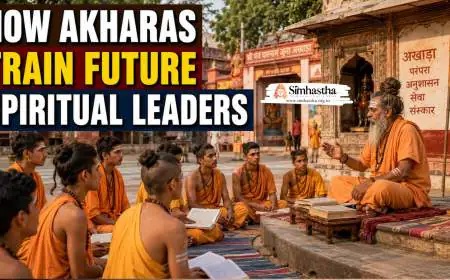
Many Akharas maintain Gurukuls (traditional schools) where young disciples learn:
-
Sanskrit grammar and literature 📜
-
Vedic chanting and rituals
-
Philosophy and ethics
-
Discipline and austerity
The Bhandari Baba Tradition
The Bhandari Baba system is a perfect example of tradition preservation. A culinary specialist who:
-
Must serve the Akhara for at least five years
-
Must be well-versed in the Vedas and Puranas
-
Wears yellow clothes symbolizing purity
-
Maintains strict discipline in the kitchen
The Bottom Line: Living Tradition 🌟
So, how do Akharas preserve ancient traditions in modern times? Through a remarkable combination of factors:
-
Strict Discipline: The daily routine and initiation processes ensure tradition is internalized 🧘
-
Hierarchical Governance: The Panchayati system and Mahamandaleshwar leadership ensure continuity 👑
-
Adaptation: Embracing technology, education, and legal systems while keeping the essence intact 🌍
-
Financial Sustainability: Diversifying revenue streams while maintaining traditional funding 💰
-
Inclusivity: Evolving to remain relevant in contemporary society 🌈
-
Lived Experience: Practicing traditions 24/7, not just during festivals 🕉️
The Akharas are not museums of the past. They are living traditions that have survived for centuries by finding the delicate balance between preservation and adaptation. 🌟
When you see a Naga Sadhu covered in ash, or witness the Shahi Snan, or participate in the Bhasma Aarti, you're not just watching a performance. You're witnessing a tradition that has been kept alive through discipline, devotion, and an unwavering commitment to spiritual values. 🙏
Frequently Asked Questions