



















How Akharas Manage Thousands of Followers During Kumbh
Discover how Akharas manage thousands of followers during Kumbh. From the Mahant's command and the langar kitchens to Naga processions and camp discipline, explore the ancient, efficient logistics of these spiritual cities.



The Divine Hierarchy and the Chain of Command That Never Breaks
The entire edifice of an Akhara's management rests on a single, unshakeable pillar: a rigid, divinely ordained internal hierarchy that has been in place for centuries, with each rank carrying specific, non-negotiable responsibilities and powers. At the apex sits the Mahant or the Mahamandaleshwar, the spiritual and administrative head of the Akhara. His word, within the sacred boundary of the camp, is absolute law. He is not merely a manager; he is the living embodiment of the Akhara's lineage and its connection to the founding guru. All major decisions—the allocation of camp sectors, the resolution of internal disputes, the precise timing of the camp's movement to the Shahi Snan, and the authorization of new initiations—flow from his direct command. He is surrounded by a council of senior, trusted sadhus, often the heads of the various sub-branches or akharas within the larger order. These senior disciples function as his executive officers, translating his broad spiritual vision into detailed, actionable plans.
Below this apex council is a meticulously layered pyramid of authority. Senior Nagas and veteran celibate monks (brahmacharis) are assigned specific sectors of the camp to oversee, responsible for the discipline and well-being of the sadhus in their charge. The newest initiates, who are at the bottom of the hierarchy, are assigned the most menial but essential tasks—chopping firewood, fetching water, cleaning the vast kitchen utensils, and serving the senior sadhus. This is not a system of oppression but an ancient, ascetic technology for crushing the individual ego. Every member of the Akhara knows his exact place, his exact duty, and the exact chain of command that he must follow. This total clarity of command structure allows the Akhara to function with a smooth, silent, and almost military precision that is invisible to the outside observer but is the fundamental reason why chaos never engulfs the camp. The hierarchy is the skeleton upon which the entire, immense body of the Akhara is built. 👑
The Camp as a Self-Sufficient Spiritual Fortress and the Architecture of Sacred Order
The physical layout of an Akhara camp is itself a masterclass in spatial and logistical management. Upon arriving at the Mela grounds, the Akhara is allocated a specific, vast tract of land by the Mela administration, a process that follows its own ancient, fiercely guarded protocol. The senior sadhus, guided by the Mahant, immediately begin the process of laying out the camp according to a traditional, spiritually ordained design. At the very centre, and in the most protected and elevated position, is the tent or structure that houses the Akhara's presiding deity, the ishta devata. This is the spiritual heart of the camp, the generator of all sacred power. Radiating outward from this centre are the quarters of the Mahant and the senior-most sadhus, then the residential tents for the various ranks of the order, each arranged in a specific, concentric pattern. The vast community kitchen (bhandara) , the dining areas, and the food storage tents are placed on one side, while the dhuni, the sacred fire that burns continuously, is positioned in a designated, open area. The entire camp is laid out with clearly defined internal pathways, a central gathering space for collective prayers and instructions, and a strictly controlled perimeter. This is not a random assortment of tents; it is a sacred mandala made manifest in canvas and rope, a temporary village whose every street and dwelling is positioned according to a logic that is simultaneously spiritual and profoundly practical. This predetermined spatial order eliminates ambiguity, creates a clear sense of home for every follower, and allows for the seamless, frictionless movement of thousands of people within a contained, sanctified territory. 🏕️
The Langar and the Sacred Logistics of Feeding an Army of the Spirit
The single largest and most continuous logistical operation within any Akhara camp is the communal kitchen, the bhandara or langar. Feeding a permanent population of several thousand sadhus, in addition to the tens of thousands of lay pilgrims who will visit the camp each day seeking the Mahant's darshan and a blessed meal, is an undertaking of staggering proportions that runs, quite literally, twenty-four hours a day. The management of this operation falls to a dedicated team of senior sadhus and an army of volunteer sevadars, many of whom are lay followers who have come to the Kumbh specifically to offer this service. The kitchen's supply chain is a continuous, complex dance. Truckloads of flour, rice, lentils, potatoes, ghee, and oil arrive daily from the Akhara's pre-arranged suppliers, often from farming communities that have maintained a multi-generational relationship with the order. The storage and inventory are managed by a team of sadhus who maintain meticulous, though often entirely mental, ledgers.
Trending Guides Now

How Naga Sadhus Begin Their Day: Ancient Discipline and Yogic Power
Who Are the Naga Sadhus of Simhastha 2028? Discipline, Rituals & Mystical Identity Revealed
The Untold Reason Naga Sadhus Lead the First Shahi Snan at Simhastha 2028

Why 13 Akharas Are Recognised in Simhastha

Ujjain Railway Station to Mahakaleshwar Temple Distance (2026 Guide)

Ujjain Simhastha 2028 Dates Announced: Full Shahi Snan & Event Timeline

Ujjain Simhastha Update: CM Mohan Yadav Reviews 2028 Works

Ujjain Railway Station to Kal Bhairav Temple: Distance, Auto Fare and Best Route
The cooking itself is performed on a scale that can only be described as industrial, yet it is infused with a profound, ritualistic devotion. Enormous, wood-fired cauldrons, each capable of holding hundreds of litres, bubble continuously with dal, khichdi, or a simple, nourishing vegetable curry. The roti-making is a breathtakingly efficient human assembly line, with scores of volunteers sitting in rows, rolling, slapping, and puffing tens of thousands of flatbreads over open flames. The entire operation runs on a strict, pre-determined schedule, with specific times for the sadhus' meals and for the public langar. The serving itself is a model of crowd management. Pilgrims are seated in long, orderly rows (pangat), and a swift, well-trained team of servers moves down the lines, ladling out the sacred food with a practiced, unhurried efficiency. The langar is not a chaotic charity; it is a spiritually charged, meticulously managed, and deeply nourishing act of mass hospitality, a daily miracle of organization that is the very heartbeat of the Akhara's connection to the people. 🍛
Managing the Naga Sadhus and the Fierce Order of the Warrior-Saints
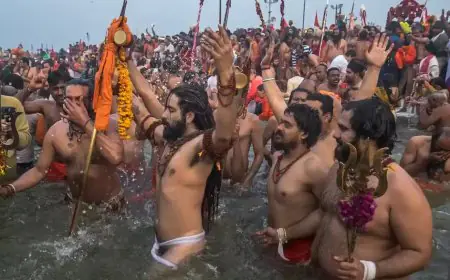
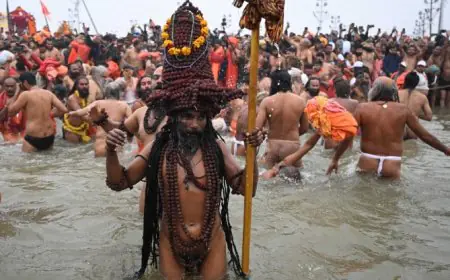
Within the Akhara, the Naga sadhus—the naked, ash-smeared, trident-wielding warrior-ascetics—represent the order's most volatile, revered, and fiercely independent element. Their management requires a unique blend of spiritual authority, psychological understanding, and a heavy, unspoken martial discipline. The Nagas are not managed through bureaucratic instructions; they are bound by an intensely personal loyalty to their immediate guru and to the Akhara's Mahant. Their behaviour, which can appear chaotic and ecstatic to an outsider, is governed by a strict internal maryada (code of conduct) that is drilled into them from the moment of their initiation. Their daily routine—the tending of the dhuni, the specific yogic practices, the meditation, the controlled consumption of the chillum as a ritual offering to Shiva—is a structured discipline that channels their immense, volatile energy. During the great Shahi Snan processions, the Nagas are the tip of the spiritual spear, the first to charge into the river. Their movement, though seemingly a wild, ecstatic sprint, is controlled by a senior Naga leader who gives the signal and who maintains a core of veteran warriors around the Mahant's palanquin and the deity's chariot. The junior Nagas form a protective, moving cordon, their raised tridents creating both a sacred boundary and a practical, human barrier. The management of the Naga sadhus is a testament to the profound truth that the strongest bonds are not those of written contracts, but those of a shared, absolute, and life-renouncing faith. Their discipline is the discipline of the cremation ground, a force that is harnessed not by policy but by the sheer, overwhelming gravitational pull of the guru's command. 🔱
The Procession Protocols and Moving Thousands as a Single, Sacred Body
The most spectacular and logistically complex act of management an Akhara performs during the Kumbh is the coordination of its Shahi Snan procession, the royal march to the sacred river. Moving a company of thousands of sadhus, from the ecstatic, sprinting Nagas to the solemn, chanting elders, along with the deity's massive, decorated chariot, the Mahant's elephant or palanquin, the bands of musicians, and the flag-bearers, requires a precision that is reminiscent of a military parade, yet it is executed entirely through an inherited, oral, and deeply spiritual command structure. The assembly begins in the pre-dawn darkness, a process that is itself a ritual, with each sub-group of the Akhara taking its pre-assigned place in the formation, a sequence that has been rehearsed for centuries. The Mahant gives the final signal, often a blast of a conch shell, and the great, sacred organism begins to move. The Nagas charge ahead, clearing the path and sanctifying the route. The main body of the Akhara moves in a tightly controlled block, with senior sadhus positioned at the flanks to maintain the formation. The entire procession is a single, unified entity, a moving, chanting, ecstatic river of faith that knows, with a deep, non-verbal intelligence, exactly where it is going and exactly how to get there. The management of the procession is not about controlling a crowd; it is about orchestrating a collective, moving prayer, and its success lies in the absolute, internalized discipline of every single participant, who moves not as an individual but as a single, living cell in the greater body of the Akhara. 🚶
Communication, Discipline, and the Unwritten Code of the Sacred Camp
In a world that is increasingly mediated by smartphones and public address systems, the internal communication within an Akhara remains anchored in a far more ancient and potent technology: the human voice and the resonant power of the sacred symbol. The Mahant's instructions are relayed through a chain of senior sadhus, who pass them down through the ranks in a rapid, personal, and unfailingly accurate cascade. Important announcements are made during the daily communal gatherings, the satsangs, where the Mahant addresses the entire assembly. The rhythm of the camp is itself a communication system: the specific, unmistakable call of the conch shell signals the time for the aarti, the beating of a particular drum pattern announces the langar, and the urgent, rhythmic shout of a Naga leader is the unmistakable command for the camp to mobilize. This system of non-verbal, symbolic communication is deeply embedded in the Akhara's culture and functions flawlessly even in the most chaotic, noisy environment. The discipline, too, is enforced not by a written rulebook but by the living, breathing, and all-seeing presence of the guru and the senior sadhus. A transgression of the Akhara's maryada—a breach of celibacy, an act of violence born of ego, a serious disobedience—is dealt with swiftly and, if necessary, ruthlessly. The ultimate punishment is expulsion from the Akhara, a spiritual death sentence for a man who has already performed his own funeral rites. The management of behaviour, therefore, rests on a foundation of profound, existential stakes, a form of accountability far more powerful than any secular system of fines or penalties. It is the ultimate self-regulating community. 📢
The Digital Akhara and the Quiet Embrace of Modern Tools
The Akhara, for all its profound and necessary anchoring in the timeless, is not entirely immune to the quiet, pragmatic embrace of modern tools. In the years leading up to the 2028 Simhastha, a subtle, digital evolution has been taking place within these ancient orders. A senior mahant, who may be illiterate in the conventional sense, now holds a simple smartphone, which he uses to coordinate the massive supply chain of his langar with a network of trusted grain merchants. The Akhara's administrative wing maintains a basic website and a presence on social media, publishing the official dates of the Shahi Snan and the schedule of the camp's major events. A digital, photo-identity system is increasingly being used to manage the vast, floating population of sadhus and to coordinate with the Mela administration's security apparatus. The Akhara's treasurer now uses a banking app to manage the vast, complex flow of donations that sustain the order's charitable activities. This digital embrace is done quietly, cautiously, and without any sense of contradiction. The smartphone is treated as a simple, useful tool, no different from a ladle in the kitchen or a bell in the temple. It serves the purpose of the Akhara, and it is never allowed to become a distraction from the central, unchanging mission of sadhana and spiritual liberation. The Akhara manages its followers not by rejecting the modern world, but by selectively, and on its own terms, incorporating the tools of the modern world into its ancient, unshakeable framework of faith. 📱
The Invisible Anchor and the Unshakeable Power of the Guru's Grace
In the final analysis, the most sophisticated management tool that an Akhara possesses is not its hierarchy, its camp layout, or its logistical prowess. It is the invisible, unshakeable, and deeply personal bond of faith between the guru and the disciple. The thousands of followers who live within the camp, who obey its rules, who rise at 3:00 AM for the cold bath and the first aarti, who work for hours in the blistering heat of the kitchen without a single word of complaint, are not managed by a system of rewards and punishments. They are held, completely and utterly, by their love for their guru and their unshakeable belief that his command is the direct, divine instruction of Lord Shiva himself. This is the ultimate, irreducible secret of the Akhara's extraordinary organizational power. The Mahant does not need to micromanage; he needs only to be present. A single, silent glance from him can quell a rising dispute. A gentle, whispered word can send a hundred Nagas charging towards the river. The management of the Akhara is a continuous, lived demonstration of the truth that when a community is bound together by a shared, transcendental purpose, and when it places its complete, childlike trust in a single, divinely appointed leader, it can achieve a state of seamless, harmonious, and profoundly efficient collective action that no secular organization, with all its consultants and its flowcharts, can ever hope to replicate. The Akhara is, in its very essence, a family of the spirit, and like all great families, it is held together not by a contract, but by an unbreakable, and ultimately inexplicable, bond of love. 🔱

Frequently Asked Questions