




























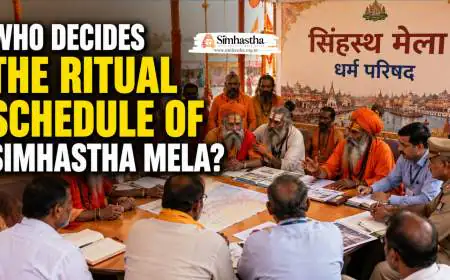


The Role of Naga Sadhus Beyond the Kumbh Mela
Discover the role of Naga sadhus beyond the Kumbh Mela. From Himalayan solitude and fierce dhuni rituals to social service and protecting Sanatan Dharma, explore the hidden life of India's naked ash-smeared ascetics.
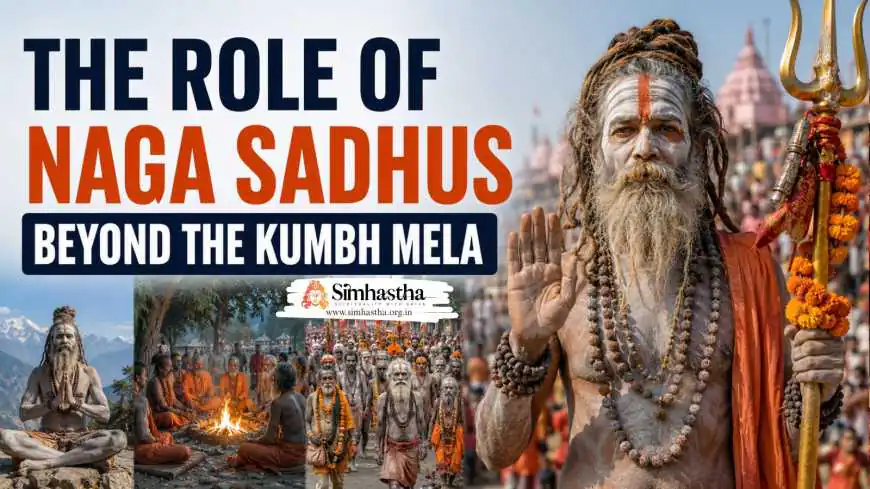


The Akhara as a Permanent Home and the Daily Rhythm of the Camp
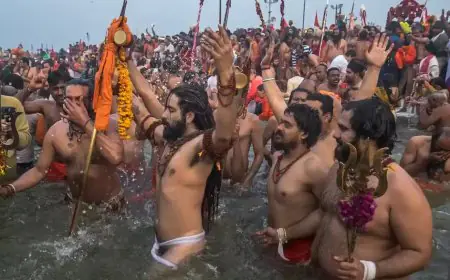
When the Kumbh Mela ends and the great canvas cities are dismantled, the Naga sadhus do not simply vanish into thin air. They return, in organized groups or as solitary wanderers, to the permanent headquarters of their respective Akharas. These akharas, scattered across the sacred geography of India—in Haridwar, Varanasi, Ujjain, Nashik, and in remote Himalayan ashrams—are the year-round homes, training grounds, and spiritual fortresses of the Naga orders. The largest, such as the Juna Akhara, the Niranjani Akhara, and the Mahanirvani Akhara, maintain sprawling compounds with temples, dhuni (sacred fire) pits, residential quarters, and halls for scriptural study. Life in the akhara is governed by a strict, unyielding maryada (code of conduct). The day begins in the Brahma Muhurta, the auspicious pre-dawn hour, with a ritual bath, often in a nearby sacred river, followed by the first tending of the dhuni, the eternal fire that is the spiritual heart of the camp. The dhuni is not merely a source of warmth; it is a living deity, an embodiment of Agni, to whom the first offerings of ghee and wood are made. Throughout the day, a junior Naga, often a recent initiate, is assigned the duty of keeping the dhuni alive, a task that is considered a foundational spiritual practice in itself, teaching patience, vigilance, and the sacredness of even the most mundane acts. 🛕
The Internal Hierarchy and the Transmission of Sacred Knowledge
Within the permanent akhara, a rigid internal hierarchy defines every interaction. At the apex are the Mahamandaleshwars and Mahants, the spiritual and administrative heads, whose words are law. Below them are the senior Nagas, veterans of decades of tapasya, who serve as the gurus and disciplinarians of the younger initiates. The newest members, those who may have taken their diksha at the most recent Kumbh, occupy the lowest rungs. Their life is one of complete obedience and menial service—chopping wood, fetching water, cleaning the compound, and running errands for their seniors. This is not exploitation; it is an ancient, tried, and tested method of crushing the ego, which is the primary obstacle on the path of renunciation. Alongside physical service, the junior Nagas receive rigorous instruction in the akhara's specific scriptural tradition, whether it is the Advaita Vedanta of the Dashanami orders or the yogic and tantric texts of the Nath-influenced akharas. They memorize stotras, learn the correct performance of complex rituals, and are gradually initiated into the deeper, secret mantras that are the sonic seeds of their spiritual practice. The akhara, in its non-Mela life, is a monastic university, a boot camp for the soul, and the guardian of an oral tradition that has been transmitted in an unbroken chain for over a thousand years. 📜
The Solitary Wanderer and the Path of the Himalayas
While the akhara provides a structured communal life, a profound and essential part of a Naga sadhu's role beyond the Kumbh is the life of a solitary, wandering mendicant. After spending a few months or years in the discipline of the akhara, a Naga, particularly one who has advanced in his practice, will often set out alone, walking the ancient pilgrimage Routes, disappearing into the remote valleys of the Himalayas, and living for years in complete isolation. This is the phase of tivra sadhana, of intense, accelerated spiritual practice, far from the distractions of any human company. A Naga might sit for months before a small, self-made Shiva lingam on the banks of a glacial river, his body exposed to the brutal Himalayan winter, sustained by nothing but the mantra given to him by his guru and a handful of wild berries. These solitary wanderings are not aimless drifting; they are a deliberate, conscious imitation of Lord Shiva himself, who is the eternal wanderer, the ash-smeared yogi who is at home in the cremation ground and the frozen peak alike. The Naga's lack of clothing, a source of such fascination at the Kumbh, becomes an unimaginable austerity at 12,000 feet, a constant, visceral reminder of his vow of renunciation and his complete surrender to the divine protection. The wisdom and the spiritual power (tapasya) that the Naga radiates at the Kumbh are not generated at the Mela itself; they are the fruit of these years of silent, invisible, and unimaginably demanding solitude in the lap of the mountains. 🏔️
The Village Guardian, the Healer, and the People's Saint
Not all Nagas retreat into inaccessible wilderness. A significant and often overlooked role they play is as the wandering spiritual guardians of rural India. A Naga sadhu, with his ash-smeared body and trident, is a familiar and revered figure walking the dusty village paths of the Gangetic plain, the forests of central India, and the foothills of the Vindhyas. He carries no money, asks for no shelter, and owns nothing but the fire-hardened wood in his hand. In return for the simple alms of roti, dal, and a cup of chai that villagers offer, the Naga provides a vital, informal spiritual service. He blesses their fields for a good harvest, performs simple, powerful pujas to ward off disease and misfortune, and offers counsel in family disputes. He is often an accomplished practitioner of Ayurveda, carrying the knowledge of medicinal herbs collected during his Himalayan wanderings. A Naga may sit under a village peepal tree for a week, his mere presence believed to purify the atmosphere and bring peace to the community. He may teach the local children a simple mantra or tell them stories from the Puranas. In a vast country where formal religious institutions are often distant, the wandering Naga sadhu has, for centuries, been the accessible, living face of the divine, a direct, tangible link to Lord Shiva who walks among his people. 🪔
Trending Guides Now

How Naga Sadhus Begin Their Day: Ancient Discipline and Yogic Power
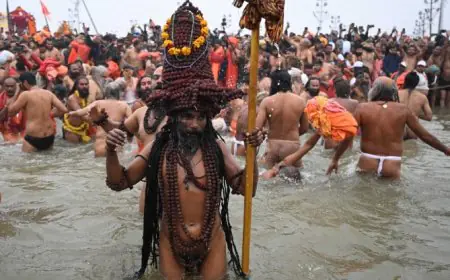
The Untold Reason Naga Sadhus Lead the First Shahi Snan at Simhastha 2028

Why 13 Akharas Are Recognised in Simhastha

What Happens During Akhara Peshwai in Ujjain Simhastha

Ujjain Railway Station to Mahakaleshwar Temple Distance (2026 Guide)

Ujjain Simhastha 2028 Dates Announced: Full Shahi Snan & Event Timeline

Mahakaleshwar Sandhya Aarti Online Booking 2026: Fee, Timings, Entry Gate and Step-by-Step Process

Mangalnath Temple Trip Budget: Puja, Local Transport, Food and Stay Planning
The Fierce Guardians of Dharma and the Akhara's Martial Tradition
The Naga sadhus are not just meditators and healers; their historical and contemporary role as protectors of sanatana dharma is a core part of their identity. The akharas were originally formed, in part, as military orders of warrior-ascetics to defend the faith and its sacred sites from attack. While the era of large-scale armed combat has passed, this martial tradition continues to define the Nagas' psychology and their collective role. They are trained in traditional weapons—the trident, the sword, the staff—and they maintain a sense of vigilance. In modern times, this protective role has translated into a fierce guardianship of Hindu interests and a willingness to be the vocal, ash-smeared face of the faith in times of perceived threat. The akharas command immense respect and hold significant political influence, and their mahants are frequently consulted by politicians. The Naga sadhu's presence at a disputed site, a massive religious gathering, or a public debate is a symbol of spiritual authority and an implicit reminder of the strength of the Hindu ascetic tradition. The akhara, in its year-round operation, continues to train its members not just in scripture, but in a psychological and spiritual discipline that is rooted in the fearlessness of the warrior. A Naga is taught to have no attachment to his own life, and this makes him a formidable guardian of the faith he has dedicated his existence to. ⚔️
The Inner War, the Yoga of Fire, and the Dissolution of the Self
Beyond the communal roles of teacher, healer, and guardian, the ultimate and most demanding role of the Naga sadhu beyond the Kumbh Mela is the one performed in the absolute privacy of his own being: the lifelong, brutal, and ecstatic inner war against the ego. The Naga's entire external presentation—his nakedness, his ash-covered body, his matted hair, his fierce countenance—is a carefully constructed, publicly visible map of this inner battle. The dhuni, the sacred fire that is the centrepiece of any Naga's camp, is the primary arena for this inner yoga. For hours, the Naga will sit motionless before the flames, his eyes unblinking, the heat scorching his ash-covered skin, his mind focused on a single, secret mantra. This is a tantric practice of burning away the vrittis, the mental modifications and desires, one by one, in the fire of awareness. The ash is a constant, tactile memento mori, a reminder that his body is already dust. The nakedness is the radical, lived philosophy of non-attachment—nothing to hide, nothing to protect, nothing to lose. The matted hair, or jata, is a symbol of his uncivilized, wild nature, his complete removal from the norms of society. The Naga's entire life, whether in the akhara, the cave, or the village, is a continuous, unbroken act of worship and self-annihilation, an attempt to become, truly and completely, a Shiva-lingam himself—a formless, ash-smeared vessel of pure consciousness, beyond birth, beyond death, and beyond all form. 🔥
The Modern Challenges and the Naga's Unbroken Vow
The modern world, with its relentless technology and shifting social norms, presents a unique challenge to this ancient order. The Nagas are increasingly visible on social media, and some akharas maintain a digital presence. The influx of young, educated men seeking initiation is changing the internal dynamics of the akharas. Yet, the core of the Naga's vow remains impervious to these external shifts. A man who has performed his own funeral rites, who has no bank account, no Aadhaar card, no family, and whose only possession is a single, whispered mantra, is a man who has stepped outside the very system that modernity seeks to optimize. His role, fundamentally, is to be a standing, living critique of the entire material project of human civilization. He is a witness, a silent, ash-smeared question mark, asking every beholder: "Is this all there is?" His very presence, so stark and so uncompromising, is a spiritual teaching in itself. In a world of endless noise, the Naga is a walking embodiment of a profound and unshakeable silence. In a world obsessed with acquisition, he is the photograph of complete renunciation. His role, beyond the Kumbh, is to be the eternal outlier, the holy ghost, the one who has died before his death and, in doing so, points the way to a life that is truly, and eternally, free. 🙏
Frequently Asked Questions