


















Best Time to Visit Mahakaleshwar Temple Crowd And Weather Guide
Explore the best time to visit Mahakaleshwar Temple with an in-depth month-by-month crowd and weather comparison, seasonal darshan comfort, festival impact, and complete travel planning insights.



Best Time to Visit Mahakaleshwar Temple (Month, Day & Crowd Guide)
Best Time to Visit Mahakaleshwar Temple
The best time to visit Mahakaleshwar Jyotirlinga is from October to February when the weather is comfortable and darshan is physically manageable. For fewer crowds, May–June weekdays are ideal. The best time of day for Mahakal darshan is between 4 AM and 7 AM, especially during Bhasma Aarti hours, when waiting time is lowest and the spiritual atmosphere is most powerful.
Also Read | Mahakaleshwar Temple Darshan Timings And Aarti Schedule
🔑 At a Glance — Best Time to Visit Mahakaleshwar Temple
- 📅 Best Season: October to February — cool weather, comfortable queues, vibrant festivals
- 🌙 Best Month for Spirit: Shravan (July–August) — most auspicious, but very crowded
- ⏰ Best Time of Day: 4:00 AM – 7:00 AM — Bhasma Aarti window, lowest crowd pressure
- 📆 Best Day of Week: Tuesday, Wednesday, or Thursday (avoid Mondays)
- 🎫 Bhasma Aarti Ticket: ₹200/person (book at mahakaleshwar.nic.in, 60 days ahead)
- 🌡️ Best Weather: 10°C–25°C in November–January; 30°C–40°C in May–June
- 🚫 Avoid: Mondays during Shravan, Mahashivratri without advance booking, May afternoons
What Is the Best Time to Visit Mahakaleshwar Temple?
The best time to visit Mahakaleshwar Temple depends on your purpose. Some visitors want comfort, some want less crowd, and some want spiritual intensity.
Trending Guides Now
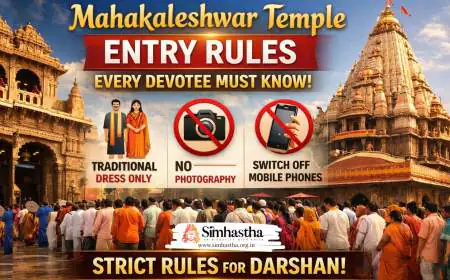
Mahakaleshwar Temple Entry Rules 2026: Dress Code, Mobile & Bag Policy

Mahakaleshwar Tatkal Bhasma Aarti Booking Guide 2026
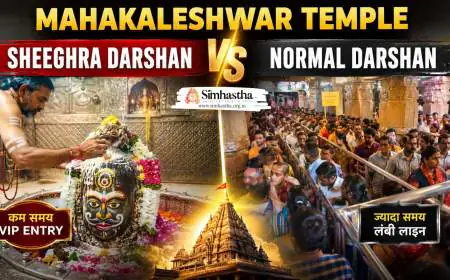
Sheeghra Darshan vs Normal Darshan at Mahakaleshwar Temple
The Ultimate Guide to VIP Sheetal Darshan at Mahakaleshwar Temple

Ujjain Railway Station to Mahakaleshwar Temple Distance (2026 Guide)

Ujjain Simhastha 2028 Dates Announced: Full Shahi Snan & Event Timeline

Mahakaleshwar Sandhya Aarti Online Booking 2026: Fee, Timings, Entry Gate and Step-by-Step Process

Latest Simhastha 2028 Development Projects Every Pilgrim Should Know
If your goal is comfort, winter months from October to February are ideal. The Mahakaleshwar Temple weather remains pleasant, and standing in queues becomes easier even if the Mahakaleshwar Temple crowd is high.
If your goal is less waiting time, summer months from April to June are better. During this period, the Mahakaleshwar Temple crowd drops significantly, making Mahakal darshan faster.
If your focus is devotion, then Shravan month and Mahashivratri are the most important periods. However, these are also the most crowded times for Mahakaleshwar Temple darshan.
Festival Calendar & Best Events to Plan Around
Attending Mahakaleshwar during a major festival is a transcendent experience — the devotional energy is unmatched anywhere in India. However, these are also the most crowded and logistically demanding times. Here is a guide to the major events:
| Festival / Event | Typical Timing | Crowd Level | Planning Needed |
|---|---|---|---|
| Maha Shivaratri 🔱 | February / March | Massive | Book hotels & tickets 3–6 months ahead. Special tokens issued for darshan. |
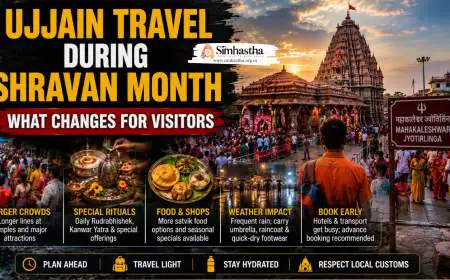
| Shravan Month 🌊 | July – August | Very High | Plan mid-week visits. Early morning mandatory. Hotel rooms book out weeks early. |
| Bhadrapada Sawari 🎺 | August–September | High | Grandest procession of Lord Shiva. Book accommodation 4+ weeks ahead. |
| Nag Panchami | July / August | High | Bhasma Aarti VIP tickets sell out instantly. Book 60 days ahead online. |
| Kartik Purnima 🪔 | November | Moderate | Temple beautifully lit with diyas. Great balance of spiritual atmosphere and manageable crowds. |
| Kumbh Mela | 2028 (next) | Massive | Held every 12 years in Ujjain. Book hotels 6–12 months ahead. Once-in-12-years experience. |
| Sawan Mondays | Every Mon in July–Aug | Extreme | Largest regular crowd event. Only visit if you can arrive before 3 AM and have Bhasma Aarti booking. |
Which Visit Type Is Right for You?
Use this comparison to match your priority with the ideal visiting strategy:
| Priority | Oct–Feb | Apr–Jun | Jul–Aug (Shravan) | Mahashivratri |
|---|---|---|---|---|
| Comfortable weather | ✔ | ✘ | 〜 | ✔ |
| Fewer crowds / fast darshan | 〜 | ✔ | ✘ | ✘ |
| Highest spiritual energy | 〜 | ✘ | ✔ | ✔ |
| Easy Bhasma Aarti booking | ✔ | ✔ | ✘ | ✘ |
| Family / elderly friendly | ✔ | ✘ | ✘ | 〜 |
| Budget-friendly hotels | ✘ | ✔ | ✘ | ✘ |
| Festival atmosphere | ✔ | ✘ | ✔ | ✔ |
Best Day to Visit Mahakaleshwar Temple for Less Crowd
The best day to visit Mahakaleshwar Temple plays a major role in your experience.

- Monday: Highest Mahakaleshwar Temple crowd
- Tuesday to Thursday: Lowest crowd, best for Mahakal darshan
- Friday: Moderate crowd
- Saturday and Sunday: High tourist rush
If you want less waiting time, choose Tuesday, Wednesday, or Thursday. Avoid Monday if possible, as it is the peak day for Mahakal darshan.
Best Time of Day for Mahakal Darshan
The best time of day for Mahakal darshan can reduce your waiting time significantly.
- 4:00 AM – 7:00 AM: Lowest Mahakaleshwar Temple crowd, best time
- 8:00 AM – 12:00 PM: Moderate crowd
- 1:00 PM – 3:00 PM: Less crowd, especially in summer
- Evening: Crowd increases again
Early morning remains the most recommended time for Mahakaleshwar Temple darshan in all seasons.
How Much Time Is Required for Mahakaleshwar Darshan?
Many visitors ask about how much time required for Mahakaleshwar Temple darshan.
- Normal days: 1 to 3 hours
- Weekends: 3 to 5 hours
- Shravan month: 6 to 12 hours
- Mahashivratri: 12+ hours
The Mahakaleshwar Temple waiting time depends mainly on crowd, not just the season.
When Is Mahakaleshwar Temple Least Crowded?
If your goal is fast darshan, you must know the least crowded time in Mahakaleshwar Temple.
- May and June weekdays have the lowest Mahakaleshwar Temple crowd
- Afternoon hours have less rush than mornings
- Non-Monday days are always better
This is the best time for quick and smooth Mahakal darshan.
Mahakaleshwar Temple Weather and Crowd by Season
Understanding Mahakaleshwar Temple weather helps in planning your visit.
Winter (October to February)
- Best Mahakaleshwar Temple weather
- High Mahakaleshwar Temple crowd
- Comfortable for long waiting
This is the best season to visit Mahakaleshwar Temple for most people.
Summer (March to June)
- Hot Mahakaleshwar Temple weather
- Lowest Mahakaleshwar Temple crowd
- Fastest Mahakal darshan
This is the least crowded time to visit Mahakaleshwar Temple.
Monsoon (July to September)
- Humid Mahakaleshwar Temple weather
- Crowd depends on festivals
- Very high crowd during Shravan month
This is the most spiritual but crowded period for Mahakaleshwar Temple darshan.
Month-by-Month Best Time to Visit Mahakaleshwar Temple
- January: Cold and crowded
- February: Balanced and comfortable
- March: Moderate crowd
- April: Hot but less crowd
- May: Extreme heat, lowest crowd
- June: Hot, very low crowd
- July: Crowd increasing
- August: Peak crowd due to Shravan month
- September: Crowd decreases
- October: Best balance
- November: Ideal conditions
- December: Comfortable but busy
Best Time to Visit Mahakaleshwar Temple Based on Your Need
- For comfort: October to February
- For less crowd: May to June weekdays
- For fast darshan: Early morning hours
- For spiritual experience: Shravan month and Mahashivratri
- For senior citizens: Winter weekdays
Why Timing Is Crucial at Mahakaleshwar Temple
Unlike most pilgrimage sites, Mahakaleshwar Temple operates under an intense convergence of ritual schedules, seasonal pilgrim waves, and astrological calendars. The experience of Mahakal darshan changes drastically depending on:
-
The month
-
The day of the week
-
The season
-
The religious calendar
A visit in January feels entirely different from a visit in May. A darshan during Shravan Monday bears no resemblance to a darshan on a summer weekday afternoon.
This is why asking “Is Mahakaleshwar open?” is never the right question.
The real question is:
Will I be able to stand, wait, focus, and connect during darshan?
And that answer depends on crowd and weather together, not separately.
For first-time visitors, knowing the confirmed schedule is essential before planning travel and accommodation. The official dates announced for Ujjain Simhastha 2028 clearly define the start, peak bathing period, and closing timeline of the event, helping pilgrims align their visit with important ritual days.
Understanding Ujjain Weather and Its Effect on Mahakaleshwar Darshan
Mahakaleshwar Temple weather is shaped by Ujjain’s inland location. There is no coastal moderation. Each season arrives fully and affects the human body clearly.
Ujjain experiences three dominant seasons:
-
Winter season: October to February
-
Summer season: March to June
-
Monsoon season: July to September
Each season affects:
-
Darshan queue duration
-
Physical stamina
-
Temple floor temperature
-
Crowd behavior
-
Administrative crowd control
Let us now examine each season in depth, beginning with the most preferred one.
Also Read | Hidden Divine Power Inside Mahakaleshwar Temple
Winter Season (October to February): The Most Comfortable Time to Visit Mahakaleshwar Temple
The winter season is widely regarded as the best season to visit Mahakaleshwar Temple due to favorable Mahakaleshwar Temple weather and manageable physical conditions during Mahakal darshan.
Mahakaleshwar Temple Weather in Winter
-
Temperature range: 8°C to 25°C
-
Cool early mornings
-
Mild afternoons
-
Pleasant evenings
-
Almost no rainfall
For devotees who must stand in queues for several hours, winter offers the least physical strain.
Mahakaleshwar Temple Crowd in Winter
Comfort attracts people. As a result, Mahakaleshwar Temple crowd levels peak during winter.
-
Heavy domestic pilgrimage
-
Family groups and senior citizens
-
Spiritual tour operators schedule visits
-
Weekends and Mondays become extremely crowded
However, because the weather cooperates, the crowd movement remains smoother compared to other seasons.
Month-by-Month Winter Breakdown
October: The Best Balance Month
October is often considered the ideal entry point for first-time visitors.
Why October works so well:
-
Post-monsoon freshness
-
Clean temple surroundings
-
Comfortable Mahakaleshwar Temple weather
-
Crowd is increasing but not overwhelming
Mahakaleshwar Temple crowd in October:
-
Weekdays: Moderate
-
Weekends: Busy but controlled
-
Mondays: Long queues, manageable wait
October is perfect for:
-
First Mahakal darshan
-
Elderly devotees with assistance
-
Short religious trips
November: Peak Comfort, Rising Crowd
November delivers the most stable weather conditions of the year.
-
Cold mornings enhance the spiritual atmosphere
-
Midday remains comfortable
-
Evenings are calm and devotional
However, Mahakaleshwar Temple crowd increases sharply in November due to:
-
School vacations
-
Festival travel
-
Pan-India pilgrim influx
Darshan reality in November:
-
Early morning darshan: Best option
-
Afternoon darshan: Moderate wait
-
Evening darshan: Long queues on weekends
Despite crowd volume, November remains a top recommendation.
December: Spiritually Rich, Logistically Heavy
December combines:
-
Peak winter comfort
-
Holiday tourism
-
Long-distance pilgrimages
Mahakaleshwar Temple weather in December:
-
Cold mornings, especially before sunrise
-
Fog may appear
-
Afternoon remains pleasant
Mahakaleshwar Temple crowd in December:
-
One of the highest of the year
-
Waiting time increases significantly
-
Special darshan bookings fill fast
For Bhasma Aarti, December requires:
-
Strict advance planning
-
Physical tolerance for cold
-
Mental preparation for waiting
January: Coldest Month, Heavy Religious Flow
January is both austere and auspicious.
-
Coldest mornings of the year
-
Makar Sankranti increases pilgrim traffic
-
Bathing rituals in Shipra accompany temple visits
Mahakaleshwar Temple crowd in January:
-
Extremely high during mid-month
-
Long waiting hours
-
Strong security presence
January is suitable only if:
-
You are physically fit
-
You can tolerate long queues
-
You have pre-arranged accommodation
February: Calm Before Mahashivratri
February marks the transition toward Mahashivratri.
Mahakaleshwar Temple weather in February:
-
Slightly warmer days
-
Still cool mornings
-
Comfortable evenings
Mahakaleshwar Temple crowd in February:
-
Gradually rising
-
Sharp spike near Mahashivratri
-
Non-festival days remain manageable
February is ideal for devotees who want:
-
Winter comfort
-
Fewer crowds than January
-
Deep devotional focus
Why Winter Is Still the Most Recommended Season
Despite higher crowds, winter remains the best time to visit Mahakaleshwar Temple because:
-
The body cooperates
-
Waiting becomes tolerable
-
Darshan focus improves
-
Health risks reduce
-
Elderly devotees manage better
Winter is the season where devotion flows without physical resistance.
Also Read | how to attend Bhasma Aarti at Mahakaleshwar Temple
Best Time of the Year to Visit Mahakaleshwar Temple: Summer Season, Crowd Reality, and Darshan Psychology
Summer at Mahakaleshwar Temple: When Comfort Drops and Crowd Disappears
The summer season at Mahakaleshwar Temple, stretching from March to June, is often misunderstood. Most casual travelers label it as “the worst time,” but for experienced pilgrims, it represents something entirely different. Summer is not about comfort. Summer is about access, silence, and direct darshan.
During this period, Mahakaleshwar Temple weather becomes harsh, but Mahakaleshwar Temple crowd levels drop to their lowest point of the year. This inverse relationship between weather severity and crowd density fundamentally changes the nature of Mahakal darshan.
For devotees who value time inside the temple over physical ease outside it, summer becomes a strategic choice.
Mahakaleshwar Temple Weather in Summer: What the Body Faces
Summer in Ujjain is intense and unapologetic.
-
Temperature range: 25°C to 45°C
-
Peak heat between 11:30 AM and 4:00 PM
-
Dry air, minimal wind
-
Stone floors around Mahakaleshwar Temple heat rapidly
-
Even shaded areas retain warmth
Unlike coastal heat, this is dry inland heat, which causes:
-
Faster dehydration
-
Fatigue during standing queues
-
Increased physical stress for elderly devotees
This weather alone deters a large section of pilgrims, which directly leads to lower Mahakaleshwar Temple crowd levels.
Mahakaleshwar Temple Crowd in Summer: The Lowest of the Year
From April to June, Mahakaleshwar Temple crowd reaches its annual minimum, except on specific religious dates.
Why Crowds Reduce So Sharply
-
Schools are open
-
Families avoid travel
-
Senior citizens postpone visits
-
Tour operators suspend packages
-
Heat discourages casual visitors
As a result:
-
Darshan queues shorten drastically
-
Movement inside the temple becomes smoother
-
Police barricades reduce
-
Temple staff pressure decreases
For devotees focused purely on Mahakal darshan, this change is transformative.
Also Read | Secrets Behind Mahakaleshwar’s Sacred Architecture
Month-by-Month Summer Breakdown at Mahakaleshwar Temple
March: The Transitional Threshold
March sits between winter comfort and summer intensity.
Mahakaleshwar Temple weather in March:
-
Pleasant mornings
-
Warm afternoons
-
Cool evenings early in the month
Mahakaleshwar Temple crowd in March:
-
Still moderate
-
Drops significantly after Holi
-
Weekdays remain manageable
March is ideal for:
-
Devotees who want fewer crowds without extreme heat
-
Elderly pilgrims with early-morning darshan plans
-
First-time visitors avoiding winter congestion
April: Crowds Fall, Heat Rises
April marks a noticeable shift.
Mahakaleshwar Temple weather in April:
-
Hot afternoons
-
Dry heat
-
Early mornings remain usable
Mahakaleshwar Temple crowd in April:
-
Clearly reduced
-
Darshan waiting time shortens
-
Weekday darshan often smooth
April becomes the first true low-crowd month.
This month suits:
-
Budget travelers
-
Devotees prioritizing quick darshan
-
Repeat visitors who know temple flow
May: Extreme Heat, Extreme Access
May is the hottest month and the least crowded month at Mahakaleshwar Temple.
Mahakaleshwar Temple weather in May:
-
Temperatures regularly exceed 43°C
-
Stone pathways become extremely hot
-
Midday outdoor movement becomes difficult
Mahakaleshwar Temple crowd in May:
-
Lowest of the entire year
-
Darshan queues often minimal
-
Temple interiors feel calm
This contrast creates a unique darshan environment:
-
Silence replaces noise
-
Personal prayer becomes easier
-
Time inside the sanctum increases
However, May is recommended only for:
-
Physically fit devotees
-
Those accustomed to Indian summer heat
-
Pilgrims with disciplined schedules
June: Heat with Mental Stillness
June continues the summer pattern, sometimes with slight humidity before monsoon.
Mahakaleshwar Temple weather in June:
-
Hot and heavy air
-
Occasional dust storms
-
Pre-monsoon discomfort
Mahakaleshwar Temple crowd in June:
-
Very low
-
Slight increase toward late June
-
Still among the least crowded months
June attracts a specific group:
-
Ascetics
-
Serious Shiva devotees
-
Pilgrims who equate discomfort with penance
Why Some Devotees Deliberately Choose Summer
For many experienced pilgrims, less crowd equals deeper connection.
During summer:
-
There is less pushing
-
Less noise
-
Less urgency
-
Less distraction
Mahakal darshan becomes:
-
Slower
-
More personal
-
More introspective
In winter, darshan often feels collective.
In summer, darshan feels individual.
This psychological difference is why some devotees return only during summer, year after year.
Also Read | Inside the Silent Garbhagriha of Mahakal
Darshan Psychology: How Low Crowds Change Experience
When Mahakaleshwar Temple crowd is high:
-
Attention shifts to survival
-
Focus stays on movement
-
Spiritual absorption reduces
When Mahakaleshwar Temple crowd is low:
-
The mind settles
-
The eyes linger
-
The breath slows
-
Prayer deepens
Summer creates conditions where:
-
Temple staff are less rushed
-
Instructions are clearer
-
Ritual continuity feels smoother
This does not mean summer is better.
It means summer is different, and for some, more meaningful.
Summer Darshan Strategy at Mahakaleshwar Temple
If visiting during summer, planning becomes essential.
Best Time of Day in Summer
-
Early morning (4:00 AM – 8:00 AM) is ideal
-
Late evening (after 7:30 PM) is acceptable
-
Avoid midday darshan completely
Physical Preparation
-
Continuous hydration
-
Light cotton clothing
-
Foot protection for hot surfaces
-
Avoid fasting during peak heat
Mental Preparation
-
Accept physical discomfort
-
Slow your pace
-
Avoid impatience
Summer darshan rewards discipline, not speed.
Summer vs Winter: A Direct Comparison
| Factor | Winter | Summer |
|---|---|---|
| Mahakaleshwar Temple weather | Comfortable | Extreme |
| Mahakaleshwar Temple crowd | Heavy | Minimal |
| Waiting time | Long | Short |
| Physical strain | Low | High |
| Spiritual silence | Moderate | High |
This table reveals why best time to visit Mahakaleshwar Temple depends entirely on personal priorities.
Who Should Avoid Summer at Mahakaleshwar Temple
Summer is not recommended for:
-
Elderly devotees
-
Children
-
Health-compromised pilgrims
-
First-time visitors unfamiliar with temple layout
For these groups, winter or post-monsoon months remain safer.
Also Read | Ancient Texts That Reveal Mahakal’s True Form
Who Should Consider Summer Seriously
Summer is suitable for:
-
Repeat devotees
-
Solo pilgrims
-
Ascetics and spiritual seekers
-
Time-constrained visitors
If your priority is fast Mahakal darshan with minimal crowd, summer weekdays outperform all other seasons.
Summary of Summer Season at Mahakaleshwar Temple
-
Worst weather
-
Best access
-
Least crowd
-
Deepest silence
-
Strong test of endurance
Summer strips the pilgrimage down to its core.
There is no comfort to hide behind.
Only intention remains.
Best Time of the Year to Visit Mahakaleshwar Temple: Monsoon Season, Shravan Month, and Festival Crowd Reality
Monsoon at Mahakaleshwar Temple: When Nature and Devotion Move Together
The monsoon season at Mahakaleshwar Temple, spanning from July to September, is unlike any other period of the year. This season does not prioritize comfort or speed. Instead, it amplifies devotional emotion, ritual density, and collective spiritual energy.
During monsoon, Mahakaleshwar Temple weather becomes unpredictable, while Mahakaleshwar Temple crowd becomes emotionally charged rather than numerically extreme, except during specific sacred windows. Rain transforms the physical surroundings, but belief transforms the human behavior.
For Shiva devotees, monsoon is not an inconvenience. It is the season of surrender.
Mahakaleshwar Temple Weather in Monsoon: What Changes Physically
Monsoon brings relief from summer heat, but introduces new challenges.
-
Temperature range: 22°C to 32°C
-
Frequent rainfall
-
High humidity
-
Wet stone floors
-
Slippery temple pathways
Unlike winter or summer, monsoon discomfort is not constant. It comes in waves, just like devotion itself.
Rain may pause darshan movement temporarily, but rituals at Mahakaleshwar Temple continue uninterrupted.
Mahakaleshwar Temple Crowd in Monsoon: Not Uniform, But Event-Driven
Monsoon crowd patterns are uneven.
-
Ordinary days: Moderate crowds
-
Mondays: Heavy crowds
-
Shravan month: Extremely high crowds
-
Post-Shravan: Gradual decline
This means monsoon cannot be judged as a single block. It must be understood ritually, not seasonally.
The Spiritual Significance of Shravan Month at Mahakaleshwar Temple
Shravan month holds unmatched importance for devotees of Lord Shiva. Scriptures associate Shravan with cosmic renewal, devotion, and the strengthening of vows.
At Mahakaleshwar Temple, Shravan transforms the atmosphere completely.
-
Continuous Abhishek rituals
-
Sacred water offerings
-
Chanting throughout the day
-
Devotees walking barefoot in rain
During Shravan, devotion overrides logic. People do not ask about weather or waiting time. They ask only one question:
Will I get Mahakal darshan?
Mahakaleshwar Temple Crowd During Shravan Month
This is the most crowded period after Mahashivratri.
-
Shravan Mondays see massive footfall
-
Waiting time can exceed 10 to 14 hours
-
Crowd density remains high from early morning
-
Administrative control becomes extremely strict
During this period:
-
Barricades multiply
-
Movement becomes regulated
-
Darshan pace slows significantly
This is not the time for comfort-oriented pilgrims.
This is the time for devotional endurance.
Season-by-Season Guide to Visiting Mahakaleshwar
Winter
✦ Best| Months | October – February |
| Temperature | 10°C – 25°C (daytime) 3°C – 10°C (nights/early mornings) |
| Crowd Level | Moderate – High |
| Best For | Comfort, exploration, first-time visitors |
✔ Cool, manageable temperatures for queue standing
✔ Mahakal Lok corridor beautifully lit; temple decorated with flowers
✔ Bhasma Aarti at 4 AM is comfortable even in the outdoor waiting area
✘ Nights can be very cold — carry a warm layer for 3–4 AM visits
✘ Peak tourist season: hotels fill up; book 3–4 weeks in advance
Summer
Hot| Months | April – June |
| Temperature | 30°C – 45°C (daytime) 25°C – 32°C (early morning) |
| Crowd Level | Low – Moderate (best for quick darshan) |
| Best For | Fast, uncrowded darshan; budget travel |
✔ Lowest crowd levels all year — fastest darshan access
✔ Bhasma Aarti slots more easily available
✔ Better hotel deals and lower prices
✘ Brutal midday heat — strictly limit visits to before 9 AM / after 6 PM
✘ Standing in queues after 10 AM is physically draining
Monsoon
Spiritual| Months | July – September |
| Temperature | 24°C – 32°C |
| Crowd Level | Very High (Shravan); Moderate (Aug–Sep weekdays) |
| Best For | Deep spiritual seekers; Shravan Jalabhishek |
✔ Most auspicious month (Shravan) — divine energy at its peak
✔ Green, lush Ujjain; Kshipra River full and sacred
✔ Grand Sawari processions every Monday
✘ Shravan Mondays: 4–6 hour queues — avoid unless fully prepared
✘ Rain disrupts travel; book flexible tickets
✘ Advance hotel booking essential — rooms sell out weeks early
Spring / Early Summer
Good| Months | March – April |
| Temperature | 20°C – 35°C |
| Crowd Level | Moderate (March: Mahashivratri spike) |
| Best For | Comfortable visit; Mahashivratri if planned early |
✔ Pleasant mornings and evenings; not yet scorching
✔ Mahashivratri (Feb/Mar) is the grandest spiritual event
✘ Mahashivratri brings massive crowds — requires months-ahead planning
✘ Temperatures rise sharply by late March
Month-by-Month Monsoon Breakdown
July: The Beginning of Sacred Momentum
July marks the arrival of monsoon energy.
Mahakaleshwar Temple weather in July:
-
Intermittent rainfall
-
Warm but bearable temperatures
-
Humidity begins to rise
Mahakaleshwar Temple crowd in July:
-
Gradually increasing
-
Mondays become noticeably crowded
-
Early Shravan energy visible
July suits devotees who want:
-
Spiritual build-up
-
Fewer crowds than peak Shravan
-
Authentic monsoon experience
August: The Heart of Shravan Devotion
August often hosts the core of Shravan month.
Mahakaleshwar Temple weather in August:
-
Heavy rainfall
-
High humidity
-
Cool evenings
Mahakaleshwar Temple crowd in August:
-
Extremely high
-
Darshan queues stretch endlessly
-
Emotional devotion dominates physical awareness
During August:
-
Devotees chant continuously
-
Many observe fasts
-
Physical fatigue becomes secondary
This is not tourism.
This is pure pilgrimage.
September: Withdrawal and Reflection
September signals the end of Shravan and gradual crowd reduction.
Mahakaleshwar Temple weather in September:
-
Rainfall reduces
-
Air feels lighter
-
Ground begins to dry
Mahakaleshwar Temple crowd in September:
-
Drops steadily
-
Non-Monday darshan becomes manageable
-
Temple regains calm rhythm
September is ideal for devotees who:
-
Want monsoon atmosphere
-
Prefer fewer crowds
-
Seek post-festival stillness
Festival-Driven Crowd Spikes Across Seasons
Certain sacred days override all seasonal logic.
Mahashivratri: The Absolute Peak
Mahashivratri is the single most crowded day at Mahakaleshwar Temple.
-
Darshan time may exceed 15–18 hours
-
Temple remains active all night
-
Devotees arrive days in advance
-
Security and crowd control reach maximum levels
On Mahashivratri:
-
Sleep becomes optional
-
Physical discomfort becomes irrelevant
-
Spiritual intensity peaks
This is the ultimate test of devotion, not logistics.
Shravan Mondays
Every Monday during Shravan month is treated like a festival.
-
Office-goers take leave
-
Devotees arrive before dawn
-
Jal Abhishek becomes central
Crowd density on these days rivals major festivals.
Nag Panchami
Nag Panchami brings ritual observance related to Shiva symbolism.
-
Special prayers
-
Increased footfall
-
Cultural significance adds to crowd volume
Also Read | Why This Jyotirlinga Faces South and What It Means
Emotional vs Physical Experience in Monsoon Darshan
Monsoon darshan at Mahakaleshwar Temple creates a unique internal conflict.
Physically:
-
Clothes remain damp
-
Feet ache on wet floors
-
Waiting becomes uncomfortable
Emotionally:
-
Chanting sustains energy
-
Group devotion strengthens resolve
-
Rain feels purifying, not obstructive
This contrast is why monsoon devotees rarely complain.
They arrive prepared to endure.
Crowd Psychology During Shravan
During Shravan month, the Mahakaleshwar Temple crowd behaves differently.
-
Less impatience
-
More chanting
-
Greater tolerance
-
Shared devotion reduces conflict
Unlike tourist-heavy winter crowds, Shravan crowds are:
-
Purpose-driven
-
Ritual-focused
-
Emotionally unified
This reduces chaos even when numbers are high.
Who Should Choose Monsoon at Mahakaleshwar Temple
Monsoon is suitable for:
-
Devoted Shiva followers
-
Pilgrims observing Shravan vows
-
Repeat visitors
-
Spiritually resilient devotees
Who Should Avoid Monsoon
Monsoon may not suit:
-
Elderly pilgrims with mobility issues
-
First-time visitors
-
Those sensitive to humidity
-
Comfort-seeking travelers
For them, winter remains the best time to visit Mahakaleshwar Temple.
Summary of Monsoon Season Experience
-
Moderate to extreme crowd, depending on date
-
Emotionally intense darshan
-
Weather discomfort balanced by devotion
-
Ritual richness at its peak
Monsoon does not offer ease.
It offers meaning.
Also Read | How Mahakaleshwar Became the Eternal Guardian of Time
Best Time of the Year to Visit Mahakaleshwar Temple: Month-by-Month Comparison, Darshan Timing, and Final Verdict
Month-by-Month Comparison: Mahakaleshwar Temple Crowd and Weather Explained Clearly
To understand the best time to visit Mahakaleshwar Temple, it is essential to examine each month individually, because Mahakaleshwar Temple crowd and Mahakaleshwar Temple weather do not change gradually. They shift sharply due to festivals, rituals, and pilgrim psychology.
January
-
Weather: Cold mornings, pleasant afternoons
-
Crowd: Very high due to Makar Sankranti
-
Darshan Reality: Long queues, high devotion
-
Verdict: Spiritually powerful but physically demanding
February
-
Weather: Comfortable, slightly warmer
-
Crowd: Moderate to high, spikes near Mahashivratri
-
Darshan Reality: Balanced on non-festival days
-
Verdict: One of the best months if festival dates are avoided
March
-
Weather: Mild mornings, warm afternoons
-
Crowd: Moderate, declines after Holi
-
Darshan Reality: Smooth on weekdays
-
Verdict: Transition month with good balance
April
-
Weather: Hot afternoons
-
Crowd: Low
-
Darshan Reality: Faster Mahakal darshan, early mornings ideal
-
Verdict: Best for quick darshan seekers
May
-
Weather: Extreme heat
-
Crowd: Lowest of the year
-
Darshan Reality: Minimal waiting time
-
Verdict: Physically toughest but fastest access
June
-
Weather: Hot, humid
-
Crowd: Very low
-
Darshan Reality: Calm and quiet
-
Verdict: Suitable only for heat-tolerant devotees
July
-
Weather: Monsoon begins
-
Crowd: Increasing, especially Mondays
-
Darshan Reality: Emotionally devotional
-
Verdict: Good for Shravan-focused pilgrims
August
-
Weather: Heavy rain, high humidity
-
Crowd: Extremely high due to Shravan month
-
Darshan Reality: Long waits, intense devotion
-
Verdict: Spiritually highest, logistically hardest
September
-
Weather: Monsoon recedes
-
Crowd: Gradually reducing
-
Darshan Reality: Balanced and peaceful
-
Verdict: Underrated and effective
October
-
Weather: Pleasant, post-monsoon freshness
-
Crowd: Moderate
-
Darshan Reality: Smooth flow
-
Verdict: One of the best months overall
November
-
Weather: Cool and stable
-
Crowd: High but manageable
-
Darshan Reality: Comfortable, organized
-
Verdict: Ideal for most devotees
December
-
Weather: Cold mornings
-
Crowd: Very high due to holidays
-
Darshan Reality: Requires patience
-
Verdict: Good if planned early
Best Time to Visit Mahakaleshwar Temple Based on Devotee Profile
The idea of a single “best time” does not exist at Mahakaleshwar Temple. The best time changes based on who you are and why you are visiting.
First-Time Visitors
October and November
-
Comfortable Mahakaleshwar Temple weather
-
Predictable Mahakaleshwar Temple crowd
-
Smooth darshan experience
Senior Citizens
November to February (non-festival days)
-
Reduced heat stress
-
Better crowd control
-
Medical safety
Budget Travelers
April to June
-
Lowest accommodation costs
-
Faster Mahakal darshan
-
Minimal congestion
Devoted Shiva Followers
Shravan month and Mahashivratri
-
Maximum spiritual energy
-
Ritual depth outweighs discomfort
Crowd-Averse Devotees
May and June weekdays
-
Shortest waiting time
-
Silent darshan environment
Best Time of Day for Mahakal Darshan (All Seasons)
Regardless of the month, time of day plays a critical role.
Early Morning (4:00 AM – 7:00 AM)
-
Least disturbance
-
Strong devotional focus
-
Best for meditation-oriented darshan
Midday (12:00 PM – 3:00 PM)
-
Least crowded in summer
-
Physically challenging
-
Not recommended in heat
Evening (7:00 PM onwards)
-
Calm atmosphere
-
Moderate crowd
-
Suitable for families
Understanding Crowd vs Comfort: The Core Trade-Off
At Mahakaleshwar Temple, there is always a trade-off:
-
Better weather = more crowd
-
Less crowd = harsher weather
This trade-off defines the entire pilgrimage experience.
Those who accept discomfort often receive time.
Those who seek comfort must share space.
Neither approach is superior.
They serve different devotees.
Also Read | Hidden Divine Power Inside Mahakaleshwar Temple
Final Verdict: What Is the Best Time to Visit Mahakaleshwar Temple?
The best time to visit Mahakaleshwar Temple ultimately depends on the experience you are seeking.
October to February is widely considered the ideal season for most pilgrims and tourists, thanks to pleasant weather, comfortable sightseeing conditions, and well-organized darshan arrangements.
April to June offers a surprising advantage for devotees who prioritize shorter waiting times, faster darshan, and a less crowded temple environment despite the summer heat.
Shravan Maas and Mahashivratri represent the most spiritually powerful periods of the year, when Mahakaleshwar Temple witnesses its highest devotional energy, grand celebrations, and the deepest connection to Lord Shiva.
The truth is that there is no single "perfect" season to visit Mahakaleshwar Temple. Every month offers a unique experience, whether it is peaceful worship, convenient travel, or extraordinary spiritual immersion.
Mahakal remains eternal through every season.
What changes is the experience, the atmosphere, and the journey of the devotee.
Plan your visit according to your priorities, and you will discover why Mahakaleshwar Temple remains one of India's most revered Jyotirlingas throughout the year.
Frequently Asked Questions