



































How Mahakaleshwar Became the Eternal Guardian of Time
Explore how Mahakaleshwar came to be revered as the eternal guardian of time, a divine power that dissolves fear, awakens clarity, and connects devotees to cosmic truth.


How Mahakaleshwar Became the Eternal Guardian of Time
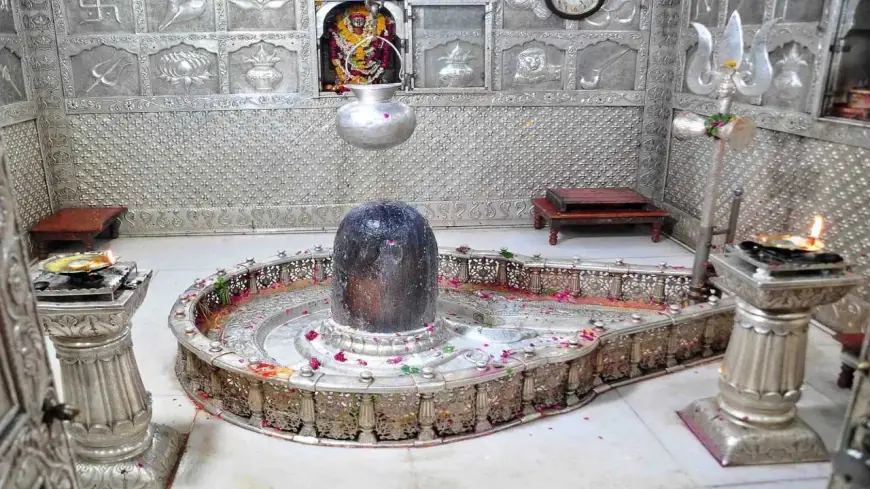
Within the ancient stone heart of Ujjain rests Mahakaleshwar, a presence so profound that the very idea of time seems to bend at its feet. Devotees feel a strange lightness here, as though their burdens age backward and dissolve. The temple does not merely stand as a monument of faith; it breathes a concept that transcends human understanding — Mahakal, the one who governs time itself.
To call Mahakaleshwar the guardian of time is not poetic exaggeration. It is a truth carried across scriptures, legends, rituals, and lived experiences. The story of how Mahakal assumed this cosmic role reveals a tapestry of mystical logic, spiritual depth, and silent power.
Mahakaleshwar is not a deity you simply visit. He is a force you encounter, a presence that shifts the rhythm of your inner world the moment you step inside his temple.
For Every pilgrims, understanding Simhastha 2028 dates and the official Shahi Snan timeline is essential before booking flights or accommodation, as these sacred dates are completely non-negotiable.
Trending Guides Now

Best Time to Visit Mahakaleshwar Temple Crowd And Weather Guide

Ujjain Bus Stand to Mahakaleshwar Temple Distance (2026 Guide)

Mahakaleshwar Tatkal Bhasma Aarti Booking Guide 2026

Sheeghra Darshan vs Normal Darshan at Mahakaleshwar Temple

Ujjain Railway Station to Mahakaleshwar Temple Distance (2026 Guide)

Ujjain Simhastha 2028 Dates Announced: Full Shahi Snan & Event Timeline

Mangalnath Temple Trip Budget: Puja, Local Transport, Food and Stay Planning

Omkareshwar Trip Budget Guide: Transport, Stay, Food and Local Travel Costs
Mahakal and Time: A Bond Older Than Creation
In ancient texts, Shiva is described as the Mahakaal — the one beyond and above the limitations of time. The concept is simple yet expansive: while all beings experience time, Mahakal is the one who holds its reins.
Time has three faces:
• the past that shapes memory
• the present that shapes experience
• the future that shapes imagination
But Mahakal resides outside all three.
He does not move within time; time moves within him.
When Shiva manifested as Mahakaleshwar in Ujjain, this cosmic identity took a localized, powerful form — a point where devotees could touch the presence that governs creation’s clock.
This is the origin of Mahakaleshwar as the eternal guardian of time.
Why Ujjain Became the Seat of Time’s Protector
Mahakaleshwar did not choose Ujjain casually. This land carries an ancient association with cosmic measurement.

For thousands of years, Ujjain was considered:
• the central reference point for astronomical calculations
• the prime meridian in ancient Hindu geography
• the sacred ground where sages studied celestial rhythms
This alignment makes Ujjain a spiritual axis for timekeeping.
When Mahakal took residence here, his presence fused with the land’s astronomical heritage.
The result:
Mahakaleshwar became a living embodiment of time’s sacred balance.
This makes Ujjain not only a city of temples but a cosmic laboratory where spiritual and astronomical wisdom intersect.
The South-Facing Jyotirlinga: Symbol of Dissolution and Liberation
Mahakaleshwar is the only south-facing Jyotirlinga — a detail that holds profound meaning. In spiritual tradition, the south symbolizes:
• the release of karmic burdens
• the ending of old cycles
• the gateway to transformation
• the direction of time’s silent flow
Facing south, Mahakal is not merely watching creation; he is dissolving the unnecessary weights that slow spiritual progress.
The south-facing orientation is a spiritual declaration:
Mahakal is not here to create cycles; he is here to end them.
Not to prolong time’s illusions, but to liberate devotees from them.
This is why devotees often feel an unexplainable lightness after darshan — as if time’s burdens softened inside the sanctum.
The Temple as a Silent Clock of Spiritual Awakening
Inside Mahakaleshwar Temple, time feels different. Minutes stretch. Thoughts slow. Awareness sharpens.
This is not psychological anomaly; it is a designed experience.
Every element of the temple is aligned to amplify Mahakal’s relationship with time:
1. The stone architecture
Stone absorbs and radiates vibrations slowly, creating a field of steady spiritual frequency.
2. Repetitive rituals
Daily abhisheks, chants, and aartis reinforce a cyclical rhythm — mirroring time’s own cycles.
3. The garbhagriha’s intense energy
Inside the sanctum, devotees often lose awareness of time. The experience becomes a moment of pure presence.
4. The subtle darkness
The dim sanctum reduces sensory stimuli, allowing inner time perception to expand.
Collectively, these elements create a timelessness that devotees feel instantly.
Mahakaleshwar becomes not a place within time, but a place beyond time.
The Legend of Mahakal’s Emergence
Ancient lore describes how Mahakal manifested to protect Ujjain from the terror of the demon Dushan. But beneath the dramatic surface lies a deeper truth.
Mahakal did not simply defeat the demon.
He restored cosmic balance.
He ended an era of spiritual darkness.
He reset the moral clock of the land.
This moment shaped his identity as the guardian of time — not merely as destroyer of evil, but restorer of balance, order, and dharma.
In this story, Mahakal acts like time itself:
Fierce when needed, compassionate when required, silent when wisdom suffices.
Bhasma Aarti: The Ritual That Reveals Mahakal’s Timeless Face
Bhasma Aarti is the temple’s most iconic ritual — a ceremony where Mahakal is adorned with sacred ash before sunrise. The symbolism is profound:
• Ash represents the end of all things.
• The aarti represents the cycle of renewal.
• The timing represents the rise of a new spiritual day.
In this ritual, Mahakal reveals his timeless form — the one untouched by birth or death.
When devotees witness Bhasma Aarti, they are not watching a performance; they are witnessing the cosmic truth of time’s nature:
Everything rises, everything dissolves, everything returns.
And what remains untouched is Mahakal.
Why Devotees Feel Time Slow Down Inside the Temple
One of the most reported experiences inside Mahakaleshwar Temple is the sensation that time slows. People often say:
• “I didn’t realize how long I stood there.”
• “I forgot the outside world.”
• “It felt like one breath lasted minutes.”
This happens because the temple environment harmonizes the mind’s internal clock. Stress shortens perception of time; stillness expands it. Mahakal’s presence induces an inner silence that stretches perception.
This slowed perception is spiritual, not psychological.
It is the soul pausing to align with the guardian of time.
The Corridor and the Long Walk Toward Inner Timelessness
The Mahakal Corridor, with its sculptures, open spaces, water bodies, and symbolic art, acts as a transitional zone.
It prepares the mind to leave ordinary time behind.
Each sculpture retells a story of Shiva’s cosmic nature — stories of destruction, awakening, silence, and limitlessness. Water bodies mirror the sky, reminding devotees of the infinite. The wide pathways encourage slow, mindful walking.
By the time devotees reach the main sanctum, their inner rhythm has already adjusted.
This is the hidden purpose of the corridor:
To transition the devotee from worldly time into Mahakal’s time.
How Mahakaleshwar Continues as Time’s Guardian Today
Even today, Mahakal preserves his role as time’s protector through:
• Ancient rituals preserved unchanged
• Daily cycles of worship that mirror cosmic cycles
• Spiritual discipline upheld by priests
• Devotees who arrive seeking rebirth of purpose
• The unwavering presence of the south-facing Lingam
Mahakal remains relevant because the human relationship with time remains unchanged. We still seek relief from past wounds, clarity for the present, and courage for the future.
Mahakaleshwar offers all three.
He does not stop time; he makes it meaningful.
The Real Secret: Mahakal Awakens Your Inner Guardian of Time
The greatest truth hidden inside Mahakaleshwar Temple is this:
Mahakal does not guard time for the world alone.
He teaches devotees how to guard their own time — their life, their energy, their purpose.
Inside the temple, people rediscover:
• what truly matters
• what must be released
• what must be protected
• what must be transformed
This clarity is the touch of Mahakal’s timeless blessing.
The guardian of time awakens the guardian within.
And that is why Mahakaleshwar remains eternal — not because time bows before him, but because he helps devotees rise above time.
You May Also Like:
- How Mahakaleshwar Became the Eternal Guardian of Time
- Hidden Divine Power Inside Mahakaleshwar Temple
- VIP Darshan at Mahakaleshwar: What No One Tells You
- Ujjain ke Mahakaleshwar: Jahan Samay Tham Jaata Hai Aur Shraddha Jeevan Ban Jaati Hai
- Perfect Stay Near Mahakaleshwar Temple, Ujjain – Dharamshalas, Hotels & Spiritual Stays
- Gadkalika Temple: The Goddess Who Inspired Kalidasa?
- What Happens Inside Harsiddhi Temple After Sunset? A Divine Night Experience in Ujjain
- Navagraha Mandir: Can a Temple Change Your Planetary Fate?
- Bhartrihari Caves: Meditation Secrets Hidden Underground
- Kaal Sarp Dosh Puja in Ujjain – Benefits, Procedure & Why It Works Faster
Frequently Asked Questions