


















Sheeghra Darshan vs Normal Darshan at Mahakaleshwar Temple
Sheeghra Darshan at Mahakaleshwar Temple costs ₹150-₹300 and takes 15-30 minutes. Normal Darshan is free but takes 2-5 hours. Complete comparison inside.
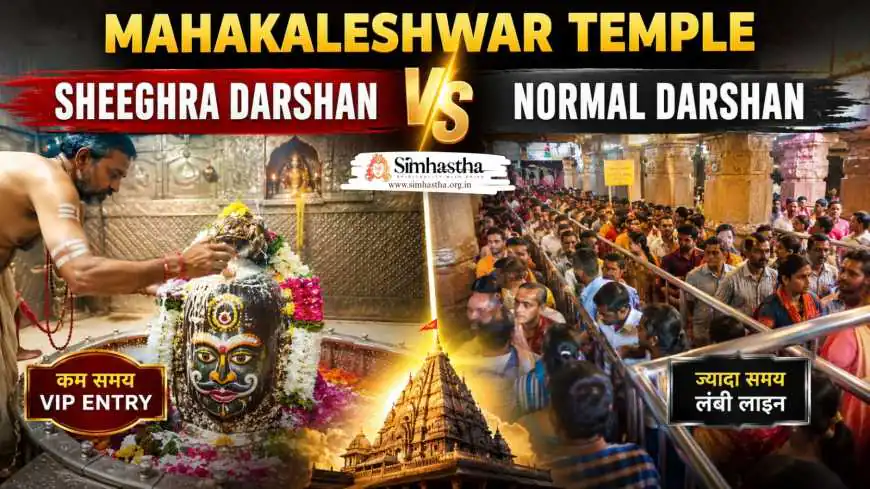

If you have ever stood in a serpentine queue under the hot Ujjain sun, watching the minutes turn into hours just for a 30-second glimpse of Baba Mahakal, you have already asked yourself this question: Should I pay for Sheeghra Darshan or stick with the Normal Darshan at Mahakaleshwar Temple?
The answer is not simply about money. It is about time, physical endurance, spiritual priority, and what kind of darshan experience you truly want.
Sheeghra Darshan at Mahakaleshwar Temple is a paid fast-track pass costing between ₹150 to ₹300 per person that allows devotees to skip the regular queue and complete darshan in 15 to 30 minutes. Normal Darshan is completely free but requires waiting in the general queue for 2 to 5 hours depending on the season, day, and crowd levels.
That is the short answer. But the real decision runs much deeper. Let me walk you through everything you need to know before you make that choice. 🛕
Trending Guides Now

Ujjain Railway Station to Mahakaleshwar Temple Distance (2026 Guide)

Best Time to Visit Mahakaleshwar Temple Crowd And Weather Guide

Mahakaleshwar Sheeghra Darshan Booking Guide 2026
Why This Jyotirlinga Faces South and What It Means

Ujjain Simhastha 2028 Dates Announced: Full Shahi Snan & Event Timeline
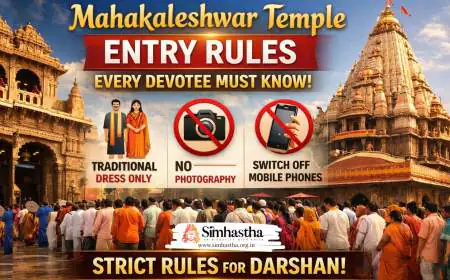
Mahakaleshwar Temple Entry Rules 2026: Dress Code, Mobile & Bag Policy
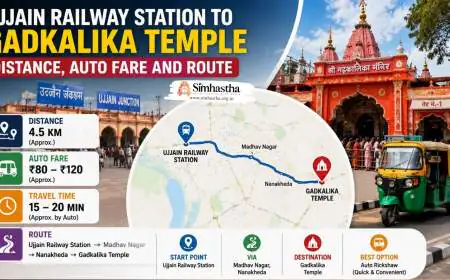
Ujjain Railway Station to Gadkalika Temple: Distance, Auto Fare and Route
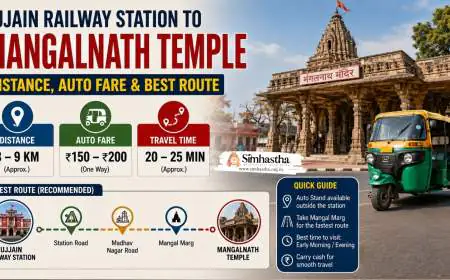
Ujjain Railway Station to Mangalnath Temple: Distance, Auto Fare and Best Route
How Sheeghra Darshan Actually Works at Mahakaleshwar Temple
Many first-time visitors assume Sheeghra Darshan is just about paying money and walking straight to the sanctum. That is not entirely accurate. Let me explain the actual process so you know exactly what you are getting.
The Sheeghra Darshan facility is officially managed by the Mahakaleshwar Temple Trust. When you purchase this pass, you are essentially buying access to a separate, faster-moving queue that runs parallel to the general queue. This dedicated queue has significantly fewer people because the temple limits the number of Sheeghra passes sold each day.
Once you enter the Sheeghra queue, you will still go through the same security check, the same shoe deposit area, and the same final approach to the Garbhagriha (sanctum sanctorum) where the Jyotirlinga resides. The difference is entirely in the waiting time before you reach that sacred moment.
The pass is available at:
-
Online portals (official temple website and select booking partners)
-
On-site counters near the temple entrance
-
Authorized agents near Ram Ghat and the temple complex
Here is something most guides will not tell you: Even with a Sheeghra pass, the actual time inside the sanctum — the few seconds you stand before Baba Mahakal — is exactly the same as Normal Darshan. The pass does not buy you extra time at the Jyotirlinga. It only buys you less time in the queue outside. Keep that in mind because it changes how you should value the experience.
✅ Pro tip: During peak seasons like Shravan month, Nag Panchami, and Mahashivratri, the Sheeghra queue itself can take 45 to 60 minutes. The temple still processes thousands of devotees, and even the fast track has limits.
Normal Darshan at Mahakaleshwar Temple – The Traditional Experience
Let me be honest with you. Normal Darshan is not for everyone. But for many devotees, it is the only authentic way to approach Baba Mahakal.
Normal Darshan is completely free. No ticket, no pass, no online booking. You simply join the general queue that starts from the Tripura Gate or Nandi Hall area, depending on the crowd management system on that particular day.
The waiting time varies dramatically:
| Day/Season | Normal Darshan Wait Time | Sheeghra Wait Time |
|---|---|---|
| Weekdays (non-festive) | 1.5 to 2.5 hours | 10-15 minutes |
| Weekends | 2 to 3.5 hours | 15-25 minutes |
| Shravan Monday | 4 to 6 hours | 30-45 minutes |
| Mahashivratri | 8 to 12 hours | 1-1.5 hours |
| Regular holiday period | 3 to 4 hours | 20-30 minutes |
Here is what the Normal Darshan experience actually feels like. You will stand in a queue that moves in short, unpredictable bursts. The temple volunteers manage the crowd with ropes and barriers. You will hear devotional bhajans playing on the temple speakers. The air smells of camphor, marigold, and ghee lamps.
Children, elderly devotees, and anyone with physical difficulties will find this challenging. There are some shaded areas in the queue, but large sections are open to the sun. Water stations are available, but toilets are not easily accessible once you are inside the main queue.
Why do people still choose Normal Darshan? Three reasons:

-
Financial priority — Not everyone can afford paid passes
-
Spiritual belief — Many feel waiting patiently is part of their bhakti
-
Group logistics — Large family groups often find it easier to stay together in the general queue
I have spoken to devotees who say the long wait builds anticipation and devotion in a way that the fast-track cannot replicate. They describe finally seeing the Jyotirlinga after hours of waiting as an emotionally overwhelming, tearful moment. That is a real experience worth respecting. 🙏
Price Comparison – What Does Each Option Really Cost?
Let us talk numbers clearly because this is where most confusion happens.
Normal Darshan: ₹0
No hidden charges. No booking fees. No platform fees. Completely free.
Sheeghra Darshan: Between ₹150 and ₹300 per person
The price variation depends on:
-
Online vs offline purchase — Online often includes a small convenience fee
-
Time slot — Early morning slots near Bhasma Aarti time cost more

-
Seasonal demand — Prices can rise during Shravan
-
Package inclusions — Some Sheeghra passes include shoe storage or prasad

Special VIP Sheeghra (sometimes called Ati-Sheeghra): Around ₹500 to ₹1,000
This is a premium version available only through specific channels. It promises even faster access and sometimes includes a brief guided explanation of the temple’s history. Most regular devotees do not need this. The standard Sheeghra pass works perfectly well.
Here is an important clarification. The temple administration has stated multiple times that no amount of money can guarantee touching the Jyotirlinga or entering the inner-most platform where priests perform the Abhishekam. Those privileges are reserved for specific ritual bookings made well in advance through the temple office.
So when you pay for Sheeghra Darshan, you are paying for queue priority only. Nothing more. Nothing less.
💰 Value verdict: If your time in Ujjain is limited to one day and you are also planning to visit Kaal Bhairav Temple, Harsiddhi Temple, and Ram Ghat, paying for Sheeghra Darshan at Mahakaleshwar is an intelligent decision. If you have two full days in Ujjain and a flexible schedule, Normal Darshan saves you money without sacrificing the spiritual experience.
Bhasma Aarti and Sheeghra Darshan – Critical Timing Rules
This is where many devotees make expensive mistakes. Listen carefully. ⚠️
The Bhasma Aarti at Mahakaleshwar Temple is the most famous ritual — performed daily between 4:00 AM and 5:00 AM (timings shift slightly with seasons). During this ritual, the Shiva Linga is bathed with sacred ash in a deeply powerful ceremony.
Sheeghra Darshan does NOT include Bhasma Aarti access automatically.
If you want to witness the Bhasma Aarti, you need a separate Bhasma Aarti pass. This pass costs around ₹250 to ₹400 and must be booked well in advance — sometimes weeks ahead during Shravan. The number of passes is extremely limited, and they sell out fast.
Once Bhasma Aarti ends, the temple opens for regular darshan. If you hold a Sheeghra Darshan pass for the 4:00 AM to 6:00 AM time slot, you will be entering immediately after the Aarti ends. You will miss the actual ash ritual but will get the benefit of an almost-empty temple.
Here is the strategy smart pilgrims use:
Option A (Full experience): Book Bhasma Aarti pass → Attend the ritual → Exit → Re-enter later with Sheeghra pass for unhurried darshan
Option B (Efficient darshan): Arrive at 3:30 AM → Join regular Bhasma Aarti queue (free, very long) → Witness Aarti from outside the main hall → Use Sheeghra pass at 5:30 AM for quick darshan
Option C (Budget spiritual): Arrive at 5:00 AM → Join Normal Darshan queue after Bhasma Aarti ends → Wait 1.5 to 2 hours → Complete darshan by 7:00 AM
Each option serves a different type of devotee. Only you know which one fits your spiritual and logistical needs. 🔱
Sunday, Monday, and Festivals – How Days Change Everything
Mahakaleshwar Temple is not the same every day. The difference between Sheeghra and Normal Darshan widens dramatically on certain days.
Mondays are naturally crowded because Monday is dedicated to Lord Shiva. Even Sheeghra Darshan can take 30-45 minutes on a Monday. Normal Darshan easily stretches beyond 4 hours. If you are visiting on a Monday, Sheeghra Darshan is strongly recommended unless you have unlimited time and extraordinary patience.
Sundays are also busy but not as intense as Mondays. The difference is that many out-of-town devotees arrive on Saturday night and visit on Sunday morning. The peak hours between 9:00 AM and 1:00 PM on Sunday have the longest queues.
Shravan Mondays (July-August) are in a completely different category. The temple receives over 1.5 lakh devotees on a single Shravan Monday. Normal Darshan takes 6 to 8 hours. Sheeghra Darshan takes 45 to 90 minutes. Even the VIP pass holders wait.
Mahashivratri is the most challenging day. The temple remains open for 24 hours. The queue never drops below 2 hours — even at 3:00 AM. For this single festival, many regular Ujjain residents skip darshan entirely and watch the live telecast from home. If you are traveling specifically for Mahashivratri, book both Bhasma Aarti pass and Sheeghra pass at least 2 weeks in advance online.
Pro tip from local pilgrims: The least crowded time for darshan is between 12:00 PM and 3:00 PM on weekdays. Most out-of-town devotees finish their visits by 11:00 AM, and the evening crowd starts arriving only after 4:00 PM. If you want Normal Darshan to be tolerable, aim for this midday window.
Online Booking for Sheeghra Darshan – Step by Step Guide
The temple has digitized most of its pass system, which is excellent news for travelers. Here is exactly how to book your Sheeghra Darshan pass online:
Step 1: Visit the official Mahakaleshwar Temple website (check for the .gov.in domain — fake booking sites exist)
Step 2: Click on “Online Services” or “Darshan Booking”
Step 3: Select “Sheeghra Darshan Pass”
Step 4: Choose your date. You can book up to 30 days in advance. Same-day bookings are possible only if slots remain open.
Step 5: Select time slot. Slots are usually in 2-hour blocks:
-
4:00 AM - 6:00 AM
-
6:00 AM - 8:00 AM
-
8:00 AM - 10:00 AM
-
10:00 AM - 12:00 PM
-
12:00 PM - 2:00 PM
-
2:00 PM - 4:00 PM
-
4:00 PM - 6:00 PM
-
6:00 PM - 8:00 PM
Step 6: Enter devotee details — name, age, gender, and city
Step 7: Make payment via card, UPI, or net banking
Step 8: Download the PDF pass or save the SMS confirmation
Step 9: On your visit day, show either the printout or the SMS at the Sheeghra Darshan entrance gate (different from the general entry gate)
A critical warning: Screenshots are often rejected. Either keep the PDF open on your phone or carry a printout. The temple Wi-Fi is unreliable, and mobile network signals can be weak inside the old city area. Do not assume you can download your pass at the gate.
📱 Mobile booking alternative: The “Mahakal Darshan” mobile app (available on both app stores) also supports Sheeghra pass booking. The app interface is simpler than the website.
Physical Comfort and Accessibility – Real Talk
Let me be direct about something most travel guides soften. This matters deeply for elderly devotees, pregnant women, and anyone with mobility issues.
Normal Darshan is physically punishing for many people. You will stand for hours. You will be pressed against strangers. The floor is uneven stone. There are stairs. There are no chairs. There is almost nowhere to sit once you are inside the queue system. If you need to exit the queue for any reason — to use a toilet, to drink water, to sit down — you lose your spot and must start over.
The temple does provide special assistance for:
-
Senior citizens above 70 years
-
Differently-abled individuals
-
Pregnant women (visible pregnancy only)
-
Parents with infants
This assistance is free and operates like a very limited Sheeghra system. You approach the Divyangjan and Senior Citizen Help Desk near the main entrance. A volunteer guides you through a separate accessible queue. The wait time is usually 20-40 minutes.
Important: This assistance does not require a paid pass. But you must have valid ID proving age or disability. And you must be genuinely unable to stand in the regular queue — not just looking for a shortcut.
For everyone else, Sheeghra Darshan is the humane choice if your budget allows even a small expense. The difference in physical strain is enormous. After a 4-hour queue, many devotees are too exhausted to visit other Ujjain attractions like the Shipra River ghats or the Jantar Mantar. Sheeghra Darshan leaves you with energy and time for the rest of your pilgrimage.
The Spiritual Question – Does Fast Darshan Feel Less Sacred?
I have debated this with priests, with old pilgrims, and with first-time visitors. There is no single answer.
Some argue that waiting is worship. The hardship of the queue — the heat, the exhaustion, the patience — becomes part of your offering to Baba Mahakal. When you finally stand before the Jyotirlinga after hours of struggle, your gratitude and devotion reach a peak that a 15-minute fast-track cannot replicate.
Others say this logic is unnecessarily romanticizing suffering. Baba Mahakal is called “Sankat Mochan” — the remover of difficulties. Why would he want you to suffer unnecessarily? If technology and organization can make darshan easier, that is not cheating devotion. That is common sense.
I have personally seen both sides. My own view is this: Your intention matters more than your waiting time.
If you take Sheeghra Darshan because you are genuinely short on time — perhaps you are a working professional who could only get one day off, or a parent managing young children — that is not disrespectful. You are using available resources to ensure you can still have darshan at all.
If you take Sheeghra Darshan because you feel entitled to skip the queue and look down on the “poor people waiting for free darshan” — that attitude is spiritually bankrupt regardless of how much you pay. Your ₹300 does not make you a better devotee. It just makes you a faster one.
The temple itself does not judge. Both queues end at the same Jyotirlinga. Both devotees receive the same darshan — that sacred seeing that is the whole point of the journey. 🕉️
What Neither Option Can Give You – Managing Expectations
Let me save you from disappointment by telling you what no pass can buy.
Neither Sheeghra Darshan nor Normal Darshan guarantees:
-
Touching the Jyotirlinga — Only priests and specific ritual bookers may perform Abhishekam
-
Extended time in the sanctum — Volunteers will gently move you forward after 10-15 seconds
-
Photography inside — Mobile phones and cameras are not allowed near the Garbhagriha
-
Private darshan — Even VIP passes still place you among other devotees
-
Bhasma Aarti access — That requires a completely different pass
Understanding these limits is crucial. I have seen devotees pay for Sheeghra Darshan expecting to spend 10 minutes alone at the Jyotirlinga. That is simply not how Mahakaleshwar Temple operates. The crowd management is strict, efficient, and impersonal — regardless of your pass type.
The real value of either darshan option is simply getting to see Baba Mahakal at all. On the busiest days, thousands of devotees who take Normal Darshan actually fail to reach the sanctum before the temple closes for the midday break or evening break. They wait for hours and still leave without darshan.
Sheeghra Darshan essentially guarantees that you will complete the journey. That certainty alone is worth the price for many pilgrims.
Practical Decision Matrix – Which One Should You Choose?
Let me make this simple for you. Answer these five questions honestly:
Question 1: What is your total time in Ujjain?
-
One day or less → Choose Sheeghra Darshan
-
Two days or more → Normal Darshan is fine
Question 2: Are you visiting during Shravan or a festival?
-
Yes → Sheeghra Darshan is almost mandatory
-
No → Either option works
Question 3: Are you traveling with elderly people, children, or anyone with health issues?
-
Yes → Choose Sheeghra Darshan or use the free assistance queue
-
No → Normal Darshan is manageable
Question 4: Does paying ₹150-300 cause any financial stress?
-
Yes → Choose Normal Darshan without any guilt
-
No → Sheeghra Darshan is a good convenience purchase
Question 5: Do you want the traditional, unhurried, patient pilgrimage experience?
-
Yes → Normal Darshan, arrive very early (5:00 AM)
-
No → Sheeghra Darshan
Here is my honest recommendation for most first-time visitors who can afford it:
Book Sheeghra Darshan for your first visit. Use the time and energy saved to explore the entire temple complex properly — the Nandi Hall, the Koti Tirtha, the Nagchandreshwar Temple on the third floor (open only on Nag Panchami), and the surrounding Mahakal Lok corridor. Then, if you return to Ujjain again, try Normal Darshan as a different spiritual experience.
This approach gives you the best of both worlds without the regret of missing anything important.
Local Secrets for Both Types of Darshan
After speaking with Ujjain residents, temple volunteers, and frequent visitors, I have collected small tips that make either darshan option better.
For Normal Darshan:
-
Arrive at 5:00 AM sharp — The queue grows fastest between 6:00 AM and 8:00 AM
-
Carry a small foldable stool if you are elderly — Security allows it
-
Use the free locker service near the shoe stand for bags and phones
-
Drink water before entering the queue — limited water inside
-
Tuesday and Friday are less crowded than Monday and Thursday
For Sheeghra Darshan:
-
Book the earliest possible slot (4:00 AM - 6:00 AM) — The temple feels meditative at dawn
-
The midday slot (12:00 PM - 2:00 PM) has the shortest Sheeghra queue
-
Print your pass — Phone networks fail near the temple
-
Keep your ID proof handy — Some ticket checkers verify identity
-
The Sheeghra entrance is near Gate Number 3, not the main gate
For Everyone:
-
Avoid carrying bags, large wallets, or valuable items — The crowd is intense
-
Wear comfortable slip-on shoes — You remove shoes before entering and collecting them afterward is chaotic
-
Modest clothing is strictly enforced — Shoulders and knees must be covered
-
Mobile phones must be switched off inside the inner temple — Volunteers are strict about this
One more local secret: The prasad (charanamrit and maha-prasad) is the same for both darshan types. Do not buy overpriced “special prasad” from touts outside. The free prasad at the temple exit is perfectly fine and equally blessed. 🥛
Money Saving Strategy Without Compromising Experience
If your budget is tight but your time is also limited, here is a hybrid strategy that works beautifully.
Use Normal Darshan for the Bhasma Aarti (free but requires arriving at 3:00 AM and waiting). You will not get inside the main hall, but you can stand outside and still witness the ritual through the open doors. The energy of 10,000 devotees chanting at 4:00 AM is unforgettable even from outside.
After Bhasma Aarti ends around 5:30 AM, the Normal Darshan queue will already be long. Do not join it. Instead, leave the temple complex, have breakfast at one of the small eateries near Ram Ghat, and return at 1:00 PM. The afternoon Normal Darshan queue is often just 60-90 minutes — far shorter than the morning and evening peaks.
This gives you:
-
Bhasma Aarti experience (free)
-
Manageable 60-90 minute wait (free)
-
Darshan completed by 2:30 PM
-
Rest of the day for Kaal Bhairav and Harsiddhi temples
The only cost is your willingness to wake up at 3:00 AM and return at 1:00 PM. For budget travelers, this is the smartest approach. For everyone else, Sheeghra Darshan remains the most comfortable choice.
Your Decision, Your Darshan, Your Mahakal
Here is what I have learned after watching hundreds of pilgrims make this choice.
There is no wrong decision between Sheeghra Darshan and Normal Darshan. Both options exist because the temple administration understands that different devotees have different needs. A grandmother with arthritis is not less devoted because she uses the paid queue. A college student backpacking across India is not more devoted because he stood in line for six hours.
What matters — and I mean this sincerely — is what happens after you leave the temple.
Do you carry the peace of Baba Mahakal into the rest of your day? Do you treat fellow travelers, auto drivers, shopkeepers, and temple volunteers with patience and kindness? Do you return to your regular life as a slightly better human being than when you arrived?
That is the darshan that continues long after you have left Ujjain. That is the darshan that no queue — fast or slow — can give you or take away from you.
Whether you pay ₹300 or ₹0, whether you wait 15 minutes or 5 hours, when you finally stand before that ancient, radiant Jyotirlinga and hear the priests chant “Om Namah Shivaya” — in that single moment, everything else falls away. The money, the time, the crowd, the exhaustion. All that remains is you and Mahakal.
And that, my friend, is worth every single second of the journey. 🔱🙏
Frequently Asked Questions