





























Why This Jyotirlinga Faces South and What It Means
Discover why Mahakaleshwar is the only south-facing Jyotirlinga and what this rare direction reveals about spiritual release, transformation, and inner freedom.


The One Jyotirlinga That Breaks All the Rules 🛕🧭
Let me start with a question that might change how you see a temple. 🤔
You walk into a Hindu temple. The deity faces east—the direction of the rising sun. You've seen this a thousand times. It's tradition, it's normal, and you barely even notice it. ☀️
But what if I told you that one of the most powerful Shiva temples in India deliberately breaks this rule? What if the deity faces the opposite direction—south, the direction of death itself? 😮
That temple is Mahakaleshwar Jyotirlinga in Ujjain. And its south-facing orientation is the key to understanding its deepest spiritual meaning. 🌟
Trending Guides Now
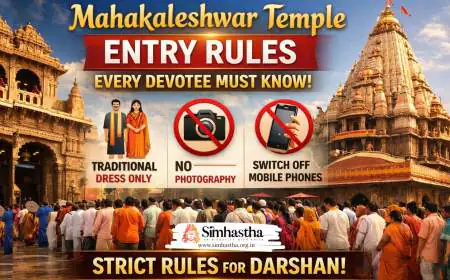
Mahakaleshwar Temple Entry Rules 2026: Dress Code, Mobile & Bag Policy

Mahakaleshwar Tatkal Bhasma Aarti Booking Guide 2026
Sheeghra Darshan vs Normal Darshan at Mahakaleshwar Temple
The Ultimate Guide to VIP Sheetal Darshan at Mahakaleshwar Temple

Ujjain Railway Station to Mahakaleshwar Temple Distance (2026 Guide)

Ujjain Simhastha 2028 Dates Announced: Full Shahi Snan & Event Timeline

Mangalnath Temple Trip Budget: Puja, Local Transport, Food and Stay Planning

Omkareshwar Trip Budget Guide: Transport, Stay, Food and Local Travel Costs
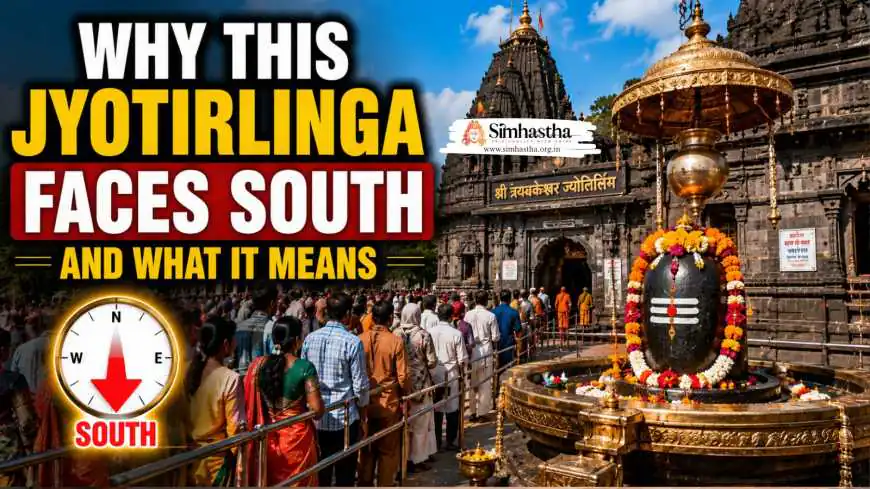
So, why does this Jyotirlinga face south and what does it mean? The answer is a profound exploration of life, death, and the cosmic power of Lord Shiva. Mahakaleshwar is the only Jyotirlinga that faces south (Dakshinamukhi) among the twelve. While all others face east, this one looks directly toward the direction associated with death and the ancestors. It symbolizes Shiva as Mahakal—the Lord of Time and the conqueror of death itself.
In this article, we'll explore the mythology, the symbolism, and the spiritual significance behind this unique orientation. Let's go! 🚀
The Only South-Facing Jyotirlinga: A Rare Distinction 🧭✨
Dakshinamukhi: The South-Facing Deity
In Hindu temple architecture, deities almost always face east—the direction of the rising sun, representing life, light, and new beginnings. The Mahakaleshwar Jyotirlinga is a striking exception. It is Dakshinamukhi, meaning it faces south.
What "Dakshinamukhi" Means:
-
Dakshina = South or right side
-
Mukhi = Facing or mouth

-
Together: "The one who faces south"

According to Hindu tradition, the direction of death is believed to be the south. This is the realm of Yama, the god of death, and the land of the ancestors, known as Pitr-loka. By facing south, Mahakaleshwar looks directly toward the domain of death, symbolizing his mastery over it.
The Tantric Connection:
The south-facing orientation is upheld by the tantric shivnetra tradition and is found only in Mahakaleshwar among the 12 Jyotirlingas. This marks the temple as a site of profound tantric significance—a place where devotees confront the reality of death to achieve spiritual liberation.
A Swayambhu Jyotirlinga
Adding to its uniqueness, Mahakaleshwar is a Swayambhu Jyotirlinga—meaning it is self-manifested and "originated on its own". Unlike other lingams that are ritually established and invested with mantra-shakti, the Mahakal lingam derives currents of power (Shakti) from within itself.
What This Means:
The Swayambhu nature of the lingam signifies that it is not a human creation but a direct manifestation of divine energy. This makes it exceptionally powerful and sacred in Hindu tradition.
The Symbolism: South, Death, and the Master of Time 🕉️💀
Why South Is the Direction of Death
In Hindu cosmology, the south holds special significance. It is associated with:
-
🕉️ Yama: The god of death resides in the south
-
🕉️ Pitr-loka: The land of the ancestors lies beyond the river Vaitarni in the south
-
🕉️ Transformation: The south represents the end of one cycle and the beginning of another
By facing south, Mahakaleshwar looks toward the realm of the dead, symbolizing his role as the conqueror of death. As the Art of Living explains: "The direction of death is believed to be south. As Lord Shiva faces south, it symbolizes that he is master of death. In fact, people worship Mahakaleshwar to prevent untimely death – to enjoy a long life".
Mahakal: The Lord of Time
The name "Mahakal" itself reveals the deity's nature:
What This Means:
Lord Shiva as Mahakal is not just the destroyer—he is the one who transcends time itself. He is the master of the cosmic cycle of creation, preservation, and destruction. The south-facing orientation is a visual reminder of this power.
Devdutt Pattanaik Explains:
"Typically, deities in Hindu temples face the rising sun. However, in Ujjain, the presiding deity, Shiva, known locally as Mahakaleshwar, faces south, which in Hindu mythosphere is the direction associated with death. There flows the river Vaitarni, beyond which is located Pitr-loka, the land of the ancestors. Shiva looks at them and offers hope of another life, for he is the lord of time, Mahakal, and the conqueror of death, Mrityunjaya".
The Two Meanings of "Kaal"
| Meaning | Significance |
|---|---|
| Time | Shiva transcends the cycle of past, present, and future |
| Death | Shiva controls the moment of death and grants liberation |
This dual meaning is why Mahakaleshwar is one of the most powerful deities for those seeking protection from untimely death and liberation from the cycle of rebirth.
The Legend: Why Shiva Faced South at Ujjain 📜🛡️
The Story of King Chandrasena
According to the Shiva Purana, the Mahakaleshwar Jyotirlinga emerged when Lord Shiva appeared to protect his devotees from the demon Dushana, who tormented the city of Ujjain.
The Legend:
King Chandrasena of Ujjain was a devotee of Shiva. When enemy kings attacked the city, the boy Shrikhar prayed to Shiva for help. Hearing his devotee's plea, Shiva appeared in his Mahakal form—the fierce, time-transcending manifestation—and destroyed the enemies.
Upon the request of his devotees, Shiva agreed to reside in Ujjain as the chief deity, protecting all his devotees. The Jyotirlinga that manifested at this spot faces south, symbolizing Shiva's role as the destroyer of negativity and the protector of his devotees.
Shiva as Dakshinamurti
The south-facing orientation is also connected to Shiva's form as Dakshinamurti—the "south-facing" form of Shiva who is the ultimate teacher.
The Connection:
Dakshinamurti is Shiva as the Adi Guru—the first teacher who imparted knowledge to the Seven Sages through silence. He sits under a banyan tree facing south. In Ujjain, the Shivling itself faces south, making Mahakaleshwar a Yoga Dakshinamurti—a place where seekers can learn the deepest spiritual truths by confronting the reality of death.
The Bhasma Aarti: Where the Symbolism Comes to Life 🔥🌅
The Ritual of Ash
The south-facing orientation is most powerfully expressed in the temple's famous Bhasma Aarti—a pre-dawn ritual where the deity is bathed in sacred ash.
What Is Bhasma Aarti:
-
⏰ Time: Around 4:00 AM daily
-
🔥 Offering: The Shiva Lingam is bathed in Vibhuti (sacred ash)
-
🕉️ Significance: The ash symbolizes the impermanence of the physical body and the eternal nature of the soul
The Connection to Death:
In the folklore of Ujjain, it is from the crematorium that the ash is collected for rituals of the Mahakaleshwar temple. This is not a sanitized ritual—it is a direct confrontation with death.
Why Ash Matters:
The ash represents:
-
💀 The reality of death—all bodies return to ash
-
🕉️ The transcendence of death—the soul continues
-
🔥 The destruction of ego and attachment
The Tantric Dimension:
As Devdutt Pattanaik explains: "Shiva of the former school receives milk and cow dung ash. Shiva of the latter school receives ash and bones from the crematorium". The Mahakaleshwar temple belongs to the latter tradition, facing death directly.
The Temple's Unique Features 🏛️🌟
Five Levels of the Temple
The Mahakaleshwar Temple has a unique architectural structure with five levels, one of which is underground.
| Level | Deity | Significance |
|---|---|---|
| Lower (Underground) | Mahakaleshwar | Original Jyotirlinga, south-facing |
| Middle | Omkareshwar Mahadev | Another form of Shiva |
| Upper | Nagchandreshwar | Open only on Nag Panchami |
Nagchandreshwar: Open Only One Day a Year
The idol of Nagchandreshwar on the third floor is open for darshan only one day in the year—on Nag Panchami. This rare darshan adds to the temple's mystique.
The Underground Sanctum
The main Mahakal shrine is located underground, and brass lamps light the way to the sanctum. Walking down into the earth—toward the south-facing deity—feels like a descent into the underworld itself, a symbolic journey toward confronting death.
The Comparison: Mahakaleshwar vs Other Jyotirlingas 📊
| Feature | Mahakaleshwar | Other 11 Jyotirlingas |
|---|---|---|
| Direction | South (Dakshinamukhi) | East |
| Nature | Swayambhu (self-manifested) | Usually Sthapitha (established) |
| Symbolism | Master of death and time | Mostly creation-oriented |
| Bhasma Aarti | Yes, unique ritual with ash | Not usually practiced |
| Tantric Tradition | Yes, Shivnetra tradition | Mostly Vedic tradition |
The Bottom Line: Facing Death to Conquer It 🎯
So, why does this Jyotirlinga face south and what does it mean?
-
Dakshinamukhi: Mahakaleshwar is the only Jyotirlinga facing south—a unique feature among the twelve.
-
Direction of Death: The south is the direction of Yama and the ancestors, associated with death.
-
Master of Death: By facing south, Shiva symbolizes his role as Mahakal—the Lord of Time and the conqueror of death.
-
Swayambhu: The self-manifested lingam derives power from within itself.
-
Bhasma Aarti: The ritual of offering ash in the pre-dawn hours directly confronts death and impermanence.
-
Spiritual Liberation: Worshipping at Mahakaleshwar is believed to prevent untimely death and grant moksha.
The Mahakaleshwar Jyotirlinga is not a temple for those who want to avoid thinking about death. It is a temple for those who are brave enough to face it. The south-facing orientation is a constant reminder that the Lord of Time is watching, that death is not the end, and that true liberation comes from confronting reality—not running from it.
When you stand before Mahakal, you are not just facing south—you are facing the mystery of life and death itself. And that is the profound teaching of this unique Jyotirlinga. 🙏🕉️
Frequently Asked Questions