




























Ancient Texts That Reveal Mahakal’s True Form
Explore the ancient scriptures that reveal Mahakal’s true form, his cosmic nature, and how timeless texts describe the powerful essence of Mahakaleshwar.


Ancient Texts That Reveal Mahakal’s True Form
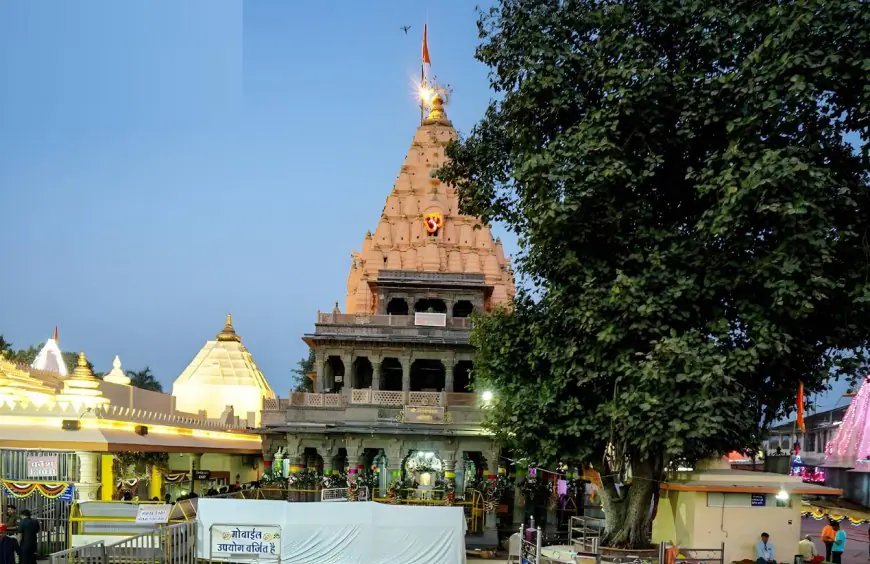
For thousands of years, seekers, sages, and scholars have tried to understand the true nature of Mahakal, the mighty form of Shiva who governs time, dissolves illusion, and liberates the soul. While temples, rituals, and traditions keep the devotion alive, the ancient texts are the deepest mirrors through which Mahakal’s true form is unveiled. These scriptures do not merely describe a deity; they reveal a cosmic principle, an eternal presence that manifests most powerfully as Mahakaleshwar in Ujjain.
To understand Mahakal fully, one must listen to the voices of ancient wisdom — the Shiva Purana, Skanda Purana, Agamas, Upanishads, and Tantric texts. These scriptures paint a radiant, fierce, compassionate, and philosophical portrait of Mahakal, a form that transcends time, fear, and limitation.
This article explores what these texts reveal about who Mahakal truly is — and why his presence inside Mahakaleshwar Temple continues to transform devotees today.
For Every pilgrims, understanding Simhastha 2028 dates and the official Shahi Snan timeline is essential before booking flights or accommodation, as these sacred dates are completely non-negotiable.
Trending Guides Now

Best Time to Visit Mahakaleshwar Temple Crowd And Weather Guide
Why This Jyotirlinga Faces South and What It Means

What to Carry and Avoid During Mahakaleshwar Darshan

Mahakal Corridor Guide for First Time Visitors Ujjain

Ujjain Railway Station to Mahakaleshwar Temple Distance (2026 Guide)

Ujjain Simhastha 2028 Dates Announced: Full Shahi Snan & Event Timeline

Mangalnath Temple Trip Budget: Puja, Local Transport, Food and Stay Planning

Omkareshwar Trip Budget Guide: Transport, Stay, Food and Local Travel Costs
Mahakal in Scriptures: The Form Beyond Time
In the Shiva Purana, Mahakal is described as the force before creation, the stillness before movement, the silence before sound. Time is called Kala, and the one who controls time is Mahakala. This is not just a title; it is a cosmic identity.
The texts reveal two fundamental truths about Mahakal:
1. Mahakal exists before time begins.
Time flows from him, not the other way around.
The universe expands and collapses according to his will.
2. Mahakal dissolves all limitations.
He destroys not as punishment but as liberation.
Endings become gateways to new beginnings.
The scriptures repeatedly describe Mahakal as the one whom even gods revere, for he alone remains after everything else dissolves.
When devotees enter Mahakaleshwar Temple, they experience this truth not as philosophy but as intuition — a subtle feeling that time has loosened its grip.

Mahakal in the Shiva Purana: The Supreme Liberator
The Shiva Purana offers one of the clearest revelations of Mahakal’s true form. It describes Mahakal as:
• the energy that burns ignorance
• the fire that ends suffering
• the guardian of cosmic rhythm
• the destroyer of fear
• the source of inner courage
In one verse, Shiva declares:
“When darkness devours the worlds, I appear as Mahakal.”
This means Mahakal is not a deity of destruction; he is the deity of renewal. He removes only what obstructs spiritual evolution. This is why the south-facing nature of Mahakaleshwar Jyotirlinga holds such weight — it symbolizes the end of fear and the beginning of liberation, just as the scriptures say.
Mahakal in the Skanda Purana: The Protector of Ujjain
The Skanda Purana contains a section dedicated entirely to Ujjain and Mahakaleshwar. Here, Mahakal is not only a cosmic form but the fierce guardian of this sacred land.
The text describes how Mahakal manifested to protect King Chandrasena and the young devotees whose faith shone brighter than any threat. But behind the story lies a deeper meaning:
Mahakal appears wherever righteousness needs protection and wherever time has become imbalanced.
The Skanda Purana emphasizes that Mahakaleshwar does not merely belong to Ujjain — Ujjain vibrates with his presence. The city becomes an extension of his form, a living field of sacred energy shaped by ancient mantras and rituals.
Mahakal in the Agamas: The Geometry of Divine Power
The Agamas are ancient texts that describe temple construction, rituals, and spiritual practices. In these texts, Mahakal is associated with:
• powerful yantras
• sacred geometry
• mantric vibration
• concentrated spiritual energy
These describe how the garbhagriha (sanctum) of Mahakaleshwar acts like a spiritual pressure chamber. Every stone, direction, symbol, and mantra contributes to an energy field that amplifies Mahakal’s presence.
The Agamas explain why devotees feel:
• calmness
• surrender
• subtle inner expansion
• emotional release
inside the temple. The space is engineered according to precise spiritual mathematics — something only ancient wisdom knew how to design.
Mahakal in the Upanishads: The Stillness That Holds the Universe
Several Upanishadic ideas resonate with Mahakal’s identity even if not named directly. They describe a presence that:
• witnesses time
• transcends birth and death
• remains unchanged amid change
• is the silent foundation beneath creation
This is the essence of Mahakal.
When the Upanishads speak of the formless absolute that burns away illusion, they echo the Mahakal principle. Similarly, meditative stillness described in texts like the Kena Upanishad and Kathopanishad aligns perfectly with the experience devotees feel inside Mahakaleshwar Temple.
Mahakal is the supreme stillness that contains all movement.
Mahakal in Tantric Texts: The Inner Dissolver of Illusion
In several Tantric scriptures, Mahakal is revered as the ultimate dissolver of:
• ego
• fear
• confusion
• inner darkness
Here, Mahakal is not external alone — he is awakened within the devotee. The texts describe his form as:
• fierce yet compassionate
• burning with clarity
• capable of shaking inner illusions
• a mirror that reflects the truth of the soul
When devotees apply vibhuti (sacred ash) after Mahakaleshwar darshan, they are following a Tantric principle — acknowledging the impermanence of all forms and the ultimate reality of Mahakal.
The Connection Between Bhasma Aarti and Scriptural Mahakal
The Bhasma Aarti, one of the oldest surviving Shaivite rituals, reflects Mahakal’s scriptural identity in perfect symbolism.
Ancient texts describe ash as the final truth of creation — what remains when everything dissolves. When this ash is offered to Mahakal, it signifies:
• acceptance of reality
• offering of ego
• release from worldly illusions
• union with timelessness
This ritual echoes scriptural teachings:
Mahakal is the liberator, the purifier, the one who burns away illusion.
Devotees often feel the deepest connection to the Mahakal described in scriptures during this Aarti.
What Ancient Texts Teach About Mahakal’s Appearance
The scriptures do not describe Mahakal with a physical form. They speak instead of qualities:
• radiant like the fire of dissolution
• calm like infinite space
• intense like the moment before dawn
• compassionate like a silent guardian
This non-physical portrayal teaches devotees that Mahakal’s true form is not to be seen with the eyes but experienced with the soul.
This is why Mahakaleshwar Temple limits visual facial depictions — aligning with scriptural tradition that Mahakal is beyond form.
How Mahakal’s Scriptural Identity Lives Within the Temple Today
Devotees entering Mahakaleshwar Temple often do not realize they are walking into a space built on scriptural principles. Everything reflects ancient knowledge:
• the south-facing sanctum
• the vibration of Rudrabhishek mantras
• the structural geometry
• the Bhasma Aarti philosophy
• the emotional release devotees feel
• the silence that expands inside the garbhagriha
The temple is not only a place of worship; it is a living interpretation of Mahakal’s scriptural form.
When ancient texts say Mahakal dissolves fear, devotees feel it.
When texts say Mahakal governs time, devotees sense timelessness inside the sanctum.
When texts say Mahakal liberates, devotees walk out lighter.
This harmony between scripture and physical experience is the greatest proof of Mahakal’s true form.
You May Also Like:
- Ancient Texts That Reveal Mahakal’s True Form
- How Mahakaleshwar Became the Eternal Guardian of Time
- Hidden Divine Power Inside Mahakaleshwar Temple
- VIP Darshan at Mahakaleshwar: What No One Tells You
- Ujjain ke Mahakaleshwar: Jahan Samay Tham Jaata Hai Aur Shraddha Jeevan Ban Jaati Hai
- Perfect Stay Near Mahakaleshwar Temple, Ujjain – Dharamshalas, Hotels & Spiritual Stays
- Gadkalika Temple: The Goddess Who Inspired Kalidasa?
- What Happens Inside Harsiddhi Temple After Sunset? A Divine Night Experience in Ujjain
- Navagraha Mandir: Can a Temple Change Your Planetary Fate?
- Bhartrihari Caves: Meditation Secrets Hidden Underground
- Kaal Sarp Dosh Puja in Ujjain – Benefits, Procedure & Why It Works Faster
Frequently Asked Questions