





























What Happens Inside Harsiddhi Temple After Sunset? A Divine Night Experience in Ujjain
Discover what unfolds inside Harsiddhi Temple after sunset—deep rituals, glowing Deepstambhas, serene aarti, and the powerful divine energy of this Ujjain Shaktipeeth.


What Happens Inside Harsiddhi Temple After Sunset? A Divine Night Experience in Ujjain
Harsiddhi Mata Temple stands at the heart of Ujjain’s spiritual landscape. During the day, it appears like any sacred Hindu temple—crowded, lively, filled with chants, and known for its rich Shaktipeeth heritage. Yet the true essence of this temple does not fully reveal itself until the sun sets. Once darkness settles around the city and the evening lamps begin to glow, Harsiddhi Temple transforms into a space of profound silence, elevated energy, and ancient rituals that carry an extraordinary depth.
While thousands visit the temple during daylight hours, far fewer witness what happens after sunset. The atmosphere becomes more powerful, more intimate, and more connected to the divine feminine force that this Shaktipeeth represents. This detailed experience-based guide reveals the complete journey: how the temple changes at night, what rituals unfold, why the Deepstambhas are significant, and why devotees often feel an unexplained pull toward evening darshan.
For Every pilgrims, understanding Simhastha 2028 dates and the official Shahi Snan timeline is essential before booking flights or accommodation, as these sacred dates are completely non-negotiable.
The Transformation Begins When the Sun Sets
As dusk settles over Ujjain and the last golden light fades across the ancient city, the temple begins to shift from an active place of worship to a deeply meditative sanctuary. The daytime noise reduces naturally, conversations soften, and the air becomes filled with the scent of incense and desi ghee lamps. Walking into the temple during this period feels dramatically different from the rush of daytime. The vibrations become heavier, deeper, and more peaceful.
Trending Guides Now

Senior Citizen Darshan Guide for Mahakaleshwar and Ujjain Temples
The Magic of the Shipra River – Ujjain’s Sacred Lifeline of Faith and Flow

Ujjain–Omkareshwar 3-Day Trip Plan for Spiritual Travelers and Families

The Akharas of Ujjain: Meeting the Saints Who Keep India's Ancient Traditions Alive

Ujjain Railway Station to Mahakaleshwar Temple Distance (2026 Guide)

Ujjain Simhastha 2028 Dates Announced: Full Shahi Snan & Event Timeline

Mangalnath Temple Trip Budget: Puja, Local Transport, Food and Stay Planning

Omkareshwar Trip Budget Guide: Transport, Stay, Food and Local Travel Costs
Devotees often describe this moment as a transition between the physical world and the spiritual realm. There is less movement, less distraction, and less chatter. Instead, there is an intense but comforting sense of stillness, as if the temple is preparing itself for its most sacred rituals of the day.
The idols glow under the soft light of oil lamps, the stone floors cool down under the feet, and the silence merges with the subtle ringing of temple bells. This sets the stage for one of the most breathtaking rituals: the lighting of the towering Deepstambhas.
The Deepstambh Lighting Ritual: The Heart of Harsiddhi’s Night Experience
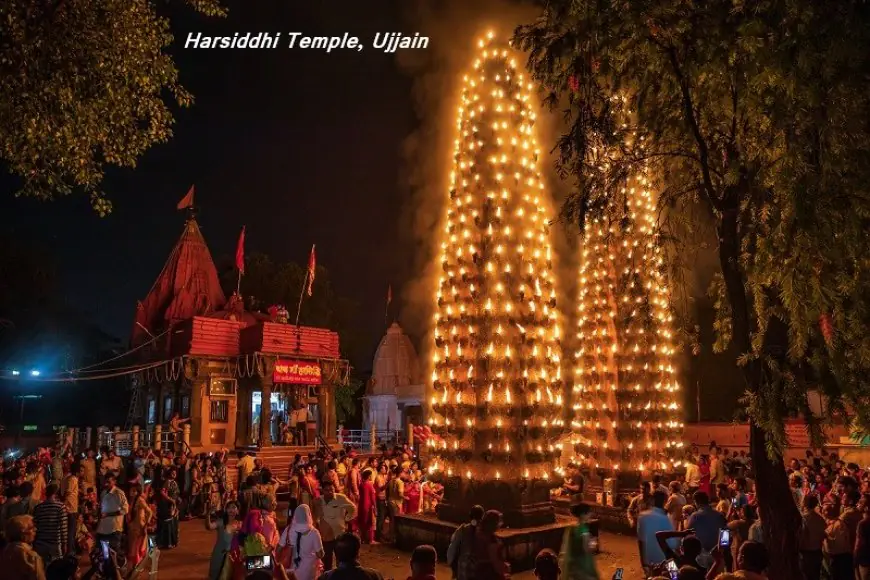
One of the most iconic features of Harsiddhi Temple is the pair of massive Deepstambhas, each containing hundreds of small niches for diyas. These lamp towers are symbols of divine light, purity, and the presence of Shakti. While they remain an important part of the temple’s identity throughout the day, they come alive only after sunset.
Priests climb the towering structures with remarkable skill and devotion, lighting diyas row by row. This visual spectacle is not just visually stunning but spiritually potent. As the towers gradually illuminate from bottom to top, they transform into vertical rivers of fire, casting warm, golden reflections across the temple walls. The entire courtyard becomes bathed in a soft glow that feels both ancient and mystical.
Devotees often stand silently, mesmerized by the sight. Many believe that witnessing this ritual brings protection, positivity, and emotional healing. Offering a diya at the base of the Deepstambhas is considered a powerful act of surrender and devotion to the divine mother.
The Evening Aarti: When the Temple’s Energy Peaks
Shortly after the Deepstambhas are fully illuminated, the evening aarti begins. This is the moment when the energy inside Harsiddhi Temple reaches its highest point. The aarti at night feels distinctly different from the one conducted during the day. It is slower, deeper, and more resonant.

The sound of conch shells signals the beginning of the ritual. Priests holding large brass lamps stand before the deity and perform synchronized circular motions, creating patterns of light that dance across the sanctum. The rhythmic ringing of bells, the harmonious chanting of shlokas, and the deep resonance of mantras fill every corner of the temple.
The vibrations created during the aarti have a noticeable effect on the devotees. Many experience goosebumps. Some feel emotional release. Others report a wave of calmness washing over them. The night aarti is believed to purify the mind, soothe emotional disturbances, and awaken inner strength.
The atmosphere during this ritual is so powerful that even those who are not deeply spiritual often feel moved. It is not merely a ritual; it is a moment of connection with something far beyond the physical realm.
Unique Night Rituals Performed Only After Sunset
Harsiddhi Temple follows several ancient practices connected to the divine feminine energy. Some of these rituals are performed only at night, when the energy of the Shaktipeeth is believed to be more active and receptive.
These include:
• Special oil offerings dedicated to Harsiddhi Mata
• Unique chanting patterns associated with Shakti worship
• Silent circumambulation around the sanctum
• Deep meditation and inward prayer conducted by traditional practitioners
• Offerings made without verbal requests, symbolizing surrender and trust
These rituals are subtle and not always visible to the public, yet they contribute to the powerful atmosphere that defines nighttime at Harsiddhi Temple. According to temple priests, the divine mother’s energy intensifies at night, making evening rituals far more spiritually effective for devotees seeking peace, healing, or guidance.
The Sensory Experience of the Temple at Night
There is a particular sensory depth to Harsiddhi Temple after sunset—one that engages sight, sound, scent, and emotion.
The lighting becomes softer but more concentrated. The shadows cast by the Deepstambhas create hypnotic patterns on the ground. The soundscape shifts from busy chanting to occasional bells and soft murmurs of prayer. The fragrance of camphor, incense, and oil lamps lingers in the air, creating a grounding effect. Even the temperature feels different, offering a gentle coolness that soothes the senses.
Visitors often describe the night environment as healing. It feels like stepping into a different dimension—one where time slows down and the mind becomes quiet without effort.
Meditation and Silence After the Aarti
Once the aarti concludes and the large crowd disperses, the temple transitions into its most peaceful phase of the night. Devotees who remain often choose to sit quietly along the walls or in front of the sanctum, absorbing the energy of the space.
This is one of the most effective times for meditation in the temple. Even five minutes of sitting silently can bring noticeable calmness, emotional clarity, and spiritual grounding. The combination of flickering lamps, profound silence, and lingering vibrations creates a natural meditative state that does not require any technique.
Many locals believe that this is the time when the blessings of Harsiddhi Mata are most easily received, as the mind is quiet and the heart is open.
The Final Darshan of the Night
As the temple prepares to close, devotees line up for the last darshan of the day. The queue is often shorter, and the atmosphere becomes more intimate. The idol of Harsiddhi Mata appears particularly radiant under the evening lamps, and devotees often offer their final prayers with deep gratitude.
This final darshan is considered highly auspicious. Many visitors describe it as emotionally moving—a moment when personal prayers feel heard and acknowledged.
Why Visiting Harsiddhi Temple After Sunset Is Essential
Harsiddhi Temple’s true spiritual energy is felt most profoundly after sunset. The combination of rituals, lighting, silence, and divine presence creates a sacred environment that daytime visits simply cannot replicate. Whether you seek peace, healing, clarity, or connection, the nighttime experience is transformative.
For devotees, travelers, or anyone exploring Ujjain’s spiritual landscape, visiting Harsiddhi Temple in the evening is an essential part of understanding the city’s ancient spiritual heart.
Frequently Asked Questions