













The Akharas of Ujjain: Meeting the Saints Who Keep India's Ancient Traditions Alive
Step inside the world of Ujjain’s Akharas — the sacred centers of India’s saintly orders. Meet the Naga Sadhus, explore their rituals, and discover how these spiritual warriors preserve centuries-old Hindu traditions and discipline in the heart of Ujjain.


The Guardians of Sanatan Dharma 🕉️🚩
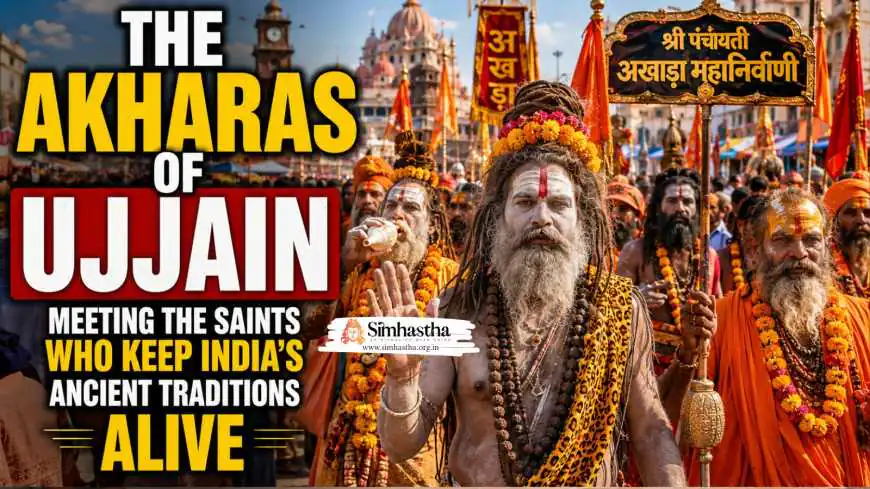
Let me take you to the heart of Ujjain's spiritual soul—the Akharas. 🏛️
Imagine a tradition so ancient that it traces its roots to Lord Brahma himself. A tradition where Naga Sadhus cover their bodies in ash, renounce all possessions, and dedicate their lives to preserving India's spiritual heritage. A tradition that has survived invasions, empires, and the relentless march of time. 🌟
When you visit the Simhastha Kumbh Mela in Ujjain, you're not just attending a festival—you're stepping into a living museum of India's monastic traditions. The Akharas—India's traditional monastic schools—form the spiritual backbone of this gathering, bringing together thousands of renunciates, sadhus, and holy people from across the country .
So, who are the Akharas of Ujjain? They are the saints, seers, and monastic orders who have kept India's ancient traditions alive for over a millennium. From the seven Akharas founded by Adi Shankaracharya in the 8th century to modern adaptations like the Kinnar Akhara, these institutions represent the living continuity of Sanatan Dharma. 🙏
Trending Guides Now

Best Time to Visit Ujjain: For Peaceful Darshan and Comfortable Travel
Women Safety Guide for Ujjain: Travel Smart, Safe and Confident

Ujjain to Omkareshwar Route Guide: Best Road Plan, Temples, and Travel Tips for Devotees
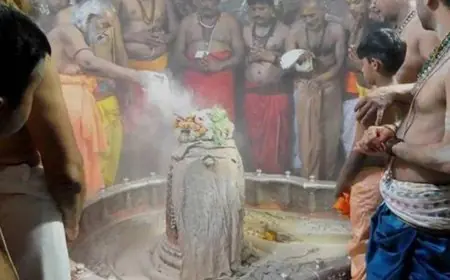
A Morning at Mahakaleshwar: My Experience of the Bhasma Aarti in Ujjain

Ujjain Railway Station to Mahakaleshwar Temple Distance (2026 Guide)

Ujjain Simhastha 2028 Dates Announced: Full Shahi Snan & Event Timeline

Ujjain Simhastha Update: CM Mohan Yadav Reviews 2028 Works

Ujjain Railway Station to Kal Bhairav Temple: Distance, Auto Fare and Best Route
In this article, we'll meet the Akharas, explore their history, understand their rituals, and discover how they're preparing for Simhastha 2028. Let's go! 🚀
The Foundation: How Akharas Began 🏛️📜
The Vision of Adi Shankaracharya
The Akhara system as we know it today is believed to have been established by Adi Shankaracharya in the 8th century CE. Facing challenges from other religious traditions, Shankaracharya organized Hindu ascetics into monastic orders known as Akharas—a strategic move to preserve and propagate Sanatan Dharma .
The Seven Original Akharas:
According to tradition, Shankaracharya founded seven major Akharas:
-
🏛️ Mahanirvani Akhara
-
🏛️ Niranjani Akhara

-
🏛️ Juna Akhara
-
🏛️ Atal Akhara
-
🏛️ Avahan Akhara
-
🏛️ Agni Akhara
-
🏛️ Anand Akhara

The Dashanami Tradition: These Akharas are part of the Dashanami Sampradaya—ten monastic orders established by Shankaracharya to organize Hindu renunciates across India. Each tradition specialized in different spiritual practices :
| Tradition | Specialty |
|---|---|
| Saraswati | Advaita, Vedanta, Yoga |
| Giri | Hatha Yoga, Tapasya, Tantra |
| Puri | Sankhya philosophy |
The 13 Akharas of India 🚩👑
The Full List
Today, there are 13 major Akharas recognized by the Akhil Bharatiya Akhara Parishad, the governing body of Hindu monastic orders .
The Shaivite Akharas (7)
Following the Dashanami tradition established by Adi Shankaracharya:
-
🕉️ Juna Akhara — The largest and most prominent, with disciples tracing their lineage through Lord Dattatreya
-
🕉️ Niranjani Akhara
-
🕉️ Mahanirvani Akhara
-
🕉️ Atal Akhara
-
🕉️ Avahan Akhara
-
🕉️ Agni Akhara
-
🕉️ Anand Akhara
The Vaishnav Akharas (3)
Devoted to Lord Vishnu:
-
🙏 Nirmohi Akhara
-
🙏 Digambar Akhara
-
🙏 Nirvani Akhara
The Udasin Akharas (3)
Followers of a neutral path, influenced by Sikh and Nath traditions:
-
☸️ Bada Udasin Akhara
-
☸️ Naya Udasin Akhara
-
☸️ Nirmal Akhara
The 14th Akhara: Kinnar Akhara
In 2015, a significant development occurred—the formation of the Kinnar Akhara, a religious order for transgender individuals .
The Milestone: Formed in October 2015, the Kinnar Akhara now has branches in over two dozen states .
The 2016 Simhastha: The transgender community was allotted five acres of land to host the Kinnar Akhara at the 2016 Ujjain Simhastha. While the inclusion met with some objections from other Akharas, their positive reception by pilgrims testified to their overall acceptance. They were treated as holy people, enjoying the full respect afforded to any Hindu sadhu .
The Recognition: The Kinnar Akhara held its own parade to the river for their sacred dip .
The Traditions: Rituals That Defy Modernity 🔥🪔
The Shahi Snan Procession
The most spectacular display of Akhara traditions occurs during the Shahi Snan (Royal Bath)—the grand procession of sadhus to the river for their sacred dip at the Kumbh Mela .
The 2016 Milestone: At the 2016 Ujjain Simhastha, the saints and Naga ascetics of all 13 Akharas agreed to take the bath simultaneously for the first time, instead of vying for first place as in past years. In this way, they affirmed the ideal of peaceful coexistence between philosophical views .
The Order of March:
The procession begins with the sadhus leading the way to the river banks, followed by the general population after the sadhus have completed their ritual bath .
The Cow Dung Holi
One of the most unusual traditions of the Ujjain Akharas is the cow dung Holi celebration ahead of the Simhastha .
The Ritual: Naga saints assemble and toss cow dung mixed with cow urine at each other, a tradition that began with prayers and offerings .
The Significance: Akhil Bhartiya Akhara Parishad chief Narendra Giri explained, "Cow dung is very important because of its medicinal properties." Members of all 13 Akharas participated in this celebration .
The Experience: The celebration involved a tractor trolley full of cow dung, followed by showers of flower petals and sandalwood powder. Divisional Commissioner Ravindra Pastor called it "one of the best things I have ever witnessed" .
The Spiritual Legacy: What Makes Ujjain's Akharas Special 🌟🕉️
A Tradition of Renunciation
The Akharas of Ujjain represent the pinnacle of spiritual renunciation in India. The Naga Sadhus—ascetics who abandon all worldly possessions—are a hallmark of the Shaivite Akharas.
The Initiation: Becoming a Naga Sadhu requires years of preparation, celibacy, and rigorous spiritual practice.
The Lifestyle: Naga Sadhus live without possessions, often residing in caves or forests, emerging only during special occasions like the Kumbh Mela.
The Symbolism: The sacred ash (bhasma) smeared on their bodies represents the impermanence of the physical form and the eternal nature of the soul.
The Dattatreya Akhara: Ujjain's Own
Ujjain is home to the Shri Dattatreya Akhara, a monastery located on the very place where Lord Dattatreya is believed to have taught his disciples in the Treta Yuga .
The Lineage: The guru-disciple tradition of the Dattatreya Akhara traces back through Adi Shankaracharya, Govindapadacharya, Gaudapadacharya, Shukadeva, Sage Vyasa, Sage Parashara, Shakti Maharishi, Sage Vasishtha, and Lord Brahma .
The Significance: This Akhara represents the unbroken continuity of spiritual knowledge from ancient times to the present day.
The All-Female Akhara
At the 2016 Ujjain Simhastha, the Mela saw the initiation of over 400 women monks in the Naga order. While the all-female Juna Sannyasini Akhara was not permitted at the Ujjain Mela, this marked a significant step toward inclusivity in the tradition .
Preparing for 2028: The Future of Ujjain's Akharas 🏗️🌟
Permanent Ashrams for the Akharas
In October 2024, Chief Minister Mohan Yadav announced a comprehensive plan allowing all 13 Akharas and other seers to build permanent ashrams in Ujjain, on the lines of Haridwar .
The Vision: "On the lines of Haridwar, where all the 13 akharas and other seers have their own permanent ashrams from where their sadhus and sanyasis as well as devotees leave to take bath during the Kumbh Mela, similar planning is being done for Ujjain," the CM said .
The Land Allocation: A significant portion of Ujjain will be reserved for ashrams. While 25% of each plot will be allowed for construction, the remaining open space will be used for parking and other facilities .
The Infrastructure: All infrastructural support, including roads, sewage, drinking water, and power, will be made available to the ashrams by the government and the Ujjain Development Authority .
Public Facilities: Anna Kshetra (community kitchens), dharamshalas, medical centers, and Ayurveda centers will be organized on priority .
Simhastha 2028: A Grand Affair
The Simhastha 2028 is expected to attract millions of pilgrims, with the Akharas playing a central role .
The Significance: Ujjain is one of the four sites where drops of amrita (the drink of immortality) are believed to have fallen, according to Hindu mythology .
The Scale: The 2016 Simhastha attracted nearly 75 million people, and 2028 is expected to be even larger .
The Preparations: Permanent infrastructure is being built for basic facilities like roads, electricity, drinking water, and drainage to avoid problems caused by temporary construction .
The Politics of the Akharas: A Note of Caution ⚖️
While the Akharas are spiritual institutions, they have also been part of the political landscape of India. In 1968-69, a serious dispute between the Akharas regarding the Ujjain Simhastha led to one group organizing the Kumbh in 1968 and the other in 1969 .
The Lesson: Even spiritual institutions can be affected by politics, but the essence of the Akhara tradition remains focused on preserving India's ancient spiritual heritage.
The Bottom Line: Living Tradition, Eternal Spirit 🎯
So, who are the Akharas of Ujjain? They are the living embodiment of India's ancient spiritual traditions—guardians of a heritage that has survived for millennia.
-
The Monastic Orders: 13 Akharas, including the Kinnar Akhara, representing the diversity of Hindu monasticism 🏛️
-
The Founders: The seven original Akharas established by Adi Shankaracharya 🕉️
-
The Traditions: Rituals like the Shahi Snan and cow dung Holi that defy modern convention 🔥
-
The Diversity: Shaivite, Vaishnav, Udasin, and Kinnar Akharas—each with unique traditions 🚩
-
The Future: Permanent ashrams being built for Simhastha 2028 🏗️
-
The Essence: Saints who renounce the world to preserve India's spiritual soul 🙏
The Akharas of Ujjain are not just religious institutions—they are the guardians of India's spiritual heritage, the keepers of ancient wisdom, and the living link between the past and the future. When you meet them at the Simhastha, you are meeting the soul of India itself. 🕉️✨
Frequently Asked Questions