
































Why Different Akharas Follow Different Traditions
Explore why different Akharas follow different traditions. Understand the historical, philosophical, and spiritual roots behind the diverse practices of India's ancient monastic orders.



The Ancient Roots of Akhara Diversity and the Four Sampradayas
To understand the diversity of the Akharas, one must first understand that they emerged from different Sampradayas—the great philosophical and devotional lineages that have structured Hindu spirituality for over a millennium. The Akharas did not arise in a vacuum; they were formed at specific historical moments, by specific spiritual masters, in response to specific theological and social needs. The most fundamental division is between the Shaiva Akharas, which worship Shiva as the supreme deity, and the Vaishnava Akharas, which worship Vishnu or his avatars as the ultimate reality. Within these broad categories, further distinctions emerge. The Shaiva Akharas are themselves divided into those that follow the Dashanami tradition established by the great 8th-century philosopher Adi Shankaracharya, and those that follow the Nath Sampradaya founded by Matsyendranath and Gorakhnath. The Vaishnava Akharas, similarly, are divided among those dedicated to Lord Rama, those dedicated to Lord Krishna, and those following specific Vaishnava theologians like Ramanuja, Nimbarka, or Vallabhacharya. Each of these Sampradayas brought to its Akhara a fully developed philosophical system, a specific set of ritual practices, a distinct understanding of the relationship between the soul and the divine, and a particular emphasis on certain scriptures. The Akhara, in this sense, is the institutional embodiment of a Sampradaya's spiritual vision, the organizational form through which the vision is preserved, practiced, and transmitted across generations. 🔱
Adi Shankaracharya and the Dashanami Roots
The most influential figure in the formation of the Shaiva Akhara system is undoubtedly Adi Shankaracharya. In the 8th century, Shankaracharya travelled across India, debating philosophers, establishing monasteries, and reviving a Vedantic understanding of Hinduism that emphasized the non-dual nature of reality—Advaita Vedanta. As part of his organizational genius, he established the Dashanami Sannyasa tradition, organizing renunciates into ten orders, each named after a spiritual quality or a sacred location: Giri (mountain), Puri (city), Bharati (learning), Saraswati (wisdom), Tirtha (pilgrimage), Aranya (forest), Parvata (mountain), Sagari (ocean), Vana (forest), and Ashrama (hermitage). These ten orders formed the pool from which many of the great Shaiva Akharas would later draw their members. The Juna Akhara, the largest and one of the most influential, is strongly associated with the Giri and Puri orders, and its philosophical orientation carries the deep imprint of Shankaracharya's Advaita Vedanta. The Niranjani Akhara traces its spiritual lineage through the Dashanami tradition as well, though it has developed its own distinctive practices and internal culture over the centuries. The Mahanirvani Akhara, one of the oldest and most respected, is also rooted in the Dashanami system but has incorporated significant tantric elements into its practices. The point is that even among the Akharas that share a common Shankaracharya lineage, centuries of independent development under different mahants, in different regions, and with different spiritual emphases, have created distinct institutional identities and ritual traditions. ✅
The Nath Sampradaya and the Yoga-Oriented Akharas
Parallel to the Dashanami tradition, and interacting with it in complex ways, is the Nath Sampradaya, the lineage of the great yogis Matsyendranath and Gorakhnath. While the Dashanami Akharas tend to emphasize knowledge (jnana) and devotion (bhakti) as paths to liberation, the Nath-influenced Akharas place a stronger emphasis on Hatha Yoga, Kundalini awakening, and the attainment of Kaya Siddhi—the perfection and potential immortality of the physical body through yogic processes. The Nath Sampradaya has its own distinctive rituals, its own mantras, its own understanding of the subtle body and the chakras, and its own pantheon of perfected masters, the Navnaths and the Chaurasi Siddhas. The Akharas that draw significantly from the Nath tradition will often have dhunis—sacred fires—that are maintained with specific Nath mantras, and their sadhus may engage in yogic practices that are less common in the purely Dashanami Akharas. The relationship between the Dashanami and Nath traditions is not one of simple separation; there has been cross-pollination over the centuries, and some Akharas incorporate elements of both. But the distinct emphasis on yogic siddhis and the Guru Gorakhnath lineage marks a clear difference in spiritual orientation that shapes everything from daily practice to initiation rituals. 🛕
The Vaishnava Akharas and the Path of Devotion
If the Shaiva Akharas represent the paths of knowledge and yoga, the Vaishnava Akharas represent the path of bhakti—intense, personal devotion to a loving deity. The Vaishnava Akharas are organized around the worship of Vishnu in his various forms, most prominently Lord Rama and Lord Krishna. The largest and most prominent of the Vaishnava Akharas is the Shri Nirmohi Ani Akhara, dedicated to Lord Rama, and the Shri Digambar Ani Akhara, also Rama-oriented. The Shri Nirvani Ani Akhara is a significant Krishna-oriented Vaishnava Akhara. The philosophical foundations of these Akharas are drawn from the great Vaishnava theologians: the qualified non-dualism of Ramanuja, the dualistic devotion of Madhvacharya, the pushti marg of Vallabhacharya, and the achintya bheda abheda of Chaitanya Mahaprabhu. The Vaishnava sadhus typically do not practice the extreme physical austerities of the Shaiva Nagas. You will not see naked, ash-covered Vaishnava warriors; instead, you will see ochre or white-robed renunciates, often with the urdhva pundra—the distinctive Vaishnava tilak—on their foreheads, chanting the names of Rama or Krishna, and engaged in devotional practices like kirtan and puja to the deity's image. Their initiation rituals, their dietary rules, their relationship to temple worship, and their understanding of the nature of the soul and its relationship to God are all distinct from the Shaiva traditions, reflecting the profound theological differences between the two great streams of Hindu spirituality. ✅
Trending Guides Now

How Naga Sadhus Begin Their Day: Ancient Discipline and Yogic Power

13 Akharas of Simhastha 2028: Names, Order & Their Role Explained
Who Are the Naga Sadhus of Simhastha 2028? Discipline, Rituals & Mystical Identity Revealed

Why Only Akharas Are Allowed to Lead Shahi Snan (Ujjain Rule Explained)

Ujjain Railway Station to Mahakaleshwar Temple Distance (2026 Guide)

Ujjain Simhastha 2028 Dates Announced: Full Shahi Snan & Event Timeline

Benefits of Becoming a Simhastha Volunteer

Ujjain Travel During Shravan Month: What Changes for Visitors
The Udasin and the Sikh-Origin Akharas
A unique and often misunderstood category within the Akhara system is that of the Udasin Akharas, which trace their spiritual lineage to Shri Chand, the elder son of Guru Nanak Dev Ji, the founder of Sikhism. The Udasin tradition represents a fascinating syncretic space where Sikh and Hindu spiritualities have intermingled for centuries. The Bada Udasin Akhara and the Naya Udasin Akhara are the two prominent Udasin orders. Their practices, their scriptures, and their philosophical orientations draw from both the Sikh Gurus' teachings and the broader Hindu monastic tradition. They revere the Guru Granth Sahib alongside Hindu scriptures, and their sadhus often maintain a lifestyle that reflects the simplicity and devotion emphasized by Guru Nanak while participating fully in the Kumbh Mela and the Akhara system. The Udasin Akharas serve as a living reminder that the boundaries between what we now call "Hinduism" and "Sikhism" were, for much of history, far more fluid and overlapping than modern communal identities might suggest. Their presence in the Simhastha processions, with their distinctive saffron turbans and their reverence for the Sikh Gurus, adds yet another thread to the already rich tapestry of Akhara diversity. 🛕
The Initiation Rituals and the Internal Constitution of Each Akhara
The differences between Akharas are not merely philosophical abstractions; they are embodied in the very process by which a renunciate becomes a member. Each Akhara has its own diksha or initiation ritual, and these rituals differ significantly in their procedures, their mantras, and their symbolic meanings. In the Shaiva Akharas, the initiation of a Naga sadhu, as discussed earlier, involves the performance of one's own pind daan funeral rites, the renunciation of clothing and caste, and the reception of the guru mantra from the mahant. But even among the Shaiva Akharas, the specific mantras used, the number of prostrations, the time of day considered auspicious for the ritual, and the post-initiation disciplines imposed on the new initiate will vary. In the Vaishnava Akharas, initiation typically does not involve ritual nudity; instead, the initiate receives the nama mantra—the sacred name of Rama or Krishna—and the gopal mantra for those in the Krishna tradition, and is branded with the symbols of Vishnu's conch and discus on the shoulders or arms using heated metal stamps, a practice known as tapa mudra. The Udasin Akharas have their own initiation procedures, reflecting their Sikh-influenced traditions. These ritual differences are not superficial; they encode the core theological and spiritual DNA of each Akhara, and they ensure that each new generation of sadhus is formed in the distinctive spiritual mould of their particular lineage.
The Symbols, Flags, and Visual Identity of the Akharas
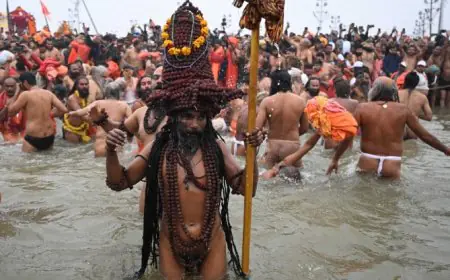
When the Akharas process during the Simhastha, a knowledgeable observer can identify each one by its visual symbols: the color and design of its flag, the style of its sadhus' clothing or lack thereof, the specific tilak marks on their foreheads, and the weapons or staffs they carry. The Juna Akhara's flag, for example, carries specific symbols associated with its lineage and its presiding deity. The Niranjani Akhara has its own distinctive banner. The Mahanirvani Akhara is known for the particular weapons its Nagas carry. These visual markers are not arbitrary decorations; they are dense with symbolic meaning. The flag, the dhvaja, is considered a living embodiment of the Akhara's spiritual power, consecrated through elaborate rituals before the Mela begins and guarded throughout. The weapons carried by the Naga sadhus—the swords, tridents, and staffs—are not primarily for combat, though the Akharas have a historical warrior dimension. They are symbols of the spiritual battle against ignorance, ego, and attachment. The ash smeared on the bodies of the Shaiva Nagas is vibhuti, sacred ash from the dhuni fire, symbolizing the impermanence of the physical body and the soul's ultimate identity with Shiva. The ochre robes of other sadhus symbolize renunciation, the fire of tapas that has burned away worldly desires. Each element of visual identity is a teaching, a reminder, and a declaration of the Akhara's particular spiritual lineage and emphasis. 🔱
The Philosophical Emphases and the Different Maps of Reality
At the deepest level, why different Akharas follow different traditions is because they operate with different philosophical maps of reality. The Advaita Vedanta of the Shankaracharya-influenced Akharas teaches that the individual soul and the ultimate reality, Brahman, are ultimately non-different, and that liberation is achieved through the direct knowledge of this identity. The bhakti traditions of the Vaishnava Akharas, by contrast, maintain a distinction between the soul and God, teaching that the highest state is not absorption into the divine but eternal, loving service to the divine in a relationship of intimate duality. The Nath-influenced Akharas work with a map of the subtle body, the chakras, and the kundalini energy, understanding liberation as the awakening and ascent of this energy to the crown chakra. The Udasin Akharas bring a perspective influenced by the Sikh Gurus' emphasis on the formless divine and the importance of the Guru's grace. These are not small, negotiable differences. They are fundamentally different understandings of the nature of the self, the nature of the divine, the nature of the path, and the nature of the goal. The Akhara system, in its wisdom, has never attempted to homogenize these differences. Instead, it has provided a framework in which each tradition can maintain its integrity, pass on its teachings, and participate in the larger, collective expression of Hindu spirituality at events like the Kumbh Mela.
The Shared Ground Beneath the Diversity
Having emphasized the differences, it is equally important to recognize the shared ground that unites all the Akharas. All of them are communities of renunciates who have left behind family, caste, and worldly pursuits in search of spiritual truth. All of them are organized around the guru-shishya parampara, the unbroken lineage of master and disciple that transmits spiritual authority and knowledge. All of them participate in the Kumbh Mela, acknowledging the sacredness of the event and the importance of the collective Shahi Snan. All of them, despite their different philosophical maps, share a fundamental commitment to sanatana dharma—the eternal spiritual order—and to the protection and propagation of the Hindu spiritual tradition. The Akharas have, at times in their history, even come together to defend their shared heritage against external threats. The diversity of the Akharas is not a diversity of enemies but a diversity of friends, of brothers and sisters walking different paths up the same mountain, occasionally arguing about the best route but united in their commitment to the climb. The Simhastha, when the Akharas process in their magnificent variety, is the great, public celebration of this unity-in-diversity, a declaration to the world that the spiritual life can be lived in a thousand different ways, and that all of them are valid, all of them are sacred, and all of them are, in their own way, beautiful.
The Living, Evolving Tradition
Finally, it is important to understand that the Akhara traditions are not frozen in time. They are living, evolving institutions that continue to adapt to changing historical circumstances while preserving their core spiritual identities. The Kinnar Akhara, which has gained increasing recognition in recent years, represents a contemporary evolution of the Akhara system, creating a space for transgender and gender-nonconforming renunciates within the ancient monastic framework. This development, like the formation of the original Akharas centuries ago, is a response to a specific need and a specific historical moment, demonstrating that the Akhara system retains the flexibility to expand and include new voices while remaining rooted in its ancient foundations. The diversity of the Akharas, therefore, is not just a fact about their past; it is a promise about their future. As long as the Akharas exist, they will continue to generate new forms of spiritual practice, new interpretations of ancient wisdom, and new expressions of the eternal human quest for the divine. And when the great processions of the Simhastha unfold, they will continue to display, for all the world to see, the magnificent, uncontainable, endlessly creative diversity of the Hindu spiritual genius. 🔱

Frequently Asked Questions