















What Businesses Gain Most From Simhastha 2028 Tourism
Discover what businesses gain most from Simhastha 2028 tourism. From hotels and transport to local artisans and food vendors, explore the economic sectors poised for massive growth during the Kumbh.


The Hospitality and Accommodation Sector and the Room Rush
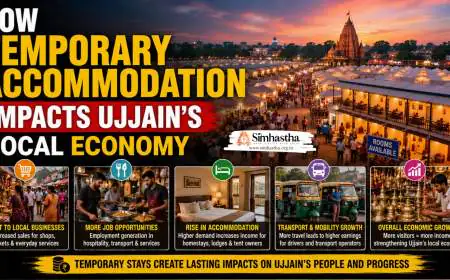
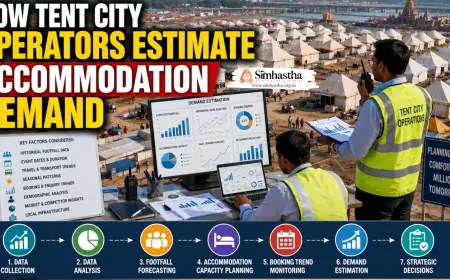
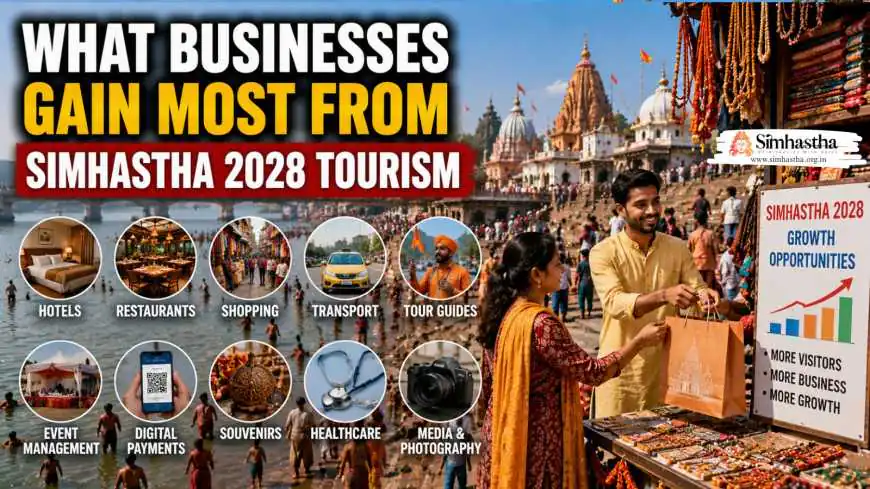
The single most obvious and dramatic beneficiary of Simhastha tourism is the hospitality and accommodation sector. During the 2016 Simhastha, hotel rooms within Ujjain city limits were selling at five to twenty times their normal rates during the Shahi Snan dates, and they were still completely sold out months in advance. For 2028, the pattern will repeat with amplified intensity. Ujjain's existing hotel inventory—approximately 5,000 to 7,000 rooms across all categories—will be entirely absorbed by early bookers, tour operators, VIP delegations, and international pilgrims during the Phase One and Phase Two booking windows. The premium and mid-range hotels in Ujjain and the Indore corridor will see their annual revenue targets met within the span of a single month. But the real hospitality story of Simhastha 2028 extends far beyond the formal hotel sector. The homestay market, being actively developed by the Madhya Pradesh government with a target of 10,000 to 15,000 registered rooms, will allow thousands of ordinary Ujjain residents to participate directly in the economic boom. Families who open their homes to pilgrims will earn substantial supplemental income, and the government's training and certification programs will ensure that these homestays meet basic quality and safety standards. The tent city operators, who will construct and manage temporary accommodations for lakhs of pilgrims, represent another massive business opportunity, with contracts running into hundreds of crores for the largest installations. 🛕
Dharamshalas, Ashrams, and Community-Run Accommodations
The dharamshala and ashram sector, often overlooked in conventional economic analyses, will experience a surge in both occupancy and donations during the Simhastha. These institutions, many of which operate on modest budgets throughout the year, will accommodate tens of thousands of pilgrims during the Mela period. The donations—both cash and in-kind—that flow into these institutions during the Simhastha often sustain their operations and charitable activities for years afterward. Temple trusts that manage pilgrim accommodations, such as the Mahakaleshwar Temple Trust, will see a dramatic increase in their revenue and will typically reinvest these funds into Temple Infrastructure, social services, and preparations for the next Kumbh cycle. For the managers and trustees of these religious accommodations, the Simhastha is not merely a busy period but a critical financial juncture that determines their institutional capacity for the following decade.
The Transportation and Logistics Sector and Moving Millions
If accommodation is the most obvious business beneficiary, transportation and logistics is arguably the most pervasive. Moving ten crore people into, around, and out of a single city over the course of a month is a logistical operation that rivals the mobilization of entire nations during wartime. Every segment of the transport sector stands to gain. Indian Railways, which will operate over 500 special trains during the Mela period, will generate significant revenue from pilgrim fares, though this is balanced by the public-service nature of the railway's operations. The real transport windfall flows to the private sector. Bus operators, both organized companies and independent fleet owners, will see their vehicles booked solid for weeks on end. Auto-rickshaw and taxi drivers in Ujjain and Indore will earn multiples of their normal monthly income during the peak Mela days, with round-the-clock demand and surge pricing that, while officially regulated, will operate dynamically. Car rental agencies and private vehicle operators serving tour groups, VIP delegations, and international pilgrims will be fully booked. The fuel stations along the Ujjain-Indore corridor and the major approach roads will operate at maximum capacity, and associated businesses—vehicle repair shops, spare parts dealers, tire vendors—will all see a significant demand surge. Even bullock cart operators and tonga drivers, who serve the more traditional pilgrims and the rural devotees walking to Ujjain from surrounding villages, will find their services in high demand, connecting the modern economic boom to modes of transport that are centuries old. 🚆
The Logistics and Supply Chain Backbone
Behind the visible transport of pilgrims lies an invisible but equally massive logistics and supply chain operation. The temporary city that houses the Simhastha requires food, water, fuel, construction materials, medical supplies, and countless other commodities to be transported, stored, and distributed efficiently. Trucking companies, warehouse operators, and cold storage facilities in and around Ujjain and Indore will operate at peak capacity for months before, during, and after the Mela. Packaged water and beverage companies will see a demand spike that rivals the peak summer season compressed into a few weeks. Fuel distributors and gas agencies will need to manage their supply chains meticulously to ensure that the Mela's massive energy demands are met without disruption. For businesses in the logistics sector, the Simhastha is not just a revenue opportunity; it is a stress test of their operational capabilities, and those that perform well earn reputational capital that pays dividends long after the Mela concludes.
Trending Guides Now
Why Simhastha Happens Only When Jupiter Enters Leo ?

Simhastha Kumbh Mela Explained for First-Time Visitors
How Simhastha 2028 Traffic Control Relies on Ring Roads and Bypass Corridors

Why Simhastha 2028 Planning Focuses on Movement Flow Over Monument Building

Ujjain Railway Station to Mahakaleshwar Temple Distance (2026 Guide)

Ujjain Simhastha 2028 Dates Announced: Full Shahi Snan & Event Timeline

Benefits of Becoming a Simhastha Volunteer

Ujjain Travel During Shravan Month: What Changes for Visitors
The Food and Beverage Industry and Feeding the Pilgrim Nation
If there is one universal, non-negotiable need that every pilgrim shares, regardless of wealth, background, or spiritual inclination, it is the need to eat. The food and beverage industry during the Simhastha operates at a scale that is almost impossible to comprehend. Tens of millions of meals will be served over the course of the Mela month. The beneficiaries of this gastronomic economy range from the humblest street vendor to the largest institutional caterers. Local food vendors—the chaiwallahs, the kachori sellers, the poha-jalebi stalls, the sugarcane juice vendors—will experience a demand surge that transforms their annual economic reality. A strategically located tea stall near a major bathing ghat can generate revenue during the Simhastha that sustains the vendor's family for years. Restaurants and dhabas in Ujjain, Indore, and along the approach roads will operate at full capacity with extended hours. Many will set up temporary satellite outlets within the Mela area, paying significant fees for prime locations that they recoup many times over through volume sales. Institutional caterers who secure contracts to supply the akhara camps, the tent cities, the government-organized pilgrim facilities, and the various religious organizations' langars will manage kitchen operations that rival those of large hotels, cooking for thousands of people at a time. The food supply chain—the farmers, wholesalers, grain merchants, dairy cooperatives, and vegetable markets—will experience a demand spike that elevates prices and revenues across the Malwa region. For the agricultural communities surrounding Ujjain, the Simhastha is a guaranteed, high-volume market for their produce, timed conveniently after the winter harvest. ✅
The Retail and Religious Merchandise Sector and the Sacred Economy
The retail sector during the Simhastha is dominated by religious merchandise, and the scale of this sacred economy is staggering. Every pilgrim who visits Ujjain for the Kumbh carries home something—a framed image of Mahakaleshwar, a rudraksha mala, a copper kalash filled with Shipra jal, a packet of Mahakal vibhuti, a length of sacred thread tied at the temple, a small idol, a book of mantras, a CD of bhajans. The puja item vendors who line the approach roads to the temples and the Mela ghats will sell flowers, bel patra leaves, coconuts, incense, camphor, sandalwood paste, kumkum, and sacred ash in quantities that are difficult to fathom. The textile and garment sector benefits from pilgrims purchasing new clothes—particularly the traditional kurta-pajamas, sarees, and dhotis—to wear for their sacred baths and temple visits. Handicraft and artisan cooperatives from across Madhya Pradesh, showcased at the Malyavaan Haat and other government-organized craft bazaars, will find a captive market of millions of pilgrims who are eager to purchase authentic, locally-made spiritual and cultural items. Jewelry shops, particularly those selling rudraksha, tulsi, and sandalwood malas, silver and copper items, and religious pendants, will do brisk business. Even the humble plastic and steel utensil vendors who sell the water pots and containers that pilgrims use to carry Shipra water home will see their stocks depleted. The retail economy of the Simhastha is decentralized, distributed across thousands of small vendors and hundreds of established shops, and the money that flows through this sector percolates deep into the local economy. 🛕
The Tour Operator and Travel Agency Sector and the Pilgrimage Package Boom
The tour operator and travel agency sector occupies a specialized and highly profitable niche in the Simhastha economy. For pilgrims who are traveling from distant states, from the Indian diaspora abroad, or from international backgrounds with no familiarity with Indian pilgrimage logistics, a packaged tour is the difference between a manageable spiritual journey and an overwhelming logistical nightmare. Tour operators who specialize in Kumbh Mela packages will begin marketing and selling their Simhastha 2028 tours as early as 2026, securing advance bookings with significant deposits. These packages, which bundle transportation, accommodation, guided darshan, special puja arrangements, and sometimes even Bhasma Aarti passes, command premium prices. A well-organized Simhastha tour package for an international pilgrim can range from ₹50,000 to ₹2,00,000 per person for a week-long stay, depending on the accommodation tier and the inclusiveness of the package. The most successful tour operators are those who have cultivated relationships with Ujjain hotels, with temple trusts, and with local guides over many years, and who can navigate the complex, rapidly changing landscape of the Mela with the confidence that comes from experience. For these businesses, the Simhastha is not just a revenue spike; it is the event around which their entire business model is structured, the twelve-yearly harvest that justifies years of relationship-building and market cultivation.
The Digital Services and Technology Sector and the Smart Kumbh
The Simhastha 2028 is being actively designed as a "Smart Kumbh" with a significant digital infrastructure overlay, and this creates substantial opportunities for the technology and digital services sector. The government's Integrated Command and Control Centre (ICCC) , the unified pilgrim mobile application, the digital payment infrastructure, the RFID-based waste management and sanitation monitoring systems, and the AI-powered crowd analytics platform are all being developed through contracts with technology companies, research institutions like IIT Indore, and specialized software firms. Beyond the government contracts, the digital economy of the Simhastha will include mobile recharge and data pack vendors who cater to pilgrims needing connectivity, digital payment facilitators who enable the transition from cash to UPI and card-based transactions across the Mela, social media and content creation professionals who document and broadcast the Mela to global audiences, and online booking platforms that aggregate accommodation, transport, and darshan passes. The telecom companies—Jio, Airtel, Vi—will deploy temporary infrastructure to handle the massive data and call traffic, and while this is a cost center in one sense, it is also a customer acquisition and brand visibility opportunity on an unparalleled scale. For technology startups and established firms alike, the Simhastha offers a unique proving ground for solutions designed for mass gatherings, and success at the Kumbh translates into credentials that open doors to other mega-events globally. ✅
The Medical and Wellness Sector and the Health Needs of Millions
The medical and pharmaceutical sector experiences a predictable and significant surge during the Simhastha. The sheer density of the pilgrim population, combined with the physical exertion of the pilgrimage, the variable weather conditions, and the inevitable spread of minor infections in crowded environments, creates a massive demand for healthcare services. The government's four-tier health infrastructure for the Mela—120 first-aid posts, 48 mini-hospitals, six sector hospitals, and upgraded tertiary referral centers—requires the procurement of medicines, equipment, and supplies on a massive scale, benefiting pharmaceutical distributors, medical equipment suppliers, and healthcare staffing agencies. Private clinics and hospitals in Ujjain and Indore will see increased patient loads. Pharmacies will sell basic medications, ORS packets, bandages, antiseptics, and preventive health products in enormous volumes. A specialized niche within this sector is Ayurvedic and wellness products—chyawanprash, herbal teas, massage oils, and immunity-boosting formulations—which are particularly popular among the traditional pilgrim demographic. Telemedicine platforms involved in the Simhastha health network will gain valuable experience and visibility. For the medical sector, the Simhastha is both a public health challenge and a significant economic opportunity, and businesses that align themselves with the government's health preparedness efforts can secure contracts and build relationships that extend far beyond the Mela period.
The Artisan, Handicraft, and Cultural Economy
One of the most heartening and culturally significant economic dimensions of the Simhastha is the opportunity it provides for traditional artisans, craftspeople, and cultural practitioners. The Malyavaan Haat, a permanent 15-acre crafts bazaar being developed for the Simhastha, will showcase the work of Bhil tribal artists, Maheshwari and Chanderi handloom weavers, Bagh print textile artisans, metalworkers from the Malwa region, terracotta craftspeople, and traditional painters. These artisans, many of whom struggle for market access and fair prices in normal times, will find themselves with direct access to millions of potential customers, many of whom are specifically seeking authentic, spiritually-infused, handmade items. The government's decision to structure the Haat with direct artisan-to-consumer sales, eliminating middlemen, means that the economic benefit flows more directly to the creators than through conventional retail channels. Folk musicians, bhajan singers, kirtan groups, and traditional storytellers also find their audiences multiplied exponentially during the Simhastha, with performance opportunities at akhara camps, temple courtyards, and cultural programs organized by the administration. Local printing presses that produce religious books, pamphlets, calendars, and images of deities will operate at maximum capacity. This cultural economy, while less financially massive than the hospitality or transport sectors, is perhaps the most meaningful in terms of its impact on the preservation and transmission of traditional art forms and the livelihoods of the communities that sustain them. ✅

The Employment Generation and the Labor Market Boom
Underpinning all the sectoral gains is a massive employment generation effect that transforms the labor market of Ujjain and the surrounding districts. The Simhastha directly and indirectly creates hundreds of thousands of temporary jobs. Construction workers are employed for years in the run-up to the Mela, building roads, ghats, sewerage systems, and temporary structures. Sanitation workers—an army of 10,000 is planned—are employed on performance-linked contracts during the Mela itself. Security personnel, both government and private, are deployed in large numbers. Guides, interpreters, auto-rickshaw drivers, porters, cooks, cleaning staff, tent erectors, electricians, plumbers, water tanker operators, and countless other categories of workers find their services in intense demand. The daily wage rates in Ujjain during the Simhastha surge well above normal levels, and workers from neighboring districts and even neighboring states migrate temporarily to take advantage of the opportunity. For the landless laborers, the marginal farmers, and the urban poor of the Malwa region, the Simhastha represents a concentrated period of employment and income that can significantly alter their household economic trajectory. The challenge for the administration is to ensure that this employment is fairly compensated, that workers are not exploited, and that the benefits of the economic boom reach the most vulnerable segments of the population. 🚶
The Long-Term Legacy and the Post-Simhastha Economic Landscape
The economic impact of the Simhastha does not end when the last pilgrim departs and the temporary tent cities are dismantled. The permanent infrastructure built for the Mela—the roads, the sewerage systems, the drinking water grid, the electricity network, the digital fiber backbone, the improved ghats and riverfront—continues to serve Ujjain's residents and its year-round pilgrim visitors for decades. This infrastructure legacy enhances the city's long-term economic competitiveness, making it more attractive for future investment, for tourism development, and for the growth of local businesses. The global visibility that Ujjain gains during the Simhastha—the media coverage, the social media content, the word-of-mouth of millions of pilgrims—positions the city as a year-round spiritual tourism destination, not just a once-in-twelve-years event. Businesses that establish themselves during the Simhastha and build relationships, reputations, and operational capabilities during the Mela are well-positioned to serve the ongoing pilgrimage traffic that flows through Ujjain throughout the year. The Simhastha is, in this sense, not merely a one-month economic phenomenon but a catalyst for a permanent elevation of Ujjain's economic base, a twelve-yearly injection of infrastructure, visibility, and entrepreneurial energy that compounds over time. For the businesses that recognize this and plan not just for the Mela month but for the post-Mela landscape, the Simhastha is the gift that keeps on giving. 🔱
Frequently Asked Questions