

























Why Simhastha 2028 Planning Focuses on Movement Flow Over Monument Building
Simhastha 2028 shifts focus to movement flow, crowd control, and safety over monuments. Learn how smart planning ensures seamless pilgrim experience.


Why Simhastha 2028 Planning Focuses on Movement Flow Over Monument Building
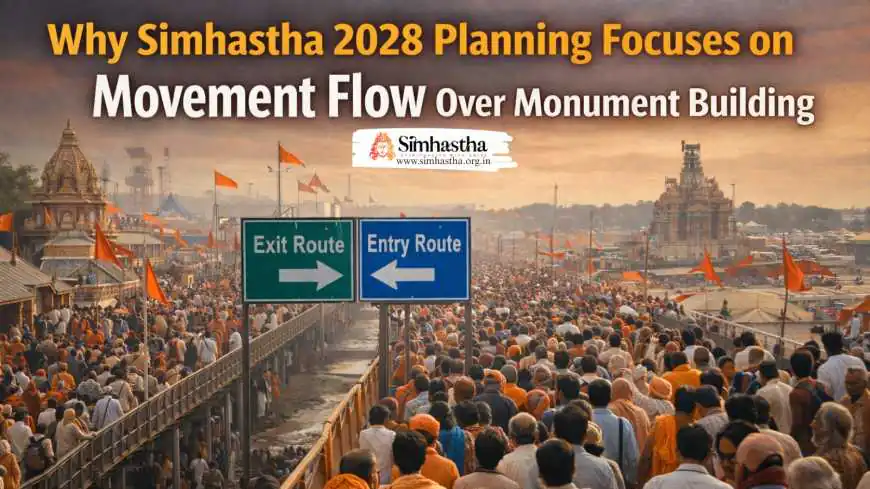
Simhastha 2028 is being designed not as a city of structures, but as a living system of movement. The real challenge is not where people will stand, but how millions will move. Authorities are prioritizing seamless flow of pilgrims, vehicles, and services over building permanent monuments because the success of this sacred gathering depends on continuity, safety, and timing rather than static infrastructure. The focus has shifted from creating landmarks to designing pathways that breathe, adapt, and sustain one of the largest human gatherings on Earth.
For Every pilgrims, understanding Simhastha 2028 dates and the official Shahi Snan timeline is essential before booking flights or accommodation, as these sacred dates are completely non-negotiable
The Core Shift: From Static Structures to Dynamic Systems
Traditional urban planning often celebrates permanence. Buildings, gates, and monuments stand as symbols of development. But Simhastha 2028 planning operates under a completely different logic.
Here, permanence can become a bottleneck. A massive structure might look impressive, but if it restricts movement or creates congestion, it becomes a liability. The real architecture of Simhastha is invisible. It lies in how people flow like a river, not how they gather like a crowd.
Trending Guides Now

What Is Simhastha? Complete Explanation of Ujjain’s Sacred Kumbh
Why Simhastha Happens Only When Jupiter Enters Leo ?
Why is Ujjain Kumbh Called Simhastha?
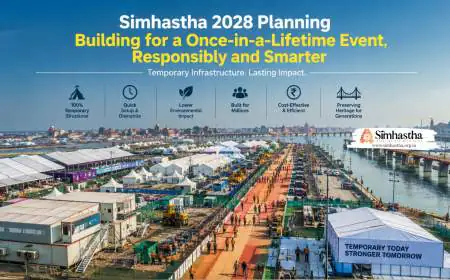
How Simhastha 2028 Planning Uses Temporary Infrastructure Over Permanent Construction

Ujjain Railway Station to Mahakaleshwar Temple Distance (2026 Guide)

Ujjain Simhastha 2028 Dates Announced: Full Shahi Snan & Event Timeline

Benefits of Becoming a Simhastha Volunteer

Ujjain Travel During Shravan Month: What Changes for Visitors
Movement flow Simhastha is not just a concept but a design philosophy. Every road, every entry point, every ghat access route is being evaluated based on how efficiently it can handle human movement under peak pressure.
Understanding the Scale of Movement
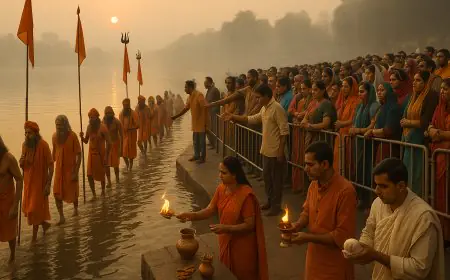
Simhastha is not a typical event. It is a phenomenon where millions converge within limited time windows, especially during Shahi Snan days.
This creates unique challenges:
- Sudden surges in crowd density
- Time-sensitive movement patterns
- Multi-directional pedestrian flows
- Simultaneous vehicular and foot traffic
In such a scenario, crowd management Kumbh becomes more important than construction. The question is not “Where will people go?” but “How will they get there and back safely?”
Even a minor disruption in flow can ripple into large-scale chaos. That is why planning focuses on dispersion, circulation, and exit strategies rather than centralized gathering points.
A first time Simhastha guide is essential because without contextual understanding, pilgrims arrive prepared for devotion but unprepared for logistics, stamina, patience, and adaptability.

Why Monument Building Takes a Backseat
Monuments are static. Pilgrims are not.
Large-scale permanent structures:
- Occupy valuable space
- Reduce flexibility
- Increase congestion risk
- Require long-term maintenance
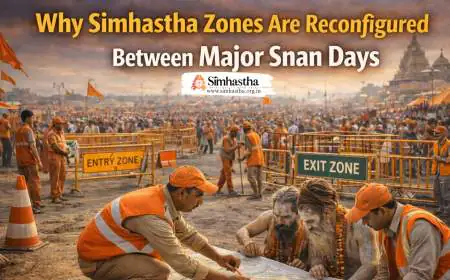
On the other hand, temporary infrastructure Simhastha is adaptable. It can expand, contract, and reconfigure based on real-time needs.
Instead of investing heavily in stone and steel, authorities are investing in systems:
- Modular pathways
- Temporary bridges
- Expandable holding areas
- Flexible barricading systems
This ensures that the city can reshape itself according to crowd density rather than forcing crowds to adjust to rigid structures.
Couples arriving during Ujjain Simhastha should spend their first few hours adjusting to the rhythm of the pilgrimage. Walking slowly through the city allows visitors to absorb the powerful spiritual atmosphere created by the gathering of saints and devotees attending the Ujjain Kumbh Mela.To deepen your understanding of the spiritual customs and sacred rituals practiced during Ujjain Simhastha, read our complete Simhastha rituals and sacred practices guide that explains their meaning, timing, and significance.
The Science Behind Pilgrim Flow Design
Designing movement for millions is not guesswork. It is a calculated science that blends urban planning, behavioral psychology, and real-time data.
Pilgrim flow design involves:
- Predicting peak density zones
- Mapping high-frequency routes
- Designing one-way movement corridors
- Creating buffer zones for pressure release
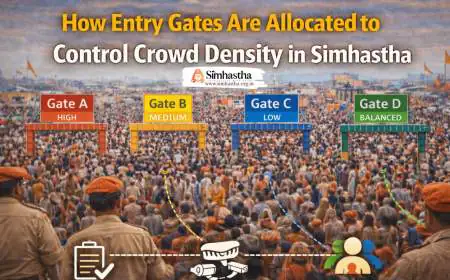
For example, instead of allowing random entry and exit, certain routes are designated as one-way during peak hours. This reduces collision points and ensures smooth circulation.
The goal is to keep movement continuous. When movement stops, risk begins.
Role of Smart Technology in Movement Planning
Modern Simhastha planning is deeply integrated with technology.
Smart pilgrimage planning includes:
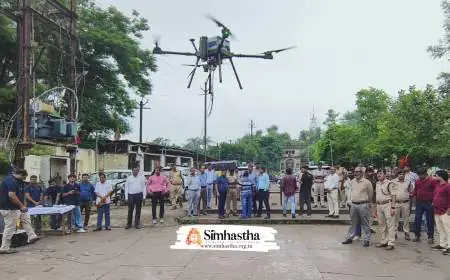
- Real-time crowd monitoring systems
- GPS-based traffic tracking
- AI-driven density prediction
- Surveillance-integrated control rooms
These tools help authorities respond instantly to changes in crowd behavior.
If a route becomes congested, alternative paths are activated. If a zone reaches capacity, inflow is temporarily restricted.
This dynamic control is impossible with a monument-centric approach. Only a flow-based system can adapt in real time.
Also Read | Best Time to Visit Ujjain Simhastha 2028
Traffic Management Around Ujjain
One of the biggest challenges is managing vehicles without disrupting pedestrian movement.
Mahakaleshwar traffic management strategies include:
- Peripheral parking zones
- Shuttle-based transport systems
- Restricted vehicle entry near core areas
- Dedicated emergency corridors
By pushing vehicles outward and prioritizing pedestrian flow inward, planners ensure that the sacred zones remain accessible and safe.
This separation of movement types is crucial. Mixing pedestrian and vehicular flow in high-density events leads to severe risks.
Designing for Peak Days, Not Average Days
A common mistake in planning is designing for average usage. Simhastha planning avoids this entirely.
Everything is designed for the worst-case scenario:
- Maximum crowd density
- Peak arrival hours
- Emergency evacuation needs
This is where Kumbh logistics system thinking becomes critical.
Routes are widened not for comfort, but for survival under pressure.
Holding areas are created not for waiting, but for absorbing sudden surges.
This ensures that even on the busiest days, movement remains controlled and predictable.
Also Read | Step-by-Step Guide to Shipra Snan at Ujjain Kumbh Mela
Temporary Infrastructure as a Strategic Advantage
Temporary does not mean weak. In Simhastha, temporary means intelligent.
Temporary infrastructure Simhastha includes:
- Pontoon bridges
- Modular sanitation systems
- Portable lighting networks
- Flexible barricading
These systems can be installed quickly, modified instantly, and removed without long-term impact on the city.
This approach reduces cost, increases efficiency, and allows planners to adapt to real-time requirements.
Safety as the Ultimate Goal
Every decision in Simhastha planning circles back to one principle: safety.
Efficient crowd control Simhastha ensures:
- Reduced stampede risk
- Faster emergency response
- Clear evacuation routes
- Better coordination among agencies
Flow-based planning minimizes friction points. It avoids sudden stops, sharp turns, and conflicting directions.
In a gathering of this scale, safety is not achieved through control alone but through movement.
Integration with Urban Mobility Planning
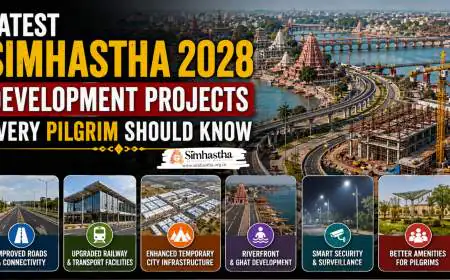
Simhastha is also reshaping long-term urban mobility Ujjain strategies.
Road expansions, traffic diversions, and route optimizations are being designed in a way that benefits the city even after the event ends.
However, unlike traditional urban projects, the focus is not on beautification but functionality.
The idea is simple:
A city that can handle Simhastha can handle anything.
Lessons from Previous Kumbh Events
Past Kumbh gatherings have shown that movement efficiency determines success.
Events that prioritized pilgrim flow design experienced:
- Lower accident rates
- Faster crowd dispersal
- Better overall experience
On the other hand, areas with rigid infrastructure often faced congestion and delays.
Simhastha 2028 is learning from these patterns and applying them at a larger, more refined scale.
Human Behavior and Movement Psychology
Crowd movement is not purely physical. It is psychological.
People tend to:
- Follow visible paths
- Move toward open spaces
- Avoid congestion instinctively
Planning leverages this behavior by:
- Creating visually clear routes
- Using signage effectively
- Designing intuitive pathways
This reduces confusion and ensures self-regulated movement among pilgrims.
The Invisible Architecture of Simhastha
Unlike monuments, movement systems are not visible in photographs. Yet, they are the backbone of the entire event.
The true success of Simhastha will not be measured by what stands still, but by how smoothly everything moves.
From entry points to ghats, from parking zones to temples, every element is part of a larger flow network.
This is the new definition of infrastructure. Not what is built, but what works.
A Living System That Breathes with the Crowd
Simhastha 2028 is being designed like a living organism.
It expands during peak hours.
It relaxes during low density.
It adapts to changing conditions.
This fluidity is impossible with monument-heavy planning.
Flow-based systems allow the event to breathe, ensuring that millions can participate without overwhelming the city.
Where Movement Becomes the True Pilgrimage Path
In Simhastha, the journey is not just spiritual, it is physical.
Every step a pilgrim takes is part of a larger choreography designed for safety, efficiency, and harmony.
By prioritizing movement flow Simhastha over monument building, planners are ensuring that the sacred experience remains uninterrupted, accessible, and secure for everyone.
The real marvel of Simhastha 2028 will not be a structure that rises above the ground, but a system that moves effortlessly across it.
Frequently Asked Questions