



























Simhastha Rituals Complete Guide to Sacred Practices in Ujjain
A complete and official guide to Simhastha rituals in Ujjain, explaining what happens, why each sacred practice matters, and how rituals are performed during the Simhastha Kumbh Mela.
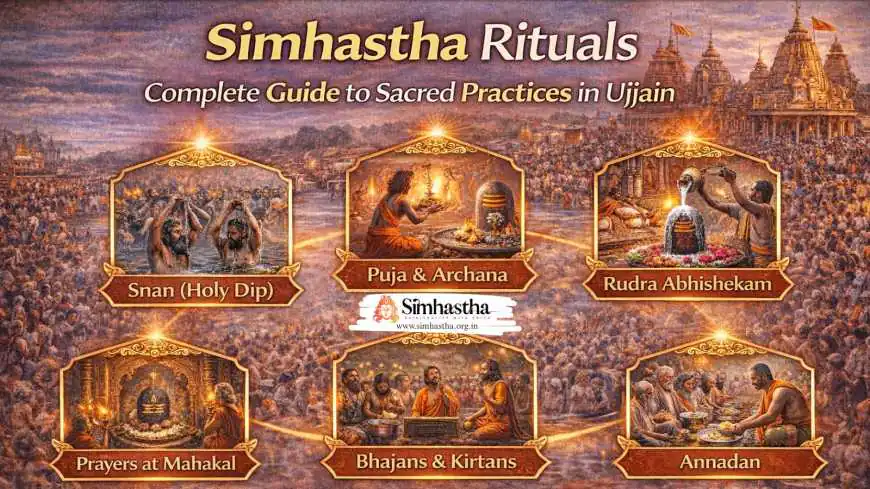


Why Rituals Are the Soul of Simhastha, Not Just Traditions
Simhastha Is Not an Event. It Is a Ritual Cycle
When people hear the word Simhastha, many imagine crowds, bathing dates, tents, and large-scale arrangements. But Simhastha, whether it is called Simhastha Kumbh Mela, Ujjain Simhastha, or Ujjain Kumbh, does not begin with crowds and does not end with them.
Simhastha begins with rituals.
Without rituals, Simhastha does not exist as a spiritual phenomenon. What remains would only be a gathering. What makes Simhastha sacred, authoritative, and transformative is not the number of pilgrims, but the precision, sequence, and intent of the rituals performed during this rare cosmic period.
This pillar exists to explain those rituals in their complete depth, not as a list, but as a living system.
Trending Guides Now
Why Certain Rituals Are Allowed Only at Specific Ghats During Simhastha

First Shahi Snan 2028 Date Ujjain Simhastha

What Is Shahi Snan in Ujjain Simhastha Kumbh Mela?

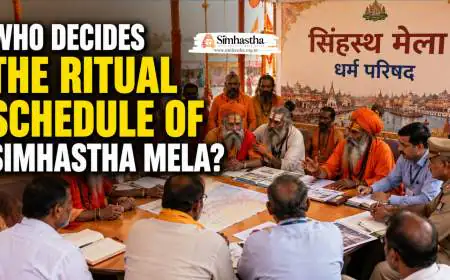
Who Decides Ritual Timings in Ujjain Simhastha?

Ujjain Railway Station to Mahakaleshwar Temple Distance (2026 Guide)

Ujjain Simhastha 2028 Dates Announced: Full Shahi Snan & Event Timeline

Mahakaleshwar Sandhya Aarti Online Booking 2026: Fee, Timings, Entry Gate and Step-by-Step Process

Mangalnath Temple Trip Budget: Puja, Local Transport, Food and Stay Planning
Also Read | Ujjain Simhastha - Meaning, History & Why It Matters
What Makes Simhastha Rituals Fundamentally Different
Many Hindu rituals are repeated every day, every month, or every year. Simhastha rituals are not.
Simhastha rituals are:
-
Time-bound to a rare cosmic alignment
-
Location-bound strictly to Ujjain
-
Governed by scriptural and ascetic authority

-
Performed in a specific spiritual order

Unlike regular pilgrimages, where rituals remain mostly the same regardless of time, Simhastha rituals change the spiritual quality of time itself.
That is why rituals performed during Simhastha are considered more potent than the same actions performed outside this period.
Why Rituals Matter More Than the Festival Itself
There is a common misunderstanding that Simhastha is primarily a festival and rituals are secondary. In truth, the reverse is correct.
Simhastha exists because rituals must be performed under specific cosmic conditions. The gathering happens only to support those rituals.
In Sanatan tradition:
-
Rituals are not symbolic gestures
-
Rituals are structured spiritual actions
-
Rituals create inner and collective change
Simhastha rituals are designed to work at:
-
The personal level of purification
-
The collective level of spiritual reset
-
The ascetic level of lineage renewal
This is why Simhastha is never described in scriptures as a “celebration,” but as a Mahaparva, a great spiritual turning point.
Why Ujjain Is Non-Negotiable for Simhastha Rituals
Simhastha rituals can only occur in Ujjain, and this is not due to tradition alone.
Ujjain holds a unique place in Sanatan geography because:
-
It is associated with Mahakaleshwar, the controller of time
-
It has been a center of ritual astronomy for millennia
-
Its spiritual geography responds specifically to Jupiter’s movement
When Jupiter enters Leo, Ujjain becomes ritually active in a way no other city does. This activation allows certain rituals to be performed validly, not just symbolically.
That is why:
-
Simhastha rituals cannot be shifted to another city
-
Even administrative convenience cannot override this rule
-
The term Simhastha Ujjain is inseparable
Also Read | Simhastha 2028 Dates Officially Announced
Simhastha Kumbh Mela Is a Ritual System, Not a Single Act
One of the biggest mistakes people make is thinking of Simhastha as a single ritual, usually the Shahi Snan.
In reality, Simhastha rituals form a complete system, including:
-
Preparatory rituals
-
Ascetic rituals
-
Pilgrim rituals
-
Daily spiritual disciplines
-
Concluding rites
Each ritual supports the next. Removing one weakens the entire structure.
This is why this guide does not jump directly into individual rituals. Understanding the ritual logic must come first.
How Ritual Authority Works During Simhastha
Not all rituals in Simhastha are performed by everyone.
Simhastha rituals operate under clearly defined authority layers:
-
Some rituals are reserved for Akharas
-
Some are meant for initiated ascetics only
-
Some are open to all pilgrims
-
Some are collective, some individual
This layered structure is intentional. It ensures that:
-
Sacred disciplines are preserved
-
Ritual purity is maintained
-
Spiritual hierarchy remains functional
Understanding this prevents confusion and misinformation, especially during Simhastha 2028, when millions of first-time pilgrims will arrive.
Why Akharas Are Central to Simhastha Rituals
Akharas are not participants in Simhastha rituals.
They are custodians of them.
The Akharas:
-
Preserve ancient ritual knowledge
-
Decide ritual sequences
-
Lead the most powerful rites
-
Maintain continuity across centuries
When Akharas assemble during Simhastha, it is not ceremonial. It is a ritual necessity. Many Simhastha rituals do not carry authority unless Akharas are present.
This is why:
-
Shahi Snan is led by Akharas
-
Initiations peak during Simhastha
-
Major ritual decisions occur in this period
Shahi Snan Is Important, But It Is Not the Whole Story
Search interest often centers around Shahi Snan, and for good reason. It is the most visible ritual of Simhastha.
However, Shahi Snan is:
-
A peak ritual, not the base
-
A culmination, not the beginning
-
Powerful only because other rituals support it
Without understanding the ritual ecosystem around Shahi Snan, its true meaning is lost.
That is why this pillar treats Shahi Snan as a central chapter, not the entire book.
Why Shipra River Rituals Are Unique to Simhastha
The Shipra River flows throughout the year, but it does not carry the same ritual authority at all times.
During Simhastha:
-
The river is ritually activated
-
Bathing carries scriptural legitimacy
-
Certain mantras and vows become effective
Shipra River rituals during Simhastha are not about water purity alone. They are about time purity.
This distinction explains why:
-
Bathing outside Simhastha does not hold the same merit
-
Certain rites are prohibited outside the Simhastha window
-
Timing is as important as action
Why Simhastha Rituals Cannot Be “Adjusted” or “Simplified”
In modern times, people often ask whether rituals can be shortened or simplified due to crowd size or logistics.
The answer is no.
Simhastha rituals are not flexible formats. They are:
-
Scripturally defined
-
Cosmically timed
-
Spiritually calibrated
Logistics must adapt to rituals, not rituals to logistics. This principle has preserved Simhastha for centuries and will continue to do so in Ujjain Kumbh 2028 and beyond.
The Spiritual Purpose Behind Every Simhastha Ritual
Every Simhastha ritual serves at least one of these purposes:
-
Purification of accumulated karmic weight
-
Renewal of spiritual commitment
-
Reconnection with dharmic order
-
Preparation for inner transformation
None of these are symbolic ideas. They are outcomes observed and recorded for centuries.
That is why Simhastha rituals are approached with:
-
Discipline
-
Restraint
-
Seriousness
-
Inner readiness
How Simhastha Rituals Are Structured, Classified, and Governed
Simhastha Rituals Do Not Exist Randomly. They Follow a System
One of the most misunderstood aspects of Simhastha rituals is the belief that they are simply a collection of sacred acts performed during the Simhastha Kumbh Mela. This assumption is incorrect.
Simhastha rituals follow a clear internal system.
They are:
-
Classified by purpose
-
Ordered by spiritual priority
-
Governed by authority
-
Activated by time
Understanding this system is essential. Without it, rituals appear repetitive. With it, rituals reveal their logic and power.
Why Simhastha Rituals Are Classified into Distinct Categories
In Simhastha, rituals are not equal in function or authority. They are classified to preserve:
-
Ritual purity
-
Spiritual hierarchy
-
Scriptural discipline
Broadly, Simhastha rituals fall into four major categories:
-
Foundational rituals
-
Ascetic and Akhara rituals
-
Public and pilgrim rituals
-
Daily sustaining rituals
Each category serves a different spiritual purpose and is governed by different rules.
Foundational Rituals: The Rituals That Make Simhastha Valid
Foundational rituals are those without which Simhastha itself cannot exist.
These rituals:
-
Are performed before large public participation begins
-
Establish ritual legitimacy of the Simhastha period
-
Are conducted under strict authority
They are not widely visible, but they are the spiritual base of the entire event.
Without these rituals:
-
Public bathing has no spiritual authority
-
Ascetic participation loses legitimacy
-
The Simhastha period is incomplete
These rituals mark the formal opening of Simhastha in Ujjain.
Ascetic and Akhara Rituals: Why Authority Comes Before Participation
The most powerful rituals of Simhastha are not performed by the public.
They are performed by:
-
Akharas
-
Sadhus
-
Initiated ascetics
This is not exclusion. It is preservation.
Ascetic rituals exist to:
-
Renew spiritual lineages
-
Transfer ritual authority
-
Maintain continuity across centuries
These rituals include:
-
Akhara entry rituals
-
Lineage affirmations
-
Initiations and vows
-
Leadership confirmations
Public participation becomes meaningful only after these rituals are completed.
Why Shahi Snan Belongs to Ascetic Authority First
The Shahi Snan is often perceived as a mass bathing ritual. In reality, it is an ascetic-led ritual that the public witnesses and later follows.
The Shahi Snan:
-
Begins with Akharas
-
Follows strict order
-
Represents ritual sovereignty
Public bathing occurs after ritual authority is established.
This is why:
-
Akharas lead the procession
-
Timing is non-negotiable
-
Discipline is strictly enforced
Understanding this prevents one of the most common misconceptions about Simhastha rituals.
Public and Pilgrim Rituals: Where Participation Begins
After ritual authority is established, Simhastha opens itself to pilgrims.
Public rituals during Simhastha include:
-
Sacred bathing in the Shipra River
-
Daily prayers and vows
-
Offerings and sankalp
-
Observances tied to specific days
These rituals are:
-
Open to all
-
Structured by time and place
-
Governed by guidelines, not improvisation
Pilgrim rituals are powerful, but only when performed within the Simhastha framework.
Why Timing Matters More Than the Ritual Action Itself
A critical concept in Simhastha rituals is this:
The same ritual performed at the wrong time loses authority.
During Simhastha:
-
Certain rituals are effective only on specific days
-
Some rituals are prohibited outside designated windows
-
Time overrides convenience
This is why:
-
Pilgrims are advised to follow ritual schedules
-
Spontaneous ritual performance is discouraged
-
Discipline is emphasized over enthusiasm
Time is not a background element in Simhastha.
Time is an active participant.
Daily Sustaining Rituals: What Keeps Simhastha Spiritually Alive
Beyond major rituals, Simhastha includes daily sustaining rituals that maintain spiritual continuity throughout the event.
These include:
-
Daily worship routines
-
Disciplined living practices
-
Silence and restraint observances
-
Repetitive mantra disciplines
These rituals:
-
Are less visible
-
Are deeply transformative
-
Prevent Simhastha from becoming chaotic
They ensure that Simhastha remains a living spiritual environment, not just a sequence of dates.
The Complete Daily Ritual Flow During Simhastha (From Dawn to Closure)
Simhastha rituals are not random acts performed at convenience. Each day during Simhastha follows a ritual rhythm that repeats with discipline.
A typical Simhastha ritual day includes:
-
Early-morning purification and silence
-
Preparatory prayers before approaching the river
-
Ritual bathing within approved time windows
-
Sankalp and inner commitment
-
Observational restraint throughout the day
-
Evening withdrawal and reflection
This sequence is important because:
-
It preserves inner alignment
-
It prevents ritual fatigue
-
It allows gradual spiritual absorption
Pilgrims who follow this rhythm experience Simhastha differently from those who rush through isolated acts.
Why Simhastha Rituals Cannot Be Performed Independently
A frequent question asked by pilgrims is whether Simhastha rituals can be performed independently at home or at another location.
The answer is no, for most core rituals.
Simhastha rituals:
-
Depend on location
-
Depend on time
-
Depend on collective ritual authority
Isolated performance removes:
-
Scriptural legitimacy
-
Energetic alignment
-
Spiritual continuity
This is why Simhastha rituals are inseparable from Ujjain Simhastha itself.
How Ritual Governance Works During Simhastha
Simhastha rituals are not managed casually.
Ritual governance includes:
-
Scriptural reference
-
Ascetic consensus
-
Historical continuity
Decisions about:
-
Ritual timing
-
Ritual order
-
Ritual access
are taken with extreme care.
This governance ensures:
-
Ritual discipline
-
Conflict prevention
-
Preservation of sanctity
Without governance, Simhastha would lose its spiritual structure.
Why Discipline Is Considered a Ritual in Simhastha
In Simhastha, discipline itself is ritualized.
Pilgrims are encouraged to:
-
Wake early
-
Eat simply
-
Observe restraint
-
Maintain cleanliness
These are not lifestyle tips.
They are supporting rituals.
They prepare the mind and body to receive the effects of deeper rituals.
The Relationship Between Rituals and Spiritual Outcome
Simhastha rituals are outcome-oriented.
They are designed to produce:
-
Inner clarity
-
Emotional release
-
Spiritual redirection
-
Detachment from accumulated burdens
These outcomes do not occur instantly.
They build through ritual consistency, not intensity.
This is why Simhastha is spread across weeks, not days.
Why This Classification Matters for Pilgrims
Understanding ritual classification helps pilgrims:
-
Avoid ritual mistakes
-
Respect ritual boundaries
-
Participate appropriately
It also prevents:
-
Misinformation
-
Ritual misuse
-
Spiritual disappointment
A pilgrim who understands ritual structure gains more from fewer actions.
The Core Rituals of Simhastha and How They Are Actually Performed
The Ritual Heart of Simhastha Begins Here
By the time a pilgrim reaches Ujjain during Simhastha, one question dominates their mind:
“What exactly happens during Simhastha rituals, and how should I participate correctly?”
This part answers that question in full depth.
Simhastha rituals are not spontaneous acts of devotion. They are predefined, time-activated, and authority-led spiritual processes. Each major ritual exists for a specific reason, follows a fixed sequence, and produces a distinct spiritual effect.
Understanding this transforms participation from ritual imitation into ritual awareness.
Shahi Snan: The Central Axis of All Simhastha Rituals
Among all Simhastha rituals, Shahi Snan holds the highest ritual authority.
But Shahi Snan is often misunderstood.
It is not:
-
A public bathing opportunity
-
A crowd-driven ritual
-
A personal merit shortcut
Shahi Snan is a sovereign ascetic ritual that establishes spiritual legitimacy for the entire Simhastha period.
What Shahi Snan Actually Represents
Shahi Snan symbolizes:
-
Ascetic dominance over time and space
-
Renewal of dharmic authority
-
Public affirmation of spiritual hierarchy
It is called “Shahi” not because of royalty, but because it reflects ritual sovereignty.
When Akharas enter the river first, they are not claiming privilege. They are activating ritual time.
Only after this activation does the river become ritually accessible for the public.
Why Shahi Snan Cannot Be Replicated or Modified
Shahi Snan follows:
-
A fixed Akhara order
-
Precise timing
-
Strict discipline
Any deviation weakens its ritual authority.
This is why:
-
Shahi Snan dates are rare
-
Entry sequences are protected
-
Discipline is enforced strictly
This ritual cannot be shortened, rescheduled, or democratized without losing its spiritual meaning.
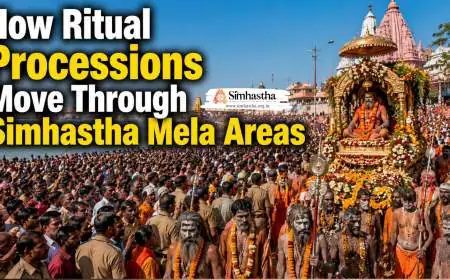
Akhara Processions: Ritual Movement as Spiritual Act
The movement of Akharas toward the Shipra River is itself a ritual.
These processions:
-
Carry lineage symbols
-
Represent centuries of discipline
-
Transmit collective spiritual energy
The chants, flags, weapons, and silence are not ceremonial decorations. They are encoded ritual language.
For pilgrims, witnessing these processions is a ritual act in itself, one that carries spiritual merit through awareness, not participation.
The Role of the Shipra River in Simhastha Rituals
The Shipra River is not merely a location for bathing.
During Simhastha, it becomes a ritual medium.
Bathing in the Shipra during Simhastha:
-
Is bound to specific days
-
Requires mental preparation
-
Demands restraint and humility
The water itself does not change.
The time does.
How Public Snan Differs from Shahi Snan
Public snan during Simhastha is often confused with Shahi Snan.
The difference is fundamental.
Shahi Snan:
-
Establishes ritual authority
-
Is ascetic-led
-
Happens first
Public snan:
-
Follows authority
-
Is pilgrim-led
-
Draws power from timing
Public snan is meaningful because Shahi Snan has already occurred.
Without that sequence, bathing becomes symbolic rather than transformative.
Sankalp and Vow Rituals During Simhastha
One of the most powerful yet overlooked Simhastha rituals is Sankalp, the conscious vow.
During Simhastha:
-
Sankalp carries heightened potency
-
Long-term vows are encouraged
-
Inner commitments deepen
Pilgrims often take vows related to:
-
Spiritual discipline
-
Ethical conduct
-
Renunciation of habits
-
Lifelong devotional paths
These vows are not emotional promises.
They are ritual contracts with oneself.
Why Initiations Peak During Simhastha
Simhastha is a peak time for:
-
Spiritual initiation
-
Mantra diksha
-
Renunciation vows
This is because:
-
Jupiter governs wisdom transmission
-
Ritual authority is concentrated
-
Ascetic lineages are present together
Initiation during Simhastha is considered stable and enduring, not experimental.
This is why aspirants prepare for years for this moment.
Daily Ritual Discipline During Simhastha
Beyond major rituals, Simhastha demands daily ritual discipline.
This includes:
-
Early rising
-
Simple food
-
Controlled speech
-
Repetitive mantra practice
These daily rituals:
-
Maintain inner alignment
-
Prevent spiritual fatigue
-
Prepare the seeker for deeper experiences
Pilgrims who ignore daily discipline often feel overwhelmed instead of uplifted.
Why Simhastha Rituals Emphasize Restraint
Simhastha rituals repeatedly emphasize:
-
Silence
-
Moderation
-
Simplicity
This is not restriction.
It is preparation.
Restraint prevents:
-
Emotional overload
-
Ritual confusion
-
Ego-driven participation
Simhastha is not about doing more.
It is about doing correctly.
Rituals Reserved Only for Ascetics
Certain Simhastha rituals are strictly reserved for:
-
Initiated sadhus
-
Akhara members
-
Renunciates
These include:
-
Lineage affirmations
-
Leadership confirmations
-
Secret mantra disciplines
Public access to these rituals is neither permitted nor beneficial.
Understanding this boundary preserves respect and prevents spiritual misinterpretation.
Why Not All Rituals Are Visible
Many pilgrims feel they are “missing something” because they do not witness all rituals.
This feeling is misplaced.
Some Simhastha rituals:
-
Are intentionally private
-
Are inward-focused
-
Do not require spectators
Visibility is not a measure of importance.
The most transformative rituals often leave no external trace.
The Emotional and Psychological Effects of Proper Ritual Participation
Pilgrims who participate correctly often report:
-
Sudden clarity
-
Emotional release
-
Reduced anxiety
-
Long-term calm
These are not placebo effects.
They arise because Simhastha rituals:
-
Interrupt habitual mental patterns
-
Reset inner priorities
-
Create space for reflection
This is the silent success of Simhastha.
Common Ritual Mistakes Pilgrims Make
Some of the most common mistakes include:
-
Treating rituals as checklists
-
Rushing through bathing
-
Ignoring timing guidelines
-
Overcrowding sacred spaces unnecessarily
These mistakes do not invalidate devotion, but they reduce impact.
Awareness corrects more than effort.
Why Ritual Understanding Matters More Than Ritual Quantity
Many pilgrims believe that performing more rituals yields more benefit.
In Simhastha, this belief is incorrect.
One correctly performed ritual:
-
Outweighs many careless ones
-
Produces lasting change
-
Leaves inner clarity
Simhastha rewards understanding, not accumulation.
How Ritual Intensity Changes on Parva Days and Major Snan Days
Not all days of Simhastha carry the same ritual weight.
On Parva and major Snan days:
-
Ascetic participation intensifies
-
Ritual discipline becomes stricter
-
Public access is more regulated
-
Silence and restraint are emphasized
On non-Parva days:
-
Reflective practices dominate
-
Personal vows deepen
-
Observational rituals increase
Understanding this prevents a common mistake:
treating every day of Simhastha as identical.
Simhastha rituals follow waves of intensity, not a flat structure.
How Simhastha Rituals Transform Over Time
Ritual intensity changes as Simhastha progresses.
Early period:
-
Foundational and ascetic rituals dominate
Middle period:
-
Public participation peaks
Later period:
-
Reflective and concluding rituals emerge
Each phase serves a purpose.
Pilgrims who align with this rhythm gain the most.
What Simhastha Rituals Ultimately Do to a Seeker and Why Their Impact Lasts
Simhastha Rituals Do Not End at the Riverbank
For many pilgrims, Simhastha appears to conclude when the final bath is taken and the journey back home begins. In reality, Simhastha rituals do not end in Ujjain.
They end inside the seeker.
This is the most overlooked truth about Simhastha rituals. Their purpose is not to complete a sequence of sacred actions, but to alter inner orientation, often quietly, sometimes permanently.
Understanding this changes how Simhastha is remembered and valued.
Why Simhastha Is Designed to Create Inner Stillness, Not Excitement
Unlike festivals that create heightened emotion and celebration, Simhastha rituals are structured to gradually lead a person toward inner quiet.
This is intentional.
The rituals:
-
Slow the body
-
Discipline the senses
-
Simplify daily needs
-
Reduce mental noise
The outward scale of Simhastha is vast, but its inward direction is narrow. Rituals are designed to turn attention inward, not outward.
Those who expect excitement often feel overwhelmed.
Those who allow stillness often feel transformed.
The Gradual Inner Shift That Simhastha Rituals Produce
Simhastha rituals do not produce instant enlightenment. What they produce is more subtle and more lasting.
Pilgrims often experience:
-
Reduced mental restlessness
-
Clarity about personal priorities
-
Detachment from long-held anxieties
-
A quiet sense of alignment
These changes may not appear dramatic, but they persist long after Simhastha ends.
This persistence is the real success of Simhastha rituals.
Why Simhastha Rituals Work Differently for Each Person
No two seekers experience Simhastha rituals in the same way.
This is because:
-
Rituals act on inner readiness
-
Personal karma influences outcome
-
Awareness determines depth
Simhastha rituals do not impose a fixed result. They reveal what is already present, often gently, sometimes forcefully.
This is why comparison between experiences is meaningless.
The ritual does not change.
The inner response does.
How Simhastha Rituals Cleanse More Than Just Past Actions
People often associate Simhastha rituals with cleansing past sins or accumulated karma. While this is true, it is incomplete.
Simhastha rituals also cleanse:
-
Habitual patterns
-
Emotional residues
-
Mental rigidity
-
Unquestioned beliefs
This deeper cleansing is why many pilgrims return from Simhastha feeling lighter, even if they cannot articulate why.
The rituals loosen what has been held too tightly.
Why Silence Is One of the Most Powerful Simhastha Rituals
Not all Simhastha rituals involve action.
Silence itself becomes a ritual.
During Simhastha:
-
Silence is encouraged
-
Excessive speech is discouraged
-
Observation is valued over explanation
This ritual silence allows:
-
Inner reflection
-
Emotional processing
-
Gradual insight
Many seekers realize after Simhastha that what stayed with them was not a ritual action, but a moment of stillness they experienced unexpectedly.
The Role of Simplicity in Making Rituals Effective
Simhastha rituals strip life down to essentials.
Simple food.
Simple shelter.
Simple routine.
This simplicity is not inconvenience. It is ritual design.
By reducing choice and distraction, rituals allow:
-
Focus to deepen
-
Awareness to stabilize
-
Inner noise to fade
Modern life rarely allows this. Simhastha creates it deliberately.
Why Simhastha Rituals Feel More Intense Than Regular Pilgrimages
Many pilgrims notice that Simhastha rituals feel heavier and more demanding than rituals performed at other times.
This intensity comes from:
-
Collective participation
-
Cosmic timing
-
Sustained discipline
Simhastha compresses spiritual effort into a limited window. This compression magnifies both effort and outcome.
It is not meant to be comfortable.
It is meant to be effective.
What Happens When Simhastha Rituals Are Approached Casually
Some pilgrims approach Simhastha rituals as sightseeing experiences or checklist activities.
In such cases:
-
The ritual may still be performed
-
The inner impact remains minimal
This does not mean the ritual fails. It means the opportunity is underused.
Simhastha rituals offer depth, but they do not force it.
How Simhastha Rituals Prepare a Seeker for Life Beyond the Mela
The true test of Simhastha rituals begins after returning home.
Signs that rituals have worked include:
-
Increased patience
-
Reduced attachment to unnecessary desires
-
Greater ethical clarity
-
Desire for simplicity
These changes may appear slowly, but they indicate that Simhastha rituals have taken root.
A ritual that ends at the river ends quickly.
A ritual that alters behavior endures.
Why Simhastha Rituals Do Not Demand Belief, Only Participation
Simhastha rituals do not require philosophical agreement.
They require:
-
Presence
-
Discipline
-
Willingness
Many pilgrims participate without fully understanding the philosophy. Yet they still experience change.
This is because Simhastha rituals are experiential, not conceptual.
Understanding deepens the effect, but it is not a prerequisite.
How Simhastha Rituals Will Adapt Without Losing Their Essence
As Simhastha 2028 approaches, scale and logistics will evolve.
Facilities will change.
Technology will assist.
Management will modernize.
But the rituals themselves will remain unchanged.
This is because:
-
Ritual authority does not adapt to convenience
-
Sacred sequences are preserved
-
Timing remains absolute
Simhastha rituals may be supported by modern systems, but they will never be defined by them.
Why Simhastha Rituals Remain Relevant in the Modern World
In an age of constant stimulation, Simhastha rituals offer:
-
Structured withdrawal
-
Meaningful discipline
-
Purposeful restraint
These are not outdated values.
They are increasingly rare necessities.
Simhastha rituals continue to attract millions because they address what modern life often lacks.
The Final Measure of a Simhastha Ritual
A Simhastha ritual is successful not when:
-
A photo is taken
-
A bath is completed
-
A date is checked
It is successful when:
-
A habit loosens
-
A fear softens
-
A direction becomes clear
These results cannot be measured publicly.
They are felt privately.
Carrying Simhastha Forward
Simhastha rituals are not meant to be remembered as events.
They are meant to be carried forward as orientation.
Those who do this:
-
Live more consciously
-
Choose more carefully
-
Act more ethically
This is the quiet continuity of Simhastha.
Why Simhastha Rituals Cannot Be Compared to Any Other Kumbh
Other Kumbh Melas are powerful, but Simhastha rituals are structurally different.
Key distinctions:
-
Simhastha rituals are governed primarily by Jupiter
-
Ritual authority is more centralized
-
Geographic dependency on Ujjain is absolute
-
Ritual hierarchy is stricter
This is why:
-
Ritual flexibility is lower in Simhastha
-
Ascetic authority is more pronounced
-
Discipline is emphasized over scale
Comparison reduces understanding.
Context restores it.
The Right Mindset for Approaching Simhastha Rituals
Simhastha rituals respond more to inner posture than external action.
The right mindset includes:
-
Observation before participation
-
Respect for ritual boundaries
-
Willingness to wait and adapt
-
Acceptance of discipline
Pilgrims who arrive with expectations often feel overwhelmed.
Pilgrims who arrive with openness feel guided.
Simhastha rituals do not demand perfection.
They demand sincerity and patience.
Carrying Simhastha Rituals Beyond Ujjain
Simhastha Does Not Conclude. It Transitions.
For most journeys, the end is marked by return.
For Simhastha, the end is marked by integration.
When the tents are removed, when the riverbanks grow quiet again, and when pilgrims leave Ujjain, Simhastha rituals do not end. They change their location.
They move from:
-
Sacred spaces to daily life
-
Structured discipline to conscious living
-
Collective rhythm to individual awareness
This transition is not symbolic. It is the true completion of Simhastha.
Why the Value of Simhastha Rituals Is Measured After the Mela
The success of Simhastha rituals is not measured by:
-
How many rituals were performed
-
How many snan days were attended
-
How closely schedules were followed
It is measured by:
-
What habits loosened
-
What attachments softened
-
What clarity emerged
A ritual that ends at the riverbank ends quickly.
A ritual that alters orientation endures.
What Simhastha Rituals Ask of a Seeker in the Long Term
Simhastha rituals do not demand lifelong renunciation.
They ask for conscious adjustment.
After Simhastha, a seeker may notice:
-
Reduced urgency for unnecessary accumulation
-
Greater patience in daily interactions
-
More intentional silence
-
Clearer moral boundaries
These changes are not dramatic.
They are stable.
Stability is the sign that Simhastha rituals have taken root.
Why Simhastha Rituals Cannot Be Recreated at Home
Many pilgrims return with a desire to recreate Simhastha rituals in daily life.
This instinct is natural, but it must be understood correctly.
Simhastha rituals cannot be replicated.
They can be remembered and reflected.
What can be carried forward is:
-
Discipline, not the exact ritual form
-
Restraint, not the environment
-
Awareness, not the ceremony
The essence travels. The structure stays in Ujjain.
How Simhastha Rituals Influence Ethical and Inner Life
One of the quiet effects of Simhastha rituals is ethical clarity.
After participating sincerely, many seekers:
-
Make cleaner choices
-
Feel discomfort with excess
-
Respond more consciously
-
Listen more than they speak
This ethical alignment is not imposed.
It arises naturally when ritual discipline reorganizes priorities.
Why Simhastha Rituals Do Not Promise Immediate Answers
Simhastha rituals do not promise solutions.
They promise space.
Space for:
-
Reflection
-
Reevaluation
-
Inner realignment
Some answers arise during Simhastha.
Many arise months later.
This delayed clarity is not a failure.
It is a sign that the rituals continue to work silently.
The Subtle Discipline Simhastha Leaves Behind
The most enduring ritual Simhastha leaves behind is self-discipline without force.
Not rigid control.
Not moral pressure.
But an internal sense of:
-
When to stop
-
When to wait
-
When to step back
This subtle discipline cannot be taught.
It can only be experienced.
Why Simhastha Rituals Remain Relevant Across Generations
Every generation approaches Simhastha differently.
Circumstances change.
Language changes.
Systems evolve.
But the need for:
-
Inner order
-
Periodic withdrawal
-
Meaningful restraint
remains unchanged.
This is why Simhastha rituals continue to draw millions. They answer a timeless human need.
What to Remember When You Remember Simhastha
Years later, when Simhastha is remembered, it is rarely remembered as a schedule.
It is remembered as:
-
A moment of stillness
-
A quiet realization
-
A subtle shift
This is not accidental.
Simhastha rituals are designed to leave impressions, not memories.
The Quiet Authority of Simhastha Rituals
Simhastha rituals do not ask to be defended.
They do not seek validation.
Their authority comes from:
-
Continuity
-
Precision
-
Inner effect
They have survived centuries not because they were explained well, but because they worked consistently.
This guide exists not to replace experience, but to prepare the mind to receive it.
Final Guidance for Every Seeker
If there is one way to approach Simhastha rituals correctly, it is this:
-
Do less, but do it consciously
-
Observe more than you act
-
Respect what you do not understand
-
Allow time to do its work
Simhastha does not demand performance.
It responds to sincerity.
The Final Truth
Simhastha rituals are not meant to be completed.
They are meant to be carried.
Carried into daily choices.
Carried into restraint.
Carried into clarity.
That is how Simhastha continues — long after Ujjain grows quiet again.
Related Simhastha Guides :
- Ancient References of Ujjain Simhastha in Hindu Texts
- Why Certain Rituals Are Allowed Only at Specific Ghats
- Bathing Timings Change from Day to Day During Simhastha
- First Shahi Snan Holds Supreme Spiritual Authority
- Shahi Snan Dates for Ujjain Simhastha 2028
- Difference Between Shahi Snan and Normal Snan
Frequently Asked Questions