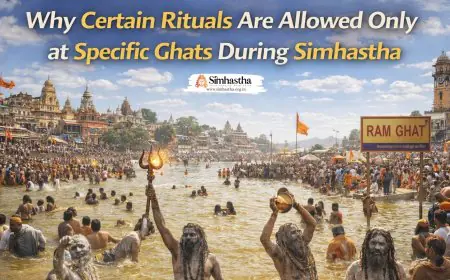



















Difference Between Shahi Snan and General Snan
Understand the clear spiritual, ritual, and hierarchical difference between Shahi Snan and general snan in Simhastha and Kumbh Melas, explained with Sanatan clarity.



Why the Difference Must Be Clearly Understood
The difference between Shahi Snan and general snan is not a matter of scale, crowd size, or ceremonial importance. It is a difference of purpose, authority, and function. Treating both as the same act of river bathing collapses a carefully preserved ritual structure within Simhastha and all Kumbh Melas.
Shahi Snan and general snan may occur in the same river, but they do not operate in the same spiritual category. One activates sacred time. The other participates in it. Understanding this distinction is essential to understanding how Sanatan Dharma organizes mass spirituality without disorder.
Also Read | Complete Guide of Ujjain Simhastha
What Is General Snan in Sanatan Practice
General snan is the most widespread and accessible form of ritual bathing in Sanatan Dharma. It can be performed:
Trending Guides Now

Who Decides Ritual Timings in Ujjain Simhastha?

Why the First Shahi Snan Holds Supreme Spiritual Authority

How Ritual Processions Move Through Simhastha Mela Areas

Shahi Snan Dates for Ujjain Simhastha 2028 Official Schedule

Ujjain Railway Station to Mahakaleshwar Temple Distance (2026 Guide)

Ujjain Simhastha 2028 Dates Announced: Full Shahi Snan & Event Timeline

Ujjain Simhastha Update: CM Mohan Yadav Reviews 2028 Works

Karkateshwar Mahadev: 22/84 Mahadev of Ujjain
-
Daily or occasionally
-
Individually or collectively
-
Without hierarchy
-
Without institutional authority
The purpose of general snan is personal purification. A devotee bathes with faith, intention, and devotion. The benefit is individual and inward-facing.
General snan does not alter ritual time.
It responds to ritual time.

What Is Shahi Snan and Why It Exists
Shahi Snan is a ritual of authorization, not personal purification. It exists only during Simhastha and Kumbh Melas, and it is performed exclusively by akharas and ascetic orders with recognized spiritual authority.
The purpose of Shahi Snan is not to cleanse the participants. It is to consecrate the river, open sacred time, and establish ritual order for millions who will bathe afterward.
Without Shahi Snan, the gathering remains incomplete in Sanatan understanding.
Also Read | Official Shahi Snan Dates
Authority Versus Access: The Central Difference
The clearest difference between Shahi Snan and general snan lies in authority.
General snan is open-access.
Shahi Snan is authority-based.
General snan assumes equality of participation.
Shahi Snan requires adhikara, or earned eligibility.
This does not imply spiritual superiority. It implies ritual responsibility.
Sequence: Why Order Matters
In general snan, sequence does not matter. Anyone may bathe at any time.
In Shahi Snan, sequence is everything.
Shahi Snan is performed:
-
By renunciant akharas
-
In a fixed hierarchical order
-
At a precisely calculated time
Only after this sequence is completed does general snan become ritually effective during Simhastha or Kumbh.
General snan follows activation.
Shahi Snan performs activation.
Every sacred act performed during Simhastha carries centuries of Sanatan tradition, from the timing of holy baths to the disciplined order of Akharas and temple rituals. To truly understand how these ancient practices unfold on the ghats of Ujjain, our detailed guide on Simhastha rituals explains each ceremony, its spiritual meaning, and its role in the larger flow of Ujjain Simhastha and the Simhastha Kumbh Mela, helping pilgrims experience the festival with clarity, devotion, and cultural authenticity.
Individual Merit Versus Collective Activation
General snan generates individual spiritual merit based on devotion and intention.
Shahi Snan generates collective ritual activation. Its effects are not limited to the performer. They extend to:
-
The river
-
The gathering
-
The time period itself
This is why mistakes in Shahi Snan are considered serious within Sanatan ritual science.
Role of Akharas and Ascetics
General snan requires no institutional role.
Shahi Snan cannot exist without akharas.
Akharas maintain:
-
Lineage discipline
-
Renunciation-based eligibility
-
Scriptural responsibility
Their participation is not symbolic. It is structural. Without them, Shahi Snan collapses into ceremony.
Also Read | Complete Guide on Akharas Rituals
Why Renunciation Leads Shahi Snan
Renunciation removes personal desire, identity, and expectation. This is essential for Shahi Snan because:
-
The act affects millions
-
Personal intention would distort ritual outcome
-
Sacred time must be opened without ego
General snan allows personal prayer.
Shahi Snan forbids personal agenda.
Public Visibility Versus Public Participation
General snan is meant for participation.
Shahi Snan is meant for witnessing.
The public gathers in large numbers during Shahi Snan not to perform the act, but to align with it. Witnessing correct ritual order is itself considered spiritually beneficial.
This distinction preserves both access and order.
Timing and Rarity
General snan can be performed frequently.
Shahi Snan is rare, tied to:
-
Planetary alignment
-
Zodiacal calculation
-
Cosmic timing
This rarity increases responsibility and restricts access.
Misinterpretation in Modern Narratives
Modern descriptions often describe both acts as “holy bathing.” This language erases function.
A public bath cleanses the body.
General snan purifies the individual.
Shahi Snan consecrates time and space.
They are not interchangeable.
Why Shahi Snan Is Never Optional
General snan is optional.
Shahi Snan is mandatory within Simhastha and Kumbh structure. Without it:
-
The gathering loses ritual legitimacy
-
Public snan becomes symbolic rather than functional
-
Sacred time remains unopened
This is why Shahi Snan is always performed first.
Also Read | Simhastha Rituals Performed by the Pilgrims
Why Confusing the Two Weakens Understanding
When Shahi Snan and general snan are treated as the same:
-
Hierarchy is misunderstood as privilege
-
Restriction is misread as exclusion
-
Order is mistaken for inequality
Sanatan Dharma does not prioritize sameness. It prioritizes correctness.
The Complementary Relationship
Shahi Snan and general snan are not in opposition.
Shahi Snan prepares the ground.
General snan fulfills the participation.
One without the other is incomplete.
Two Acts, Two Purposes, One Sacred System
The difference between Shahi Snan and general snan is foundational, not cosmetic.
-
Shahi Snan activates sacred time through authority
-
General snan allows individuals to participate within that time
Understanding this difference preserves the integrity of Simhastha, Kumbh Melas, and Sanatan ritual science itself.
Confusion simplifies.
Clarity protects tradition.
Related Simhastha Guides For You :
Frequently Asked Questions