






























Ujjain Simhastha
What is Ujjain Simhastha? Learn its meaning, history, religious significance, and why Simhastha 2028 is sacred for millions of pilgrims.



What Is Ujjain Simhastha in Simple Terms
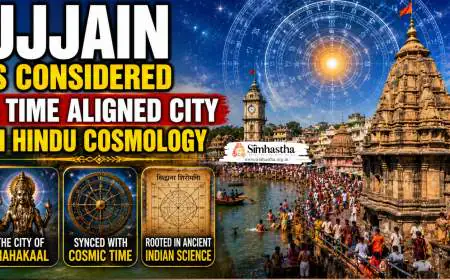
Ujjain Simhastha is a once-in-12-years Hindu spiritual gathering held in Ujjain, when Jupiter enters Leo (Simha Rashi). During this period, millions of pilgrims come for ritual bathing in Shipra River, spiritual discipline, and religious practices. It is one of the four major Kumbh Melas in India, but uniquely governed by a single planetary alignment, not a calendar date.
Recognized as one of the four classical Kumbh Melas of India, Ujjain Simhastha draws millions of pilgrims, saints, ascetics, and devotees to the sacred banks of the Shipra River. Ritual bathing, religious observances, and spiritual disciplines performed during Ujjain Simhastha follow traditions that have continued uninterrupted for centuries, making it a defining pillar of Ujjain’s religious and cultural identity.
What Makes Ujjain Simhastha Different from Other Gatherings
Simhastha is not scheduled according to administrative convenience or seasonal preference.
It is governed entirely by planetary movement. Only when Jupiter completes its cycle and enters Simha Rashi does Ujjain Simhastha take place.
Trending Guides Now

Why Travel to Ujjain Before the First Snan Is Sacred

What Makes Ujjain Simhastha a Living Spiritual Tradition

Spiritual Importance of Ujjain Simhastha in Sanatan Dharma

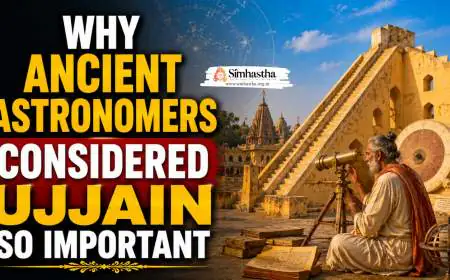
How Ujjain Influenced Ancient Indian Astronomy

Ujjain Railway Station to Mahakaleshwar Temple Distance (2026 Guide)

Ujjain Simhastha 2028 Dates Announced: Full Shahi Snan & Event Timeline

Mahakaleshwar Sandhya Aarti Online Booking 2026: Fee, Timings, Entry Gate and Step-by-Step Process

Mangalnath Temple Trip Budget: Puja, Local Transport, Food and Stay Planning
This dependence on cosmic timing is what separates Simhastha from most other religious festivals. The event does not occur every year, nor can it be advanced or postponed. When the alignment happens, the gathering becomes inevitable.
Also Read | Ujjain Simhastha Official Shahi Snan Dates
Meaning of the Term Simhastha
The word Simhastha is derived from two Sanskrit components:
-
Simha, meaning Leo
-
Stha, meaning established or situated
Together, the term describes the period when Jupiter is established in Leo. In Hindu tradition, this alignment is considered spiritually significant rather than symbolic.

Jupiter, known as Brihaspati, represents wisdom, guidance, expansion, and dharma. When this planetary force aligns with Simha, a sign associated with authority and order, the period is believed to be especially conducive to spiritual discipline and merit-based actions.
This belief forms the foundation of Ujjain Simhastha.
Why Simhastha Timing Cannot Be Changed
The timing of Ujjain Simhastha is completely fixed by astronomical calculation, not by human decision.
Unlike festivals that follow yearly calendars, Simhastha Ujjain happens only when the exact planetary alignment occurs. This means:
- It cannot be preponed
- It cannot be delayed
- It cannot be adjusted for convenience
This strict dependence on cosmic timing is what gives Simhastha Ujjain its authority and uniqueness.
Ujjain Simhastha as a Part of the Kumbh Tradition
Among the four Kumbh Melas recognized in Hindu tradition, Simhastha Ujjain holds a distinct position.
While the broader Kumbh tradition is linked to ancient narratives and sacred geography, Ujjain Simhastha follows its own timing rule based on Jupiter’s position in Leo. This is why the Ujjain gathering is often referred to by its specific name, Simhastha, rather than by the general term Kumbh alone.
The term Ujjain Kumbh gained wider usage in later periods for simplicity, but traditional references continue to prioritize the name Simhastha.
The Role of Ujjain in Simhastha
Ujjain is not merely the host city for Simhastha.
Historically, it has been regarded as an important center for astronomy, timekeeping, and ritual coordination. This background is essential to understanding why Simhastha Ujjain cannot be transferred to another location.
The presence of the Shipra River, long-established settlement patterns, and the spiritual importance of the city together create a setting that is considered non-substitutable within Hindu sacred geography.
Key Facts About Ujjain Simhastha
- Occurs once every 12 years
- Based on Jupiter’s entry into Leo
- Held only in Ujjain
- Centered around the Shipra River
- Attracts millions of pilgrims and ascetics
These factors make Ujjain Simhastha one of the largest and most structured spiritual gatherings in the world.
How Ujjain Simhastha Is Remembered and Observed
Unlike events remembered by fixed calendar years, Simhastha is often recalled through lived experience.
Families refer to life events in relation to past ujjain Simhastha gatherings. Ascetic orders organize their long-term movements around its return. Preparations begin years in advance, even before official announcements are made.
This pattern of remembrance reflects how deeply Ujjain Simhastha is embedded in social and religious memory.
Continuity of Ujjain Simhastha Across Time
The structure of Simhastha has adapted to changing eras, but its core principles have remained intact.
Ritual bathing, ascetic participation, disciplined living, and collective spiritual focus continue to define Ujjain Simhastha, just as they did in earlier centuries. Modern arrangements support the gathering, but they do not redefine it.
This continuity is one of the reasons Simhastha Ujjain remains relevant across generations.
Ujjain Simhastha in Simple Words (For First-Time Readers)
Ujjain Simhastha is a sacred Hindu gathering where people come together to reset their lives spiritually according to cosmic time.
In simple words, it is a moment when ordinary life slows down and spiritual discipline becomes central. People bathe in the Shipra River, follow strict routines, listen to spiritual teachings, and live with restraint for a limited period.
Unlike festivals based on fixed dates, Simhastha happens only when planetary conditions allow it. This makes it rare and meaningful.
For many pilgrims, attending Ujjain Simhastha is not about celebration. It is about correction, reflection, and renewal.
This simplicity is what gives Ujjain Simhastha its lasting power.
Why Simhastha Is Held Only in Ujjain
Simhastha Ujjain and Sacred Geography
Simhastha is not held in Ujjain by coincidence.
Among all ancient cities of India, Ujjain occupies a unique position in Hindu sacred geography. It is one of the few cities repeatedly described in traditional sources as a meeting point of cosmic order, natural elements, and human spiritual activity.
This is the first reason Simhastha Ujjain exists only here.
Ujjain as an Ancient Center of Timekeeping
Long before mechanical clocks or modern calendars, Ujjain was regarded as a reference point for measuring time.
Ancient astronomers used Ujjain as a prime meridian for astronomical calculations. The city’s geographic position made it suitable for observing planetary movement with precision.
Because Ujjain Simhastha depends entirely on Jupiter’s movement into Leo, this historical role of Ujjain as a time-observing city becomes essential.
Without this connection to timekeeping, Simhastha would lose its foundational logic.
The Shipra River and Its Role in Ujjain Simhastha
Every Kumbh gathering is anchored to a river.
In Simhastha Ujjain, that river is the Shipra.
The Shipra is not the largest river in India, nor the longest. Its importance lies in ritual continuity. For centuries, ritual bathing, daily offerings, and ascetic disciplines during Ujjain Simhastha have been centered on this river.
Traditionally, the river is seen not only as flowing water, but as a ritual space that becomes active during Simhastha.
This relationship between Simhastha and the Shipra cannot be replicated elsewhere.
Why Simhastha Cannot Be Shifted to Another City
Many cities host large pilgrimages.
Very few are irreplaceable.
Simhastha Ujjain depends on a combination of factors that must exist together:
-
A historically recognized timekeeping center
-
A river with continuous ritual association
-
An uninterrupted tradition of ascetic participation
-
A city embedded in Hindu sacred geography
Remove any one of these, and Ujjain Simhastha cannot function in its traditional form.
This is why Simhastha is exclusive to Ujjain.
The Presence of Mahakal and Simhastha
Ujjain is inseparable from Mahakal.
In traditional understanding, Mahakal represents time itself. This symbolism aligns directly with the time-based nature of Simhastha.
While Ujjain Simhastha is not a temple festival, the spiritual atmosphere of the city is shaped by this association with time, dissolution, and renewal.
This underlying presence strengthens Ujjain’s role as the only valid location for Simhastha.
Historical Continuity of Simhastha Ujjain
One of the strongest arguments for Ujjain’s exclusivity is continuity.
Simhastha has been observed in Ujjain across different political eras, dynasties, and administrative systems. While the scale and organization have evolved, the core gathering has never shifted away from the city.
This uninterrupted practice reinforces why Ujjain Simhastha is not transferable.
How Tradition Determines Location
In Hindu tradition, location is not decided by convenience.
It is decided by precedent.
Simhastha Ujjain continues where it has always been observed. The authority of tradition, strengthened through repetition, carries more weight than modern logistical reasoning.
This principle explains why even today, despite the scale of Ujjain Simhastha, the gathering remains rooted in the same geography.
Ujjain Simhastha and the Continuation of Place
The upcoming Ujjain Simhastha follows the same foundational rules as previous gatherings.
Despite modern infrastructure, planning, and administration, Ujjain Ujjain Simhastha will unfold within the same sacred framework that defines Simhastha Ujjain.
The place does not change. Only the generation does.
Key Insight
Simhastha is held only in Ujjain because no other city fulfills the same combination of time, tradition, geography, and continuity.
This exclusivity is not symbolic. It is functional.
Understanding this makes every other aspect of Ujjain Simhastha clearer, from rituals to timing to scale.
Astronomical and Cosmic Basis of Ujjain Simhastha
Simhastha Is Governed by Time, Not by Human Decision
Simhastha is not decided by governments, religious bodies, or calendars.
It is decided by the movement of Jupiter.
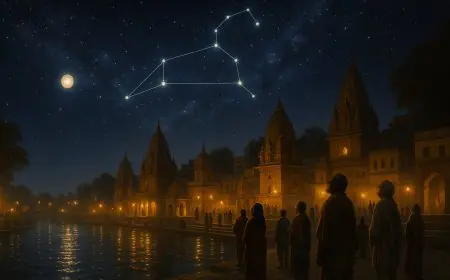
The Ujjain Simhastha takes place only when Jupiter enters Leo, an astrological position known as Simha Rashi. This single condition controls when Simhastha Ujjain can occur.
If the planetary alignment does not happen, Simhastha does not take place.
There are no exceptions.
This is why Ujjain Simhastha cannot be conducted annually or shifted to suit convenience.
Why Jupiter Controls Ujjain Simhastha
In Hindu cosmology, Jupiter (Brihaspati) represents wisdom, dharma, and spiritual guidance. Since Simhastha is a collective spiritual event, its timing is linked to Jupiter rather than faster-moving planets.
When Jupiter enters Simha Rashi, it is believed that the spiritual environment becomes more favorable for discipline, purification, and ritual practice. This belief is not symbolic. It is the foundation of Simhastha Ujjain timing.
Why Jupiter Determines Ujjain Simhastha
In Hindu cosmology, Jupiter is known as Brihaspati.
Brihaspati represents wisdom, knowledge, spiritual authority, and dharma. Unlike planets associated with individual fortune, Jupiter is believed to influence collective spiritual conditions.
Because Simhastha is a mass spiritual gathering, its timing is linked to Jupiter rather than the Sun or Moon.
When Jupiter changes position, it is understood as a change in the spiritual atmosphere itself. This belief forms the foundation of Ujjain Simhastha.
The Role of Leo (Simha Rashi) in Simhastha
Leo, or Simha Rashi, is associated with authority, order, and leadership.
When Jupiter enters Leo, Hindu tradition understands this as wisdom aligning with authority. This alignment is believed to create a period when spiritual discipline, restraint, and religious actions carry greater significance.
The term Simhastha directly refers to this moment.
Without Jupiter’s entry into Leo, Ujjain Simhastha has no spiritual or traditional basis.
Why Simhastha Occurs Every Twelve Years
Jupiter takes approximately twelve years to complete one full cycle through the zodiac.
This natural cycle determines the interval between two Simhastha gatherings.
The twelve-year gap is not symbolic and not chosen by tradition alone. It is astronomical.
Because of this long cycle, Simhastha Ujjain becomes a rare event in a human lifetime. Many devotees experience it only once or twice.
This rarity strengthens the importance of Ujjain Simhastha and prevents it from becoming routine.
Astronomical Calculation and Traditional Calendars
The timing of Simhastha is calculated using traditional astronomical systems.
Scholars and calendar makers track Jupiter’s movement with precision. Only after the exact planetary position is confirmed is Ujjain Simhastha declared.
This reliance on observation and calculation explains why Simhastha has remained consistent for centuries, even as political systems and administrations have changed.
The sky, not the state, decides the timing.
Time as the Central Element of Simhastha Ujjain
In Simhastha, time is not a background factor.
It is the central element.
Ritual bathing, vows, ascetic practices, and large-scale religious ceremonies are all performed with awareness of timing. Certain moments during Ujjain Simhastha are considered more spiritually potent than others because of planetary influence.
This is why Simhastha Ujjain is often described as a gathering where human action aligns with cosmic rhythm.
Ujjain Simhastha in the Same Cosmic Pattern
The upcoming Ujjain Simhastha follows the same astronomical rules as all previous Simhasthas.
Ujjain Ujjain Simhastha is not a modern version or a special case. It is simply the next occurrence in a long, uninterrupted sequence governed by Jupiter’s movement.
Despite modern infrastructure and administration, the cosmic condition remains unchanged.
The alignment decides the event, not human planning.
Core Understanding of Simhastha
Simhastha exists because time, as understood in Hindu cosmology, allows it to exist.
The entry of Jupiter into Leo is not symbolic decoration. It is the operational trigger that activates Ujjain Simhastha.
Without this alignment, there is no Simhastha.
Understanding this astronomical foundation is essential before exploring rituals, traditions, or historical development of Simhastha Ujjain.
Historical Evolution of Simhastha Ujjain
Simhastha Ujjain Is Older Than Recorded History
The origins of Simhastha Ujjain do not begin with a specific year or ruler.
They begin with tradition.
Long before written records became common, Ujjain was already recognized as a sacred city where time, ritual, and spiritual discipline intersected. The gathering later known as Ujjain Simhastha developed gradually from these early practices.
This is why the history of Simhastha is traced through continuity rather than documentation alone.
Why Simhastha Has Survived for Centuries
The survival of Ujjain Simhastha across centuries is not accidental.
It continues because it is based on:
- Repeated cycles of time
- Fixed sacred geography
- Strong ascetic participation
- Collective memory across generations
Even when political systems changed, Simhastha Ujjain continued without interruption. This continuity makes it one of the most stable traditions in the world.
Early References to Ujjain Simhastha
Ancient Hindu texts describe Ujjain as a major center of learning, astronomy, and religious practice.
These references consistently associate the city with planetary observation and large ritual gatherings. Over time, the specific period when Jupiter entered Leo became marked by increased pilgrimage and ritual bathing, forming the foundation of Ujjain Simhastha.
Even in early descriptions, the gathering is linked to timing rather than royal patronage.
Ujjain Simhastha Through Ancient Kingdoms
As dynasties rose and fell across central India, Simhastha Ujjain continued.
Rulers supported the gathering, but they did not create it. Their role was limited to protection and facilitation. The structure, timing, and spiritual authority of Simhastha remained with ascetic orders and religious communities.
This separation between political power and spiritual control allowed Ujjain Simhastha to survive changes in governance.
What Makes Simhastha Different from Other Festivals
Most religious events are based on:
- Fixed dates
- Administrative planning
- Cultural celebrations
But Ujjain Simhastha is different.
It is:
- Time-driven, not calendar-driven
- Discipline-based, not celebration-based
- Repeated through cycles, not yearly
This difference is what separates Simhastha Ujjain from ordinary festivals.
How Modern Ujjain Simhastha Took Shape: Maratha to British Period
The large and structured form of Ujjain Simhastha that we recognize today did not emerge overnight.
A major turning point came during the Maratha period in the 18th century. Historical records associate the formal organization of Ujjain Simhastha with Ranoji Shinde, a Maratha ruler who invited established Akharas from Nashik to Ujjain.
Nashik already followed a Jupiter-based Simhastha tradition. By bringing Akharas to Ujjain, the Marathas helped transfer ritual discipline, bathing order, and organizational knowledge.
During the British era, Simhastha entered another phase. Authorities focused on crowd control and safety rather than ritual leadership. Fixed bathing zones, controlled river access, and administrative oversight were introduced.
While these measures were modern, they did not alter the spiritual structure. Instead, they ensured that Ujjain Simhastha could continue safely at a growing scale.
Medieval Period and Continuity of Ujjain Simhastha
During the medieval period, Ujjain experienced political instability and external pressures.
Despite this, Simhastha was never abandoned.
Even when large public arrangements became difficult, ascetic participation, ritual bathing, and pilgrimage continued in reduced but unbroken forms. This continuity ensured that Simhastha Ujjain did not disappear from collective memory.
Few religious gatherings in the world demonstrate this level of resilience.
Simhastha Ujjain in the Colonial Era
Under colonial rule, large religious gatherings were often viewed with suspicion.
Yet Ujjain Simhastha continued to be observed. British records mention large pilgrim gatherings in Ujjain linked to specific planetary timings, confirming that Simhastha was already well-established and widely recognized.
Administrative oversight increased, but the spiritual structure remained unchanged.
Post-Independence Organization of Ujjain Simhastha
After independence, Simhastha Ujjain entered a new phase.
The responsibility of managing the gathering shifted to state authorities, while religious leadership remained with Akharas and spiritual institutions. Infrastructure, sanitation, and public safety improved, but the timing and rituals of Ujjain Simhastha were left untouched.
This balance preserved tradition while accommodating scale.
Growth in Scale, Not in Structure
One of the most important historical facts about Simhastha is this:
Its scale has grown.
Its structure has not changed.
Ritual bathing, ascetic processions, and disciplined spiritual practice continue exactly as they did in earlier centuries. What has expanded is participation.
Millions now attend Simhastha Ujjain, but they follow the same framework established long ago.
Ujjain Simhastha as a Continuation, Not a New Beginning
The upcoming Ujjain Simhastha is part of this uninterrupted historical flow.
Ujjain Ujjain Simhastha does not represent modernization of the tradition. It represents its continuation under contemporary conditions.
The same city, the same river, the same planetary rule, and the same spiritual purpose remain in place.
Why History Matters in Understanding Simhastha
Understanding the history of Simhastha Ujjain explains why the gathering commands such authority.
It has survived empires, invasions, administrative changes, and modern regulation without losing its core identity. This endurance is not accidental.
It is the result of a tradition rooted in time, geography, and collective belief.
Core Historical Insight
Ujjain Simhastha is not a revived tradition.
It is a continuous one.
Its historical strength lies not in monuments or records, but in repetition across centuries. Each Simhastha reinforces the legitimacy of the next.
This continuity is what allows Simhastha Ujjain to remain relevant, authoritative, and unquestioned even today.
Ritual Structure and Sacred Practices of Simhastha
Rituals as the Foundation of Simhastha
At its core, Simhastha is defined by ritual action.
Without rituals, Ujjain Simhastha would be only a large gathering. What transforms it into a sacred event is the disciplined performance of practices that have been followed for centuries.
These rituals are not optional traditions.
They are the structure on which Simhastha Ujjain stands.
The Central Role of Ritual Bathing in Simhastha Ujjain
Ritual bathing is the most visible and widely practiced act during Simhastha.
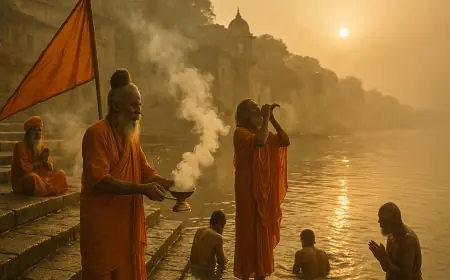
Pilgrims gather at the banks of the Shipra River to immerse themselves in the water during specific sacred periods. This act is believed to symbolize purification, renewal, and spiritual reset.
In Ujjain Simhastha, bathing is not treated as a symbolic gesture alone. It is performed with intention, discipline, and awareness of timing.
For many devotees, this single act represents the spiritual purpose of attending Simhastha Ujjain.
Why Bathing Holds Such Importance
In Hindu tradition, water is associated with cleansing at both physical and spiritual levels.
During Simhastha, the combination of sacred geography, planetary timing, and collective discipline is believed to enhance the spiritual value of ritual bathing.
This belief explains why millions travel long distances to participate in Ujjain Simhastha, even when modern conveniences are limited.
Ascetic Practices During Simhastha
Ascetics play a central role in shaping the ritual atmosphere of Simhastha.
During Simhastha Ujjain, many ascetics intensify their spiritual disciplines. These include silence, fasting, meditation, and withdrawal from ordinary social interaction.
These practices are not performed for display.
They represent continuity of renunciatory traditions that predate modern society.
Their presence reinforces the spiritual seriousness of Ujjain Simhastha.
Processions and Ritual Order
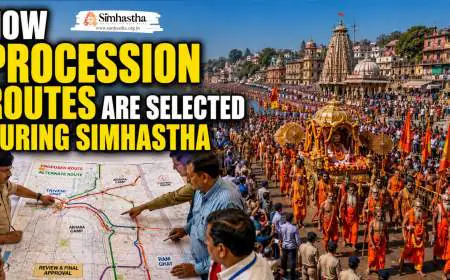
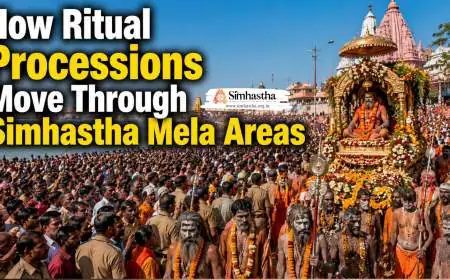
Ritual processions form an important part of Simhastha.
Ascetic groups and religious orders move in a fixed ceremonial order, reflecting hierarchy, tradition, and mutual recognition. These processions are governed by long-established rules that are respected across generations.
The order is not decided by administration.
It is inherited through tradition.
This ritual discipline ensures that Simhastha Ujjain maintains internal balance despite its scale.
Daily Religious Practices at Ujjain Simhastha
Beyond large public rituals, Simhastha is sustained by thousands of small daily practices.
These include:
-
Early morning prayers
-
Fire rituals
-
Scriptural recitation
-
Disciplined living near the river
Together, these practices create an atmosphere where Ujjain Simhastha functions as a temporary spiritual city rather than a festival ground.
Vows and Spiritual Commitments
Many pilgrims take vows during Simhastha.
These vows may involve fasting, charity, silence, or ethical discipline. Some vows last only for the duration of Simhastha Ujjain, while others continue long after pilgrims return home.
This aspect explains why Ujjain Simhastha is seen as transformative rather than recreational.
Collective Discipline During Simhastha
One of the most remarkable features of Simhastha is collective discipline.
Despite the presence of millions, behavior during Ujjain Simhastha is guided by shared understanding rather than enforcement alone. Pilgrims accept restrictions, follow ritual timing, and respect sacred spaces.
This collective discipline is a ritual in itself.
Ritual Simplicity and Spiritual Focus
Unlike modern events, Simhastha emphasizes simplicity.
Temporary shelters, minimal possessions, and basic living conditions are considered part of the spiritual process. This simplicity reinforces detachment and focus during Simhastha Ujjain.
Comfort is secondary.
Discipline is primary.
Ujjain Simhastha and Ritual Continuity
The upcoming Ujjain Simhastha will follow the same ritual framework observed in earlier gatherings.
Ujjain Ujjain Simhastha may involve larger numbers and improved facilities, but the sacred practices themselves remain unchanged.
Ritual continuity ensures that Simhastha Ujjain does not lose its spiritual character despite modern scale.
Core Ritual Insight of Simhastha
Simhastha is sustained not by infrastructure, but by practice.
The rituals of Ujjain Simhastha create meaning, discipline, and continuity. They transform a gathering of millions into a unified spiritual act.
Without these rituals, Simhastha Ujjain would not exist in its true form.
Akharas, Ascetic Orders, and Spiritual Lineages of Simhastha
Akharas as the Spiritual Backbone of Simhastha
The presence of Akharas is essential to Simhastha.
Without Akharas, Ujjain Simhastha would lose its spiritual structure. These ascetic orders preserve discipline, continuity, and authority within the gathering.
Akharas are not temporary groups formed for the event.
They are long-established institutions that guide how Simhastha Ujjain functions at a spiritual level.
What Are Akharas?
Akharas are organized monastic orders of ascetics.
They are formed to preserve spiritual teachings, protect religious traditions, and maintain disciplined renunciation. Each Akhara follows a distinct philosophical path while participating collectively in Ujjain Simhastha.
Their authority comes from lineage, not from popularity or numbers.
Historical Role of Akharas in Simhastha Ujjain
The involvement of Akharas in Simhastha goes back many centuries.
Historically, Akharas played a dual role:
-
Spiritual preservation
-
Protection of pilgrimage traditions during unstable political periods
Because of this role, Akharas became central to the organization and ritual order of Ujjain Simhastha.
Their continued participation ensures historical continuity.
Ascetic Orders and Spiritual Discipline
Ascetic life is based on renunciation.
During Simhastha Ujjain, ascetics follow strict daily routines that include meditation, austerity, scriptural study, and detachment from material comforts.
These practices are not symbolic displays.
They represent living spiritual discipline.
The presence of ascetics reinforces the seriousness of Ujjain Simhastha as a spiritual undertaking rather than a cultural gathering.
Lineage and Authority in Simhastha
Spiritual authority in Simhastha is transmitted through lineage.
Teachers pass knowledge to disciples over generations. These lineages define identity, responsibility, and ritual precedence during Simhastha Ujjain.
This system ensures that leadership within Ujjain Simhastha is rooted in tradition rather than personal influence.
Why Akharas Follow a Fixed Ritual Order
Order is critical in Simhastha.
Akharas follow a long-established sequence during major rituals and processions. This order reflects respect among spiritual lineages and prevents conflict within the gathering.
The sequence is not decided by administration.
It is accepted through consensus and tradition.
This structure allows Ujjain Simhastha to function smoothly despite its scale.
Diversity Within Unity
Although Akharas differ in philosophy, practice, and appearance, they operate within a shared spiritual framework.
This diversity within unity is a defining feature of Simhastha.
Shaiva, Vaishnava, and other ascetic traditions participate together in Simhastha Ujjain, reinforcing the inclusive nature of the gathering.
The Influence of Akharas on Pilgrims
For many pilgrims, interaction with ascetics is a central experience of Ujjain Simhastha.
Ascetics provide guidance, instruction, and example. Their presence encourages introspection and ethical reflection among visitors.
This exchange between renunciants and householders strengthens the social relevance of Simhastha Ujjain.
Akharas and Continuity of Simhastha
One reason Simhastha has survived for centuries is the commitment of Akharas.
They return to Ujjain at every Simhastha, regardless of political or social change. This repeated participation anchors the event in tradition.
Without Akharas, Ujjain Simhastha would lose its spiritual leadership and historical depth.
Ujjain Simhastha and Ascetic Participation
The upcoming Ujjain Simhastha will continue this pattern.
Ascetic orders and Akharas will participate in Ujjain Ujjain Simhastha according to the same principles followed in earlier gatherings.
Modern arrangements may change logistics, but the spiritual role of Akharas in Simhastha Ujjain remains unchanged.
Simhastha as a Center of Debate, Learning, and Religious Thought
Ujjain Simhastha has never been limited to ritual bathing alone.
Historically, it also served as a platform for religious debate, philosophical discussion, and intellectual exchange. Saints and scholars from different traditions used Simhastha as an opportunity to debate interpretations of sacred texts and monastic authority.
Some of these debates reshaped the identity of major religious orders and clarified boundaries between sects.
Unlike formal academic conferences, these discussions occurred in public view, grounded in scripture and lived discipline.
This intellectual role is one reason Ujjain Simhastha has influenced the evolution of Hindu religious thought, not just its ritual expression.
Core Insight on Akharas and Simhastha
Simhastha is sustained by spiritual lineages, not by infrastructure.
Akharas provide continuity, discipline, and authority to Ujjain Simhastha. Their presence ensures that the gathering remains rooted in renunciation, tradition, and spiritual purpose.
Understanding Akharas is essential to understanding Simhastha Ujjain itself.
Kalpavas, Pilgrim Life, and Daily Spiritual Discipline at Simhastha
Understanding Kalpavas in Simhastha
Kalpavas is one of the most demanding spiritual commitments observed during Simhastha.
In simple terms, Kalpavas means choosing to live a disciplined, restrained life for a fixed period during Ujjain Simhastha. Pilgrims who undertake Kalpavas temporarily step away from normal routines and accept a life focused entirely on spiritual practice.
Kalpavas is voluntary.
It is chosen, not imposed.
Who Observes Kalpavas During Simhastha Ujjain
Kalpavas is not limited to ascetics.
Householders, elderly pilgrims, families, and individuals from all backgrounds undertake Kalpavas during Simhastha Ujjain. Many are ordinary people who choose this discipline once in their lifetime.
This wide participation reflects how Simhastha integrates spiritual discipline into everyday life.
Life Conditions During Kalpavas
Life during Kalpavas is intentionally simple.
Pilgrims live in temporary shelters near the Shipra River. Possessions are kept to a minimum. Sleeping arrangements are basic, and daily comforts are reduced.
This simplicity is not considered hardship.
It is part of the discipline.
By reducing external distractions, Kalpavas allows participants to focus on inner clarity during Ujjain Simhastha.
Daily Routine of a Kalpavasi
A Kalpavasi follows a fixed daily routine.
The day typically begins before sunrise with bathing, prayer, and meditation. Meals are simple and taken at fixed times. Much of the day is spent in listening, reflection, chanting, or silent contemplation.
This structure creates rhythm and stability throughout Simhastha Ujjain.
Discipline replaces choice.
Routine replaces distraction.
Spiritual Purpose of Kalpavas
Kalpavas is not about endurance.
It is about transformation.
By living under restraint, pilgrims aim to cultivate patience, humility, and self-awareness. Many believe that disciplined living during Ujjain Simhastha helps reset mental and spiritual patterns formed over years.
For this reason, Kalpavas is often described as the most intense personal experience of Simhastha.
Pilgrim Life Beyond Kalpavas
Not all pilgrims observe Kalpavas.
Many attend Simhastha Ujjain for shorter durations, participating in bathing, prayer, and darshan while maintaining flexible routines.
Even so, pilgrim life during Ujjain Simhastha is guided by restraint. Visitors adapt to early mornings, limited resources, and shared spaces.
This shared adjustment creates a sense of collective purpose.
Community Living During Simhastha
One of the defining features of pilgrim life during Simhastha is community living.
Pilgrims share space, resources, and routines with strangers. This temporary community dissolves social boundaries and encourages cooperation.
In Simhastha Ujjain, this shared experience often becomes as meaningful as individual spiritual practice.
Discipline as a Collective Practice
Discipline during Simhastha is not enforced through strict rules alone.
It emerges from shared understanding.
Pilgrims respect sacred spaces, follow ritual timing, and accept limitations because everyone around them is doing the same. This collective discipline allows Ujjain Simhastha to function peacefully despite its scale.
Kalpavas and Mental Transformation
Many Kalpavasis describe subtle but lasting changes.
These include improved self-control, reduced attachment, and increased clarity. While experiences vary, the consistent element is reflection.
Kalpavas provides time.
Time for observation.
Time for silence.
This is rare in ordinary life.
Ujjain Simhastha and Continuation of Kalpavas
The upcoming Ujjain Simhastha will continue the tradition of Kalpavas without alteration.
Facilities may improve, but the discipline itself remains unchanged. Ujjain Ujjain Simhastha will offer the same opportunity for restraint, reflection, and spiritual focus that previous gatherings have provided.
Kalpavas remains central to Simhastha Ujjain.
Core Insight on Pilgrim Life at Simhastha
Simhastha is not only about large rituals or public events.
It is equally about quiet discipline practiced by individuals.
Kalpavas and pilgrim life transform Ujjain Simhastha into a lived spiritual environment rather than a temporary festival.
This daily discipline is what gives Simhastha Ujjain its depth, seriousness, and lasting impact.
Simhastha in the Modern Era – Scale, Administration, and Infrastructure
Growth of Simhastha Ujjain in Modern Times
Over the centuries, Simhastha has remained spiritually unchanged.
What has changed is scale.
In the modern era, Simhastha Ujjain has grown into one of the largest periodic human gatherings in the world. Population growth, improved transport, and wider awareness have increased participation with every cycle.
Despite this expansion, Ujjain Simhastha continues to function within its traditional spiritual framework.
Managing Scale Without Altering Tradition
Modern administration plays a supporting role during Simhastha.
Its responsibility is not to define rituals or alter timing, but to ensure safety, access, and basic services for pilgrims. Roads, sanitation, medical facilities, water supply, and temporary settlements are created to support the gathering.
These arrangements exist around Ujjain Simhastha, not above it.
The spiritual structure remains untouched.
Temporary Cities During Ujjain Simhastha
One of the defining features of modern Simhastha is the creation of temporary settlements.
Large areas near the Shipra River are transformed into organized living spaces. These include:
-
Pilgrim camps
-
Ascetic settlements
-
Community kitchens
-
Medical and safety zones
Once Simhastha Ujjain concludes, these settlements are dismantled, returning the landscape to its original form.
This temporary nature reflects the impermanence central to Simhastha itself.
Infrastructure as Support, Not Center
Infrastructure during Ujjain Simhastha serves a practical purpose.
It ensures that millions can participate safely. However, infrastructure is not the focus of Simhastha Ujjain.
Pilgrims attend for spiritual reasons, not amenities. Facilities exist to reduce hardship, not to redefine the experience.
This balance preserves the character of Simhastha even in a modern setting.
Role of Administration During Simhastha Ujjain
Administrative systems coordinate logistics, crowd management, and public safety.
They work alongside religious institutions, ascetic orders, and local communities. Decisions related to ritual order and spiritual practice are respected as traditional authority.
This cooperation allows Ujjain Simhastha to function smoothly without disrupting its spiritual hierarchy.
Technology and Simhastha
Technology has become a visible part of modern Simhastha.
Communication systems, navigation support, health monitoring, and emergency services use modern tools to manage scale. These systems operate quietly in the background.
They do not change why Simhastha exists.
They help ensure that it can continue safely.
Environmental Awareness in Modern Simhastha
Modern Simhastha Ujjain places greater emphasis on environmental responsibility.
Efforts are made to protect the Shipra River, manage waste, and reduce long-term impact. These measures recognize that spiritual gatherings must coexist with environmental care.
This awareness reflects the evolving responsibilities of Ujjain Simhastha in a changing world.
Ujjain Simhastha in the Modern Context
The upcoming Ujjain Simhastha represents the same balance seen in recent cycles.
Ujjain Ujjain Simhastha will involve large-scale preparation, modern infrastructure, and coordinated administration. At the same time, it will follow the same spiritual rules that define Simhastha Ujjain.
Modern systems support the gathering.
They do not redefine it.
What Recent Simhasthas Teach Us: 1992, 2004, and 2016
Recent Simhasthas help explain how Ujjain Simhastha evolves with time while preserving its spiritual core.
The 1992 Ujjain Simhastha took place during a period of intense religious and social discussion in India. Alongside rituals and pilgrimages, large spiritual assemblies and public discourses reflected wider debates within Hindu society. Despite heightened attention and differing viewpoints, Ujjain Simhastha maintained ritual discipline and Akhara authority.
The 2004 Ujjain Simhastha marked a phase of consolidation and learning. By this time, administrative coordination had improved significantly. Crowd management systems, cooperation with Akharas, and safety planning were refined using lessons from earlier gatherings. This Simhastha demonstrated how experience-based governance could support tradition without interfering in spiritual practice.
The 2016 Ujjain Simhastha represented a new scale of participation. Tens of millions of pilgrims arrived within a limited period, supported by modern infrastructure, technology, and emergency systems. Despite this unprecedented scale, ritual order, Akhara leadership, and pilgrim discipline remained intact.
Taken together, the Simhasthas of 1992, 2004, and 2016 reveal a clear pattern. Administrative methods evolve with time, but the spiritual framework of Ujjain Simhastha remains stable. Adaptation occurs at the level of support systems, not at the level of belief or ritual.
This continuity is the reason Ujjain Simhastha continues to function successfully across generations.
How Millions of Pilgrims Will Be Managed During Ujjain Simhastha
Managing Ujjain Simhastha is one of the most complex public coordination exercises in the world. Unlike ordinary festivals, Simhastha concentrates millions of pilgrims within a limited sacred geography, primarily along the banks of the Shipra River, over specific astrologically significant days.
The scale of the gathering requires a system that balances religious freedom, public safety, and ritual discipline without disturbing the spiritual character of the event.
Why Crowd Management at Simhastha Is Uniquely Challenging
Ujjain Simhastha is not spread evenly across time or space. Large crowds gather simultaneously on Shahi Snan days, often before sunrise, and movement is strongly influenced by traditional bathing orders of Akharas rather than by modern convenience.
Pilgrims arrive by road, rail, and temporary transit routes, many without fixed schedules. Saints, ascetics, and Kalpavasis follow different movement patterns than general pilgrims. All of this makes Simhastha management fundamentally different from concerts, sports events, or political rallies.
Traditional Discipline Meets Modern Administration
Historically, discipline during Simhastha was maintained by Akharas and religious authorities. In modern times, this traditional structure works alongside civil administration.
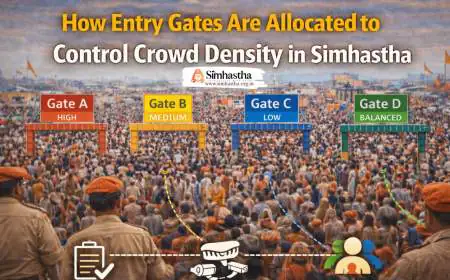
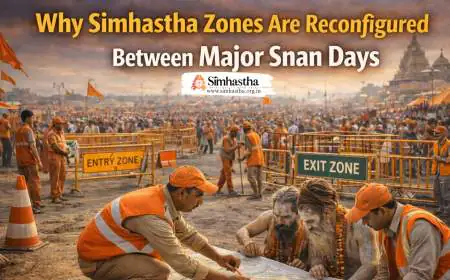
The role of the government is not to alter rituals, but to create invisible systems that allow rituals to happen safely. These include regulated entry points, designated bathing zones, time-based movement controls, medical readiness, and emergency response planning.
Importantly, no management decision is taken in isolation. Planning for Ujjain Simhastha begins years in advance and is continuously refined based on lessons from previous Simhastha gatherings.
Learning From Past Simhastha Events
Earlier Simhastha events demonstrated that crowd safety depends more on flow control than force. Managing direction, timing, and information reduces risk far more effectively than physical restriction.
Modern Simhastha planning therefore focuses on:
-
Preventing congestion before it forms
-
Separating pedestrian and vehicle movement
-
Ensuring rapid communication across the entire event area
These principles guide all contemporary preparations for upcoming Simhastha cycles.
A Coordinated Effort, Not a Single System
No single authority manages Simhastha alone. Religious bodies, district administration, police, health services, transport agencies, and volunteers work in coordination.
This layered approach ensures that even at peak moments, pilgrims are guided rather than controlled, supported rather than restricted.
Continuity Despite Change
The defining feature of Simhastha in the modern era is continuity.
Despite population growth, technology, and administrative complexity, the core of Ujjain Simhastha remains unchanged. Timing, rituals, ascetic authority, and pilgrim discipline continue to guide the event.
Change exists only where it is necessary.
Core Insight on Simhastha in the Modern Era
Modern organization allows Simhastha to exist at scale.
Tradition allows it to exist at all.
Simhastha Ujjain demonstrates that ancient spiritual systems can adapt to modern realities without losing identity. This balance is what allows Ujjain Simhastha to remain relevant, respected, and functional in the present day.
Ujjain Simhastha – Context, Importance, and Lasting Significance
Ujjain Simhastha as a Natural Continuation
Ujjain Simhastha is not a new beginning.
It is the next occurrence in a long and uninterrupted sequence governed by cosmic timing, sacred geography, and inherited tradition. In this sense, Ujjain Ujjain Simhastha exists for the same reasons as every previous Simhastha.
The place remains Ujjain.
The rule remains planetary alignment.
The purpose remains spiritual discipline.
Why Ujjain Simhastha Matters
Every Simhastha matters, but each one carries its own context.
Ujjain Simhastha arrives in a time when spiritual gatherings are often viewed through the lens of scale, logistics, or media attention. Against this background, Ujjain Simhastha continues to assert its original identity as a time-governed spiritual event.
Its importance lies not in numbers, but in continuity.
A Generational Gathering
Because Simhastha occurs once every twelve years, it becomes a generational experience.
For many pilgrims, Ujjain Simhastha may be the first Simhastha they attend. For others, it may be the only one they experience in full awareness. This rarity gives Ujjain Ujjain Simhastha a sense of urgency and responsibility rather than excitement alone.
People prepare for it years in advance, often guided by memory rather than publicity.
Simhastha Ujjain in a Changing World
The world surrounding Simhastha changes with every cycle.
Society becomes faster. Technology becomes more visible. Daily life becomes more complex. Against this movement, Simhastha Ujjain offers a pause rooted in discipline, restraint, and collective focus.
This contrast is what makes Ujjain Simhastha increasingly relevant rather than outdated.
Spiritual Continuity in Ujjain Ujjain Simhastha
Despite modern context, the spiritual framework of Ujjain Simhastha remains unchanged.
Ritual bathing, ascetic discipline, pilgrim restraint, and traditional order continue to define Ujjain Ujjain Simhastha just as they did in earlier centuries.
Modern arrangements may support participation, but they do not alter meaning.
The Role of Memory and Expectation
Simhastha is carried forward through memory.
Families recall past Simhasthas. Ascetic orders prepare according to long-term cycles. Local communities measure time through its return. These layers of memory shape the collective expectation of Simhastha Ujjain.
In this way, Ujjain Simhastha is anticipated not as an event, but as a return.
Why Ujjain Simhastha Is Not a Standalone Event
It is important to understand that Ujjain Simhastha does not exist independently.
It is connected to every Simhastha before it and every Simhastha that will follow. This continuity is what protects Ujjain Simhastha from becoming a one-time spectacle.
Each occurrence reinforces the authority of the tradition itself.
Cultural and Spiritual Relevance Today
In a time when spiritual practices are often individualized, Ujjain Simhastha represents collective spiritual effort.
Millions follow shared discipline, shared restraint, and shared timing. This collective participation gives Ujjain Simhastha cultural weight beyond personal belief.
It becomes a visible expression of living tradition.
Simhastha Ujjain Beyond the Year 2028
While Ujjain Simhastha is significant, its meaning does not end with its conclusion.
The gathering leaves behind renewed memory, reinforced discipline, and preparation for the next cycle. In this way, Simhastha functions as a recurring anchor in time.
The year changes.
The tradition continues.
Core Insight on Ujjain Simhastha
Ujjain Simhastha matters not because it is new, but because it is faithful to what came before.
Ujjain Ujjain Simhastha represents continuity in a changing world, discipline in an age of convenience, and collective focus in a fragmented time.
Understanding Simhastha Ujjain through this lens allows the gathering to be seen not as a temporary event, but as an enduring spiritual rhythm.
Simhastha Compared with Other Kumbh Melas – What Makes Ujjain Unique
One Kumbh Tradition, Four Sacred Locations
In Hindu tradition, the Kumbh Mela is not held at one place alone.
It takes place at four sacred locations:
-
Prayagraj
-
Haridwar
-
Nashik
-
Ujjain
Each location hosts a Kumbh gathering based on different planetary combinations and sacred geography. Simhastha Ujjain is one of these four, but it follows a rule that is unique.
Why Simhastha Ujjain Has a Distinct Identity
Among all Kumbh gatherings, Simhastha is the only one that is triggered specifically by Jupiter’s entry into Leo.
This single condition separates Ujjain Simhastha from other Kumbh Melas. While other locations rely on combinations of Jupiter, the Sun, or the Moon, Simhastha depends on one clear astronomical event.
This clarity gives Simhastha Ujjain a distinct identity within the broader Kumbh tradition.
Difference in Timing and Frequency
All Kumbh Melas follow planetary cycles.
However, Simhastha follows Jupiter’s twelve-year cycle in a direct and fixed way. This makes Ujjain Simhastha predictable but infrequent.
Other Kumbh Melas may have additional sub-events or variations. Simhastha Ujjain remains consistent in its timing rule.
Difference in Sacred Geography
Each Kumbh Mela is anchored to a river.
For Simhastha Ujjain, that river is the Shipra.
Unlike rivers associated with other Kumbh locations, the Shipra’s importance comes from ritual continuity rather than size or length. This gives Ujjain Simhastha a more intimate ritual geography.
The gathering grows large, but the river remains central.
Spiritual Atmosphere and Discipline
All Kumbh Melas involve ritual bathing, ascetics, and pilgrims.
What distinguishes Simhastha is its emphasis on discipline and restraint. The gathering traditionally carries a quieter, more inward-focused spiritual atmosphere compared to some other Kumbh locations.
This character shapes how Simhastha Ujjain is experienced by pilgrims.
Role of Ascetic Orders Across Kumbh Melas
Ascetic orders participate in all Kumbh gatherings.
However, in Ujjain Simhastha, their role is especially prominent due to the city’s long association with renunciation and time-based spirituality.
This reinforces Simhastha as a gathering rooted deeply in ascetic tradition.
Scale Versus Structure
Some Kumbh Melas are known for massive scale.
Simhastha balances scale with structure.
Even as participation increases, the internal order of Simhastha Ujjain remains stable. Ritual sequence, ascetic hierarchy, and discipline continue to guide the event.
This balance is one of the strengths of Ujjain Simhastha.
Why Comparison Matters
Comparing Simhastha with other Kumbh Melas helps clarify its role.
It is not greater or lesser.
It is different.
Understanding these differences prevents confusion and allows Simhastha Ujjain to be appreciated on its own terms.
Ujjain Ujjain Simhastha in the Broader Kumbh Cycle
Within the larger Kumbh tradition, Ujjain Simhastha represents Ujjain’s turn in the cycle.
Ujjain Ujjain Simhastha will follow the same rules that have defined Simhastha for centuries, while other locations follow their own planetary schedules.
This shared cycle maintains balance across sacred sites.
Core Insight on Simhastha and Other Kumbh Melas
The Kumbh tradition is unified, but not uniform.
Simhastha Ujjain stands apart because of its clear astronomical trigger, sacred geography, and disciplined structure. These elements give Ujjain Simhastha a distinct and respected place within the larger spiritual landscape.
Understanding this distinction completes the broader picture of Simhastha Ujjain.
Cultural, Social, and Spiritual Impact of Simhastha on Ujjain
Simhastha Ujjain as a Living Cultural Force
Simhastha is not limited to a fixed period on the calendar.
Its influence on Ujjain extends far beyond the days of the gathering. The city’s cultural rhythms, public spaces, and collective memory are shaped by repeated cycles of Ujjain Simhastha.
For residents, Simhastha is not remembered as an event.
It is remembered as a phase of life.
Cultural Identity of Ujjain and Simhastha
Ujjain’s cultural identity is closely linked to Simhastha.
Stories, customs, and local traditions often refer to past Simhasthas as reference points. Neighborhoods recall how spaces were transformed. Families remember participation across generations.
This shared memory strengthens cultural continuity and reinforces Simhastha Ujjain as part of everyday identity rather than an occasional occurrence.
Social Interaction During Ujjain Simhastha
During Ujjain Simhastha, social boundaries soften.
Pilgrims from different regions, languages, and backgrounds share space, routines, and discipline. Temporary communities form around shared purpose rather than social status.
This interaction creates a rare social environment where equality is practiced rather than declared.
Strengthening Community Bonds in Ujjain
For local residents, Simhastha is a collective responsibility.
Communities prepare together, adapt their daily lives, and participate in hosting millions of visitors. This shared effort strengthens social bonds within Ujjain itself.
After Ujjain Simhastha concludes, these bonds remain, reinforced by shared experience.
Spiritual Atmosphere Beyond Rituals
The spiritual impact of Simhastha is not limited to rituals.
During Simhastha Ujjain, the city experiences a noticeable shift in atmosphere. Silence, restraint, early mornings, and disciplined movement become common.
This environment influences even those not directly participating in rituals, creating a city-wide spiritual tone.
Influence on Personal Values
Many pilgrims report lasting changes after attending Simhastha.
These include increased patience, ethical awareness, and spiritual reflection. While experiences differ, the shared element is exposure to collective discipline during Ujjain Simhastha.
For residents of Ujjain, repeated exposure across cycles deepens understanding rather than novelty.
Intergenerational Transmission of Tradition
One of the strongest impacts of Simhastha Ujjain is intergenerational transmission.
Elders share experiences of previous Simhasthas. Younger generations learn by participation rather than instruction. This process ensures that Simhastha remains relevant without formal preservation efforts.
Tradition survives because it is lived.
Cultural Expression During Simhastha
Music, recitation, discourse, and traditional arts become more visible during Ujjain Simhastha.
These expressions are not staged performances. They emerge organically from religious practice and community interaction.
This reinforces Simhastha as a cultural ecosystem rather than a single event.
Long-Term Social Impact
The effects of Simhastha extend into long-term social behavior.
Improved cooperation, increased volunteerism, and heightened awareness of public spaces are often observed after the gathering concludes.
In this way, Simhastha Ujjain leaves a social imprint that lasts beyond its physical presence.
Ujjain Simhastha and Contemporary Society
In the context of modern life, Ujjain Simhastha carries added relevance.
As society becomes faster and more fragmented, the collective discipline and shared purpose of Ujjain Ujjain Simhastha offer a contrasting experience.
This contrast increases its cultural and spiritual value rather than diminishing it.
Core Insight on Impact of Simhastha
The true impact of Simhastha cannot be measured only in numbers or infrastructure.
Its cultural, social, and spiritual influence on Ujjain is cumulative. Each cycle reinforces identity, strengthens community, and renews spiritual focus.
This enduring impact explains why Simhastha Ujjain remains central to the city’s life, long after the gathering itself has ended.
Why Simhastha Remains Spiritually Relevant Today
Simhastha in a Rapidly Changing World
Modern life moves fast.
Technology, schedules, and constant information leave little space for reflection. In this environment, Simhastha continues to exist as a pause rather than a performance.
Simhastha Ujjain does not compete with modern life.
It interrupts it.
This interruption is one reason Ujjain Simhastha remains spiritually relevant even today.
Relevance Beyond Belief Systems
Participation in Simhastha is not limited to deep theological understanding.
Many pilgrims attend Ujjain Simhastha without formal religious study. What draws them is the experience of shared discipline, simplicity, and collective purpose.
This accessibility allows Simhastha Ujjain to remain relevant across generations and belief levels.
Collective Discipline in an Individual-Centered Age
Modern spirituality is often individual.
Simhastha offers the opposite.
Millions follow the same timing, the same restraint, and the same rhythm during Ujjain Simhastha. This collective discipline creates a sense of unity that is rare in everyday life.
For many, this shared structure becomes the most meaningful aspect of Simhastha.
Simplicity as a Spiritual Tool
Simhastha emphasizes simplicity.
Temporary living, minimal possessions, and structured routines contrast sharply with modern comfort-driven lifestyles. This contrast encourages detachment and clarity.
Even short participation in Simhastha Ujjain can reset habits shaped by excess and distraction.
Relevance of Sacred Time
Time governs Simhastha.
In a world where time is treated as a resource to be spent or saved, Ujjain Simhastha presents time as something to align with rather than control.
The concept of sacred timing remains meaningful, especially in an age driven by constant urgency.
Ujjain Simhastha and Contemporary Spiritual Needs
The relevance of Ujjain Simhastha lies in its ability to meet contemporary spiritual needs without adapting its core.
Ujjain Ujjain Simhastha offers discipline without pressure, community without hierarchy, and reflection without isolation.
These qualities explain why participation continues to grow despite changing social patterns.
Renewal Without Reinvention
Simhastha does not reinvent itself to stay relevant.
It renews itself through repetition.
Each cycle reinforces values of restraint, patience, and collective responsibility. This repetition strengthens meaning rather than dulling it.
For Simhastha Ujjain, continuity is the source of relevance.
Shared Experience as Spiritual Validation
Modern individuals often seek validation through personal milestones.
Simhastha offers validation through shared experience.
Participating in Ujjain Simhastha places individual effort within a larger rhythm. This shared participation reinforces belief, even for those uncertain about doctrine.
Inner Impact Over External Expression
The spiritual relevance of Simhastha is measured internally.
Quiet discipline, altered routines, and reflective time shape participants more than public rituals alone. These internal shifts explain why Simhastha Ujjain continues to influence lives long after the gathering ends.
Simhastha as a Living Practice
Unlike symbolic traditions, Simhastha remains a living practice.
It requires physical presence, effort, and adjustment. This active participation ensures that Ujjain Simhastha remains grounded in lived experience rather than abstraction.
Core Insight on Spiritual Relevance of Simhastha
Simhastha remains spiritually relevant because it offers what modern life often lacks.
Time for discipline.
Space for reflection.
Community without division.
These elements ensure that Simhastha Ujjain continues to function not as a relic of the past, but as an active spiritual rhythm in the present.
The Eternal Nature of Simhastha and Its Place in Hindu Civilization
Simhastha as a Civilizational Constant
Many traditions change with time.
Simhastha endures because it is built on time.
Unlike events shaped by rulers, institutions, or trends, Simhastha Ujjain is governed by cosmic cycles and inherited discipline. This foundation allows Ujjain Simhastha to exist independently of political or social change.
As long as planetary cycles continue, Simhastha remains possible.
Continuity Without Central Authority
One of the defining features of Simhastha is that it does not rely on a single authority to survive.
There is no founder, no central institution, and no governing text that controls Ujjain Simhastha. Instead, continuity is maintained through collective acceptance, repetition, and lived practice.
This decentralized structure makes Simhastha Ujjain resilient across centuries.
Place of Simhastha in Hindu Civilization
Hindu civilization does not function through fixed historical moments alone.
It functions through cycles.
Simhastha is one such cycle. It reinforces values of restraint, discipline, and alignment with time rather than conquest or expansion.
Within this civilizational framework, Ujjain Simhastha acts as a periodic reset, reminding society of priorities beyond material continuity.
Relationship Between Time and Civilization
Civilizations often measure progress through monuments or records.
Simhastha measures continuity through recurrence.
Each cycle confirms that the connection between place, time, and practice remains intact. This recurring validation gives Simhastha Ujjain a unique position within Hindu civilization.
It is not remembered as history.
It is experienced as renewal.
Survival Through Adaptation, Not Alteration
Simhastha has adapted to changing conditions without altering its core.
Infrastructure has improved.
Administration has evolved.
Participation has expanded.
Yet the essential structure of Ujjain Simhastha remains unchanged. This balance allows Simhastha Ujjain to remain functional without losing identity.
Ujjain Simhastha as Part of an Endless Sequence
Ujjain Simhastha is significant not because it marks an endpoint, but because it confirms continuity.
Ujjain Ujjain Simhastha is one point in an endless sequence that stretches backward and forward in time. It exists because previous Simhasthas existed, and future ones will exist because it does.
This sequence defines Simhastha more than any single gathering.
Beyond Event, Beyond Spectacle
In the modern world, large gatherings are often evaluated by numbers, visuals, or media coverage.
Simhastha resists this framing.
Its true significance lies in discipline practiced quietly, routines followed consistently, and traditions repeated faithfully. These elements place Simhastha Ujjain beyond spectacle and into continuity.
Collective Memory as Preservation
Simhastha survives because it is remembered collectively.
Families remember participation. Ascetic orders remember responsibility. Cities remember transformation. This shared memory acts as preservation without formal record.
Through this process, Ujjain Simhastha sustains itself naturally.
Why Simhastha Will Continue
As long as Hindu civilization values alignment with time, place, and discipline, Simhastha will continue.
It does not depend on popularity.
It does not depend on promotion.
It depends on rhythm.
This rhythm has survived centuries. It will survive centuries more.
Why Millions of People Attend Ujjain Simhastha
The scale of Ujjain Simhastha can be difficult to imagine. Millions of people travel long distances, often under difficult conditions, to attend it.
They come for different reasons:
-
Faith and devotion
-
Spiritual cleansing
-
To see saints and Akharas
-
To be part of a living tradition
For many pilgrims, attending Simhastha is a once-in-a-lifetime experience. For monks and ascetics, it is a duty tied to their spiritual order.
This mix of ordinary people and renunciates is what gives Simhastha Mela Ujjain its unique energy.
Why Millions Still Attend Ujjain Simhastha
Despite modern travel challenges and large crowds, millions continue to attend Ujjain Simhastha because it offers something rare:
- A chance to participate in a time-bound spiritual cycle
- Direct connection with ascetics and traditions
- A break from daily life through discipline and simplicity
For many, Simhastha Ujjain is not just a visit. It is a once-in-a-lifetime experience.
Final Insight on Simhastha Ujjain
Simhastha Ujjain is not an event that belongs to the past or the future.
It belongs to continuity.
Through its timing, discipline, and place within Hindu civilization, Ujjain Simhastha remains a living expression of how tradition survives not by resisting time, but by moving with it.
This is why Simhastha endures.
Frequently Asked Questions