























Ujjain Simhastha 2028 to Deploy 25,000+ Trained Personnel and Volunteers
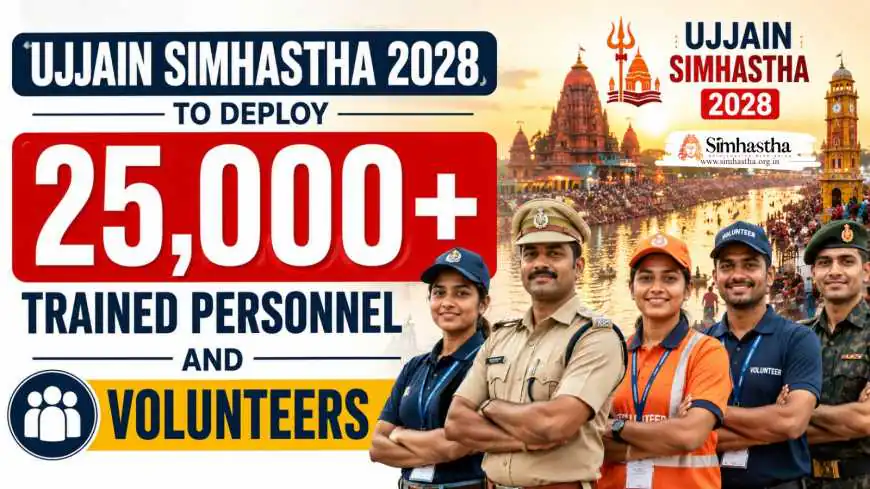
Ujjain Simhastha 2028 security plan includes 25,000+ trained personnel and volunteers for crowd control, rescue, disaster response and pilgrim safety.


Ujjain Simhastha 2028 to Deploy 25,000+ Trained Personnel and Volunteers
Ujjain Simhastha 2028 is beginning to take shape not only as a grand spiritual gathering but also as one of the largest crowd management and public safety exercises planned in Madhya Pradesh in the coming years. A major update from Ujjain’s Simhastha preparations indicates that 25,000+ trained personnel and volunteers are expected to be deployed for the event, creating a broad support network for security, crowd control, emergency response, rescue work, pilgrim guidance, and disaster management.
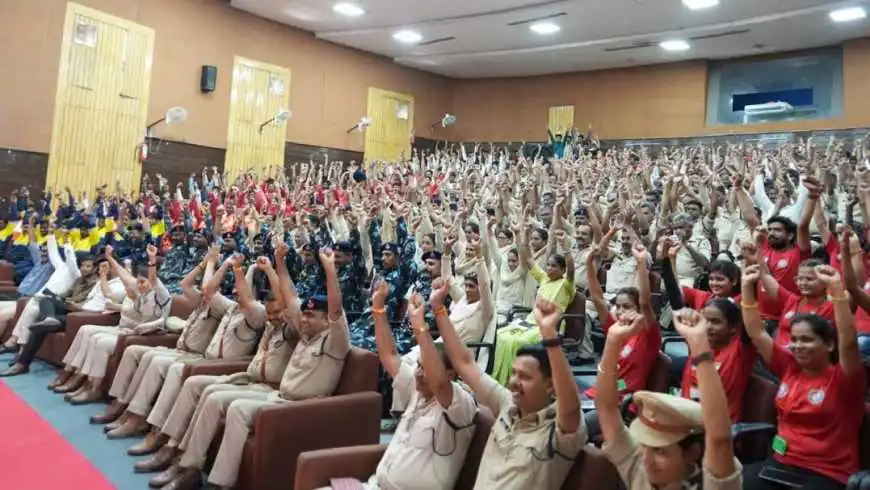
This is an important development for anyone tracking Simhastha 2028, because it shows that preparations are moving beyond broad announcements and entering the stage of operational planning. Instead of looking only at roads, ghats, accommodation, or temple arrangements, the latest focus is on the human system that will keep the mela functioning safely: Home Guards, Civil Defence volunteers, disaster-response workers, trained support teams, and field-level personnel who can manage pressure points when lakhs of pilgrims gather in one zone.
For devotees, this update matters because the success of Ujjain Simhastha depends as much on safe movement and emergency preparedness as it does on spiritual arrangements. A mela of this scale needs people on the ground who can handle lost-and-found situations, guide pilgrims at ghats, assist during crowd surges, support traffic discipline, coordinate with rescue teams, and respond quickly if there is a medical or disaster-related emergency. The plan to place 25,000+ trained personnel and volunteers into the Simhastha ecosystem signals that Ujjain is preparing for the event with a much wider safety net.
Trending Guides Now

Simhastha 2028 Mega Development Plan Revealed: How Ujjain Is Being Transformed Forever
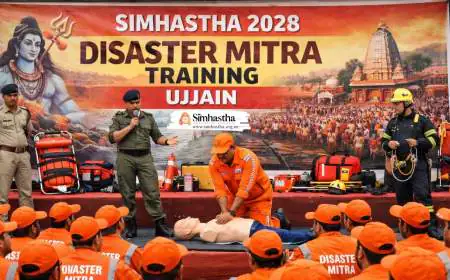
Simhastha 2028 Latest Update: Disaster Mitra Training Begins in Ujjain
Big Update: Who Will Handle the Ujjain–Maksi Four-Lane Road and When Does It Start?”

Ujjain Airport Project: A Historic Leap Before Simhastha 2028

Ujjain Railway Station to Mahakaleshwar Temple Distance (2026 Guide)

Ujjain Simhastha 2028 Dates Announced: Full Shahi Snan & Event Timeline

Mahakaleshwar Sandhya Aarti Online Booking 2026: Fee, Timings, Entry Gate and Step-by-Step Process

Kal Bhairav Temple Darshan Guide: Entry, Timings and Tips
Why the 25,000+ deployment plan is a major Simhastha 2028 update
Every large religious gathering has two faces. One is visible: temples, processions, snan dates, akharas, yatras, saints, and pilgrims. The other works in the background: security, movement control, water safety, emergency access, communications, medical coordination, and disaster preparedness. The latest Ujjain Simhastha 2028 update belongs to the second category, but it is just as important.
The announcement around 25,000+ trained personnel and volunteers suggests that Ujjain is preparing a layered response system rather than relying on a single department. That matters because Simhastha 2028 is expected to draw huge crowds across different zones of the city, riverfront areas, transport hubs, temporary camps, parking spaces, approach roads, and major temples. Managing that kind of movement requires not only police presence but also a support structure made up of trained people who can work at multiple points at the same time.
A deployment of this size can help in several ways:
- crowd regulation near ghats, bathing points, temples, and key corridors
- pilgrim assistance for route guidance, movement management, and public help
- emergency response support during medical incidents, panic situations, or sudden crowd pressure
- disaster readiness for fire, weather-related risk, water incidents, or stampede prevention measures
- coordination between agencies working across security, health, rescue, transport, and administration
For a spiritual event the size of Ujjain Kumbh Mela / Ujjain Simhastha, trained manpower often becomes the difference between orderly movement and chaos. That is why this update deserves to be seen as one of the more important operational stories in the run-up to the 2028 mela.
What the latest Ujjain Simhastha 2028 update points to
The most significant message in this development is not just the number itself. It is the kind of structure that number implies. 25,000+ trained personnel and volunteers means the administration is thinking in terms of a distributed support grid across the mela area, not a single command point.
That grid may include different layers of support such as:

- Home Guards for disciplined field deployment and support functions
- Civil Defence volunteers for public assistance and emergency support roles
- disaster-response volunteers who can act during crisis situations or help with evacuation and basic rescue
- trained local support teams who may be assigned to pilgrim-heavy locations
- coordination units working with police, health services, transport teams, and district administration
This matters because Ujjain Simhastha 2028 will not be a single-location event. Pilgrims will move across multiple spaces including Mahakal-linked routes, bathing areas, temple circuits, accommodation zones, bus and rail arrival points, parking areas, and temporary public facilities. A large volunteer and trained personnel force allows the administration to spread response capacity across these zones instead of concentrating it in only a few locations.
What roles trained personnel and volunteers may play during Simhastha 2028
Although specific deployment charts may emerge closer to the event, the broad role of trained personnel and volunteers in Simhastha 2028 can be understood through the needs of a mega religious gathering. The administration is likely to focus on a mix of safety, assistance, and rapid response responsibilities.
1) Crowd control and route management
One of the biggest challenges during Ujjain Simhastha is handling dense movement near important bathing dates, temple areas, and major access roads. Trained teams can help channel movement into controlled streams, prevent unnecessary bottlenecks, guide pilgrims toward designated paths, and keep entry and exit corridors functional.
Their presence can also reduce confusion for first-time visitors who may not know which route leads to a ghat, parking area, camp, or temple zone. During high-pressure hours, even simple guidance at the right point can prevent crowd build-up.
2) Pilgrim assistance and public help
Many visitors arriving for Ujjain Simhastha 2028 will be elderly devotees, families, or first-time pilgrims from other states. Volunteers and trained field staff can support them with directions, queue information, movement advice, and help during disorientation or separation from family members.
This public-facing role often looks small on paper, but on the ground it is one of the most important functions in a mela environment. A calm volunteer with accurate information can solve dozens of problems before they grow into larger management issues.
3) Lost-and-found support and family reunification help
Large melas always generate a high number of lost-and-found cases, especially when families split while moving through crowded areas. Volunteers positioned at public help points can support basic registration, information relay, and coordination with control rooms or public announcement systems.
A trained lost-and-found support network can be especially valuable for children, senior citizens, and pilgrims who are not carrying mobile phones or are unfamiliar with the city.
4) Emergency response support
If a pilgrim faints in a queue, a crowd surge occurs, a weather event disrupts movement, or a route suddenly becomes blocked, response time matters. Trained volunteers and support personnel can act as the first layer of assistance before medical or specialist rescue teams fully take over.
Their job may include:
- clearing access space for emergency teams
- guiding people away from a pressure point
- assisting with basic first response
- alerting the right control unit quickly
- helping stabilize movement until trained rescue or medical staff arrive
5) Ghat safety and water-edge discipline
Bathing areas are among the most sensitive parts of any Kumbh Mela or Simhastha arrangement. Crowd pressure near water, slippery surfaces, panic movement, and uneven access points can create risk if not monitored carefully. Trained personnel and volunteers may be deployed to maintain movement discipline, guide safe access, and assist in emergencies.
6) Disaster response and crisis coordination
The inclusion of large-scale trained manpower in Simhastha planning also points to disaster readiness. This may include support for evacuation management, public alerting, route clearing, communication assistance, and response coordination during events such as fire, severe crowd pressure, weather disruption, or water-related emergencies.
How this fits into the wider security planning for Ujjain Simhastha 2028
This development should not be viewed in isolation. It appears to be part of a larger security and preparedness build-up for Simhastha 2028. Ujjain will need a complete ecosystem for the mela, not a one-dimensional police deployment model.
That ecosystem is likely to include:
- field security presence
- crowd movement planning
- disaster management preparation
- medical support integration
- ghat and river safety planning
- transport and traffic coordination
- volunteer deployment across public-facing points
- control room communication and emergency escalation systems
When you look at the story from that angle, the 25,000+ trained personnel and volunteers figure starts to make more sense. It is less about one single force and more about building a human infrastructure around the event.
For Ujjain Simhastha 2028, that human infrastructure could be just as important as roads, bridges, accommodation, and sanitation, because even the best physical infrastructure needs people on the ground who know how to manage real-time pressure.
Why volunteer deployment matters in a mela as large as Ujjain Simhastha
A mega religious gathering runs on two things at once: faith and logistics. Devotees come for darshan, snan, rituals, spiritual connection, and the rare atmosphere of a sacred congregation. But once lakhs of people begin moving through the same city, logistics become inseparable from devotion. A pilgrim’s experience of the mela depends heavily on whether the environment feels safe, guided, and manageable.
That is why volunteers are not a side note in Simhastha 2028. They can become the connective tissue between the administration and the pilgrim.
A well-deployed volunteer network can help in the following ways:
- answer routine public questions without forcing every issue to reach the police
- support the elderly, women, and families in finding the right routes
- reduce crowd hesitation at junctions by offering immediate guidance
- direct people toward medical help, transport points, and service counters
- support queue management at high-footfall zones
- keep basic public information moving in a human, approachable way
In a city-wide event like Ujjain Kumbh Mela / Simhastha, that kind of support is not cosmetic. It can directly influence crowd behaviour, reduce confusion, and improve overall safety.
Home Guards, Civil Defence, and disaster volunteers: why this mix matters
The reported focus on trained personnel and volunteers suggests that Simhastha 2028 is not planning to rely on one uniform category of deployment. That is a positive sign because different situations require different kinds of response.
Home Guards
Home Guards are often useful in support roles that require discipline, presence, and coordination with official machinery. In a mela environment, they may be used for route discipline, crowd support, public assistance, and coordination at important movement points.
Civil Defence volunteers
Civil Defence volunteers can add a strong public-help layer to the system. Their value increases when they are deployed at information points, movement corridors, assistance counters, and emergency support locations where pilgrims need calm, immediate help.
Disaster-response volunteers
These teams are important because Simhastha 2028 will not only need routine crowd management but also contingency planning. If trained properly, disaster volunteers can become an early-response support force for situations where time matters.
Together, these categories can create a more flexible field system. One team may focus on movement discipline, another on public support, another on emergency escalation, and another on ghat-side monitoring. That kind of distribution is exactly what a large spiritual event needs.
What this means for pilgrims planning to visit Ujjain Simhastha 2028
For pilgrims, this update is good news because it indicates that safety planning is receiving serious attention well ahead of the event. While no mela can be made completely risk-free, the quality of preparation can dramatically improve the on-ground experience.
If the deployment plan is implemented effectively, pilgrims may benefit from:
Better route guidance
A larger trained presence can make it easier for visitors to understand which roads, gates, ghats, and temple approaches they should use.
Faster response during confusion or crowd pressure
Volunteers and trained personnel stationed across the mela area can act before a situation worsens, especially when the issue is confusion, congestion, or separation from family.
Improved assistance for elderly devotees
Senior citizens often need route help, seating guidance, support in moving through dense areas, and quick assistance if they feel unwell. A trained volunteer presence can make the pilgrimage safer and more manageable.
Stronger emergency support network
Whether the issue is a medical problem, water-edge emergency, sudden weather change, or movement disruption, a broad manpower network gives the administration more reach.
More organised public experience
Pilgrims do not experience “planning documents.” They experience queues, roads, crowd flow, help points, bathing access, and the availability of someone who can solve a problem. A well-deployed support system improves all of these.
Why this update is also important from a planning and governance perspective
The story also signals something larger about how Ujjain Simhastha 2028 is being approached. It suggests that the administration is not treating the mela as a short ceremonial burst but as a full-scale public management operation that needs trained manpower, distributed coordination, and advance preparedness.
That matters for three reasons.
1) It shows early attention to risk management
When security and disaster response planning begins well in advance, authorities have more time to identify pressure points, design training, and coordinate across departments.
2) It helps build a trained response culture before the mela starts
You cannot create field discipline overnight. Large deployments work best when people are trained, briefed, and familiar with their likely roles before the event begins.
3) It improves confidence among pilgrims and stakeholders
When the public hears that 25,000+ trained personnel and volunteers are being prepared for Simhastha 2028, it sends a message that crowd safety, assistance, and emergency management are part of the event blueprint.
What to watch next in Simhastha 2028 security updates
This story is important on its own, but it also opens the door to several follow-up developments that devotees, local residents, and Simhastha watchers should keep an eye on in the coming months.
Detailed deployment zones
Future updates may clarify where different categories of personnel and volunteers will be positioned, including ghats, temple routes, transport hubs, and mela sectors.
Training modules and readiness drives
Authorities may share more information on what kind of training is being provided to Home Guards, Civil Defence volunteers, or disaster-response teams.
Ghat safety planning
Given the importance of bathing zones during Ujjain Simhastha, more details may emerge on water safety, rescue arrangements, and public movement design around the riverfront.
Emergency communication systems
Control rooms, public information systems, route updates, and field-level communication channels are all critical to a safe mela. These may become a major part of future planning announcements.
Volunteer mobilisation and support roles
If more formal volunteer systems are announced, that would be a major development for both local participation and field-level assistance during the mela.
Why this is one of the most useful early operational signals for Simhastha 2028
A lot of pre-event coverage around large melas focuses on roads, bridges, funding, or political announcements. Those are important, but they do not always reveal how the event will function at the ground level. This update is different because it points directly to the people who will stand at the front lines of the mela experience.
When 25,000+ trained personnel and volunteers are discussed in the context of Ujjain Simhastha 2028, the story becomes about more than security numbers. It becomes about whether pilgrims will find guidance when they arrive, whether emergency help will reach them quickly, whether crowd movement will remain manageable, and whether the city can absorb the pressure of a spiritually massive gathering without losing control of the basics.
That is why this update deserves attention. It suggests that the mela’s invisible machinery is being assembled now, long before the first major bathing rush begins.
Ujjain Simhastha 2028 is moving from announcement mode to execution mode
Seen together, the planning around trained personnel, volunteers, and emergency support reflects a broader shift in Simhastha 2028 preparations. The event is no longer only being discussed in terms of what might happen in 2028. It is increasingly being planned in terms of what needs to be built, trained, coordinated, and deployed.
That shift matters. Once preparations move into execution mode, each update starts carrying more practical value for pilgrims, local businesses, transport operators, accommodation providers, and residents of Ujjain. Security and volunteer planning is one of the clearest examples of that transition.
For now, the headline is straightforward and significant: Ujjain Simhastha 2028 is preparing to deploy 25,000+ trained personnel and volunteers, a move that could shape everything from crowd control and public guidance to emergency response and disaster preparedness during one of India’s most important spiritual gatherings.
Frequently Asked Questions