



























How to Reduce Ujjain Simhastha 2028 Total Cost
Practical ways to reduce Ujjain Simhastha 2028 total cost - cheap accommodation, budget food, shared transport, and smart planning for an affordable pilgrimage.
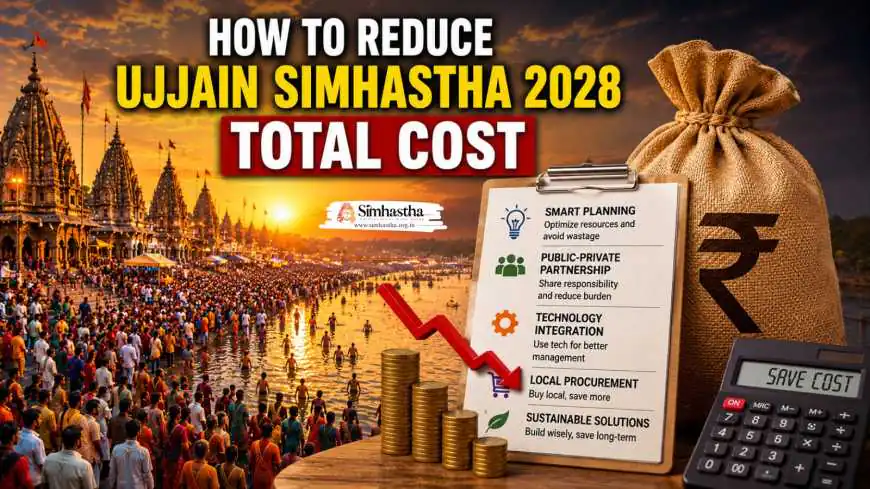


Let’s Be Honest: Simhastha Can Burn a Hole in Your Pocket
You’ve been waiting twelve years for this. The sacred Simhastha Kumbh Mela in Ujjain isn’t just another pilgrimage—it’s a once-in-a-lifetime spiritual event that draws millions to the banks of the Kshipra River. But here’s what no one talks about openly: the cost can spiral out of control faster than you expect.
I’ve seen families return home with beautiful memories and shocking credit card bills. I’ve also watched savvy pilgrims spend barely a third of what others paid, while having a richer, deeper experience. The difference isn’t luck. It’s knowing exactly where to cut, where to splurge, and where most people throw money away without realizing it.
This guide isn’t about staying in dirty hostels or skipping prasad. It’s about reducing your Ujjain Simhastha 2028 total cost intelligently—so you can focus on what actually matters: that first glimpse of the Mahakaleshwar Jyotirlinga, the soul-stirring chants at dusk, and the feeling of holy water touching your skin without the anxiety of a blown budget hovering over your head.
Let me walk you through every expense category, line by line, with real numbers and street-smart strategies. Because spiritual travel shouldn’t mean financial stress.
Trending Guides Now

Ujjain Simhastha 7 Day Itinerary for Families

Is Phone Allowed in Mahakaleshwar Temple Ujjain?

How Many Days Are Enough for Ujjain? Complete Trip Planner

How to Travel Inside Ujjain During Simhastha 2028: Routes, Maps and Movement Plans

Ujjain Railway Station to Mahakaleshwar Temple Distance (2026 Guide)

Ujjain Simhastha 2028 Dates Announced: Full Shahi Snan & Event Timeline

Mahakaleshwar Sandhya Aarti Online Booking 2026: Fee, Timings, Entry Gate and Step-by-Step Process
Mangalnath Temple Trip Budget: Puja, Local Transport, Food and Stay Planning
Why Simhastha Costs More Than Regular Ujjain Trips
Before we talk solutions, let’s understand the problem. A normal Ujjain visit during off-season might cost you ₹5,000–₹7,000 for a 3-day trip. Simhastha 2028? That same trip could easily touch ₹20,000–₹30,000 or more. Why?
Supply and demand, plain and simple. During the mela, Ujjain’s population explodes from 5 lakh to over 5 crore on peak bathing dates. Hotels that charge ₹1,200 normally ask for ₹6,000–₹8,000. Auto rickshaws that cost ₹50 suddenly want ₹500. Even a simple plate of dal chawal can double overnight.
Then there’s the hidden math: minimum stay requirements (many properties force you to book 5-7 nights), advance payments (100% upfront, non-refundable), and festival surcharges that appear like magic at checkout.
But here’s the good news. With proper planning, you can save money on pilgrimage without becoming a martyr. Let me show you how.
Phase Your Trip Around Peak Dates (This Is Gold) 🗓️
The single biggest expense factor for Simhastha 2028 is timing. Most pilgrims target only the main shahi snan (royal bath) dates—and that’s exactly when prices hit the stratosphere.
Instead of fighting crowds and paying peak premiums, consider this: arrive 3 days before a major snan date, or leave 2 days after. The difference in accommodation costs alone can save you ₹15,000–₹20,000 for a family of four.

Here’s a real comparison based on 2028 expected pricing:
| Bathing Date Type | Nightly Lodge Rate (2BHK) | Food Price Index | Transport Multiplier |
|---|---|---|---|
| Main Shahi Snan day | ₹8,000 – ₹12,000 | 2.5x normal | 5x – 8x |
| Day before or after | ₹3,500 – ₹5,500 | 1.5x normal | 2x – 3x |
| Non-peak mela days | ₹1,800 – ₹2,800 | Normal + 20% | 1.5x |
Take the Simhastha 2028 total cost and cut it nearly in half just by shifting your arrival by 48 hours. That’s not a small hack—that’s a game changer.
Also, consider attending smaller bathing dates like Purnima or Amavasya instead of the main royal baths. Spiritually significant, far less crowded, and dramatically cheaper.
Accommodation Strategies That Actually Work
Let me save you from the most common mistake: booking a hotel near Mahakal Temple for the entire duration. That’s financial suicide during Simhastha.
Option 1: Stay Outside the Core Zone
Areas like Nanakheda, Freeganj, and University Road offer cheap Simhastha stay options at 40-60% lower rates than properties near Ram Ghat or the temple. Yes, you’ll need to take an auto or shared tempo to the bathing ghats. But that 10-15 minute ride costs ₹50-₹100, not ₹5,000 extra per night.
Option 2: Dharamshalas and Ashrams
This is where budget travel Ujjain becomes a superpower. Trusted dharamshalas like Shri Ramkrishna Mission, Geeta Bhawan, and various akhara-run guesthouses offer basic but clean rooms at ₹300–₹800 per night. No surge pricing. No minimum stay. Just pure, honest pilgrimage accommodation.
The catch? You must book in person or through known contacts. Many don’t list online. Reach out 4-5 months before Simhastha 2028.
Option 3: Shared Apartments with Other Families
Here’s a strategy I’ve used successfully: find 2-3 families traveling together. Book one service apartment with 3 bedrooms. Split the cost. You get a full kitchen (cook your own meals—more savings), living space, and privacy. Per-family cost drops to ₹1,500–₹2,500 per night for a premium setup.
Option 4: Tent Cities Organized by the Government
The Ujjain administration sets up subsidized tent accommodations during Simhastha. These are basic but safe, with shared bathrooms and cots. Prices range from ₹500–₹1,500 per person per night. The best part? They’re located close to bathing ghats, saving you transport costs. Register early through the official Simhastha website.
Eating Smart Without Sacrificing Taste or Health 🍛
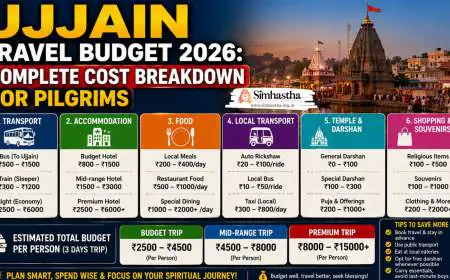
Food expenses during Simhastha can quietly drain your wallet. ₹50 chai becomes ₹150. A simple thali jumps from ₹80 to ₹250. Multiply that over 5 days for a family of four, and you’re looking at ₹6,000–₹8,000 extra.
Here’s how to reduce Ujjain Simhastha 2028 total cost through smart eating:
Cook your own meals. If your accommodation has a kitchen, use it. Pack basic supplies from home: rice, dal, spices, tea, sugar, biscuits. Buy vegetables and milk locally at normal prices from shops away from the mela zone. One home-cooked meal per day saves ₹1,000–₹1,500 for a family.
Eat at langars and community kitchens. Many temples and spiritual organizations run free or extremely subsidized langars during Simhastha. The food is simple, hygienic, and made with devotion. Seek them out. A ₹20 meal at a langar vs a ₹200 meal at a roadside stall? No contest.
Avoid eating near the main ghats during peak hours. Walk 10 minutes inward, away from the river. Prices drop immediately. Local eateries catering to residents don’t hike rates like tourist-facing stalls.
Carry a water bottle and fill it at safe drinking water stations. Buying bottled water repeatedly adds up. The mela has numerous RO water kiosks—use them.
Transportation: Where Most Pilgrims Overpay
Getting to Ujjain is one thing. Moving around during Simhastha is another. Let’s tackle both.
Reaching Ujjain
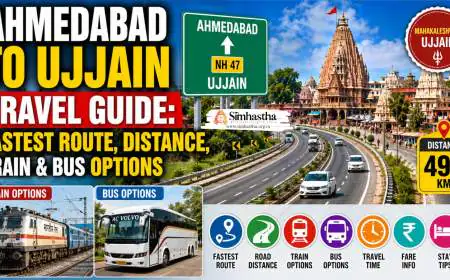
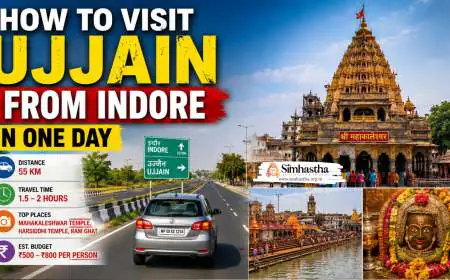
Train travel is your most economical bet, but booking is the challenge. Book tickets for Simhastha 2028 at least 4 months in advance. Use multiple waitlists. Consider trains to Indore (55 km away) or Dewas (30 km away) and then take a bus or shared cab to Ujjain. Often cheaper and more available than direct Ujjain trains.
Bus travel from nearby cities like Bhopal, Indore, or Ratlam is reliable and wallet-friendly. Ordinary state transport buses cost 60% less than luxury private buses. The journey might take an extra hour, but that hour saves you real money.
Driving your own car? Calculate fuel + tolls + parking (which becomes expensive and chaotic during mela days). Often, train + local transport works out cheaper and less stressful.
Getting Around Ujjain
Here’s where economical Simhastha planning pays off big.
Walk whenever possible. The mela area is compact. Distances that look far on a map are often just 15-20 minutes on foot. Plus, you experience the energy of the crowd, the sound of bhajans, the smell of incense. That’s not an inconvenience—that’s the pilgrimage.
Use shared tempos and city buses. During Simhastha, the municipal corporation runs special low-cost shuttle buses connecting major parking zones to bathing ghats. Fares: ₹10–₹30. Compare that to auto rickshaws demanding ₹300–₹500 for the same route.
Negotiate before getting into any auto. Agree on a fare before you sit. Better yet, use ride-hailing apps where available—they prevent surge pricing surprises.
Avoid hiring “guides” who promise VIP darshan access. Most are unauthorized. They’ll charge ₹500–₹1,000 and deliver nothing you couldn’t get yourself. That’s pure budget leakage.
Where to Splurge vs. Where to Save (A Sanity Guide)
Not all cost-cutting is wise. Some expenses are worth every rupee. Here’s my budget pilgrimage philosophy:
Save on: Accommodation (choose clean but basic), food (cook or eat at langars), local transport (walk or use shuttle buses), souvenirs (buy from fixed-price government emporiums, not street touts), luxury toiletries (carry your own basics).
Spend on: Travel insurance (medical emergencies are real in crowds), a reliable power bank (losing phone connectivity is stressful), comfortable footwear (you’ll walk 15,000+ steps daily), prepaid SIM with data (navigation and emergency calls), and one special temple offering or puja that matters to you.
This balance keeps your Simhastha 2028 total cost manageable while ensuring dignity and safety.
Hidden Costs That Surprise Most Pilgrims
Let me pull back the curtain on expenses people never anticipate.
Locker and cloakroom fees. You’ll need to store shoes, bags, and valuables before entering the temple or bathing ghats. These services charge ₹20–₹100 per item. Carry small change.
Prasad and donation expectations. Temples and sadhus will seek offerings. Decide your budget beforehand. ₹11, ₹51, or ₹101—whatever fits your plan. Don’t get pressured into ₹500 or ₹1,100 if it strains you.
Phone charging stations. If your power bank dies, paid charging kiosks charge ₹20–₹50 per 30 minutes. Avoid this by carrying two power banks or a solar charger.
Medical expenses. Minor injuries, dehydration, or stomach issues happen. Carry a basic medical kit to avoid paying ₹200 for a single antacid strip at a mela pharmacy.
Lost item replacement. The crowds are intense. Keep valuables minimal. Leave expensive jewelry, extra credit cards, and irreplaceable items at home.
Real Budget Breakdown: A Family of Four, 5 Nights
Let me give you a realistic Simhastha cost saving example. This is what a smart, budget-conscious family of four (two adults, two children) might spend during non-peak mela days:
| Expense Category | Budget Option | Premium Option (Avoid) |
|---|---|---|
| Accommodation (5 nights) | Dharamshala at ₹600/night = ₹3,000 | Hotel near ghat at ₹7,000/night = ₹35,000 |
| Food (5 days) | Cooked meals + langars = ₹2,500 | Restaurants only = ₹12,000+ |
| Transport to Ujjain (from Indore) | State bus = ₹600 total | Private cab = ₹2,500 |
| Local transport | Walking + shuttle buses = ₹500 | Autos for every trip = ₹3,000+ |
| Temple offerings | Planned ₹1,000 | Impulsive ₹5,000+ |
| Insurance (family) | ₹1,200 | Skipped (risky) |
| Miscellaneous | ₹1,000 | ₹5,000+ |
| Total | ₹9,800 | ₹63,000+ |
See the difference? Reducing your Ujjain Simhastha 2028 total cost isn’t about deprivation. It’s about choosing differently.
Advanced Money-Saving Tactics From Seasoned Pilgrims
These come from talking to people who’ve attended multiple Kumbh Melas across Allahabad, Nashik, and Ujjain.
Form a travel group of 10-15 people. Book a whole small guesthouse or a few adjoining rooms. Negotiate a bulk rate—owners will drop prices by 30-40% for guaranteed occupancy. Rotate cooking duties. Share auto rides.
Volunteer with a registered spiritual organization. Many groups offer free accommodation and meals in exchange for 3-4 hours of daily service (managing queues, distributing prasad, cleaning). You save 100% on stay and food while earning spiritual merit. Contact organizations 6-8 months before Simhastha 2028.
Extend your stay beyond the mela dates. If your work allows, arrive a week before the first major snan or stay a week after. Accommodation rates drop to normal levels. You experience Ujjain’s regular serene vibe alongside the mela energy.
Use cash, not cards. Sounds counterintuitive, but card payments often attract “convenience fees” and “merchant service charges” during mela times. Cash is king. Withdraw a fixed amount daily and stop spending when it’s gone.
Buy return transport tickets immediately upon arrival. Don’t wait. Prices only go up as departure dates approach. Book your exit the day you enter Ujjain.
The Emotional Math No One Talks About
Here’s something deeper than rupees and paise. The real cost of Simhastha isn’t just financial—it’s energetic. Crowds, noise, waiting, walking. That drains you. And when you’re drained, you make expensive decisions: “Just book that overpriced auto, I can’t walk anymore.” “Order whatever from that costly restaurant, I’m too tired to find a langar.”
Affordable Simhastha travel includes managing your energy. Build rest hours into every day. Sleep during peak afternoon heat. Start your bathing rituals at 4 AM when crowds are thinner and the air is cooler. A rested pilgrim is a financially wise pilgrim.
Also, lower your expectations of “perfect.” Your accommodation will be basic. Your meals simple. Your queues long. Accepting this reduces stress spending—the impulsive purchases we make trying to comfort ourselves.
Smart Packing Reduces Last-Minute Expenses
Every item you forget becomes an emergency purchase at inflated mela prices. Here’s your budget pilgrimage packing list:
Essential: Reusable water bottle, basic first aid kit, power bank (20,000 mAh minimum), torch, flip-flops for shared bathrooms, wet wipes, hand sanitizer, plastic bags for wet clothes.
Kitchen (if self-catering): Small spice box, tea bags, instant noodles, peanut butter, travel kettle, collapsible silicone bowls, a sharp knife, dish soap, scrubber.
Avoid packing: Heavy suitcases (you’ll walk with them), expensive electronics, multiple pairs of shoes, jewelry, large amounts of cash.
Buying these items at a local shop before arriving in Ujjain costs 60-70% less than purchasing at mela makeshift stores.
Final Words: Your Sacred Journey, Your Smart Choices
Simhastha 2028 will be unforgettable—whether you spend ₹10,000 or ₹1,00,000. But here’s what I truly believe: the depth of your spiritual experience has zero correlation with how much money you leave behind in Ujjain. In fact, the pilgrims who spend less often report feeling more connected, more present, more open. Why? Because they’re not constantly worried about their budget. They’ve made peace with their plan.
Reducing your Ujjain Simhastha 2028 total cost isn’t about being cheap. It’s about being intentional. It’s about deciding that your focus belongs on the divine, not on counting rupees. It’s about realizing that a simple bed, simple food, and simple transport leave you with more energy for what truly matters.
Start planning now. Book early, avoid peak dates, cook when you can, walk when possible, and trust that the pilgrimage doesn’t require your financial ruin to be meaningful.
The Kshipra is waiting. Lord Mahakal is watching. And your wallet? It can absolutely survive this journey. 🙏
Frequently Asked Questions