













How Demand Compression Affects Ujjain Simhastha 2028 Prices
Discover how demand compression and dynamic pricing will shape Ujjain Simhastha 2028 costs. Get expert tips, price forecasts, and smart booking strategies for your sacred journey.



Best Routes and Travel Overview
Every twelve years, the ancient city of Ujjain transforms into the epicenter of global spirituality, hosting the Simhastha Kumbh Mela —a celestial gathering where the divine and mortal worlds momentarily converge. As the city prepares for the Simhastha Kumbh Mela 2028, scheduled to grace the banks of the sacred Shipra River, a silent economic force begins to stir. This force is demand compression , a phenomenon where an overwhelming surge in pilgrims collides with a finite supply of travel and hospitality services, inevitably reshaping the market and driving prices upward. While this might sound like classic supply-and-demand theory, the reality for a pilgrim planning a "savings for the journey" is far more intense. This article unravels how demand compression will directly impact your travel budget, from hotel tariffs skyrocketing to flight prices soaring on key bathing dates. We will decode the market mechanics, rely on historical precedents from 2016, examine government interventions, and offer a strategic roadmap to navigate the 2028 price landscape effectively, ensuring your Mahakaleshwar darshan is both spiritually fulfilling and economically sound.
Understanding Demand Compression in the Context of Simhastha
Demand compression occurs when a massive volume of travel demand is forced into a short, specific timeframe due to a major event. For the Ujjain Simhastha, this is not a general increase in travel but a hyper-concentrated spike . It happens because the religious calendar dictates that auspicious bathing dates like Chaitra Purnima or Baisakhi fall on specific days. Pilgrims, wishing to maximize spiritual merit, travel almost exclusively on those dates, creating acute "demand compression windows" that last just 36 to 48 hours.
Unlike a wedding or a festival spread over a week, the Simhastha creates a unique cycle. Dynamic pricing algorithms used by hotels and airlines are designed to exploit these compression windows, raising rates gradually to protect margins. This is what leads to price surges that can be breathtaking, potentially raising fares many times over the base rate if not managed proactively. The effect is systemic, causing a ripple effect across hospitality, rail, aviation, and even essentials like fruits and flowers.
Historical Precedent: The 2016 Simhastha and Its Price Lesson
Experience from the 2016 Ujjain Simhastha provides a stark preview of what 2028 holds. While official data on percentages is scarce, the behavioral patterns were unmistakable. Reports indicated that the Simhastha, initially planned with a budget of around Rs 262 crore, ballooned to an estimated spend of Rs 3,000 to Rs 5,000 crore, reflecting the massive anticipated scale and the consequent price pressures across the board. The potential economic flow was estimated to be as high as Rs 10,000 crore.
Trending Guides Now
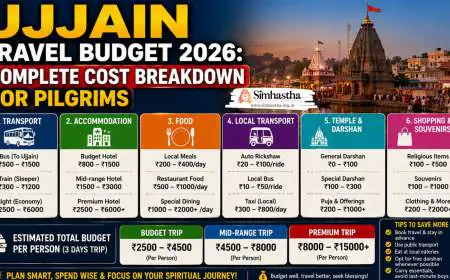
Ujjain Travel Budget 2026: Complete Cost Breakdown for Pilgrims
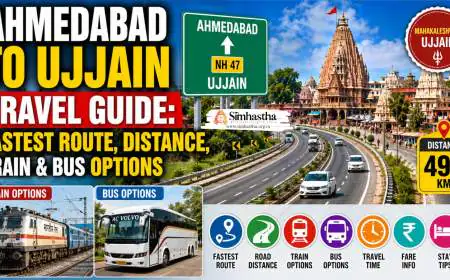
Ahmedabad to Ujjain Travel Guide: Fastest Route, Distance, Train & Bus Options
Kota to Ujjain Travel Guide: Routes, Distance and Travel Time

Ujjain Temple Tour by Auto, Taxi or Walking: Best Choice

Ujjain Railway Station to Mahakaleshwar Temple Distance (2026 Guide)

Ujjain Simhastha 2028 Dates Announced: Full Shahi Snan & Event Timeline

Ujjain Simhastha Update: CM Mohan Yadav Reviews 2028 Works

Karkateshwar Mahadev: 22/84 Mahadev of Ujjain
In 2016, as millions of devotees converged, the market exhibited the classic signs of demand compression. Reports confirm a phenomenon of panic buying as locals and pilgrims feared shortages in food supplies due to the drastic rise in floating population. Hoteliers, expecting a windfall, initially raised rates. However, reports also noted that due to logistical challenges and extreme heat, the actual influx was lower than the astronomical expectations of 5 crore or more. This led to a dynamic market where some hoteliers had to lower tariffs to attract visitors. This instability sent mixed signals: high demand for key dates but soft demand for the rest, revealing that while demand compression is powerful, mismanaged expectations can create localized price drops.
A critical lesson from 2016 is that airlines introduced additional flights to Indore, acknowledging the demand, while the Supreme Court later expressed concerns about excessive fare hikes during such festivals, indicating that while the market drives the price, regulatory oversight is on the horizon.
Deconstructing the Price Surge: Accommodation and Travel Costs
The cost of your journey will be the most visible impact of demand compression. Here’s how the different sectors will likely react.
Accommodation Hotspots: Hotels, Dharamshalas, and Tented Cities
The hospitality sector is the first to feel the pressure. Normal tariffs in Ujjain for a modest 3-star hotel range from ₹1,500 to ₹3,000, and 5-star properties from ₹6,000 to ₹10,000. However, during compression windows like the Shahi Snan days, dynamic pricing could cause tariffs to double, triple, or even increase sevenfold. A budget of ₹2,000 might only get you a bed in a dormitory rather than a private room.
To counter this, the government is actively addressing supply by approving modern tent cities and a planned "Kumbh City" to offer semi-permanent, affordable accommodation. Yet, even with these additions, official projections anticipate up to 14 crore devotees over the two-month festival, placing immense stress on the city's capacity. Even the flower market is already seeing expansion, proving how demand compression trickles down to every service industry, with a 100-acre flower cluster being developed specifically to meet the demand spike.
Travel Costs: Railways, Airlines, and Buses
The onward journey to Ujjain will also see price compression.

-
Indian Railways, aware that an estimated 1 crore pilgrims will travel by rail, is planning to run 100 special trains daily and introducing a Vande Bharat Metro on the Indore-Ujjain route to absorb the shock. While train fares are relatively fixed, the compression will be felt in the form of waitlisted tickets on standard trains, forcing pilgrims to pay premium tatkal fares or opt for more expensive classes.
-
Flight Prices to Indore are where uncompressed demand meets low supply. In 2016, Air India added ad-hoc flights to Indore to manage the rush. For 2028, airlines will inevitably use dynamic pricing to raise last-minute fares exponentially, potentially to rates five or ten times higher than usual—a phenomenon the government has labeled "unjustifiable".
-
Road Transport: Bus fares will also jump. With a 33% growth in intercity bus demand nationally, the rush to tier-2 cities like Ujjain will push bus fares up. The demand compression will be exacerbated by the creation of 8-lane roads and new expressways leading into the city.
Government Policy vs. Market Dynamics
A crucial dimension of the 2028 price landscape is the tug-of-war between government regulation and free-market pricing. The Madhya Pradesh government is aware of the risk of price exploitation. Already in early 2026, officials announced plans for controlled pricing for food and essential services on the mela grounds. However, for privately operated services like airlines and high-end hotels, capping prices is challenging.
The state has repealed the controversial land pooling policy, which was designed to build a permanent "Kumbh City" infrastructure but faced intense farmer protests. While this resolves local tensions, it may delay the creation of additional permanent accommodation, inadvertently concentrating demand into existing structures and worsening supply-side compression in 2028.
Thus, while the government is pouring around Rs 3,000 crore into infrastructure and has even sought a Rs 20,000 crore central aid package, the fundamental economic rule persists: when supply is inelastic, a sudden surge in demand will force prices upward.
Strategic Planning for a Budget-Friendly Pilgrimage in 2028
Given the predictable price surge, smart advance planning is your only defense. Here are five strategies to mitigate the effect of demand compression:
-
Book Accommodation 12 Months in Advance
Do not wait. Major hotels and government-approved tent cities will open bookings for Simhastha 2028 by early 2027. Securing a room 12 to 18 months ahead locks in a base rate before dynamic pricing algorithms trigger the surge. -
Travel Well Before or After the Shahi Snan Dates
The extreme price peak occurs only on the three or four main bathing dates. Arriving five days before or staying two days after these dates could reduce your lodging bill by 60-70%. -
Use Train Travel Over Flights
With 100 special trains anticipated, rail capacity is scaling far more effectively than airline capacity for Indore. Book your train tickets the moment the booking window (120 days prior) opens via IRCTC. -
Consider Group Booking
Forming a small group of 4-8 pilgrims allows you to charter a bus or minivan directly from your city. This bypasses the compressed pricing on individual air and train tickets, giving you fixed, predictable costs. -
Monitor Government Notifications on Price Caps
Watch announcements from the Madhya Pradesh tourism department for fixed-rate dharamshalas and "Bharat Sevashram" style camp accommodations. These are critical fallbacks when commercial hotels surge beyond reach.
The Macro-Economic Context: Oil Prices and Inflation
Beyond local logistics, global economic factors are set to amplify demand compression effects in 2028. Global crude oil prices are projected to average 95 per barrel in 2026, up from $70 in 2025. If this high-price environment persists for two years, airline and bus operating costs will be permanently elevated, setting a higher baseline fare before any compression markup. Retail inflation in India, already at a 10-month high in early 2026, is expected to rise further, with a 10% rise in crude possibly adding 0.3% to general inflation. Consequently, the 2028 pilgrimage will start from a higher inflationary plateau, making the surge worse than in 2016.
A Forecast for Ujjain Simhastha 2028 Prices
To provide a clear planning baseline, this table summarizes likely price ranges under normal conditions versus demand compression peaks:
| Service Category | Normal Price (2027) | Demand Compression Price (Peak Days 2028) |
|---|---|---|
| Budget Hotel Room (per night) | ₹1,000 – ₹1,800 | ₹4,000 – ₹7,000 |
| Mid‑Segment Hotel Room (per night) | ₹2,500 – ₹4,000 | ₹9,000 – ₹15,000 |
| Luxury Hotel Room (per night) | ₹6,000 – ₹10,000 | ₹20,000 – ₹35,000 |
| Dharamshala / Tent City (per bed) | ₹500 – ₹1,000 | ₹1,500 – ₹3,500 |
| Flight (Delhi – Indore, round trip) | ₹5,000 – ₹8,000 | ₹12,000 – ₹25,000 |
| Train (Sleeper Class, Delhi – Ujjain) | ₹400 – ₹600 | ₹600 – ₹900 (if available) |
| Bus (AC Sleeper, Delhi – Ujjain) | ₹1,200 – ₹2,000 | ₹3,000 – ₹5,000 |
Note: Actual prices depend on booking timing, availability, and official government interventions.
Your Spiritual and Financial Preparation for 2028
As you map your route from your city to the divine darshan of Mahakaleshwar, a well-researched budget is as essential as a prayer. The demand compression set to hit Ujjain in 2028 is not a coincidence but the inevitable marriage of faith and market economics. Yet, this should not deter your pilgrimage. Understanding the rules of dynamic pricing allows you to game them: book early, travel flexibly, embrace railways, and follow official price control announcements. The government's commitment to Simhastha as a model for spiritual tourism is evident in its massive infrastructure push and its creation of alternative accommodations. If you plan now, you can offset the demand surge. While airlines may hike fares and hotel tariffs may spike on sacred bathing days, your foresight can protect your budget and ensure that your experience is defined by grace, not by cost. Let your Simhastha be a testament to smart planning, where your devotion leads, and your wallet follows comfortably.
Frequently Asked Questions