






























How Hotel Pricing Works in Ujjain Simhastha 2028
Understand hotel pricing dynamics for Ujjain Simhastha 2028. Learn dynamic pricing, demand compression, booking strategies and get tips for affordable accommodation.


Best Routes and Hotel Pricing Overview
Every twelve years, the sacred city of Ujjain witnesses an extraordinary spiritual gathering—the Simhastha Kumbh Mela. As millions of pilgrims converge on the banks of the Shipra River for the Simhastha 2028, one of the most critical aspects of travel planning becomes securing a place to stay. Hotel pricing in Ujjain during Simhastha operates on a completely different paradigm than normal times. Driven by the economic forces of demand compression and dynamic pricing algorithms, room tariffs can surge anywhere from three to ten times their standard rates on peak bathing days. Understanding how this pricing mechanism works is not just a matter of budgeting—it can determine whether you find a bed within your means or end up paying a fortune for a basic room. This guide demystifies the pricing strategies of hotels, lodges, dharamshalas, and government‑run tent cities during the Simhastha 2028. Drawing from historical patterns of the 2016 Simhastha, current infrastructure developments, and the predictable behavior of online travel aggregators, you will learn exactly when and how to book, which price segments to avoid, and the insider strategies that can help you secure affordable accommodation without compromising on safety or convenience. Your Mahakal pilgrimage deserves spiritual focus, not financial anxiety—let this guide empower your planning.
The Economic Engine Behind Simhastha Hotel Pricing
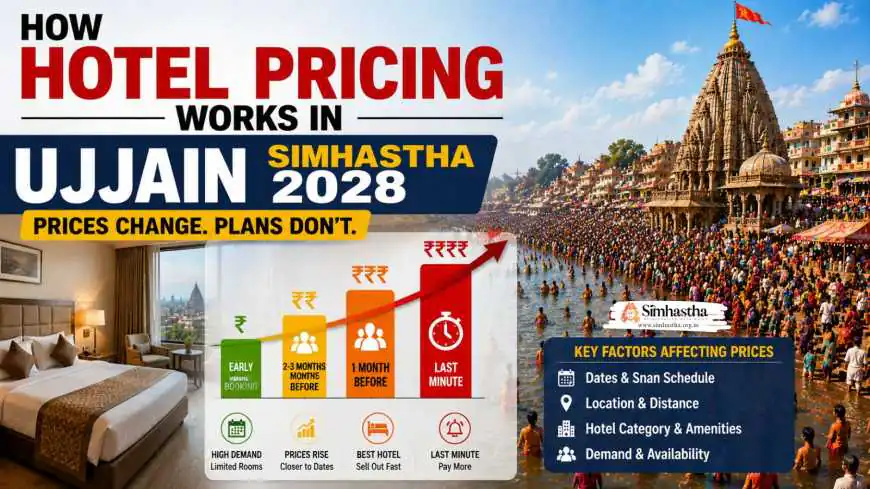
To understand how hotel pricing behaves during the Simhastha 2028, you must first grasp two interrelated concepts: demand compression and dynamic pricing.
Demand compression occurs because the religious calendar forces millions of pilgrims to travel on the same few auspicious dates. The Shahi Snan (royal bath) days—typically three to five specific days during the two‑month festival—create extreme short‑term demand spikes. On these dates, Ujjain’s population swells from its normal 5‑6 lakh to an estimated 1‑2 crore devotees. The fixed supply of hotel rooms (around 12,000‑15,000 registered rooms plus unorganized lodging) cannot accommodate this volume. Consequently, the market enters a demand compression window.
Dynamic pricing, on the other hand, is the algorithmic tool hotels and online travel aggregators (OTAs) use to maximize revenue during these windows. Similar to how airline and Uber prices surge during peak hours, hotel dynamic pricing software continuously adjusts room rates based on real‑time occupancy, competitor pricing, and remaining inventory. As the Shahi Snan dates approach and rooms sell out, the algorithms raise prices automatically—sometimes several times within a single day. By the night before a major bathing date, rates may have tripled or quadrupled from their levels a week earlier.
Trending Guides Now

Ujjain Simhastha 7 Day Itinerary for Families

How Many Days Are Enough for Ujjain? Complete Trip Planner

Ujjain Simhastha 5 Day Itinerary for Couples

2 Days Ujjain Solo Female Travel Plan Safe Guide

Ujjain Railway Station to Mahakaleshwar Temple Distance (2026 Guide)

Ujjain Simhastha 2028 Dates Announced: Full Shahi Snan & Event Timeline
Mangalnath Temple Trip Budget: Puja, Local Transport, Food and Stay Planning

Omkareshwar Trip Budget Guide: Transport, Stay, Food and Local Travel Costs
Understanding these two forces is your first step toward outsmarting the system.
Historical Hotel Pricing Patterns from Simhastha 2016
The 2016 Simhastha offers invaluable data on how hotel tariffs behave during a Kumbh Mela. While exact figures vary by source, clear patterns emerged:
-
Normal rates (pre‑Simhastha, 2015) : A standard budget hotel room in Ujjain cost ₹800‑₹1,200 per night. Mid‑range hotels charged ₹1,800‑₹3,000, and luxury properties ₹5,000‑₹8,000.
-
Rates during Simhastha 2016 (non‑peak days) : Prices doubled to ₹1,600‑₹2,500 for budget rooms, and ₹3,500‑₹6,000 for mid‑range.
-
Rates on Shahi Snan days (peak compression) : Budget rooms reportedly reached ₹4,000‑₹7,000, mid‑range ₹8,000‑₹15,000, and luxury hotels ₹20,000‑₹35,000 or more. Some reports suggested even higher unofficial rates in unorganized lodges.
-
Post‑peak correction : After the last major bathing date, prices dropped sharply, often by 40‑50% within two days.


Crucially, not all hotels followed the same curve. Government‑run dharamshalas and many temple accommodations maintained fixed, low rates (₹200‑₹500 per bed) but filled up months in advance. Smaller, family‑run lodges without online booking systems sometimes offered lower walk‑in rates than OTAs, though this was risky during peak days.
The lesson from 2016 is clear: dynamic pricing is real, but early booking and knowledge of fixed‑price options can neutralise its impact.
Types of Accommodation and Their Pricing Models in Simhastha 2028
For the 2028 Simhastha, Ujjain’s accommodation ecosystem will consist of several distinct categories, each with its own pricing logic.
1. Luxury and Mid‑Range Hotels
These properties—mostly located near the Mahakaleshwar Temple, Freeganj, and Nanakheda—will aggressively use dynamic pricing. Most are listed on OTAs like MakeMyTrip, Goibibo, and Agoda, which trigger automatic rate hikes as occupancy crosses 70‑80% on peak dates. Prices will be highest for bookings made within 30 days of the festival. Some luxury hotels may also offer "Kumbh packages" that bundle meals, darshan arrangements, and transport for a premium price (₹25,000‑₹50,000 per night for a family).
2. Budget Hotels and Lodges
This segment, comprising hundreds of small establishments scattered across Ujjain, operates on a hybrid model. Many do not use sophisticated dynamic pricing software but will raise rates manually at their front desks based on demand. During compression windows, walk‑in rates can be even higher than OTA prices. However, budget properties that accept direct phone bookings several months in advance often honour quoted rates, making them a good choice for early planners.
3. Dharamshalas and Temple Accommodations
Managed by religious trusts like the Shri Mahakaleshwar Temple Trust, Harsiddhi Temple Trust, and various mathas, dharamshalas offer the most price‑stable option. Rates are fixed—typically ₹100‑₹500 per bed—and do not change during the festival. However, availability is extremely limited (perhaps 3,000‑5,000 beds in total). Booking opens 6‑12 months in advance and is often restricted to verified pilgrims or those with referrals from local priests.
4. Government‑Run Tent Cities
The Madhya Pradesh Tourism Department and municipal authorities plan to set up large tent cities on the outskirts of Ujjain (e.g., near the newly developed areas, along the Dewas Road, and near the Airport Road). These will feature pre‑erected tents with varying comfort levels: budget (shared dormitories), standard (twin sharing with common washrooms), and deluxe (attached bathrooms, air‑cooling). Pricing for tent cities is expected to be regulated, with budget options around ₹1,000‑₹2,000 per person per night, and deluxe tents up to ₹6,000‑₹8,000. Unlike private hotels, these rates will be announced well in advance and will not surge dynamically—making them a reliable fallback.
5. Private Camp Sites and Homestays
Private landowners and entrepreneurs often convert vacant plots into temporary camps during Simhastha. Pricing is highly variable and unregulated—ranging from ₹3,000 to ₹15,000 per night. Quality and safety are major concerns. Only book such options through verified platforms or with personal recommendations.
Dynamic Pricing Algorithm – How It Actually Works
Behind the scenes, most hotels connected to OTAs use revenue management systems (RMS) that integrate with the hotel’s booking engine. Here is the step‑by‑step mechanism that will drive hotel pricing during Simhastha 2028:
-
Baseline rate setting – Hotels input their normal rates (e.g., ₹2,000 for a standard room) as a base.
-
Demand forecasting – The RMS analyses historical data from 2016, current booking pace for 2028, and external factors like flight bookings to Indore. It predicts which dates will have extreme compression.
-
Automated tiered pricing – For dates predicted as "peak compression," the system automatically applies multiplier rules. For example, 90 days before the event, rates may be set at 1.5x base; 60 days before, 2.5x; 30 days before, 4x; and within 7 days, up to 7‑10x.
-
Real‑time adjustment – As rooms sell, the algorithm checks competitor rates. If a competing hotel raises its price, the RMS may follow. If certain dates are selling slower than forecast, prices may drop temporarily—creating brief windows of opportunity for savvy last‑minute bookers.
-
Length‑of‑stay restrictions – During Shahi Snan dates, many hotels impose minimum stays (e.g., 3 nights) to prevent pilgrims from booking only the peak night. This further concentrates demand.
Understanding this logic reveals a key insight: the cheapest time to book is as early as possible—typically 9‑12 months before the festival—before algorithms have raised multipliers significantly.
Government Intervention and Price Control Mechanisms
The Madhya Pradesh government is acutely aware of the risks of uncontrolled price surges damaging the spiritual character of the Simhastha. For 2028, several interventions are being planned:
-
Fixed‑price dharamshala expansion – The government is funding the renovation and expansion of existing dharamshalas, adding approximately 2,000 additional beds at regulated rates.
-
Tent city price ceilings – For all campsites under the Tourism Department’s purview, maximum tariffs will be notified at least six months before the festival. Operators violating these caps may be blacklisted.
-
Helpline for price complaints – A dedicated Simhastha 2028 control room will accept complaints about exorbitant hotel rates, with the authority to direct local administration to intervene. However, enforcement effectiveness remains to be tested.
-
Mandatory rate display – All registered hotels will be required to display their maximum and minimum tariffs for the festival period on their premises and websites.
Despite these measures, private properties will likely still raise rates significantly within legal bounds. The government’s focus is on expanding affordable options rather than capping private prices—a smart strategy that acknowledges market realities while protecting low‑income pilgrims.
When to Book – A Strategic Timeline for 2028
To secure affordable hotel accommodation for Simhastha 2028, follow this proven booking timeline:
| Time Before Simhastha | Action |
|---|---|
| September 2027 (10‑12 months out) | Start researching and shortlisting hotels, dharamshalas, and tent cities. Contact dharamshala trusts directly for booking rules. |
| October – November 2027 (8‑10 months out) | Book tent cities as soon as MP Tourism opens reservations. Book directly with budget hotels via phone to lock rates before dynamic pricing escalates. |
| December 2027 – January 2028 (4‑6 months out) | If you missed early booking, this is the second‑best window. Some hotels may still offer moderate multipliers (2‑3x base). Avoid OTA bookings if possible; call hotels directly. |
| February – March 2028 (1‑3 months out) | Peak dynamic pricing has kicked in. Only book if absolutely necessary, and consider options outside the city centre (e.g., near Dewas or Indore). |
| April – May 2028 (Less than 30 days) | Extremely high rates. Focus on last‑minute cancellations or government‑run overflow camps. |
Crucially, avoid booking during the 7‑14 days immediately preceding a Shahi Snan date—this is when dynamic pricing reaches its maximum multiplier.
Factors That Will Influence 2028 Hotel Rates More Than 2016
Several additional factors in 2028 will amplify price surges compared to 2016:
-
Post‑COVID travel boom – Domestic travel has seen a sustained surge since 2022. The pent‑up desire for pilgrimage travel will be exceptionally high.
-
Improved connectivity – Expanded expressways, the new Vande Bharat trains, and increased flights to Indore mean more pilgrims can reach Ujjain quickly, intensifying demand compression.
-
Inflation – General inflation in India between 2016 and 2028 is expected to raise baseline rates by at least 40‑50%, even before any event‑related surge.
-
Online booking penetration – Far more pilgrims will use OTAs in 2028 than in 2016, making pricing more transparent but also more algorithmically volatile.
-
Limited new hotel construction – Despite government efforts, the number of new permanent hotel rooms added in Ujjain since 2016 is modest, meaning supply remains inelastic.
Given these factors, prudent pilgrims should budget for peak night rates that could be 5‑8 times higher than normal, with luxury properties potentially exceeding 10 times.
How to Spot and Avoid Price Gouging
Price gouging—charging unconscionably high rates during emergencies or festivals—is illegal under the Essential Commodities Act and various state laws. In practice, proving gouging is difficult because hotels can claim "dynamic pricing" as a legitimate business strategy. However, you can protect yourself:
-
Check historical rates – Use OTA price tracking tools or browse cached versions of hotel websites to see normal rates. If a hotel that normally charges ₹1,500 demands ₹12,000 without providing additional services, that is a red flag.
-
Avoid unregistered lodges – Unlicensed properties have no oversight and are likeliest to engage in extreme price hikes.
-
Book via MP Tourism – Government‑approved accommodations are bound by notified rates and have a complaints mechanism.
-
Report excessive hikes – Use the Simhastha helpline (numbers to be announced in late 2027) or the state tourism department’s grievance portal.
Remember that lowest price is not always best value. Extremely cheap unregulated camps may lack security, sanitation, or proximity to transport.
Budgeting for Your Stay – Realistic Cost Estimates
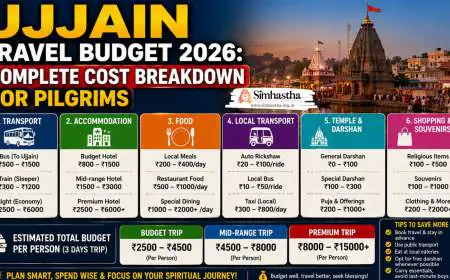
Based on the 2016 pattern, projected inflation, and the 2028 infrastructure plans, here are realistic per‑night hotel cost estimates for different accommodation types during peak and off‑peak periods of Simhastha 2028:
| Accommodation Type | Normal Rate (2027) | Off‑Peak Simhastha Rate (pre‑festival or between Snans) | Peak (Shahi Snan) Rate |
|---|---|---|---|
| Dharamshala (per bed) | ₹150 – ₹300 | ₹200 – ₹500 (fixed) | ₹200 – ₹500 (fixed) |
| Government Tent City (budget, per person) | N/A | ₹1,000 – ₹1,500 | ₹1,000 – ₹1,500 (fixed) |
| Government Tent City (deluxe, per person) | N/A | ₹4,000 – ₹6,000 | ₹4,000 – ₹6,000 (fixed) |
| Budget Hotel (private, double room) | ₹800 – ₹1,500 | ₹1,800 – ₹3,500 | ₹4,500 – ₹8,000 |
| Mid‑Range Hotel (double room) | ₹2,000 – ₹3,500 | ₹4,000 – ₹7,000 | ₹9,000 – ₹16,000 |
| Luxury Hotel (double room) | ₹5,000 – ₹10,000 | ₹10,000 – ₹18,000 | ₹22,000 – ₹40,000 |
| Private Camp Site (tent, double) | ₹2,000 – ₹4,000 (estimated) | ₹4,000 – ₹8,000 | ₹8,000 – ₹15,000 |
All figures are approximate and subject to market conditions. Government rates are expected to be announced in 2027.
Insider Strategies for Affordable Simhastha Accommodation
Beyond early booking and choosing regulated options, these advanced strategies can dramatically reduce your lodging costs:
-
Stay in Indore or Dewas
Ujjain is only 55 km from Indore and 35 km from Dewas. Hotels in these cities will also see price hikes but typically less extreme than in Ujjain itself. Take a taxi or train (₹50‑₹150) for your daily darshan. A round‑trip commute of 2‑3 hours is a small price for saving ₹5,000‑₹10,000 per night. -
Share rooms with fellow pilgrims
Many budget hotels allow triple or quadruple occupancy. Splitting a room that costs ₹8,000 among four people reduces per‑person cost to ₹2,000. -
Volunteer with service organizations
Spiritual groups like ISKCON, Art of Living, or local sewa samitis often provide free or subsidised accommodation to volunteers who help during the mela. Contact them at least six months in advance. -
Arrive a week before the first Shahi Snan
Rates begin rising sharply about 5‑7 days before each major bathing date. Arriving 10 days early allows you to secure a room at lower rates and stay through the peak without repricing. -
Use last‑minute cancellation channels
Some OTAs release cancelled rooms at moderate rates a few days before the date. Set up alerts on Booking.com or Agoda. This is risky but can work for solo travelers with flexible plans.
The Future of Hotel Pricing – What Ujjain Simhastha 2028 Teaches Us
The pricing dynamics of Simhastha 2028 will serve as a case study for future mega‑events in India—the Mahakumbh in Prayagraj (2025), the next Simhastha in 2040, and other large religious gatherings. The tension between dynamic pricing as a legitimate revenue tool and its potential to exclude low‑income pilgrims will likely lead to more regulatory frameworks. We may see laws requiring hotels to publish festival‑period price bands months in advance or mandating that a certain percentage of rooms be kept at controlled rates.
For the pilgrim, the core lesson remains timeless: knowledge is your best shield against price volatility. By understanding how hotel pricing works, you transform from a passive consumer at the mercy of algorithms into an empowered planner who can navigate the market, identify the best value, and focus your mental energy on the spiritual purpose of your journey—the darshan of Mahakaleshwar. Let the wisdom of this guide light your path to affordable, comfortable, and holy accommodation in Ujjain during the divine Simhastha of 2028.
Frequently Asked Questions