


































84 Mahadev Yatra in Ujjain: Complete Sacred Circuit Guide
Discover all 84 Mahadev temples in Ujjain with exact locations, religious significance, legends, and sacred shlokas. A complete spiritual guide for devotees and pilgrims.



Understanding the 84 Mahadev Tradition of Ujjain
The 84 Mahadev tradition of Ujjain (Chaurasi Mahadev) represents a sacred network of 84 Shiva temples forming the spiritual boundary of Mahakal Kshetra. Rooted in Shaiva tradition, tantric geography, and rishi lineage, each Mahadev is considered a living spiritual energy point. The number 84 symbolizes the 84 lakh yonis, the cycle of karma and rebirth, and the soul’s journey toward moksha under Lord Shiva’s grace, making the complete darshan spiritually transformative.
Ujjain is not merely a city of temples. It is a Shaiva mandala. The tradition of 84 Mahadev temples, known as Chaurasi Mahadev, represents the complete spiritual circumference of Mahakal Kshetra. Each Mahadev is not symbolic alone, but a living spiritual node, established through rishi traditions, tantric geography, and uninterrupted worship.
The number 84 is not arbitrary. In Sanatan cosmology, it represents:
-
The 84 lakh yonis of existence
Trending Guides Now

Karkoteshwar Mahadev Ujjain – The Sacred Serpent-Blessed Temple of the 84 Mahadev Circuit

Shri Anadikalpeshwar Mahadev, Ujjain – The Eternal Form of Shiva Among the 84 Mahadev Shrines

Guheshwar Mahadev Temple, Ujjain: The Sacred Cave of Lord Shiva
Shri Kapaleshwar Mahadev Ujjain – The Sacred Site Where Shiva’s Kapal Vrat Was Completed

Ujjain Railway Station to Mahakaleshwar Temple Distance (2026 Guide)

Ujjain Simhastha 2028 Dates Announced: Full Shahi Snan & Event Timeline

Mangalnath Temple Trip Budget: Puja, Local Transport, Food and Stay Planning

Omkareshwar Trip Budget Guide: Transport, Stay, Food and Local Travel Costs
-
Completion of karmic cycles
-
The soul’s journey toward liberation under Shiva’s grace
The darshan of all 84 Mahadevs is believed to dissolve accumulated karmic impressions and align the devotee with Mahakal Tattva.
Before starting the journey, it is important to understand why these temples exist as a connected system. The deeper meaning and ancient structure of this network are explained in our detailed guide on the Ancient Origins of the 84 Mahadev Temple Network, which reveals the spiritual science behind the yatra.
Complete List of the 84 Mahadev Temples of Ujjain (Chaurasi Mahadev)
1/84 – Agastyeshwar Mahadev (अगस्त्येश्वर महादेव)
2/84 – Guheshwar Mahadev (गुहेश्वर महादेव)
3/84 – Dhundheshwar Mahadev (धुंधेश्वर महादेव)
4/84 – Damrukeshwar Mahadev (डमरुकेश्वर महादेव)
5/84 – Anadikalpeshwar Mahadev (अनादिकल्पेश्वर महादेव)
6/84 – Swarnajwaleshwar Mahadev (स्वर्णज्वालेश्वर महादेव)
7/84 – Trivishtapeshwar Mahadev (त्रिविष्टपेश्वर महादेव)
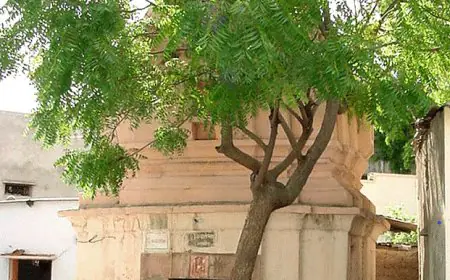
8/84 – Kapaleshwar Mahadev (कपालेश्वर महादेव)
9/84 – Swargdwareshwar Mahadev (स्वर्गद्वारेश्वर महादेव)
10/84 – Karkoteshwar Mahadev (कर्कोटेश्वर महादेव)
11/84 – Siddheshwar Mahadev (सिद्धेश्वर महादेव)
12/84 – Lokpaleshwar Mahadev (लोकपालेश्वर महादेव)
13/84 – Shree Kameshwar Mahadev Temple (श्री कामेश्वर महादेव मंदिर)
14/84 – Kutumbeshwar Mahadev (कुटुम्बेश्वर महादेव)
15/84 – Indradyumneshwar Mahadev (इन्द्रद्युम्नेश्वर महादेव)
16/84 – Ishaneshwar Mahadev (ईशानेश्वर महादेव)
17/84 – Apsareshwar Mahadev (अप्सरेश्वर महादेव)
18/84 – Kalakaleshwar Mahadev (कालकलेश्वर महादेव)
19/84 – Nagchandreshwar Mahadev (नागचन्द्रेश्वर महादेव)
20/84 – Pratiharaeshwar Mahadev (प्रतिहारेश्वर महादेव)
21/84 – Kukateshwar Mahadev (कुकाटेश्वर महादेव)
22/84 – Karkateshwar Mahadev (कर्कटेश्वर महादेव)
23/84 – Shri Meghnadeshwar Mahadev (श्री मेघनादेश्वर महादेव)
24/84 – Shree Mahalayeshwar Mahadev Temple (श्री महालयेश्वर महादेव मंदिर)
25/84 – Shree Mukteshwar Mahadev (श्री मुक्तेश्वर महादेव)
26/84 – Shree Someshwar Mahadev (श्री सोमेश्वर महादेव)
27/84 – Shree Anarkeshwar Mahadev (श्री अनार्केश्वर महादेव)
28/84 – Shree Jateshwar Mahadev (श्री जटेश्वर महादेव)
29/84 – Shree Rameshwar Mahadev (श्री रामेश्वर महादेव)
30/84 – Shree Chyvaneshwar Mahadev (श्री च्यवनश्वर महादेव)
31/84 – Shree Khandeshwar Mahadev (श्री खंडेश्वर महादेव)
32/84 – Shree Patneshwar Mahadev (श्री पाटनेश्वर महादेव)
33/84 – Shree Anandeshwar Mahadev (श्री आनन्देश्वर महादेव)
34/84 – Shree Kanthadeshwar Mahadev (श्री कण्ठदेश्वर महादेव)
35/84 – Shree Indreshwar Mahadev (श्री इन्द्रेश्वर महादेव)
36/84 – Shree Markandeshwar Mahadev (श्री मार्कण्डेयश्वर महादेव)
37/84 – Shree Shiveshwar Mahadev (श्री शिवेश्वर महादेव)
38/84 – Shree Kusumeshwar Mahadev (श्री कुसुमेश्वर महादेव)
39/84 – Shree Akrureshwar Mahadev (श्री अक्रूरेश्वर महादेव)
40/84 – Shree Kundeshwar Mahadev (श्री कुण्डेश्वर महादेव)
41/84 – Shree Lumpeshwar Mahadev (श्री लुम्पेश्वर महादेव)
42/84 – Shree Gangeshwar Mahadev (श्री गंगेश्वर महादेव)
43/84 – Shree Angareshwar Mahadev (श्री अंगारेश्वर महादेव)
44/84 – Shree Uttareswar Mahadev (श्री उत्तरेश्वर महादेव)
45/84 – Shree Trilochaneshwar Mahadev (श्री त्रिलोचनश्वर महादेव)
46/84 – Shree Vireswar Mahadev (श्री वीरेश्वर महादेव)
47/84 – Shree Nupureshwar Mahadev (श्री नूपुरेश्वर महादेव)
48/84 – Shree Abhayeshwar Mahadev (श्री अभयेश्वर महादेव)
49/84 – Shree Prithukeshwar Mahadev (श्री पृथुकेश्वर महादेव)
50/84 – Shree Sthavareshwar Mahadev (श्री स्थावरश्वर महादेव)
51/84 – Shree Shuleshwar Mahadev (श्री शूलेश्वर महादेव)
52/84 – Shree Omkareshwar Mahadev (श्री ओंकारेश्वर महादेव)
53/84 – Shree Vishweshwar Mahadev (श्री विश्वेश्वर महादेव)
54/84 – Kantheshwar Mahadev (कण्ठेश्वर महादेव)
55/84 – Singheswar Mahadev (सिंहेश्वर महादेव)
56/84 – Revanteshwar Mahadev (रेवन्तेश्वर महादेव)
57/84 – Ghanteshwar Mahadev (घण्टेश्वर महादेव)
58/84 – Prayageshwar Mahadev (प्रयागेश्वर महादेव)
59/84 – Siddhaheshwar Mahadev (सिद्धहेश्वर महादेव)
60/84 – Matangeshwar Mahadev (मातङ्गेश्वर महादेव)
61/84 – Saubhagyeshwar Mahadev (सौभाग्येश्वर महादेव)
62/84 – Rupeshwar Mahadev (रूपेश्वर महादेव)
63/84 – Sahastradhnukeshwar Mahadev (सहस्रधनुकेश्वर महादेव)
64/84 – Pashupateshwar Mahadev (पशुपतेश्वर महादेव)
65/84 – Brahmeshwar Mahadev (ब्रह्मेश्वर महादेव)
66/84 – Jalpeshwar Mahadev (जलपेश्वर महादेव)
67/84 – Kedareshwar Mahadev (केदारेश्वर महादेव)
68/84 – Pishachamukteshwar Mahadev (पिशाचमुक्तेश्वर महादेव)
69/84 – Sangameshwar Mahadev (संगमेश्वर महादेव)
70/84 – Dudhareshwar Mahadev Temple (दुधरेश्वर महादेव)
71/84 – Prayogeshwar Mahadev Mandir (प्रयोगेश्वर महादेव मंदिर)
72/84 – Chandradityeshwar Mahadev (चन्द्रादित्येश्वर महादेव)
73/84 – Karbheshwar Mahadev (कर्भेश्वर महादेव)
74/84 – Rajasthaleshwar Mahadev (राजस्थलेश्वर महादेव)
75/84 – Badleshwar Mahadev Mandir (बड़लेश्वर महादेव)
76/84 – Aruneshwar Mahadev (अरुणेश्वर महादेव)
77/84 – Pushpadanteshwar Mahadev (श्री पुष्पदन्तेश्वर महादेव)
78/84 – Abhimukteshwar Mahadev Temple (अभिमुक्तेश्वर महादेव मंदिर)
79/84 – Hanumanteshwar Mahadev(हनुमंत्केश्वर महादेव)
80/84 – Swapneshwar Mahadev (स्वप्नेश्वर महादेव)
81/84 – Pingleshwar Mahadev (पिंगलेश्वर महादेव)
82/84 – Shree Kayavarohaneshwar Mahadev (श्री कायावरोहणेश्वर महादेव)
83/84 – Bilkeshwar Mahadev Mandir(बिल्केश्वर महादेव मंदिर)
84/84 – Durdureshwar Mahadev(श्री दुर्दुरेश्वर महादेव)

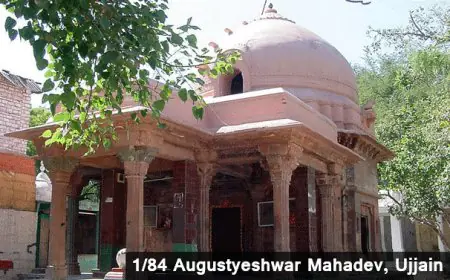
1/84 – Agastyeshwar Mahadev (अगस्त्येश्वर महादेव)
Devotional Sanskrit Verse (भावार्थ आधारित स्तुतिपंक्ति)
महाकाल वने दिव्ये यक्ष गन्धर्व सेविते।
उत्तरे वट यक्षिण्या यत्तल्लिङ्गमनुत्तमम्॥
Meaning of the Verse
In the divine Mahakal forest of Ujjain,
worshipped by Yakshas and Gandharvas,
on the northern side near the sacred banyan tree and the Yakshini,
stands that supreme and incomparable Shiva Linga.
Spiritual Importance of Agastyeshwar Mahadev
Agastyeshwar Mahadev holds a foundational position among the 84 Mahadev temples of Ujjain. This sacred Mahadev is associated with Maharshi Agastya, the great Vedic sage revered for his spiritual discipline and mastery over cosmic balance. The presence of Agastyeshwar Mahadev is believed to have stabilized the divine energies of Mahakal Van, making Ujjain a permanent seat of Shiva worship.
In the tradition of the 84 Mahadev Yatra, darshan of Agastyeshwar Mahadev is considered essential at the beginning of the pilgrimage. Worship here signifies purification of intent, grounding of the mind, and readiness to proceed through the complete Chaurasi Mahadev Ujjain circuit.
Spiritual Interpretation
Agastyeshwar Mahadev represents Shiva as the guru of discipline and restraint. The Devotional Sanskrit Verse (भावार्थ आधारित स्तुतिपंक्ति)’s reference to Mahakal Van and celestial worship confirms this linga as a spiritually elevated manifestation rather than a symbolic shrine. The northern placement indicates upward spiritual movement, suggesting the devotee’s first conscious step toward higher awareness and inner stability.
Spiritually, this Mahadev marks the transition from worldly orientation to structured spiritual pursuit, setting the tone for the remaining 83 Mahadev temples of Ujjain.
Darshan Note
Darshan at Agastyeshwar Mahadev is traditionally performed in the early morning hours. Devotees offer jal abhishek, bilva patra, and silent prayers. Many pilgrims take a formal sankalp here before beginning the full 84 Mahadev darshan, acknowledging this shrine as the spiritual gateway of the yatra.
Exact Location To Reach At Mahadev Temple
Shree Agastyeshwar Mahadev Mandir (01/84)
2/84 – Guheshwar Mahadev (गुहेश्वर महादेव)
Devotional Sanskrit Verse (भावार्थ आधारित स्तुतिपंक्ति)
रामघाटे महापुण्ये क्षिप्रातीरसमाश्रिते।
गुह्यरूपेण देवेशो गुहेश्वर इति स्मृतः॥
Meaning of the Verse
At the supremely sacred Ram Ghat,
situated on the banks of the holy Shipra River,
the Lord resides in a hidden and secret form;
therefore He is remembered as Guheshwar Mahadev.
Spiritual Importance of Guheshwar Mahadev
Guheshwar Mahadev is one of the most spiritually profound shrines among the 84 Mahadev temples of Ujjain. Located near Ram Ghat on the Shipra River, this Mahadev represents Shiva in His hidden, inward, and subtle form. The term Guhya signifies secrecy, depth, and esoteric truth, indicating that this shrine is meant for seekers who move beyond external rituals.
In the traditional 84 Mahadev Yatra, darshan of Guheshwar Mahadev is believed to awaken inner awareness and prepare the devotee for deeper spiritual realizations that unfold as the yatra progresses.
Spiritual Interpretation
Guheshwar Mahadev symbolizes the stage where the seeker turns inward. Unlike grand temple structures, this Mahadev teaches that true Shiva resides in silence and introspection. The placement near Ram Ghat emphasizes purification through sacred waters, while the “hidden form” reflects Shiva as the indwelling consciousness rather than an outward spectacle.
Spiritually, this Mahadev guides the devotee from visible devotion toward inner sadhana and self-inquiry, which is essential for completing the full Chaurasi Mahadev Ujjain circuit with understanding.
Darshan Note
Devotees traditionally perform jal abhishek using Shipra River water at Guheshwar Mahadev. Silent prayer, minimal offerings, and inward contemplation are preferred here. Many pilgrims pause briefly in meditation, acknowledging this Mahadev as a reminder that the journey of Shiva ultimately moves within.
Exact Location To Reach At Mahadev Temple
Shri Guheshwar Mahadev (2/84) -Complete Address
3/84 – Dhundheshwar Mahadev (धुंधेश्वर महादेव)
Devotional Sanskrit Verse (भावार्थ आधारित स्तुतिपंक्ति)
धुन्धेश्वरं महादेवं क्षिप्रातीरसमाश्रितम्।
मोहध्वान्त विनाशाय पूजयेत् शिवभक्तितः॥
Meaning of the Verse
On the banks of the holy Shipra River,
resides the great Lord known as Dhundheshwar Mahadev.
He is worshipped to destroy the darkness of illusion and delusion,
by those devoted to Lord Shiva.
Spiritual Importance of Dhundheshwar Mahadev
Dhundheshwar Mahadev is a significant shrine among the 84 Mahadev temples of Ujjain, revered for its power to remove confusion, ignorance, and spiritual fog. The word Dhundh means mist or obscurity, symbolizing the mental and karmic veils that cloud human perception.
Situated near Ram Ghat along the Shipra River, Dhundheshwar Mahadev is traditionally worshipped by devotees seeking clarity in life decisions, relief from inner restlessness, and guidance during spiritually uncertain phases. In the 84 Mahadev Yatra, this temple represents an early stage of purification where the seeker’s inner vision begins to clear.
Spiritual Interpretation
Dhundheshwar Mahadev embodies Shiva as the dispeller of illusion. Spiritually, this Mahadev corresponds to the moment when a seeker recognizes ignorance and consciously seeks truth. The riverbank location reinforces purification, while the name itself indicates the gradual lifting of mental and karmic haze.
This Mahadev teaches that spiritual progress does not happen instantly but through progressive clarity, making it a vital stop in the Chaurasi Mahadev Ujjain pilgrimage.
Darshan Note
Darshan at Dhundheshwar Mahadev is considered especially auspicious during the early morning hours, when natural mist often rises from the Shipra River, mirroring the temple’s spiritual symbolism. Devotees commonly perform jal abhishek, offer bilva leaves, and sit briefly in silent reflection.
Exact Location To Reach At Mahadev Temple
Shri Dhundeshwar Mahadev (3/84)
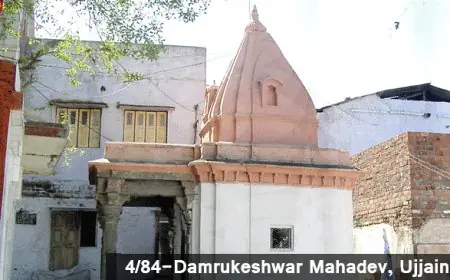
4/84 – Damrukeshwar Mahadev (डमरुकेश्वर महादेव)
Devotional Sanskrit Verse (भावार्थ आधारित स्तुतिपंक्ति)
डमरुनिनादसंयुक्तं नृत्यतां शिवमव्ययम्।
सृष्टिस्थितिलयाधारं डमरुकेश्वरमाश्रये॥
Meaning of the Verse
I take refuge in Damrukeshwar Mahadev,
the imperishable Lord who dances with the sound of the damaru,
who sustains creation, preservation, and dissolution,
and whose rhythm governs the cosmic order.
Spiritual Importance of Damrukeshwar Mahadev
Damrukeshwar Mahadev occupies a unique place among the 84 Mahadev temples of Ujjain, symbolizing cosmic rhythm and divine sound. The damaru, held by Lord Shiva, represents the primal vibration from which creation emerges. Worship of Damrukeshwar Mahadev aligns the devotee with the natural rhythm of the universe.
Located near the Ram Ghat region of Ujjain, this Mahadev is revered by devotees seeking balance in life, stability during transitions, and harmony between action and stillness. In the traditional 84 Mahadev Yatra, this shrine marks the realization that life itself moves according to Shiva’s rhythm.
Spiritual Interpretation
Damrukeshwar Mahadev represents Shiva as Nataraja, the cosmic dancer. Spiritually, this Mahadev teaches that chaos and order are not opposites but parts of the same divine movement. The sound of the damaru symbolizes awareness awakening through vibration, reminding seekers that spiritual growth requires alignment with universal rhythm rather than resistance.
This shrine reinforces the understanding that all phases of existence are governed by Shiva Tattva, an essential insight in the Chaurasi Mahadev Ujjain pilgrimage.
Darshan Note
Devotees traditionally offer jal abhishek and meditate briefly on rhythmic breathing while worshipping Damrukeshwar Mahadev. Listening inwardly to one’s breath is considered especially beneficial here. Mondays and the month of Shravan are regarded as particularly auspicious for darshan.
Exact Location To Reach At Mahadev Temple
Shri Damrukeshwar Mahadev (4/84)
5/84 – Anadikalpeshwar Mahadev (अनादिकल्पेश्वर महादेव)
Devotional Sanskrit Verse (भावार्थ आधारित स्तुतिपंक्ति)
अनादिकल्पसम्भूतं महाकालवने स्थितम्।
सृष्टेः पूर्वं स्थितं लिङ्गं अनादिकल्पेश्वरं भजे॥
Meaning of the Verse
I worship Anadikalpeshwar Mahadev,
the Shiva Linga that existed before the beginning of creation,
established in the sacred Mahakal forest,
present even before the first cycle of time unfolded.
Spiritual Importance of Anadikalpeshwar Mahadev
Anadikalpeshwar Mahadev represents one of the deepest philosophical manifestations among the 84 Mahadev temples of Ujjain. The name itself signifies Shiva beyond time, existing before the first kalpa and remaining beyond dissolution. This Mahadev is associated with the concept of Adi Ananta Shiva, the eternal source without origin or end.
Within the 84 Mahadev Yatra, darshan of Anadikalpeshwar Mahadev reminds devotees that Shiva is not bound by creation or destruction. Worship here is believed to help seekers detach from fear of time, death, and impermanence.
Spiritual Interpretation
Anadikalpeshwar Mahadev symbolizes Shiva as pure existence, untouched by cycles of birth and dissolution. Spiritually, this shrine corresponds to the seeker’s realization that consciousness existed before identity, form, and memory. The reference to Mahakal Van reinforces Shiva as both time and transcendence of time.
This Mahadev teaches that liberation lies in recognizing the timeless awareness behind all experiences, a crucial understanding in the Chaurasi Mahadev Ujjain pilgrimage.
Darshan Note
Darshan at Anadikalpeshwar Mahadev is ideally performed with quiet contemplation rather than elaborate ritual. Devotees traditionally offer water and bilva leaves, followed by silent meditation. Worship during Brahma Muhurta is considered especially powerful at this shrine.
Exact Location To Reach At Mahadev Temple
Anadikelpeshwar Mahadev, (05/84)
6/84 – Swarnajwaleshwar Mahadev (स्वर्णज्वालेश्वर महादेव)
Devotional Sanskrit Verse (भावार्थ आधारित स्तुतिपंक्ति)
स्वर्णज्वालासमप्रख्यं तेजोराशिं सनातनम्।
महाकालवने स्थितं स्वर्णज्वालेश्वरं भजे॥
Meaning of the Verse
I worship Swarnajwaleshwar Mahadev,
whose form shines like blazing golden flames,
the eternal reservoir of divine radiance,
established within the sacred Mahakal forest.
Spiritual Importance of Swarnajwaleshwar Mahadev
Swarnajwaleshwar Mahadev is revered among the 84 Mahadev temples of Ujjain as the embodiment of inner divine fire and spiritual illumination. The term Swarnajwala refers not to material gold but to pure spiritual brilliance, the luminous energy that burns away ignorance.
Located within the ancient Mahakal region, this Mahadev is worshipped by devotees seeking clarity, inner strength, and awakening of spiritual insight. In the 84 Mahadev Yatra, darshan of Swarnajwaleshwar Mahadev symbolizes the ignition of inner awareness after foundational purification.
Spiritual Interpretation
Swarnajwaleshwar Mahadev represents Shiva as tejas, the radiant consciousness that illuminates the seeker’s inner world. Spiritually, this shrine corresponds to the awakening of discernment, where ignorance begins to dissolve under the light of awareness.
The golden flame imagery signifies transformation without destruction, reminding devotees that true spiritual fire refines rather than consumes. This realization deepens the seeker’s progress through the Chaurasi Mahadev Ujjain pilgrimage.
Darshan Note
Darshan at Swarnajwaleshwar Mahadev is traditionally accompanied by silent prayer and inward focus. Devotees often offer ghee lamps along with jal abhishek. Worship during evening hours is considered especially auspicious, symbolizing the transition from darkness to inner light.
Exact Location To Reach At Mahadev Temple
Shree Swarnjaleshwar Mahadev (6/84)
7/84 – Trivishtapeshwar Mahadev (त्रिविष्टपेश्वर महादेव)
Devotional Sanskrit Verse (भावार्थ आधारित स्तुतिपंक्ति)
त्रिविष्टपे महापुण्ये देवराजैर्निषेवितम्।
त्रैलोक्यसाक्षिणं शम्भुं त्रिविष्टपेश्वरं भजे॥
Meaning of the Verse
In the supremely sacred Trivishtap realm,
worshipped by the kings of the gods,
the witness of all the three worlds,
I worship that Lord as Trivishtapeshwar Mahadev.
Spiritual Importance of Trivishtapeshwar Mahadev
Trivishtapeshwar Mahadev holds a highly elevated position among the 84 Mahadev temples of Ujjain. The word Trivishtap refers to the celestial realm of the gods, indicating that this Mahadev is worshipped not only by humans but also by divine beings. This shrine represents Shiva as the supreme overseer of all three lokas.
In the traditional 84 Mahadev Yatra, darshan of Trivishtapeshwar Mahadev signifies spiritual elevation. Devotees believe that worship here grants protection from negative influences and aligns the seeker with higher divine order.
Spiritual Interpretation
Trivishtapeshwar Mahadev symbolizes Shiva as the cosmic witness, observing creation, preservation, and dissolution across all realms. Spiritually, this Mahadev represents the stage where the seeker rises above purely personal concerns and begins to perceive life from a universal perspective.
This shrine teaches that true spiritual maturity comes from recognizing one’s place within the larger cosmic design governed by Shiva Tattva, a crucial realization in the Chaurasi Mahadev Ujjain pilgrimage.
Darshan Note
Darshan at Trivishtapeshwar Mahadev is traditionally performed with a calm and reverent mindset. Devotees offer jal abhishek, incense, and bilva leaves, followed by a moment of gratitude for divine protection. Worship during Pradosh Kaal is considered especially auspicious at this shrine.
Exact Location To Reach At Mahadev Temple
Trivishtpeshwar Mahadev(7/84)
8/84 – Kapaleshwar Mahadev (कपालेश्वर महादेव)
Devotional Sanskrit Verse (भावार्थ आधारित स्तुतिपंक्ति)
कपालहस्तधारी च भस्मभूषितविग्रहः।
कपालेश्वरपूजायां विनश्यन्ति महाभयाः॥
Meaning of the Verse
The one who bears the skull in His hand
and whose form is adorned with sacred ash,
through the worship of Kapaleshwar Mahadev,
even the deepest fears and karmic burdens dissolve.
Spiritual Importance of Kapaleshwar Mahadev
Kapaleshwar Mahadev holds a profound and intense place among the 84 Mahadev temples of Ujjain, representing the Ugra and Bhairava-linked aspect of Lord Shiva. The name “Kapaleshwar” originates from kapala (skull), symbolizing Shiva as the dissolver of ego, identity, and accumulated karma.
Within the 84 Mahadev Yatra, Kapaleshwar Mahadev marks the phase where the seeker confronts inner fear, guilt, and attachment. This shrine does not emphasize comfort or softness. Instead, it reflects Shiva as the cosmic force that strips away illusion and false security, preparing the devotee for deeper spiritual truth.
Kapaleshwar is closely associated with Shmashana tattva (cremation-ground consciousness), where life and death are seen as equal expressions of the same cosmic rhythm governed by Mahakal.
Spiritual Interpretation
Spiritually, Kapaleshwar Mahadev represents the stage of ego-dissolution and karmic burning. The skull symbolism does not signify fear but awareness. It reminds the seeker that all forms, names, and achievements ultimately return to ash.
In the inner journey of the Chaurasi Mahadev Ujjain pilgrimage, Kapaleshwar corresponds to the moment when the seeker releases attachment to identity and accepts impermanence without resistance. This acceptance is considered a gateway to fearlessness and spiritual maturity.
The devotional verse emphasizes the destruction of mahābhaya (great fear), indicating liberation from fear of death, loss, and time itself.
Darshan Note
Darshan at Kapaleshwar Mahadev is traditionally simple and restrained.
Ideal offerings include:
-
Jal abhishek
-
Bhasma (sacred ash)
-
Bilva leaves
-
Silent remembrance rather than prolonged rituals
Devotees often pause briefly after darshan, reflecting inwardly instead of engaging in outward prayer. Worship on Mondays, Amavasya, and during Shravan month is considered especially potent, as these periods align strongly with Shiva’s transformative energy.
Kapaleshwar Mahadev does not promise comfort.
He offers clarity, courage, and freedom from fear.
Exact Location To Reach At Mahadev Temple
Kapaleshwar Mahadev Temple (8/84)
9/84 – Swargdwareshwar Mahadev (स्वर्गद्वारेश्वर महादेव)
Devotional Sanskrit Verse (भावार्थ आधारित स्तुतिपंक्ति)
स्वर्गद्वारे महापुण्ये क्षिप्रातीरसमाश्रिते।
मोक्षमार्गप्रदं लिङ्गं स्वर्गद्वारेश्वरं भजे॥
Meaning of the Verse
At the sacred gateway of heaven,
situated on the banks of the holy Shipra River,
that Shiva Linga which grants the path to liberation,
I worship as Swargdwareshwar Mahadev.
Spiritual Importance of Swargdwareshwar Mahadev
Swargdwareshwar Mahadev holds immense significance among the 84 Mahadev temples of Ujjain as the gateway between the earthly and higher realms. The name Swargdwar literally means “door to heaven,” indicating this Mahadev’s association with moksha, transition, and liberation.
Traditionally, this shrine is linked with antyeshti rites and remembrance of impermanence. In the 84 Mahadev Yatra, darshan of Swargdwareshwar Mahadev reminds devotees that Shiva is not only the lord of life but also the guide beyond death.
Spiritual Interpretation
Swargdwareshwar Mahadev represents Shiva as the guardian of transition. Spiritually, this Mahadev corresponds to the understanding that death is not an end but a passage governed by divine order. The riverbank location reinforces the symbolism of flow, release, and movement beyond attachment.
This shrine teaches detachment from fear of death and attachment to form, an essential realization in the deeper stages of the Chaurasi Mahadev Ujjain pilgrimage.
Darshan Note
Darshan at Swargdwareshwar Mahadev is traditionally performed with humility and introspection. Devotees offer jal abhishek and pray silently for peace of ancestors and liberation of the soul. Early morning and Pradosh Kaal are considered especially meaningful times for worship here.
Exact Location To Reach At Mahadev Temple
Swargdwareshwar Mahadev Mandir (9/84)
10/84 – Karkoteshwar Mahadev (कर्कोटेश्वर महादेव)
Devotional Sanskrit Verse (भावार्थ आधारित स्तुतिपंक्ति)
कर्कोटतीर्थसन्नद्धं क्षिप्रातीरनिवासिनम्।
सर्पदोषविनाशाय कर्कोटेश्वरमाश्रये॥
Meaning of the Verse
I take refuge in Karkoteshwar Mahadev,
who resides at the sacred Karkot Tirtha on the banks of the Shipra River,
and who destroys afflictions caused by serpentine energies
and removes deep-seated karmic disturbances.
Spiritual Importance of Karkoteshwar Mahadev
Karkoteshwar Mahadev is a highly significant shrine among the 84 Mahadev temples of Ujjain, especially revered for relief from Sarpa Dosha, Kaal Sarpa influences, and ancestral karmic imbalances. The name Karkot is associated with ancient serpentine energies, symbolizing latent karmas and subconscious fears.
Located near the Shipra River, Karkoteshwar Mahadev is traditionally worshipped by devotees experiencing repeated obstacles, unexplained delays, or generational patterns of suffering. In the 84 Mahadev Yatra, this Mahadev represents the phase where hidden karmic knots begin to loosen.
Spiritual Interpretation
Karkoteshwar Mahadev embodies Shiva as the transformer of latent energies. Spiritually, serpents represent dormant consciousness and unresolved karma. Worship at this shrine signifies the awakening and purification of these suppressed forces under Shiva’s guidance.
This Mahadev teaches that obstacles are not punishments but signals for inner correction. Recognizing and surrendering these patterns allows the seeker to progress more freely through the Chaurasi Mahadev Ujjain pilgrimage.
Darshan Note
Darshan at Karkoteshwar Mahadev is traditionally performed with sincere repentance and focused intent. Devotees offer jal abhishek, milk, and bilva leaves. Many pilgrims chant Shiva mantras silently, seeking relief from persistent difficulties. Worship on Mondays and during Nag Panchami is considered especially effective.
Exact Location To Reach At Mahadev Temple
Karkotkeshwar Mahadev (10/84)
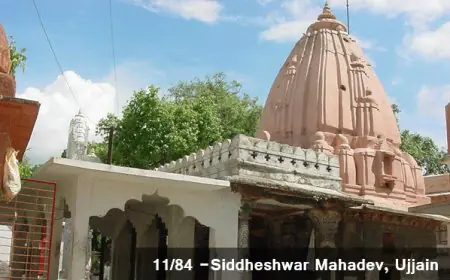
11/84 – Siddheshwar Mahadev (सिद्धेश्वर महादेव)
Devotional Sanskrit Verse (भावार्थ आधारित स्तुतिपंक्ति)
सिद्धक्षेत्रे महापुण्ये महाकालवने स्थितम्।
सिद्धिप्रदं महादेवं सिद्धेश्वरमुपास्महे॥
Meaning of the Verse
In the supremely sacred Siddha Kshetra,
established within the holy Mahakal forest,
that great Lord who grants spiritual attainments,
we worship as Siddheshwar Mahadev.
Spiritual Importance of Siddheshwar Mahadev
Siddheshwar Mahadev is a highly revered shrine among the 84 Mahadev temples of Ujjain, known as the bestower of siddhis and spiritual accomplishment. The name itself signifies Shiva as the Lord who perfects the seeker’s effort, transforming disciplined practice into realization.
Devotees traditionally worship Siddheshwar Mahadev for success in sadhana, mantra practice, meditation, and life objectives aligned with dharma. Within the 84 Mahadev Yatra, this shrine marks the point where consistent devotion begins to yield tangible inner results.
Spiritual Interpretation
Siddheshwar Mahadev represents Shiva as the completer of effort. Spiritually, this Mahadev corresponds to the phase where intention, discipline, and grace converge. The seeker realizes that while effort is essential, attainment ultimately unfolds through Shiva’s will.
This shrine teaches humility in achievement, reminding devotees that siddhi is not an end in itself but a milestone toward liberation within the Chaurasi Mahadev Ujjain pilgrimage.
Darshan Note
Darshan at Siddheshwar Mahadev is traditionally performed with focused prayer and mental clarity. Devotees offer jal abhishek, bilva leaves, and silently dedicate their spiritual practices at this shrine. Worship during Brahma Muhurta and on Mondays is considered especially auspicious.
Exact Location To Reach At Mahadev Temple
Siddheshwar Mahadev Mandir (11/84)
12/84 – Lokpaleshwar Mahadev (लोकपालेश्वर महादेव)
Devotional Sanskrit Verse (भावार्थ आधारित स्तुतिपंक्ति)
लोकपालैः समाराध्यं महाकालवने स्थितम्।
दिशां रक्षकदेवेशं लोकपालेश्वरं भजे॥
Meaning of the Verse
Worshipped by the guardians of the directions,
established within the sacred Mahakal forest,
the supreme Lord who protects all realms and directions,
I worship as Lokpaleshwar Mahadev.
Spiritual Importance of Lokpaleshwar Mahadev
Lokpaleshwar Mahadev holds a vital place among the 84 Mahadev temples of Ujjain as the embodiment of cosmic guardianship and protection. The Lokpalas are the divine protectors of the eight directions, and this Mahadev represents Shiva as their supreme authority and source of power.
Devotees worship Lokpaleshwar Mahadev for protection from unseen dangers, stability in life, and safeguarding of family and spiritual pursuits. In the 84 Mahadev Yatra, this shrine symbolizes the establishment of divine protection as the seeker advances further into the sacred circuit.
Spiritual Interpretation
Lokpaleshwar Mahadev represents Shiva as the cosmic protector, maintaining balance across all realms and directions. Spiritually, this Mahadev corresponds to the realization that one’s path is guarded when aligned with dharma and truth.
This shrine teaches surrender to divine order, assuring the seeker that righteous effort is always protected under Shiva Tattva, a key understanding in the Chaurasi Mahadev Ujjain pilgrimage.
Darshan Note
Darshan at Lokpaleshwar Mahadev is traditionally performed with a prayer for protection and balance. Devotees offer jal abhishek, bilva leaves, and mentally dedicate all directions of life to Shiva. Worship during Pradosh Kaal and on Mondays is considered especially beneficial.
Exact Location To Reach At Mahadev Temple
Lokpaleshwar Mahadev Mandir (12/84)
13/84 – Shree Kameshwar Mahadev Temple (श्री कामेश्वर महादेव मंदिर)
Devotional Sanskrit Verse (भावार्थ आधारित स्तुतिपंक्ति)
कामनापूरकं देवं महाकालवने स्थितम्।
धर्मार्थकाममोक्षाणां दातारं कामेश्वरं भजे॥
Meaning of the Verse
I worship Shree Kameshwar Mahadev,
the divine Lord who fulfills rightful desires,
established within the sacred Mahakal forest,
the giver of dharma, artha, kama, and moksha.
Spiritual Importance of Shree Kameshwar Mahadev Temple
Shree Kameshwar Mahadev Temple holds a special place among the 84 Mahadev temples of Ujjain as the shrine where desire is purified rather than denied. In Shaiva philosophy, kama is not rejected but disciplined, and this Mahadev represents Shiva as the regulator of human longing.
Devotees worship Shree Kameshwar Mahadev Temple to seek balance between worldly duties and spiritual goals. In the sacred 84 Mahadev Yatra, this temple reminds pilgrims that when desires are aligned with dharma, they become stepping stones rather than obstacles on the spiritual path.
Spiritual Interpretation
Shree Kameshwar Mahadev symbolizes Shiva as the lord of controlled desire. Spiritually, this Mahadev corresponds to the stage where the seeker learns to transform craving into conscious intention. Desire, when surrendered to Shiva, becomes a force for growth instead of bondage.
This shrine teaches that fulfillment comes not from indulgence, but from alignment with Shiva Tattva, a crucial realization within the Chaurasi Mahadev Ujjain pilgrimage.
Darshan Note
Darshan at Shree Kameshwar Mahadev Temple is traditionally performed with mental clarity and honesty. Devotees offer jal abhishek, flowers, and bilva leaves, consciously surrendering their wishes to Shiva. Worship on Mondays, Fridays, and during Shravan Maas is considered especially auspicious.
Exact Location To Reach At Mahadev Temple
Shree Kameshwar Mahadev Temple(13/84)
14/84 – Kutumbeshwar Mahadev (कुटुम्बेश्वर महादेव)
Devotional Sanskrit Verse (भावार्थ आधारित स्तुतिपंक्ति)
कुटुम्बरक्षणार्थाय महाकालवने स्थितम्।
गृहस्थधर्मपालं तं कुटुम्बेश्वरमाश्रये॥
Meaning of the Verse
I take refuge in Kutumbeshwar Mahadev,
who resides in the sacred Mahakal forest,
who protects the household and family order,
and upholds righteousness in the life of a householder.
Spiritual Importance of Kutumbeshwar Mahadev
Kutumbeshwar Mahadev holds a deeply practical and compassionate place among the 84 Mahadev temples of Ujjain. This Mahadev represents Shiva as the protector of family, lineage, and household harmony. Unlike ascetic forms, this shrine acknowledges the spiritual legitimacy of grihastha dharma.
Devotees worship Kutumbeshwar Mahadev for family stability, resolution of domestic conflicts, protection of children, and continuity of lineage. In the 84 Mahadev Yatra, this shrine affirms that spiritual life does not require withdrawal from responsibility but sanctification of it.
Spiritual Interpretation
Kutumbeshwar Mahadev symbolizes Shiva as the anchor of balance between worldly duty and spiritual awareness. Spiritually, this Mahadev corresponds to the stage where the seeker integrates devotion into daily life rather than separating it from worldly roles.
This shrine teaches that family life, when aligned with dharma, becomes a field of spiritual evolution, an essential realization within the Chaurasi Mahadev Ujjain pilgrimage.
Darshan Note
Darshan at Kutumbeshwar Mahadev is traditionally performed with prayers for family well-being and harmony. Devotees offer jal abhishek, flowers, and bilva leaves, often naming family members mentally during prayer. Worship on Mondays and during family-related sankalps is considered especially beneficial.
Exact Location To Reach At Mahadev Temple
Kutumbeshwar Mahadev(14/84)
15/84 – Indradyumneshwar Mahadev (इन्द्रद्युम्नेश्वर महादेव)
Devotional Sanskrit Verse (भावार्थ आधारित स्तुतिपंक्ति)
इन्द्रद्युम्नेन राज्ञा च महाकालवने स्थितम्।
तपसा स्थापिता लिङ्गं इन्द्रद्युम्नेश्वरं भजे॥
Meaning of the Verse
I worship Indradyumneshwar Mahadev,
the Shiva Linga established by King Indradyumna,
through intense austerity in the sacred Mahakal forest,
as an act of devotion and righteous kingship.
Spiritual Importance of Indradyumneshwar Mahadev
Indradyumneshwar Mahadev is a revered shrine among the 84 Mahadev temples of Ujjain, symbolizing devotion through righteous leadership and selfless duty. Named after King Indradyumna, this Mahadev reflects the ideal of a ruler who governs with humility, dharma, and devotion to Shiva.
Devotees worship Indradyumneshwar Mahadev seeking blessings for leadership, governance, responsibility, and ethical decision-making. Within the 84 Mahadev Yatra, this shrine represents the purification of power through devotion.
Spiritual Interpretation
Indradyumneshwar Mahadev represents Shiva as the sanctifier of authority. Spiritually, this Mahadev corresponds to the stage where influence, responsibility, and leadership are surrendered to divine guidance rather than ego.
This shrine teaches that true authority arises from service and devotion, a vital realization within the Chaurasi Mahadev Ujjain pilgrimage.
Darshan Note
Darshan at Indradyumneshwar Mahadev is traditionally performed with prayers for wisdom, humility, and righteous action. Devotees offer jal abhishek, bilva leaves, and silently dedicate their duties to Shiva. Worship on Mondays and during periods of responsibility or transition is considered auspicious.
Exact Location To Reach At Mahadev Temple
Indradyumneshwar Mahadev(15/84)
16/84 – Ishaneshwar Mahadev (ईशानेश्वर महादेव)
Devotional Sanskrit Verse (भावार्थ आधारित स्तुतिपंक्ति)
ईशानदिशि संस्थानं महाकालवने स्थितम्।
ज्ञानप्रदं महादेवं ईशानेश्वरमाश्रये॥
Meaning of the Verse
I take refuge in Ishaneshwar Mahadev,
who is established in the Ishana (northeast) direction,
situated within the sacred Mahakal forest,
and who bestows divine knowledge and wisdom.
Spiritual Importance of Ishaneshwar Mahadev
Ishaneshwar Mahadev is a highly significant shrine among the 84 Mahadev temples of Ujjain, representing Shiva as the lord of the Ishana direction, the northeast, which is considered the most auspicious direction in Vastu and Shaiva cosmology. This Mahadev governs knowledge, purity, and higher awareness.
Devotees worship Ishaneshwar Mahadev for clarity of thought, spiritual understanding, and guidance on the righteous path. Within the 84 Mahadev Yatra, this shrine marks the transition from disciplined effort to illumined awareness.
Spiritual Interpretation
Ishaneshwar Mahadev symbolizes Shiva as the source of divine wisdom. Spiritually, the Ishana direction represents upward movement toward truth and realization. This Mahadev corresponds to the stage where the seeker’s understanding matures, and devotion becomes guided by insight rather than effort alone.
The shrine teaches that true knowledge arises through humility and surrender to Shiva Tattva, an essential realization within the Chaurasi Mahadev Ujjain pilgrimage.
Darshan Note
Darshan at Ishaneshwar Mahadev is traditionally performed facing the northeast direction. Devotees offer jal abhishek, bilva leaves, and pray for clarity and wisdom. Worship during Brahma Muhurta and on Mondays is considered especially beneficial at this shrine.
Exact Location To Reach At Mahadev Temple
Ishaneshwar Mahadev (16/84)
17/84 – Apsareshwar Mahadev (अप्सरेश्वर महादेव)
Devotional Sanskrit Verse (भावार्थ आधारित स्तुतिपंक्ति)
अप्सराभिः समाराध्यं महाकालवने स्थितम्।
चित्तशुद्धिप्रदं देवं अप्सरेश्वरमाश्रये॥
Meaning of the Verse
I take refuge in Apsareshwar Mahadev,
who is worshipped by celestial Apsaras,
established within the sacred Mahakal forest,
and who grants purity and refinement of the mind.
Spiritual Importance of Apsareshwar Mahadev
Apsareshwar Mahadev holds a unique and subtle place among the 84 Mahadev temples of Ujjain. This Mahadev represents Shiva as the master of beauty, grace, and inner refinement, worshipped even by celestial beings known for divine elegance and artistry.
Devotees worship Apsareshwar Mahadev to overcome mental restlessness, excessive attachment to sensory pleasure, and emotional imbalance. Within the 84 Mahadev Yatra, this shrine signifies the purification of desire and emotion, transforming attraction into devotion.
Spiritual Interpretation
Apsareshwar Mahadev symbolizes Shiva as the regulator of attraction and beauty. Spiritually, this Mahadev corresponds to the stage where the seeker learns to experience beauty without bondage. The worship by Apsaras in the Devotional Sanskrit Verse (भावार्थ आधारित स्तुतिपंक्ति) indicates that even refined pleasure must bow to higher consciousness.
This shrine teaches mastery over the senses and emotional maturity, an essential realization in the Chaurasi Mahadev Ujjain pilgrimage.
Darshan Note
Darshan at Apsareshwar Mahadev is traditionally performed with calmness and restraint. Devotees offer jal abhishek, flowers, and bilva leaves, followed by silent introspection. Worship during evening hours is considered especially meaningful, symbolizing balance between attraction and awareness.
Exact Location To Reach At Mahadev Temple
Shri Apsareshwar Mahadev (17/84)
18/84 – Kalakaleshwar Mahadev (कालकलेश्वर महादेव)
Devotional Sanskrit Verse (भावार्थ आधारित स्तुतिपंक्ति)
कालकलं समुद्धृत्य महाकालवने स्थितम्।
कालभयहरं देवं कालकलेश्वरमाश्रये॥
Meaning of the Verse
I take refuge in Kalakaleshwar Mahadev,
who dissolves the fear arising from time itself,
established within the sacred Mahakal forest,
and who frees the devotee from the bondage of temporal anxiety.
Spiritual Importance of Kalakaleshwar Mahadev
Kalakaleshwar Mahadev occupies a profound place among the 84 Mahadev temples of Ujjain, representing Shiva as the pacifier of time’s turbulence. The name signifies the calming and neutralization of kala, the restless and consuming force of time that governs birth, aging, and decay.
Devotees worship Kalakaleshwar Mahadev to seek relief from fear of death, anxiety about the future, and psychological unrest caused by impermanence. Within the 84 Mahadev Yatra, this shrine marks the stage where the seeker confronts and transcends anxiety related to time and change.
Spiritual Interpretation
Kalakaleshwar Mahadev symbolizes Shiva as the still center within time’s motion. Spiritually, this Mahadev corresponds to the realization that time affects the body and mind but not the eternal awareness witnessing it.
This shrine teaches the seeker to rest in the present moment, recognizing Shiva as both time and freedom from time, a crucial insight within the Chaurasi Mahadev Ujjain pilgrimage.
Darshan Note
Darshan at Kalakaleshwar Mahadev is traditionally performed with quiet surrender and inward focus. Devotees offer jal abhishek, bilva leaves, and sit briefly in silence, contemplating impermanence. Worship during Pradosh Kaal and on Mondays is considered especially effective at this shrine.
Exact Location To Reach At Mahadev Temple
Kalkaleshwar Mahadev(18/84)
19/84 – Nagchandreshwar Mahadev (नागचन्द्रेश्वर महादेव)
Devotional Sanskrit Verse (भावार्थ आधारित स्तुतिपंक्ति)
नागैः समर्चितं देवं चन्द्रभूषणधारिणम्।
महाकालवने स्थितं नागचन्द्रेश्वरं भजे॥
Meaning of the Verse
I worship Nagchandreshwar Mahadev,
the Lord who is revered by divine serpents,
who adorns the moon upon His head,
and who resides within the sacred Mahakal forest.
Spiritual Importance of Nagchandreshwar Mahadev
Nagchandreshwar Mahadev holds a powerful and symbolic place among the 84 Mahadev temples of Ujjain, uniting two profound Shaiva elements: naga (serpent) energy and chandra (lunar consciousness). Serpents represent latent spiritual power and kundalini, while the moon signifies mental calmness and rhythm.
Devotees worship Nagchandreshwar Mahadev to seek balance between inner energy and mental stability, relief from serpent-related afflictions, and harmony between emotion and awareness. Within the 84 Mahadev Yatra, this shrine represents mastery over inner forces rather than suppression of them.
Spiritual Interpretation
Nagchandreshwar Mahadev symbolizes Shiva as the controller of kundalini energy and the regulator of the mind. Spiritually, this Mahadev corresponds to the phase where awakened energy must be guided with calm awareness. The moon upon Shiva’s head reminds seekers that power without balance leads to disturbance.
This shrine teaches integration of strength and serenity, an essential realization in the Chaurasi Mahadev Ujjain pilgrimage.
Darshan Note
Darshan at Nagchandreshwar Mahadev is traditionally performed with focused intent and inner stillness. Devotees offer jal abhishek, milk, and bilva leaves. Worship on Nag Panchami, Mondays, and during Shravan Maas is considered especially auspicious.
Exact Location To Reach At Mahadev Temple
Nagchandreshwar Mahadev(19/84)
20/84 – Pratiharaeshwar Mahadev (प्रतिहारेश्वर महादेव)
Devotional Sanskrit Verse (भावार्थ आधारित स्तुतिपंक्ति)
प्रतिहारैः समाराध्यं महाकालवने स्थितम्।
रक्षकं धर्ममार्गस्य प्रतिहारेश्वरं भजे॥
Meaning of the Verse
I worship Pratiharaeshwar Mahadev,
who is revered by the divine guardians and sentinels,
established within the sacred Mahakal forest,
and who protects the righteous path and sacred boundaries.
Spiritual Importance of Pratiharaeshwar Mahadev
Pratiharaeshwar Mahadev occupies a crucial place among the 84 Mahadev temples of Ujjain as the manifestation of Shiva in the role of a divine gatekeeper and protector. The term Pratihara signifies one who guards entrances, thresholds, and sacred limits. This Mahadev represents Shiva as the protector of dharma, discipline, and sacred order.
Devotees worship Pratiharaeshwar Mahadev for protection from negative influences, safeguarding of spiritual progress, and preservation of moral boundaries. In the 84 Mahadev Yatra, this shrine symbolizes the strengthening of inner vigilance as the seeker moves deeper into the sacred circuit.
Spiritual Interpretation
Pratiharaeshwar Mahadev symbolizes Shiva as the guardian of thresholds, both external and internal. Spiritually, this Mahadev corresponds to the realization that advancement on the spiritual path requires boundaries, discernment, and self-restraint.
This shrine teaches that protection is not restriction but preservation of purity, an essential understanding within the Chaurasi Mahadev Ujjain pilgrimage.
Darshan Note
Darshan at Pratiharaeshwar Mahadev is traditionally performed with a prayer for protection and steadiness. Devotees offer jal abhishek, bilva leaves, and mentally commit to righteous conduct. Worship during Pradosh Kaal and on Mondays is considered especially auspicious at this shrine.
Exact Location To Reach At Mahadev Temple
Pratihareshwar Mahadev (20/84)
21/84 – Kukateshwar Mahadev (कुकाटेश्वर महादेव)
Devotional Sanskrit Verse (भावार्थ आधारित स्तुतिपंक्ति)
कुकुटितनादसंयुक्तं महाकालवने स्थितम्।
शान्तिदं देवं तं कुकाटेश्वरं भजे॥
Meaning of the Verse
I worship Kukateshwar Mahadev,
who resonates with the sound of the sacred cuckoo’s cry,
established within the Mahakal forest,
and who bestows peace and inner harmony.
Spiritual Importance of Kukateshwar Mahadev
Kukateshwar Mahadev is an integral shrine among the 84 Mahadev temples of Ujjain, representing Shiva as the bringer of serenity amidst life’s noise and disturbance. The image of the cuckoo (kuka) in the name suggests clarity of sound and purity of expression, reminding the seeker that internal harmony is attainable even in chaotic surroundings.
Devotees worship Kukateshwar Mahadev to receive mental peace, emotional stability, and relief from inner turmoil. In the 84 Mahadev Yatra, this Mahadev signifies the transition from external struggle toward inner quietude and spiritual calm.
Spiritual Interpretation
Kukateshwar Mahadev symbolizes Shiva as the harmonizer of discordant states. Spiritually, this Mahadev corresponds to the stage where the seeker’s mind settles after encountering life’s turbulence. The sacred sound imagery suggests a shift from chaotic thought patterns to discerned awareness.
This shrine teaches that peace is not absence of sound but clarity within it, an essential realization in the Chaurasi Mahadev Ujjain pilgrimage.
Darshan Note
Darshan at Kukateshwar Mahadev is traditionally performed with focused attention on mental stillness. Devotees offer jal abhishek, flowers, and bilva leaves, followed by silent prayer. Worship during early morning hours is considered especially auspicious for seeking peace and harmony of mind.
Exact Location To Reach At Mahadev Temple
Kukuteshwar Mahadev Temple (21/84)
22/84 – Karkateshwar Mahadev (कर्कटेश्वर महादेव)
Devotional Sanskrit Verse (भावार्थ आधारित स्तुतिपंक्ति)
कर्कटाकारसंयुक्तं महाकालवने स्थितम्।
रोगदुःखहरं देवं कर्कटेश्वरमाश्रये॥
Meaning of the Verse
I take refuge in Karkateshwar Mahadev,
whose form is associated with the karkata (crab) principle,
established within the sacred Mahakal forest,
and who removes disease, suffering, and deep-rooted afflictions.
Spiritual Importance of Karkateshwar Mahadev
Karkateshwar Mahadev holds a significant place among the 84 Mahadev temples of Ujjain, especially revered as a healer and protector from chronic ailments. The karkata symbolism relates to bodily sensitivity, hidden pain, and ailments that move slowly but persistently. This Mahadev is traditionally worshipped for relief from long-standing diseases, mental stress, and recurring health issues.
Within the 84 Mahadev Yatra, darshan of Karkateshwar Mahadev represents a phase where the seeker seeks physical and subtle healing, acknowledging the body as an instrument of spiritual practice.
Spiritual Interpretation
Karkateshwar Mahadev symbolizes Shiva as the healer of concealed suffering. Spiritually, this Mahadev corresponds to the stage where unaddressed pain, whether physical or emotional, is brought into awareness and surrendered to divine grace.
This shrine teaches that healing begins with recognition and surrender, allowing Shiva Tattva to restore balance. It is a vital realization within the Chaurasi Mahadev Ujjain pilgrimage, where inner and outer purification move together.
Darshan Note
Darshan at Karkateshwar Mahadev is traditionally performed with prayers for health and strength. Devotees offer jal abhishek, milk, and bilva leaves, often touching the ground in humility. Worship on Mondays, during Shravan, and at times of illness is considered especially beneficial.
Exact Location To Reach At Mahadev Temple
Karkateshwar Mahadev Temple (22/84)
23/84 – Shri Meghnadeshwar Mahadev (श्री मेघनादेश्वर महादेव)
Devotional Sanskrit Verse (भावार्थ आधारित स्तुतिपंक्ति)
मेघनादसमायुक्तं महाकालवने स्थितम्।
वृष्टिकर्तारमीशानं मेघनादेश्वरं भजे॥
Meaning of the Verse
I worship Shri Meghnadeshwar Mahadev,
whose presence resounds like thunderclouds,
established within the sacred Mahakal forest,
the divine Lord who governs rain and cosmic sound.
Spiritual Importance of Shri Meghnadeshwar Mahadev
Shri Meghnadeshwar Mahadev holds an important position among the 84 Mahadev temples of Ujjain, symbolizing Shiva’s control over rain, thunder, and atmospheric balance. The name Meghnada refers to the powerful sound of clouds, representing fertility, nourishment, and the sustaining forces of nature.
Devotees worship Shri Meghnadeshwar Mahadev for timely rainfall, agricultural prosperity, relief from drought-like conditions, and harmony with natural cycles. Within the 84 Mahadev Yatra, this Mahadev signifies recognition of Shiva as the provider and sustainer of life through nature.
Spiritual Interpretation
Shri Meghnadeshwar Mahadev represents Shiva as the voice of nature itself. Spiritually, thunder symbolizes awakening and divine reminder, urging humanity to align with cosmic rhythms. This Mahadev corresponds to the stage where the seeker realizes that spiritual life is inseparable from ecological balance and gratitude.
The shrine teaches reverence for nature as an expression of Shiva Tattva, a key realization in the Chaurasi Mahadev Ujjain pilgrimage.
Darshan Note
Darshan at Shri Meghnadeshwar Mahadev is traditionally performed with prayers for balance between human life and natural forces. Devotees offer jal abhishek, bilva leaves, and often pray silently for rainfall and prosperity. Worship during the monsoon season, Mondays, and Shravan Maas is considered especially auspicious.
Exact Location To Reach At Mahadev Temple
Shri Meghnadeshwar Mahadev (23/84)
24/84 – Shree Mahalayeshwar Mahadev Temple (श्री महालयेश्वर महादेव मंदिर)
Devotional Sanskrit Verse (भावार्थ आधारित स्तुतिपंक्ति)
महालये महापुण्ये महाकालवने स्थितम्।
पितृमोक्षप्रदं देवं महालयेश्वरमाश्रये॥
Meaning of the Verse
I take refuge in Shree Mahalayeshwar Mahadev,
established in the supremely sacred Mahalaya region,
situated within the holy Mahakal forest,
the divine Lord who grants liberation to ancestors.
Spiritual Importance of Shree Mahalayeshwar Mahadev Temple
Shree Mahalayeshwar Mahadev Temple holds exceptional significance among the 84 Mahadev temples of Ujjain due to its deep association with pitru karma and ancestral liberation. The term Mahalaya refers to the sacred period and realm connected with ancestors, remembrance, and spiritual transition.
Devotees worship Shree Mahalayeshwar Mahadev Temple to seek peace for departed souls, resolution of ancestral obligations, and relief from pitru dosha. In the sacred 84 Mahadev Yatra, this temple marks a crucial stage where the seeker acknowledges lineage, debt to ancestors, and continuity of spiritual responsibility.
Spiritual Interpretation
Shree Mahalayeshwar Mahadev represents Shiva as the bridge between generations. Spiritually, this Mahadev embodies the truth that liberation is not individual alone but collective, extending to those who came before us.
The shrine teaches that remembrance, gratitude, and ritual acknowledgment dissolve ancestral burdens, aligning the seeker with Shiva Tattva through humility and responsibility. This realization is essential in the Chaurasi Mahadev Ujjain pilgrimage.
Darshan Note
Darshan at Shree Mahalayeshwar Mahadev Temple is traditionally performed with reverence and introspection. Devotees offer jal abhishek, black sesame, and bilva leaves, often remembering ancestors silently. Worship during Pitru Paksha, Amavasya, and Pradosh Kaal is considered especially auspicious at this shrine.
Exact Location To Reach At Mahadev Temple
Shree Mahalayeshwar Mahadev Mandir (24/84)
25/84 – Shree Mukteshwar Mahadev (श्री मुक्तेश्वर महादेव)
Devotional Sanskrit Verse (भावार्थ आधारित स्तुतिपंक्ति)
मोक्षदं शिवलिङ्गं तु महाकालवने स्थितम्।
संसारबन्धविच्छेदि मुक्तेश्वरमुपास्महे॥
Meaning of the Verse
We worship Shree Mukteshwar Mahadev,
the Shiva Linga that grants liberation,
established within the sacred Mahakal forest,
who cuts the bonds of worldly existence.
Spiritual Importance of Shree Mukteshwar Mahadev
Shree Mukteshwar Mahadev is one of the most spiritually decisive shrines among the 84 Mahadev temples of Ujjain. The name Mukteshwar directly signifies the Lord who grants moksha. This Mahadev embodies Shiva’s role as the ultimate liberator, freeing the soul from the cycle of birth and death.
Devotees worship Shree Mukteshwar Mahadev seeking release from karmic bondage, repeated suffering, and fear of death. Within the 84 Mahadev Yatra, this temple represents a turning point where the seeker consciously aspires beyond worldly fulfillment toward spiritual freedom.
Spiritual Interpretation
Shree Mukteshwar Mahadev represents Shiva as pure liberation itself. Spiritually, this Mahadev corresponds to the realization that freedom is not attained by accumulation but by detachment and surrender.
This shrine teaches that moksha is not distant or abstract but present where ego dissolves. It reinforces the highest truth of Shiva Tattva, making it a pivotal realization in the Chaurasi Mahadev Ujjain pilgrimage.
Darshan Note
Darshan at Shree Mukteshwar Mahadev is traditionally performed with deep silence and surrender. Devotees offer jal abhishek, bilva leaves, and mentally release fears, attachments, and unresolved emotions. Worship during Pradosh Kaal, Amavasya, and Mondays is considered especially powerful.
Exact Location To Reach At Mahadev Temple
Mukteshwar Mahadev Temple (25/84)
26/84 – Shree Someshwar Mahadev (श्री सोमेश्वर महादेव)
Devotional Sanskrit Verse (भावार्थ आधारित स्तुतिपंक्ति)
सोमचन्द्रसमायुक्तं महाकालवने स्थितम्।
मनःशान्तिप्रदं देवं सोमेश्वरमुपास्महे॥
Meaning of the Verse
We worship Shree Someshwar Mahadev,
the Lord adorned with the moon,
established within the sacred Mahakal forest,
who bestows peace, balance, and calmness of mind.
Spiritual Importance of Shree Someshwar Mahadev
Shree Someshwar Mahadev holds an essential place among the 84 Mahadev temples of Ujjain, representing Shiva as the regulator of the mind and emotions. The moon (Soma) symbolizes mental rhythm, emotional balance, and cooling grace. As the bearer of the moon, Shiva governs psychological harmony and inner stability.
Devotees worship Shree Someshwar Mahadev to overcome mental restlessness, emotional imbalance, insomnia, and stress. Within the 84 Mahadev Yatra, this shrine represents the phase where the seeker learns to stabilize the mind after confronting deeper karmic and existential truths.
Spiritual Interpretation
Shree Someshwar Mahadev symbolizes Shiva as the cooling consciousness that soothes agitation and restores equilibrium. Spiritually, this Mahadev corresponds to the understanding that the mind must become calm and reflective to absorb higher truths.
The moon on Shiva’s head signifies mastery over emotional tides rather than suppression of feeling. This realization is vital in the Chaurasi Mahadev Ujjain pilgrimage, where inner balance sustains spiritual progress.
Darshan Note
Darshan at Shree Someshwar Mahadev is traditionally performed with quiet prayer and mental surrender. Devotees offer jal abhishek, milk, and bilva leaves. Worship during evening hours, Mondays, and especially on full moon days (Purnima) is considered highly auspicious.
Exact Location To Reach At Mahadev Temple
Someshwar Mahadev Mandir (26/84)
27/84 – Shree Anarkeshwar Mahadev (श्री अनार्केश्वर महादेव)
Devotional Sanskrit Verse (भावार्थ आधारित स्तुतिपंक्ति)
अनार्कसम्भवं लिङ्गं महाकालवने स्थितम्।
अहङ्कारविनाशाय अनार्केश्वरमाश्रये॥
Meaning of the Verse
I take refuge in Shree Anarkeshwar Mahadev,
the Shiva Linga that is beyond outward brilliance,
established within the sacred Mahakal forest,
who destroys ego and false self-importance.
Spiritual Importance of Shree Anarkeshwar Mahadev
Shree Anarkeshwar Mahadev holds a subtle yet powerful place among the 84 Mahadev temples of Ujjain. The term Anarka signifies that which is not dependent on external radiance or display. This Mahadev represents Shiva beyond name, fame, status, and recognition.
Devotees worship Shree Anarkeshwar Mahadev to dissolve ego, pride, and the need for validation. Within the 84 Mahadev Yatra, this shrine marks an important inner shift where the seeker begins to loosen attachment to identity and self-image.
Spiritual Interpretation
Shree Anarkeshwar Mahadev symbolizes Shiva as the formless truth beyond appearances. Spiritually, this Mahadev corresponds to the stage where the seeker understands that spiritual progress is not measured by recognition or achievement but by inner emptiness and humility.
This shrine teaches that liberation begins when the ego steps aside, allowing Shiva Tattva to operate freely. It is a crucial realization in the Chaurasi Mahadev Ujjain pilgrimage.
Darshan Note
Darshan at Shree Anarkeshwar Mahadev is traditionally performed with minimal ritual and maximum inward attention. Devotees offer jal abhishek, bilva leaves, and consciously release pride or personal claims. Worship during Brahma Muhurta and on Mondays is considered especially beneficial.
Exact Location To Reach At Mahadev Temple
Shree Anarkeshwar Mahadev (27/84)
28/84 – Shree Jateshwar Mahadev (श्री जटेश्वर महादेव)
Devotional Sanskrit Verse (भावार्थ आधारित स्तुतिपंक्ति)
जटाजूटधरं देवं महाकालवने स्थितम्।
तपस्विनां प्रियं नाथं जटेश्वरमुपास्महे॥
Meaning of the Verse
We worship Shree Jateshwar Mahadev,
the Lord who bears the sacred matted locks (jata),
established within the holy Mahakal forest,
beloved of ascetics and seekers of austerity.
Spiritual Importance of Shree Jateshwar Mahadev
Shree Jateshwar Mahadev occupies a revered position among the 84 Mahadev temples of Ujjain, symbolizing Shiva as the supreme ascetic and yogi. The jata represents renunciation, restraint, and mastery over worldly desire. This Mahadev embodies the energy of tapasya, discipline, and inward focus.
Devotees worship Shree Jateshwar Mahadev to cultivate self-control, detachment, and spiritual resilience. Within the 84 Mahadev Yatra, this shrine signifies a deeper inward turn where external distractions are consciously set aside.
Spiritual Interpretation
Shree Jateshwar Mahadev symbolizes Shiva as the embodiment of disciplined consciousness. Spiritually, this Mahadev corresponds to the stage where the seeker commits to inner order and restraint, allowing spiritual energy to consolidate rather than disperse.
The matted locks signify containment of power rather than its display, teaching that true strength lies in self-mastery. This realization is central to progress in the Chaurasi Mahadev Ujjain pilgrimage.
Darshan Note
Darshan at Shree Jateshwar Mahadev is traditionally performed with simplicity and resolve. Devotees offer jal abhishek, bilva leaves, and practice a moment of silence, reaffirming discipline and restraint. Worship during Mondays, Shravan Maas, and early morning hours is considered especially auspicious.
Exact Location To Reach At Mahadev Temple
Shree Jateshwar Mahadev Mandir (28/84)
29/84 – Shree Rameshwar Mahadev (श्री रामेश्वर महादेव)
Devotional Sanskrit Verse (भावार्थ आधारित स्तुतिपंक्ति)
रामेण पूजितं लिङ्गं महाकालवने स्थितम्।
धर्मसंस्थापनार्थाय रामेश्वरमुपास्महे॥
Meaning of the Verse
We worship Shree Rameshwar Mahadev,
the Shiva Linga worshipped by Lord Rama,
established within the sacred Mahakal forest,
for the establishment and protection of dharma.
Spiritual Importance of Shree Rameshwar Mahadev
Shree Rameshwar Mahadev holds a deeply revered place among the 84 Mahadev temples of Ujjain, symbolizing the union of Shiva and Vishnu traditions through the devotion of Lord Rama. This Mahadev represents ideal devotion, obedience to dharma, and humility before divine law.
Devotees worship Shree Rameshwar Mahadev to seek strength in righteousness, success in duties aligned with dharma, and clarity during moral dilemmas. Within the 84 Mahadev Yatra, this shrine marks the phase where devotion is guided by ethical responsibility and surrender to divine order.
Spiritual Interpretation
Shree Rameshwar Mahadev symbolizes Shiva as the upholder of dharma through devotion. Spiritually, this Mahadev corresponds to the realization that even the greatest among beings bow before higher truth. The worship by Lord Rama teaches humility, discipline, and adherence to righteous conduct.
This shrine reinforces the understanding that dharma sustains spiritual progress, a vital lesson in the Chaurasi Mahadev Ujjain pilgrimage.
Darshan Note
Darshan at Shree Rameshwar Mahadev is traditionally performed with a prayer for righteousness and moral strength. Devotees offer jal abhishek, bilva leaves, and silently affirm commitment to dharma. Worship on Mondays, Ram Navami, and during Shravan Maas is considered especially auspicious.
Exact Location To Reach At Mahadev Temple
Shree Rameshwar Mahadev (29/84)
30/84 – Shree Chyvaneshwar Mahadev (श्री च्यवनश्वर महादेव)
Devotional Sanskrit Verse (भावार्थ आधारित स्तुतिपंक्ति)
च्यवनर्षिप्रतिष्ठितं महाकालवने स्थितम्।
आयुष्यवर्धनं देवं च्यवनश्वरमाश्रये॥
Meaning of the Verse
I take refuge in Shree Chyvaneshwar Mahadev,
the Shiva Linga established by Rishi Chyavana,
situated within the sacred Mahakal forest,
who grants longevity, vitality, and renewal of life.
Spiritual Importance of Shree Chyvaneshwar Mahadev
Shree Chyvaneshwar Mahadev is an important shrine among the 84 Mahadev temples of Ujjain, closely associated with Rishi Chyavana, the sage linked to rejuvenation and restoration of vitality. This Mahadev represents Shiva as the preserver of life-force and inner renewal.
Devotees worship Shree Chyvaneshwar Mahadev for health, longevity, recovery from illness, and sustained vitality. Within the 84 Mahadev Yatra, this shrine symbolizes renewal after inner purification, reminding the seeker that spiritual progress must be supported by physical and mental well-being.
Spiritual Interpretation
Shree Chyvaneshwar Mahadev symbolizes Shiva as the restorer of balance and vitality. Spiritually, this Mahadev corresponds to the stage where disciplined practice yields rejuvenation rather than exhaustion. It teaches that when aligned with dharma, spiritual effort nourishes life instead of depleting it.
This shrine reinforces the principle that longevity and vitality are sacred trusts, integral to fulfilling one’s spiritual responsibilities in the Chaurasi Mahadev Ujjain pilgrimage.
Darshan Note
Darshan at Shree Chyvaneshwar Mahadev is traditionally performed with prayers for health and sustained energy. Devotees offer jal abhishek, milk, and bilva leaves, often praying for recovery or strength. Worship on Mondays and during times of healing is considered especially beneficial.
Exact Location To Reach At Mahadev Temple
Shri Chavaneshwar Mahadev (30/84)
31/84 – Shree Khandeshwar Mahadev (श्री खंडेश्वर महादेव)
Devotional Sanskrit Verse (भावार्थ आधारित स्तुतिपंक्ति)
खंडितं पापसङ्घातं महाकालवने स्थितम्।
अज्ञानभेदनं देवं खंडेश्वरमुपास्महे॥
Meaning of the Verse
We worship Shree Khandeshwar Mahadev,
the Lord who breaks and destroys accumulated sins,
established within the sacred Mahakal forest,
who cuts through ignorance and inner bondage.
Spiritual Importance of Shree Khandeshwar Mahadev
Shree Khandeshwar Mahadev holds a decisive place among the 84 Mahadev temples of Ujjain, representing Shiva as the destroyer of deep-rooted karmic fragments. The term Khanda signifies breaking or cutting, indicating this Mahadev’s power to shatter accumulated negative impressions and habitual patterns.
Devotees worship Shree Khandeshwar Mahadev to seek relief from persistent obstacles, repeated failures, and karmic stagnation. Within the 84 Mahadev Yatra, this shrine symbolizes a turning point where long-standing inner blockages begin to dissolve.
Spiritual Interpretation
Shree Khandeshwar Mahadev symbolizes Shiva as the force of decisive transformation. Spiritually, this Mahadev corresponds to the moment when the seeker allows ingrained patterns to be cut away rather than slowly negotiated.
This shrine teaches that liberation often requires direct confrontation and surrender, allowing Shiva Tattva to remove what no longer serves growth. It is a crucial realization in the Chaurasi Mahadev Ujjain pilgrimage.
Darshan Note
Darshan at Shree Khandeshwar Mahadev is traditionally performed with sincere repentance and resolve. Devotees offer jal abhishek, bilva leaves, and mentally release burdens and repetitive patterns. Worship during Mondays, Pradosh Kaal, and periods of transition is considered especially effective.
Exact Location To Reach At Mahadev Temple
Khandeshwar Mahadev Temple(31/84)
32/84 – Shree Patneshwar Mahadev (श्री पाटनेश्वर महादेव)
Devotional Sanskrit Verse (भावार्थ आधारित स्तुतिपंक्ति)
पाटनेषु प्रतिष्ठितं महाकालवने स्थितम्।
स्थैर्यदं शिवलिङ्गं तु पाटनेश्वरमाश्रये॥
Meaning of the Verse
I take refuge in Shree Patneshwar Mahadev,
the Shiva Linga firmly established in the sacred settlement,
situated within the holy Mahakal forest,
who grants stability, grounding, and steadfastness.
Spiritual Importance of Shree Patneshwar Mahadev
Shree Patneshwar Mahadev holds an important place among the 84 Mahadev temples of Ujjain, symbolizing firm establishment and rootedness in both worldly and spiritual life. The name indicates stability in place and purpose, reminding devotees of the importance of being grounded while progressing spiritually.
Devotees worship Shree Patneshwar Mahadev for consistency in efforts, steadiness in decision-making, and protection from instability. Within the 84 Mahadev Yatra, this shrine represents the consolidation phase, where lessons learned earlier begin to settle into one’s character.
Spiritual Interpretation
Shree Patneshwar Mahadev symbolizes Shiva as the foundation of inner stability. Spiritually, this Mahadev corresponds to the stage where the seeker learns to remain centered regardless of external change.
This shrine teaches that spiritual growth requires firm grounding, ensuring that insight translates into stable conduct. This realization is essential in the Chaurasi Mahadev Ujjain pilgrimage, where continuity sustains progress.
Darshan Note
Darshan at Shree Patneshwar Mahadev is traditionally performed with prayers for steadiness and clarity. Devotees offer jal abhishek, bilva leaves, and mentally affirm commitment to their path. Worship on Mondays and during times of major life decisions is considered especially auspicious.
Exact Location To Reach At Mahadev Temple
Pattaneshwar Mahadev Temple (32/84)
33/84 – Shree Anandeshwar Mahadev (श्री आनन्देश्वर महादेव)
Devotional Sanskrit Verse (भावार्थ आधारित स्तुतिपंक्ति)
आनन्दस्वरूपं देवं महाकालवने स्थितम्।
दुःखशोकविनाशाय आनन्देश्वरमाश्रये॥
Meaning of the Verse
I take refuge in Shree Anandeshwar Mahadev,
the Lord whose very nature is divine bliss,
established within the sacred Mahakal forest,
who destroys sorrow, grief, and inner suffering.
Spiritual Importance of Shree Anandeshwar Mahadev
Shree Anandeshwar Mahadev holds a luminous place among the 84 Mahadev temples of Ujjain, representing Shiva as pure joy and inner fulfillment. Ananda in Sanatan philosophy refers not to fleeting happiness but to deep, unshakable bliss arising from inner alignment.
Devotees worship Shree Anandeshwar Mahadev to overcome sadness, emotional heaviness, depression, and lack of fulfillment. Within the 84 Mahadev Yatra, this shrine marks a phase where the seeker begins to experience inner joy independent of circumstances.
Spiritual Interpretation
Shree Anandeshwar Mahadev symbolizes Shiva as Sat-Chit-Ananda, existence, consciousness, and bliss united. Spiritually, this Mahadev corresponds to the realization that true joy is not produced but revealed when suffering-causing attachments dissolve.
This shrine teaches that bliss is the natural state of the soul when aligned with Shiva Tattva, a transformative realization within the Chaurasi Mahadev Ujjain pilgrimage.
Darshan Note
Darshan at Shree Anandeshwar Mahadev is traditionally performed with gratitude and openness of heart. Devotees offer jal abhishek, flowers, and bilva leaves, often smiling inwardly in prayer. Worship on Mondays, Pradosh Kaal, and during moments of emotional release is considered especially auspicious.
Exact Location To Reach At Mahadev Temple
Shree Anandeshwar Mahadev (33/84)
34/84 – Shree Kanthadeshwar Mahadev (श्री कण्ठदेश्वर महादेव)
Devotional Sanskrit Verse (भावार्थ आधारित स्तुतिपंक्ति)
कण्ठे विषधरं देवं महाकालवने स्थितम्।
नीलकण्ठस्वरूपं तं कण्ठदेश्वरमाश्रये॥
Meaning of the Verse
I take refuge in Shree Kanthadeshwar Mahadev,
the Lord who holds poison in His throat,
established within the sacred Mahakal forest,
manifested as the divine Neelkantha form.
Spiritual Importance of Shree Kanthadeshwar Mahadev
Shree Kanthadeshwar Mahadev occupies a deeply symbolic place among the 84 Mahadev temples of Ujjain, representing Shiva as the one who absorbs poison to protect creation. The throat (kantha) signifies restraint, sacrifice, and the power to contain destructive forces without releasing them outward.
Devotees worship Shree Kanthadeshwar Mahadev to gain strength in handling toxic situations, emotional burdens, harsh words, and negative environments. Within the 84 Mahadev Yatra, this shrine teaches controlled endurance and responsibility toward collective well-being.
Spiritual Interpretation
Shree Kanthadeshwar Mahadev symbolizes Shiva as the guardian who contains suffering rather than passing it on. Spiritually, this Mahadev corresponds to the stage where the seeker learns to absorb pain, criticism, or negativity without allowing it to poison the heart or speech.
This shrine teaches mature compassion and restraint, essential virtues for advanced progress in the Chaurasi Mahadev Ujjain pilgrimage.
Darshan Note
Darshan at Shree Kanthadeshwar Mahadev is traditionally performed with a prayer for strength and restraint. Devotees offer jal abhishek, bilva leaves, and silently surrender burdens they are carrying. Worship during Mondays, Pradosh Kaal, and times of emotional challenge is considered especially powerful.
Exact Location To Reach At Mahadev Temple
Kanthadeshwar Mahadev (34/84)
35/84 – Shree Indreshwar Mahadev (श्री इन्द्रेश्वर महादेव)
Devotional Sanskrit Verse (भावार्थ आधारित स्तुतिपंक्ति)
इन्द्रेण पूजितं देवं महाकालवने स्थितम्।
ऐश्वर्यबलदं नाथं इन्द्रेश्वरमुपास्महे॥
Meaning of the Verse
We worship Shree Indreshwar Mahadev,
the Lord who was worshipped by Indra, king of the gods,
established within the sacred Mahakal forest,
who bestows strength, authority, and divine prosperity.
Spiritual Importance of Shree Indreshwar Mahadev
Shree Indreshwar Mahadev holds a distinguished place among the 84 Mahadev temples of Ujjain, symbolizing Shiva as the source of celestial authority and righteous power. The association with Indra signifies governance, responsibility, and leadership exercised under divine guidance.
Devotees worship Shree Indreshwar Mahadev for success in leadership roles, protection of status, courage in responsibility, and balance between power and humility. Within the 84 Mahadev Yatra, this shrine represents the purification of ambition and authority through devotion.
Spiritual Interpretation
Shree Indreshwar Mahadev symbolizes Shiva as the supreme ruler beyond all rulers. Spiritually, this Mahadev corresponds to the stage where the seeker learns that true authority flows from alignment with dharma rather than dominance.
The worship of Shiva by Indra teaches that even the most powerful must bow to higher truth. This realization deepens humility and wisdom within the Chaurasi Mahadev Ujjain pilgrimage.
Darshan Note
Darshan at Shree Indreshwar Mahadev is traditionally performed with prayers for responsible use of power and courage. Devotees offer jal abhishek, bilva leaves, and silently dedicate their authority or responsibilities to Shiva. Worship on Mondays, Pradosh Kaal, and during professional transitions is considered especially auspicious.
Exact Location To Reach At Mahadev Temple
Indreshwar Mahadev Mandir (35/84)
36/84 – Shree Markandeshwar Mahadev (श्री मार्कण्डेयश्वर महादेव)
Devotional Sanskrit Verse (भावार्थ आधारित स्तुतिपंक्ति)
मार्कण्डेयेन संपूज्यं महाकालवने स्थितम्।
मृत्युभयहरं देवं मार्कण्डेयेश्वरमाश्रये॥
Meaning of the Verse
I take refuge in Shree Markandeshwar Mahadev,
the Lord worshipped by Rishi Markandeya,
established within the sacred Mahakal forest,
who removes the fear of death and grants divine protection.
Spiritual Importance of Shree Markandeshwar Mahadev
Shree Markandeshwar Mahadev holds a deeply revered place among the 84 Mahadev temples of Ujjain, representing Shiva as the protector against untimely death. Associated with the legendary devotion of Rishi Markandeya, who was saved from Yama by Shiva’s grace, this Mahadev embodies divine intervention, faith, and immortality through devotion.
Devotees worship Shree Markandeshwar Mahadev to seek protection from accidents, severe illness, premature death, and overwhelming fear. Within the 84 Mahadev Yatra, this shrine marks a powerful moment where the seeker confronts mortality and surrenders fear to Shiva.
Spiritual Interpretation
Shree Markandeshwar Mahadev symbolizes Shiva as the conqueror of death (Mrityunjaya). Spiritually, this Mahadev corresponds to the realization that death governs the body but not the soul anchored in devotion.
This shrine teaches unwavering faith and surrender, showing that complete trust in Shiva dissolves the fear of impermanence, a transformative insight within the Chaurasi Mahadev Ujjain pilgrimage.
Darshan Note
Darshan at Shree Markandeshwar Mahadev is traditionally performed with heartfelt surrender. Devotees offer jal abhishek, milk, and bilva leaves, often chanting or mentally invoking protection. Worship on Mondays, Pradosh Kaal, and during health concerns is considered especially auspicious.
Exact Location To Reach At Mahadev Temple
Markandeyeshwar Mahadev Mandir (36/84)
37/84 – Shree Shiveshwar Mahadev (श्री शिवेश्वर महादेव)
Devotional Sanskrit Verse (भावार्थ आधारित स्तुतिपंक्ति)
शिवतत्त्वस्वरूपं तु महाकालवने स्थितम्।
सर्वमङ्गलदं देवं शिवेश्वरमुपास्महे॥
Meaning of the Verse
We worship Shree Shiveshwar Mahadev,
the very embodiment of Shiva Tattva,
established within the sacred Mahakal forest,
who grants auspiciousness, welfare, and spiritual well-being to all.
Spiritual Importance of Shree Shiveshwar Mahadev
Shree Shiveshwar Mahadev holds a central philosophical position among the 84 Mahadev temples of Ujjain, representing Shiva in His pure, undifferentiated essence. Unlike specific functional manifestations, this Mahadev embodies Shiva as consciousness itself, beyond form, role, or attribute.
Devotees worship Shree Shiveshwar Mahadev for overall auspiciousness, inner alignment, and holistic spiritual growth. Within the 84 Mahadev Yatra, this shrine signifies a stage where the seeker begins to experience Shiva not as an external deity alone but as indwelling awareness.
Spiritual Interpretation
Shree Shiveshwar Mahadev symbolizes Shiva as being itself. Spiritually, this Mahadev corresponds to the realization that all forms, experiences, and states arise from the same Shiva consciousness.
This shrine teaches the seeker to move beyond fragmented understanding toward integrated awareness, recognizing Shiva in every aspect of life. This is a profound realization within the Chaurasi Mahadev Ujjain pilgrimage.
Darshan Note
Darshan at Shree Shiveshwar Mahadev is traditionally performed with quiet reverence and inward focus. Devotees offer jal abhishek, bilva leaves, and meditate briefly on the presence of Shiva within. Worship on Mondays, Pradosh Kaal, and during moments of inner reflection is considered especially meaningful.
Exact Location To Reach At Mahadev Temple
Shiveshwar Mahadev (37/84)
38/84 – Shree Kusumeshwar Mahadev (श्री कुसुमेश्वर महादेव)
Devotional Sanskrit Verse (भावार्थ आधारित स्तुतिपंक्ति)
कुसुमैः पूजितं देवं महाकालवने स्थितम्।
भक्तिप्रसन्नहृदयं कुसुमेश्वरमाश्रये॥
Meaning of the Verse
I take refuge in Shree Kusumeshwar Mahadev,
the Lord worshipped with flowers,
established within the sacred Mahakal forest,
whose heart is pleased by pure devotion and simplicity.
Spiritual Importance of Shree Kusumeshwar Mahadev
Shree Kusumeshwar Mahadev holds a gentle yet profound place among the 84 Mahadev temples of Ujjain, representing Shiva’s graceful and compassionate aspect. Kusum means flower, symbolizing purity, humility, and devotion offered without expectation.
Devotees worship Shree Kusumeshwar Mahadev to cultivate bhakti, emotional softness, gratitude, and surrender. Within the 84 Mahadev Yatra, this shrine marks a phase where devotion becomes effortless and heartfelt rather than disciplined alone.
Spiritual Interpretation
Shree Kusumeshwar Mahadev symbolizes Shiva as the receiver of simple devotion. Spiritually, this Mahadev corresponds to the realization that love and sincerity are greater offerings than ritual complexity.
This shrine teaches that when ego dissolves, devotion naturally blossoms like a flower, aligning the seeker with Shiva Tattva in its most compassionate form. This is a tender realization within the Chaurasi Mahadev Ujjain pilgrimage.
Darshan Note
Darshan at Shree Kusumeshwar Mahadev is traditionally performed with flowers, especially fresh and fragrant ones. Devotees offer jal abhishek, bilva leaves, and flowers, focusing on gratitude rather than requests. Worship on Mondays, Pradosh Kaal, and during devotional festivals is considered especially auspicious.
Exact Location To Reach At Mahadev Temple
Kusumeshwar Mahadev (38/84)
39/84 – Shree Akrureshwar Mahadev (श्री अक्रूरेश्वर महादेव)
Devotional Sanskrit Verse (भावार्थ आधारित स्तुतिपंक्ति)
अक्रूरभक्त्या संपूज्यं महाकालवने स्थितम्।
भक्तवत्सलमीशानं अक्रूरेश्वरमाश्रये॥
Meaning of the Verse
I take refuge in Shree Akrureshwar Mahadev,
the Lord worshipped with deep devotion by Akrura,
established within the sacred Mahakal forest,
the compassionate protector of sincere devotees.
Spiritual Importance of Shree Akrureshwar Mahadev
Shree Akrureshwar Mahadev holds an important place among the 84 Mahadev temples of Ujjain, representing Shiva as the recipient of humble, selfless devotion. Akrura is remembered in Sanatan tradition as a devotee whose faith was steady, pure, and free from ego. This Mahadev reflects the same spiritual quality.
Devotees worship Shree Akrureshwar Mahadev to strengthen faith, humility, and devotion rooted in service rather than expectation. Within the 84 Mahadev Yatra, this shrine signifies the stage where devotion matures into quiet surrender.
Spiritual Interpretation
Shree Akrureshwar Mahadev symbolizes Shiva as the Lord who responds to sincerity rather than status. Spiritually, this Mahadev corresponds to the realization that divine grace is drawn by humility, not display.
This shrine teaches that unwavering faith, even when unseen or unrecognized, is powerful enough to invite Shiva’s presence. This understanding deepens spiritual maturity within the Chaurasi Mahadev Ujjain pilgrimage.
Darshan Note
Darshan at Shree Akrureshwar Mahadev is traditionally performed with simplicity and gratitude. Devotees offer jal abhishek, bilva leaves, and silent prayers of devotion. Worship on Mondays, Pradosh Kaal, and during moments of personal humility is considered especially meaningful.
Exact Location To Reach At Mahadev Temple
Akrureshwar Mahadev (39/84)
40/84 – Shree Kundeshwar Mahadev (श्री कुण्डेश्वर महादेव)
Devotional Sanskrit Verse (भावार्थ आधारित स्तुतिपंक्ति)
कुण्डतीर्थसमायुक्तं महाकालवने स्थितम्।
शुद्ध्यर्थं पूजितं देवं कुण्डेश्वरमुपास्महे॥
Meaning of the Verse
We worship Shree Kundeshwar Mahadev,
the Lord associated with the sacred kund (holy water reservoir),
established within the divine Mahakal forest,
who grants purification of body, mind, and consciousness.
Spiritual Importance of Shree Kundeshwar Mahadev
Shree Kundeshwar Mahadev holds a purifying place among the 84 Mahadev temples of Ujjain, symbolizing Shiva as the sanctifier through sacred waters. In Sanatan tradition, kunds represent reservoirs of spiritual energy where impurities are dissolved and clarity is restored.
Devotees worship Shree Kundeshwar Mahadev to seek inner cleansing, release from mental heaviness, and renewal of spiritual intent. Within the 84 Mahadev Yatra, this shrine marks a phase of washing away residual impurities before deeper realizations unfold.
Spiritual Interpretation
Shree Kundeshwar Mahadev symbolizes Shiva as the still, reflective purifier. Spiritually, this Mahadev corresponds to the stage where the seeker pauses, reflects, and allows accumulated impressions to settle and dissolve.
The kund imagery teaches that purification is not forceful but gradual and receptive, aligning the seeker gently with Shiva Tattva. This realization supports steady progress in the Chaurasi Mahadev Ujjain pilgrimage.
Darshan Note
Darshan at Shree Kundeshwar Mahadev is traditionally performed with calmness and reverence. Devotees offer jal abhishek, often with water drawn respectfully, along with bilva leaves. Worship during early morning hours, Mondays, and after periods of inner reflection is considered especially auspicious.
Exact Location To Reach At Mahadev Temple
Kundeshwar Mahadev Mandir (40/84)
41/84 – Shree Lumpeshwar Mahadev (श्री लुम्पेश्वर महादेव)
Devotional Sanskrit Verse (भावार्थ आधारित स्तुतिपंक्ति)
लुम्पितं दुष्टसङ्घातं महाकालवने स्थितम्।
पापभङ्गकरं देवं लुम्पेश्वरमुपास्महे॥
Meaning of the Verse
We worship Shree Lumpeshwar Mahadev,
the Lord who destroys accumulated evil and corruption,
established within the sacred Mahakal forest,
who breaks sinful tendencies and restores purity.
Spiritual Importance of Shree Lumpeshwar Mahadev
Shree Lumpeshwar Mahadev holds a decisive role among the 84 Mahadev temples of Ujjain, representing Shiva as the eradicator of moral decay and destructive habits. The word Lumpa signifies plunder or corruption, and this Mahadev stands for Shiva’s power to dismantle forces that erode righteousness.
Devotees worship Shree Lumpeshwar Mahadev to overcome negative habits, unethical influences, addictions, and inner decay. Within the 84 Mahadev Yatra, this shrine signifies a critical cleansing stage where harmful patterns are decisively uprooted.
Spiritual Interpretation
Shree Lumpeshwar Mahadev symbolizes Shiva as the destroyer of inner corruption. Spiritually, this Mahadev corresponds to the moment when the seeker confronts and releases deeply ingrained destructive tendencies rather than tolerating them.
This shrine teaches that spiritual growth requires courage to remove what is harmful, allowing Shiva Tattva to restore inner integrity. It is a powerful realization within the Chaurasi Mahadev Ujjain pilgrimage.
Darshan Note
Darshan at Shree Lumpeshwar Mahadev is traditionally performed with sincere resolve for self-correction. Devotees offer jal abhishek, bilva leaves, and mentally renounce harmful behaviors. Worship on Mondays, Pradosh Kaal, and during periods of personal reform is considered especially effective.
Exact Location To Reach At Mahadev Temple
Shri Lumpeshwar Mahadev Mandir (41/84)
42/84 – Shree Gangeshwar Mahadev (श्री गंगेश्वर महादेव)
Devotional Sanskrit Verse (भावार्थ आधारित स्तुतिपंक्ति)
गङ्गाधरं महादेवं महाकालवने स्थितम्।
पावनं सर्वपापघ्नं गंगेश्वरमुपास्महे॥
Meaning of the Verse
We worship Shree Gangeshwar Mahadev,
the great Lord who bears the sacred Ganga upon His head,
established within the holy Mahakal forest,
who purifies all sins and bestows divine sanctity.
Spiritual Importance of Shree Gangeshwar Mahadev
Shree Gangeshwar Mahadev holds an exceptionally sacred place among the 84 Mahadev temples of Ujjain, representing Shiva as the source and controller of the river Ganga, the greatest purifier in Sanatan Dharma. Through Shiva’s matted locks, Ganga descends to earth, making Him the eternal bridge between heaven and humanity.
Devotees worship Shree Gangeshwar Mahadev for spiritual purification, release from heavy karmic burdens, and renewal of inner sanctity. Within the 84 Mahadev Yatra, this shrine signifies deep cleansing, where accumulated karmas are washed away through grace rather than effort alone.
Spiritual Interpretation
Shree Gangeshwar Mahadev symbolizes Shiva as the conduit of divine grace. Spiritually, this Mahadev corresponds to the stage where the seeker allows grace to flow freely, surrendering resistance and guilt.
The descent of Ganga represents humility and compassion flowing from higher consciousness into human life. This shrine teaches that true purification happens when effort meets surrender, a vital realization within the Chaurasi Mahadev Ujjain pilgrimage.
Darshan Note
Darshan at Shree Gangeshwar Mahadev is traditionally performed with reverence and gratitude. Devotees offer jal abhishek, preferably with clean water, along with bilva leaves. Worship on Mondays, Ganga Dussehra, and during moments of repentance is considered especially auspicious.
Exact Location To Reach At Mahadev Temple
Gangeshwar Mahadev (42/84)
43/84 – Shree Angareshwar Mahadev (श्री अंगारेश्वर महादेव)
Devotional Sanskrit Verse (भावार्थ आधारित स्तुतिपंक्ति)
अङ्गारदोषशमनं महाकालवने स्थितम्।
मङ्गलप्रदमीशानं अङ्गारेश्वरमाश्रये॥
Meaning of the Verse
I take refuge in Shree Angareshwar Mahadev,
who pacifies the afflictions of Angaraka (Mars),
established within the sacred Mahakal forest,
and who bestows auspiciousness, courage, and righteous strength.
Spiritual Importance of Shree Angareshwar Mahadev
Shree Angareshwar Mahadev is a highly revered shrine among the 84 Mahadev temples of Ujjain, associated with Angaraka (Mangal/Mars) and its intense energies. In Shaiva and Jyotish traditions, Mars governs courage, action, aggression, and vitality. This Mahadev represents Shiva as the harmonizer of fiery planetary forces.
Devotees worship Shree Angareshwar Mahadev for relief from Mangal dosha, reduction of anger and impulsiveness, and strengthening of disciplined courage. Within the 84 Mahadev Yatra, this shrine marks a phase where raw energy is refined into purposeful action.
Spiritual Interpretation
Shree Angareshwar Mahadev symbolizes Shiva as the controller of inner fire. Spiritually, this Mahadev corresponds to the stage where passion and aggression are transformed into determination and dharmic strength.
This shrine teaches that fire can destroy or illuminate depending on awareness. Mastery over inner heat aligns the seeker with Shiva Tattva, an essential realization in the Chaurasi Mahadev Ujjain pilgrimage.
Darshan Note
Darshan at Shree Angareshwar Mahadev is traditionally performed with focused intent and calmness. Devotees offer jal abhishek, red flowers, and bilva leaves, praying for control over anger and courage guided by wisdom. Worship on Tuesdays, Mondays, and during Mangal-related remedies is considered especially effective.
Exact Location To Reach At Mahadev Temple
Angareshwar Mahadev Mandir (43/84)
44/84 – Shree Uttareswar Mahadev (श्री उत्तरेश्वर महादेव)
Devotional Sanskrit Verse (भावार्थ आधारित स्तुतिपंक्ति)
उत्तरे दिशि संस्थानं महाकालवने स्थितम्।
उन्नतिं ददते देवं उत्तरेश्वरमाश्रये॥
Meaning of the Verse
I take refuge in Shree Uttareswar Mahadev,
who is established in the northern direction,
situated within the sacred Mahakal forest,
and who grants upliftment, progress, and spiritual ascent.
Spiritual Importance of Shree Uttareswar Mahadev
Shree Uttareswar Mahadev holds an important directional significance among the 84 Mahadev temples of Ujjain. In Sanatan tradition, the north (uttar) direction symbolizes progress, elevation, and movement toward higher consciousness. This Mahadev represents Shiva as the guide who leads the seeker upward, both materially and spiritually.
Devotees worship Shree Uttareswar Mahadev for career growth, spiritual advancement, clarity of direction, and steady progress in life. Within the 84 Mahadev Yatra, this shrine marks a phase where the seeker’s path becomes clearer and upward momentum is established.
Spiritual Interpretation
Shree Uttareswar Mahadev symbolizes Shiva as the force of ascent and guidance. Spiritually, this Mahadev corresponds to the stage where confusion gives way to direction, and effort aligns with purpose.
The northern placement signifies movement toward illumination and higher understanding, teaching that spiritual growth requires both aspiration and discipline. This realization strengthens the seeker’s journey through the Chaurasi Mahadev Ujjain pilgrimage.
Darshan Note
Darshan at Shree Uttareswar Mahadev is traditionally performed facing the north direction with focused intent. Devotees offer jal abhishek, bilva leaves, and pray for clarity and upward progress. Worship on Mondays and during periods of transition or planning is considered especially auspicious.
Exact Location To Reach At Mahadev Temple
Uttareshwar Mahadev (44/84)
45/84 – Shree Trilochaneshwar Mahadev (श्री त्रिलोचनश्वर महादेव)
Devotional Sanskrit Verse (भावार्थ आधारित स्तुतिपंक्ति)
त्रिलोचनं महादेवं महाकालवने स्थितम्।
भूतभव्यभविष्यज्ञं त्रिलोचनश्वरं भजे॥
Meaning of the Verse
I worship Shree Trilochaneshwar Mahadev,
the great Lord with three eyes,
established within the sacred Mahakal forest,
who knows the past, present, and future.
Spiritual Importance of Shree Trilochaneshwar Mahadev
Shree Trilochaneshwar Mahadev holds a profound place among the 84 Mahadev temples of Ujjain, representing Shiva as the seer beyond time. The three eyes symbolize awareness of past, present, and future, as well as the destruction of ignorance through the inner eye of wisdom.
Devotees worship Shree Trilochaneshwar Mahadev to gain clarity, foresight, intuitive understanding, and protection from deception. Within the 84 Mahadev Yatra, this shrine marks a stage where perception sharpens and awareness expands beyond surface appearances.
Spiritual Interpretation
Shree Trilochaneshwar Mahadev symbolizes Shiva as the all-seeing consciousness. Spiritually, this Mahadev corresponds to the awakening of the inner eye, where the seeker begins to perceive truth beyond illusion and time-bound thinking.
The third eye represents insight that dissolves ignorance, teaching that wisdom arises not from accumulation of information but from direct inner vision. This realization is central to advancement in the Chaurasi Mahadev Ujjain pilgrimage.
Darshan Note
Darshan at Shree Trilochaneshwar Mahadev is traditionally performed with deep focus and mental stillness. Devotees offer jal abhishek, bilva leaves, and meditate briefly on awareness and clarity. Worship on Mondays, Pradosh Kaal, and during periods of decision-making is considered especially auspicious.
Exact Location To Reach At Mahadev Temple
Trilochaneshwar Mahadev Mandir (45/84)
46/84 – Shree Vireswar Mahadev (श्री वीरेश्वर महादेव)
Devotional Sanskrit Verse (भावार्थ आधारित स्तुतिपंक्ति)
वीर्यबलसमायुक्तं महाकालवने स्थितम्।
धैर्यशौर्यप्रदं देवं वीरेश्वरमुपास्महे॥
Meaning of the Verse
We worship Shree Vireswar Mahadev,
the Lord endowed with strength and valor,
established within the sacred Mahakal forest,
who bestows courage, resilience, and righteous power.
Spiritual Importance of Shree Vireswar Mahadev
Shree Vireswar Mahadev holds a dynamic place among the 84 Mahadev temples of Ujjain, representing Shiva as the source of inner strength and fearless resolve. The term Vira signifies courage that arises from righteousness, not aggression. This Mahadev embodies moral bravery, endurance, and the will to stand for truth.
Devotees worship Shree Vireswar Mahadev to overcome fear, weakness, hesitation, and lack of confidence. Within the 84 Mahadev Yatra, this shrine marks the stage where the seeker develops unwavering strength to live according to dharma.
Spiritual Interpretation
Shree Vireswar Mahadev symbolizes Shiva as the inner warrior of consciousness. Spiritually, this Mahadev corresponds to the moment when courage is no longer reactive but rooted in clarity and compassion.
This shrine teaches that true valor is the ability to remain steady in truth despite challenges. Such strength aligns the seeker with Shiva Tattva, an essential realization in the Chaurasi Mahadev Ujjain pilgrimage.
Darshan Note
Darshan at Shree Vireswar Mahadev is traditionally performed with focused intent and inner steadiness. Devotees offer jal abhishek, bilva leaves, and pray for courage guided by wisdom. Worship on Mondays, Pradosh Kaal, and during moments of personal challenge is considered especially auspicious.
Exact Location To Reach At Mahadev Temple
Shri Veereshwar Mahadev (46/84)
47/84 – Shree Nupureshwar Mahadev (श्री नूपुरेश्वर महादेव)
Devotional Sanskrit Verse (भावार्थ आधारित स्तुतिपंक्ति)
नूपुरनिनादसंयुक्तं महाकालवने स्थितम्।
लयतालसमन्वितं नूपुरेश्वरमाश्रये॥
Meaning of the Verse
I take refuge in Shree Nupureshwar Mahadev,
whose presence resonates with the sound of anklets (nupur),
established within the sacred Mahakal forest,
who embodies rhythm, harmony, and divine balance.
Spiritual Importance of Shree Nupureshwar Mahadev
Shree Nupureshwar Mahadev holds a refined and symbolic place among the 84 Mahadev temples of Ujjain, representing Shiva as the lord of rhythm, movement, and graceful order. The nupur signifies subtle sound, balance, and coordinated motion, reflecting Shiva’s cosmic dance in its gentlest expression.
Devotees worship Shree Nupureshwar Mahadev to bring balance into life, harmony in actions, and rhythm in spiritual practice. Within the 84 Mahadev Yatra, this shrine marks the stage where effort and grace begin to move together effortlessly.
Spiritual Interpretation
Shree Nupureshwar Mahadev symbolizes Shiva as the harmonizer of motion and stillness. Spiritually, this Mahadev corresponds to the realization that life must flow with rhythm rather than force.
The anklet sound represents awareness accompanying every step, teaching the seeker to move through life consciously, aligned with Shiva Tattva. This understanding deepens refinement in the Chaurasi Mahadev Ujjain pilgrimage.
Darshan Note
Darshan at Shree Nupureshwar Mahadev is traditionally performed with a calm and attentive mind. Devotees offer jal abhishek, bilva leaves, and sit briefly in awareness of breath and movement. Worship during evening hours, Mondays, and times of transition is considered especially auspicious.
Exact Location To Reach At Mahadev Temple
Nupureshwar Mahadev Mandir (47/84)
48/84 – Shree Abhayeshwar Mahadev (श्री अभयेश्वर महादेव)
Devotional Sanskrit Verse (भावार्थ आधारित स्तुतिपंक्ति)
अभयं सर्वभूतेभ्यो ददतं महाकालवने स्थितम्।
भयहारिणमीशानं अभयेश्वरमाश्रये॥
Meaning of the Verse
I take refuge in Shree Abhayeshwar Mahadev,
the Lord who grants fearlessness to all beings,
established within the sacred Mahakal forest,
and who removes every form of fear and insecurity.
Spiritual Importance of Shree Abhayeshwar Mahadev
Shree Abhayeshwar Mahadev holds a deeply reassuring place among the 84 Mahadev temples of Ujjain, representing Shiva as the giver of fearlessness (Abhaya). This Mahadev embodies protection from both visible and invisible fears, including anxiety, insecurity, and existential dread.
Devotees worship Shree Abhayeshwar Mahadev to overcome fear, uncertainty, nightmares, and lack of confidence. Within the 84 Mahadev Yatra, this shrine marks the phase where inner courage stabilizes and the seeker begins to walk the path without hesitation.
Spiritual Interpretation
Shree Abhayeshwar Mahadev symbolizes Shiva as the protector who dissolves fear at its root. Spiritually, this Mahadev corresponds to the realization that fear arises from separation, while courage arises from trust in the divine.
This shrine teaches surrender as the highest form of fearlessness, aligning the seeker with Shiva Tattva in its most protective aspect. This is a crucial realization within the Chaurasi Mahadev Ujjain pilgrimage.
Darshan Note
Darshan at Shree Abhayeshwar Mahadev is traditionally performed with quiet surrender and faith. Devotees offer jal abhishek, bilva leaves, and mentally release fears and anxieties. Worship on Mondays, Pradosh Kaal, and during moments of uncertainty is considered especially auspicious.
Exact Location To Reach At Mahadev Temple
Abhayeshwar Mahadev (48/84)
49/84 – Shree Prithukeshwar Mahadev (श्री पृथुकेश्वर महादेव)
Devotional Sanskrit Verse (भावार्थ आधारित स्तुतिपंक्ति)
पृथुना पूजितं लिङ्गं महाकालवने स्थितम्।
धर्मराज्यप्रदं देवं पृथुकेश्वरमाश्रये॥
Meaning of the Verse
I take refuge in Shree Prithukeshwar Mahadev,
the Shiva Linga worshipped by King Prithu,
established within the sacred Mahakal forest,
who grants righteous governance and prosperity rooted in dharma.
Spiritual Importance of Shree Prithukeshwar Mahadev
Shree Prithukeshwar Mahadev holds a distinguished place among the 84 Mahadev temples of Ujjain, symbolizing Shiva as the supporter of righteous kingship and societal order. King Prithu is remembered in Sanatan tradition as the ideal ruler who nurtured the earth and ruled with justice and compassion. This Mahadev reflects the same principles.
Devotees worship Shree Prithukeshwar Mahadev for ethical leadership, stability in livelihood, land-related harmony, and prosperity guided by dharma. Within the 84 Mahadev Yatra, this shrine represents the alignment of worldly responsibility with spiritual accountability.
Spiritual Interpretation
Shree Prithukeshwar Mahadev symbolizes Shiva as the sanctifier of power and responsibility. Spiritually, this Mahadev corresponds to the realization that material prosperity and authority must serve the greater good.
This shrine teaches that when duty is performed with humility and devotion, worldly roles become instruments of spiritual growth. This realization strengthens the seeker’s path within the Chaurasi Mahadev Ujjain pilgrimage.
Darshan Note
Darshan at Shree Prithukeshwar Mahadev is traditionally performed with gratitude for sustenance and responsibility. Devotees offer jal abhishek, bilva leaves, and silently dedicate their work and duties to Shiva. Worship on Mondays and during decisions related to land, livelihood, or leadership is considered especially auspicious.
Exact Location To Reach At Mahadev Temple
Prithukeshwar Mahadev Mandir (49/84)
50/84 – Shree Sthavareshwar Mahadev (श्री स्थावरश्वर महादेव)
Devotional Sanskrit Verse (भावार्थ आधारित स्तुतिपंक्ति)
स्थावरं चलरूपं च महाकालवने स्थितम्।
अचलश्रद्धादं देवं स्थावरश्वरमाश्रये॥
Meaning of the Verse
I take refuge in Shree Sthavareshwar Mahadev,
the Lord who exists in both the immovable and the moving,
established within the sacred Mahakal forest,
who grants unwavering faith and inner steadiness.
Spiritual Importance of Shree Sthavareshwar Mahadev
Shree Sthavareshwar Mahadev holds a deeply grounding place among the 84 Mahadev temples of Ujjain, representing Shiva as the unchanging foundation of existence. The term Sthavara signifies immovability, stability, and permanence. This Mahadev embodies Shiva as the eternal support beneath all change.
Devotees worship Shree Sthavareshwar Mahadev to gain steadfastness, patience, resilience, and freedom from instability. Within the 84 Mahadev Yatra, this shrine marks the stage where the seeker develops inner firmness that remains untouched by external fluctuations.
Spiritual Interpretation
Shree Sthavareshwar Mahadev symbolizes Shiva as the still axis of consciousness around which all movement occurs. Spiritually, this Mahadev corresponds to the realization that while life moves and transforms, the witnessing awareness remains unmoved.
This shrine teaches anchoring in truth and presence, allowing the seeker to remain calm amidst change. Such stability is essential for mature progress in the Chaurasi Mahadev Ujjain pilgrimage.
Darshan Note
Darshan at Shree Sthavareshwar Mahadev is traditionally performed with quiet resolve and patience. Devotees offer jal abhishek, bilva leaves, and meditate briefly on steadiness and surrender. Worship on Mondays and during times of uncertainty is considered especially beneficial.
Exact Location To Reach At Mahadev Temple
Sthavareshwar Mahadev (50/84)
51/84 – Shree Shuleshwar Mahadev (श्री शूलेश्वर महादेव)
Devotional Sanskrit Verse (भावार्थ आधारित स्तुतिपंक्ति)
शूलधारं महावीरं महाकालवने स्थितम्।
दुष्टनाशकरं देवं शूलेश्वरमुपास्महे॥
Meaning of the Verse
We worship Shree Shuleshwar Mahadev,
the mighty Lord who wields the trident (shool),
established within the sacred Mahakal forest,
who destroys negativity and protects righteousness.
Spiritual Importance of Shree Shuleshwar Mahadev
Shree Shuleshwar Mahadev holds a powerful place among the 84 Mahadev temples of Ujjain, representing Shiva as the protector through decisive action. The shool symbolizes the destruction of ignorance, ego, and harmful forces, as well as protection of dharma.
Devotees worship Shree Shuleshwar Mahadev for protection from enemies, removal of negative influences, and strength to face injustice. Within the 84 Mahadev Yatra, this shrine signifies the stage where the seeker learns to stand firmly against inner and outer negativity.
Spiritual Interpretation
Shree Shuleshwar Mahadev symbolizes Shiva as the force of righteous intervention. Spiritually, this Mahadev corresponds to the realization that compassion and firmness must coexist. The trident represents balance of the three gunas and mastery over suffering.
This shrine teaches that protecting truth sometimes requires decisive clarity, aligning the seeker with Shiva Tattva in its protective aspect. This understanding is vital in the Chaurasi Mahadev Ujjain pilgrimage.
Darshan Note
Darshan at Shree Shuleshwar Mahadev is traditionally performed with courage and resolve. Devotees offer jal abhishek, bilva leaves, and silently pray for protection and moral strength. Worship on Mondays, Pradosh Kaal, and during times of conflict or challenge is considered especially auspicious.
Exact Location To Reach At Mahadev Temple
Shuleshwar Mahadev Temple (51/84)
52/84 – Shree Omkareshwar Mahadev (श्री ओंकारेश्वर महादेव)
Devotional Sanskrit Verse (भावार्थ आधारित स्तुतिपंक्ति)
ओंकारस्वरूपं देवं महाकालवने स्थितम्।
नादब्रह्मस्वरूपं तं ओंकारेश्वरमाश्रये॥
Meaning of the Verse
I take refuge in Shree Omkareshwar Mahadev,
the Lord who is the very form of Om,
established within the sacred Mahakal forest,
the embodiment of Nāda Brahma, the primal cosmic sound.
Spiritual Importance of Shree Omkareshwar Mahadev
Shree Omkareshwar Mahadev holds a highly elevated place among the 84 Mahadev temples of Ujjain, representing Shiva as the source of creation through sound. Om is the primordial vibration from which the universe arises, and this Mahadev embodies Shiva as that originating consciousness.
Devotees worship Shree Omkareshwar Mahadev for spiritual awakening, mental clarity, and alignment with cosmic order. Within the 84 Mahadev Yatra, this shrine marks a profound stage where the seeker connects directly with the source vibration of existence.
Spiritual Interpretation
Shree Omkareshwar Mahadev symbolizes Shiva as sound, silence, and awareness combined. Spiritually, this Mahadev corresponds to the realization that all forms, thoughts, and movements arise from a single unstruck sound.
The worship of Om here teaches the seeker to listen inwardly, dissolving fragmentation and merging with Shiva Tattva at its most subtle level. This realization deepens meditative awareness in the Chaurasi Mahadev Ujjain pilgrimage.
Darshan Note
Darshan at Shree Omkareshwar Mahadev is traditionally performed with stillness and inward listening. Devotees offer jal abhishek, bilva leaves, and may silently chant or mentally resonate with Om. Worship during Brahma Muhurta, Mondays, and moments of meditation is considered especially powerful.
Exact Location To Reach At Mahadev Temple
Shri Omkareshwar Temple(52/84)
53/84 – Shree Vishweshwar Mahadev (श्री विश्वेश्वर महादेव)
Devotional Sanskrit Verse (भावार्थ आधारित स्तुतिपंक्ति)
विश्वनाथं महादेवं महाकालवने स्थितम्।
जगत्साक्षिणमीशानं विश्वेश्वरमुपास्महे॥
Meaning of the Verse
We worship Shree Vishweshwar Mahadev,
the supreme Lord of the entire universe,
established within the sacred Mahakal forest,
the eternal witness of all creation.
Spiritual Importance of Shree Vishweshwar Mahadev
Shree Vishweshwar Mahadev holds a cosmic position among the 84 Mahadev temples of Ujjain, representing Shiva as the sovereign of the universe. The name Vishweshwar means “Lord of all worlds,” affirming Shiva as the source, sustainer, and dissolver of existence.
Devotees worship Shree Vishweshwar Mahadev for universal harmony, expansion of consciousness, and freedom from narrow identity. Within the 84 Mahadev Yatra, this shrine signifies the stage where the seeker’s awareness expands beyond personal concerns into cosmic perspective.
Spiritual Interpretation
Shree Vishweshwar Mahadev symbolizes Shiva as the all-pervading consciousness. Spiritually, this Mahadev corresponds to the realization that the same awareness present within the individual permeates the entire universe.
This shrine teaches dissolution of separation and ownership, guiding the seeker toward unity with Shiva Tattva on a universal scale. This is a major leap in realization within the Chaurasi Mahadev Ujjain pilgrimage.
Darshan Note
Darshan at Shree Vishweshwar Mahadev is traditionally performed with reverence for all beings. Devotees offer jal abhishek, bilva leaves, and silently pray for universal well-being. Worship on Mondays, Pradosh Kaal, and during moments of expansive reflection is considered especially auspicious.
Exact Location To Reach At Mahadev Temple
Shree Vishveshwar Mahadev Mandir (53/84)
54/84 – Kantheshwar Mahadev (कण्ठेश्वर महादेव)
Devotional Sanskrit Verse (भावार्थ आधारित स्तुतिपंक्ति)
कण्ठे विषं धृतं येन महाकालवने स्थितम्।
लोकत्रयरक्षणार्थं कण्ठेश्वरमुपास्महे॥
Meaning of the Verse
We worship Kantheshwar Mahadev,
the Lord who held poison in His throat,
established within the sacred Mahakal forest,
to protect the three worlds from destruction.
Spiritual Importance of Kantheshwar Mahadev
Kantheshwar Mahadev holds a deeply revered place among the 84 Mahadev temples of Ujjain, symbolizing Shiva’s role as the protector who absorbs poison for the welfare of creation. The word Kantha refers to the throat, the sacred space where Shiva contained the deadly poison during Samudra Manthan.
Devotees worship Kantheshwar Mahadev to gain strength in facing toxic situations, harsh environments, emotional pressure, and heavy responsibilities. In the 84 Mahadev Yatra, this shrine represents the moment where the seeker learns restraint instead of reaction.
Spiritual Interpretation
Kantheshwar Mahadev symbolizes Shiva as the master of containment. Spiritually, this Mahadev corresponds to the stage where the seeker understands that not every poison needs to be expelled outward. Some burdens must be consciously held, processed, and neutralized through awareness.
This shrine teaches self-control, sacrifice, and maturity, reminding devotees that true power lies in protecting others without spreading harm. This realization is essential in the deeper progression of the Chaurasi Mahadev Ujjain pilgrimage.
Darshan Note
Darshan at Kantheshwar Mahadev is traditionally performed with humility and silence. Devotees offer jal abhishek, bilva leaves, and mentally surrender emotional burdens and unresolved pain. Worship on Mondays, Pradosh Kaal, and during periods of stress or responsibility is considered especially auspicious.
Exact Location To Reach At Mahadev Temple
Kantheshwar Mahadev (54/84)
55/84 – Singheswar Mahadev (सिंहेश्वर महादेव)
Devotional Sanskrit Verse (भावार्थ आधारित स्तुतिपंक्ति)
सिंहविक्रमसंयुक्तं महाकालवने स्थितम्।
पराक्रमप्रदं देवं सिंहेश्वरमुपास्महे॥
Meaning of the Verse
We worship Singheswar Mahadev,
the Lord endowed with the valor of a lion,
established within the sacred Mahakal forest,
who grants courage, dominance over fear, and inner strength.
Spiritual Importance of Singheswar Mahadev
Singheswar Mahadev occupies a powerful position among the 84 Mahadev temples of Ujjain, representing Shiva as the embodiment of fearless authority and righteous dominance. The simha (lion) symbolizes sovereignty, protection, and unshakable confidence rooted in dharma.
Devotees worship Singheswar Mahadev to overcome fear, intimidation, weakness, and lack of self-belief. In the 84 Mahadev Yatra, this shrine marks the stage where the seeker regains inner authority after learning restraint and sacrifice in earlier phases.
Spiritual Interpretation
Singheswar Mahadev symbolizes Shiva as the kingly consciousness that commands without aggression. Spiritually, this Mahadev corresponds to the awakening of inner leadership where confidence arises naturally from alignment with truth.
The lion energy here teaches that strength must be calm, centered, and protective, not reactive. This realization strengthens the seeker’s spiritual spine within the Chaurasi Mahadev Ujjain pilgrimage.
Darshan Note
Darshan at Singheswar Mahadev is traditionally performed with grounded confidence and clarity. Devotees offer jal abhishek, bilva leaves, and silently affirm courage and moral strength. Worship on Mondays, Pradosh Kaal, and during times requiring bold decisions is considered especially auspicious.
Exact Location To Reach At Mahadev Temple
Shree Sinheshwar Mahadev (55/84)
56/84 – Revanteshwar Mahadev (रेवन्तेश्वर महादेव)
Devotional Sanskrit Verse (भावार्थ आधारित स्तुतिपंक्ति)
रेवन्तेन समाराध्यं महाकालवने स्थितम्।
रक्षकं धर्ममार्गस्य रेवन्तेश्वरमाश्रये॥
Meaning of the Verse
I take refuge in Revanteshwar Mahadev,
the Lord worshipped by Revanta,
established within the sacred Mahakal forest,
who protects the righteous path and safeguards devotees.
Spiritual Importance of Revanteshwar Mahadev
Revanteshwar Mahadev holds a distinct place among the 84 Mahadev temples of Ujjain, associated with Revanta, the divine protector figure linked with journeys, vigilance, and safeguarding righteous movement. This Mahadev represents Shiva as the guardian of travelers, seekers, and those walking the path of dharma.
Devotees worship Revanteshwar Mahadev for protection during travel, safety from sudden dangers, and guidance while moving through uncertain phases of life. In the 84 Mahadev Yatra, this shrine symbolizes divine protection as the seeker advances further on the spiritual circuit.
Spiritual Interpretation
Revanteshwar Mahadev symbolizes Shiva as the watchful protector who accompanies the seeker through transitions. Spiritually, this Mahadev corresponds to the understanding that progress always requires protection, awareness, and alertness.
The association with Revanta highlights that spiritual movement must be guarded, not careless. This realization deepens trust in Shiva Tattva while encouraging responsibility, a key lesson in the Chaurasi Mahadev Ujjain pilgrimage.
Darshan Note
Darshan at Revanteshwar Mahadev is traditionally performed with a prayer for safety and correct direction. Devotees offer jal abhishek, bilva leaves, and mentally dedicate their journeys and transitions to Shiva. Worship on Mondays and before travel is considered especially auspicious.
Exact Location To Reach At Mahadev Temple
Shri Revanteshwar Mahadev Mandir (56/84)
57/84 – Ghanteshwar Mahadev (घण्टेश्वर महादेव)
Devotional Sanskrit Verse (भावार्थ आधारित स्तुतिपंक्ति)
घण्टानादेन यः पूज्यः महाकालवने स्थितः।
जागरणप्रदो देवः घण्टेश्वरमुपास्महे॥
Meaning of the Verse
We worship Ghanteshwar Mahadev,
the Lord invoked by the sacred sound of the temple bell,
established within the holy Mahakal forest,
who awakens consciousness and dispels inner inertia.
Spiritual Importance of Ghanteshwar Mahadev
Ghanteshwar Mahadev holds a unique place among the 84 Mahadev temples of Ujjain, representing Shiva as the awakener of awareness through sound. The ringing of the ghanta is not merely ritualistic; it signifies calling the mind from distraction into presence.
Devotees worship Ghanteshwar Mahadev to overcome mental dullness, confusion, laziness, and spiritual inattentiveness. Within the 84 Mahadev Yatra, this shrine marks the phase where the seeker becomes alert, attentive, and consciously present on the spiritual path.
Spiritual Interpretation
Ghanteshwar Mahadev symbolizes Shiva as the call to awareness. Spiritually, the bell sound represents vibration that cuts through mental fog and summons clarity.
This shrine teaches that awakening often begins with a call, a moment of recognition that brings the seeker fully into the present. Responding to that call aligns the devotee with Shiva Tattva, an essential realization within the Chaurasi Mahadev Ujjain pilgrimage.
Darshan Note
Darshan at Ghanteshwar Mahadev is traditionally performed with mindful attention. Devotees offer jal abhishek, bilva leaves, and ring the temple bell consciously, focusing on the sound. Worship on Mondays, Pradosh Kaal, and during periods of mental dullness is considered especially auspicious.
Exact Location To Reach At Mahadev Temple
Ghanteshwar Mahadev (57/84)
58/84 – Prayageshwar Mahadev (प्रयागेश्वर महादेव)
Devotional Sanskrit Verse (भावार्थ आधारित स्तुतिपंक्ति)
प्रयागतीर्थसम्भूतं महाकालवने स्थितम्।
सङ्गमप्रदमीशानं प्रयागेश्वरमाश्रये॥
Meaning of the Verse
I take refuge in Prayageshwar Mahadev,
the Lord associated with the sacred Prayag Tirtha,
established within the holy Mahakal forest,
who grants the blessing of spiritual confluence and purity.
Spiritual Importance of Prayageshwar Mahadev
Prayageshwar Mahadev holds a deeply sacred place among the 84 Mahadev temples of Ujjain, symbolizing the spiritual essence of Prayag, the confluence of holy rivers. Though geographically distinct, the tattva of Prayag, union and purification, manifests here through Shiva.
Devotees worship Prayageshwar Mahadev to seek inner purification, resolution of karmic conflicts, and harmony between thought, action, and intention. Within the 84 Mahadev Yatra, this shrine represents the merging of previously fragmented aspects of the seeker’s life into a unified spiritual flow.
Spiritual Interpretation
Prayageshwar Mahadev symbolizes Shiva as the lord of inner confluence. Spiritually, this Mahadev corresponds to the stage where intellect, emotion, and action come into alignment, much like rivers meeting at a sangam.
This shrine teaches that purification occurs not by separation but by integration, aligning all inner streams toward truth. This realization is pivotal in the advanced stages of the Chaurasi Mahadev Ujjain pilgrimage.
Darshan Note
Darshan at Prayageshwar Mahadev is traditionally performed with a prayer for unity and clarity. Devotees offer jal abhishek, bilva leaves, and silently reflect on areas of inner conflict, surrendering them to Shiva. Worship on Mondays, Amavasya, and during times of life transition is considered especially auspicious.
Exact Location To Reach At Mahadev Temple
Prayageshwar Mahadev(58/84)
59/84 – Siddhaheshwar Mahadev (सिद्धहेश्वर महादेव)
Devotional Sanskrit Verse (भावार्थ आधारित स्तुतिपंक्ति)
सिद्धैः समाराध्यं देवं महाकालवने स्थितम्।
साधनासिद्धिदं नाथं सिद्धहेश्वरमाश्रये॥
Meaning of the Verse
I take refuge in Siddhaheshwar Mahadev,
the Lord worshipped by Siddhas,
established within the sacred Mahakal forest,
who grants success in spiritual practice and realization.
Spiritual Importance of Siddhaheshwar Mahadev
Siddhaheshwar Mahadev holds a highly elevated place among the 84 Mahadev temples of Ujjain, representing Shiva as the bestower of siddhi, spiritual accomplishment attained through disciplined sadhana. The Siddhas are realized beings, and this Mahadev reflects the culmination of their tapasya.
Devotees worship Siddhaheshwar Mahadev for success in meditation, mantra sadhana, inner breakthroughs, and removal of obstacles in spiritual progress. Within the 84 Mahadev Yatra, this shrine signifies the stage where sustained effort begins to bear visible spiritual fruit.
Spiritual Interpretation
Siddhaheshwar Mahadev symbolizes Shiva as the completer of spiritual effort. Spiritually, this Mahadev corresponds to the realization that siddhi arises not from desire but from surrender, discipline, and inner alignment.
This shrine teaches that accomplishment must be accompanied by humility, or it becomes bondage. True siddhi is freedom, a vital realization within the advanced phase of the Chaurasi Mahadev Ujjain pilgrimage.
Darshan Note
Darshan at Siddhaheshwar Mahadev is traditionally performed with focus and restraint. Devotees offer jal abhishek, bilva leaves, and mentally dedicate their spiritual practices to Shiva. Worship during Brahma Muhurta, Mondays, and during intense sadhana periods is considered especially auspicious.
Exact Location To Reach At Mahadev Temple
Shri Siddheshwar Mahadev Mandir (59/84)
60/84 – Matangeshwar Mahadev (मातङ्गेश्वर महादेव)
Devotional Sanskrit Verse (भावार्थ आधारित स्तुतिपंक्ति)
मातङ्गमुनिना पूज्यं महाकालवने स्थितम्।
ज्ञानवैराग्यदं देवं मातङ्गेश्वरमाश्रये॥
Meaning of the Verse
I take refuge in Matangeshwar Mahadev,
the Lord worshipped by Rishi Matanga,
established within the sacred Mahakal forest,
who bestows wisdom, detachment, and inner clarity.
Spiritual Importance of Matangeshwar Mahadev
Matangeshwar Mahadev holds a spiritually refined place among the 84 Mahadev temples of Ujjain, associated with Rishi Matanga, a sage symbolizing humility, inner purity, and wisdom beyond social identity. This Mahadev represents Shiva as the bestower of true knowledge free from ego and distinction.
Devotees worship Matangeshwar Mahadev to seek clarity of understanding, freedom from pride, and deep spiritual insight. Within the 84 Mahadev Yatra, this shrine signifies a mature phase where knowledge is softened by humility and insight is guided by compassion.
Spiritual Interpretation
Matangeshwar Mahadev symbolizes Shiva as the teacher of inner equality and wisdom. Spiritually, this Mahadev corresponds to the realization that spiritual attainment is independent of birth, status, or recognition.
This shrine teaches that wisdom flowers fully only when ego dissolves, aligning the seeker naturally with Shiva Tattva. This realization deepens the seeker’s grounding in the advanced stages of the Chaurasi Mahadev Ujjain pilgrimage.
Darshan Note
Darshan at Matangeshwar Mahadev is traditionally performed with humility and quiet reflection. Devotees offer jal abhishek, bilva leaves, and mentally release pride or self-judgment. Worship on Mondays, Brahma Muhurta, and during periods of self-inquiry is considered especially auspicious.
Exact Location To Reach At Mahadev Temple
Matangeshwer Mahadev Mandir (60/84)
61/84 – Saubhagyeshwar Mahadev (सौभाग्येश्वर महादेव)
Devotional Sanskrit Verse (भावार्थ आधारित स्तुतिपंक्ति)
सौभाग्यदं महादेवं महाकालवने स्थितम्।
गृहस्थधर्मसंरक्षं सौभाग्येश्वरमाश्रये॥
Meaning of the Verse
I take refuge in Saubhagyeshwar Mahadev,
the great Lord who grants good fortune and auspiciousness,
established within the sacred Mahakal forest,
and who protects harmony in household and worldly life.
Spiritual Importance of Saubhagyeshwar Mahadev
Saubhagyeshwar Mahadev holds a highly cherished place among the 84 Mahadev temples of Ujjain, representing Shiva as the bestower of auspicious destiny, marital harmony, and prosperity aligned with dharma. Saubhagya signifies lasting good fortune that arises from righteous conduct rather than mere chance.
Devotees worship Saubhagyeshwar Mahadev for marital stability, family well-being, prosperity, and removal of misfortune. Within the 84 Mahadev Yatra, this shrine reflects the blessing of Shiva on balanced worldly life, affirming that spiritual growth and material harmony can coexist.
Spiritual Interpretation
Saubhagyeshwar Mahadev symbolizes Shiva as the harmonizer of destiny. Spiritually, this Mahadev corresponds to the understanding that true good fortune is not external luck but the natural outcome of alignment with dharma and inner balance.
This shrine teaches that when actions, intentions, and values are aligned, life unfolds with grace. Such realization strengthens trust in Shiva Tattva, an important milestone in the Chaurasi Mahadev Ujjain pilgrimage.
Darshan Note
Darshan at Saubhagyeshwar Mahadev is traditionally performed with gratitude and positive intention. Devotees offer jal abhishek, flowers, and bilva leaves, praying for lasting harmony and well-being. Worship on Mondays, Fridays, and during family-related sankalps is considered especially auspicious.
Exact Location To Reach At Mahadev Temple
Sowbhagyeshwar Mahadev (61/84)
62/84 – Rupeshwar Mahadev (रूपेश्वर महादेव)
Devotional Sanskrit Verse (भावार्थ आधारित स्तुतिपंक्ति)
रूपातीतं च रूपेण महाकालवने स्थितम्।
सौन्दर्यबोधदं देवं रूपेश्वरमुपास्महे॥
Meaning of the Verse
We worship Rupeshwar Mahadev,
the Lord who is beyond form yet present in all forms,
established within the sacred Mahakal forest,
who grants true perception of beauty and reality.
Spiritual Importance of Rupeshwar Mahadev
Rupeshwar Mahadev holds a subtle and philosophical place among the 84 Mahadev temples of Ujjain, representing Shiva as the source of form, beauty, and perception. Rupa signifies appearance and manifestation, and this Mahadev teaches that all visible forms arise from the same divine essence.
Devotees worship Rupeshwar Mahadev to gain clarity of perception, freedom from illusion, and the ability to see divinity within diversity. Within the 84 Mahadev Yatra, this shrine marks the stage where the seeker transcends attachment to outer appearance and begins to perceive the underlying truth.
Spiritual Interpretation
Rupeshwar Mahadev symbolizes Shiva as the form within form and the formless within form. Spiritually, this Mahadev corresponds to the realization that beauty and truth are not separate, but that attachment to appearance obscures essence.
This shrine teaches discernment, allowing the seeker to appreciate form without being bound by it. Such understanding refines awareness and aligns it with Shiva Tattva, a mature insight within the Chaurasi Mahadev Ujjain pilgrimage.
Darshan Note
Darshan at Rupeshwar Mahadev is traditionally performed with mindful awareness. Devotees offer jal abhishek, bilva leaves, and consciously observe thoughts and perceptions. Worship on Mondays and during periods of self-reflection is considered especially auspicious.
Exact Location To Reach At Mahadev Temple
Rupeshwara Mahadev (62/84)
63/84 – Sahastradhnukeshwar Mahadev (सहस्रधनुकेश्वर महादेव)
Devotional Sanskrit Verse (भावार्थ आधारित स्तुतिपंक्ति)
सहस्रधनुषा युक्तं महाकालवने स्थितम्।
असंख्यबलदं देवं सहस्रधनुकेश्वरमाश्रये॥
Meaning of the Verse
I take refuge in Sahastradhnukeshwar Mahadev,
the Lord endowed with the power of a thousand bows,
established within the sacred Mahakal forest,
who grants immeasurable strength and divine protection.
Spiritual Importance of Sahastradhnukeshwar Mahadev
Sahastradhnukeshwar Mahadev occupies a powerful place among the 84 Mahadev temples of Ujjain, representing Shiva as the embodiment of limitless strength and readiness to protect dharma. The imagery of a thousand bows symbolizes preparedness, vigilance, and the capacity to face innumerable challenges simultaneously.
Devotees worship Sahastradhnukeshwar Mahadev for strength in adversity, protection from overwhelming difficulties, and courage to face multiple life battles. Within the 84 Mahadev Yatra, this shrine signifies the stage where the seeker realizes that divine support is inexhaustible, even when challenges appear countless.
Spiritual Interpretation
Sahastradhnukeshwar Mahadev symbolizes Shiva as the guardian with infinite readiness. Spiritually, this Mahadev corresponds to the understanding that fear arises from perceived limitation, while strength flows from trust in the infinite.
This shrine teaches that no challenge exceeds divine capacity. When the seeker surrenders limitation, Shiva Tattva reveals boundless inner strength. This realization marks an advanced milestone in the Chaurasi Mahadev Ujjain pilgrimage.
Darshan Note
Darshan at Sahastradhnukeshwar Mahadev is traditionally performed with resolve and faith. Devotees offer jal abhishek, bilva leaves, and silently place their struggles at Shiva’s feet. Worship on Mondays, Pradosh Kaal, and during periods of intense challenge is considered especially auspicious.
Exact Location To Reach At Mahadev Temple
Sahastra Dhanukeshwar Mahadev (63/84)
64/84 – Pashupateshwar Mahadev (पशुपतेश्वर महादेव)
Devotional Sanskrit Verse (भावार्थ आधारित स्तुतिपंक्ति)
पशूनां पतिरूपेण महाकालवने स्थितम्।
बन्धमोचनकर्तारं पशुपतेश्वरमाश्रये॥
Meaning of the Verse
I take refuge in Pashupateshwar Mahadev,
the Lord who is the master of all beings,
established within the sacred Mahakal forest,
who releases souls from the bondage of ignorance.
Spiritual Importance of Pashupateshwar Mahadev
Pashupateshwar Mahadev holds one of the most philosophically profound positions among the 84 Mahadev temples of Ujjain. Pashu signifies the bound soul, while Pati signifies the supreme Lord. This Mahadev represents Shiva as the liberator who frees beings from karmic bondage and instinct-driven existence.
Devotees worship Pashupateshwar Mahadev to seek freedom from addictions, attachments, compulsive behavior, and repeated karmic cycles. Within the 84 Mahadev Yatra, this shrine marks a decisive inner turning point where the seeker consciously seeks liberation rather than comfort.
Spiritual Interpretation
Pashupateshwar Mahadev symbolizes Shiva as the lord of consciousness over instinct. Spiritually, this Mahadev corresponds to the realization that the soul is not meant to remain bound by habit, fear, or desire.
This shrine teaches that liberation begins with awareness and surrender, allowing Shiva Tattva to dissolve the invisible chains of ignorance. This realization is central to the advanced stages of the Chaurasi Mahadev Ujjain pilgrimage.
Darshan Note
Darshan at Pashupateshwar Mahadev is traditionally performed with deep introspection. Devotees offer jal abhishek, bilva leaves, and consciously surrender habits or attachments they wish to transcend. Worship on Mondays, Pradosh Kaal, and during periods of self-discipline is considered especially auspicious.
Exact Location To Reach At Mahadev Temple
Pashupateshwar Mahadev 64/84
65/84 – Brahmeshwar Mahadev (ब्रह्मेश्वर महादेव)
Devotional Sanskrit Verse (भावार्थ आधारित स्तुतिपंक्ति)
ब्रह्मणा पूजितं लिङ्गं महाकालवने स्थितम्।
सृष्ट्यादिकारणं देवं ब्रह्मेश्वरमुपास्महे॥
Meaning of the Verse
We worship Brahmeshwar Mahadev,
the Shiva Linga revered by Lord Brahma,
established within the sacred Mahakal forest,
the divine cause behind creation itself.
Spiritual Importance of Brahmeshwar Mahadev
Brahmeshwar Mahadev holds a foundational place among the 84 Mahadev temples of Ujjain, symbolizing Shiva as the source from which creation arises. Though Brahma performs creation, this Mahadev reminds devotees that even the creator worships Shiva, the supreme origin beyond form and function.
Devotees worship Brahmeshwar Mahadev to seek clarity of purpose, creative wisdom, and alignment with cosmic order. Within the 84 Mahadev Yatra, this shrine represents the realization that all beginnings must be rooted in higher consciousness.
Spiritual Interpretation
Brahmeshwar Mahadev symbolizes Shiva as the origin before origin. Spiritually, this Mahadev corresponds to the understanding that creation is not random but emerges from conscious intent.
This shrine teaches humility in creativity and action, reminding the seeker that all abilities flow from Shiva Tattva. Recognizing the source refines intention and deepens awareness, a vital insight in the advanced stages of the Chaurasi Mahadev Ujjain pilgrimage.
Darshan Note
Darshan at Brahmeshwar Mahadev is traditionally performed with reverence for beginnings and intentions. Devotees offer jal abhishek, bilva leaves, and silently dedicate new ventures or creative efforts to Shiva. Worship on Mondays and during the start of important undertakings is considered especially auspicious.
Exact Location To Reach At Mahadev Temple
Brahmeshwar Mahadev(65/84)
66/84 – Jalpeshwar Mahadev (जलपेश्वर महादेव)
Devotional Sanskrit Verse (भावार्थ आधारित स्तुतिपंक्ति)
जले प्रतिष्ठितं लिङ्गं महाकालवने स्थितम्।
जीवनप्रदमीशानं जलपेश्वरमाश्रये॥
Meaning of the Verse
I take refuge in Jalpeshwar Mahadev,
the Shiva Linga established in sacred water,
situated within the holy Mahakal forest,
the divine Lord who grants life, nourishment, and continuity.
Spiritual Importance of Jalpeshwar Mahadev
Jalpeshwar Mahadev holds a deeply elemental place among the 84 Mahadev temples of Ujjain, representing Shiva as the source of life through water. Jala signifies life-force, purity, and sustenance. This Mahadev embodies Shiva’s presence within the most essential element required for existence.
Devotees worship Jalpeshwar Mahadev for health, purification, emotional balance, and renewal of vitality. Within the 84 Mahadev Yatra, this shrine represents restoration of life-energy after intense inner transformation experienced in earlier stages.
Spiritual Interpretation
Jalpeshwar Mahadev symbolizes Shiva as the flowing consciousness that sustains life. Spiritually, this Mahadev corresponds to the realization that rigidity must dissolve into flow for life to renew itself.
Water teaches adaptability, humility, and continuity. This shrine reminds the seeker that spiritual life must remain fluid, compassionate, and nourishing, aligning seamlessly with Shiva Tattva in the advanced phase of the Chaurasi Mahadev Ujjain pilgrimage.
Darshan Note
Darshan at Jalpeshwar Mahadev is traditionally performed with reverence for water and purity. Devotees offer jal abhishek, bilva leaves, and silently pray for health and balance. Worship on Mondays, during Shravan Maas, and after periods of exhaustion or illness is considered especially auspicious.
Exact Location To Reach At Mahadev Temple
Shri Jalpeshwar Mahadev Mandir (66/84)
67/84 – Kedareshwar Mahadev (केदारेश्वर महादेव)
Devotional Sanskrit Verse (भावार्थ आधारित स्तुतिपंक्ति)
केदाराख्ये महापुण्ये महाकालवने स्थितम्।
तपःसिद्धिप्रदं लिङ्गं केदारेश्वरमाश्रये॥
Meaning of the Verse
I take refuge in Kedareshwar Mahadev,
the Shiva Linga associated with the sacred Kedara principle,
established within the holy Mahakal forest,
who grants success in tapasya and disciplined sadhana.
Spiritual Importance of Kedareshwar Mahadev
Kedareshwar Mahadev holds a deeply ascetic and yogic place among the 84 Mahadev temples of Ujjain, reflecting the Kedarnath tattva of intense penance and unwavering devotion. Though geographically distinct from the Himalayan Kedarnath, this shrine carries the same spiritual essence of austerity and renunciation.
Devotees worship Kedareshwar Mahadev to strengthen discipline, perseverance, spiritual focus, and endurance. Within the 84 Mahadev Yatra, this shrine represents the phase where the seeker embraces simplicity and sustained effort without expectation of immediate reward.
Spiritual Interpretation
Kedareshwar Mahadev symbolizes Shiva as the supreme ascetic. Spiritually, this Mahadev corresponds to the stage where the seeker accepts solitude, silence, and inner discipline as gateways to higher realization.
This shrine teaches that true spiritual power arises from consistency and restraint rather than intensity alone. Such understanding deepens surrender to Shiva Tattva, an advanced realization within the Chaurasi Mahadev Ujjain pilgrimage.
Darshan Note
Darshan at Kedareshwar Mahadev is traditionally performed with simplicity and inward focus. Devotees offer jal abhishek, bilva leaves, and sit briefly in silence. Worship on Mondays, during Shravan Maas, and at times of personal vows or penance is considered especially auspicious.
Exact Location To Reach At Mahadev Temple
Kedareshwar Mahadev Mandir (67/84)
68/84 – Pishachamukteshwar Mahadev (पिशाचमुक्तेश्वर महादेव)
Devotional Sanskrit Verse (भावार्थ आधारित स्तुतिपंक्ति)
पिशाचबन्धमोचनं महाकालवने स्थितम्।
भूतबाधाहरं देवं पिशाचमुक्तेश्वरमाश्रये॥
Meaning of the Verse
I take refuge in Pishachamukteshwar Mahadev,
the Lord who frees beings from pishacha and negative influences,
established within the sacred Mahakal forest,
and who removes fear, affliction, and unseen disturbances.
Spiritual Importance of Pishachamukteshwar Mahadev
Pishachamukteshwar Mahadev holds a powerful protective role among the 84 Mahadev temples of Ujjain, representing Shiva as the liberator from lower energies and negative forces. In Sanatan understanding, pishacha symbolizes not only external entities but also deep psychological fears, obsessions, and disturbances.
Devotees worship Pishachamukteshwar Mahadev to seek relief from unexplained fear, mental disturbance, recurring nightmares, negative thought patterns, and spiritual imbalance. Within the 84 Mahadev Yatra, this shrine signifies a crucial cleansing stage where subtle disturbances are released.
Spiritual Interpretation
Pishachamukteshwar Mahadev symbolizes Shiva as the remover of inner darkness. Spiritually, this Mahadev corresponds to the stage where the seeker confronts subconscious fears and dissolves them through awareness and surrender.
This shrine teaches that liberation is not only from worldly bondage but also from inner shadows. When fear dissolves, consciousness naturally rises, aligning the seeker with Shiva Tattva in a purified state during the Chaurasi Mahadev Ujjain pilgrimage.
Darshan Note
Darshan at Pishachamukteshwar Mahadev is traditionally performed with faith and calmness. Devotees offer jal abhishek, bilva leaves, and silently release fears or disturbances. Worship on Mondays, Amavasya, and during periods of mental unrest is considered especially effective.
Exact Location To Reach At Mahadev Temple
Shree Pishachmukteshwar Mahadev Mandir (68/84)
69/84 – Sangameshwar Mahadev (संगमेश्वर महादेव)
Devotional Sanskrit Verse (भावार्थ आधारित स्तुतिपंक्ति)
संगमे सर्वतीर्थानां महाकालवने स्थितम्।
एकत्वबोधदं देवं संगमेश्वरमाश्रये॥
Meaning of the Verse
I take refuge in Sangameshwar Mahadev,
the Lord of the sacred confluence,
established within the holy Mahakal forest,
who grants realization of unity and oneness.
Spiritual Importance of Sangameshwar Mahadev
Sangameshwar Mahadev holds a deeply integrative place among the 84 Mahadev temples of Ujjain, representing Shiva as the lord of union and convergence. Sangam signifies the meeting of rivers, paths, or energies. This Mahadev embodies the spiritual truth that liberation arises when divisions dissolve.
Devotees worship Sangameshwar Mahadev to resolve inner conflicts, life contradictions, and fragmented thinking, and to bring harmony between intellect, emotion, and action. Within the 84 Mahadev Yatra, this shrine marks a mature stage where previously separated aspects of the seeker merge into a coherent whole.
Spiritual Interpretation
Sangameshwar Mahadev symbolizes Shiva as the principle of integration. Spiritually, this Mahadev corresponds to the realization that truth is not found in extremes but in synthesis.
This shrine teaches that when opposing tendencies unite, inner struggle ends and clarity emerges. Such integration aligns the seeker fully with Shiva Tattva, a profound milestone in the advanced stages of the Chaurasi Mahadev Ujjain pilgrimage.
Darshan Note
Darshan at Sangameshwar Mahadev is traditionally performed with a prayer for harmony and resolution. Devotees offer jal abhishek, bilva leaves, and silently reflect on areas of division in life. Worship on Mondays, Amavasya, and during periods of reconciliation is considered especially auspicious.
Exact Location To Reach At Mahadev Temple
Sangameshwar Mahadev Mandir (69/84)
70/84 – Dudhareshwar Mahadev Temple (दुधरेश्वर महादेव)
Devotional Sanskrit Verse (भावार्थ आधारित स्तुतिपंक्ति)
दुग्धधाराभिषिक्तं तु महाकालवने स्थितम्।
पोषणप्रदमीशानं दुधरेश्वरमाश्रये॥
Meaning of the Verse
I take refuge in Dudhareshwar Mahadev,
the Lord anointed with the continuous flow of milk,
established within the sacred Mahakal forest,
who nourishes life, faith, and inner strength.
Spiritual Importance of Dudhareshwar Mahadev Temple
Dudhareshwar Mahadev Temple holds a nurturing and sustaining place among the 84 Mahadev temples of Ujjain. The name Dudhareshwar comes from dudha (milk), symbolizing nourishment, protection, and maternal grace within Shaiva tradition.
Devotees worship Dudhareshwar Mahadev for physical well-being, mental peace, family stability, and protection of children. In the 84 Mahadev Yatra, this temple represents the stage where Shiva is experienced not as a fierce ascetic, but as a provider and sustainer of life.
Spiritual Interpretation
Dudhareshwar Mahadev symbolizes Shiva as the nourishing consciousness that sustains both body and soul. Spiritually, this Mahadev corresponds to the realization that growth requires nourishment, patience, and gentle care, not only intensity or austerity.
Milk represents purity and life-force. This shrine teaches that compassion and sustenance are as divine as renunciation, a crucial balance revealed in the later stages of the Chaurasi Mahadev Ujjain pilgrimage.
Darshan Note
Darshan at Dudhareshwar Mahadev Temple is traditionally performed with milk abhishek, along with jal abhishek and bilva leaves. Devotees pray for health, fertility, emotional healing, and family harmony. Worship on Mondays, Pradosh Kaal, and during personal health-related sankalps is considered especially auspicious.
Exact Location To Reach At Mahadev Temple
Dudhareshwar Mahadev Temple (70/84)
71/84 – Prayogeshwar Mahadev Mandir (प्रयोगेश्वर महादेव मंदिर)
Devotional Sanskrit Verse (भावार्थ आधारित स्तुतिपंक्ति)
प्रयोगे पुण्यसंयुक्तं महाकालवने स्थितम्।
कर्मशुद्धिप्रदं देवं प्रयोगेश्वरमाश्रये॥
Meaning of the Verse
I take refuge in Prayogeshwar Mahadev,
the Lord established at the place of sacred action and practice,
situated within the holy Mahakal forest,
who purifies actions and guides righteous conduct.
Spiritual Importance of Prayogeshwar Mahadev Mandir
Prayogeshwar Mahadev Mandir holds a significant place among the 84 Mahadev temples of Ujjain, symbolizing Shiva as the Lord of right application (Prayog). In Sanatan Dharma, prayog means the correct execution of knowledge through action. This temple emphasizes that wisdom becomes fruitful only when practiced correctly.
Devotees worship Prayogeshwar Mahadev to seek success in efforts, correctness in rituals, clarity in decisions, and purification of karma. Within the 84 Mahadev Yatra, this temple marks a stage where the seeker moves from understanding and realization into disciplined action.
Spiritual Interpretation
Prayogeshwar Mahadev symbolizes Shiva as the bridge between knowledge and action. Spiritually, this Mahadev represents the realization that liberation is not achieved by theory alone but through right application of dharma in daily life.
This shrine teaches accountability, awareness, and responsibility in action. When effort aligns with intention, karma dissolves naturally. This insight is crucial in the advanced progression of the Chaurasi Mahadev Ujjain pilgrimage.
Darshan Note
Darshan at Prayogeshwar Mahadev Mandir is traditionally performed with a focused mind and clear intention. Devotees offer jal abhishek, bilva leaves, and mentally dedicate their actions, decisions, and ongoing efforts to Shiva. Worship on Mondays and before starting important work is considered especially auspicious.
Exact Location To Reach At Mahadev Temple
Prayogeshwar Mahadev Mandir (71/84)
72/84 – Chandradityeshwar Mahadev (चन्द्रादित्येश्वर महादेव)
Devotional Sanskrit Verse (भावार्थ आधारित स्तुतिपंक्ति)
चन्द्रसूर्यसमायुक्तं महाकालवने स्थितम्।
कालचक्रप्रवर्तारं चन्द्रादित्येश्वरं भजे॥
Meaning of the Verse
I worship Chandradityeshwar Mahadev,
the Lord united with Moon and Sun,
established within the sacred Mahakal forest,
the one who governs the cycle of time and cosmic rhythm.
Spiritual Importance of Chandradityeshwar Mahadev
Chandradityeshwar Mahadev holds a unique cosmological position among the 84 Mahadev temples of Ujjain. This form of Shiva represents the union of Chandra (Moon) and Aditya (Sun), symbolizing balance between coolness and heat, mind and soul, rest and action.
Devotees worship Chandradityeshwar Mahadev to seek mental stability, emotional balance, clarity of purpose, and harmony between inner and outer life. In the 84 Mahadev Yatra, this temple marks the stage where dualities begin to dissolve into balance.
Spiritual Interpretation
Chandradityeshwar Mahadev symbolizes Shiva as the regulator of time, rhythm, and consciousness. Spiritually, the Moon represents the mind, while the Sun represents the soul. Their union under Shiva indicates mastery over fluctuating thoughts and ego-driven action.
This shrine teaches that liberation comes not by rejecting opposites but by harmonising them. When mind and soul move together, awareness stabilizes. This realization deepens progress in the Chaurasi Mahadev Ujjain pilgrimage.
Darshan Note
Darshan at Chandradityeshwar Mahadev is traditionally performed with calm awareness. Devotees offer jal abhishek, bilva leaves, and silently pray for balance in emotions and decisions. Worship on Mondays, Amavasya, Purnima, and during periods of emotional turbulence is considered especially auspicious.
Exact Location To Reach At Mahadev Temple
Chandradityeshwar Mahadev(72/84)
73/84 – Karbheshwar Mahadev (कर्भेश्वर महादेव)
Devotional Sanskrit Verse (भावार्थ आधारित स्तुतिपंक्ति)
कर्भगुह्यसमुद्भूतं महाकालवने स्थितम्।
गर्भस्थदुःखहर्तारं कर्भेश्वरं भजे॥
Meaning of the Verse
I worship Karbheshwar Mahadev,
the Lord associated with the mystery of the womb (garbha),
established within the sacred Mahakal forest,
who removes suffering originating from the deepest inner layers.
Spiritual Importance of Karbheshwar Mahadev
Karbheshwar Mahadev holds a deeply subtle place among the 84 Mahadev temples of Ujjain, symbolizing Shiva as the protector of the unseen and the unborn. The word karbha / garbha signifies the womb, origin, and concealed potential. This Mahadev reflects Shiva’s presence at the very beginning of life and intention.
Devotees worship Karbheshwar Mahadev for protection of children, relief from fears related to childbirth, healing of ancestral or prenatal karmic impressions, and inner security. In the 84 Mahadev Yatra, this temple represents a phase where deeply rooted fears and impressions begin to dissolve.
Spiritual Interpretation
Karbheshwar Mahadev symbolizes Shiva as the guardian of origin and potential. Spiritually, this Mahadev corresponds to the realization that many fears and limitations arise from unconscious, deeply embedded impressions.
This shrine teaches that healing does not always happen at the surface level; it must reach the root. When awareness enters the hidden layers, transformation becomes complete. This insight is crucial in the later stages of the Chaurasi Mahadev Ujjain pilgrimage.
Darshan Note
Darshan at Karbheshwar Mahadev is traditionally performed with a prayer for protection, inner safety, and continuity of life. Devotees offer jal abhishek, bilva leaves, and silently release fears related to future, lineage, or security. Worship on Mondays and during family-related sankalps is considered especially auspicious.
Exact Location To Reach At Mahadev Temple
Karbheshwar Mahadev (73/84)
74/84 – Rajasthaleshwar Mahadev (राजस्थलेश्वर महादेव)
Devotional Sanskrit Verse (भावार्थ आधारित स्तुतिपंक्ति)
राजस्थानस्थितं लिङ्गं महाकालवने स्थितम्।
अहंकारक्षयकरं राजस्थलेश्वरं भजे॥
Meaning of the Verse
I worship Rajasthaleshwar Mahadev,
the Lord established at the seat of authority,
situated within the sacred Mahakal forest,
who dissolves ego and purifies power.
Spiritual Importance of Rajasthaleshwar Mahadev
Rajasthaleshwar Mahadev holds a highly symbolic place among the 84 Mahadev temples of Ujjain, representing Shiva as the controller of authority, power, and governance. Rajasthal signifies the seat of rule, influence, and command. This Mahadev reminds devotees that all authority ultimately belongs to Shiva.
Devotees worship Rajasthaleshwar Mahadev for ethical leadership, balance in positions of power, protection from ego-driven decisions, and stability in administration or responsibility. In the 84 Mahadev Yatra, this temple reflects the purification of power through humility.
Spiritual Interpretation
Rajasthaleshwar Mahadev symbolizes Shiva as the destroyer of ego hidden within authority. Spiritually, this Mahadev corresponds to the realization that power without humility leads to downfall, while power surrendered to dharma becomes a tool for service.
This shrine teaches that leadership is not ownership but responsibility. When ego dissolves, authority transforms into stewardship. This realization is essential in the advanced phase of the Chaurasi Mahadev Ujjain pilgrimage.
Darshan Note
Darshan at Rajasthaleshwar Mahadev is traditionally performed with humility and introspection. Devotees offer jal abhishek, bilva leaves, and mentally surrender pride, control, or dominance. Worship on Mondays and during professional or leadership transitions is considered especially auspicious.
Exact Location To Reach At Mahadev Temple
Shree Rajsthaleshwar Mahadev (74/84)
75/84 – Badleshwar Mahadev Mandir (बड़लेश्वर महादेव)
Devotional Sanskrit Verse (भावार्थ आधारित स्तुतिपंक्ति)
मणिभद्रसुतं मुक्तं रोगदोषविनाशनम्।
बड़लस्य कृपानाथं बड़लेश्वरं भजे॥
Note: This is a devotional, story-based Sanskrit verse composed to express the spiritual essence of the temple. It is not a scriptural citation.
Meaning of the Verse
This verse expresses reverence to Badleshwar Mahadev,
the compassionate form of Shiva who liberated Badal,
destroyed his disease and suffering, and restored his health, form, and vision through divine grace.
Spiritual Importance of Badleshwar Mahadev Mandir
Badleshwar Mahadev Mandir derives its name directly from Badal (बड़ल), the son of Manibhadra, who was a close associate of Kubera. The importance of this temple is rooted in a powerful traditional narrative involving arrogance, curse, suffering, repentance, and Shiva’s boundless compassion. Because of this story, Badleshwar Mahadev is regarded as one of the most significant healing and curse-liberating temples among the 84 Mahadev temples of Ujjain.
Badal was extremely handsome and physically powerful. Once, driven by arrogance, he entered Kubera’s garden and approached a celestial woman named Nalini. When the guards protecting Nalini tried to stop him, Badal used his strength to defeat and drive them away. The incident was reported to Kubera, where Manibhadra was also present. Deeply angered by his son’s misconduct, Manibhadra cursed Badal to become blind and afflicted with tuberculosis (consumption). As the curse took effect, Badal immediately fell to the earth and began suffering severely.
Spiritual Interpretation
Later, Manibhadra approached his suffering son and made it clear that the curse would not be withdrawn. However, he revealed that redemption was still possible. He instructed Badal to go to Avantika (Ujjain) and have darshan of a Shiva Linga located to the south of Swargadwareshwar. Manibhadra brought Badal to Ujjain, where Badal performed darshan and touched the Shiva Linga with devotion. Through Shiva’s grace, his tuberculosis was cured, his eyesight returned, and his original handsome form was fully restored. Because Badal attained liberation from disease and curse at this very spot, the Shiva Linga became famous as Badleshwar Mahadev, meaning the Mahadev who redeemed Badal.
Darshan Note
It is traditionally believed that anyone who performs darshan and worship of Badleshwar Mahadev experiences relief from serious diseases and deep karmic afflictions. Devotees believe that through sincere worship here, one enjoys worldly well-being and ultimately attains moksha. The temple is especially revered by those suffering from chronic illness, long-standing disease, and conditions believed to arise from past karmic causes.
Exact Location To Reach At Mahadev Temple
Badleshwar Mahadev Mandir (75/84)
76/84 – Aruneshwar Mahadev (अरुणेश्वर महादेव)
Devotional Sanskrit Verse (भावार्थ आधारित स्तुतिपंक्ति)
कश्यपात्मजमारुण्यं महाकालवने स्थितम्।
पितृमोक्षप्रदं देवं अरुणेश्वरं भजे॥
Note: This is a devotional, story-based Sanskrit verse composed to express the spiritual essence of the temple. It is not a scriptural citation.
Meaning of the Verse
This verse venerates Aruneshwar Mahadev, the form of Shiva worshipped by Aruna, son of Sage Kashyapa, who bestows liberation to ancestors and grants divine purpose through devotion.
Spiritual Importance of Aruneshwar Mahadev
Aruneshwar Mahadev is deeply connected with the ancient lineage of Prajapati Brahma. Brahma had two daughters, Kadru and Vinata, both of whom were married to Sage Kashyapa. Pleased with his wives, Kashyapa granted them boons. Kadru asked to become the mother of one hundred serpent sons, while Vinata asked for two sons who would be more powerful than Kadru’s children. In due course, Kadru gave birth to one hundred Nagas, while Vinata laid two eggs and kept them safely in a vessel.
Five hundred years passed, yet Vinata did not receive her sons. Driven by impatience and desire, she broke one egg prematurely. From it emerged a child with a fully formed head and torso but without legs. Enraged and hurt, the child Aruna cursed his mother, saying that because she had broken the egg out of greed before his complete formation, she would be forced into servitude, and that her second son, to be born after another five hundred years, would eventually free her from slavery.
Spiritual Interpretation
After cursing his mother, Aruna was filled with sorrow and began to weep. Hearing his cries, Narada Muni appeared and consoled him, explaining that everything had occurred according to divine will. Narada advised Aruna to go to Mahakal Van in Avantika and worship the Shiva Linga located in the northern direction. Aruna followed this instruction and performed deep devotion and worship of Shiva in Mahakal Van.
Pleased with Aruna’s sincere devotion, Lord Shiva granted him the boon of becoming the charioteer of Surya, the Sun God. Because the Shiva Linga was worshipped by Aruna, son of Kashyapa, it became renowned as Aruneshwar Mahadev. This event transformed Aruna’s destiny from incompleteness and suffering into divine service and cosmic purpose.
Darshan Note
It is traditionally believed that anyone who performs darshan of Aruneshwar Mahadev attains liberation for their ancestors. The temple is especially revered for Pitru Moksha, and devotees visit this shrine with deep faith for ancestral peace and relief from ancestral karmic burdens.
Exact Location To Reach At Mahadev Temple
Aruneshwar Mahadev(76/84)
77/84 – Pushpadanteshwar Mahadev (श्री पुष्पदन्तेश्वर महादेव)
Devotional Sanskrit Verse (भावार्थ आधारित स्तुतिपंक्ति)
पुष्पदन्तार्चितं लिङ्गं महाकालवने स्थितम्।
कुलोद्धारप्रदं देवं पुष्पदन्तेश्वरं भजे॥
Note: This is a devotional, story-based Sanskrit verse composed to express the spiritual essence of the temple. It is not a scriptural citation.
Meaning of the Verse
This verse venerates Pushpadanteshwar Mahadev, the form of Shiva worshipped by Pushpadanta, whose grace grants liberation to generations and leads the devotee toward Shiva’s divine abode.
Spiritual Importance of Pushpadanteshwar Mahadev
Pushpadanteshwar Mahadev is associated with a deeply moving narrative of devotion, disobedience, repentance, and ultimate grace. Long ago, there lived a Brahmin named Timi, who had no children. With intense desire for a son, he performed prolonged and severe penance to please Lord Shiva. When his prayers initially bore no fruit, Timi intensified his austerities even further. For twelve long years, his tapasya continued with such power that mountains began to glow and even the oceans started to dry.
Observing this extreme penance, Goddess Parvati approached Lord Shiva and urged Him to fulfill the Brahmin’s wish, warning that Timi’s growing spiritual energy could disturb cosmic balance. Accepting Parvati’s request, Shiva summoned His attendants (Ganas) and commanded that one of them should be born on earth as the Brahmin’s son.
Spiritual Interpretation
Upon hearing Shiva’s command, one of His Ganas named Pushpadanta refused, stating that living near Shiva was blissful and that birth on earth would bring suffering. Enraged by this defiance, Lord Shiva cursed Pushpadanta, declaring that he alone would be sent to earth. As a result of the curse, Pushpadanta fell from Shiva’s realm. Shiva then instructed another Gana, Veeraka, to take birth as the Brahmin’s son, assuring him that all his desires would be fulfilled. When Veeraka was born, the Brahmin Timi was filled with joy.
Meanwhile, Pushpadanta, realizing his grave mistake, began to weep in repentance for disobeying Shiva. Seeing his sorrow, Goddess Parvati compassionately advised him to worship a Shiva Linga located north of Mahakal Van. Lord Shiva Himself also instructed Pushpadanta to perform devotion there. Pushpadanta went to Mahakal Van, worshipped the Shiva Linga with deep devotion, and pleased Lord Shiva through his penance. Shiva embraced him, seated him on His lap, and granted him an exalted position.
Because the Shiva Linga was worshipped by Pushpadanta, it came to be known as Pushpadanteshwar Mahadev.
Darshan Note
It is believed that anyone who performs darshan of Pushpadanteshwar Mahadev brings liberation to seven generations of their lineage. Devotees firmly believe that worship here leads to spiritual upliftment during life and attainment of Shivaloka at the time of death. The temple holds special significance for those praying for family purification, ancestral merit, and ultimate spiritual liberation.
Exact Location To Reach At Mahadev Temple
Pushpadanteshwar Mahadev (77/84)
78/84 – Abhimukteshwar Mahadev Temple (अभिमुक्तेश्वर महादेव मंदिर)
Devotional Sanskrit Verse (भावार्थ आधारित स्तुतिपंक्ति)
पूर्वजन्मकृतं पाशं छित्वा मोक्षप्रदं शिवम्।
भयमृत्युविनाशाय अभिमुक्तेश्वरं भजे॥
Note: This is a devotional, meaning-based Sanskrit verse composed to express the spiritual essence of the temple. It is not a scriptural citation.
Meaning of the Verse
This verse venerates Abhimukteshwar Mahadev, the compassionate form of Shiva who cuts the bonds created by actions of previous births, grants liberation, and removes fear of death.
Spiritual Importance of Abhimukteshwar Mahadev Temple
Abhimukteshwar Mahadev Temple is associated with a profound story of past-life memory, karmic consequence, suffering, and ultimate liberation, making it one of the most spiritually significant temples among the 84 Mahadev temples of Ujjain. Long ago, in a city named Shakal, there ruled a king called Chitrasena and his queen Chandraprabha. Both were exceptionally beautiful, and they were blessed with a daughter of extraordinary beauty, whom the king named Lavanyavati.
Lavanyavati possessed clear memories of her previous births. When she came of age, King Chitrasena asked her whom she wished to marry. On hearing this, Lavanyavati sometimes laughed and sometimes wept. When her father asked the reason, she revealed the story of her previous life. In an earlier birth, she had lived in Pragjyotishpur as the wife of a man named Haraswami. Despite her beauty, her husband strictly followed celibacy, remained angry with her, and denied her conjugal life. In distress, she returned to her parental home and narrated her suffering.
Spiritual Interpretation
Her father gave her enchanted objects and mantras, through which her husband eventually came under her influence, and she lived a happy married life. However, after death, she was condemned to hell due to misuse of spiritual power and suffered severe punishments. When some of her sins were exhausted, she was reborn in the house of a Chandala. Though she regained physical beauty in that birth, her body became afflicted with boils, and animals attacked her. Fleeing from this unbearable suffering, she reached Mahakal Van, where she had darshan of Lord Shiva and Pipladeshwar Mahadev. Through this darshan, she attained Swarga.
Because of her association with the divine realms, she was later reborn as Lavanyavati, the daughter of King Chitrasena. She told her father that in this birth too, she would attain liberation only after having darshan of Shiva in Avantika (Ujjain). The king arrived in Mahakal Van with his army, queen, and daughter. After worshipping the Shiva Linga there, Lavanyavati gave up her body and merged into Shiva. At that moment, Goddess Parvati named the Shiva Linga “Abhimukteshwar”, declaring it the giver of certain liberation.
Darshan Note
It is firmly believed that anyone who performs darshan and worship of Abhimukteshwar Mahadev attains moksha without fear. Devotees believe that worship here frees one from the terror of death and releases the soul from the cycle of rebirth. The temple is especially revered by those seeking liberation from deep karmic bondage and fear of death.
Exact Location To Reach At Mahadev Temple
Abhimukteshwar Mahadev Temple(78/84)
79/84 – Hanumanteshwar Mahadev (हनुमंत्केश्वर महादेव)
Devotional Sanskrit Verse (भावार्थ आधारित स्तुतिपंक्ति)
हनूमत्स्पर्शसंयुक्तं महाकालवने स्थितम्।
बलभक्तिप्रदं देवं हनुमन्तेश्वरं भजे॥
Note: This is a devotional, meaning-based Sanskrit verse composed to express the spiritual essence of the temple. It is not a scriptural citation.
Meaning of the Verse
This verse venerates Hanumanteshwar Mahadev, the form of Shiva sanctified by the touch and worship of Lord Hanuman, who bestows strength, devotion, and fulfillment of righteous desires.
Spiritual Importance of Hanumanteshwar Mahadev
Hanumanteshwar Mahadev is associated with a powerful tradition linking Lord Rama, Hanuman, and Shiva, making it one of the most devotion-centered shrines among the 84 Mahadev temples of Ujjain. After Lord Rama destroyed Ravana and other demons and began ruling Ayodhya, many sages and ascetics came to his kingdom to have his darshan. The sages praised Lord Rama and glorified his deeds, stating that the destruction of Ravana’s lineage was accomplished with the great support of Hanuman, whose valor was witnessed directly by the Vanaras during the war.
Lord Rama responded that while Hanuman’s valor was indeed great, Lakshmana had also fought bravely and had slain Meghnada (Indrajit). The sages replied that Hanuman’s strength surpassed all others, and when Rama asked for the reason, they narrated an ancient episode from Hanuman’s childhood.
Spiritual Interpretation
The sages explained that when Hanuman was in his childhood form, he once mistook the Sun for a fruit and leapt into the sky to consume it. Indra, fearing cosmic imbalance, struck Hanuman with his Vajra, injuring his lips and causing him to fall unconscious onto a mountain. Vayu Deva, deeply grieved, carried the unconscious Hanuman to Mahakal Van and began worshipping Lord Shiva before a sacred Shiva Linga there. Through the touch of the Shiva Linga, Hanuman was restored to life.
During this event, all the gods assembled and granted Hanuman various boons. However, due to a curse by sages, Hanuman later forgot his immense strength, which was only recalled when Jambavan reminded him during the crossing of the ocean to Lanka. Because Hanuman had touched and worshipped this Shiva Linga, and later worshipped Shiva again after the destruction of Ravana, the Linga became renowned as Hanumanteshwar Mahadev.
Darshan Note
It is traditionally believed that anyone who worships Hanumanteshwar Mahadev attains fulfillment of righteous wishes, strength of mind, unwavering devotion, and protection from fear. Devotees especially pray here for courage, success in difficult tasks, and removal of obstacles. The temple is regarded as deeply auspicious for those seeking Hanuman’s strength combined with Shiva’s grace.
Exact Location To Reach At Mahadev Temple
Hanumanteshwar Mahadev(79/84)
80/84 – Swapneshwar Mahadev(स्वप्नेश्वर महादेव)
Devotional Sanskrit Verse (भावार्थ आधारित स्तुतिपंक्ति)
दुःस्वप्ननाशनं शान्तं महाकालसमीपगम्।
चित्तविश्रान्तिदं देवं स्वप्नेश्वरं भजे॥
Note: This is a devotional, meaning-based Sanskrit verse composed to express the spiritual essence of the temple. It is not a scriptural citation.
Meaning of the Verse
This verse venerates Swapneshwar Mahadev, the peaceful form of Shiva who destroys distressing dreams, calms the mind, and grants inner rest and mental clarity.
Spiritual Importance of Swapneshwar Mahadev
Swapneshwar Mahadev is associated with a powerful narrative of guilt, curse, repentance, and mental suffering, giving this shrine a unique place among the 84 Mahadev temples of Ujjain. In ancient times, there lived a king named Kalmasapada. Once, while roaming in a forest, he encountered the son and daughter-in-law of Sage Vashistha. At that time, the sage’s son was seated in deep meditation. The king ordered him to move aside, but when the command was not obeyed, the king became enraged and struck the sage with a whip.
Witnessing this act, another son of Sage Vashistha cursed the king, declaring that he would turn into a rakshasa and would be driven to consume human flesh. The king begged forgiveness, but the curse could not be withdrawn. Overcome by the curse, Kalmasapada ultimately consumed Vashistha’s sons and daughter-in-law, sealing his tragic fate.
Spiritual Interpretation
After these terrible acts, the king began experiencing terrifying and recurring nightmares every night. Disturbed and fearful, he shared his suffering with his minister, who then took him to Sage Vashistha. The sage instructed the king to go to Avantika (Ujjain) and have darshan of a Shiva Linga located near Mahakaleshwar. Vashistha assured him that worship there would bring relief from his tormenting dreams.
Following this guidance, King Kalmasapada came to Avantika and performed darshan and worship of the Shiva Linga with deep remorse and devotion. By the grace of Lord Shiva, the king’s distressing dreams were completely destroyed, and his mind attained peace. Because the Shiva Linga freed the king from his terrible dreams, it became renowned as Swapneshwar Mahadev.
Darshan Note
It is firmly believed that darshan of Swapneshwar Mahadev brings relief from bad dreams, recurring nightmares, mental fear, and subconscious disturbances. Devotees visit this shrine seeking peace of mind, restful sleep, and freedom from unseen psychological burdens. The temple holds special significance for those suffering from anxiety and fear rooted in the mind.
Exact Location To Reach At Mahadev Temple
Shree Swapneshwar Mahadev (80/84)
81/84 – Pingleshwar Mahadev (पिंगलेश्वर महादेव)
Devotional Sanskrit Verse (भावार्थ आधारित स्तुतिपंक्ति)
पिङ्गलामुक्तिदं शान्तं महाकालवने स्थितम्।
धर्मधनप्रदं देवं पिङ्गलेश्वरं भजे॥
Note: This is a devotional, meaning-based Sanskrit verse composed to express the spiritual essence of the temple. It is not a scriptural citation.
Meaning of the Verse
This verse venerates Pingleshwar Mahadev, the peaceful form of Shiva who granted liberation to Pingala, and who blesses devotees with righteousness, prosperity, and a sacred end to life.
Spiritual Importance of Pingleshwar Mahadev
Pingleshwar Mahadev holds a highly protective and boundary-defining role among the 84 Mahadev temples of Ujjain. Once, Goddess Parvati expressed a desire to see the most sacred place on earth. Lord Shiva brought her to Mahakal Van and declared it the supreme region among the three worlds. At Parvati’s request, Shiva created four divine gateways in the four directions to protect this sacred land. He established Pingleshwar in the east, Kayavarohaneshwar in the south, Vishweshwar in the north, and Durdeshwar in the west, appointing them as divine guardians. Shiva further instructed his attendants to protect all beings who attained death within this sacred zone.
After establishing Pingleshwar as the eastern guardian, Lord Shiva narrated its sacred story to Parvati, which is deeply rooted in karmic law and liberation.
Spiritual Interpretation
In ancient times, there lived a maiden named Pingala in the city of Kanyakubja. She was exceptionally beautiful, and her father Vipendra Pingal was a scholar of the Vedas and dharma. After the death of Pingala’s mother, Vipendra renounced worldly life and left home, leaving Pingala alone. When Vipendra later passed away, Pingala was overwhelmed with grief and began to lament deeply.
At that moment, Dharmaraja appeared before her in the form of a Brahmin and explained that her suffering was the result of actions from her previous birth. In that earlier life, she had been extremely beautiful and had lived as a courtesan. A Brahmin, enchanted by her beauty, abandoned his lawful wife to live with her. One day, a Shudra killed that Brahmin, and the Brahmin’s parents cursed Pingala, declaring that she would suffer separation from her father and would never receive a husband.
Pingala then asked how she had attained birth in a Brahmin family in this life. Dharmaraja explained that in a previous existence, she had once freed a Brahmin who had been imprisoned by a king due to uncontrolled desire and had sheltered him in her home. Because of that compassionate act, she received birth as a Brahmin woman in this life. When Pingala asked how she could attain liberation, Dharmaraja instructed her to go to Avantika, to Mahakal Van, and worship the Shiva Linga located in the eastern direction.
Pingala arrived at Mahakal Van, performed darshan of the Shiva Linga, and through that divine vision gave up her body and merged into the Shiva Linga itself. Because Pingala attained liberation at this sacred spot, the Shiva Linga became renowned as Pingleshwar Mahadev.
Darshan Note
It is firmly believed that anyone who performs darshan of Pingleshwar Mahadev is blessed with dharma and wealth residing permanently in the household, and at the end of life attains Swarga. The temple is revered as a guardian shrine and is also known by the name Dwarpaleshwar, reflecting its role as a divine gatekeeper.
Exact Location To Reach At Mahadev Temple
Pingleshwar Mahadev(81/84)
82/84 – Shree Kayavarohaneshwar Mahadev (श्री कायावरोहणेश्वर महादेव)
Devotional Sanskrit Verse (भावार्थ आधारित स्तुतिपंक्ति)
कायाप्रदं महादेवं महाकालवने स्थितम्।
दैवतार्तिनिवाराय कायावरोहणेश्वरं भजे॥
Note: This is a devotional, meaning-based Sanskrit verse composed to express the spiritual essence of the temple. It is not a scriptural citation.
Meaning of the Verse
This verse venerates Kayavarohaneshwar Mahadev, the form of Shiva who restores the divine body, removes suffering of the gods, and grants completeness of form and dignity through His grace.
Spiritual Importance of Shree Kayavarohaneshwar Mahadev
Shree Kayavarohaneshwar Mahadev is directly connected with the cosmic event of Daksha Prajapati’s yajna, making it one of the most theologically significant shrines among the 84 Mahadev temples of Ujjain. When Lord Shiva was not invited to Daksha’s yajna, Goddess Uma became enraged and manifested Bhadrakali Maya through her divine power. On the other hand, angered by Uma’s self-immolation in the yajna fire, Lord Shiva sent Veerabhadra to destroy the sacrificial ritual.
Bhadrakali and Veerabhadra together created immense devastation at the yajna site. The gods were tormented, and many of them lost their physical bodies (kaya) due to the intensity of the divine wrath. Terrified and helpless, some of the gods sought refuge with Lord Brahma, who then went to Mount Kailash and prayed to Lord Shiva, asking how the gods could regain their bodies.
Spiritual Interpretation
Lord Shiva instructed Brahma and the gods to go to Mahakal Van and worship the Shiva Linga situated at the southern gateway of this sacred region. Following Shiva’s command, all the gods arrived at Mahakal Van and performed darshan and worship of the Shiva Linga. Through Shiva’s grace, the gods regained their bodies and divine forms.
Because the gods attained restoration of their kaya (body) at this sacred spot, the Shiva Linga became renowned as Kayavarohaneshwar Mahadev, meaning the Lord who restores the body. This shrine thus represents Shiva as the preserver of form, dignity, and divine order after cosmic destruction.
Darshan Note
It is traditionally believed that anyone who performs darshan and worship of Kayavarohaneshwar Mahadev enjoys excellent royal comforts and prosperity on earth and ultimately attains Swarga at the end of life. The temple is especially revered by those seeking restoration of honor, strength, and completeness after loss or suffering.
Exact Location To Reach At Mahadev Temple
Shree kayavarohaneshwar Mahadev 82/84
83/84 – Bilkeshwar Mahadev Mandir (बिल्केश्वर महादेव मंदिर)
Devotional Sanskrit Verse (भावार्थ आधारित स्तुतिपंक्ति)
बिल्वार्चितं महादेवं महाकालवने स्थितम्।
पापनाशकरं शान्तं बिल्वेश्वरं भजे॥
Note: This is a devotional, meaning-based Sanskrit verse composed to express the spiritual essence of the temple. It is not a scriptural citation.
Meaning of the Verse
This verse venerates Bilkeshwar Mahadev, the peaceful form of Shiva worshipped by King Bilva, who destroys sins and grants ultimate liberation through sincere devotion.
Spiritual Importance of Bilkeshwar Mahadev Mandir
Bilkeshwar Mahadev Mandir is associated with a unique narrative involving creation, ambition, rivalry, and surrender, giving it a distinct place among the 84 Mahadev temples of Ujjain. Once, Lord Brahma, while meditating, manifested a Kalpavriksha. Beneath this divine tree, a man was resting. Brahma approached him and offered him a bilva fruit. After Brahma departed, Indra arrived and encouraged the man to rule the earth. The man replied that he would rule only if he possessed Indra’s vajra. Indra granted him a boon that whenever he remembered the vajra, it would appear before him. From that moment, the man came to be known as Bilva, and he began ruling the earth.
King Bilva later developed a close friendship with Sage Kapila. However, during a discussion on dharma, a dispute arose between them. Seeking dominance, Bilva worshipped Lord Vishnu and asked for a boon that Kapila should fear him. Vishnu granted the boon and went to Kapila, asking him to acknowledge fear of Bilva. Kapila refused. Seeing that his desire was not fulfilled, Bilva fell into despair. At that moment, Indra advised him to seek victory by worshipping a Shiva Linga located in the western direction of Mahakal Van.
Spiritual Interpretation
Following Indra’s guidance, King Bilva came to Mahakal Van and worshipped the Shiva Linga with devotion. During his worship, Sage Kapila also arrived there. Upon seeing Shiva manifesting within Bilva’s body due to his devotion, Kapila acknowledged his defeat and declared that Bilva had truly conquered him. Because the Shiva Linga was worshipped by King Bilva, it became renowned as Bilveshwar Mahadev, later known as Bilkeshwar Mahadev.
This shrine reflects the deeper truth that victory achieved through ego is temporary, but victory attained through surrender to Shiva is eternal.
Darshan Note
It is firmly believed that anyone who performs darshan of Bilkeshwar Mahadev becomes free from all sins and ultimately attains Shivaloka at the end of life. Devotees visit this temple seeking purification, inner humility, and freedom from karmic burden.
Exact Location To Reach At Mahadev Temple
Bilkeshwar Mahadev Mandir (83/84)
84/84 – Durdureshwar Mahadev (दुरदुरेश्वर महादेव)
Devotional Sanskrit Verse (भावार्थ आधारित स्तुतिपंक्ति)
दुर्दुरदोषसंहारं महाकालवने स्थितम्।
पापनाशकरं शान्तं दुर्दुरेश्वरं भजे॥
Note: This is a devotional, meaning-based Sanskrit verse composed to express the spiritual essence of the temple. It is not a scriptural citation.
Meaning of the Verse
This verse venerates Durdureshwar Mahadev, the peaceful form of Shiva who destroys the curse associated with dur-dur (frog form), removes sins, and grants liberation through divine grace.
Spiritual Importance of Durdureshwar Mahadev
Durdureshwar Mahadev is associated with a distinctive narrative involving attachment, loss, curse, repentance, and liberation, completing the sacred circuit of the 84 Mahadev temples of Ujjain. Long ago, the king of Ayodhya discovered a young maiden in a forest and married her, bringing her back to his kingdom. Overcome by attachment to her, the king gradually neglected his royal duties. Seeing this decline, the minister arranged for a beautiful garden and encouraged the king to spend time there with the queen, keeping him away from state affairs.
One day, while bathing in a pond within the garden, the queen disappeared and did not return. The pond was inhabited by numerous frogs (dur-dur). Enraged and grief-stricken, the king ordered all the frogs to be destroyed. At that moment, the king of the frogs appeared and revealed that his name was Ayu, and that the missing woman was his daughter. He explained that she had been taken to the Naga Loka by its ruler, Nagachud, and advised the king to remember Nagachud and request the queen’s return.
Spiritual Interpretation
Upon being invoked, Nagachud returned the queen to the king. He then explained the deeper cause of the events, stating that he himself had been cursed to take the form of a frog because he had once mocked Sage Galava. The curse would end only when he gave his daughter in marriage to a king of the Ikshvaku lineage and performed darshan of a Shiva Linga located north of Mahakal Van.
After fulfilling these conditions and worshipping the Shiva Linga, Nagachud was freed from the curse and attained Swarga. Because liberation from the dur-dur form was attained at this sacred spot, the Shiva Linga became renowned as Durdureshwar Mahadev, signifying Shiva as the destroyer of deep-rooted curses and impurities.
Darshan Note
It is firmly believed that anyone who performs darshan of Durdureshwar Mahadev becomes free from sins and attains spiritual purification. Devotees visit this shrine with faith that even long-standing karmic burdens and curses can be dissolved through Shiva’s grace.
Exact Location To Reach At Mahadev Temple
Durdureshwar Mahadev (84/84)
The Legend Behind the 84 Mahadev Temples of Ujjain
According to ancient Shaiva tradition, most prominently echoed in narratives associated with the Skanda Purana, the sacred city of Ujjain (Avantika) became the divine stage for one of Shiva’s most profound cosmic acts. A powerful asura, known as Andhakasura or Dushan, once terrorized the three worlds. Each drop of his blood that touched the earth gave rise to another demon, making him nearly invincible. To contain this multiplying evil, Lord Shiva struck him down in Ujjain, and as the battle unfolded, eighty-four drops of blood fell upon the sacred land. At each of these locations, Shiva manifested Himself as a Shiva Linga, sealing the destructive energy and restoring cosmic balance. These manifestations came to be revered as the 84 Mahadev Temples of Ujjain.
Beyond the mythic battle, the Chaurasi Mahadev Yatra carries a deeper spiritual symbolism. The number eighty-four represents the 84 lakh yonis, the cycles of birth and rebirth through which the soul passes. Completing the pilgrimage is therefore not merely a physical journey but a symbolic movement toward liberation, marking the soul’s release from karmic cycles and its alignment with Shiva’s timeless consciousness. Together, these temples form a sacred mandala where creation, dissolution, sin, suffering, redemption, and moksha coexist, making Ujjain one of the most spiritually complete Shaiva landscapes in Sanatan Dharma.
Frequently Asked Questions