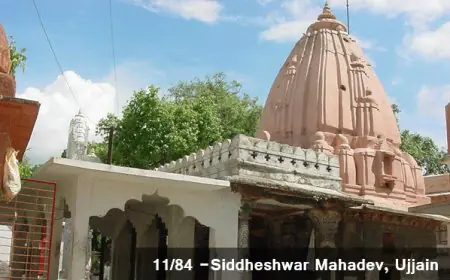



































Agastyeshwar Mahadev Temple: A Sacred Abode of Lord Shiva in Ujjain
Visit Agastyeshwar Mahadev Temple, the first of 84 Mahadev temples in Ujjain. Know its spiritual importance, verse meaning, darshan timings & exact location.
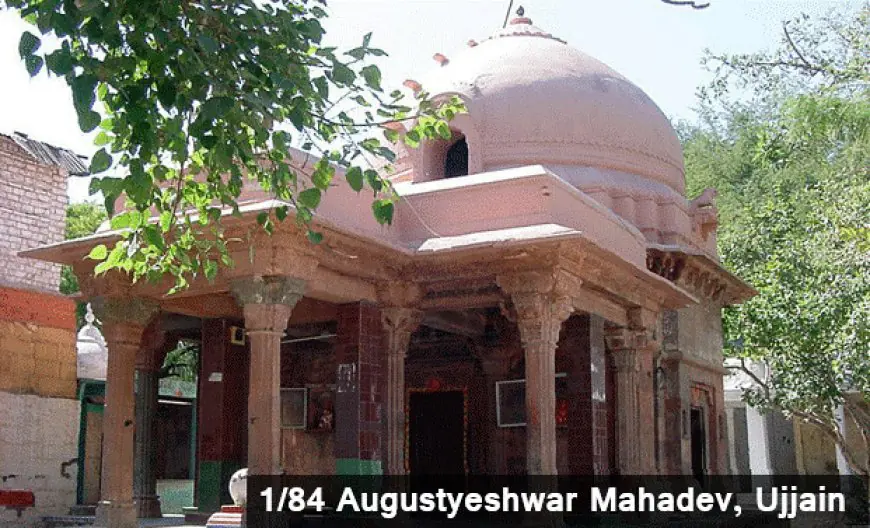


Before You Step Into the 84 Mahadev Circuit, Start Here
Every spiritual journey has a threshold – a single step that transforms a pilgrim from a curious visitor into a dedicated seeker. For the legendary 84 Mahadev Yatra of Ujjain, that threshold is Agastyeshwar Mahadev Temple, the very first shrine among the sacred Chaurasi Mahadev circuit. This is where your sankalp (sacred vow) begins. This is where the divine energies of Mahakal Van first touch your soul. And this is where Maharshi Agastya, one of Hinduism's most revered sages, established a Shiva Linga that continues to radiate discipline, stability, and spiritual grounding after thousands of years.
Unlike the grand Mahakaleshwar Jyotirlinga that draws millions, Agastyeshwar stands quietly on the northern side of the Mahakal forest, near a sacred banyan tree and a Yakshini. It is not built for crowds. It is built for intention. The Yakshas and Gandharvas – celestial beings of nature and music – are said to worship here. The Sanskrit verse declares this linga as anuttamam – supreme and incomparable. And for good reason. Without acknowledging this shrine, the remaining 83 Mahadev temples of Ujjain lose their context. Agastyeshwar is not just the first – it is the foundation.
Let me walk you through everything you need to know about this powerful yet often overlooked temple: its spiritual depth, the story of Rishi Agastya, how to reach it, and why starting your 84 Mahadev Yatra anywhere else would be like building a house without a foundation.
Why Agastyeshwar Mahadev Is the First and Most Essential Stop 🛕
The 84 Mahadev Yatra of Ujjain is a complete spiritual circuit – 84 Shiva Lingas placed across the Mahakal forest and the city, each representing a different facet of Lord Shiva. But a circuit needs a starting point. And the ancient architects of this yatra chose Agastyeshwar as that point for three profound reasons.
Trending Guides Now

84 Mahadev Yatra in Ujjain: Complete Sacred Circuit Guide
Shri Damrukeshwar Mahadev, Ujjain – The Divine Shiva Lingam Born from the Cosmic Damru Sound
Guheshwar Mahadev Temple, Ujjain: The Sacred Cave of Lord Shiva
Shri Kapaleshwar Mahadev Ujjain – The Sacred Site Where Shiva’s Kapal Vrat Was Completed

Ujjain Railway Station to Mahakaleshwar Temple Distance (2026 Guide)

Ujjain Simhastha 2028 Dates Announced: Full Shahi Snan & Event Timeline

Mangalnath Temple Trip Budget: Puja, Local Transport, Food and Stay Planning

Omkareshwar Trip Budget Guide: Transport, Stay, Food and Local Travel Costs
First, the northern direction (Uttara) is considered the most auspicious in Vastu and spiritual geography. It is the direction of Kubera, the god of wealth, and of Himalaya, the abode of Shiva. Agastyeshwar is located on the northern side of Mahakal Van, making it a natural gateway to the sacred energies that follow. Second, the banyan tree (vat vriksha) is a symbol of immortality and continuity. Beginning your yatra under its shade reminds you that spiritual progress is patient, rooted, and long-lasting. Third, the presence of a Yakshini (a female nature spirit) indicates that this linga governs not just celestial realms but also the subtle earth energies – making it accessible to householders as well as ascetics.
When you take your sankalp (formal vow) at Agastyeshwar, you are not just saying words. You are aligning your intention with millennia of pilgrims who began their journey here. You are declaring to the universe: “I am ready to purify myself, to visit 83 more forms of Shiva, and to return here changed.” This is not drama. This is spiritual technology – and it works.
The Sacred Verse: Celestial Worship and a Promise of Supremacy
The devotional Sanskrit verse for Agastyeshwar Mahadev is not just poetry – it is a map of invisible geography.
महाकाल वने दिव्ये यक्ष गन्धर्व सेविते।
उत्तरे वट यक्षिण्या यत्तल्लिङ्गमनुत्तमम्॥
Meaning: In the divine Mahakal forest of Ujjain, worshipped by Yakshas and Gandharvas, on the northern side near the sacred banyan tree and the Yakshini, stands that supreme and incomparable Shiva Linga.
Let me break this down in human language.

Mahakala vane divye – “In the divine Mahakal forest.” This is not ordinary woods. This is the forest where Mahakaleshwar – the Lord who defeats time itself – resides. Every leaf, every stone, every path here is charged with eternity.
Yaksha Gandharva sevite – “Worshipped by Yakshas and Gandharvas.” Yakshas are nature spirits, guardians of earthly treasures and secrets. Gandharvas are celestial musicians, masters of sound and emotion. Even they bow here. If nature and art both honor this Linga, what does that tell you about its power?
Uttare vata yakshinya – “On the northern side, near the banyan tree and the Yakshini.” The Yakshini is a female nature deity – nurturing, protective, and fierce. Her presence makes this linga a bridge between the fierce and the gentle, the masculine and the feminine, the sky and the earth.
Yat tallingam anuttamam – “That Linga is supreme and incomparable.” Anuttamam is a strong word. It means nothing is above it. This Linga is not just “one of many.” It is the foundation upon which the entire 84 Mahadev circuit rests.
When you chant this verse, especially in the early morning at the temple, you are not just reciting. You are invoking the Yakshas, the Gandharvas, the Yakshini, and the banyan tree itself to witness your pilgrimage. Do it with awareness. The vibration will stay with you through all 84 shrines.
Rishi Agastya: The Sage Who Balanced the Universe 🧘
The temple is named Agastyeshwar – the Shiva of Agastya. But who was Rishi Agastya, and why is his name attached to this first shrine?
Agastya is one of the most revered sages in Hindu tradition. He is credited with drinking the entire ocean to expose demons hiding in its depths. He is the sage who traveled south to balance the weight of the earth when Lord Shiva was wedding Parvati in the north (the wedding party was so large that the earth began to tilt). He is the author of many Vedic hymns and the guru of Lopamudra, one of the most learned women in scripture.
In short, Agastya is the sage of balance – of north and south, of earth and ocean, of knowledge and action. When he established a Shiva Linga in Mahakal Van, he was not just building a temple. He was stabilizing the spiritual energy of Ujjain itself. Before Agastyeshwar, the divine forces in the Mahakal forest were unstable, shifting like sand. After his tapasya and installation, they coalesced – making Ujjain a permanent seat of Shiva worship.
For pilgrims beginning the 84 Mahadev Yatra, this stability is essential. You cannot wander through 83 temples without a grounded start. Agastyeshwar plants your feet firmly on the path. The discipline and restraint of Rishi Agastya become your companions for the entire journey.
Location, Darshan, and How to Reach Agastyeshwar Temple 📍
One of the beautiful things about Agastyeshwar Mahadev is that it is tucked away – not on the main tourist trail, but accessible enough for determined pilgrims. Here is everything you need to plan your visit.
Exact Location: Shree Agastyeshwar Mahadev Mandir (01/84), Mahakal Forest Area, Ujjain, Madhya Pradesh – 456001
How to Reach:
-
From Mahakaleshwar Temple – The most common starting point. Walk north into the Mahakal forest for about 15-20 minutes. The path is shaded but uneven in places. Wear comfortable shoes. 🚶
-
By Auto-Rickshaw – From Ujjain Railway Station or Mahakaleshwar, take an auto to “Agastyeshwar, pehla Mahadev” (the first Mahadev). The fare is around ₹40-50. Tell the driver to drop you at the northern entrance of the forest.
-
By Bus – City buses to Nana Kheda or Dewas Gate stop near the Mahakal forest boundary. From there, a 10-minute walk. Ask locals for “Agastya Rishi wala Mahadev.”
Darshan Timings: The temple is open from 5:00 AM to 12:00 PM and 4:00 PM to 8:00 PM daily. Early morning (6-8 AM) is the best time – the forest is cool, the birds are active, and the spiritual energy is fresh. ⏰
What to Bring: Water for abhishek (you can buy copper lotas near the temple), bilva leaves (available from vendors outside), white flowers, and a clean cotton cloth to sit on. Avoid leather items inside the temple premises.
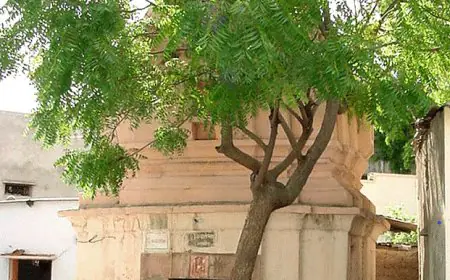
What to Expect: A small, unassuming shrine with a black stone Shivalinga under a banyan tree. There is a small platform for sitting. Priests are usually present but not intrusive. You can perform your own abhishek or request a priest to do it for a nominal donation (₹50-100). Do not expect crowds – this is a quiet, introspective space.
How to Take Your Sankalp (Sacred Vow) at Agastyeshwar 📜
The sankalp is the heart of starting the 84 Mahadev Yatra. Without it, you are just visiting temples. With it, you are undertaking a pilgrimage. Here is how to do it correctly.
Step 1 – Purify Yourself: Bathe before coming. Wear clean, modest clothes (white or light colors preferred). Do not eat heavy food before the sankalp.
Step 2 – Bring Offerings: A small copper pot of water, bilva leaves, white flowers, and a coconut (optional). You can buy these near Mahakaleshwar or from vendors at the forest entrance.
Step 3 – Approach the Linga: Stand or sit facing north (the direction of the linga). Take a few deep breaths. Calm your mind.
Step 4 – State Your Sankalp: Hold the water in your right hand. Speak aloud (or silently with great intensity): *“I, [your name], residing in [your city/country], hereby begin the 84 Mahadev Darshan of Ujjain. I will visit all 84 Shiva Lingas with faith, discipline, and humility. May Lord Agastyeshwar guide my steps and purify my intentions. I offer this sankalp at your feet.”* Then pour the water over the linga.
Step 5 – Offer Bilva Leaves and Flowers: Place three bilva leaves (representing body, speech, and mind) and a handful of white flowers on the linga.
Step 6 – Chant the Verse: Recite the Agastyeshwar verse (given above) 3 times. If you do not know Sanskrit, you can chant “Om Namah Shivaya” 11 times with intention.
Step 7 – Sit in Silence: Stay for 5 minutes after the ritual. Do not rush away. Let the energy of the first Mahadev settle into your consciousness.
That is your sankalp. You are now officially on the 84 Mahadev Yatra. Keep a small notebook to document your visits – many pilgrims write the date, time, and a brief observation after each temple.
The Northern Banyan Tree and the Yakshini: Guardians of the Gateway 🌳
Two silent guardians watch over Agastyeshwar Mahadev: the ancient banyan tree and the Yakshini (a female nature deity). Do not overlook them – they are essential to the power of this shrine.
The banyan tree (vat vriksha) is not a random plant. In Hindu symbolism, the banyan represents immortality – its aerial roots grow downward to become new trunks, allowing it to live for thousands of years. Lord Shiva is often depicted meditating under a banyan as Dakshinamurti, the guru of gurus. The tree at Agastyeshwar is believed to be a shoot of that original cosmic banyan. Pilgrims circumambulate the tree three times before entering the temple.
The Yakshini is a small stone carving at the base of the tree – often overlooked by hasty visitors. Yakshinis are nature spirits associated with fertility, protection, and hidden treasures. The presence of a Yakshini at the first Mahadev indicates that this yatra is not just about Shiva in the sky – it is about Shiva in the earth, in the roots, in the subtle energies that sustain life. Touch the Yakshini carving gently with your right hand, then touch your forehead. This is a prayer for grounding and protection through the remaining 83 temples.
Common Mistakes Pilgrims Make at Agastyeshwar (And How to Avoid Them) ⚠️
Even well-intentioned pilgrims make errors at the first shrine. Here are the most common – and how to avoid them.
Mistake #1 – Skipping the Sankalp: Many visitors assume they can just “start” the yatra from any temple. No. Agastyeshwar is the official starting point. Without a sankalp here, you have not technically begun the 84 Mahadev circuit. 🚫
Mistake #2 – Rushing Away: People often spend 5 minutes at Agastyeshwar and then dash to the next temple. This is a loss. The first shrine sets your energetic foundation. Spend at least 20 minutes here. Sit. Breathe. Listen to the forest.
Mistake #3 – Ignoring the Tree and Yakshini: The banyan tree and Yakshini are not decorations. They are active spiritual components. Circumambulate the tree. Acknowledge the Yakshini. This completes the ritual.
Mistake #4 – Forgetting the Direction: Face north when offering prayers. The linga itself faces north. Turning the wrong direction dilutes the energy.
Mistake #5 – Not Taking a Memento: Many pilgrims take a small bilva leaf or a pinch of vibhuti (sacred ash) from Agastyeshwar and keep it in their wallet or puja room as a reminder of their sankalp. This is a beautiful practice – it connects you to the first Mahadev throughout the entire yatra.
Why Agastyeshwar Matters Even If You Are Not Doing the Full 84 Mahadev Yatra
Not everyone has the time or energy to visit all 84 Mahadev temples in Ujjain. Perhaps you are on a short trip, or you are elderly, or you are simply drawn to Shiva but cannot commit to a full circuit. Does Agastyeshwar still matter for you? Absolutely.
Even as a standalone shrine, Agastyeshwar Mahadev offers profound blessings. It is a temple of beginnings – of new ventures, fresh starts, and spiritual grounding. If you are starting a new business, a new phase of life, or a new spiritual practice, a visit here can anchor your intention. The energy of Rishi Agastya – the sage of balance – is particularly helpful for those feeling scattered, overwhelmed, or unsure of their next step.
Moreover, Agastyeshwar is accessible even during crowded festivals when Mahakaleshwar is impossible to enter. The walk through the Mahakal forest is therapeutic – green, quiet, and ancient. Many Ujjain locals visit Agastyeshwar every Monday simply to escape the noise of the city and reconnect with themselves.
So whether you are a dedicated pilgrim completing 84 temples, or a casual visitor seeking one powerful darshan, Agastyeshwar welcomes you. It is the first for a reason – but it is also the first because it stands alone in its grace.
The Unfinished Journey: What Agastyeshwar Whispers to Every Seeker
When you leave Agastyeshwar Mahadev Temple, you will not feel dramatically different. You will feel grounded. Quiet. Ready. The banyan tree will have shaded you. The Yakshini will have watched over you. Rishi Agastya's discipline will have touched your spine. And you will know, deep in your bones, that this was not just a temple visit – it was a threshold crossing.
The remaining 83 Mahadev temples of Ujjain are waiting for you. Some are grand, some are hidden, some are powerful, some are gentle. But none of them will make sense without the foundation you laid here. Agastyeshwar is the seed. The rest of the yatra is the tree.
So go ahead. Take your sankalp. Pour your water. Chant the verse. Touch the Yakshini. Walk into the forest. Lord Shiva is waiting for you – 84 different ways. And it all begins right here, under the banyan, on the northern side, where the Yakshas and Gandharvas still sing.
Frequently Asked Questions