
































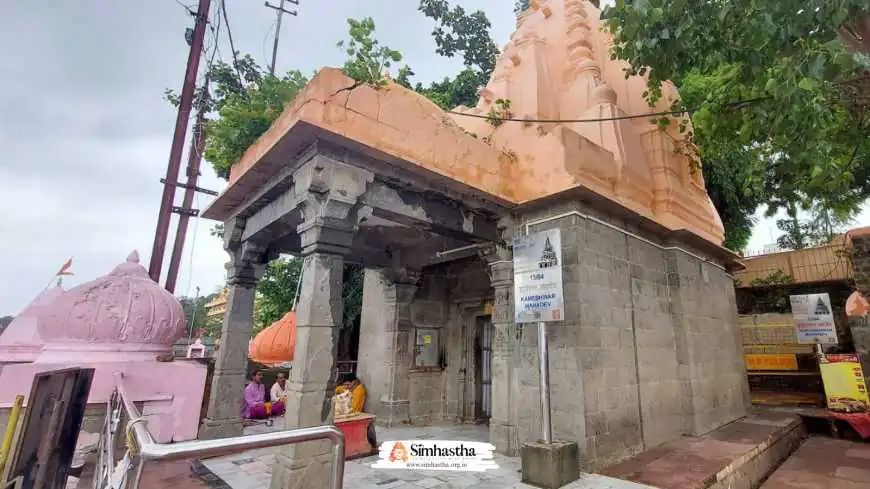
Kameshwar Mahadev: 13/84 Ujjain's Desire Fulfiller
Worship Shree Kameshwar Mahadev, the 13th of 84 Ujjain temples. Lord Shiva who purifies desires & grants dharma, artha, kama, moksha. Darshan guide inside.


You Have Desires – And That Is Not a Sin
Let me tell you something most spiritual teachers won't admit. Desire is not your enemy. The longing for a better job, a loving partner, a comfortable home, or even recognition for your work – these are not sins. They are human. And yet, for centuries, we have been told to "kill our desires" to become spiritual. But here is a beautiful secret hidden in the heart of Ujjain, inside the sacred Mahakal forest, at the 13th shrine of the legendary 84 Mahadev Yatra.
Meet Shree Kameshwar Mahadev.
Unlike any other form of Lord Shiva, this Mahadev does not ask you to drop your wishes at the door. Instead, he takes them in his trident-bearing hands, examines them, purifies them, and returns them to you as stepping stones for your growth. Where other temples might preach renunciation, Kameshwar whispers a radical truth: "Your desires, when aligned with dharma, become the very fuel for liberation."
This is not a temple for people who want to run away from life. This is a temple for people who want to live fully – earning wealth (artha), enjoying pleasures (kama), fulfilling duties (dharma), and eventually reaching freedom (moksha). All four goals, under one roof. All four, blessed by the same Shiva.
Trending Guides Now

84 Mahadev Yatra in Ujjain: Complete Sacred Circuit Guide

Guheshwar Mahadev Temple, Ujjain: The Sacred Cave of Lord Shiva

Shri Trivishtapeshwar Mahadev Ujjain – The Heavenly Gateway Among 84 Mahadev Temples

Ishaneshwar Mahadev: 16/84 Ujjain's Wisdom Lord

Ujjain Railway Station to Mahakaleshwar Temple Distance (2026 Guide)

Ujjain Simhastha 2028 Dates Announced: Full Shahi Snan & Event Timeline

Benefits of Becoming a Simhastha Volunteer

Ujjain Travel During Shravan Month: What Changes for Visitors
If you have ever felt guilty for wanting something – a promotion, a marriage, a house, even a vacation – then Kameshwar Mahadev is waiting for you. Not to judge you. To channel you.
The 13th Jewel in Ujjain's Crown of 84 Mahadevs
You may have heard of the 84 Mahadev temples of Ujjain – a sacred circuit that turns the entire city into a mandala of Shiva's energies. Each temple represents a different manifestation of the destroyer of evil. By the time you reach the 13th shrine, something interesting happens. You have already met Lokpaleshwar (the lord of direction-guardians). Now you meet Kameshwar.
The number 13 is often misunderstood in popular culture. But in Shaiva tradition, 13 represents transformation. There are 13 lunar days in the waxing phase from new moon to full moon. There are 13 global energy meridians in ancient yogic geography. Kameshwar as the 13th Mahadev is placed deliberately. He is the gateway between external protection (Lokpaleshwar) and internal purification (the shrines that follow).
Think of it this way. First you ask for safety from all directions – that is Lokpaleshwar. Then, feeling safe, you dare to want. You dare to dream. But without guidance, those dreams can become obsessions. So Kameshwar steps in as the regulator. He holds your longings like a father holds a child's hand while crossing a busy road – not to stop the child from moving, but to ensure the child reaches the other side safely.
I have walked this yatra twice. And both times, at Kameshwar Temple, I saw a different kind of devotee. Not the weeping, desperate kind. But the focused, clear-eyed kind. People who know exactly what they want, but who also know that Shiva's will is higher than their own. That balance – between ambition and surrender – is the gift of this shrine.
Kameshwar: Not the God of Indulgence, But the Lord of Rightful Desire
Let me correct a common misunderstanding. The name Kameshwar comes from Kama (desire) + Ishwar (lord). So he is the Lord of Desire. But this is not a license for greed, lust, or unchecked craving. In Hindu philosophy, there are two types of kama – pravritti (outward, binding desire) and nivritti (inward, liberating desire). Kameshwar governs the transformation of the first into the second.

When you come to this Mahadev with a selfish, harmful wish – say, to harm a rival or to possess someone against their will – the Shivalinga here remains cold. The priests will tell you that such devotees leave with their hearts heavier than before. But when you come with a rightful desire – a job that serves your family, a partner who respects you, a creative project that brings joy to others – the energy shifts. You feel a warmth. A permission. A quiet assurance that your wish is heard.
This is the essence of Shaiva ethics. Desire is not rejected; it is disciplined. The same fire that burns a house can cook a meal. Kameshwar takes the raw fire of your longing and turns it into a sacred flame on the altar of your life.
I recall a conversation with a middle-aged businessman outside this temple. He told me he had been visiting Kameshwar every month for seven years. Not for anything dramatic. Just to "check in" on his wishes. He said, "Earlier, I wanted ten things at once – more money, a bigger office, respect from my competitors. I would pray frantically. Now I come with one desire at a time. And I ask Shiva, 'If this is good for my growth, let it happen. If not, remove this desire from my heart.' That honesty changed everything."
The Purifying Power of the Sanskrit Verse
Now let me share the devotional verse that has been whispered at this temple for centuries. Do not just read it. Feel it. Because the sounds themselves carry a vibrational signature that purifies your intentions.
कामनापूरकं देवं महाकालवने स्थितम्।
धर्मार्थकाममोक्षाणां दातारं कामेश्वरं भजे॥
Breaking it down in plain human language:
The first word Kamanapurakam means "the fulfiller of desires." Not some random genie. But Devam – the divine one. Mahakalavane sthitam – he lives in the Mahakal forest, the same timeless space where Mahakaleshwar resides. Then the second line: Dharmarthakamamokshanam – the four goals of human life: righteousness, wealth, pleasure, and liberation. Dataram – the giver. Kameshwaram bhaje – I worship Kameshwar.
When you chant this verse, you are not begging. You are declaring a relationship. You are saying, "You are the one who decides which desires deserve fulfillment. You are the one who balances my worldly needs with my spiritual evolution. I trust your judgment more than my own craving."
That shift – from demanding to trusting – is where the real magic happens. Try chanting this 11 times on a Friday morning (Fridays are especially dear to Kameshwar because of the connection to goddess energy that nurtures desires). Light a single ghee lamp. And watch how your wishes start finding their natural place in your life – not always the way you imagined, but always the way that serves your highest good.
Dharma, Artha, Kama, Moksha – The Four Goals Under One Roof
Most temples focus on one or two of life's goals. Moksha temples tell you to renounce the world. Prosperity temples focus only on wealth. But Kameshwar Mahadev does something almost unheard of. He addresses all four Purusharthas – the four legitimate aims of human existence according to Hindu dharma.
Dharma (Righteousness)
Without dharma, desire becomes destruction. At Kameshwar Temple, the first offering is always a bowed head – a silent promise that you will not use your fulfilled wishes to harm others. The priests say that many devotees come asking for reconciliation in broken families. That is dharma – restoring what is right.
Artha (Wealth)
Money is not dirty. Artha is the energy that allows you to feed your children, build schools, support temples, and live without constant fear. Kameshwar blesses wealth – but only when it is earned honestly and shared generously. I have seen small shopkeepers and startup founders sit here for hours, not asking for millions, but for stability and integrity in their earnings.
Kama (Pleasure)
This is the tricky one. Kama in Sanskrit means desire in all forms – not just sexual, but the desire for beauty, art, music, travel, love, companionship. The Kama that Kameshwar blesses is the pure, consensual, life-affirming kind. Couples hoping for a child, artists praying for creative flow, lovers seeking a harmonious marriage – these are the people who find answers at this Shivalinga.
Moksha (Liberation)
The ultimate goal. But here is the Kameshwar secret – moksha does not require you to hate kama. It requires you to see through it. When your desires are fulfilled yet you remain unattached; when you enjoy pleasure but are not enslaved by it – that is liberation while living (jivanmukti). Kameshwar guides you to that balance.
One elderly pujari told me, "Most people come here only for kama and artha. They forget dharma. They ignore moksha. And then they wonder why their wishes feel empty after fulfillment. But the one who prays keeping all four in mind – that person's every desire becomes a door to the divine."
Why Devotees Seek Kameshwar for Career, Love, and Spiritual Balance
Let me get practical. You are reading this because you have unfulfilled wishes. Maybe it is a job promotion that feels stuck. Maybe it is a relationship that won't move forward. Maybe it is a health issue for a loved one. Or maybe it is a spiritual block – you want to meditate but your mind keeps running after worldly things.
Here is what Kameshwar Mahadev offers for each:
For Career and Wealth:
Devotees pour milk and water over the linga while mentally listing their professional goals. The ritual is not complicated. The key is honesty. You must admit if you have been cutting corners or stepping on others. Then promise to change. After that, Kameshwar begins clearing the obstacles from your professional path – sometimes by removing bad partnerships, sometimes by delaying a promotion that would have corrupted you.
For Love and Relationships:
Fridays are powerful. Offer red flowers or white jasmine – not as a romantic gesture to Shiva, but as a symbol of pure affection. Couples who pray together at Kameshwar often report a deepening of trust. Single people praying for a righteous partner are told to focus on qualities rather than fantasies. "Do not ask for a tall, rich, handsome stranger," a priest once joked. "Ask for someone who makes you a better human. Kameshwar understands that language."
For Spiritual Balance:
If you feel guilty for having desires at all, Kameshwar is your healer. Spend 10 minutes sitting quietly in the temple. Do not chant anything. Just let your wishes rise and fall in your awareness. Then whisper to the linga: "I don't know which of these are worth keeping. You decide." That surrender alone can dissolve years of spiritual shame.
The Spiritual Transformation: From Craving to Conscious Intention
Now let me take you deeper. Because Kameshwar is not really about getting things. He is about changing your relationship with the very act of wanting.
There is a Sanskrit term – vasana. It means the subtle imprint of past desires that keeps you rebirth after rebirth. Most spiritual paths try to burn these vasanas by austerity. But Shaivism offers another way: sublimation. You take the energy of craving and you redirect it towards the divine.
Kameshwar Mahadev is the master of sublimation. When you pray to him with a conscious intention, you are not feeding your ego. You are offering your longing as fuel to Shiva's fire. The more you do this, the more your desires lose their desperate edge. They become playful. Creative. Service-oriented.
I remember a young woman who came to this temple every week for a year. She wanted to become a classical dancer but her family opposed it. She did not ask Kameshwar to change her family's mind. Instead, she asked, "Make me so good that they cannot deny my calling." She practiced. She improved. And one day, her parents saw her perform at a local event. They cried with pride. That is Kameshwar's way – not handing you things on a plate, but strengthening your hands to hold them yourself.
Rituals That Work – How to Worship Kameshwar Mahadev
If you are planning a visit – or even a home worship – follow these traditional methods that have proven effective for generations.
At the Temple (Ujjain)
-
Morning Visit Preferred – The linga receives the first rays of the sun. This is when desire energy is most pliable.
-
Jal Abhishek – Pour water or milk while mentally naming one desire at a time. Do not rush. One desire per pour.
-
Bilva Leaves – Offer three leaves. Each leaf represents one of the three gunas (sattva, rajas, tamas). Ask Kameshwar to purify the rajas (active, desiring) part of your mind.
-
Red or White Flowers – Red for courage in pursuing worldly goals. White for purity of intention. Mix them if your desire serves both.
-
Chant the Verse – Recite the Kameshwar verse 11 or 21 times. Do not just mechanically repeat. Feel each word.
-
Silent Surrender – Finally, sit with eyes closed. Say this internally: "This desire is yours now. Fulfill it if it serves my dharma. Withdraw it if it harms my growth. I trust you completely."
At Home (For Those Far from Ujjain)
No problem. Shiva is not limited by geography. Take a small Shivalinga or a clear photo of Kameshwar (you can draw a simple linga on paper with sandalwood paste). Face east. Light a ghee lamp and camphor. Then follow the same steps above. The intensity of your honesty matters more than the elaborateness of the ritual.
Best Days and Offerings
-
Mondays – General Shiva worship. Good for starting any new desire.
-
Fridays – Especially powerful for love, relationships, creativity, and artistic desires.
-
Shravan Maas (July-August) – The entire month is considered Kameshwar's season. Pilgrims pour Ganga jal daily.
-
Full Moon (Purnima) – For desires related to completion – finishing a project, ending a legal dispute, or finding closure.
What NOT to Offer
Do not offer non-vegetarian items, alcohol, or anything obtained unethically. Also avoid praying with a heart full of jealousy or malice. Kameshwar is gentle, but he is still Shiva – the destroyer of lower tendencies. You have been warned.
A Walk to the Temple – Exact Location and Darshan Experience
Exact Address:
Shree Kameshwar Mahadev Temple (13/84), Mahakal Forest Area, Ujjain, Madhya Pradesh – 456001
How to Reach
-
From Mahakaleshwar Temple – About a 15-minute walk or a 5-minute auto ride. Ask any local for "Kameshwar Mahadev" or "13th Mahadev."
-
By Auto-Rickshaw – From Ujjain Railway Station, it costs around ₹30-40. Tell the driver "Mahakal Van ke paas Kameshwar Mandir."
-
By Bus – City buses to Nana Kheda or Dewas Gate stop near the Mahakal forest area. From there, follow the small signboards.
What You Will See
Unlike the grand, crowded Mahakaleshwar, Kameshwar Temple is small, intimate, and often quiet. The Shivalinga is not massive. But the energy is remarkably still. You will notice a unique feature – there are four small lamps placed around the sanctum, representing the four Purusharthas. Many devotees light one lamp for each goal they are praying for.
The temple courtyard has a peepal tree where people tie red-and-yellow sacred threads (kalava) after their wishes are fulfilled. It is a moving sight – hundreds of threads, each one a story of a desire that was purified, granted, and then released.
The best time for darshan is early morning (6-8 AM) or evening (5-7 PM). Avoid midday unless you enjoy Ujjain's heat. The priests are helpful but not overly talkative. If you want a short ritual (abhishek), ask for "Kamana Abhishek" – they will know.
What Kameshwar Teaches Us About Modern Life's Restlessness
Let me close with a reflection. We live in an age of infinite desires. Social media shows us what everyone else has. Advertisements scream that we are incomplete without the next purchase. Our minds bounce from wanting a new phone to wanting a better body to wanting a vacation to wanting a different partner – all in the span of ten minutes.
This is not kama. This is vyakulata – restless craving. And it is eating us alive.
Kameshwar Mahadev offers a remedy. He does not ask you to stop wanting. He asks you to slow down. To bring consciousness to your longings. To ask: "Why do I want this? Whom will it serve? What will I become if I get it? What will I become if I don't?"
These questions, asked before the Shivalinga, have a strange power. They filter your desires. The shallow ones fall away on their own. The deep, dharmic ones remain. And then Kameshwar does his work – not as a magician, but as a gardener. He waters what should grow. He prunes what should not. And over time, you find that your desires no longer possess you. You possess them.
That is the real fulfillment. Not getting everything you want. But wanting only what is worth having – and having the courage to let go of the rest.
The Silent Promise of Shree Kameshwar Mahadev
When you leave this temple, do not expect miracles overnight. Expect something better. Expect clarity. Expect peace in the middle of your ambitions. Expect a quiet voice inside that says, "This desire is pure. Go ahead." or "This one is poison. Drop it now."
That voice is Kameshwar. Not outside you. Inside you. Because the Lord of Desire is not a statue. He is the awakened intelligence in your own heart that knows the difference between craving and calling.
So go ahead. Want. Dream. Long. But do it with Shiva as your witness. Do it with dharma as your boundary. And watch how your desires – no longer your masters but your servants – carry you gently towards everything you truly need.
And maybe, just maybe, towards everything Shiva has always wanted to give you.
Frequently Asked Questions