






























Karkoteshwar Mahadev Ujjain – The Sacred Serpent-Blessed Temple of the 84 Mahadev Circuit
Discover the divine legend, serpent lore, spiritual symbolism, and blessings of Shri Karkoteshwar Mahadev—the 10th temple of Ujjain’s 84 Mahadev, established by the noble serpent Karkotak.
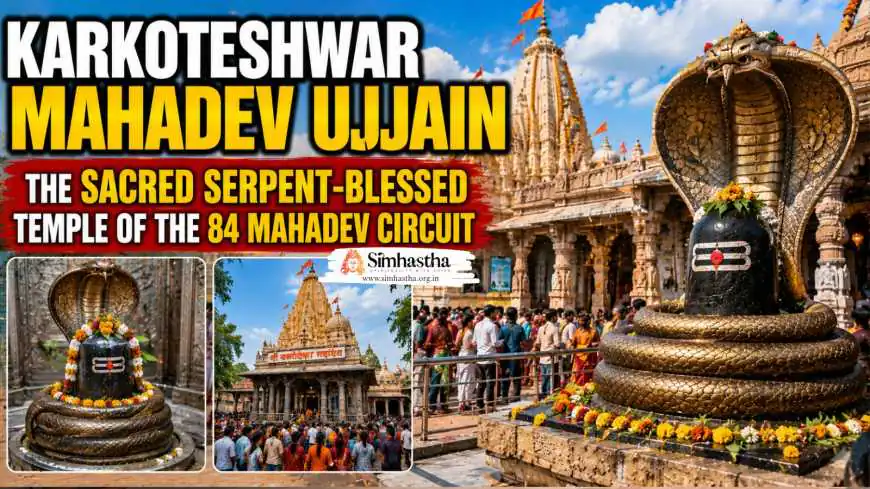


10/84 - Shri Karkoteshwar Mahadev — The Serpent King’s Sacred Gift to Mahakal Van
Ujjain, the mystical land of Lord Mahakal, is a tapestry woven with divine legends, cosmic mysteries, and ancient spiritual sites. Among its most treasured divine landmarks is the sacred circuit known as 84 Mahadev—a manifestation of Shiva’s infinite forms across the Mahakal Van region. Each of these lingas has its own story, its own energy, and its own cosmic purpose.
The 10th Mahadev in this revered lineage is Shri Karkoteshwar Mahadev, a unique and powerful shrine established by the mighty serpent king Karkotak Naag, one of the most celebrated serpents of ancient Hindu scriptures.
Shri Karkoteshwar Mahadev is not only a temple; it is a symbol of transformation—where poison becomes nectar, curses turn into blessings, and fear dissolves into divine grace.
For Every pilgrims, understanding Simhastha 2028 dates and the official Shahi Snan timeline is essential before booking flights or accommodation, as these sacred dates are completely non-negotiable.
Trending Guides Now

84 Mahadev Yatra in Ujjain: Complete Sacred Circuit Guide
Guheshwar Mahadev Temple, Ujjain: The Sacred Cave of Lord Shiva
Shri Trivishtapeshwar Mahadev Ujjain – The Heavenly Gateway Among 84 Mahadev Temples
Ishaneshwar Mahadev: 16/84 Ujjain's Wisdom Lord

Ujjain Railway Station to Mahakaleshwar Temple Distance (2026 Guide)

Ujjain Simhastha 2028 Dates Announced: Full Shahi Snan & Event Timeline
Karkateshwar Mahadev: 22/84 Mahadev of Ujjain

Ujjain Simhastha Update: CM Mohan Yadav Reviews 2028 Works
1. Sacred Shloka and Its Meaning
कर्कोटेश्वर-संज्ञं च दशमं विद्धि पार्वती।
यस्य दर्शन मात्रेण विषैर्नैवाभिभूयते।।
“O Parvati! Know that the tenth linga is called Karkoteshwar.
The mere sight of this linga protects beings from the harm of poison.”
This divine assurance from Shiva himself makes the temple one of the most powerful places for protection from fear, venom, curses, and negative energies.
2. The Origin Story — The Curse of the Serpent Mother
The legend of Karkoteshwar Mahadev begins with the great serpent mother Kadru, who demanded complete righteousness from her serpent sons. Many serpents, however, turned arrogant, deceitful, or unrighteous. In anger and sorrow, Kadru cursed them:
“You shall burn in the serpent sacrifice of King Janamejaya!”
The serpents panicked.
Some fled.
Some repented.
Some sought divine intervention.

Among them was Karkotak, the serpent known not for cruelty but for devotion, wisdom, and adherence to dharma.
He refused to accept the curse as his destiny.
Instead, he chose the path of spiritual surrender.
Also Read | 84 Mahadev Yatra in Ujjain: Complete Sacred Circuit Guide
3. Brahma’s Guidance — The Path to Liberation
One serpent named Elapatra approached Lord Brahma with anguish.
“Father of creation, is there any way to escape Kadru’s curse?”
Brahma replied:
“Go to Mahakal Van in Ujjain.
There, near Goddess Mahamaya, lies a divine shivalinga.
Worship it with unwavering devotion.
Shiva will free you from all curses.”
Thus began the serpents’ pilgrimage toward Mahakal Van.
But among them, Karkotak was the most determined.
He vowed:
“Even if this serpent body perishes,
I will not rise until Shiva himself grants me refuge.”
4. Karkotak’s Intense Tapasya in Mahakal Van
Karkotak arrived at Mahakal Van, found the divine linga south of Mahamaya Devi, and began his centuries-long tapasya.
He stayed motionless.
He consumed no food.
He drank no water.
He chanted only one mantra:
“Om Namah Shivaya.”
It is said that his venom dried up in the heat of his austerity.
His ego dissolved.
His serpent form radiated only purity.
Even nature respected his vow—winds softened, trees bowed, the soil vibrated with the energy of his penance.
5. Shiva Appears — The Gift of Karkoteshwar
Pleased with Karkotak’s devotion, Shiva manifested before him.
“Rise, O noble serpent. Your bhakti has moved me.”
Karkotak bowed deeply.
“Lord, free me and my kin from the curse. Protect all beings from the fear of poison.”
Shiva smiled and declared:
“From this day, the linga you worshipped shall be known as Karkoteshwar.
Anyone who worships here will be free from serpent fear, venom, and afflictions.”
The divine vibration of Shiva’s words transformed the linga into a radiant sphere of healing power.
Thus, the Karkoteshwar Mahadev linga became the cosmic seat of protection from:
-
Snakebite
-
Poison
-
Naga dosha
-
Ancestral serpent afflictions
Karkotak received immortality through Shiva’s grace.
His tapasya turned a curse into a blessing for all generations to come.
6. Symbolism — What Does Karkoteshwar Represent?
Karkoteshwar Mahadev is a symbol of:
1. Transformation
Just like Karkotak transformed his curse through devotion, the temple teaches that:
“No destiny is final—devotion can rewrite it.”
2. Control of Poison
The “poison” represents:
-
Ego
-
Anger
-
Hatred
-
Trauma
-
Jealousy
-
Past karmic burdens
Worshipping at this temple helps dissolve inner toxins.
3. Protection
This temple safeguards:
-
Children from naga afflictions
-
Families from ancestral curses
-
Devotees from accidents and illnesses
-
Homes from negative serpent energy
4. Blessings for Progeny
Families suffering from lack of children often worship here for lineage continuity—something deeply connected to serpent symbolism in Hindu Dharma.
7. Karkotak in Other Scriptures
Karkotak is not merely a serpent of local lore; he appears across major Hindu texts:
In Mahabharata
Karkotak cursed King Nala to become unrecognizably ugly—
not out of malice but to free him from karmic suffering and redirect him toward destiny.
This shows Karkotak as:
-
A serpent of wisdom
-
A guide of fate
-
A being capable of using venom for good
In Bhagavata Purana
He is mentioned as one of the principal Nagas with divine roles.
In Puranic Cosmology
Karkotak is one among the eight great serpents holding the universe’s cosmic balance.
Thus, the linga blessed by such a serpent becomes a powerhouse of spiritual energy.
8. Temple Location
Location:
Inside the Harsiddhi Mata Temple Complex, Ujjain, Madhya Pradesh
Pilgrims visiting Mahakaleshwar and Harsiddhi Mata invariably complete their journey with Karkoteshwar Darshan.
The temple environment carries:
-
Serpentine symbolism
-
A deep sense of mystery
-
An atmosphere of divine protection
-
Powerful meditative silence
It feels as though Karkotak himself guards the shrine.
9. Rituals and Worship
Best Days for Worship
-
Nag Panchami
-
Chaturdashi
-
Sundays
-
Shravan Month
-
All Mondays
Common Offerings
-
Milk
-
Bilva Leaves
-
Nagfani (cactus plant)
-
Turmeric
-
Ghee lamps
Key Mantra
“Om Karkotakeshwaraya Namah”
This mantra is known to dissolve fears and emotional toxins.
10. Benefits of Worshipping at Karkoteshwar Mahadev
Devotees believe that sincere worship here grants:
-
Protection from snakebite
-
Relief from Naga Dosha
-
Removal of ancestral curses
-
Peace and emotional healing
-
Fertility blessings and progeny growth
-
Physical vitality
-
Courage and inner purification
It is said:
“Those who worship Karkoteshwar do not fear poison — either worldly or spiritual.”
11. Divine Essence
The message of Karkoteshwar Mahadev is clear:
“Poison and suffering are not the end—devotion can turn them into divine strength.”
Karkotak transformed his venom into tapasya.
Shiva transformed his curse into immortality.
The temple transforms suffering into peace for every visitor.
A pilgrim who visits both Harsiddhi Mata and Karkoteshwar Mahadev receives the combined blessings of Shakti and Shiva, representing perfect cosmic balance.
Frequently Asked Questions