


















How Long Does the Complete 84 Mahadev Yatra Really Take?
Plan your sacred journey with a realistic guide to how long the complete 84 Mahadev Yatra really takes. From 7‑day rural circuits to 2‑day inner city routes, discover the perfect itinerary for your pilgrimage.



Understanding the Geographic Spread and the Inner Versus Outer Circuit
The first, most essential truth about the 84 Mahadev Yatra is that these temples are not a neat, suburban cluster. They are scattered, like seeds thrown by a divine hand, across the vast, fertile, and often deeply rural landscape of the Malwa plateau, spanning the districts of Ujjain, Dewas, Indore, and Ratlam in a rough, sacred circle with a radius that can stretch up to 80 kilometres from the Mahakaleshwar-darshan" class="contextual-link" data-post-id="530">Mahakaleshwar Jyotirlinga at its mystical centre. The temples are conventionally, and practically, divided into two distinct layers. The inner circuit, comprising roughly twenty to twenty‑five temples, is nestled within the city limits of Ujjain or on its immediate, walkable periphery. These are the shrines that the auto‑rickshaw drivers know by heart, the ones that appear on the standard one‑day pilgrimage itineraries, and the ones that can be visited, with a gentle, unhurried pace, in a couple of deeply satisfying days. The outer circuit, by contrast, is a different world entirely. It is a world of narrow, unpaved village tracks, of temples that are only open when the local priest, who often lives in a small hut beside the shrine, hears the sound of an approaching engine, and of a profound, enveloping silence that is broken only by the wind in the wheat fields and the distant, rhythmic bark of a village dog. This outer circuit is the heart of the Chaurasi Mahadev, the challenging, transformative, and deeply rewarding pilgrimage that demands a full, dedicated week or more of a pilgrim’s life. Understanding this fundamental geographic split is the first, and most important, step in planning a realistic, and spiritually nourishing, journey. 🌾
The Complete Yatra and a 7 to 10 Day Itinerary for the Dedicated Pilgrim
For the pilgrim who has the immense, rare gift of a full week or more, and whose heart is set on the complete, unbroken mandala of the eighty‑four, the Chaurasi Mahadev Yatra unfolds as a profound, multi‑day immersion into the soul of rural Malwa. A realistic, sustainable pace, which allows for the necessary travel time between clusters, the unhurried darshan at each temple, and the essential, sacred rest that prevents the pilgrimage from becoming an exhausting endurance test, works out to roughly seven to ten days. This assumes you have hired a private vehicle, ideally a sturdy, high‑clearance car or a small SUV, along with a knowledgeable local driver who has guided the Chaurasi Yatra before and who understands the specific, often unmarked, routes to the remote village shrines.
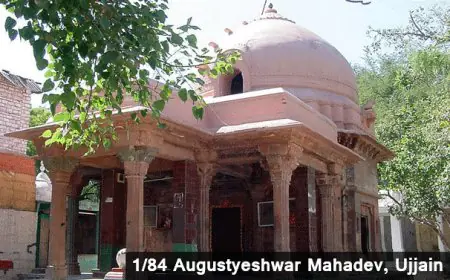
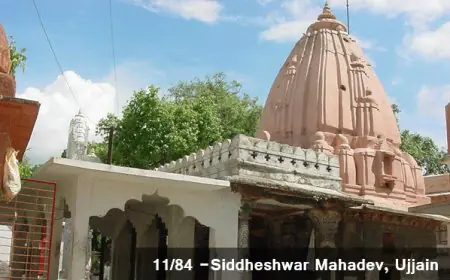
A typical, well‑tested itinerary would begin with Days 1 and 2 dedicated to the inner circuit, a gentle, grounding start that allows you to find your pilgrim’s rhythm, to acclimatize to the city’s sacred energy, and to seek the initial blessings of the central, most powerful shrines like Mangalnath, Siddheshwar, Rameshwar, and Jageshwar. Days 3 and 4 would then push outwards, into the southern and eastern clusters along the Shipra and the old Indore road, where the temples become quieter, the welcome from the village priests becomes warmer, and the countryside begins to work its silent, healing magic. Days 5 and 6 are for the more remote northern and western clusters, the temples that are tucked away in forest clearings, on gentle, wind‑swept hillocks, and at the quiet, forgotten confluences of small, seasonal streams with the Shipra. These are the days that demand the most of the pilgrim, physically and logistically, but they are also the days that offer the most profound, intimate, and unforgettable spiritual rewards. The final Days 7 and 8, and possibly a ninth or tenth day depending on the exact routes and the pilgrim’s energy, are for the return, for revisiting any temples that were missed, for offering a final, grateful darshan at Mahakaleshwar, and for the quiet, internal, and deeply personal process of allowing the immense, accumulated grace of the journey to settle into the soul. This is the pace of the true pilgrim, the one who understands that the number of temples visited is far less important than the depth of the silence experienced at each one. 🚗
The Inner Circuit and a 2 to 3 Day Accessible Pilgrimage
For the vast majority of pilgrims, whose lives are bound by the beautiful, demanding constraints of work, family, and limited vacation time, the inner circuit of the 84 Mahadev is not a compromise; it is a profound, accessible, and deeply scripturally valid form of the pilgrimage. The Skanda Purana itself, in its voluminous, encyclopaedic Avanti Khanda, acknowledges that not every devotee can undertake the full, arduous rural circuit and that the concentrated, sincere worship of the city‑based temples carries an immense, and equivalent, spiritual merit. This inner circuit, comprising twenty to twenty‑five temples, can be completed, with a comfortable, respectful, and spiritually focused pace, in two to three days. These temples are woven into the very fabric of Ujjain’s daily life. They can be visited on foot, in a gentle, wandering walk through the old city’s ancient, winding lanes, or by hiring a single, knowledgeable auto‑rickshaw driver for the day, who will wait patiently at each shrine and who will often share his own family’s deep, inherited knowledge of the circuit. The inner circuit includes the great, powerful astrological anchor of Mangalnath, the serene, riverside peace of Siddhavat, the ancient, wish‑fulfilling power of Siddheshwar, and the quiet, neighbourhood shrines that are hidden in plain sight, their ancient lingams perpetually damp with the water and milk of continuous, humble devotion. A two‑day inner circuit allows for a beautiful, relaxed rhythm: the mornings dedicated to the darshan, the afternoons for rest, reflection, and a simple, sattvic lunch at a local dhaba, and the evenings for the great, ecstatic Shipra Aarti at Ram Ghat. A three‑day plan allows for an even deeper immersion, with time to revisit a particularly beloved shrine, to sit for an hour in silent meditation in the courtyard of a quiet temple, and to truly absorb the sacred, transformative energy of the city’s ancient, protective ring of Shiva. 🛺
Trending Guides Now
Shri Trivishtapeshwar Mahadev Ujjain – The Heavenly Gateway Among 84 Mahadev Temples

Ishaneshwar Mahadev: 16/84 Ujjain's Wisdom Lord

Planning the Ultimate 84 Mahadev Pilgrimage Route

Which 84 Mahadev Temples Are Most Visited by Families?

Ujjain Railway Station to Mahakaleshwar Temple Distance (2026 Guide)

Ujjain Simhastha 2028 Dates Announced: Full Shahi Snan & Event Timeline

Ujjain to Mahakaleshwar Temple Distance & Taxi Fare (2026)

Ujjain Simhastha 2028: ₹91.74 Cr Harifatak-Mahakal Lok Underpass
The One‑Day Sprint and Touching the Hem of the Sacred Garment
Is it possible to undertake the 84 Mahadev Yatra in a single, breathless day? Yes, but only as a symbolic, intense, and deeply humbling gesture, a first, fleeting touch of the hem of a vast, sacred garment. In a single day, a pilgrim can realistically visit perhaps a dozen of the most accessible, centrally located inner‑circuit temples. This is not a completion of the Chaurasi Yatra; it is a profound, powerful, and often tear‑filled promise, a declaration of intent to the Lord that you will return, when the time is right, to walk the full, sacred circle. The one‑day pilgrim typically begins at dawn, rushing from shrine to shrine, their auto‑rickshaw driver navigating the narrow lanes with a practiced, efficient urgency. They will touch the great, powerful anchors—Mangalnath, Siddheshwar, Rameshwar, Jageshwar, and a few others—offering a quick, heartfelt prayer at each, before the relentless, ticking clock forces them back to the Railway Station or the bus stand. This is a pilgrimage of the heart, not of the feet. It is a way of planting a sacred seed, of establishing a personal, intimate connection with the mandala of the 84, and of vowing, with a sincerity that the Lord of Time himself will honour, to return for the full, complete, and transformative journey. It is not to be judged as insufficient; it is a beautiful, desperate, and deeply human act of faith, a whispered prayer that says, “Lord, I have come as far as I can today. Please accept this small, hurried offering and wait for me. I will be back.” 🕰️
Factors That Influence the Duration and Transport, Seasons, and the Pilgrim’s Pace
The actual, on‑the‑ground duration of the 84 Mahadev Yatra is not a fixed, mathematical constant; it is deeply influenced by a series of very practical, often unpredictable, factors that the wise pilgrim will consider carefully in their planning. The most critical of these is transport. A private, hired vehicle with an experienced, Chaurasi‑literate driver is, by a significant margin, the most efficient and comfortable option, particularly for the outer rural circuit. The driver will know the precise, often unmarked, village roads, the specific timings when the remote temples are open, and the locations of the few, simple, and clean places to eat and rest along the way. A pilgrim who attempts the outer circuit using public buses and shared jeeps will need to add at least two to three extra days to their itinerary, and will require a deep, Zen‑like patience and a profound flexibility of spirit. The season also plays a massive, often underestimated role. The post‑monsoon months, from October to March, offer the most pleasant weather, with cool, clear mornings, and the roads, while still rustic, are generally in better condition. The summer months, from April to June, are brutally hot, and the wise summer pilgrim will structure their day around the cool, pre‑dawn hours and the late evening, retreating to a shaded room during the harsh, draining midday. The monsoon, while poetically beautiful, can make the unpaved village tracks treacherously muddy and impassable, significantly slowing the journey. Finally, the pilgrim’s own inner pace is the ultimate determinant. The pilgrim who rushes, who is obsessed with the checklist and the clock, may complete the circuit in fewer days but will absorb far less of its grace. The pilgrim who moves slowly, who sits for ten minutes in silence at each shrine, who accepts a cup of chai from a village priest, and who allows the journey to unfold at its own sacred rhythm, will take longer but will return home immeasurably richer in spirit. ☀️
Practical Tips and the Spiritual Wisdom of the Unhurried Path
A few simple, practical, and deeply hard‑won pieces of wisdom will serve the Chaurasi pilgrim well. Carry a basic puja kit with you, a small cloth bag containing bel patra leaves, a packet of kumkum, some incense sticks, and a coconut, as these offerings may not be easily available at the remote village shrines. Always carry a generous supply of drinking water and some simple, non‑perishable snacks, as the facilities in the rural areas are basic and often unpredictable. Hire a driver who knows the circuit, and negotiate a clear, fair, all‑inclusive price for the entire duration before you set out; a good driver is not an expense but a wise, essential, and deeply valuable investment in the peace and success of your pilgrimage. Plan your accommodation in advance for the multi‑day rural circuit; the options are simple—small village guesthouses, dharamshalas attached to the larger temples, or a return to the comfort of your Ujjain base each night if the day’s cluster is within a manageable driving radius. And above all, embrace the unhurried path. The 84 Mahadev Yatra is not a race to be won; it is a sacred, slow dance with the divine, a meandering, meditative walk through the ancient, living heart of the Malwa countryside. The pilgrim who stops to watch the sunset over a wheat field, who listens, with a quiet, open heart, to the simple, profound stories of a village priest, and who allows the journey to take the time it needs, is the pilgrim who will receive the truest, deepest, and most lasting blessing of the eighty‑four faces of Lord Shiva. 🙏
The Eternal Circuit and the Pilgrim’s Transformation
The question of how long the 84 Mahadev Yatra really takes is, in the end, a deeply personal one, and its truest answer is not measured in days or in the number of temples visited, but in the quiet, invisible, and profound inner distance the soul travels during the journey. The seven‑day pilgrim who walks the dusty, remote village roads, who gets lost, who is found by a kind, weathered farmer, and who sits, at dusk, before a small, ancient lingam in a silent forest clearing, has not merely completed a circuit; they have been slowly, gently, and irrevocably remade. The two‑day pilgrim who walks the inner circuit with a humble, open, and unhurried heart, who offers a coconut at Siddheshwar with a tear of gratitude rolling down their cheek, and who feels, for the first time, the subtle, protective, and deeply loving embrace of the mandala of the 84, has also, in their own profound way, completed the yatra. The pilgrimage is not a checklist; it is a conversation. It is a slow, sacred, and deeply personal opening of the soul to the eighty‑four faces of the divine, each one a unique, radiant reflection of the same, eternal, and all‑pervading Lord. Whether you have a week, a weekend, or a single, blessed day, come to Ujjain, step into the ancient, sacred circle, and let the journey take exactly the time it needs to change you. The Lord of Time, who sits at the centre of the mandala, is in no hurry at all. 🔱
Frequently Asked Questions