





























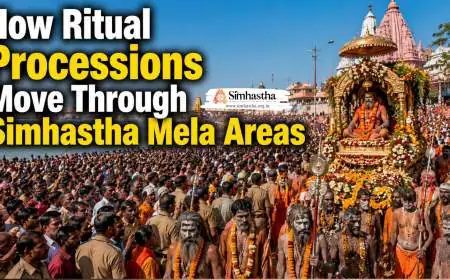



Which 84 Mahadev Temples Receive the Highest Footfall?
Discover which 84 Mahadev temples receive the highest footfall in Ujjain. From Mangalnath and Kumbheshwar to inner-city shrines like Siddheshwar, explore the most visited Shiva temples on the sacred Chaurasi circuit.



The Sacred Geography of Footfall and the Inner Circuit Advantage
The primary factor that determines a temple's popularity within the 84 Mahadev circuit is brutally simple: location. The inner circuit, comprising roughly twenty to twenty-five temples that are nestled within the city limits of Ujjain or on its immediate, walkable periphery, commands the overwhelming majority of pilgrim footfall. These temples are woven into the fabric of the city's daily ritual life. A pilgrim who has just emerged from the thundering Bhasma Aarti at Mahakaleshwar can, within a few minutes' walk, offer their prayers at Siddheshwar, Rameshwar, or Jageshwar without needing to negotiate transport or venture into the unknown. The auto-rickshaw drivers know them well, the flower sellers outside their gates do a brisk trade, and their names appear on the standard one-day pilgrimage itineraries that guide the vast majority of visitors. In contrast, the outer circuit temples—scattered across the rural landscape of Dewas, Indore, and Ratlam districts—demand a dedicated, multi-day journey. They require a private vehicle, a guide who knows the village roads, and a spirit of adventurous austerity that the average pilgrim, constrained by time and physical stamina, simply cannot afford. The geographical divide is the single greatest determinant of a temple's crowdedness or its silence, and the inner circuit is, by that measure, the perpetual winner. 🚶
Mangalnath: The Cosmic Anchor and the Mars Magnet
If a single temple were to be crowned the most visited among the 84 Mahadev, Mangalnath would hold the strongest claim. Perched on the serene banks of the Shipra, this shrine is not strictly an inner-city temple, being a short auto-rickshaw ride from the central zone, but its massive popularity transcends its location. The reason is its unique, unrivalled astrological specialization. Mangalnath is revered as the birthplace of the planet Mars (Mangal) , a belief deeply embedded in the Skanda Purana and the Matsya Purana. This cosmic connection transforms the temple from a simple Shiva shrine into a pan-Indian astrological remedy centre. Pilgrims afflicted by Mangal Dosh in their horoscopes, facing delays in marriage or career stagnation, travel from across the country to perform the pacification rituals here. The temple priests are constantly busy, conducting one Mangal Shanti puja after another, especially on Tuesdays, the day sacred to Mars, when the queues swell dramatically. Beyond its astrological pull, Mangalnath offers a spectacular, Instagram-famous sunset view over the Shipra, drawing a steady stream of non-ritual visitors who come simply for the beauty. The temple's association with the planet Mars gives it a distinct, crimson-hued identity, and its presence on almost every major Ujjain itinerary ensures a daily footfall that rivals, and on Tuesdays, surpasses, many of the city's centrally located shrines. It is the Jyotirlinga of the planetary realm, and its crowds are a testament to the enduring power of cosmic faith. 🔴
Kumbheshwar Mahadev: The Purifier of the Kumbh
The Kumbheshwar Mahadev temple holds a unique and prestigious position in the 84 Mahadev circuit, and its footfall reflects this. As its name suggests, the temple is intimately tied to the Kumbh Mela, the great festival of the sacred pot. The local tradition, echoing the Puranic narrative of the Samudra Manthan, holds that it was at this spot that the divine pot (kumbha) of amrit was first purified and sanctified. This makes Kumbheshwar not just another Shiva temple, but a powerful tirtha in its own right, a place where the accumulated spiritual merit of the Kumbh is accessible year-round. Located within the central city, it is easily reached from the Mahakaleshwar and Ram Ghat areas. During the Simhastha, its crowd swells to staggering proportions, as lakhs of pilgrims make it a mandatory stop on their parikrama. But even on an ordinary Monday in Shravan, the temple sees a dense, steady flow of devotees, many of whom are performing a specific, water-based abhishek that is believed to confer a special purification. The temple's modest architecture belies its immense ritual importance, and for the pilgrim who is "doing the 84," Kumbheshwar is a non-negotiable, high-priority stop. Its name is its advertisement, and the promise of the Kumbh's grace draws the faithful in a constant, unwavering stream. 🏺
The Inner Trinity: Siddheshwar, Rameshwar, and Jageshwar
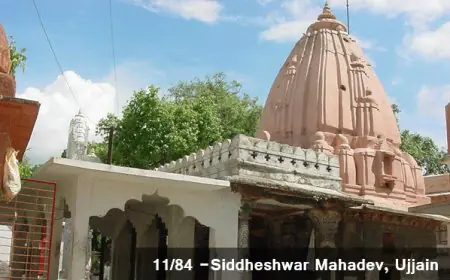
Within the winding lanes of the old city, a trio of temples absorbs a massive volume of the daily pilgrim traffic. Siddheshwar Mahadev, its name meaning "Lord of the Siddhas," is perhaps the busiest of the inner circuit after Mangalnath. Located a stone's throw from the Mahakal Lok corridor, it is virtually impossible for a pilgrim walking from the main temple to the ghats to miss. The temple is associated with the 84 Siddhas, the perfected yogic masters, and it is believed that a darshan here completes the spiritual benefit of the main Mahakaleshwar visit. The small, stone sanctum often has a line snaking out into the alley, the air thick with the chant of "Bam Bam Bhole." The walls of the temple are dark with centuries of lamp soot, and the lingam is perpetually wet with the water and milk of continuous abhishek. On a Monday, the crowd here is a solid, breathing mass of devotion.
Trending Guides Now

84 Mahadev Yatra in Ujjain: Complete Sacred Circuit Guide
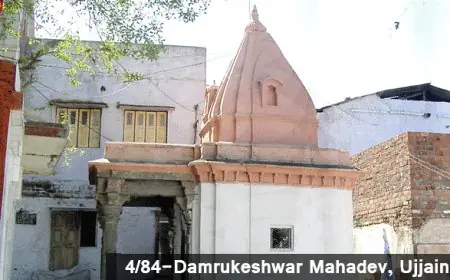
Shri Damrukeshwar Mahadev, Ujjain – The Divine Shiva Lingam Born from the Cosmic Damru Sound
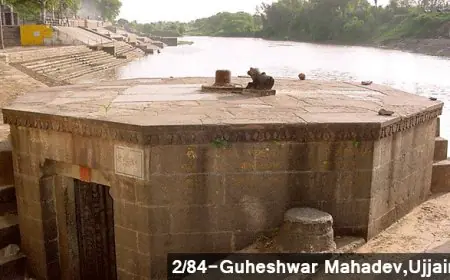
Guheshwar Mahadev Temple, Ujjain: The Sacred Cave of Lord Shiva
Shri Kapaleshwar Mahadev Ujjain – The Sacred Site Where Shiva’s Kapal Vrat Was Completed

Ujjain Railway Station to Mahakaleshwar Temple Distance (2026 Guide)

Ujjain Simhastha 2028 Dates Announced: Full Shahi Snan & Event Timeline

Mangalnath Temple Trip Budget: Puja, Local Transport, Food and Stay Planning

Omkareshwar Trip Budget Guide: Transport, Stay, Food and Local Travel Costs
A short walk away, Rameshwar Mahadev and Jageshwar Mahadev are similarly situated. Rameshwar, linked to the great Rama-Setu tradition, draws those seeking blessings for journeys and new beginnings. Jageshwar, the "Lord of the World," is a powerful, intimate shrine where the priest knows his regular congregation by name and where a visiting pilgrim can still, on a quiet Tuesday, have a moment of solitary prayer before the crowd returns. During the great Shaivite festivals—Mahashivratri and the Mondays of Shravan—these three temples become a single, interconnected river of pilgrims, their narrow approach lanes completely impassable. The footfall here is a different species from the wide, managed queues of Mangalnath; it is the raw, unmediated, shoulder-to-shoulder crush of ancient urban devotion, and for the pilgrim, navigating it is a spiritual practice in itself. 🏙️
The Festival Surge and the Great Equalizer
The footfall of the 84 Mahadev temples is not a static, evenly distributed phenomenon; it pulses in a dramatic, predictable rhythm according to the Hindu calendar. On a quiet Tuesday afternoon, even the busiest inner-city shrines are peaceful. But on a Monday in Shravan, or during the great vigil of Mahashivratri, the entire circuit transforms. The inner temples become crush zones, while even some of the more accessible outer temples see a sudden, dramatic influx of devotees. On these sacred days, the hierarchy of daily popularity breaks down. A remote temple like Trilochan Mahadev, perched on a beautiful, windy hillock outside the city, which normally sees only a handful of local villagers, will suddenly receive hundreds of pilgrims who have made the conscious, merit-laden decision to walk the extra miles. The Kumbh Mela is the ultimate festival surge, where the entire circuit, inner and outer, becomes a unified field of pilgrimage, and the footfall of every temple multiplies exponentially. For the pilgrim seeking solitude, the advice is simple: visit on a non-festival weekday, and you will have even the great Mangalnath largely to yourself. But for the pilgrim who seeks the full, collective roar of faith, the festival surge is the great equalizer, proving that every one of the 84 Mahadev, no matter how obscure, has its moment in the ecstatic, crowded sun. 📅
The Quiet Corners and the Contemplative Pilgrim's Reward
The vast majority of the 84 Mahadev temples, particularly those in the southern and western rural clusters, see a footfall that is measured in dozens, not hundreds, per day. Temples like Kameshwar Mahadev, hidden in a forest clearing, or Kapileshwar Mahadev, on a quiet Shipra confluence, are visited only by the most dedicated pilgrims who have specifically embarked on the full Chaurasi Mahadev yatra. The priests at these remote shrines are often delighted to see a new face, and they will welcome the pilgrim with a warmth and an unhurried grace that the priests at the crowded inner temples simply cannot afford. A darshan at these quiet temples is a completely different spiritual experience. There is no queue, no jostling, no pressure to move on. The pilgrim can sit before the lingam for twenty minutes, meditating in complete silence, the only sound the wind in the trees and the distant bark of a dog. The lingam, often a simple, ancient, naturally occurring stone, holds a raw, unmediated power. This is the hidden reward of the 84 Mahadev circuit: the discovery that the divine is present as fully in the empty, rain-washed village shrine as it is in the gold-adorned sanctum of the city. The low footfall is not a sign of lesser sanctity; it is a sign of a sacred silence that the crowd has not yet discovered, and for the contemplative pilgrim, that silence is the greatest gift. 🌿
The Circuit's Heartbeat and the Democracy of Shiva
The question of which 84 Mahadev temple receives the highest footfall is ultimately a question of human nature, of geography, and of the calendar. The inner-city temples, with their accessibility and their integration into the daily ritual of the city, are the perennial favourites. Mangalnath, with its powerful planetary pull, and Kumbheshwar, with its Kumbh connection, are the standout crowd-pullers. But the circuit, in its profound wisdom, is a complete mandala, and the crowded nodes and the silent, empty ones are all necessary, all sacred, and all equal in the eyes of Mahadev. The pilgrim who can only manage a quick visit to the busy inner temples receives the same grace as the one who has spent weeks traversing the dusty roads to the remote, forgotten shrines. The crowds of Mangalnath are a sea of faith, and the silence of Kameshwar is a single, perfect note. Both are the music of Lord Shiva, and Ujjain, the eternal city, holds them both within its ancient, beating heart. The next time you stand in a long queue at Siddheshwar or watch the sun set over the packed ghat at Mangalnath, remember the empty temple in the forest, where a single, unnamed priest is lighting a single, unwavering lamp, and know that the same, complete, and infinite Lord is present in both. 🔱
Frequently Asked Questions