































Shri Kapaleshwar Mahadev Ujjain – The Sacred Site Where Shiva’s Kapal Vrat Was Completed
Discover the ancient legend, spiritual significance, Brahma Kapal Vrat, and divine power of Shri Kapaleshwar Mahadev—the 8th temple in Ujjain’s 84 Mahadev circuit, where Lord Shiva was freed from the sin of Brahmahatya.
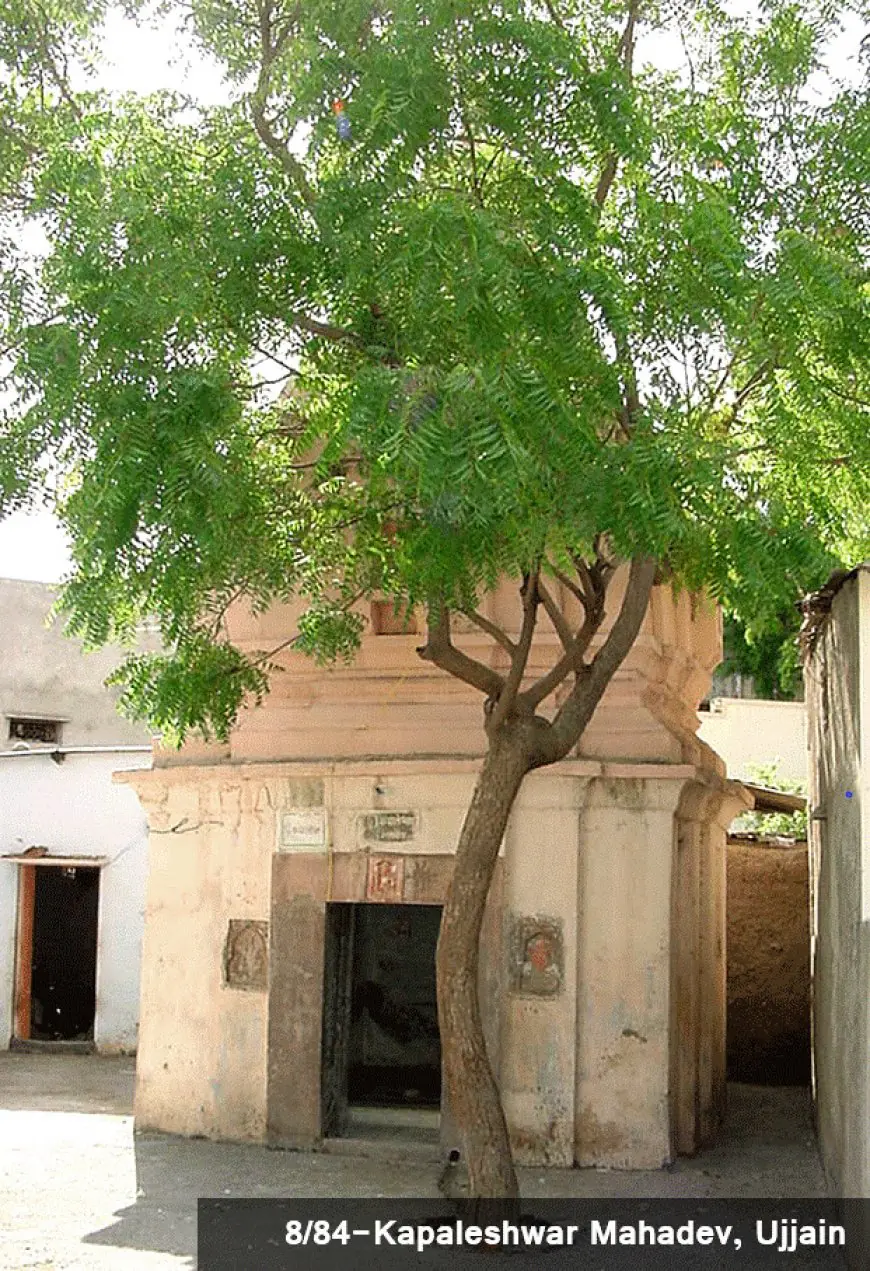


8/84 - Shri Kapaleshwar Mahadev — The Sacred Temple Where Shiva Was Freed From Brahmahatya
Ujjain, the eternal seat of Mahakal, is a city woven with the threads of cosmic energy, divine legends, and profound spirituality. Home to the sacred 84 Mahadev temples, Ujjain represents a rare spiritual grid where every linga narrates a unique story from ancient scriptures. Among these revered shrines, the eighth temple, Shri Kapaleshwar Mahadev, stands out as one of the most powerful and spiritually transformative temples in Mahakal Van.
This is the place where Lord Shiva himself attained liberation from the sin of Brahmahatya, making it one of the most important purification and redemption shrines in Hindu tradition.
Shri Kapaleshwar Mahadev is not just a temple—it is a living symbol of introspection, humility, repentance, and divine grace.
For Every pilgrims, understanding Simhastha 2028 dates and the official Shahi Snan timeline is essential before booking flights or accommodation, as these sacred dates are completely non-negotiable.
Trending Guides Now

84 Mahadev Yatra in Ujjain: Complete Sacred Circuit Guide
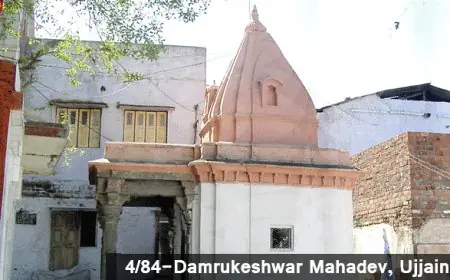
Shri Damrukeshwar Mahadev, Ujjain – The Divine Shiva Lingam Born from the Cosmic Damru Sound
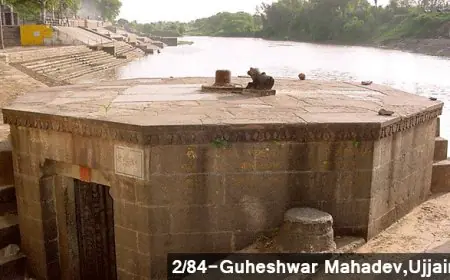
Guheshwar Mahadev Temple, Ujjain: The Sacred Cave of Lord Shiva
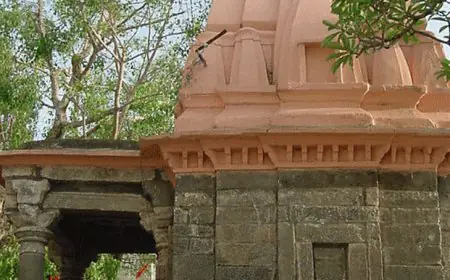
Shri Swarnajaleshwar Mahadev Ujjain – The Golden Flame of Shiva’s Divine Power

Ujjain Railway Station to Mahakaleshwar Temple Distance (2026 Guide)

Ujjain Simhastha 2028 Dates Announced: Full Shahi Snan & Event Timeline

Mangalnath Temple Trip Budget: Puja, Local Transport, Food and Stay Planning

Omkareshwar Trip Budget Guide: Transport, Stay, Food and Local Travel Costs
Sacred Shloka
तस्मिनक्षेत्रे महलिङ्गं गजरूपस्य सन्निधौ।
विद्यते पश्य देवेश ! ब्रह्महत्या प्रणश्यति।।
“O Lord of the gods! In that sacred region near Gajarupeshwar, there exists a great linga whose darshan destroys the sin of Brahmahatya itself.”
This shloka forms the divine basis of Kapaleshwar Mahadev’s immense power.
1. The Mythological Origin — Shiva’s Kapal Vrat
The story of Kapaleshwar Mahadev begins with a profound cosmic event.
During the Treta Yuga, a great yajna was being performed in Mahakal Van under the direction of Lord Brahma. Numerous sages, gods, and learned Brahmins were present. As the rituals progressed, suddenly Lord Shiva appeared—his body covered in sacred ash, serpents wrapped around him, and in his hand, he carried the skull (kapal) of Brahma.
The sight of Shiva holding Brahma’s severed head shocked the assembly. Many Brahmins became angry and demanded that Shiva leave the yajna immediately, calling him impure due to the sin of Brahmahatya.

Shiva spoke with utmost humility:
“O revered ones, I carry this skull as part of the Kapal Vrat to absolve myself of the sin of severing Brahma’s fifth head. Until this skull detaches from my hand, I remain impure. Allow me to sit in the yajna to purify myself.”
But the Brahmins refused.
Their refusal resulted in a divine event. The skull slipped from Shiva’s hand but instantly reappeared. When they attempted to strike it, innumerable skulls manifested around them. Terrified and overwhelmed, the Brahmins finally realized that they had misunderstood the Lord.
They repented and began chanting sacred hymns—Rudra Sukta, Shatarudriya, and various mantras—seeking Shiva’s forgiveness.
Moved by their devotion, Shiva revealed the truth.
Also Read | 84 Mahadev Yatra in Ujjain: Complete Sacred Circuit Guide
2. Why Shiva Carried Brahma’s Skull — The Deeper Story
Shiva explained:
“Once, Brahma’s ego had become so immense that he claimed supremacy over the Trimurti. I removed his fifth head to restore balance. But for this act, I incurred the sin of Brahmahatya, and the skull attached to my hand as a reminder of my karma.”
To atone, Shiva visited countless pilgrimage sites, performed austere penance, and traveled across realms—but the skull never detached.
At last, a divine voice said:
“Only in Mahakal Van, near Gajarupeshwar, lies a linga capable of dissolving the sin of Brahmahatya. Worship it sincerely.”
Shiva followed the divine command, reached Mahakal Van, and worshipped the sacred linga.
The moment Shiva gazed upon the linga, the skull detached and fell.
At that moment, the land shone with a celestial glow, and Shiva declared:
“This linga shall be known as Kapaleshwar—the destroyer of Brahmahatya, the purifier of sins, and the granter of liberation.”
Since then, this linga is revered as Shri Kapaleshwar Mahadev, one of the most powerful and spiritually liberating shrines in Ujjain.
3. Spiritual Meaning — The Symbolism of the Kapal
The story of Kapaleshwar is not merely an ancient legend—it is a profound philosophical teaching.
The Kapal (skull)
represents ego, ignorance, accumulated karma, and the burden of pride.
Shiva’s Kapal Vrat
symbolizes the inner journey of confronting one’s mistakes, accepting responsibility, and seeking purification.
Kapaleshwar Mahadev
represents the divine power that dissolves:
-
Ego
-
Impurities
-
Negative karma
-
Past transgressions
The temple teaches:
“Even the greatest souls undergo purification; no one is beyond truth, karma, or accountability.”
Thus, Kapaleshwar Mahadev becomes a powerful center of inner cleansing and spiritual renewal.
4. Location – Kapaleshwar in Mahakal Van
???? Location: Bilotipura, near Rajput Dharamshala, Ujjain, Madhya Pradesh
Close to Gajarupeshwar Mahadev
The temple lies within the ancient Mahakal Van area—one of the holiest zones in Ujjain.
Temple Features
-
Ancient Shiva Linga situated in a serene shrine
-
Constant water abhishek
-
Deep spiritual vibration
-
Peaceful surroundings ideal for meditation
-
Priests chanting Shiva stotras throughout the day
Devotees report an immediate sense of calm and purity upon entering the temple’s aura.
5. Worship, Rituals, and Significance
Shri Kapaleshwar Mahadev is especially revered for Paap-mochan (removal of sins).
Most auspicious days
-
Chaturdashi
-
Shravan month
-
Mahashivratri
-
Pradosh Vrat
Common rituals
-
Jalabhishek (water offering)
-
Bilva patra puja
-
Rudrabhishek
-
Chanting “Om Kapaleshwaraya Namah”
-
Lighting a ghee lamp for inner purification
Devotees believe:
“A single sincere abhishek here can wash away years of negative karma.”
6. Importance within 84 Mahadev Circuit
Being the 8th Mahadev in the 84 Mahadev Parikrama, Kapaleshwar is considered a mandatory stop for:
-
Purification
-
Karma cleansing
-
Moksha (liberation)
-
Protection from negative energies
It is said that no Mahakal pilgrimage is complete without visiting this sacred linga.
7. Divine Essence — The Power of Redemption
Kapaleshwar Mahadev teaches humanity:
“No matter the depth of your mistakes, sincere repentance brings divine grace.”
This temple stands as a symbol of:
-
Redemption
-
Renewal
-
Humility
-
Spiritual awakening
Even Lord Shiva underwent purification at this spot—making Kapaleshwar Mahadev a shrine of unparalleled sanctity.
84 Mahadev Ujjain Yatra Guides :
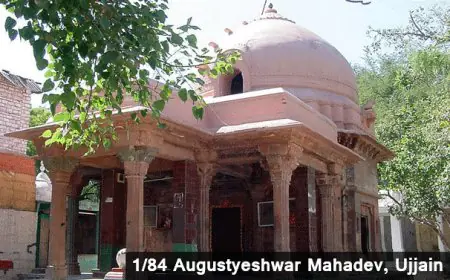
- 01/84 - Agastyeshwar Mahadev Temple
- 02/84 - Guheshwar Mahadev Temple, Ujjain
- 03/84 - Dhundheshwar Mahadev Temple, Ujjain
- 04/84 - Shri Damrukeshwar Mahadev, Ujjain
- 05/84 - Shri Anadikalpeshwar Mahadev, Ujjain
- 06/84 - Shri Swarnajaleshwar Mahadev Ujjain
- 07/84 - Shri Trivishtapeshwar Mahadev Ujjain
- 08/84 - Shri Kapaleshwar Mahadev Ujjain
- 09/84 - Shri Swargadwareshwar Mahadev Ujjain
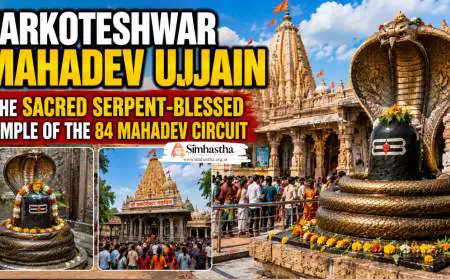
- 10/84 - Karkoteshwar Mahadev Ujjain
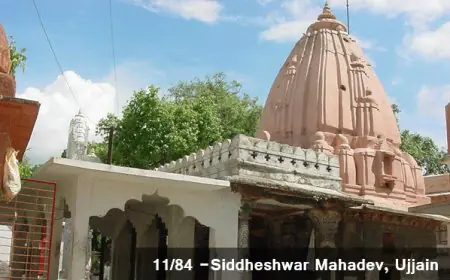
- 11/84 - Siddheshwar Mahadev Ujjain
Frequently Asked Questions