






























Shri Swargadwareshwar Mahadev Ujjain – The Sacred Gateway to Heaven in the 84 Mahadev Circuit
Explore the divine origin, Daksha Yagya legend, celestial worship, and spiritual power of Shri Swargadwareshwar Mahadev—the 9th temple of Ujjain’s 84 Mahadev, believed to grant liberation and the gateway to heaven.
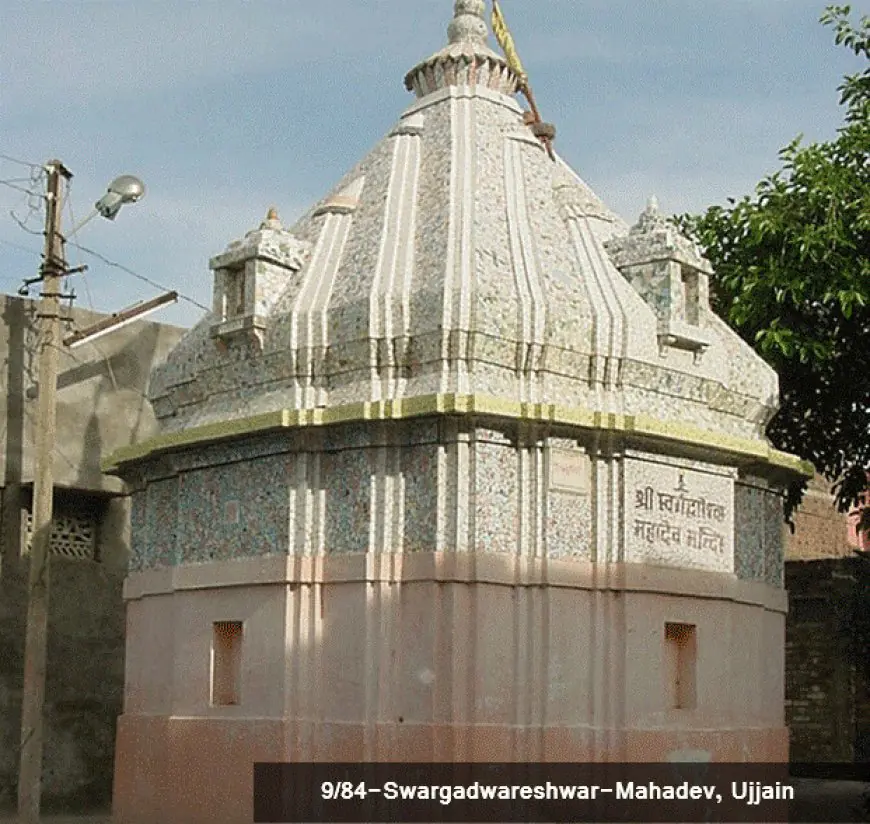


9/84 - Shri Swargadwareshwar Mahadev - The Divine Gateway to Heaven in Mahakal Van
Ujjain, the ancient spiritual city of Mahakal, is home to the divine cluster of the 84 Mahadev temples, each representing a unique manifestation of Lord Shiva. These sacred lingas embody cosmic stories, divine interventions, and timeless spiritual teachings. Among them, the 9th Mahadev, Shri Swargadwareshwar Mahadev, stands as a profound symbol of liberation, divine justice, and the heavenly path itself.
This is the temple where even the gods received the gateway to Swarga (heaven) after worshipping Lord Shiva. Swargadwareshwar Mahadev is one of the rarest temples where both removal of sins and attainment of heaven are simultaneously granted through Shiva’s grace.
For Every pilgrims, understanding Simhastha 2028 dates and the official Shahi Snan timeline is essential before booking flights or accommodation, as these sacred dates are completely non-negotiable.
1. Sacred Shloka and Its Meaning
स्वर्गद्वारेश्वर लिङ्ग नवमं सिद्धि पार्वती।
सर्व पाप हरं देवि स्वर्ग मोक्ष फल प्रदम।।
Trending Guides Now
Karkoteshwar Mahadev Ujjain – The Sacred Serpent-Blessed Temple of the 84 Mahadev Circuit
Shri Anadikalpeshwar Mahadev, Ujjain – The Eternal Form of Shiva Among the 84 Mahadev Shrines
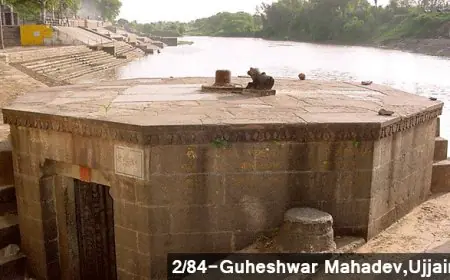
Guheshwar Mahadev Temple, Ujjain: The Sacred Cave of Lord Shiva
Shri Kapaleshwar Mahadev Ujjain – The Sacred Site Where Shiva’s Kapal Vrat Was Completed

Ujjain Railway Station to Mahakaleshwar Temple Distance (2026 Guide)

Ujjain Simhastha 2028 Dates Announced: Full Shahi Snan & Event Timeline

Mangalnath Temple Trip Budget: Puja, Local Transport, Food and Stay Planning

Omkareshwar Trip Budget Guide: Transport, Stay, Food and Local Travel Costs
“O Parvati! The ninth linga in Mahakal Kshetra is Swargadwareshwar. The mere darshan of this linga destroys all sins and grants both heaven and liberation.”
This shloka beautifully summarizes the spiritual essence of this powerful temple.
2. The Great Legend — Daksha Yagya and the Celestial War
The divine origin of Swargadwareshwar Mahadev is linked to one of the most significant events in Hindu cosmology: the Daksha Yagya, which led to the death of Sati and the wrath of Lord Shiva.
Sati’s Anguish at the Yagya
Daksha Prajapati organized an enormous yajna. He invited all gods, sages, and celestial beings—except Shiva and Sati.
Despite Shiva’s advice, Sati went to the yajna out of filial duty. But what she found there filled her with unbearable pain:
-
No seat reserved for Shiva
-
Ridicule from Daksha

-
Open insults directed toward Mahadev

Unable to tolerate the humiliation of her beloved Lord, Sati entered the fire and gave up her life.
When Shiva learned that Daksha had insulted him and caused Sati’s death, his grief turned into cosmic fury.
Also Read | 84 Mahadev Yatra in Ujjain: Complete Sacred Circuit Guide
3. Shiva’s Wrath Unleashed — Birth of Veerbhadra
Shiva, in a moment of immense rage, struck the ground with his matted locks.
From this energy emerged:
-
Veerbhadra, a fierce form of Shiva
-
Bhadraakali, the manifestation of divine wrath
Shiva commanded:
“Destroy the arrogance of Daksha. End this sacrilegious yajna!”
Veerbhadra, along with countless ganas, stormed the yajna. A catastrophic war began.
Battle Between the Devas and Shiva’s Ganas
Indra, Agni, Varuna, and many devas attempted to stop Veerbhadra, but the ganas overpowered them.
Indra was struck unconscious.
Countless devas were defeated.
Desperate, the gods fled to Lord Vishnu for protection.
4. Vishnu Intervenes
Lord Vishnu entered the battlefield with his Sudarshan Chakra.
The chakra whirled with immense force, destroying numerous ganas.
But Veerbhadra, protected by Shiva’s boon, remained unaffected.
A fierce combat began between Veerbhadra and Vishnu, shaking the heavens, earth, and the underworld.
Veerbhadra’s power stunned Vishnu, who eventually withdrew and followed the ganas back to Mahakal Van.
5. Shiva’s Command — “Let No God Enter Heaven!”
Seeing Vishnu appear before him, Shiva calmed his cosmic anger.
But he was deeply disappointed with the devas for supporting Daksha’s arrogance.
Shiva declared:
“Until I permit, my ganas shall guard the gates of Swarga. No deity shall enter heaven.”
The devas were terrified.
Heaven’s gates—Swargadwar—were now sealed.
Deprived of their celestial abode, the gods roamed helplessly, unable to access Swarga.
6. The Gods Seek Brahma’s Help
The devas rushed to Brahma and pleaded:
“Father of creation, we are barred from heaven.
Please show us the path to forgiveness.”
Brahma responded gently:
“Only Shiva can open the gates.
Go to Mahakal Van and worship the linga located east of Kapaleshwar.
Your sincere prayers will please him.”
Thus, the devas journeyed to the sacred forest of Mahakal.
7. Establishment of Swargadwareshwar Mahadev
Upon reaching Mahakal Van, the gods found a radiant linga.
They offered:
-
Flowers
-
Water
-
Chandan
-
Bilva leaves
Their prayers were humble, sincere, and filled with repentance.
Pleased with their devotion, Shiva appeared and said:
“This place shall be known as Swargadwar—the gateway to heaven.
Those who worship this linga shall attain Swarga and liberation.
Your path is now open.”
He withdrew his ganas, and the devas finally returned to heaven.
Since then, the linga worshipped by the gods has been revered as:
Shri Swargadwareshwar Mahadev — The Gateway to Heaven
8. Spiritual Significance
Worship at Swargadwareshwar Mahadev is said to grant:
-
Removal of sins
-
Freedom from fear and sorrow
-
Heavenly bliss in this life and the next
-
Spiritual elevation
-
Liberation (Moksha)
This linga symbolizes the mercy and grace of Shiva, who opens the doorway to higher realms for those who repent sincerely.
9. Symbolism — What Does “Swargadwar” Mean?
Swargadwar literally means:
“The gate that opens to heaven.”
Spiritually, this represents:
-
A higher state of consciousness
-
Victory over worldly suffering
-
Attainment of divine peace
-
Freedom from karmic bondage
The temple teaches:
“Heaven is not merely a place—it is a state of purity achieved through devotion and humility.”
10. Location of the Temple
Location: Behind Khandar Mohalla, near Naliyabakhla, Ujjain, Madhya Pradesh
A peaceful, ancient setting surrounded by older temples and sacred spots of Mahakal Van.
Most devotees visit Swargadwareshwar Mahadev immediately after Mahakaleshwar Darshan to complete their spiritual journey.
11. Worship Practice and Rituals
Best days for worship
-
Ashtami
-
Chaturdashi
-
Mondays
-
During Shravan
Common rituals
-
Jalabhishek
-
Bilva Patra offering
-
Deepdan
-
Chanting “Om Swargadwareshwaraya Namah”
-
Rudrabhishek
Pilgrims believe that sincere worship here opens the spiritual path to Swarga.
12. Divine Essence
The temple’s central message is profound:
“Heaven opens only when ego closes.”
The gods attained Swarga only after surrendering their pride and seeking Shiva’s forgiveness.
Thus, Swargadwareshwar Mahadev inspires devotees to:
-
Let go of ego
-
Embrace humility
-
Seek divine grace
-
Walk toward liberation
This shrine represents both celestial reward and spiritual cleansing.
84 Mahadev Ujjain Yatra Guides :
-
- 01/84 - Agastyeshwar Mahadev Temple
- 02/84 - Guheshwar Mahadev Temple, Ujjain
- 03/84 - Dhundheshwar Mahadev Temple, Ujjain
- 04/84 - Shri Damrukeshwar Mahadev, Ujjain
- 05/84 - Shri Anadikalpeshwar Mahadev, Ujjain
- 06/84 - Shri Swarnajaleshwar Mahadev Ujjain
- 07/84 - Shri Trivishtapeshwar Mahadev Ujjain
- 08/84 - Shri Kapaleshwar Mahadev Ujjain
- 09/84 - Shri Swargadwareshwar Mahadev Ujjain
- 10/84 - Karkoteshwar Mahadev Ujjain
- 11/84 - Siddheshwar Mahadev Ujjain
Frequently Asked Questions