



































Why Chintaman Ganesh Is Known as the Wish-Fulfilling Deity
Discover why Chintaman Ganesh is known as the wish-fulfilling deity in Ujjain. Explore the ancient legend, the meaning of his name, powerful rituals, and the unbroken tradition of devotees finding their prayers answered at this sacred temple.


The Meaning Behind the Name Chintaman and the Promise of Worry-Free Devotion
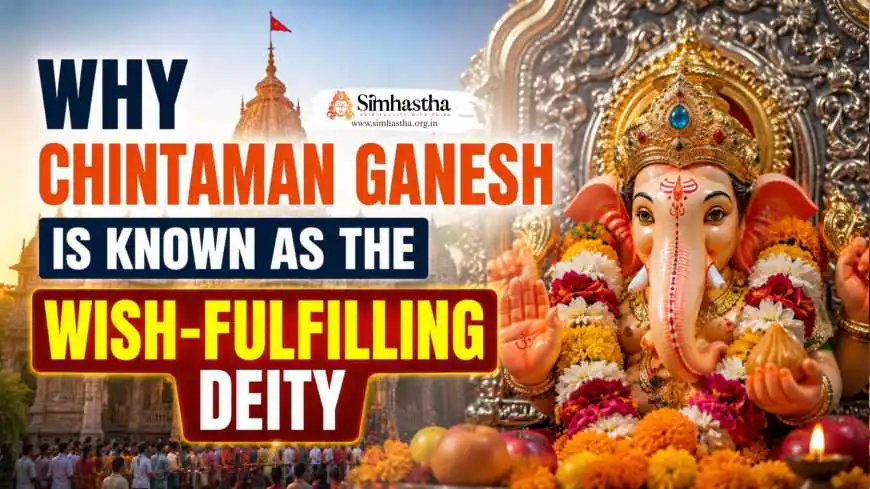
The word Chintaman is a compound of two Sanskrit terms: Chinta, meaning worry, anxiety, or the restless, agitated thoughts that cloud the mind, and Mani, meaning a jewel or gem. In Hindu mythology, the Chintamani is the fabled, wish-fulfilling gem that grants its possessor whatever they desire. By naming the deity Chintaman Ganesh, the ancient seers and the Puranic texts declared, with absolute clarity, that this particular form of the elephant-headed god is not merely a passive recipient of prayers but an active, cosmic jewel of consciousness that absorbs the devotee's mental anguish and transfigures it into the radiant clarity of fulfilled intention. He does not just grant wishes; he first removes the worry that is the primary obstacle to the wish's manifestation. The temple, known locally as Bade Ganeshji Ka Mandir due to the sheer, magnificent size of the main idol, is considered the most powerful Ganesh shrine in Ujjain, a city already overflowing with divine energy. The title Chintaman is not an epithet of adornment; it is a statement of function, a daily, operational reality for the thousands who whisper their problems into the deity's large, listening ears. 💎
The Skanda Purana Connection and the Wish-Fulfilling Gem of Faith
The primary scriptural anchor for the wish-fulfilling nature of Chintaman Ganesh lies in the Skanda Purana's Avanti Khanda, the same sacred text that maps the entire spiritual geography of Ujjain. The Purana describes how Lord Ganesh, pleased with the intense penance of a devoted sage (some traditions name him as the sage Bhrigu, others as a local king overwhelmed by sorrow), manifested himself in this very spot. The sage, tormented by the anxieties of the world and the suffering of humanity, begged for a solution. The compassionate Ganesh, in his infinite wisdom, declared that from that moment on, he would reside here as Chintaman, the jewel who eats worry. He promised that any devotee who approached him with a sincere heart, and who symbolically or literally offered their anxieties to him, would find those mental burdens dissolved, and their rightful, dharmic wishes granted. This Puranic promise is the bedrock of the temple's fame. It transforms the act of prayer from a desperate plea into a confident transaction of faith: the devotee deposits their worry at the feet of the Lord, and in return, receives the calm, focused energy required to move forward in life. The Chintamani is not a physical stone here; it is the deity himself, a living, pulsating gem of compassion. 📜
The Legend of the Worried King and the Divine Rescue
Beyond the Puranic framework, a deeply beloved local legend has been passed down through generations of Ujjain's priests and residents, giving the temple its intimate, accessible, and profoundly human texture. The story tells of a kind but deeply troubled king, often named Chintamani, who ruled a small kingdom near the Shipra. Despite his wealth and power, the king was perpetually consumed by a relentless, gnawing anxiety. He worried about his subjects, about invasions, about the fidelity of his ministers, about the meaning of his own life. His chinta grew so vast that it began to physically sicken him, and the kingdom's prosperity waned under the shadow of its melancholic ruler. On the advice of his guru, the king went to the sacred banks of the Shipra and began a severe penance to Lord Ganesh. He sat without food or water, simply pouring out his endless list of fears, his heart a storm of "what ifs." Pleased with the king's raw, unpolished honesty, Ganesh appeared not in a fearsome, cosmic form, but with a gentle, knowing smile. He touched the king's forehead, and in an instant, the churning, anxious thoughts stilled. The king felt a profound, unshakeable peace. Ganesh told him that he would forever be known at this place as Chintaman, the one who freed the king from his chinta. The king, his mind now crystal clear, went on to rule with wisdom and justice, and his transformed life became the first, enduring testament to the deity's power. This legend makes the temple profoundly personal for every visitor. Every devotee is the worried king, and every sincere prayer is the penance that invites the divine touch of peace. 👑
The Swayambhu Idol and the Unbroken Lineage of Miracles
The deity of Chintaman Ganesh housed in the temple is not an ordinary sculpture commissioned by a patron. It is widely revered as a swayambhu, a self-manifested image that emerged from the earth by its own divine will. The idol is massive, a commanding, majestic form of Ganesh with a broad, serene face painted in the sacred orange-red hue of sindoor. His eyes are large, half-closed in a meditative, all-seeing gaze, and his trunk is curled to the left, the direction traditionally associated with the calming, lunar energy of the mother, making him an approachable, gentler aspect of the deity. The sheer physical scale of the idol, from which the temple derives its popular name Bade Ganeshji, is itself a visual sermon. It conveys the immense, mountain-like strength that the deity possesses, a strength that can effortlessly shoulder the burdens of an entire universe of devotees. The unbroken lineage of the temple priests, who have served for generations, are the custodians of countless stories of miracles. They will quietly recount tales of childless couples who were blessed with a child after tying a sacred thread here, of businessmen facing ruin who recovered, and of chronic illnesses that inexplicably healed. These are not sensationalized claims; they are offered as quiet, matter-of-fact evidence that the Chintaman Ganesh of Ujjain is, and always has been, actively fulfilling the promise of his name. 🐘
Trending Guides Now

Why Chintaman Ganesh Temple Remains Important for Local Families

Why Chintaman Ganesh Temple Remains Relevant in Modern Times
Why Devotees Visit Chintaman Ganesh Before New Beginnings

Why Chintaman Ganesh Temple Is Popular Among Families

Ujjain Railway Station to Mahakaleshwar Temple Distance (2026 Guide)

Ujjain Simhastha 2028 Dates Announced: Full Shahi Snan & Event Timeline

Mahakaleshwar Sandhya Aarti Online Booking 2026: Fee, Timings, Entry Gate and Step-by-Step Process

Mangalnath Temple Trip Budget: Puja, Local Transport, Food and Stay Planning
The Rituals That Amplify Your Prayers at Chintaman Ganesh
The temple has a set of simple, yet profoundly symbolic, rituals that devotees perform to align their own energy with the wish-fulfilling nature of the deity. The most common and deeply moving practice is the offering of a coconut and a garland of marigold flowers. The coconut, with its hard outer shell and sweet inner water, represents the devotee's ego—the hard, protective exterior that must be broken in surrender to reveal the pure, sweet devotion within. Placing the coconut at the feet of the Lord is a physical act of offering one's entire being. The second powerful ritual is the tying of a sacred red thread (mouli) or a nada (sacred cord) around the ancient banyan tree in the temple courtyard, or on the metal bars of the shrine's window. The devotee ties the thread while whispering a specific, clear wish or a prayer for the removal of a specific worry, making a silent sankalpa. The belief is that Chintaman Ganesh himself receives the thread and that it serves as a constant, physical reminder of the prayer, fluttering in the breeze day and night. A special puja, often performed on Wednesdays (the day of Ganesh), involves the offering of durva grass (a specific three-bladed grass sacred to Ganesh), modak (a sweet dumpling believed to be his favorite), and red sandalwood paste. For those experiencing a particularly acute period of anxiety or a stalled project, a priest can perform a Chintaman Shanti Puja, which involves the chanting of specific Vedic mantras to pacify the mental afflictions and invoke the deity's direct intervention. 🥥
The Temple's Place in Ujjain's Sacred Circuit and Its Link to Mahakal
The location of Chintaman Ganesh, a mere five-minute walk from the Mahakaleshwar Jyotirlinga, is theologically deliberate and spiritually strategic. In the ancient logic of pilgrimage, you do not proceed directly to the great lord of the city before first paying your respects to his son and the remover of all obstacles. The traditional and highly recommended circuit, especially for a one-day pilgrimage, begins at Mahakaleshwar for the Bhasma Aarti, and then immediately proceeds to Chintaman Ganesh. This sequence is a profound act of spiritual housekeeping. You have received the fierce, transformative grace of Shiva; you now need Ganesh to clear the path of any remaining internal or external hurdles, and to bless the journey so that the rest of your day's darshan unfolds smoothly. From Chintaman Ganesh, the pilgrim walks on to the radiant Shakti shrine of Harsiddhi Mata, completing the sacred triangle of Shiva, Ganesh, and the Goddess. This integration of the temple into the very first step of the Ujjain darshan circuit is a testament to its essential, non-negotiable role. Pilgrims know that to bypass Chintaman Ganesh is to risk letting an unaddressed obstacle or an unresolved worry sabotage the spiritual fruits of their entire pilgrimage. 🛕
Common Mistakes and How to Approach the Remover of Obstacles
Approaching a deity whose primary function is to remove obstacles requires a specific, nuanced mindset that many first-time visitors miss. The most common mistake is to treat the Lord as a magical vending machine, arriving with a long, frantic list of material demands without first addressing the inner, mental clutter that created those obstacles in the first place. Chintaman Ganesh does not just grant wishes; he first removes the chinta, the worry that poisons the wish. The correct approach is to begin your prayer not by demanding a new job, but by offering the anxiety and fear you feel about your current unemployment. Another frequent error is to neglect the simple, preliminary act of honoring the deity's vahana. A small, often unnoticed mouse sits near the main idol, and the mouse, as the vehicle of Ganesh, represents the restless, nibbling, and often unseen desires of the mind. A devotee who acknowledges the mouse, and who asks the Lord to master their own inner rodent-like, scurrying thoughts, is performing a deeper, more effective ritual than one who simply offers a coconut. The final common misstep is to leave the temple in a rush, immediately getting back on one's phone and re-immersing in the stress of the day. After darshan and offering your prayer, sit in the temple courtyard for at least ten minutes. The peace you feel in that quiet space is the first, most tangible fulfillment of your prayer. The worry has been lifted; the calm is the first gift. Absorb it fully before you step back into the world. 🐭
The Emotional and Spiritual Experience of a Chintaman Ganesh Darshan
There is a distinct, almost maternal softness to the atmosphere within the Chintaman Ganesh temple that is markedly different from the raw, unblinking power of the city's Shaivite shrines. The orange-red glow of the massive idol, the gentle, rhythmic chanting of the Ganesh Atharvashirsha, the sight of countless red threads fluttering in the breeze like a field of poppies—all of this creates an emotional container that is uniquely soothing. Devotees are often seen weeping quietly, not from grief alone, but from the overwhelming relief of being able to place a long-held, heavy worry into a set of divine hands that finally feel big enough to hold it. The experience is one of deep, visceral unburdening. The hope here is not the frantic, gasping hope of a last resort, but a calm, steady, and confident hope, the hope of a child who has told their problem to a loving father and knows, with absolute certainty, that it will be taken care of. This emotional transformation, from anxiety to peace, is the true "wish fulfillment" for many. The desired outcome—the job, the marriage, the health—often follows, but it is the gift of a quiet mind that proves to be the most profound and life-changing miracle. 😌
Practical Guide for Pilgrims Visiting Chintaman Ganesh Temple
The temple is located in the bustling Gopal Mandir area, just off the main Mahakal Marg, and is easily walkable from the Mahakaleshwar Temple. The darshan is quick and intimate, and there is rarely an overwhelming queue, making it a calm and accessible shrine even during peak festival seasons. The temple opens around 6:00 AM and closes by 10:00 PM, with a brief closure in the afternoon. Wednesdays and the Ganesh Chaturthi festival see the largest crowds and the most vibrant energy, with special aartis and a magnificent decoration of the idol. The offerings can be purchased from the small stalls right outside the temple gate at a reasonable price. Carry a small amount of cash for the dakshina and the puja thali. Dress modestly, as you would for any Ujjain temple. As this is often the first stop after Mahakaleshwar, wear comfortable slip-on footwear that you have already removed multiple times. The most beautiful time to visit is in the early morning, when the temple has just opened and the first rays of the sun illuminate the great, benevolent face of Bade Ganeshji. 🙏
The Eternal Promise of the Elephant-Headed God
The name Chintaman is not merely a title; it is a promise, a sacred, enduring contract between the deity and the devotee. It is the assurance that in the heart of this ancient, chaotic, and magnificent city of Mahakal, there exists a quiet, steady, and infinitely compassionate presence whose sole purpose is to listen, to absorb, and to transform. The elephant-headed god, with his vast ears, hears every whispered prayer. With his powerful trunk, he lifts away the boulders of anxiety that block the path. And with his small, wise eyes, he sees the truth behind the request, granting not always what we ask for, but what we most deeply need. To sit in his courtyard, to offer a coconut and a thread, and to feel, even for a fleeting moment, the complete evaporation of a lifelong worry, is to understand, directly and irreversibly, why Chintaman Ganesh is known as the wish-fulfilling deity. He fulfills wishes by first granting the peace that is the wish of every soul. And that peace, once received, is a chintamani that you carry with you, shining and unbreakable, for the rest of your life. 🔱🐘

Frequently Asked Questions