
























Which Sapta Puri Is the Most Visited by Pilgrims Today
Discover which Sapta Puri is the most visited by pilgrims today. Compare Varanasi, Ujjain, Haridwar, Mathura, Ayodhya, Dwarka, and Kanchipuram’s footfalls, spiritual magnetism, and modern accessibility.


The Unending River of Souls: Why Varanasi Tops the Pilgrim Footfall
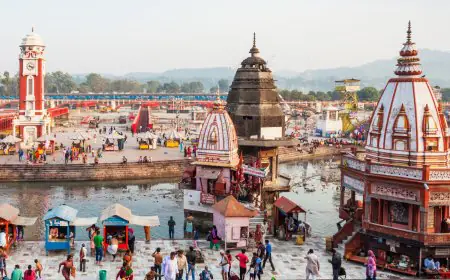
Varanasi is not merely a city that receives pilgrims; it is a city that is itself a living, breathing pilgrimage. The numbers, gathered from the Uttar Pradesh Tourism Department and the Shri Kashi Vishwanath Temple Trust, are staggering. In 2023 alone, over 11 crore (110 million) visitors passed through the city, with a significant proportion making their way to the Kashi Vishwanath Dham. The magnificent Kashi Vishwanath Corridor, inaugurated in late 2021, has acted as a force multiplier, expanding the temple’s capacity many times over and converting what was once a crush-prone experience into a managed, aesthetically uplifting flow of up to two lakh pilgrims on an average day. On festivals like Mahashivratri, the daily count explodes into the millions.
What separates Varanasi from every other Sapta Puri is the absence of an off-season. Haridwar’s phenomenal crowds are heavily concentrated around the Kumbh Melas, the Kanwar Yatra, and the summer pilgrimage months. Ujjain’s population swells into the crores once every twelve years during the Simhastha, but its daily rhythm is far more subdued. In Kashi, there is no quiet Tuesday. There is no empty ghat. The great cremation fires at Manikarnika burn without pause, and the Ganga Aarti at Dashashwamedh Ghat is a standing-room-only spectacle every single evening. The city is a spiritual vortex that sucks in the dying, the curious, the scholarly, and the devout from every corner of the subcontinent, all day, every day, and this relentless, daily density of devotion is what makes it the undisputed most-visited Sapta Puri. 📊
The Seven Doors to Moksha and the Geography of Devotion
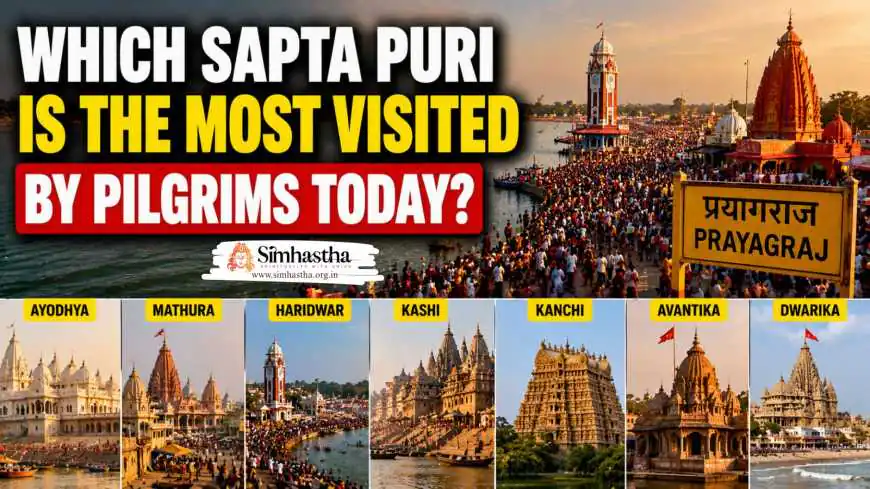
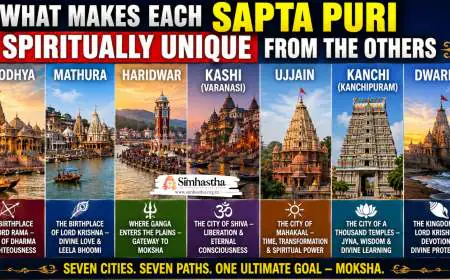
To understand Varanasi’s primacy, one must first appreciate the field of contenders. The Sapta Puris, as enumerated in the Garuda Purana and other sacred texts, are Ayodhya, Mathura, Maya (Haridwar), Kashi (Varanasi), Kanchi (Kanchipuram), Avantika (Ujjain), and Dvaravati (Dwarka) . They are the seven sacred geography points that guarantee moksha, liberation from the cycle of rebirth, to those who die within them. Each is a powerhouse of a particular divine mood. Ayodhya is the solar kingdom of Rama; Mathura, the joyous playground of Krishna; Haridwar, the celestial gateway where the Ganga leaves the mountains; Ujjain, the city of the cosmic clock and Mahakal; Dwarka, the golden, sea-girt kingdom of Krishna the king; and Kanchi, the serene, temple-studded seat of the Goddess and Shiva.
Yet, across the span of a calendar year, the visitor numbers diverge dramatically. While each is supremely sacred, only a few have transformed into accessible, mass-pilgrimage hubs with 21st-century transport infrastructure. The cities that combine ancient sanctity with modern connectivity—airports, expressways, and high-capacity railway lines—inevitably draw the largest crowds. Varanasi leads the pack, but Haridwar, Mathura, and Ujjain are formidable challengers in their own specific seasons, and Ayodhya is currently rewriting the record books with a speed that may, in the coming decade, alter the entire ranking. 🛕
Trending Guides Now

Mathura – Shri Krishna Janmabhoomi: The Birthplace of Lord Krishna and One of Hinduism’s Most Sacred Cities
Kanchipuram: The Sacred City of Temples, Spirituality, and Heritage
What Makes Each Sapta Puri Spiritually Unique From the Others

Ujjain: The Sacred City of Lord Shiva and the Spiritual Heart of India

Ujjain Railway Station to Mahakaleshwar Temple Distance (2026 Guide)

Ujjain Simhastha 2028 Dates Announced: Full Shahi Snan & Event Timeline

Mahakaleshwar Sandhya Aarti Online Booking 2026: Fee, Timings, Entry Gate and Step-by-Step Process
Kal Bhairav Temple Darshan Guide: Entry, Timings and Tips
Kashi: The Eternal City Where Death Brings Crowds, Not Silence
The unique, and to some, paradoxical, allure of Kashi is that it is a city of death. Hindu tradition holds that to die in Varanasi, and to be cremated on its sacred ghats, is to achieve moksha instantly, skipping the entire complex machinery of karmic rebirth. This draws an immense, unquantifiable number of elderly and terminally ill pilgrims to the city, not as tourists but as final pilgrims who have come to shed their mortal coil. They are joined by their families, who stay in the city’s countless mukti bhawans and dharamshalas, creating a permanent floating population of the death-pilgrims. This demographic is unique to Varanasi; no other Sapta Puri draws so many souls for this specific, final purpose.
Additionally, Kashi is the cultural and educational capital of classical Hinduism. The presence of Banaras Hindu University, the great seats of Sanskrit learning, the weaver communities, the musicians, and the storytellers creates a parallel stream of non-pilgrim visitors who eventually become pilgrims. The city’s place in the global imagination, immortalized by writers like Mark Twain and countless photographers, makes it a destination for even the spiritually uninitiated. This vast, diverse, and continuous influx—the dying grandmother, the foreign backpacker, the NRI teen on a roots journey, the classical musician paying homage, the politician seeking the Ganga’s blessing—converges to create a footfall that is unmatched in its round-the-clock, round-the-calendar constancy. 🔱
Haridwar and Ujjain: The Kumbh Effect and the Tidal Wave of Faith
If the measurement were limited to a single event, Haridwar would be the undisputed global champion of human gathering. The Haridwar Kumbh Mela, celebrated every twelve years, attracts a number of pilgrims that defies comprehension; the 2021 Kumbh, held during a pandemic, still drew millions upon millions to the banks of the Ganga at Har Ki Pauri. For those few weeks, the population of the Sapta Puri of Maya becomes the largest temporary city on earth. The daily Ganga Aarti at Har Ki Pauri is a thunderous, electrifying ritual, and the constant flow of pilgrims from Delhi, Uttar Pradesh, and beyond keeps the city bustling. However, outside of the Kumbh year and the peak summer pilgrimage season (Kawar Yatra), Haridwar’s footfall slows to a rhythm that, while still immense by any normal standard, does not match the relentless, furnace-like heat of Varanasi’s daily devotion.
Ujjain occupies a similar tidal position. The city of Mahakal is the seat of one of the twelve Jyotirlingas and the site of the Simhastha Kumbh Mela, which sees the city’s population multiply by a factor of a hundred. The daily Bhasma Aarti draws a dedicated, pre-dawn crowd, and the Mahakal Lok corridor has significantly enhanced the year-round pilgrim experience. Yet, in a non-Kumbh year, Ujjain’s annual footfall is far more modest, often measured in the tens of millions, not the hundreds. The city’s deep, tantric energy attracts the serious, the astrologically afflicted, and the true Shaiva devotee, but its relative geographic location in central India, away from the dense population corridors of the Gangetic plain, keeps its non-festival crowd numbers below those of Varanasi. Ujjain is a place of immense, concentrated power, but Kashi is a place of relentless, diffuse, and ever-present crowd. 🚶
Mathura-Vrindavan: The Land of Krishna's Play and the Daily Rush of Love
Mathura, the birthplace of Lord Krishna, and its twin town of Vrindavan represent one of the most densely packed pilgrimage circuits in the world. The narrow, colour-saturated streets of Vrindavan, leading to the Banke Bihari Temple, are a permanent, churning river of devotees. The holy complex of Shri Krishna Janmabhoomi in Mathura itself is a fortress of faith. Together, these towns draw a footfall that rivals Varanasi, particularly during the festivals of Janmashtami, Holi, and Radhashtami, when the numbers spike dramatically. The widespread, grass-roots popularity of Krishna bhakti, amplified by global movements like ISKCON, ensures a steady stream of international and domestic pilgrims.
So why does Varanasi still edge out Mathura-Vrindavan as the most visited Sapta Puri? The answer lies in the diversity of the draw. Mathura's crowds are overwhelmingly Vaishnava, focused on the Krishna cycle. Varanasi, while profoundly Shaiva, is also a Shakti centre, a city of the Ganga, a city of the ancestors, a city of music, and a city of liberation for all. It draws Buddhists to Sarnath, Jains to its ancient temples, and atheists to its sheer spectacle of life and death. Varanasi’s catchment area, geographically and spiritually, is wider. Additionally, the Kashi Vishwanath Corridor has created a visitor experience that, for the average pilgrim, is far more organized and accessible than the congested, unpredictable lanes of Vrindavan. While the two are often neck-and-neck in terms of raw emotional pull, the sheer volume of people moving through Varanasi’s temples, ghats, and hotels on a daily basis keeps it just ahead in the annual tally. 📿

Ayodhya: The New Pilgrim Giant Awakened by the Ram Mandir
No Sapta Puri has experienced a transformation as seismic in the last century as Ayodhya. The inauguration of the Shri Ram Janmabhoomi Mandir in January 2024 has rewritten the pilgrimage map of India overnight. In the months following the temple’s opening, daily footfall surged to between one and two lakh pilgrims, a number that competes with Varanasi’s Kashi Vishwanath corridor. On festivals and special days, the numbers have already touched the million mark. The Uttar Pradesh government’s massive infrastructure investment—a new airport, a revamped railway station, broadened roads, and a network of pilgrim amenities—has transformed Ayodhya from a quiet, politically charged town into a spiritual superpower.
However, at the time of this writing, Ayodhya’s surge, while historic, is still in its first phase. Its annual average over the last full year does not yet eclipse Varanasi’s entrenched, decades-long baseline of ten to twelve crore visitors. The city is still building the hotel capacity, the dharamshalas, and the daily rhythm of a truly mature pilgrimage destination. It is the fastest-rising contender, and it may, in the next five to ten years, challenge Varanasi for the crown. But for now, Kashi’s deep, multi-dimensional roots—the Ganga, the ghats, the cremation fires, the music, the university, the weavers—give it an enduring, multifaceted appeal that a single temple, however magnificent, cannot yet fully replicate. Ayodhya is the city of Rama, the ideal king. Kashi is the city of Shiva, the Lord of Time, and time, for now, is still on Kashi’s side. 🛕
Dwarka and Kanchipuram: The Remote Jewels and the Distance Factor
No discussion of the Sapta Puris is complete without the two jewels that guard the western and southern flanks of the sacred mandala: Dwarka and Kanchipuram. Dwarka, the golden city of Lord Krishna that was swallowed by the sea, sits at the westernmost tip of Gujarat. It is a magnificent, hauntingly beautiful pilgrimage, but its relative remoteness and extreme distance from the major population centres of the Gangetic plain severely limit its annual footfall. The pilgrimage to Dwarka is a once-in-a-lifetime journey for most, not a daily or weekly event. It draws the dedicated, the devout, and the determined, but in terms of absolute numbers, it cannot compete with the easily accessible cities of the north.
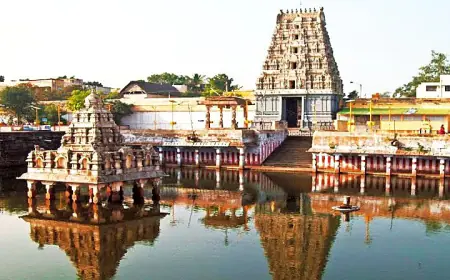
Kanchipuram, the great temple city of Tamil Nadu, is a treasure house of Dravidian architecture, home to the sublime Ekambareswarar Temple (a Prithvi Linga), the Kamakshi Amman Temple, and the Varadaraja Perumal Temple. It is a living museum of the Pallava and Chola dynasties. However, its position as a Sapta Puri is often overshadowed by the other great temple towns of Tamil Nadu, such as Madurai and Rameswaram, and its pilgrim demographic is overwhelmingly regional. It lacks the pan-Indian, mass-market pull of the northern Sapta Puris. Both Dwarka and Kanchipuram are supreme in their sanctity, but they are not, in today’s reality, contenders for the title of most visited. Their power lies in their depth, not in the width of their daily crowd. 🏝️
Practical Accessibility: The Modern Gatekeepers of Pilgrim Numbers
A clear-eyed look at the raw numbers of the Sapta Puris must acknowledge the secular, pragmatic forces that shape them. The cities that top the visitor charts are those blessed with excellent air, rail, and road connectivity. Varanasi, Haridwar, Ayodhya, and Mathura lie on the great Gangetic plain, connected by a dense network of expressways and railways that put them within a day’s travel of hundreds of millions of people. The Delhi-Varanasi Vande Bharat Express and the new expressway have drastically shortened travel time, further boosting weekend pilgrimage crowds. Haridwar and Mathura are even more accessible from Delhi, feeding a constant, massive influx of urban pilgrims.
Ujjain, while well-connected, is slightly off the main trunk routes, and its airport, Indore, requires a road transfer. Dwarka and Kanchipuram are geographically isolated relative to the northern heartland. Ayodhya’s new airport is a game-changer, but its full impact is still unfolding. The other critical factor is accommodation infrastructure. Varanasi has an immense, multi-tiered network of hotels, guesthouses, ashrams, and dharamshalas that can absorb a staggering volume of visitors. Ayodhya is still scrambling to build this capacity. The lesson is clear: the most visited Sapta Puri is not only the one with the most profound spiritual pull, but the one that has made it physically and economically possible for the largest number of people to answer that pull. In this, Varanasi remains the old master that the others are still learning from. 🚆
The Seven That Are One: The Heart of the Pilgrim Knows No Rankings
In the quiet of the sanctum, the question of footfalls and rankings evaporates like the morning mist over the Shipra or the Ganga. The Sapta Puris, in their profound, interconnected geometry, are not in competition. They are a single, seven-petalled lotus of liberation, a complete mandala of grace. The elderly woman who spends her last days in a Kashi mukti bhawan, the ecstatic sadhu charging into the Shipra at Ujjain’s Shahi Snan, the young parents lifting their child for a first darshan of the Ram Lalla in Ayodhya, and the wandering Krishna devotee lost in the colours of Vrindavan are all part of the same, unbroken, ancient story. Varanasi may hold the crown of the most visited today, but the true pilgrim knows that every Sapta Puri is the centre of the universe for the one who stands within it. The numbers are the husk; the devotion is the grain. The endless streams of humanity flowing into Kashi are not a sign of its superiority, but of its function as the great heart of a civilization, a heart that beats, without ceasing, for every soul that seeks the eternal. 🔱
Frequently Asked Questions