












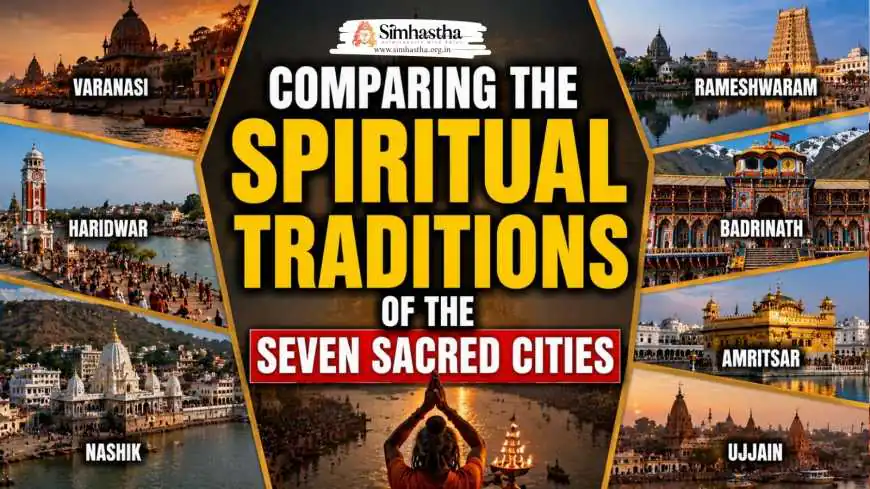
Comparing the Spiritual Traditions of the Seven Sacred Cities
Explore the diverse spiritual traditions of the seven sacred cities—Ayodhya, Mathura, Haridwar, Varanasi, Kanchipuram, Ujjain, and Dwarka. Compare their deities, core theologies, unique rituals, and the unifying thread of moksha in Hinduism's Sapta Puri.


Ayodhya and the Solar Path of Rama's Righteous Kingship
The spiritual tradition of Ayodhya, the birthplace of Lord Rama, is the path of Maryada Purushottam—the perfect, ideal man who embodies dharma in every thought, word, and deed. The city's very soil is saturated with the narrative of the Ramayana, the great epic that is not merely a story but a complete, living manual of righteous conduct. The dominant spiritual mood here is not the ecstatic, tearful devotion of the bhakti saint, but a deeply grounded, dignified, and profoundly moral love for a god who is also the perfect king, the perfect son, the perfect husband, and the perfect brother. The new Shri Ram Janmabhoomi Mandir, rising with a magnificent, solemn grandeur, is the epicentre of this solar, regal energy. The rituals are Vedic, precise, and ordered, reflecting Rama's own unwavering commitment to the law. The pilgrim who comes to Ayodhya seeks not to dissolve the self in a flood of ecstatic emotion, but to align their own life with the eternal principles of duty, honour, and truth. The sacred Sarayu River, which flows gently through the city, witnessed the Lord's final departure from the earthly realm, and it offers a peace that is deep, reflective, and quietly heroic. Ayodhya is the school of the disciplined soul, the city that teaches that the path to the divine is paved not just with love, but with an unshakeable, self-sacrificing commitment to the right. 🏹
Mathura-Vrindavan and the Madhurya Bhakti of Krishna's Divine Play
Cross the threshold from Ayodhya into the twin cities of Mathura and Vrindavan, and the spiritual climate changes with the sudden, disorienting, and utterly delicious shock of stepping from a solemn royal court into a wild, ecstatic, flower-strewn garden of divine love. This is the heartland of Madhurya Bhakti, the path of sweet, intimate, and passionate devotion, where God is not a distant, awe-inspiring king but the most beautiful, mischievous, and irresistibly loving child, friend, and lover. The spiritual tradition here is built upon the Bhagavata Purana and the philosophy of saints like Chaitanya Mahaprabhu and the Vallabhacharya Sampradaya, who taught that the highest relationship with the divine is one of pure, selfless, and intoxicating love. The narrow, colour-drenched lanes of Vrindavan are a continuous, rolling river of kirtan, the chanting of the Hare Krishna mahamantra, and the air is perpetually thick with the scent of tulsi, sandalwood, and roses offered at the Banke Bihari Temple. The deity here is not a still, stone icon but a living, breathing, and deeply responsive lover who steals the hearts, the butter, and the very souls of his devotees. The pilgrim who comes here is invited to leave their adult, rational, and burdened self at the city gate and to enter, with the wide, innocent eyes of a child or the aching, longing heart of a gopi, into the eternal, joyous, and deeply personal play—the Leela—of the Supreme Person. 🎭
Maya Haridwar and the Purifying Descent of the Ganga's Grace
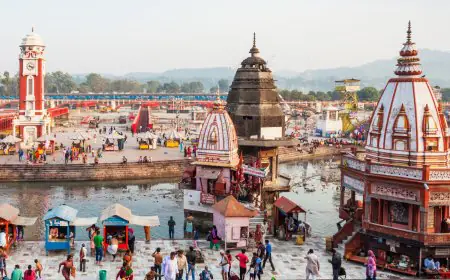
The spiritual tradition of Haridwar, the ancient city of Maya, is the path of ritual purification, the tangible, liquid grace of the sacred river, and the profound, embodied belief that the divine can wash away the accumulated karmas of countless lifetimes with a single, sanctified dip. The city's entire identity is intertwined with the Ganga, the goddess who descended from the heavens onto the matted locks of Lord Shiva and then flowed, with a gentle, nurturing power, onto the thirsty earth. The dominant spiritual practice here is not complex philosophy but the simple, profound, and universally accessible act of snan (bathing) at the Har Ki Pauri ghat, followed by the offering of a flickering diya to the river during the thunderous, soul-stirring evening Ganga Aarti. The Kumbh Mela, which rotates to Haridwar every twelve years, is the ultimate expression of this tradition, a collective, massive, and ecstatic immersion in the purifying waters. The city is also the gateway to the great Himalayan shrines, and its atmosphere is charged with the energy of the wandering sadhu, the chanting pilgrim, and the ancient, unbroken rhythm of Vedic ritual. The path of Haridwar is the path of the open heart, the simple, childlike faith that the Mother Ganga sees all, forgives all, and cleanses all, and that the journey to the divine can begin, simply and immediately, with a single, surrendered step into her cold, holy, and eternally flowing embrace. 🌊
Kashi Varanasi and the Fierce Grace of Shiva's City of Death
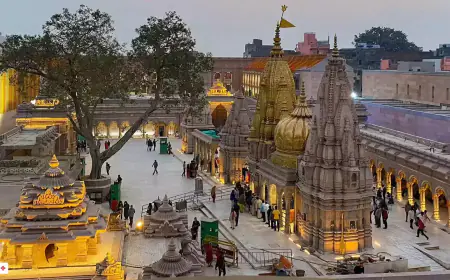
If Mathura is the city of love and life, Kashi, the eternal Varanasi, is the stark, magnificent, and profoundly liberating city of death. The spiritual tradition here is the path of Shaiva Advaita, the non-dualistic worship of Lord Shiva, not in his gentle, meditating form, but in his most fierce and awe-inspiring aspect as Mahadeva, the Lord of the Cremation Ground, the destroyer of the universe, and the supreme master of time and death. The Kashi Vishwanath Temple, with its magnificent new corridor, houses one of the twelve sacred Jyotirlingas, and the entire city is a vast, living mandala, a yantra of liberation. The most unique and defining spiritual practice here is the open, public acceptance of death. The cremation fires at the Manikarnika Ghat burn twenty-four hours a day, every single day of the year, a continuous, smoky, and profoundly un-ignorable reminder of the body's ultimate fate. To die in Kashi is to be whispered the Taraka Mantra by Lord Shiva himself into the ear of the departing soul, granting instant moksha, liberation from the endless cycle of rebirth. The pilgrim who comes to Kashi is not seeking worldly boons but a direct, unflinching confrontation with mortality, and through that confrontation, a profound, liberating, and utterly fearless understanding of the eternal, unchanging Self that is beyond both birth and death. 🔥
Trending Guides Now

Mathura – Shri Krishna Janmabhoomi: The Birthplace of Lord Krishna and One of Hinduism’s Most Sacred Cities
Haridwar – Gateway to Spirituality and One of the Seven Holiest Cities in Hinduism
Varanasi / Kashi: The Eternal Spiritual Heart of India – A Pilgrim’s Journey
Which Sapta Puri Is the Most Visited by Pilgrims Today

Ujjain Railway Station to Mahakaleshwar Temple Distance (2026 Guide)

Ujjain Simhastha 2028 Dates Announced: Full Shahi Snan & Event Timeline

Ujjain Simhastha Update: CM Mohan Yadav Reviews 2028 Works
Ujjain Railway Station to Kal Bhairav Temple: Distance, Auto Fare and Best Route
Kanchipuram and the Synthesis of Knowledge, Devotion, and the Divine Mother
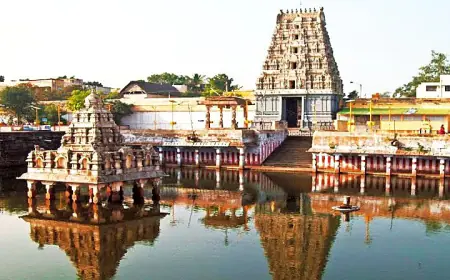
Kanchipuram, the serene and scholarly city of a thousand temples in Tamil Nadu, represents a deeply sophisticated, intellectually rigorous, and aesthetically magnificent synthesis of the three great streams of Hindu spirituality. It is simultaneously a Shaiva, Vaishnava, and Shakta centre of the highest order, a harmonious, living coexistence of the three paths that is rarely found elsewhere in such a concentrated, sacred geography. The great Ekambareswarar Temple, dedicated to Shiva as the element of earth, the magnificent Varadaraja Perumal Temple, a supreme abode of Lord Vishnu, and the sublime Kamakshi Amman Temple, one of the most powerful seats of the Goddess, stand in close, respectful proximity, each a universe of ritual, art, and philosophy. The spiritual tradition of Kanchi is deeply rooted in the Vedantic scholarship of the Kanchi Kamakoti Peetham, established by Adi Shankaracharya, and the city is a cradle of both the non-dualistic Advaita philosophy and the deeply emotional, poetic, and music-infused tradition of the Tamil Shaiva and Vaishnava saints, the Nayanmars and Alvars. The pilgrim who visits Kanchi is invited not to a single, overwhelming spiritual emotion, but to a calm, contemplative, and deeply enlightening journey through the interconnected, architectural grandeur of the Dravidian temple, the profound, logical clarity of Vedantic thought, and the nurturing, benevolent, and all-pervading grace of the Divine Mother. 📚
Avantika Ujjain and the Cosmic Clock of Mahakal's Eternal Time
The spiritual tradition of Ujjain, the ancient Avantika, is the path of time itself, the worship of the divine not just as a creator or a destroyer, but as the very substance of the relentless, eternal, and all-consuming flow of Kaal. The city's presiding deity, Mahakaleshwar, is the Lord of Time, and his Jyotirlinga is uniquely south-facing, the direction of death. The most profound, defining ritual here is the pre-dawn Bhasma Aarti, where the lingam is anointed with sacred ash freshly collected from a cremation ground, a daily, visceral reminder of the body's inevitable return to dust and the soul's eternal nature. Ujjain's spiritual identity is also inextricably tied to its ancient status as the prime meridian of India, the zero-degree longitude from which all celestial calculations were made. The city is thus a cosmic laboratory where the science of timekeeping and the worship of the Lord of Time were a single, integrated discipline. The Simhastha Kumbh Mela, triggered by the entry of Jupiter into Leo, is the massive, collective ritual of bathing in the sacred Shipra River at a precise, astrologically calculated moment when the waters are believed to transform into amrit. The pilgrim who comes to Ujjain is confronted with the most profound and unsettling of all spiritual truths: that everything in this world, including one's own body, is temporary and will dissolve. And in this fierce, unblinking acceptance of impermanence, a profound, liberating peace is found. 🔱
Dvaravati Dwarka and the Oceanic, Regal Grace of Krishna the King
The final jewel in the Sapta Puri mandala is Dwarka, the golden, sea-girt city that was the magnificent, opulent, and divinely protected capital of Lord Krishna's earthly kingdom. The spiritual tradition here is distinct from that of Vrindavan. If Vrindavan is the Krishna of the sweet, simple, cowherd childhood and the passionate, secret love of the gopis, Dwarka is the Krishna of aishwarya bhava, the Lord of supreme, awe-inspiring majesty, power, and divine sovereignty. He is the king, the statesman, the builder of a legendary fortress, and the protector of his people against immense demonic forces. The Dwarkadhish Temple, also known as the Jagat Mandir, is a towering, heavily fortified structure that seems to rise from the Arabian Sea itself, a physical testament to this regal, protective energy. The rituals here are grand, formal, and befitting a divine monarch. The city's very geography, perched on the westernmost edge of the subcontinent, adds to its unique spiritual flavour. It is a place of pilgrimage that requires a dedicated, long journey, and the pilgrim who arrives is rewarded with a sense of vast, oceanic peace, the feeling of having reached the very edge of the world where the Lord once walked as a king. The ultimate, beautiful legend is that after Krishna's departure, the sea swallowed the original city, an act of divine dissolution that perfectly completes the cycle of the Sapta Puris, returning the splendid, regal form of the divine back into the formless, eternal ocean. 🌊
The Underlying Unity and the Seven Doors to One Liberation
Despite the intoxicating diversity of their spiritual traditions—the righteous, solar dignity of Ayodhya, the passionate, sweet devotion of Mathura, the purifying liquid grace of Haridwar, the fierce, death-confronting fire of Kashi, the serene, scholarly synthesis of Kanchi, the cosmic, time-obsessed clock of Ujjain, and the majestic, oceanic sovereignty of Dwarka—the seven sacred cities are, at their deepest core, a single, magnificent, and unified revelation. They are the Sapta Moksha Puris, the seven cities that the Garuda Purana and the other ancient texts guarantee will grant liberation, moksha, to anyone who dies within their sacred boundaries. Each city is a unique, exquisitely tailored doorway, a specific spiritual medicine designed for a different temperament, a different karmic disposition, and a different stage of the soul's long, winding journey. The ritualistic, action-oriented soul finds its path in Haridwar. The heart that yearns for a personal, loving relationship with God is drawn to Mathura and Dwarka. The mind that seeks a rational, moral framework finds its home in Ayodhya. The intellect that craves profound, non-dualistic truth and a direct confrontation with mortality is pulled to Kashi and Ujjain. The spirit that seeks a complete, integrated synthesis is called to Kanchi. The Sapta Puris, in their glorious, harmonious diversity, teach the ultimate, beautiful truth of the Sanatana Dharma: that the One supreme, formless, eternal reality, in its infinite, playful grace, manifests in a million different forms, colours, and flavours, so that every single soul, in its own unique way, may find a path back to the eternal source. The seven cities are the seven notes of the sacred, cosmic scale, and together, they sing the complete, resplendent, and liberating song of the eternal. 🔱
Frequently Asked Questions