












Emergency Response Systems Planned for Simhastha 2028
Discover the multi-layered emergency response systems planned for Simhastha 2028. From AI-powered crowd control and a four-tier medical fortress to river rescue boats and the ICCC, explore how Ujjain is building a sacred safety net for 10 crore pilgrims.


The Digital Brain and the ICCC's All-Seeing Command
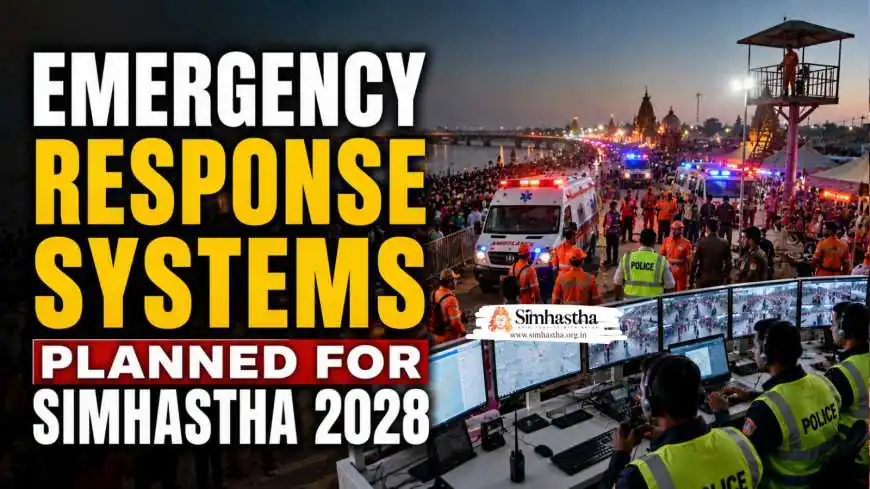
The nerve centre of the entire emergency response apparatus is the Integrated Command and Control Centre (ICCC) , a facility being custom-built for the Simhastha by IIT Indore in collaboration with the state government. This is not a passive monitoring room with a bank of fuzzy television screens. It is a proactive, AI-powered, digital oracle of public safety. The ICCC will ingest a continuous, real-time data stream from over 5,000 high-definition CCTV cameras strategically positioned across every square metre of the Mela grounds, the bathing ghats, the temple queues, and the major arterial roads. This visual deluge is processed by an advanced video analytics and artificial intelligence platform that is trained to detect the subtle, early-warning signs of a developing crisis that are invisible to the human eye. The system can measure crowd density in real time, identify a sudden, unidirectional surge of people, detect an unattended bag or a vehicle moving against the designated flow, and instantly flag these anomalies on the screens of the operators. The most revolutionary capability of the ICCC is its predictive crowd analytics. By analyzing the speed, direction, and density of pedestrian flows, the AI can forecast a dangerous bottleneck or a crowd crush up to thirty minutes before it becomes a critical, life-threatening reality. The command centre can then instantly issue an alert to the ground-level police and volunteer marshals, who can dynamically open relief corridors, halt the incoming flow, or redirect the crowd, neutralizing the threat before a single person is harmed. The ICCC also serves as the central communication hub, linking every police officer, every ambulance, every fire tender, and every medical post through a dedicated, encrypted digital radio network. The digital brain of the Kumbh does not sleep, does not blink, and watches over the pilgrim with a silent, omniscient, and profoundly protective gaze. 📡
The Four-Tier Medical Fortress and the Sanctity of Every Breath
The health and medical emergency response system for Simhastha 2028 is designed as a four-tier integrated network that ensures that no pilgrim, no matter how minor their ailment or how critical their condition, is ever beyond the reach of swift, competent, and compassionate care. The foundation of this network is a dense grid of 120 strategically located first-aid posts, each staffed by a trained paramedic and equipped with essential emergency medicines, oral rehydration salts (ORS), and basic diagnostic tools. These posts are the first line of defence against the most common Mela ailments—dehydration, heat exhaustion, minor cuts, and blisters. The second tier consists of 48 fully equipped mini-hospitals, each with 30 to 50 observation beds, a small operating theatre for minor surgical emergencies, a labour room for unexpected childbirths, and a dedicated pharmacy. These are the workhorses of the medical system, capable of stabilizing a fracture, treating a severe infection, or managing an acute asthmatic attack.
The third tier is a network of six large, state-of-the-art sector hospitals, strategically positioned on the periphery of the Mela grounds. Each of these hospitals will have 100 to 200 beds, a fully functional intensive care unit (ICU), specialist doctors in fields including cardiology, orthopaedics, neurology, and infectious diseases, and advanced diagnostic facilities including X-ray, ultrasound, and pathology labs. The apex of the pyramid is the upgradation and integration of the existing Ujjain District Hospital and the Maharaja Yeshwantrao Hospital in Indore as tertiary referral centres, with the capability for air ambulance evacuation for the most critical patients. The entire four-tier system is knitted together by a sophisticated real-time telemedicine platform. A paramedic at a remote first-aid post can, in seconds, initiate a live video consultation with a specialist sitting in Bhopal, Delhi, or Mumbai, ensuring that expert medical intervention is available at the very first point of contact. An emergency, toll-free helpline number will be publicized across the Mela, and a fleet of over 500 additional ambulances, including advanced cardiac life support (ACLS) units, will be stationed at strategic points, with dedicated, traffic-free green corridors ensuring they can reach any part of the Mela within minutes. The medical fortress of the Simhastha is a silent, powerful, and profoundly reassuring promise that the breath of every pilgrim, rich or poor, young or old, is held sacred. 🚑
The River Guardians and the Rescue Boats of the Shipra
The sacred Shipra, the liquid heart of the Kumbh, is also the site of the greatest potential for sudden, acute danger. The immense, surging crowds that enter the river during the Shahi Snan, combined with the deceptive, strong currents and the unpredictable, deep drop-offs near the ghats, create a constant, low-level risk of drowning. The emergency response plan for the river is built upon the principle of immediate, on-water, professional rescue. A dedicated fleet of fast-response, inflatable rescue boats, manned by trained divers from the State Disaster Response Force (SDRF) and the National Disaster Response Force (NDRF), will be stationed on the water at every major bathing ghat. These boats are designed to be deployed in seconds, their powerful outboard motors allowing them to reach a struggling pilgrim anywhere in the bathing zone within under ninety seconds. The rescue divers are trained in swift-water rescue techniques, and the boats are equipped with life jackets, throw ropes, and basic life-support equipment.
Trending Guides Now
Every Major Road Project Planned Before Simhastha 2028

Digital Command Centers Planned for Simhastha 2028
Street Lighting Projects Planned Before Simhastha 2028
How Public WiFi and Digital Services May Expand Before 2028

Ujjain Railway Station to Mahakaleshwar Temple Distance (2026 Guide)

Ujjain Simhastha 2028 Dates Announced: Full Shahi Snan & Event Timeline

Ujjain Simhastha Update: CM Mohan Yadav Reviews 2028 Works
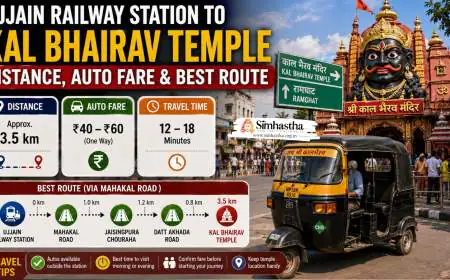
Ujjain Railway Station to Kal Bhairav Temple: Distance, Auto Fare and Best Route
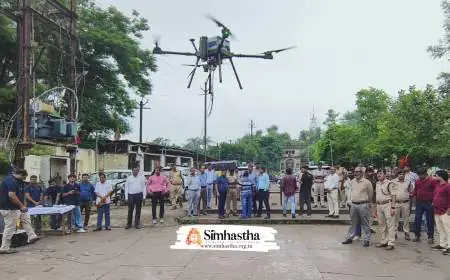
On the ghats themselves, a network of elevated observation towers, staffed by trained spotters with binoculars and direct radio communication to the boat crews, provides a continuous, vigilant watch over the bathers. The entire bathing zone is mapped into clearly defined sectors, each under the command of a designated water safety officer. During the peak Shahi Snan hours, the river rescue operation is supported by a hovering helicopter and a drone network that can provide a real-time aerial view to the ICCC, instantly pinpointing the location of a person in distress. The banks of the ghats are lined with clearly marked emergency access points, allowing ambulances to reach the water's edge. The river rescue plan is a silent, ever-present guardian angel, a fleet of unseen protectors who ensure that the sacred, purifying waters of the Shipra, which grant liberation to the soul, never become a threat to the body. 🌊
The Fire Safety Grid and the Invisible Shield Against the Flames
A temporary city of millions, with its dense concentration of canvas tents, temporary electrical wiring, community kitchens with open wood-fires, and the constant presence of oil lamps and incense, is a landscape of immense and ever-present fire risk. The fire safety and emergency response plan for Simhastha 2028 has therefore been designed with the meticulous, paranoid precision of a high-risk industrial zone. The entire Mela area is dotted with a network of temporary fire stations, strategically positioned to ensure that a fire tender can reach any point in the tent city within five minutes of an alarm being raised. These stations are equipped with modern, compact fire engines, high-pressure water mist systems that are effective on canvas and electrical fires, and advanced thermal imaging cameras to detect hidden hotspots. A fleet of agile, motorcycle-based first-response firefighting units will continuously patrol the narrow, crowded lanes, capable of reaching a nascent fire within moments and suppressing it before it can spread. The entire water supply grid of the Mela is integrated with the fire safety system, with dedicated, high-pressure hydrants installed at regular intervals. The ICCC's CCTV network is programmed with a fire detection algorithm that can automatically identify a plume of smoke and trigger an immediate alarm. A massive public awareness campaign, using signages and the mobile app, will educate pilgrims on basic fire prevention and the immediate evacuation protocols. A well-rehearsed evacuation plan, with clearly marked, illuminated fire exits and designated assembly points for each sector, ensures that a controlled, orderly escape is always possible. 🔥
The Police, the Lost-and-Found, and the Compassionate Guardians of Order
The police and security response system is the visible, human face of the emergency architecture, and it is built upon a foundation of massive, carefully planned deployment and specialized, empathetic training. The Madhya Pradesh Police, supported by the Home Guards and paramilitary forces, will create a multi-layered security blanket that extends from the outer cordons of the city to the innermost queue lines of the temples. The deployment plan is based on a detailed, real-time crowd density mapping system, allowing the force to be dynamically repositioned to areas of highest pressure. Thousands of officers will be stationed at fixed points, while mobile patrols on motorcycles and on foot will maintain a constant, reassuring presence. A dedicated women's safety cell, with all-female patrol units and a confidential, 24/7 helpline, will operate across the Mela, providing an immediate, trusted point of contact for any woman who feels threatened or distressed. The anti-touting and anti-fraud squad will work in plain clothes, protecting pilgrims from the financial predators who inevitably circle such massive gatherings.
One of the most emotionally charged and logistically complex emergency services is the lost-and-found reunification system. Given the immense, shifting crowds, thousands of individuals, particularly elderly pilgrims and young children, inevitably become separated from their families. The 2028 plan introduces a revolutionary, digitally integrated response. The "Simhastha Pariwar" reunification system links the pre-registered QR-coded pilgrim ID with a network of physical "Bhule Bhatke Shivir" (lost person camps). When a lost individual is found, their QR code is instantly scanned, and their family's registered mobile number is contacted. Simultaneously, their photograph is uploaded to the ICCC's central database and cross-referenced with any active missing person reports. The system transforms the agonizing, hours-long search of past Melas into a process that can often be resolved in minutes. The police, in this context, are not just enforcers of law; they are the compassionate guardians of the pilgrim's peace, the reassuring, uniformed presence that allows the vulnerable, the lost, and the frightened to find their way back to safety and to family. 👮
The Volunteers, the Community First Responders, and the Spirit of Seva
The most sophisticated technology and the most trained professionals are force-multiplied by the largest, most dedicated volunteer emergency response force ever assembled for an Indian event. Tens of thousands of trained civilian volunteers, drawn from the National Service Scheme (NSS) , the National Cadet Corps (NCC) , the Bharat Scouts and Guides , and a vast network of religious and social organizations, will form the grassroots, human fabric of the emergency response system. These volunteers undergo an intensive, multi-week training programme in the months leading up to the Mela, learning essential first aid, basic firefighting, crowd management techniques, and the specific, sensitive protocols for assisting lost children and the elderly. They are not merely unskilled helpers; they are trained community first responders, capable of administering cardiopulmonary resuscitation (CPR), controlling bleeding, and managing a dehydrated patient until a paramedic arrives. They are stationed at every first-aid post, at every Water ATM, at every major pedestrian intersection, and along every bathing ghat. They are the smiling, saffron-capped guides who help a confused pilgrim find their way, the calm, steady hands that assist an elderly woman through a dense crowd, and the vigilant, watchful eyes that notice a child wandering alone. The spirit of seva (selfless service), the ancient, sacred heart of the Kumbh, is, in the 2028 emergency plan, given a modern, structured, and profoundly powerful form, making every pilgrim not just a recipient of safety but a participant in the great, communal project of care. 🤝
The Invisible Safety Net and the Grace That Allows Surrender
The entire, vast, and intricate emergency response system—the AI-powered cameras, the four-tier hospitals, the river rescue boats, the fire tenders, the digital reunification network, and the army of trained volunteers—constitutes an invisible, secular, and profoundly compassionate safety net. It is not designed to be seen or to be intrusive; its genius lies in its silent, unobtrusive, and ever-present readiness. It is the necessary, physical guarantee that allows the pilgrim to surrender, completely and ecstatically, to the spiritual chaos of the Kumbh, to lose themselves in the chant, in the crush of the holy dip, and in the tearful, transformative darshan of the Lord of Time, without the constant, subliminal fear for their physical safety. The emergency planners, the doctors, the police officers, the engineers, and the volunteers are, in a very real sense, the modern, unsung priests of the Kumbh. Their work, performed in the control rooms, the ambulances, and the crowded ghats, is a form of sacred service, a secular puja whose offering is the safety and the life of the pilgrim. When the great, ecstatic roar of "Har Har Mahadev" fills the Ujjain sky, it is held, cradled, and protected by this silent, vigilant, and profoundly loving shield, allowing the divine drama to unfold in all its ancient, chaotic, and magnificent beauty. 🔱

Frequently Asked Questions