


























Simhastha 2028: Govt Drops Land-Pooling Scheme, Confirms Temporary Mega-City Model for Pilgrims
The Madhya Pradesh government has officially withdrawn the land-pooling township plan and reverted to the temporary mega-city model for Simhastha 2028. Here is what this means for pilgrims, farmers, infrastructure, and spiritual arrangements.
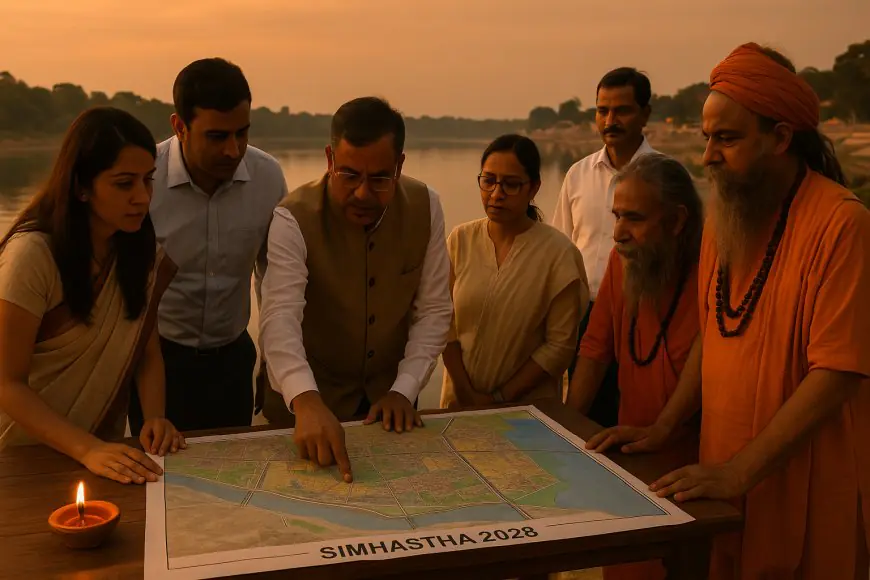


Government Shifts Course: Temporary Mega-City Model Will Shape Simhastha 2028
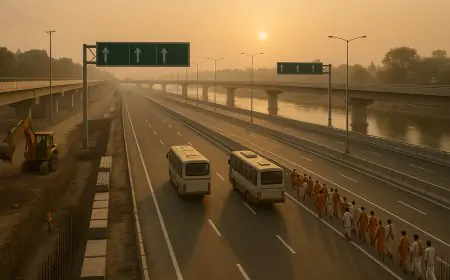
In a landmark administrative shift that has reshaped the development blueprint of Ujjain, the Madhya Pradesh government has officially abandoned the controversial land-pooling scheme and reverted to the temporary mega-city model for the upcoming Simhastha 2028. This critical decision realigns preparations with approaches historically used in previous Simhastha events — a format built around massive yet reversible civic infrastructure spread across thousands of hectares, designed solely for the duration of the Mahaparva.
The decision is not merely a technical reconfiguration — it is a socio-spiritual turning point. It reflects the need to maintain harmony between large-scale public administration, the sentiments of the farming community, and the sacred requirements of one of the world’s largest faith gatherings.
For Every pilgrims, understanding Simhastha 2028 dates and the official Shahi Snan timeline is essential before booking flights or accommodation, as these sacred dates are completely non-negotiable.
Why the Land-Pooling Plan Was Dropped
When the government first proposed the land-pooling and permanent spiritual township model, the intention was ambitious: educational institutions, dharamshalas, Vedic research centres, hospitals, meditation spaces and cultural complexes were envisioned as a permanent legacy of Simhastha.
Trending Guides Now

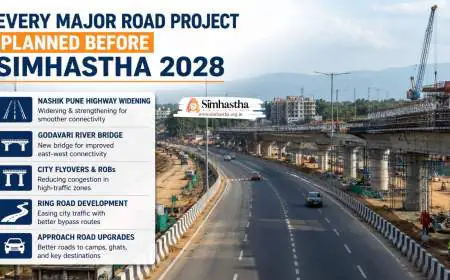
How Ujjain’s New Bridges & Bypasses Will Reduce Simhastha Traffic in 2028
How Smart City Projects Are Reshaping Ujjain
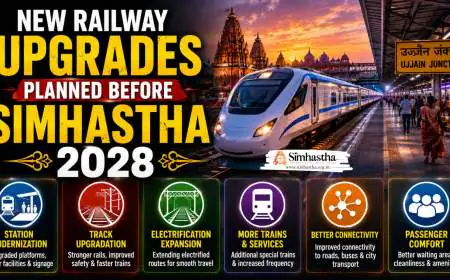
New Railway Upgrades Planned Before Simhastha 2028

How Ujjain's Bus Network May Expand Before 2028

Ujjain Railway Station to Mahakaleshwar Temple Distance (2026 Guide)

Ujjain Simhastha 2028 Dates Announced: Full Shahi Snan & Event Timeline

Mangalnath Temple Trip Budget: Puja, Local Transport, Food and Stay Planning

Omkareshwar Trip Budget Guide: Transport, Stay, Food and Local Travel Costs
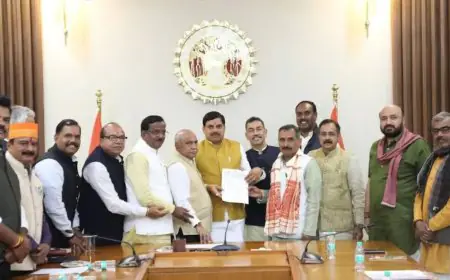
But on the ground, anxiety among farmers grew. Ownership transfers, post-event land use, valuation disputes and future real-estate uncertainties led to tensions, making progress difficult. The new administration recognised this and announced that Simhastha must proceed without burdening or dispossessing those who sustain the region agriculturally.
By reverting to a temporary mega-city model, the government guarantees:
-
Land will be used only temporarily
-
Ownership stays with farmers
-
Compensation for crop loss is ensured
-
Land returns to original status post-festival


The narrative has shifted from “development through acquisition” to infrastructure through cooperation.
How the Temporary Mega-City Will Work
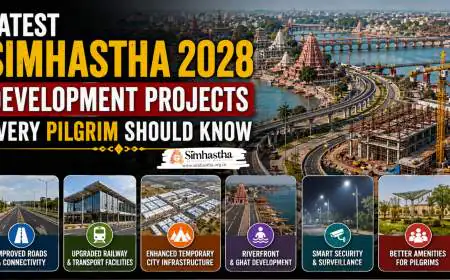
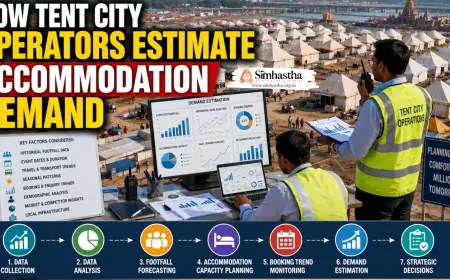
The newly approved master plan focuses on creating a large-scale temporary township across a multi-kilometre stretch surrounding the Kshipra River. Key features include:
▸ ~50 km of internal roads
Tarred temporary roads with multiple widths (18m and 24m) will support akhara processions, pilgrim footfall, emergency movement and logistics.
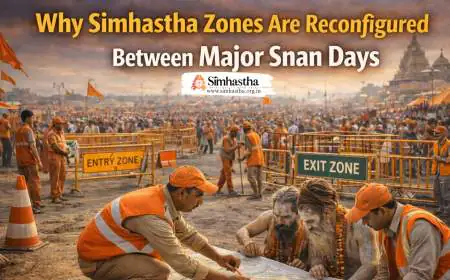
▸ Zone-based layout for safety
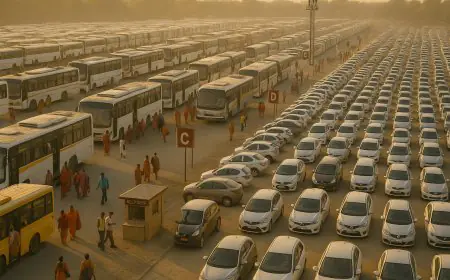
Akhara camps, pilgrimage sectors, parking spaces, food distribution zones, control rooms, medical units and sanitation sectors will be organised to prevent bottlenecks.
▸ Strengthening of Ghats
Permanent ghats and approach routes will be reinforced to support crowd density, ensuring accessible river entry and safe bathing experience.
▸ Utility Grid
Even in a temporary format, power, water supply, drainage, cellular infrastructure and medical response systems will be designed with redundancy.
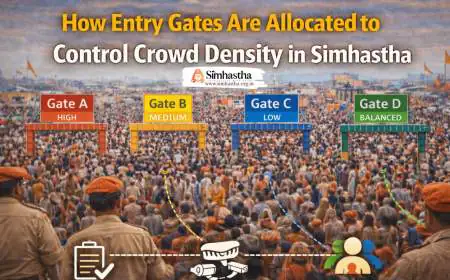
▸ High-capacity entry and exit corridors
Multiple controlled access points will evenly distribute crowd load across the riverfront.
The scale is temporary — but the standards will be world-class.
The Spiritual Dimension Remains Central
While civil infrastructure is critical, Ujjain’s identity remains rooted in devotion to Mahakaleshwar and the sanctity of the Simhastha Snan. The restructured model ensures:
-
Traditional akhara positioning will be respected
-
Processional routes will be preserved
-
Ritual timings and access corridors will not be compromised
-
Sanatan dharma practices guide the blueprint — not the other way around
In Simhastha, urban planning is not an independent act — it is a service to the pilgrimage experience.
Impact on Stakeholders
| Stakeholder | Outcome |
|---|---|
| Farmers | Land remains theirs; temporary use with compensation |
| Pilgrims | Better crowd management, smoother ghat access |
| Akharas | Coordination for demarcation & processional routes |
| City Residents | Reduction of long-term disruption; short-term economic boost |
| Governance Bodies | Faster execution, reduced litigation, higher scalability |
This moment has transformed what could have been a conflict into a collaborative civic project rooted in dharma, respect and practicality.
Will the Temporary Model Benefit Simhastha 2028?
While the land-pooling township might have created a long-term legacy, the temporary model avoids delays and ensures that preparations remain on schedule — a critical factor for a festival expecting tens of millions of visitors.
Infrastructure will now be focused, rapid and optimised for the event cycle, ensuring readiness before 2028 without structural land disputes. Ujjain’s permanent growth will continue through separate city-wide development projects — without binding it to the festival land.
This direction protects both sentiment and scalability — which is why the new model has been welcomed widely.
Frequently Asked Questions