























Farmers Win, Township Plan Falls: How Simhastha 2028’s Mega-City Scheme Was Scrapped in Ujjain
In a landmark reversal, the Madhya Pradesh government scrapped the 2,378-hectare permanent township scheme for Simhastha 2028 following sustained farmer protests. Here is a deep look at the protests, policy shift, and what the new temporary mega-city model means for pilgrims and locals.


1. A dramatic U-turn: what happened in Ujjain
In a dramatic shift in planning for the upcoming Simhastha 2028, the state government of Ujjain (Madhya Pradesh) announced that it is backing away from a permanent “spiritual township” for the 2028 fair. The reason? Sustained protests from farmers and a rising public outcry. News reports confirm that the planned acquisition of 2,378 hectares across 17 villages, from nearly 1,800 farmers, has been cancelled.
The original plan proposed to build a full-scale township, with schools, hospitals, Vedic institutes and dharamshalas linked to the Simhastha festival. The government has now said the model will revert to a temporary mega-city format, as used in previous editions of the event.
For Every pilgrims, understanding Simhastha 2028 dates and the official Shahi Snan timeline is essential before booking flights or accommodation, as these sacred dates are completely non-negotiable.
2. Why did farmers protest—and win?
From the very beginning the land-pooling and permanent township plan raised alarm bells among local farmers. Their objections included:
Trending Guides Now
How Emergency Medical Camps Will Operate During Simhastha

Emergency Response Systems Planned for Simhastha 2028
Every Major Road Project Planned Before Simhastha 2028

How Ujjain’s New Bridges & Bypasses Will Reduce Simhastha Traffic in 2028

Ujjain Railway Station to Mahakaleshwar Temple Distance (2026 Guide)

Ujjain Simhastha 2028 Dates Announced: Full Shahi Snan & Event Timeline

Mangalnath Temple Trip Budget: Puja, Local Transport, Food and Stay Planning

Omkareshwar Trip Budget Guide: Transport, Stay, Food and Local Travel Costs
-
Permanent loss of farmland and livelihood: The scheme proposed converting large tracts of fertile land into township infrastructure that might never revert to agriculture.
-
Legacy uncertainty: Farmers feared that once the land was pooled permanently, their rights, crop use and future options would diminish.
-
Insufficient compensation and risk of unusable land post-event: When roads and large structures are built, the remaining land may become fragmented or degraded for farming.
-
Lack of transparent consultations: Farmer groups claimed they were not fully heard, and that decisions proceeded without full consensus.
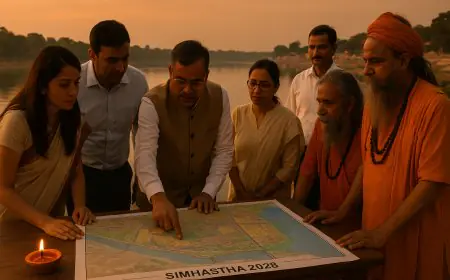
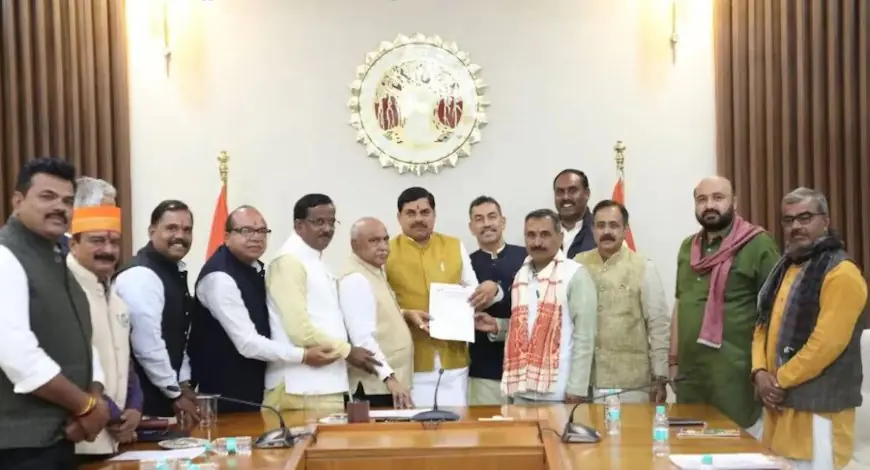
As protests grew—road-blocks, mock funerals of the scheme, mass mobilisations—the government ultimately relented. The formal announcement came after a meeting between the Chief Minister and representatives of the Bharatiya Kisan Sangh (BKS).
In the aftermath, farmers celebrated in Ujjain: drums, sweets, dancing. It marked a rare instance where a major infrastructure vision for a spiritual event reversed course because of grassroots action.

3. What the new model means for Simhastha 2028
With the township scheme cancelled, the blueprint for Simhastha 2028 now emphasises scale, safety and temporariness rather than permanence. Key features of the revised plan include:
-
Use of land only for the festival period — ownership remains with farmers, land returns to normal afterwards.
-
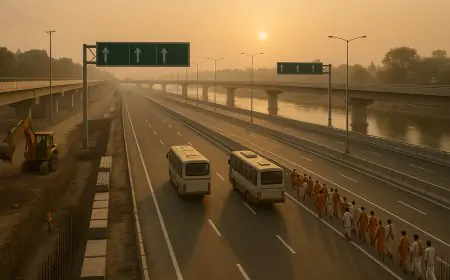
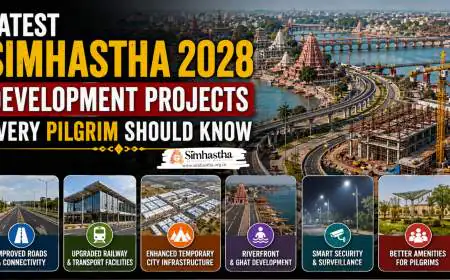
Construction of major internal roads — a 50 km network of tarred 18 m / 24 m roads planned inside the festival area to manage crowds and movement.
-
Upgrading ghats, riverfront access and utilities — even in the temporary model, permanent benefits are built in for pilgrims near the Kshipra River.
-
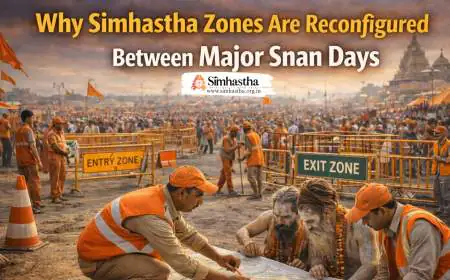
Fresh demarcation of zones for akharas, processions and pilgrims — earlier permanent matrix nullified, now aligned with mobility & safety.
This model allows the festival planners to proceed with less legal uncertainty and faster execution — while reassuring farmers about land rights.
4. The spiritual-civic interplay: what changes and what stays
Although the physical format of the festival is being reworked, the spiritual core of Simhastha remains intact. Thousands of saints, akharas, sadhus and pilgrims will gather for the sacred snan, maha aarti and processions along the Kshipra. What changes is the infrastructure:
-
Instead of permanent campuses for Vedic learning, the focus will be on temporary camps and portable structures.
-
The sacred ghats will benefit from reinforcement, but permanent township houses, schools and hospitals will no longer be part of the master-plan.
-
The decision demonstrates a blend of dharmic respect (ensuring pilgrims’ experience) + community rights (ensuring farmers’ welfare).
In short: the land is treated as commons for the event, not as permanent swap for development.
5. What’s next & what to watch
Several important questions remain as preparations advance:
-
How will the compensation packages be structured for farmers whose land is temporarily used? Will crop loss, tilling disruption, post-event restoration be fully covered?
-
Will the temporary mega-city be dismantled fully after 2028, returning land to full agricultural use? What safeguards will ensure this?
-
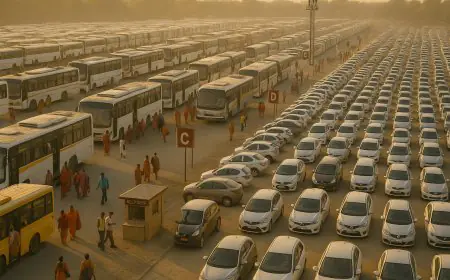
How will the government ensure that even temporary infrastructure aligns with safety, sanitation, crowd management for 30 + million pilgrims?
-
Can this model scale for future events — in 12-year cycles — without residual damage to land/fields?
-
Will other projects (like the cancelled township) be revived in another format, or will this mark a permanent policy shift?
6. Broader implications: pilgrimage, rights & governance
This episode has implications beyond Ujjain:
-
It shows that for mega-religious events, land rights and livelihoods cannot be ignored.
-
It signals a shift in approach: moving from “legacy development via acquisition” to “temporary infrastructure for event, farmland remains intact”.
-
It may set precedent for other religious cities (Haridwar, Allahabad, etc) and how they negotiate between infrastructure scale and community rights.
-
It may raise questions about the balance between spiritual capital and agrarian economy in India’s pilgrim towns.
7. Why this matters for pilgrims and devotees
For the millions who will make the journey in 2028:
-
A clearer, faster-moving plan means likely better logistics — safer roads, well-managed ghats, clearer zones for sadhus and devotees.
-
The fact that land-use rights of local farming communities were upheld might foster a more harmonious festival atmosphere — less potential for conflict or protests during the event.
-
Although the permanent township will not appear, the essential devotional infrastructure remains intact: the festival remains rooted in faith, not real-estate.
Frequently Asked Questions