



















New CCTV and Surveillance Plans for Simhastha 2028
Discover the new CCTV and surveillance plans for Simhastha 2028. From 5,000 AI-powered cameras and drone networks to the ICCC and facial recognition-free crowd analytics, explore how Ujjain will become the safest Kumbh in history.



The 5,000-Eye Digital Shield and the Scale of the New Camera Network
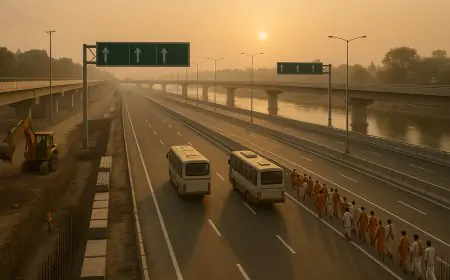
The foundation of the entire surveillance edifice is the sheer, unprecedented scale of its camera coverage. The plan calls for the installation of over 5,000 state-of-the-art CCTV cameras, a number that dwarfs the surveillance infrastructure of many mid-sized European cities. These are not the grainy, low-resolution, vandalized relics of a forgotten municipal project. They are high-definition, weatherproof, and equipped with advanced low-light and infrared capabilities, ensuring crystal-clear imagery in the blinding midday sun, the torrential monsoon downpour, and the deep, pre-dawn darkness when the Bhasma Aarti pilgrims begin to gather. The cameras are being strategically deployed in a multi-layered, concentric grid. The outermost layer covers the approach roads, the railway stations, the satellite bus terminals, and the vast, peripheral parking plazas, capturing the incoming pilgrim tide at its source. The middle layer blankets the new ring roads, the Mela sector boundaries, and the transit corridors where the shuttle buses operate. The innermost, densest layer provides a seamless, overlapping, and unbroken visual mesh over every square metre of the bathing ghats, the temple queues, the akhara camps, the tent cities, and the major pedestrian congregation points. Fixed bullet and dome cameras provide continuous, wide-angle coverage of the public spaces, while a network of Pan-Tilt-Zoom (PTZ) cameras, controlled remotely from the ICCC, allows operators to instantly focus on a specific incident, to zoom in on a lost child's face, to track a suspicious movement, or to assess a developing crowd pressure point with a forensic, eagle-eyed precision. The 5,000 cameras are the 5,000 unblinking eyes of the Kumbh, and they will watch over the pilgrim with a silent, constant, and profoundly reassuring vigilance. 👁️
The ICCC and the AI Brain That Never Sleeps
The true genius of the Simhastha 2028 surveillance plan lies not in the cameras themselves, but in the digital brain that processes their immense, continuous flood of visual data. This is the Integrated Command and Control Centre (ICCC) , a fortified, technologically sophisticated nerve centre being custom-built in collaboration with IIT Indore. The ICCC is not a passive monitoring room where bleary-eyed operators stare at a wall of screens. It is a proactive, AI-driven, predictive security oracle. The thousands of video feeds are not displayed individually; they are fused into a single, dynamic, real-time digital map of the entire Mela. An advanced video analytics and artificial intelligence platform processes every frame, not to identify individuals through facial recognition—a technology the administration has deliberately chosen to avoid for ethical and privacy reasons—but to perform a sophisticated, continuous analysis of crowd behaviour, density, and movement. The AI is trained to detect a sudden, unidirectional surge that could precede a stampede, to identify an unattended bag left in a sensitive area, to spot a vehicle moving against the designated flow, and to measure the real-time density of a crowd and predict a dangerous bottleneck up to thirty minutes before it becomes a critical, life-threatening reality. When the AI detects an anomaly, it instantly flags it on the screen of a human operator, who can then verify the alert, zoom in with a PTZ camera, and dispatch the precise, calibrated response—whether it is a police patrol, a medical team, or a crowd management volunteer. The ICCC is the silent, sleepless, and supremely intelligent guardian angel of the Kumbh, a digital protector that sees the invisible, predicts the future, and safeguards the present. 🧠
The Aerial Eyes and the Drone and UAV Surveillance Fleet
The 5,000 fixed cameras, for all their omniscience, are bound to the earth. To achieve a complete, three-dimensional, and dynamically mobile surveillance picture, the Simhastha 2028 plan deploys a dedicated fleet of advanced Unmanned Aerial Vehicles (UAVs) or drones. These are not the small, buzzing, hobbyist quadcopters, but professional-grade, tethered and free-flying surveillance platforms equipped with high-definition optical zoom cameras, thermal imaging sensors for night-time and low-visibility operations, and powerful, stabilized gimbals. The drones serve multiple, critical functions. They provide a live, bird's-eye view of the immense, slow-moving river of humanity during the Shahi Snan, allowing the ICCC to monitor the overall flow of the crowd on a macro scale that ground-based cameras simply cannot capture. The thermal imaging cameras can detect a person who has fallen into the river in the dark, a fire that is starting in a remote corner of a tent city, or a group of people moving through a restricted, forested area on the Mela's periphery. The drones are not operated independently; they are fully integrated into the ICCC's command and control system. A drone pilot, sitting in the control room, can be tasked by the AI or by a human commander to fly a specific, pre-programmed surveillance orbit, or to be vectored to a specific GPS coordinate to provide real-time, high-resolution visual intelligence to the ground forces responding to an incident. Crucially, the use of drones is strictly governed by a comprehensive policy that includes no-fly zones over sensitive areas, strict altitude limits, and a complete ban on their use by any unauthorized private individual. The airspace over the Mela is a controlled, protected, and monitored domain, and the official drone fleet is its silent, watchful, and highly effective guardian. 🛸
The Smart Pole and the Integrated Urban Sentinel
The new surveillance cameras are not being mounted on hastily erected bamboo tripods; they are a core component of Ujjain's new, permanently installed smart poles. These sleek, multi-functional urban sentinels, which are being deployed along all major Mela corridors, the ring roads, and the pedestrian zones, are the physical, visible nodes of the Smart Kumbh. A single smart pole integrates not just the high-definition surveillance camera, but also a public Wi-Fi hotspot, an emergency call button that connects the pilgrim directly to the police and medical control rooms, a digital public announcement speaker, and a real-time environmental sensor that monitors air quality and temperature. This integration dramatically reduces street clutter and creates a single, unified, and aesthetically clean infrastructure. For the pilgrim, the smart pole is a reassuring, silent, and ever-present guardian. The same pole that lights their path at night is also the one that provides them with free internet to call their family, monitors their safety for the unseen eye of the ICCC, and can guide them with a flashing, directional alert in case of an emergency evacuation. The smart pole network is being installed with underground power and fibre-optic cabling, ensuring absolute reliability even during the immense electrical load of the Mela or the violent storms of the Malwa summer. The poles are the silent, glowing, and deeply intelligent sentinels of the Kumbh, a permanent legacy that will continue to serve and protect the city of Ujjain long after the last pilgrim has departed. 💡
Trending Guides Now
How Ujjain’s New Parking Hubs Will Handle Millions During Simhastha 2028

How Ujjain's Transport Network Is Changing Before 2028

New Public Toilets and Sanitation Projects for Simhastha

Ujjain's New Riverfront Plans Before Simhastha 2028

Ujjain Railway Station to Mahakaleshwar Temple Distance (2026 Guide)

Ujjain Simhastha 2028 Dates Announced: Full Shahi Snan & Event Timeline

Ujjain Railway Station to Kal Bhairav Temple: Distance, Auto Fare and Best Route

Triveni Ghat Ujjain – Simhastha 2028 Complete Guide
The Ethical Design and the Deliberate Absence of Facial Recognition
In an era of increasing, and often justified, public anxiety about the surveillance state, the Simhastha 2028 administration has made a deliberate, conscious, and ethically significant decision: the AI-powered surveillance system will not use facial recognition technology. The powerful video analytics engine is trained to understand the behaviour, the density, and the movement patterns of a crowd, but it is explicitly not trained to identify, track, or profile an individual human face. The system sees a person as a moving dot on a density map, not as a named, identifiable individual with a biometric signature. This decision is rooted in a profound understanding of the unique nature of the Kumbh. The pilgrim comes to the Simhastha to dissolve their individual ego into the great, collective ocean of faith, and the state's surveillance apparatus, in a beautiful and necessary alignment with this spiritual purpose, is designed to protect the ocean without ever needing to identify a single, specific drop. The only exception to this principle is a voluntary, opt-in, and deeply compassionate use of technology: the "Simhastha Pariwar" lost-and-found reunification system. When a lost child or an elderly person is found, their photograph, taken with their consent and with the assistance of a trained volunteer, is uploaded to a secure, isolated database that is entirely separate from the AI crowd-monitoring system. This photograph is then instantly cross-referenced only with photographs of individuals who have been reported as missing. There is no mass, indiscriminate scanning of the crowd's faces. This carefully designed, privacy-respecting, and ethically grounded approach is a model for how mass surveillance can be deployed for public safety without sacrificing the fundamental human right to anonymity and the spiritual freedom to be just one among the many. 🛡️
The Network Backbone and the Digital Fortress of Data Security
A system of this magnitude, generating a colossal, continuous stream of high-definition video data, requires a digital backbone of immense capacity, resilience, and security. The entire camera network is connected to the ICCC via a newly laid, dedicated, underground fibre-optic cable network that criss-crosses the Mela grounds. This fibre backbone provides the massive, low-latency bandwidth required to stream thousands of simultaneous HD video feeds without a single frame of lag or loss. For the more remote, far-flung sectors of the Mela, such as the outer parking plazas and the rural approach roads, where laying physical fibre is not feasible, the plan utilizes a secure, high-bandwidth wireless mesh network and dedicated point-to-point microwave links. The entire communication infrastructure is designed with multiple, overlapping layers of redundancy. If a single fibre cable is accidentally cut, the data instantly and seamlessly reroutes through an alternate path. The ICCC itself is built as a hardened, secure facility with multiple layers of physical and cyber security. The data is stored on encrypted, access-controlled servers, with strict, audited protocols governing who can view, replay, or export any footage. The entire system is designed to be resilient against both physical tampering and sophisticated cyber-attacks, ensuring that the digital eyes of the Kumbh cannot be blinded or manipulated by any malicious actor. The network is the invisible, silent, and absolutely essential circulatory system of the entire surveillance organism. 🔗
The Human Element and the Operators Behind the Screens
The most sophisticated AI and the most advanced cameras are, ultimately, tools that require the calm, discerning, and deeply human judgment of a trained operator. The ICCC is staffed, in rotating, 24/7 shifts, by a dedicated team of over two hundred specially trained personnel, drawn from the Madhya Pradesh Police, the central paramilitary forces, and a cadre of civilian technical experts. These operators undergo an intensive, multi-week training programme that is not just about mastering the technical interface of the ICCC, but about understanding the unique, sensitive, and deeply human environment of the Kumbh. They are trained to distinguish between a genuine, developing security threat and the normal, ecstatic, and chaotic surge of a group of devotees rushing for a darshan. They are trained in the psychological management of high-stress situations, in the calm, precise use of the encrypted radio network to communicate with ground-level officers, and in the sensitive, compassionate protocols for handling a lost-child or a medical emergency alert. The AI is their tireless, unblinking assistant, but the final, critical decision to deploy a police unit, to trigger an emergency evacuation, or to dispatch a medical team is always made by a human being. The operators are the beating, compassionate human heart inside the digital brain of the Kumbh, the calm, authoritative voice on the radio that transforms a silent, flickering alert on a screen into a swift, life-saving action on the ground. 👩💻
The Permanent Legacy and Ujjain's Future as a Smart City
The immense surveillance and digital infrastructure being created for the Simhastha 2028 is not a temporary, disposable layer of technology that will be dismantled and packed away with the tent cities. It is a permanent, transformative, and deeply valuable civic investment that will serve as the technological backbone of Ujjain's Smart City project for decades to come. The 5,000 cameras, the fibre-optic backbone, the smart poles, the ICCC building, and the AI platform will all remain as permanent, functioning assets. After the Mela, the ICCC will transition into the city's permanent command centre, managing traffic, monitoring civic amenities, and coordinating the police and emergency services. The smart poles will continue to provide public Wi-Fi, environmental monitoring, and safe, well-lit streets for the city's residents and its year-round pilgrims. The AI platform, originally trained on the extreme, chaotic dynamics of the Kumbh crowd, will be retrained for the city's peacetime needs, becoming a sophisticated, intelligent tool for urban governance and planning. The Simhastha, in this sense, is the great, intense, and compressed catalyst that is allowing Ujjain to leapfrog a generation of urban development and to install a world-class, state-of-the-art digital nervous system that will serve and protect its citizens for the next half-century. The digital eyes that watch over the Kumbh will remain, a silent, benevolent, and eternal guardian of the city of Mahakal. 🔱
Frequently Asked Questions