















Simhastha 2028 Planning Committees: Who Does What?
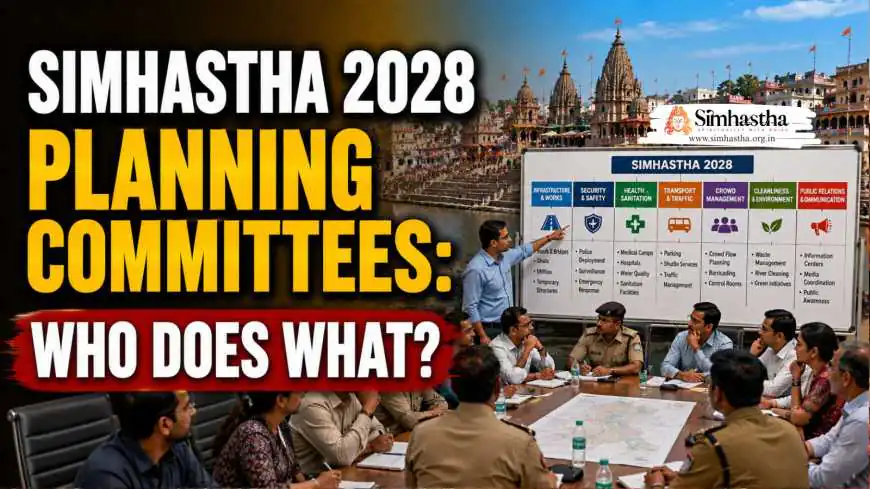
Unravel the Simhastha 2028 planning committees and their roles. From the apex Central Committee and the executive SPV to the Akhara Cell, ICCC, and Sanitation Task Force, discover the intricate machinery orchestrating the Ujjain Kumbh Mela.


The Apex Body and the Simhastha Central Committee
At the very summit of the planning pyramid sits the Simhastha Central Committee, the supreme decision-making body for the 2028 Kumbh. Chaired by the Chief Minister of Madhya Pradesh, this committee includes the most senior cabinet ministers—Finance, Home, Urban Development, Public Works, Tourism, and Public Health—along with the Chief Secretary and the Director General of Police. This is not a ceremonial body that meets once for a photograph. It is the high command that convenes at critical junctures to review the overall progress, to resolve inter-departmental deadlocks that no single ministry can break, and to sanction the massive, multi-thousand-crore budget outlays that fuel the entire project. The Central Committee approves the master plan, the land acquisition policy, the overall Mela area design, and the critical dates for the Shahi Snans as recommended by the astrologers and the Akhara Parishad. It is the ultimate guarantor of the project's political will and financial backing, and its directives are binding on every other committee and agency. The pilgrim will never see this committee's members sitting in a Bhopal conference room, poring over satellite maps and financial charts, but every smooth road, every clean toilet, and every safe ghat is a direct, tangible result of a decision taken in that room. 👑
The Executive Engine and the Simhastha Special Purpose Vehicle (SPV)
If the Central Committee is the brain, the Simhastha Special Purpose Vehicle (SPV) is the powerful, tireless heart and the two hands that get the work done. Formally notified in early 2025, the SPV is a dedicated, autonomous corporate entity that has been granted the financial and executive authority to fast-track the Mela's projects without being entangled in the slow, standard bureaucratic procedures of individual government departments. It is headed by a senior IAS officer of the rank of Principal Secretary, who serves as its full-time CEO, and it is staffed by a handpicked team of engineers, financial controllers, project managers, and administrative officers drawn from various state services. The SPV's mandate is breathtakingly comprehensive. It directly oversees the tendering, contracting, and execution of all major infrastructure projects—the ring roads, the bridges, the sewerage master plan, the water supply grid, and the development of the satellite bus terminals. It manages the consolidated Simhastha budget, disbursing funds to the line departments and maintaining the rigorous financial audit trail that is publicly visible on the Simhastha Project Dashboard. The SPV is the single point of accountability for the on-time, on-budget delivery of the Mela's physical and digital infrastructure, and its offices in Ujjain are the buzzing, high-pressure nerve centre where the blueprints become concrete. 🏗️
The District Administration and the Ujjain Collector's War Room
While the SPV manages the macro-infrastructure, the actual, ground-level orchestration of the Mela's daily life and the complex, human web of permissions, land records, and local coordination falls to the Ujjain District Administration, led by the District Collector. The Collector's office transforms, in the years leading up to 2028, into a kind of civil-military war room. The Collector chairs the District Level Coordination Committee, which brings together all the local heads of departments—the Municipal Commissioner, the Superintendent of Police, the Chief Medical Officer, the Regional Transport Officer, and the heads of the local electricity and water boards. This committee meets frequently, often weekly as the Mela approaches, to solve the thousands of granular, on-the-ground problems that no master plan can anticipate. The Collector's office is also responsible for the delicate, human-intensive work of land acquisition and the implementation of the land pooling policy, managing the compensation disbursement camps, and maintaining the essential, trust-based relationship with the farming community whose land has been taken. The Collector is the public face of the administration for the citizens of Ujjain, the person who must balance the immense, temporary demands of the Mela with the permanent, everyday needs of the city's residents. 🏢
The Municipal Corporation and the Guardians of Civic Order
The Ujjain Municipal Corporation (UMC) is the permanent, year-round custodian of the city's civic health, and its role in the Simhastha preparation is foundational. The UMC is the primary executing agency for the vast, permanent upgrades to the city's sewerage network, a project that, while accelerated by the Mela, will serve the city for decades. It is responsible for the city-wide LED street lighting retrofit, the management of solid waste, and the maintenance of the city's roads and public spaces outside the direct Mela zone. Crucially, the UMC also plays a leading role in the enforcement of building codes, the regulation of the homestay registration drive, and the licensing of the thousands of temporary food and retail vendors who will operate during the Mela. The Municipal Commissioner, who is the head of the UMC, is a key member of the Collector's coordination committee and works in close, daily partnership with the SPV. The UMC is the permanent, institutional memory of the city, the body that knows where every water pipe, every drain, and every pothole is located, and its deep, granular knowledge of the urban fabric is an indispensable asset to the temporary, project-driven SPV. 🏙️
Trending Guides Now

Ujjain Airport Project: A Historic Leap Before Simhastha 2028
Government Doubles Powers of Ujjain Mayor and Commissioner Ahead of Simhastha 2028
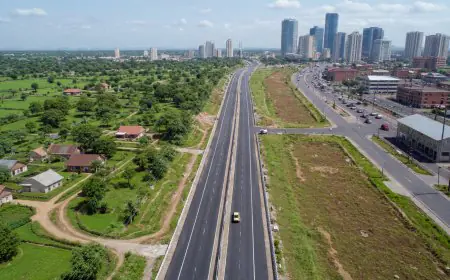
Indore–Ujjain Six-Lane Highway nearing completion — big step for regional growth!
Indore–Ujjain Six Lane Highway Update 2025: Completion Timeline & Simhastha Impact

Ujjain Railway Station to Mahakaleshwar Temple Distance (2026 Guide)

Ujjain Simhastha 2028 Dates Announced: Full Shahi Snan & Event Timeline
Ujjain Railway Station to Kal Bhairav Temple: Distance, Auto Fare and Best Route
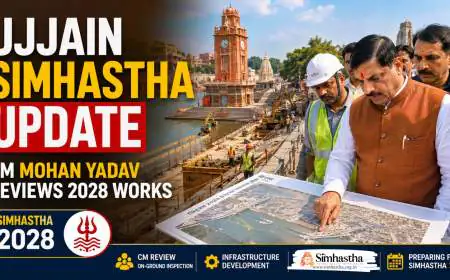
Ujjain Simhastha Update: CM Mohan Yadav Reviews 2028 Works
The Public Works and Engineering Departments and the Arteries of the Mela
The colossal task of physically building the Mela's transport backbone—the 28-kilometer Eastern Bypass, the four new ring roads, the massive new bridges over the Shipra, and the widening of the Ujjain-Indore highway—falls to the Madhya Pradesh Public Works Department (PWD) . A dedicated, high-level Chief Engineer is posted exclusively to Ujjain for the Simhastha period, and he oversees a vast army of contractors, surveyors, and labourers. The PWD's committee works in lockstep with the SPV, following the SPV's approved master plan and timeline, and is bound by the same merciless October 2027 deadline for the completion of all major road projects. Alongside the PWD, the Public Health Engineering Department (PHED) is responsible for the equally critical, and largely invisible, water supply grid—the dedicated pipeline spur from the Narmada, the 200 MLD treatment plant, and the network of master reservoirs. The Madhya Pradesh Power Management Company has its own dedicated Simhastha cell, managing the construction of the new substations, the underground cabling in the Mela zone, and the 50 MW of solar installations. These engineering departments are the muscle of the Simhastha preparation, the ones who turn the SPV's balance sheets and the Central Committee's grand visions into the asphalt, concrete, steel, and pipes that will carry the pilgrim. 🔨
The Akhara Coordination Cell and the Delicate Diplomacy of Faith
A committee that holds a uniquely sensitive and crucial role, one that has no parallel in any secular mega-event, is the Akhara Coordination Cell. Operating directly under the Simhastha Central Committee, this cell, often led by a senior officer with a deep personal understanding of the monastic orders, is the sole, authorized interface between the government machinery and the thirteen powerful, independent, and fiercely traditional Akharas. Its role is not to command the Akharas, for no government can, but to negotiate, to coordinate, and to serve. The Cell manages the delicate process of land allocation to each Akhara within the Mela zone, a task governed by an ancient protocol that must be meticulously respected. It coordinates the logistics of the Peshwai processions, ensuring that the Akharas' ceremonial entries into the city are sequenced, safe, and adequately supported. It resolves a thousand micro-disputes—over the exact placement of a camp boundary, the provision of an extra water tanker, the permissions for a particular ritual fire. It also ensures that the Akharas receive their designated bathing order and timings for the Shahi Snan, a protocol that is the single most sensitive and non-negotiable element of the entire Kumbh. The Akhara Cell's work is a continuous exercise in spiritual diplomacy, a recognition that the success of the Simhastha rests not just on engineering but on the peaceful, honoured participation of the armies of the spirit. 🛕
The Digital Nerve Centre and the ICCC Operations Committee
The Simhastha 2028 is being designed as India's first truly digital Kumbh, and the Integrated Command and Control Centre (ICCC) Operations Committee is the brain trust that is building and will operate this technological marvel. This committee, which includes senior police officers, IT specialists from IIT Indore and the state's IT department, and representatives from the telecom companies, is responsible for the design, deployment, and 24/7 operation of the ICCC. Its mandate covers the installation and integration of over 5,000 CCTV cameras, the drone surveillance network, the AI-powered crowd density analytics platform, the unified mobile application for pilgrims, the digital ticketing and common mobility card system, and the geotagged sanitation monitoring dashboard. The committee is also responsible for the colossal task of ensuring temporary network capacity augmentation, deploying portable cell towers and satellite backhaul, so that the city's telecom infrastructure does not collapse under the weight of millions of simultaneous users. During the Mela, the ICCC committee will be the digital omniscience of the Kumbh, its members seated in the silent, screen-lit control room, their eyes scanning for the first, faint digital tremor of a crowd surge, a traffic jam, or a sanitation failure. They are the unseen guardians, the priests of the pixel, who will ensure that the analog, ancient, and chaotic beauty of the Kumbh is held within a protective, predictable digital shell. 📡
The Sanitation and Health Task Forces and the Temple of the Body
Two tightly interlinked committees are tasked with a mission that is, in the public memory, the ultimate measure of the Kumbh's success or failure: the Simhastha Sanitation Task Force and the Simhastha Health Services Committee. The Sanitation Task Force, staffed by engineers, public health experts, and the private concessionaires on performance-linked contracts, is the single-minded engine behind the "zero open-defecation, zero visible waste" promise. Its role is the planning, deployment, and real-time monitoring of the 2.5 lakh temporary toilets, the bio-digester technology, the 10,000-strong sanitation workforce, and the entire solid waste management and recycling loop. It operates its own dedicated dashboard within the ICCC.
The Health Services Committee, working in consultation with AIIMS Bhopal and the WHO, is responsible for the four-tier medical fortress—the 120 first-aid posts, the 48 mini-hospitals, the six sector hospitals, and the upgraded tertiary referral centres. Its role includes the stockpiling of emergency medicines, the deployment of 500 additional ambulances including river rescue boats, and the integration of the entire network through a real-time telemedicine platform. Together, these two committees are the guardians of the pilgrim's physical body. Their work, often unseen and unglamorous, is the absolute foundation upon which the spiritual experience of the Kumbh rests. A pilgrim who is sick, or who is haunted by the lack of a clean toilet, cannot pray. The Sanitation and Health Committees are the silent, necessary priests of the body's temple. 🩺
The Transport, Traffic, and Mobility Committee and Moving a Hundred Million Souls
The Simhastha Transport and Traffic Management Committee is tasked with a fluid dynamics problem of almost unimaginable complexity: moving ten crore people into, around, and out of a single city over the course of a month, without a single catastrophic gridlock or a fatal crowd crush. This committee is a multi-agency powerhouse, co-chaired by the Inspector General of Police (Traffic) and the Regional Transport Officer, and it includes senior representatives from the Indian Railways, the state bus corporation, the SPV, and the private shuttle bus operators. Its work begins years in advance with the planning of the concentric ring road system and the one-way traffic loops. As the Mela approaches, it publishes the detailed road closure and diversion plans, manages the vast, peripheral parking plazas, and coordinates the continuous shuttle bus loops. During the Mela itself, the committee's members will be stationed at the ICCC, their eyes glued to the live traffic density maps, making moment-to-moment decisions to redirect a pedestrian flow, open a relief corridor, or dispatch a fleet of empty buses to a suddenly overwhelmed sector. The silent, smooth, and safe movement of the pilgrim is their singular obsession, and their success is measured not in reports but in the peaceful, unhurried gait of an elderly woman walking calmly to the ghat. 🚌

The Culture, Tourism, and Pilgrim Facilitation Committee
While the engineers and the police build the physical and security infrastructure, the Simhastha Culture and Tourism Committee, anchored by the Madhya Pradesh Tourism Board, is responsible for the soul and the welcome of the Mela. This committee curates the vast cultural programme—the classical music and dance performances, the bhajan and kirtan gatherings, the religious discourses, and the exhibitions on Ujjain's history and the Kumbh tradition. It manages the Malyavaan Haat, the permanent craft bazaar, and coordinates the participation of the artisan cooperatives. It also oversees the training and deployment of the multilingual volunteer squads, the pilgrim helpdesks, and the official guided tour programmes. A critical sub-committee under its purview is the Pilgrim Facilitation Cell, which is responsible for the unified mobile app, the real-time public information displays, the lost-and-found digital reunification system ("Simhastha Pariwar"), and the entire signage and wayfinding architecture of the Mela, ensuring that a pilgrim who speaks only Tamil or Bengali can navigate the vast, temporary city with confidence and ease. This committee is the warm, welcoming human face of the massive administrative machine, the custodian of the pilgrim's emotional and spiritual comfort. 🎭
The Financial Oversight Committee and the Guardians of the Public Purse
A quiet, powerful, and profoundly necessary committee that operates largely out of public view is the Simhastha Financial Oversight Committee. Chaired by a senior Finance Secretary from the state government, and including representatives from the Accountant General's office and independent audit firms, this body is the conscience of the multi-thousand-crore public expenditure. Its role is to ensure that every rupee sanctioned by the Central Committee is spent for its intended purpose, that all tenders above a certain threshold are processed transparently through the Government e-Marketplace (GeM) portal, and that there is a complete, unbroken audit trail for every contract. This committee is the driving force behind the public Simhastha Project Dashboard, the online portal that allows any citizen to track the physical and financial progress of every major project in real time. It is the guardian against the twin demons of cost overruns and corruption, and its rigorous, unsmiling vigilance is the ultimate guarantee that the funds allocated for the pilgrim's clean toilet, safe road, and pure drinking water are not siphoned off into a phantom contractor's account. The pilgrim will never hear of this committee, but the pilgrim's trust in the entire Simhastha enterprise is, in a fundamental sense, secured by its quiet, unrelenting work. 🧾
The Coordinated Whole and a City Held Together by a Thousand Hands
The great administrative machinery of the Simhastha is not a single, monolithic entity; it is a living, breathing, and constantly communicating network of specialized committees, each a vital organ in a greater body. The Central Committee provides the political will, the SPV is the executive muscle, the district administration is the local nervous system, the engineering departments are the skeleton, the Akhara Cell is the diplomatic soul, the ICCC is the digital brain, and the Sanitation and Health forces are the immune system. They communicate through a strictly defined protocol of weekly coordination meetings, shared digital dashboards, and an encrypted radio and mobile network that links the ICCC to the last police constable on the ground. The Chief Minister's periodic review meetings are the final, powerful heartbeat that synchronizes every element of this vast, complex, and astonishingly efficient organism. The pilgrim who walks peacefully through the Mahakal Lok corridor, takes a clean, hot bath in a premium tent city, and is guided by a smiling volunteer to the correct shuttle bus, is the ultimate, human beneficiary of this immense, coordinated labour of a thousand unseen hands. The Simhastha is a spiritual miracle, but it is built, committee by committee, on the solid, unglamorous, and magnificent miracle of human organization and dedicated governance. 🔱
Frequently Asked Questions