

















Why Harsiddhi Temple Is Important During Navratri Celebrations
Discover why Harsiddhi Temple is important during Navratri celebrations in Ujjain. From the Shaktipeeth legend and Deep Malika ritual to women-led bhajans and nine nights of Devi worship, explore the heart of the goddess's power.


The Shaktipeeth Awakening and the Navratri Descent of the Divine Mother
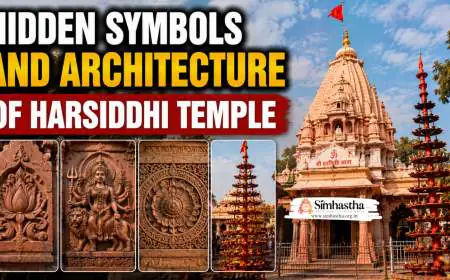
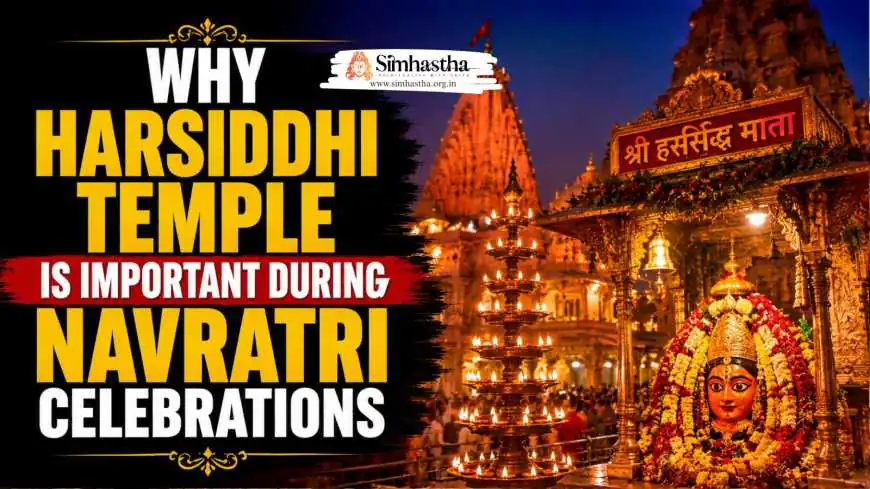
To understand the temple's supreme significance during Navratri, one must first understand what the temple fundamentally is. Harsiddhi is not a generic Devi shrine; it is a Maha Shaktipeeth, one of the 51 sacred sites that were consecrated when the body of the primordial goddess, Sati, was dismembered and scattered across the subcontinent. The specific relic that fell on this spot, according to the ancient Puranas, was her elbow. In the esoteric anatomy of the Shakta tradition, the elbow is the joint that connects the upper arm of divine will to the forearm of divine action. Harsiddhi, therefore, is the precise cosmic point where the abstract intention of the Goddess becomes the tangible, world-altering deed. During Navratri, the nine nights that celebrate the Goddess's triumphant battle against the buffalo demon Mahishasura, this inherent power of divine action is at its annual peak. The entire temple, and indeed the entire city, believes that the Goddess descends from her celestial abode during these days and takes up her most immediate and potent residence in her Shaktipeeth. The sanctum, which is always powerful, becomes, for those nine nights, a direct, luminous portal to the Adi Shakti herself. The veil is thinnest, the grace is most abundant, and a prayer whispered into the darkness of the Navratri night at Harsiddhi is believed to travel, unimpeded, directly into the ear of the Mother of the Universe. 🔱
The Sati Legend and the Elbow That Moves the Cosmos
The story of Sati, which is the foundational myth of the Shaktipeethas, is not a gentle, pastoral tale. It is a story of cosmic grief, ferocious anger, and the ultimate act of self-sacrifice. Sati, the daughter of the primordial king Daksha, immolates herself in the fire of her father's sacrificial altar after he insults her husband, Lord Shiva. In a cataclysmic rage of sorrow, Shiva lifts her burning body and performs the terrible Tandava, the dance of universal destruction. To save the cosmos from annihilation, Lord Vishnu uses his discus to dismember Sati's body, and the pieces fall to the earth. At the spot where each fragment lands, a Shaktipeeth is born, an eternal, resonant wellspring of the Goddess's power. At Ujjain, it was the elbow that fell.
The elbow, in this profound mythological code, symbolizes the dynamic power of execution, the hinge upon which the universe's actions turn. The very name of the goddess enshrined here, Harsiddhi, means "she who grants wishes with joy and swiftness." This is the elbow in action: the prayer is received, and the blessing is dispatched, without hesitation, without delay. During Navratri, the entire purpose is to invoke the Goddess as Mahishasuramardini, the slayer of the buffalo demon, the ultimate act of divine action. The connection is immediate and visceral. The same cosmic elbow that acted to destroy the demonic forces of inertia, pride, and evil is the elbow that rests at Harsiddhi. To worship here during Navratri is to connect directly with the active, weapon-bearing, demon-slaying aspect of the Mother, to draw from her the strength to conquer one's own inner demons of anger, greed, and self-doubt. ⚔️
The Twin Deep Stambhas and the Navratri Festival of Lights
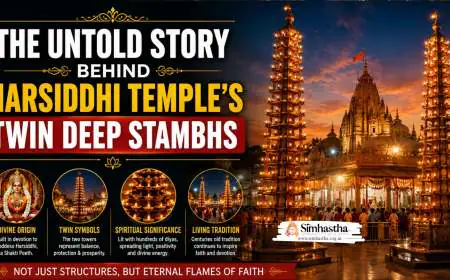
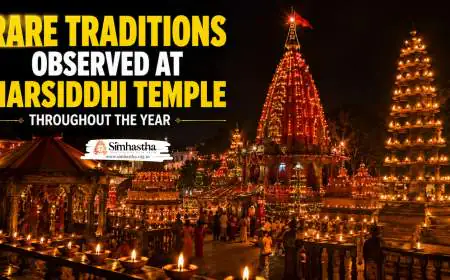
If the inner sanctum is the soul of the Navratri celebration, the magnificent twin Deep Stambhas are its blazing, visible, and unforgettable body. These towering pillars, constructed in the Maratha style and flanking the main temple entrance, are embedded with hundreds of small, lamp-holding niches. Throughout the year, they are lit for the evening aarti, but during Navratri, this ritual ascends to a completely different plane of devotional and visual spectacle. Every single niche is filled with a small, oil-fed flame, and the lighting of these lamps is not a casual act. It is a coordinated, rhythmic ceremony performed by the temple's priests, accompanied by the chanting of the Devi's mantras. The entire twin pillars are transformed into cascading columns of living fire, a vertical river of light that can be seen from the surrounding lanes, illuminating the entire courtyard and the faces of the gathered devotees with a warm, golden, dancing glow.
Trending Guides Now
Best Time to Visit Harsiddhi Temple for a Peaceful Darshan
Why Evening Visits to Harsiddhi Temple Are So Popular
Why Harsiddhi Temple Is Considered One of Shakti's Sacred Seats
Rare Traditions Observed at Harsiddhi Temple Throughout the Year

Ujjain Railway Station to Mahakaleshwar Temple Distance (2026 Guide)

Ujjain Simhastha 2028 Dates Announced: Full Shahi Snan & Event Timeline

Ujjain Simhastha Update: CM Mohan Yadav Reviews 2028 Works

Omkareshwar Trip Budget Guide: Transport, Stay, Food and Local Travel Costs
The symbolism of these lamps during Navratri is multi-layered and profoundly moving. The nine nights are a festival of the victory of light over darkness, of knowledge over ignorance, and of the divine over the demonic. The great pillars of fire are the architectural manifestation of this very victory. Each small, individual flame is understood as the soul of a devotee, individually fragile, but when placed within the great, cosmic pillar of the Mother's grace, it becomes part of an indomitable, radiant, and unified force. For the pilgrim who stands in the courtyard as dusk falls on the second or the eighth night of Navratri, watching the priests slowly, methodically bring the pillars to life, the experience is a visual sermon of the highest order. It is a silent, fiery teaching that the Mother gathers her children, with all their individual, flickering struggles, and unites them into a single, unstoppable blaze of divine love and protection. The Deep Stambhas are not merely decorated; they are liturgically activated, and their fire is believed to be a direct, purifying blessing on the entire city. 🔥
The Nine Nights of the Goddess and the Daily Ritual Pageantry
The Navratri celebrations at Harsiddhi Temple are not a single, static event. They are a carefully sequenced, nine-night-long ritual drama, with each day dedicated to a different form of the Goddess, echoing the pan-Indian tradition but infused with the temple's unique Shaktipeeth energy. The temple priests, many from lineages that have served here for centuries, perform a specific, elaborate Shodashopachara Puja for each of the nine forms. The deity, usually a dark, powerful, and richly adorned image, is bathed, dressed in a specific colour of silk corresponding to the day's goddess, and offered a unique set of flowers, grains, and sacred offerings.
The daily climax is the evening aarti, which, during Navratri, is a far more elaborate and ecstatic affair than on ordinary days. The Devi Aarti is sung with an almost martial vigour, the drums and conch shells creating a sonic landscape that is both ancient and deeply stirring. The entire congregation, often spilling out of the packed courtyard into the surrounding lanes, participates, the wave of folded hands and bowed heads moving in rhythm with the chants. On the Ashtami (eighth night) and Navami (ninth night), the rituals reach their zenith. A special Havan is performed in the temple courtyard, a sacred fire into which offerings of ghee, grains, and sacred herbs are poured, the smoke carrying the collective prayers of the community to the heavens. Young girls, seen as living embodiments of the Goddess (Kanya Puja), are invited, their feet washed, and they are offered a sanctified meal and new clothes, a ritual of profound beauty and humility. The temple becomes a microcosm of the entire cosmic cycle of invocation, worship, and the receiving of the Mother's abundant grace. 📅
The Courtyard Transforms Into a Sacred Mandala of Women’s Devotion
One of the most moving and distinct aspects of the Navratri celebration at Harsiddhi is the way the vast, open courtyard transforms into a sanctuary of women's devotion. While all pilgrims are welcome, the nights here belong, in a very palpable sense, to the women of Ujjain and the surrounding Malwa villages. Clad in vibrant red, green, and yellow bandhani or leheriya sarees, they gather in large, concentric circles, their heads covered reverently with the pallu of their saris. Led by a woman with a deep, resonant, and untrained voice, they sing traditional garba and bhajan songs, many of which are ancient and specific to the Malwa region, their lyrics speaking of the Goddess's playful childhood, her fearsome battle, and her tender, motherly love. The clapping of hands provides the rhythm, and occasionally, a simple, earthen pot perforated with holes and lit with a lamp inside is placed at the centre of the circle.
This is not a performance; it is a sacred, female communion. For the women who often spend their lives in the quiet, demanding service of their families, these nights are a space of profound, communal liberation. They sing with a power and an abandon that is otherwise rarely given public expression. The Goddess they address is not a distant, abstract deity; she is their confidante, their protector, and their sister. The courtyard of Harsiddhi, under the Navratri moon, becomes a sacred mandala where the suppressed feminine voice rises, not in protest, but in ecstatic, devotional song, a sound that the ancient stones of the Shaktipeeth have absorbed and amplified for centuries. It is the living, breathing proof that the Mother is not just in the sanctum; she is in the gathered, singing, and exultant souls of her daughters. 🎶
The Wish-Fulfilling Mother and the Tradition of the Navratri Vrat
The name Harsiddhi is an active, dynamic promise. "Har" means wish or desire, and "Siddhi" means fulfillment or perfection. The goddess of this temple is, by her very definition, the one who grants the prayers of her devotees. During Navratri, this aspect of her grace is the primary focus for thousands of pilgrims. Many devotees observe a strict nine-day Navratri Vrat, a fast that can range from a simple diet of fruits and milk to a complete, waterless fast. The fast is not a penance; it is a conscious act of creating an empty, receptive space within the body and mind, a sacred vacuum that only the Mother's grace can fill. The physical hunger is a constant, gentle reminder of the deeper spiritual hunger for her presence. The devotee comes to the temple in the evening, after a day of discipline and inner prayer, and offers their specific wish—a child for a barren daughter, a job for an unemployed son, the healing of a sick parent, or simply the strength to endure a personal, silent sorrow. They tie a sacred red thread, a moli, to the carved stone lattice of the temple window, a physical, fluttering testament to their petition. The act is simple, silent, and repeated by thousands. The collective faith that charges the atmosphere during these nine nights is a palpable force. The temple's energy, always potent, becomes supercharged with the desperate, hopeful, and grateful prayers of the countless souls who believe, with an unshakeable conviction, that the Mother of the elbow, the active, dynamic, wish-fulfilling Harsiddhi, is listening intently and will act. ✅

The Synthesis of Shaiva and Shakta Energies During the Festival
Ujjain is, in its deepest identity, the city of Mahakal, the Lord of Time. The Mahakaleshwar Jyotirlinga, a short walk away, is the spiritual centre of gravity for the entire sacred geography. The profound importance of Harsiddhi during Navratri, therefore, lies not just in its Shaktipeeth status, but in its role as the necessary, complementary pole of the divine feminine within Ujjain's Shaivite universe. The great cosmic dance of Shiva and Shakti—the static, eternal consciousness and the dynamic, creative energy—is enacted, in geographic terms, between the two temples. During Navratri, when the Goddess is in her full, manifest, and warrior-like glory, the Shakti principle dominates the spiritual calendar. The devout pilgrim who visits Ujjain during this time will perform a parikrama that begins at the Mahakaleshwar, the great masculine stillness, and concludes at Harsiddhi, the great feminine dynamism. This sacred circuit, walked by thousands, is a physical, embodied realization of the fundamental tantric truth that Shiva without Shakti is a corpse, and Shakti without Shiva is undirected chaos. The Maratha rulers who rebuilt the temple understood this profound symbiosis. They placed the grand, martial, and yet deeply maternal Harsiddhi at the heart of their spiritual kingdom, a powerful statement that the sovereignty of the goddess was the ultimate source of their worldly power. Navratri at Harsiddhi is, therefore, not just a Devi festival; it is the annual, cosmic rebalancing of Ujjain's entire sacred identity. 🕉️
Practical Guidance for Visiting Harsiddhi Temple During Navratri
Experiencing the Navratri celebrations at Harsiddhi Temple requires a small measure of planning to navigate the crowds and to fully absorb the spiritual atmosphere. The temple is at its most crowded in the late evenings, when the Deep Malika and the main aarti take place. Arriving by the late afternoon, around 5:00 PM, allows you to find a quieter spot in the courtyard from which to watch the proceedings unfold. The crowds on the Ashtami and Navami nights are immense, and a significant amount of patience and a spirit of surrender are the most valuable things you can bring. Dress in traditional, modest attire; for women, a red or vibrant saree or salwar kameez is particularly auspicious, and a dupatta to cover the head is a gesture of deep cultural and spiritual respect. Be prepared for a sea of devotees, and avoid carrying large bags or valuables. The temple's security is thorough, and electronic devices are not permitted in the inner sanctum. A simple offering of a coconut, a garland of red flowers, and some vermillion powder is easily purchased from the shops lining the approach. The most authentic experience is not to push for a close darshan, but to find a spot in the courtyard, to close your eyes, and to simply let the sound of the women's bhajans, the scent of the incense, and the warmth of the great lamp pillars wash over you. The Mother's grace during Navratri is not confined to the inner chamber; it radiates outwards, filling every stone and every heart in the vast, ancient, and magnificently alive temple complex. 🙏
The Eternal Victory and the Light That Never Dims
On the tenth day, Vijayadashami, the great lamps are finally allowed to rest, the vibrant pandal decorations are taken down, and the immense crowds slowly disperse, leaving the ancient courtyard to a quiet, profound, and grateful silence. But the energy that has been generated over the nine sacred nights does not dissipate. It settles, like a fine, invisible golden dust, into the very fabric of the temple's red stone walls, into the earth of the Shaktipeeth, and into the hearts of the millions who have come and offered their tears, their songs, and their desperate, whispered prayers. The importance of Harsiddhi Temple during Navratri is, ultimately, that it offers a lived, yearly proof of the Goddess's eternal, victorious presence. It is a reminder that the darkness of the demon, whether it exists in the world or in the secret chambers of our own hearts, will always, inevitably, be shattered by the dawn of the Mother's fiercely loving light. The flames of the Deep Stambhas may be extinguished for another year, but the inner flame they have kindled in the soul of the devotee—the fire of courage, the warmth of faith, and the light of unshakeable hope—continues to burn, silently, steadily, and eternally, through all the months until the autumn moon rises again over the ancient, sacred, and ever-gracious city of Ujjain. 🔱
Frequently Asked Questions