














The Complete Sequence of Ritual Events During Simhastha
Unfold the complete sequence of ritual events during Simhastha. From the Peshwai processions and Dhvaja flag hoisting to secret Naga initiations, the night vigil, and the thunderous Shahi Snan, trace every sacred step of the Ujjain Kumbh Mela.


The Celestial Prologue and the Astrological Determination of the Sacred Dates
The entire Simhastha is set in motion not by a government committee or a religious council, but by the silent, relentless movement of the planets. The very first act in the complete sequence of ritual events during Simhastha takes place months before any pilgrim arrives, in the quiet chambers of the Kumbh Mela's astrologers. These scholars, heirs to the mathematical tradition of the Surya Siddhanta that was perfected in Ujjain itself, calculate the precise moment when Jupiter (Brihaspati) enters the zodiac sign of Leo (Simha) and aligns with specific solar and lunar configurations. This is the cosmic trigger. The exact day, and the specific Muhurta—the window of time, often lasting only a few hours—for each of the Shahi Snans is determined. Only when this calculation is complete, verified by the Akhil Bharatiya Akhara Parishad, and formally announced by the Simhastha Central Committee does the immense machinery of the Mela begin to turn. The dates are made public, and from that moment, the city, the pilgrims, the railways, and the akharas all synchronize their internal clocks to a single, celestial command. This astrological prologue is the invisible, intellectual spine of the entire Simhastha, the quiet whisper of the cosmos that initiates the great, roaring chant of the faithful. ⏰
The Peshwai Processions and the Royal Entry of the Spiritual Armies
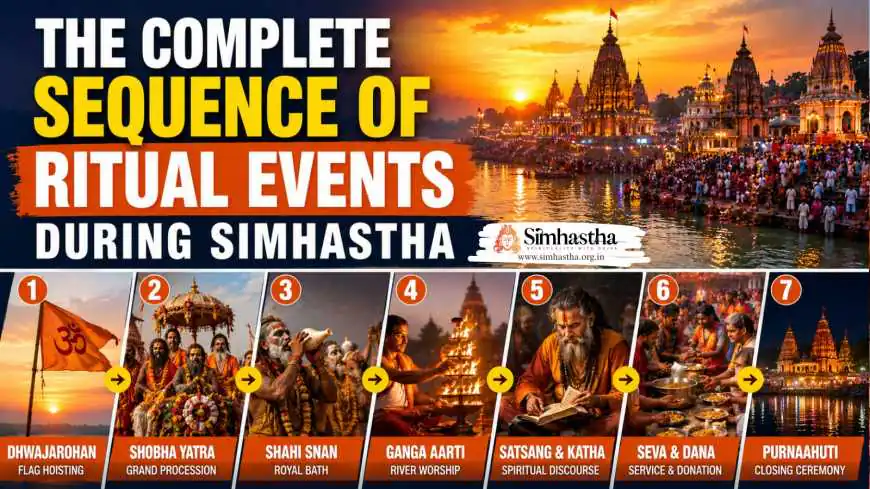
With the dates fixed, the great monastic orders, the Akharas, begin their journey to Ujjain. Their arrival is not a quiet affair; it is a series of spectacular, medieval-style ceremonial entries known as the Peshwai. Each of the thirteen recognized Akharas, and their various sub-branches, enters the Mela grounds in a procession of breathtaking pageantry that is both a spiritual statement and a display of their sovereign authority. The presiding deity of the Akhara, a bejewelled image of Lord Shiva, Lord Rama, or another divine form, rides at the head of the procession on a magnificent silver chariot or the back of a richly caparisoned elephant. The Mahant, the spiritual head of the Akhara, follows, seated beneath a silver canopy in a palanquin, shaded by a ceremonial umbrella and surrounded by his senior disciples. Bands of musicians playing ancient, martial tunes on shehnais and nagaras (war drums) announce their coming. The air is filled with the sound of conch shells, the rhythmic clang of cymbals, and the deep, resonant chanting of sacred hymns.
The most electrifying element of the Peshwai is the presence of the Naga sadhus, the naked, ash-smeared warrior-ascetics who are the Akhara's spiritual infantry. They move through the streets in a controlled, ecstatic fury, their bodies glowing with sacred ash, their matted hair flying, and their hands brandishing tridents, swords, and spears. They shout war cries of "Har Har Mahadev," perform mock charges, and display breathtaking feats of martial and yogic skill. The Peshwai is the formal, ritualized act of taking possession of the sacred ground. It announces to the city, to the cosmos, and to all the gathered pilgrims that the army of the spirit has arrived and is now encamped. The order of the Peshwais is governed by a strict, ancient protocol, with the Juna Akhara, the Niranjani Akhara, and the Mahanirvani Akhara traditionally leading the way. The Peshwai marks the transition of Ujjain from a city of stone into the living, breathing capital of the spiritual universe. 🏇
The Dhvaja Puja and the Consecration of the Akhara's Sacred Boundary
Once an Akhara has taken its designated place on the Mela grounds, a ritual of profound importance is performed before any other major ceremony can take place: the Dhvaja Puja, the worship and hoisting of the Akhara's sacred flag. The flag, or nishan, is not a mere banner; it is a living embodiment of the Akhara's spiritual power, lineage, and identity. It is woven from specific fabrics, dyed in the Akhara's traditional colors, and treated as a consecrated deity. In a formal ceremony attended by the entire Akhara, the flag is worshipped with full Vedic or tantric rites. It is offered fire, incense, flowers, and the sacred ash from the eternal dhuni. The head priest consecrates it, and then, to the sound of conch shells and the roar of the assembled sadhus, it is raised high on a tall pole at the entrance of the Akhara's camp.
Trending Guides Now

Who Decides Ritual Timings in Ujjain Simhastha?

Why the First Shahi Snan Holds Supreme Spiritual Authority
How Ritual Processions Move Through Simhastha Mela Areas

Shahi Snan Dates for Ujjain Simhastha 2028 Official Schedule

Ujjain Railway Station to Mahakaleshwar Temple Distance (2026 Guide)

Ujjain Simhastha 2028 Dates Announced: Full Shahi Snan & Event Timeline

Ujjain Simhastha Update: CM Mohan Yadav Reviews 2028 Works
Karkateshwar Mahadev: 22/84 Mahadev of Ujjain
The raising of the flag establishes the Akhara's sacred boundary. The space within its shadow is now sanctified, a sovereign spiritual territory governed by the Akhara's maryada (code of conduct). The flag will not be lowered until the Simhastha concludes, and throughout the Mela, junior sadhus are assigned the sacred duty of guarding it. Its condition—how it flutters in the wind, whether it remains untorn—is observed with deep, superstitious reverence. It is the Akhara's visible link to the heavens, and it silently watches over all the rituals that are to follow, a constant, fluttering reminder that the deity is present and the lineage is unbroken. 🚩
The Secret Initiations and the Midnight Birth of the New Naga Warriors
In the deepest, most impenetrable privacy of the Akhara's inner camp, a ritual of staggering spiritual power unfolds in the nights leading up to the first Shahi Snan: the mass initiation of new Naga sadhus. This is the hidden, beating heart of the Simhastha, a ceremony that is never photographed, never announced, and never witnessed by outsiders. A candidate who has undergone years of testing and service is led by his guru to a secluded spot by the Shipra, often in the darkest hour of the night. There, in the presence of the senior mahants and the sacred fire, the candidate performs his own funeral rites, the pind daan for his own soul. He symbolically dies to his former name, his family, his caste, and his entire social existence. He is shaved, bathed in the sacred river, and then smeared from head to toe in the sacred ash from the Akhara's eternal dhuni fire. The guru whispers a secret, sacred mantra into his ear, a sonic seed that will be the core of his spiritual practice for the rest of his life. His clothing is removed. He stands naked, reborn, a living representation of Shiva at the cremation ground.
These newly born Nagas, who will lead the charge into the river on the Shahi Snan day, emerge from these nocturnal rites not as the men they were yesterday, but as newborn warriors of the divine. Their first public act of existence will be the great, sacred plunge. The initiation is the spiritual engine of the Kumbh, the continuous, silent pulse of death and rebirth that infuses the entire Mela with its transformative power. 🔱
The Night of the Great Vigil and the City That Holds Its Breath
The night before a designated Shahi Snan is unlike any other night on earth. The entire Mela ground, a sprawling temporary megacity of millions, crackles with a peculiar, electric stillness. This is the night of the Jagaran, the great spiritual vigil. Inside the fortified camps of the Akharas, there is no sleep. The sacred dhuni fires are fed continuously, their flames leaping high into the pre-dawn dark, casting long, dancing shadows on the canvas walls. Groups of sadhus sit in circles, their eyes half-closed, engaged in deep, silent meditation or in the rhythmic, hypnotic chant of "Om Namah Shivaya." The air is thick with the scent of burning wood, the sharp, clean fragrance of incense, and the faint, earthy smell of the Shipra. In the inner sanctums of the Akhara camps, the most senior mahants perform elaborate, secret pujas to their presiding deities, invoking their full presence and blessings for the great event that is to come.
Outside the Akhara camps, the vast sea of ordinary pilgrims is also in motion. The designated bathing ghats, freshly cleaned, barricaded, and secured by a massive security presence, are already starting to fill with devotees who have walked through the night to secure a spot. The entire city of Ujjain is a single, pulsing organism, its heartbeat quickening as the hours tick down. The police and the Mela administration are on full alert, monitoring the crowd density in real time from the Integrated Command and Control Centre (ICCC) . There is a profound, almost tangible sense of anticipation, a feeling that something immense and transformative is about to erupt from the darkness into the first grey light of dawn. The night is the container, the sacred, charged silence that precedes the thunder. 🌙
The Pre-Dawn Assembly and the Order of the Sacred Charge
As the first faint, grey light of dawn begins to leach into the eastern sky, the Akhara camps erupt into a disciplined, tightly controlled chaos. This is the moment of the pre-dawn assembly. Inside each camp, the senior mahants and the heads of the various sub-sects gather to finalize the procession's formation. The order is strictly hierarchical and has been governed by the same protocol for centuries. The Akhara's presiding deity, on its chariot or elephant, is the spiritual anchor of the procession. The Mahant and other senior, learned sadhus follow, often seated in palanquins or on decorated camels. Behind them come the musicians, the flag-bearers, and the main body of the Akhara's thousands of sadhus. But at the very front, the tip of the spiritual spear, are the newly initiated and the veteran Naga sadhus. They are the shock troops, the first to touch the sacred water and, by their fierce, fearless presence, to energetically sanctify the river for all those who follow. The Nagas, their bodies glistening with freshly applied ash, perform their final, intense, inward-focused rituals. Some sit in a last, silent meditation, their tridents planted in the ground before them. Others circle their dhunis, shouting the name of Mahadev to build the internal, spiritual heat that will carry them forward. The air within the camp is a volatile mixture of extreme stillness and incipient, cataclysmic movement. 🧘

The Shahi Snan and the Thunderous Charge into the Nectar of Immortality
And then, at the precise, astrologically determined Muhurta, a signal is given. It might be a conch shell blast, a particular, ferocious rhythm of the war drums, or a shouted command from the Mahant. The tense discipline of the camp shatters into a magnificent, terrifying release of spiritual energy. The Naga sadhus burst from the camp entrance in a full, ecstatic sprint towards the Shipra. Their tridents are raised, their wild cries of "Har Har Mahadev" split the sky, and the ash from their bodies creates a pale, ghostly cloud around them. This is the Shahi Snan, the Royal Bath, the single most iconic, photographed, and spiritually electrifying event of the entire Simhastha. They do not walk; they fly, their bare feet pounding the ancient earth, their dreadlocks streaming behind them. They are not individuals anymore; they are a single, multi-limbed, divine force, a human avalanche of pure, unmediated devotion.
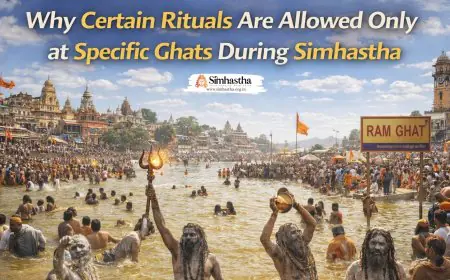
Behind them, the great procession of the Akhara—the elephants, the chariots, the palanquins, the thousands of chanting sadhus—begins its majestic, slower march towards the river. But it is the Nagas, in those first, primal moments of their charge, who are the living, breathing embodiment of the Shahi Snan's spiritual meaning: the complete, ecstatic, and fearless surrender of the soul to the eternal. The moment the first Naga's foot touches the Shipra, the first royal bath has begun. The leaders of the charge plunge into the river with a force that sends water exploding outward. They immerse themselves completely, again and again, their bodies disappearing beneath the surface, their matted hair floating on the water like dark, tangled seaweed. This is not a hygienic dip; it is a ritual of cosmic significance. The Nagas, by their bath, are believed to sanctify the river for the millions who will follow. They are the first to receive the full, undiluted potency of the celestial amrit that the astrological Muhurta has infused into the water. After the Nagas, the senior mahants and the Akhara's deity are brought to the river's edge and given a more ceremonial bath. Finally, the thousands of other sadhus of the Akhara enter the water in their designated order. The river, for those intense, chaotic moments, becomes a churning mass of ash, water, saffron, and ecstatic, liberated souls. The Shahi Snan is complete, and the great spiritual doorway of the Simhastha is now, officially and cosmically, thrown open for the millions of ordinary pilgrims who will bathe in its wake. 🌊
The Communal Feast and the Distribution of Sanctified Grace
The completion of the Shahi Snan is not the end of the day's sacred sequence; it is the gateway to another profound ritual: the communal sharing of Prasad. The Akhara's kitchens, which have been working since the early hours, now begin the massive, organized distribution of sanctified food. In vast, tented halls, volunteers ladle out a simple but delicious meal of khichdi, puri, and sabzi to a continuous, unbroken stream of pilgrims. Sitting in a long row on the ground, eating a meal that has been blessed by the presiding deity of that Akhara, is a ritual of profound equality and surrender. The king and the beggar sit side by side, receiving the same food, for it is not charity; it is Mahaprasad, the grace of the Divine Mother. The distribution of sacred ash, vibhuti, and the holy water from the Shipra are also common rituals at this time. Pilgrims receive these sacred substances in their palms or on their foreheads with deep reverence, the material objects carrying an invisible, intangible blessing that they will carry back to their homes, sometimes thousands of miles away. This is the ritual of the return gift, the divine acknowledgment of the devotee's long and arduous journey. 🍛
The Evening Aarti, the Floating Lamps, and the Quiet Personal Rituals
As dusk falls on the day of the Shahi Snan, the Mela's mood shifts from the thunderous ecstasy of the morning to a more contemplative, soulful register. The great evening Shipra Aarti at Ram Ghat is a sensory immersion: the sound of conch shells, the rhythmic clanging of bells, the synchronized movements of the priests with their massive, multi-tiered brass lamps, and the hundreds of small, floating diyas on the dark water. This ritual of offering light to the sacred river is a collective act of thanksgiving, a beautiful, luminous calm after the storm of the day. Individual pilgrims and families then engage in their own quiet, personal rituals. Some perform the Deep Daan, placing a small, lit lamp on the river with a silent prayer. Others perform their ancestral rites of pind daan on the quieter stretches of the ghats, the tears of filial love mixing with the sacred water. Some simply sit in silent meditation on the steps, allowing the peace of the river to wash over them. These quiet, personal rituals are the true soul of the Simhastha, the intimate conversation between a single soul and its Maker that takes place in the vast, gentle darkness of the Ujjain night. 🪔
The Grand Parikrama and the Circumambulation of the Sacred Mandala
In the days between the great bathing dates, and often on the days themselves, pilgrims perform the Parikrama, the sacred circumambulation of the entire Mela area or a specific set of temples. The most significant of these is the Panchkoshi Parikrama, an arduous, day-long walk that encompasses the entire sacred geography of Ujjain, tracing the ancient, invisible boundary that defines the city as a cosmic mandala. The act of walking is itself a ritual, a physical prayer made with the body. You will see groups of pilgrims walking barefoot, their lips moving in constant chant, carrying small bundles on their heads. The parikrama transforms the entire city into a temple, and the pilgrim, by walking its perimeter, symbolically places the entire sacred universe at the centre of their own being. 🚶
The Closing Ceremonies and the Lowering of the Sacred Flags
As the final Shahi Snan date passes and the Mela begins to draw to a close, a final, quiet sequence of rituals takes place. The great Akharas, having fulfilled their sacred purpose, prepare to depart. The Dhvaja, the sacred flag that was raised at the beginning, is now lowered in a simple, dignified ceremony. The dhuni, the sacred fire that has burned continuously for the entire duration of the Mela, is allowed to subside. Its final, still-glowing embers are carefully collected in a sealed container and carried by a designated sadhu back to the Akhara's permanent headquarters, where it will be used to rekindle the main fire. The temporary camp is ritually purified, the ground that hosted the Akhara is thanked with a simple puja, and any remaining offerings or ritual materials are disposed of according to prescribed procedures. The mahants and senior sadhus perform a final, grateful aarti to their presiding deity, a ritual of closure and gratitude. Then, with minimal fanfare, the great canvas cities are struck, and the Akharas, with their deities, their flags, and their eternal fires, begin the journey back to their ashrams, their caves, and their wandering paths across India. The visible Simhastha dissolves, but the invisible Simhastha, the inner Kumbh of spiritual awakening, continues in the hearts of the millions who have been touched by its ancient, transformative power. 🔱
Frequently Asked Questions