























Lesser-Known Rituals Performed During Simhastha Mela
Discover the lesser-known rituals performed during Simhastha Mela beyond the Shahi Snan. Explore hidden ceremonies, secret initiations, and mystical practices of the Kumbh that few pilgrims witness.


The Pre-Dawn Akhada Pujas That Pilgrims Never Witness
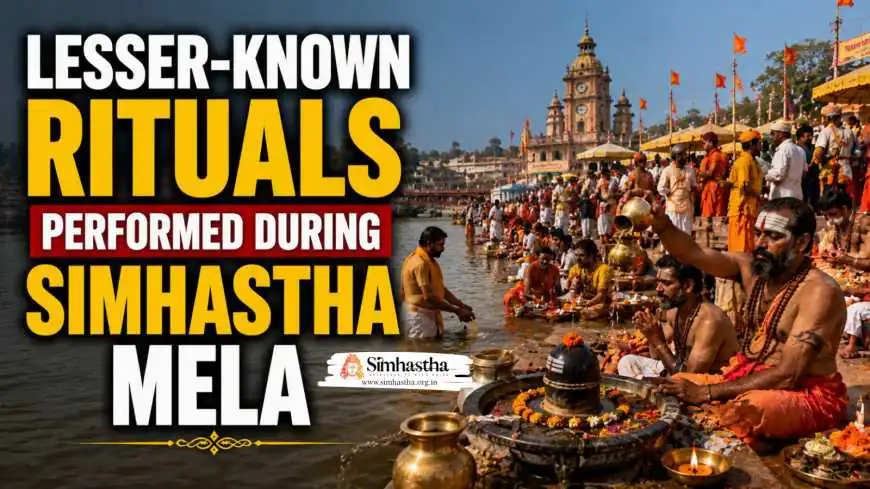
Long before the first rays of the sun touch the Shipra's waters, while the vast encampments of pilgrims are still wrapped in sleep, the akharas come alive with rituals that outsiders rarely glimpse. Each akhara—the ancient monastic orders that form the spiritual backbone of the Kumbh Mela—maintains its own secret ishta devata puja, the worship of its chosen deity, conducted within the innermost enclosure of the camp where only initiated members are permitted. These pre-dawn rituals are not performed for spectators. There is no spectacle, no public address system, no Crowd Management. There is only the fire, the mantras, and the intimate, charged silence of adepts at prayer. The Juna Akhara, the largest and most influential of the akharas, conducts a complex Shiva puja that involves the ritual anointing of a sacred lingam with substances that have been prepared over days—panchamrit, sacred ash from the dhuni, and herbs known only to the akhara's senior mahants. The Niranjani Akhara performs an elaborate Ganesh puja at the threshold of its camp, invoking the remover of obstacles before the day's momentous events. The Mahanirvani Akhara, with its deep tantric roots, conducts rituals that invoke the Dasa Mahavidyas, the ten wisdom goddesses of the tantric tradition, using yantras drawn in rice flour and vermillion on sanctified wooden boards. These are not hidden out of secrecy for its own sake but out of a profound understanding that certain vibrations, certain energies, require containment, require the protected vessel of the initiated circle, require the absence of the casual gaze. 🔱
The Ritual of the Akhada Flag and the Sacred Standard
One of the most symbolically charged yet publicly overlooked rituals of the Simhastha is the Akhada Dhvaja Puja—the worship and raising of the akhada's sacred flag. Each akhada possesses a flag, often referred to as the nishan or dhvaja, that is not merely a banner but a living embodiment of the akhada's spiritual power and lineage. The flag is woven from specific fabrics, dyed in specific colors that correspond to the akhada's presiding deity and tradition, and is treated as a consecrated object. Before the Simhastha formally begins, each akhada conducts a ritual in which the flag is worshipped with full Vedic or tantric rites, offered flowers, incense, and the sacrificial fire, and then raised on a tall pole at the entrance to the akhada's camp. This ritual marks the akhada's formal, spiritual establishment on the Mela grounds. The flag is not lowered until the Simhastha concludes. Throughout the Mela, junior sadhus are assigned the duty of guarding the flag, and its condition is believed to reflect the spiritual health of the akhada. A flag that flutters vigorously in the wind is seen as an auspicious sign of divine presence and blessing. A flag that hangs limp or, worse, is damaged by weather, requires propitiatory rituals to restore the spiritual equilibrium.
The Naga Sadhu Diksha and the Secret Initiation Chambers
The Naga sadhus—the naked, ash-smeared ascetics who lead the Shahi Snan processions—are the most iconic visual image of the Kumbh Mela. But the process by which a renunciate becomes a Naga is one of the most closely guarded rituals of the entire Simhastha. The Naga diksha, or initiation, is not a single ceremony but an extended process that culminates during the Kumbh Mela, often in the dead of night, within the most restricted enclosures of the akhara. The candidate has typically undergone years of preparatory discipline—celibacy, fasting, service to the guru, and the study of scriptures. The final initiation involves the performance of one's own pind daan, the funeral rites that a son performs for a deceased parent. By performing this ritual for himself, the candidate symbolically dies to his former identity, his family, his caste, and his place in the social order. He is no longer a householder, no longer a member of his birth family, no longer bound by the laws of the material world. Following this, in a ceremony witnessed only by the akhara's senior-most mahants and the candidate's guru, the initiate is given the langot (loincloth) or, in the case of the truly naked Nagas, commanded to renounce even that. The guru whispers the guru mantra into the initiate's ear, the sacred sound that will be the seed of his spiritual practice for the rest of his life. The new Naga is then bathed in the Shipra, often at an auspicious moment that is astrologically calculated, and emerges reborn—a naked, ash-covered embodiment of renunciation. This ritual is not photographed. It is not announced. It is not for the world. It is a transaction between the soul and the eternal, witnessed only by the fire and the guru. ⚠️
The Dhuni Puja and the Eternal Fire of the Akharas
At the heart of every akhara camp, burning continuously throughout the Simhastha, is the dhuni—the sacred fire. The dhuni is not a cooking fire or a bonfire for warmth, though it may serve those secondary purposes. It is a living deity, an embodiment of Agni, the fire god who carries offerings to the divine and who purifies all that comes into contact with it. The dhuni puja is a daily, often thrice-daily, ritual performed by designated sadhus who have been trained in the specific mantras and offerings of their lineage. The fire is kindled according to strict prescriptions—specific woods, specific offerings of ghee and grains, specific mantras chanted in specific meters. Ash from the dhuni, known as vibhuti, is considered highly sacred and is applied to the foreheads of sadhus and distributed to devotees. The dhuni is also the site of homa and havan ceremonies performed for specific purposes—for the health of a sick devotee, for the success of a particular endeavor, for the peace of a departed soul. During the Simhastha, the akhara dhunis burn with particular intensity, fed continuously and attended with heightened devotion, as the spiritual energy of the Mela is understood to amplify the potency of all fire rituals. Pilgrims who visit the akhara camps are often invited to sit near the dhuni, to offer a small piece of wood or a spoonful of ghee, and to receive the warmth and blessing of the sacred fire. But the full ritual, the long chanting of the Vedic and tantric fire mantras, takes place in the quiet hours when the crowds have thinned and only the initiated remain. 🔱
Trending Guides Now
Why Certain Rituals Are Allowed Only at Specific Ghats During Simhastha
What Is Shahi Snan in Ujjain Simhastha Kumbh Mela?

Difference Between Shahi Snan and General Snan
What Happens Before the First Royal Bath of Simhastha

Ujjain Railway Station to Mahakaleshwar Temple Distance (2026 Guide)

Ujjain Simhastha 2028 Dates Announced: Full Shahi Snan & Event Timeline
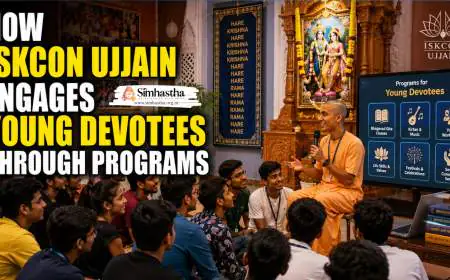
How ISKCON Ujjain Engages Young Devotees Through Programs

Benefits of Becoming a Simhastha Volunteer
The Lamp Offerings and the Shipra's Midnight Devotees
The grand Shipra aarti, performed at Ram Ghat with hundreds of lamps and thousands of spectators, is one of the Simhastha's most photographed rituals. But there is another, quieter tradition of lamp offering that takes place along the river at hours when the ghats are nearly empty. Individual pilgrims, families, and small groups of devotees come to the Shipra in the late hours of the night or the very early hours of the morning, carrying small diyas made of clay or, increasingly, leaf bowls filled with ghee and a cotton wick. They light the lamp, offer a silent prayer—often a deeply personal prayer, a vow, a plea, a thanksgiving—and set it afloat on the dark waters of the Shipra. The sight of hundreds of these small, flickering lights drifting slowly down the river in the pre-dawn darkness is hauntingly beautiful, a silent, luminous liturgy of personal devotion that unfolds without priests, without crowds, without fanfare. Some pilgrims perform a specific sankalpa—a formal vow—before releasing their lamp, promising to perform a certain spiritual practice, to give up a certain vice, to make a certain pilgrimage, if their prayer is answered. This ritual is not mandated by any scripture; it is a spontaneous, folk tradition that has grown organically from the devotional heart of the pilgrim community. And it is, in its quiet, anonymous way, one of the purest expressions of the Simhastha's spiritual essence. ✅
The Mouna Vrata and the Silent Pilgrims of the Kumbh
Amid the overwhelming noise of the Simhastha—the loudspeakers, the chanting, the shouting, the constant, oceanic roar of millions of human voices—there are pilgrims who have taken a vow of silence. The mouna vrata, the practice of observing complete silence for a specified period, is an ancient and highly respected spiritual discipline in the Hindu tradition. During the Simhastha, a significant number of sadhus and lay pilgrims undertake this vow, communicating only through gestures or written notes. For these silent pilgrims, the Kumbh becomes an entirely different experience—one of inward absorption, of watching and listening without the compulsion to speak, of conserving the energy that is ordinarily dissipated in conversation and redirecting it toward meditation and prayer. Some observe mouna for a single day, others for the entire duration of the Mela. The vow is typically undertaken after a small ritual in which the pilgrim informs their guru or a senior family member, receives a blessing, and symbolically "ties" their tongue with a sacred thread or a mental resolution. The breaking of the vow is also ritualized, often with a simple prayer of gratitude. These silent pilgrims move through the crowds like ghosts, their eyes turned inward, their presence a quiet reproach to the restlessness of the world. They are a reminder that the Simhastha is, at its deepest level, not about the spectacle but about the interior journey, the pilgrimage of the soul that happens in the vast, uncharted interiority of the human heart.
The Shava Sadhana and Tantric Practices at the Margins
At the esoteric margins of the Simhastha, far from the public akhara camps and the main bathing ghats, certain tantric practitioners engage in rituals that are so secret and so misunderstood that even many senior sadhus prefer not to speak of them. These practices, collectively referred to as shava sadhana or smashan sadhana—practices performed in cremation grounds—are undertaken by a small number of highly advanced tantric adepts during the spiritually charged atmosphere of the Kumbh. The cremation grounds of Ujjain, particularly those near the Shipra's banks, are considered sites of immense power where the veils between the material and the subtle worlds are thin. During the Simhastha, certain tantrics are believed to perform rituals that involve meditation upon the nature of death, the impermanence of the body, and the awakening of kundalini energy. These practices are not performed for shock value or to attract attention; they are the most intense and dangerous forms of spiritual practice in the Hindu tantric tradition, undertaken only by those who have spent decades in preparation under the close supervision of a qualified guru. The Kumbh Mela, with its unique conjunction of astrological energies and its massive concentration of spiritual power, is considered an exceptionally potent time for such advanced practices. The rituals are performed in strict secrecy, often at the darkest hour of the night, and are never witnessed by outsiders. They exist as a reminder that the Simhastha contains dimensions of spiritual practice that the public narrative barely touches.
The Astrologically Timed Secret Bathing Rituals
The Shahi Snan, the royal bathing procession, is the public face of the Simhastha's bathing rituals. But there are secret bathing rituals that occur at precise astrological moments, often in the middle of the night, that are known only to the initiated. The Kumbh Mela astrologers, the jyotishis who calculate the auspicious bathing times, provide not just the broad Shahi Snan dates but also highly specific muhurtas—precise windows of time, sometimes lasting only a few minutes—when the planetary configurations are believed to be uniquely favorable for spiritual practice. Certain akharas and individual sadhus perform their personal bathing rituals at these esoteric muhurtas, which may occur at 2:47 AM or 4:13 AM or at similarly precise moments. These secret baths are not accompanied by processions or elephants or bands; they are simple, solitary, or small-group immersions in the Shipra, performed in the dark and the quiet, timed to the exact second when the cosmic energies are aligned. The belief is that a bath taken at such a moment does not merely purify the body but catalyzes a profound spiritual transformation, opening doorways in the subtle body that remain closed at ordinary times. This is the hidden clockwork of the Simhastha, the secret temporal architecture that underlies the public festival.
The Guru-Shishya Parampara and the Oral Transmission of Secrets
Underlying all the lesser-known rituals performed during Simhastha Mela is the institution that makes them possible: the guru-shishya parampara, the unbroken lineage of master and disciple through which spiritual knowledge is transmitted orally and experientially. The Simhastha is, for the akharas, a massive gathering of these lineages, a rare moment when gurus and disciples from distant ashrams and wandering paths converge in one place. During the Mela, intense periods of teaching and transmission occur. Disciples who have been waiting for years to receive a particular mantra, a particular technique of meditation, a particular instruction for advanced practice, are summoned to their guru's tent and receive the teaching in a one-on-one, utterly private ceremony. These transmissions are not written down. They are not recorded. They exist only in the living current that flows from the guru's consciousness to the disciple's. The Simhastha is, in this sense, not just a pilgrimage for the masses but a kind of spiritual university for the initiated, a place where the highest and most secret teachings of the Hindu tradition are passed from one generation to the next in an unbroken chain that stretches back to the Rishis of antiquity.
The Pind Daan and Ancestral Rituals at the Simhastha
While pind daan—the offering of rice balls to departed ancestors—is a well-known Hindu ritual, its practice during the Simhastha carries a significance that many pilgrims do not fully appreciate. The Kumbh Mela is considered an exceptionally auspicious time for performing pitru karyas—rituals for the ancestors. The belief is that the spiritual energy of the Mela, combined with the astrological configurations and the sanctified waters of the Shipra, creates a uniquely powerful environment for communicating with and liberating the souls of the departed. At specific ghats, including Siddhavat and certain less crowded sections of the riverbank, families gather with priests to perform elaborate shraddh ceremonies. The rituals involve offerings of black sesame seeds, water, kusha grass, and rice balls, accompanied by mantras that invite the ancestors to accept the offerings and bless their descendants. Tears are common. The atmosphere is heavy with emotion, with the weight of filial love and unresolved grief. These rituals, while not secret in the sense of being hidden, are intensely private. They are performed in small, intimate family groups, and the unspoken rule among pilgrims is to give those performing pind daan a wide, respectful berth. In the vast, public spectacle of the Simhastha, these quiet rituals of ancestral connection represent a deeply personal, emotionally charged counterpoint.

The Quiet Departure and the Closing of the Inner Gates
As the Simhastha draws to a close and the millions of pilgrims begin their journeys home, the akharas perform their final, quiet rituals of departure. The dhvaja, the sacred flag that was raised at the beginning of the Mela, is lowered in a simple ceremony. The dhuni, the sacred fire that has burned continuously for weeks, is allowed to subside, its final embers collected and carried in a sealed container to the akhara's permanent headquarters. The temporary camp is ritually purified, the ground thanked for hosting the akhara, and any remaining offerings or ritual materials are disposed of according to prescribed procedures. The mahants and senior sadhus perform a final aarti to their presiding deity, a ritual of gratitude and closure. Then, with minimal fanfare, the akharas strike their tents and begin the journey back to their ashrams, their caves, their wandering paths. The secret rituals that were performed during the Mela—the initiations, the transmissions, the tantric practices, the astrological baths—are now internalized, carried within the consciousness of the sadhus as they disperse across India. The visible Simhastha dissolves, but the invisible Simhastha, the inner Kumbh of spiritual practice and awakening, continues in the hearts and bodies of those who have been touched by its mysterious, transformative power. 🔱
Frequently Asked Questions