































Ujjain Travel Packing List for Every Type of Visitor
Plan perfectly with this Ujjain travel packing list for every type of visitor. From pilgrims to solo travelers, photographers to families, pack smart for a comfortable and sacred journey.



The Universal Essentials That Every Ujjain Visitor Must Pack
Before we dive into the specific needs of different travelers, there is a core set of items that belongs in every single bag headed to Ujjain, regardless of who you are or when you visit. These are the non-negotiables, the items that experience has proven indispensable across countless pilgrimages. First and foremost, carry a sturdy, easy-to-slip-off footwear. Ujjain's temples require you to remove your shoes repeatedly, sometimes multiple times within a single temple complex. Fumbling with complicated laces or delicate buckles while managing a crowd is a recipe for frustration and lost footwear. Simple sandals, slip-on shoes, or comfortable flip-flops that you can step in and out of in seconds are worth their weight in gold. Second, carry a small, lightweight bag or sling that stays on your person at all times. This bag will hold your phone, some cash, a copy of your ID, and any essential medication. It needs to be compact enough to navigate crowded temple corridors but secure enough to deter pickpockets in busy areas. Third, a reusable water bottle is not just environmentally responsible; it is essential in a city where the heat can dehydrate you rapidly. Many temples and public spaces now have water refill stations, and staying hydrated is a non-negotiable aspect of maintaining your energy and health during long days of darshan and exploration. ✅
Documents, Cash, and the Digital Backup System
The modern pilgrim needs a small but robust documentation system. Carry your original government-issued photo ID—Aadhaar card, driver's license, or passport for international visitors. Many temple trusts and accommodation providers require ID for registration, and it is simply good practice. Keep a photocopy of your ID in a separate bag from the original. Keep a digital copy stored on your phone and, ideally, emailed to yourself for cloud access. Carry sufficient cash in smaller denominations. While Ujjain is increasingly digital, many smaller shops, auto-rickshaw drivers, and temple offering counters operate in cash. Hundred and two-hundred rupee notes are far more useful than a stack of two-thousand rupee notes that nobody can break. Carry at least two functioning ATM cards linked to different banks, stored separately, so a single card malfunction or loss does not leave you stranded. A small, basic power bank is essential. Your phone will be your map, your camera, your communication device, and your backup document storage. Running out of battery in an unfamiliar part of the city is an easily avoidable stress. 🚆
The Pilgrim's Sacred Packing List for Temple Darshan
For the pilgrim whose primary purpose is darshan, packing becomes an act of devotion itself. Clothing is the most important decision you will make. Ujjain's temples, particularly Mahakaleshwar, maintain a traditional dress code that is enforced with increasing consistency. For men, the ideal attire is a clean, modest kurta-pajama or a simple cotton shirt with trousers. Avoid shorts, sleeveless vests, and clothing with offensive or overly casual prints. For women, a salwar kameez, saree, or modest long skirt with a top and dupatta is perfectly aligned with temple expectations. The key principle is coverage—legs should be covered below the knees, shoulders should be covered, and clothing should not be tight or revealing. Carry a dupatta, shawl, or scarf regardless of your gender. It serves multiple purposes: covering your head inside certain temple sanctums, draping over your shoulders as a gesture of respect, and providing warmth in air-conditioned waiting areas or during early morning Bhasma Aarti queues. A small cotton towel or handkerchief is indispensable for wiping sweat, drying your hands after ritual ablutions, and maintaining personal freshness during long hours of temple visits. 🛕
Puja Items and Offerings to Carry or Purchase
Many pilgrims prefer to carry their own puja materials rather than rely on the often-inflated prices at temple-adjacent shops. A simple puja kit can include a packet of fresh bel patra leaves, sindoor, kumkum, sandalwood paste, incense sticks, a small container of ghee, and camphor tablets. Fresh flowers can be purchased locally, as they travel poorly. Coconuts, sacred threads (mouli), and prasad items like batashas or pedas are easily sourced in Ujjain's bazaars. If you plan to offer clothing or ornaments to the deity, purchase these from reputable shops near the temple rather than packing them from home. A small, clean cloth in which to wrap your offerings keeps them organized and respectful. Remember that Mahakaleshwar and several other Ujjain temples have specific Bhasma Aarti and special darshan protocols. If you have pre-booked passes or plan to book them, carry the printed confirmation or have a clear screenshot on your phone, as network connectivity can be unreliable in the temple's immediate vicinity. 🔱
Trending Guides Now
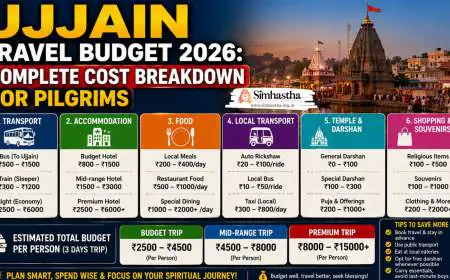
Ujjain Travel Budget 2026: Complete Cost Breakdown for Pilgrims
Ahmedabad to Ujjain Travel Guide: Fastest Route, Distance, Train & Bus Options

Kota to Ujjain Travel Guide: Routes, Distance and Travel Time

Ujjain Simhastha Kumbh Mela 2028 Peak Crowd Dates to Avoid

Ujjain Railway Station to Mahakaleshwar Temple Distance (2026 Guide)

Ujjain Simhastha 2028 Dates Announced: Full Shahi Snan & Event Timeline

How ISKCON Ujjain Engages Young Devotees Through Programs

Benefits of Becoming a Simhastha Volunteer
The Seasonal Packing Guide for Ujjain's Climate Extremes
Ujjain's climate is a study in contrasts, and your packing must adapt accordingly. A pilgrim visiting in January faces entirely different challenges than one arriving in May or August. Understanding these seasonal nuances is essential for a comfortable and healthy pilgrimage.
Winter Packing for Ujjain (November to February)
Winter in Ujjain is deceptive. Daytime temperatures hover pleasantly between 20°C and 28°C, but the early mornings and late evenings can drop sharply to 6°C or even lower, especially in December and January. If you are attending the pre-dawn Bhasma Aarti, you will be standing in queues at 3 AM in temperatures that feel genuinely cold. Pack heavy woolen shawls, a thick jacket, thermal innerwear for the early morning temple runs, woolen socks, and a warm cap or ear covering. Layering is your best strategy. Wear a thermal base, a cotton kurta or shirt, a sweater, and a heavy shawl or jacket that you can easily remove as the sun climbs. A pair of warm, comfortable slip-on shoes that can accommodate woolen socks is ideal. Do not underestimate the cold, particularly if you are elderly or not accustomed to it. The stone floors of the temples become icy in the pre-dawn hours, and cold feet can turn a spiritual experience into an endurance test. ✅
Summer Packing for Ujjain (March to June)
Summer in Ujjain is intense, with temperatures regularly crossing 40°C from April onward. The sun is relentless, and the heat can be physically punishing, particularly for those not used to it. Your packing strategy must prioritize sun protection and hydration. Carry light-colored, loose-fitting cotton clothing that allows your skin to breathe. A wide-brimmed hat or cap, UV-protective sunglasses, and a high-SPF sunscreen are not luxuries; they are necessities. An insulated water bottle that keeps water cool for hours is worth carrying even if it adds a little weight. Oral rehydration salts (ORS) packets are small, lightweight, and can prevent heat exhaustion. A small, foldable handheld fan or a battery-operated mini fan provides immense relief in crowded queues. Damp cotton handkerchiefs or cooling towels that you can drape around your neck are simple but effective tools. Avoid synthetic fabrics entirely; they trap heat and become uncomfortable very quickly. 🚶
Monsoon Packing for Ujjain (July to September)
The monsoon transforms Ujjain into a lush, poetic landscape, but it also brings specific challenges. The rain can be sudden, heavy, and persistent. A compact, sturdy umbrella is essential, but more importantly, invest in a good lightweight raincoat or poncho that covers you and your bag. Umbrellas are difficult to manage in crowded temple queues. Quick-dry clothing is a blessing in humid, wet conditions. Cotton, while breathable, takes a long time to dry, so consider packing a few synthetic blend or quick-dry fabric shirts and trousers. Footwear is critical during the monsoon. Temple floors become slippery, and puddles are unavoidable. Sturdy, non-slip sandals with good grip are far safer than smooth-soled flip-flops. Waterproof your belongings by packing your phone, documents, and power bank in resealable plastic bags or a small dry bag. Carry a small microfiber towel that dries quickly and takes up minimal space. A basic mosquito repellent cream or spray is also advisable, as mosquitoes breed in standing water.
The Solo Traveler's Lightweight and Secure Packing List
Solo travelers, whether men or women, need to pack with an emphasis on security, mobility, and self-sufficiency. You are carrying your own bag, managing your own logistics, and depending entirely on your own preparedness. A crossbody sling bag worn across the chest is far more secure than a backpack in crowded areas, as it stays in your peripheral vision and is harder for pickpockets to access. Your phone should contain offline maps of Ujjain downloaded in advance, a list of emergency contacts including local police, your hotel, and a trusted auto-rickshaw number, and a digital copy of all your documents. A portable door lock or doorstop alarm provides additional security in budget accommodations. If you are a woman traveling alone, consider packing a modest dupatta that can be draped over the head when entering temples, a small pepper spray for personal safety, and a simple wedding ring or band to wear if you prefer to avoid unwanted attention. A small notepad and pen for noting down auto-rickshaw numbers, addresses, or recommendations from locals is surprisingly useful and signals that you are organized and aware. ✅
The Family Packing List for Pilgrims Traveling With Children
Traveling to Ujjain with children, especially young ones, requires a different level of preparation. The key is to anticipate needs and pack in a way that minimizes stress and maximizes comfort for both the children and the parents. Snacks are non-negotiable. Pack a generous supply of familiar, non-perishable snacks that your children enjoy—biscuits, dry fruits, packaged snacks, and small treats. Temple queues can be long, and hungry children become irritable children very quickly. Carry a spill-proof water bottle for each child. A small, lightweight first-aid kit tailored to children's needs should include band-aids, antiseptic cream, children's paracetamol, ORS packets, and any prescription medications. A change of clothes for each child, carried in a sealed plastic bag, is essential for inevitable spills, sweat, or monsoon mud. A small, lightweight stroller can be useful for very young children, but be aware that many temple complexes have steps and uneven stone floors that make strollers difficult to navigate. A baby carrier is often more practical for infants and toddlers. A few small, quiet toys or activity books can keep children engaged during the downtime between darshan visits. ⚠️

The Senior Citizen's Comfort and Safety Packing List
Elderly pilgrims have specific needs that require thoughtful packing. The primary considerations are mobility support, medication management, and thermal comfort. A lightweight, foldable walking stick or trekking pole provides stability on the often uneven and sometimes slippery stone floors of Ujjain's temples. Some temples have ramps, but many still require navigating steps. Carry all prescription medications in clearly labeled bottles, along with a written list of medications, dosages, and your doctor's contact information. Pack a small, easily accessible medical kit with a digital thermometer, blood pressure monitor if needed, glucose tablets for diabetics, and any emergency medications. A portable, folding stool or small cushion can be a lifesaver during long temple queues where sitting on the ground may be difficult. Warm clothing is crucial for elderly pilgrims attending early morning rituals, even during seasons that are warm by day. A mobile phone with large, clearly labeled emergency contact numbers and a medical ID card worn visibly or kept in an easily accessible pocket is a simple but vital safety measure.
The Photographer's Specialized Packing List
Ujjain is a visual treasure, and photographers who arrive prepared capture images that others can only imagine. Beyond the obvious camera body and lenses, there are specific considerations for Ujjain's unique environment. Dust is a significant concern. Carry a rocket blower, lens cleaning solution, and microfiber cloths to keep your gear clean. The temple areas, particularly during festivals, can be dusty, and fine particles find their way into everything. A fast prime lens (35mm or 50mm, f/1.8 or wider) is invaluable for the low-light conditions inside temples and during the evening aarti ceremonies. A wide-angle zoom lens captures the grandeur of temple architecture, the sprawling ghats, and the expansive Shipra riverfront. A lightweight, travel-friendly tripod allows for long-exposure shots of the evening lamps and the moving waters of the Shipra. Be aware that many temples, including Mahakaleshwar, have restrictions on photography inside the sanctum. Respect these rules absolutely. Pack your camera in a discreet, non-descript bag that does not scream "expensive photography equipment." Carry extra memory cards and extra batteries; you will shoot far more than you expect, and charging opportunities may be limited. 📸
What Not to Pack for Your Ujjain Trip
Knowing what to leave behind is as important as knowing what to bring. Avoid excessive jewelry and valuables. Temples are crowded places, and managing expensive items adds unnecessary stress and risk. Simple, modest accessories are appropriate; ostentatious displays of wealth are not. Leave leather items at home if you wish to be fully respectful of Hindu temple traditions. Many temples, particularly in the inner sanctum areas, prohibit leather belts, wallets, and bags. A simple cotton belt or drawstring pants eliminates this concern entirely. Do not pack large, heavy suitcases if you plan to move between multiple accommodations or navigate train stations and auto-rickshaws. A medium-sized wheeled bag or a comfortable backpack is far more practical for a pilgrimage that involves walking and frequent transfers. Avoid packing too many pairs of shoes. You will be removing them constantly, and carrying multiple pairs is unnecessary. One comfortable, slip-on pair for temple visits and one sturdier pair for extensive walking or monsoon conditions is sufficient. ✅
The Final Check Before You Zip Your Bag
Before you close your suitcase or backpack, run through a mental checklist that goes beyond physical items. Have you booked your accommodation and kept the confirmation and contact number accessible? Have you checked the temple timings, particularly for special rituals like the Bhasma Aarti, and booked passes if required? Have you downloaded offline maps of Ujjain and saved the location of your hotel, the main temples, and the railway station? Have you informed a family member or friend at home of your travel itinerary and shared your accommodation details? Have you packed a small amount of essential toiletries—toothbrush, toothpaste, soap, hand sanitizer, wet wipes—in your carry-on bag for immediate access upon arrival? These final, simple confirmations transform a well-packed bag into a truly well-prepared journey.
Packing for Ujjain is, in its own quiet way, a spiritual practice. It is an exercise in mindfulness, in anticipating needs without succumbing to anxiety, in preparing the body so that the soul can be free to absorb the city's profound spiritual atmosphere. Pack thoughtfully, travel lightly, and carry with you an open heart. Mahakal will take care of the rest. 🔱
Frequently Asked Questions