






















Ujjain Travel Guide for Solo Pilgrims and Backpackers
Plan your spiritual journey with this Ujjain travel guide for solo pilgrims and backpackers. Discover budget stays, safe transport, temple tips, and the quiet freedom of exploring Mahakal's city alone.


Arriving in Ujjain and the First Breath of the City
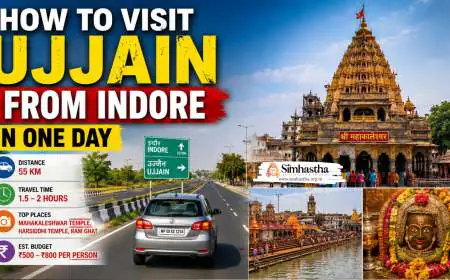
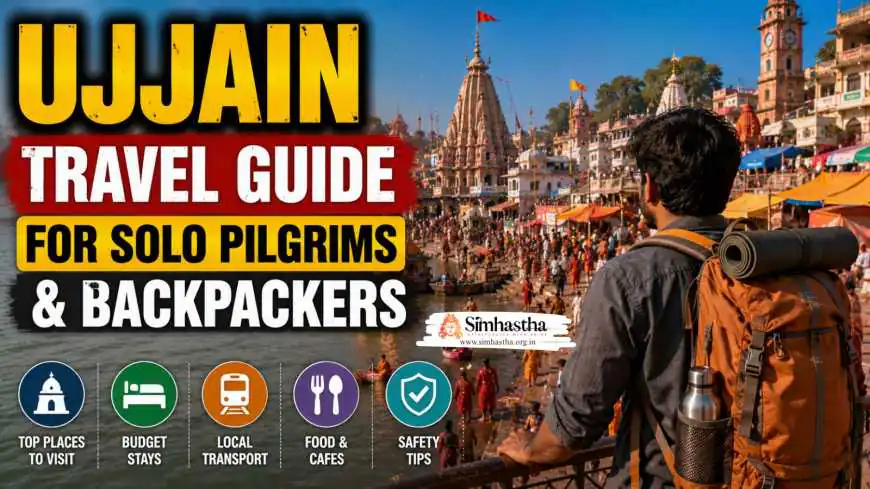
The first moments of a solo trip set the tone for everything that follows, and arriving in Ujjain is, in itself, a gentle initiation. The railway station, currently undergoing a massive expansion for the Simhastha but already functional and well-connected, is your most likely point of entry. Trains from Delhi, Mumbai, Jaipur, Ahmedabad, and Indore connect regularly, and for the backpacker, the sleeper class or AC three-tier is both economical and comfortable enough for the journey. If you fly, you will land at Devi Ahilya Bai Holkar Airport in Indore, about 55 kilometers away, and then take a prepaid taxi or the new electric bus shuttle—soon to be a backbone of the Indore-Ujjain corridor—into the city.
As you emerge from the station, the air of Ujjain hits you: a blend of incense, marigold, dust, and the faint, ever-present scent of the Shipra. Touts will approach, offering hotels and taxis, but you, the solo pilgrim, will have already done your homework. A polite "nahi chahiye" and a firm stride toward the prepaid auto-rickshaw counter is all you need. The prepaid auto is the solo traveler's best friend in Ujjain—fixed price, no haggling, and a clear destination. Your first ride through the streets, past the old havelis, the sudden flash of a temple spire, and the glimpse of the Shipra, is the moment you realize you have arrived somewhere ancient, somewhere that has been receiving solitary seekers for thousands of years. 🚆
Where the Solo Pilgrim Lays Their Head and Budget Accommodation Secrets
Accommodation for the solo pilgrim in Ujjain is a landscape of surprising abundance if you know where to look, and profoundly frustrating if you expect standard backpacker hostels of the Southeast Asian variety. Ujjain does not yet have a thriving dormitory-hostel culture, but it offers something arguably richer: a network of dharamshalas, ashrams, and budget guesthouses that are affordable, safe, and deeply embedded in the city's spiritual fabric.
The most economical and atmospherically rich option is a dharamshala. The Mahakaleshwar Temple Trust operates several pilgrim rest houses near the temple complex. Rooms are basic—a bed, a fan, sometimes an attached bathroom, sometimes shared—but they are clean, secure, and priced at a fraction of even the cheapest hotel. The trust-run facilities prioritize genuine pilgrims, and a quiet, respectful demeanor will open more doors than any amount of money. Other major temples, including the Harsiddhi Temple and the Bade Ganeshji Mandir, have smaller dharamshalas that are less known and often have availability even during busier periods. For the backpacker seeking a slightly more private space, the narrow lanes radiating from Gopal Mandir and Chhatri Chowk are dotted with small, family-run guesthouses where a simple room can be negotiated for a very modest rate, especially for a single occupant staying multiple nights. The key is to arrive early in the day, ask politely, and be willing to look at a room or two before committing.
Trending Guides Now

Ujjain Simhastha 7 Day Itinerary for Families
Is Phone Allowed in Mahakaleshwar Temple Ujjain?
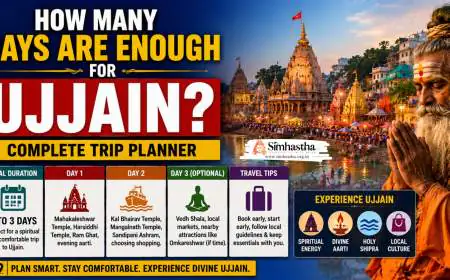
How Many Days Are Enough for Ujjain? Complete Trip Planner

How to Travel Inside Ujjain During Simhastha 2028: Routes, Maps and Movement Plans

Ujjain Railway Station to Mahakaleshwar Temple Distance (2026 Guide)

Ujjain Simhastha 2028 Dates Announced: Full Shahi Snan & Event Timeline
Benefits of Becoming a Simhastha Volunteer
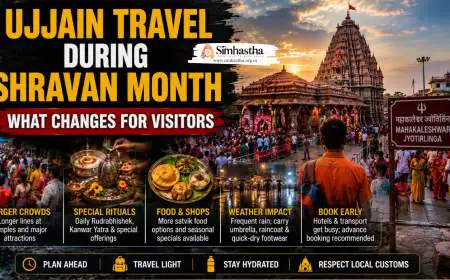
Ujjain Travel During Shravan Month: What Changes for Visitors
Solo female pilgrims will find the ashram accommodations particularly welcoming. The Anand Dham and several smaller ashrams run by women's spiritual organizations offer a secure, community-oriented environment. Wearing modest Indian attire—a salwar kameez or a kurta with a dupatta—will significantly enhance your comfort and the ease with which you are received in these spaces. Always trust your instincts; if a place does not feel right, move on. Ujjain is compact enough that finding alternative accommodation is never a desperate, hours-long ordeal. ✅
The Art of Moving Alone and Transport Hacks for One
Navigating Ujjain as a solo traveler is a lesson in simplicity and trust. The city is not vast, and the majority of the major pilgrimage sites fall within a radius that can be covered, with patience, largely on foot. The Mahakaleshwar Temple, the Harsiddhi Temple, Bade Ganeshji, and the Ram Ghat are all within walking distance of each other through the old city lanes—a walk that is itself a pilgrimage, taking you past flower sellers, chai stalls, and the timeless, unhurried rhythm of Ujjain's sacred commerce.
For longer distances—to Mangalnath, Kal Bhairav, or the Bhartrihari Caves—the shared auto-rickshaw is your budget chariot. These teeming, rattling vehicles ply fixed routes and cost a pittance. You simply stand at the roadside, flag one down, and squeeze in. The shared auto is not just transport; it is a micro-immersion in local life, a place where you might find yourself seated next to a saffron-robed sadhu, a woman carrying a basket of bel patra, and a student discussing the day's lectures. For late-night returns or pre-dawn Bhasma Aarti journeys, a private auto-rickshaw is necessary. Negotiate the fare before getting in, and as a solo traveler, carry a mental map so you can project a quiet confidence about the route. Most Ujjain auto drivers are helpful to pilgrims, and a conversation with them can yield tips about temple timings and hidden shrines that no guidebook mentions.
If you are staying in Indore and commuting, the new bus corridor will soon make this a seamless, air-conditioned journey. For now, the state buses and private Volvos from the Indore bus stand run frequently, and for the solo backpacker, the local bus offers an authentic, unhurried transition from the commercial capital of Malwa to its spiritual heart. 🚶
The Temple Circuit and the Solo Darshan Strategy
Temples in Ujjain are not passive monuments; they are living, electric organisms, and navigating them alone is a skill you will acquire quickly. The great advantage of solo pilgrimage is that you are not bound by anyone else's timeline. You can linger in the Mahakal Lok corridor long after the crowd has thinned, simply watching the carved panels of Shiva's stories. You can sit in the courtyard of the Harsiddhi Temple for an hour, waiting for the evening lamps to be lit, without a companion growing restless. You can visit a single shrine three times in a day if your heart calls you to.
The Bhasma Aarti at Mahakaleshwar is the great logistical challenge for the solo pilgrim. Passes must be booked in advance, either online or at the temple counter, and the pre-dawn reporting time requires a 3 AM wake-up call. As a solo traveler, you have an advantage: you are a single person, and a single spot in the queue is sometimes easier to accommodate. Befriending a fellow pilgrim in the queue—an elderly woman from a village, a young sadhu, another solo traveler—can lead to shared chai, shared stories, and a moment of human connection that is one of the profound, unadvertised blessings of traveling alone.

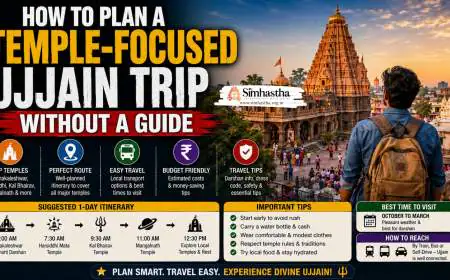
For the rest of the temple circuit, a simple rhythm works beautifully: early morning darshan at Mahakaleshwar, then a walk through the awakening bazaars to Bade Ganeshji, a rickshaw to Kal Bhairav for the unique offering ritual, a rest during the midday heat, and then, as the sun softens, a journey to Mangalnath for the sunset over the Shipra, followed by the evening aarti at Ram Ghat. The solo pilgrim who follows this rhythm will end the day spiritually full, physically tired, and quietly, deeply happy. 🛕
Eating Alone, Eating Well and the Backpacker's Food Trail
The solo eater in Ujjain is in for a treat. The city's street food and modest local eateries are designed for the individual diner, and the prices are so gentle that you can sample widely without straining your backpacker budget. Morning begins with poha-jalebi at a stall near the temple—the sweet, crispy jalebis providing a glorious counterpoint to the savoury, turmeric-yellow poha topped with sev and pomegranate seeds. A glass of cutting chai, served in a small steel cup, costs a few rupees and is the perfect punctuation mark.
For lunch, the Malwa thali at a small, family-run restaurant is a revelation. You will be seated at a simple table, and a steel platter will appear, piled with dal, bafla (the Malwa cousin of the Rajasthani bati), kadhi, seasonal vegetables, and a sweet. The servers will encourage you to eat more, and you will, because the food is simple, soulful, and cooked with a care that franchise restaurants cannot replicate. Bhutte ka Kees, a grated corn preparation unique to the region, is a monsoon specialty that is worth planning a trip around.
The evening calls for kachori from a street vendor, the flaky, deep-fried discs served with a tangy potato curry and a fiery green chutney. For the solo diner, there is a quiet, meditative pleasure in standing at a street stall, eating from a leaf bowl, watching the temple crowds ebb and flow, feeling utterly, perfectly alone and yet completely part of the city's life. Carry a reusable water bottle, refill it at the filtered water stations that are increasingly common near temples, and trust your gut—literally—when it comes to street food hygiene. A stall with a high turnover of customers is almost always a safe bet. ✅
The Quiet Corners and the Gifts of Solitude
The true magic of solo travel in Ujjain reveals itself not in the grand temples but in the quiet corners, the in-between spaces where the city's ancient soul resides and where, as a solo pilgrim, you can sit undisturbed. Siddhavat, the eternal banyan tree on the Shipra's bank, is one such place. You can sit beneath its vast canopy for hours, watching the river, listening to the occasional chant of a priest performing pind daan, and feeling the gentle, rooted energy of a tree that has witnessed centuries of solitary seekers exactly like you.
The ghats away from the main aarti sites—the quieter stretches of the Shipra near Dutt Akhara or Bhukhi Mata Ghat—offer solitude and a different kind of river experience, one where the water's sound is not competing with loudspeakers. Bhartrihari Caves, with their cool, dark chambers, are perfect for a solitary meditation. You can sit in the same stone space where the king-turned-poet composed his verses of renunciation, and for a moment, the centuries dissolve.
The Jantar Mantar, Ujjain's ancient observatory, is often nearly empty in the afternoons. You can wander among the massive masonry instruments, marvel at the astronomical precision of a civilization that placed Ujjain at the centre of the world, and feel a connection not just to the spiritual but to the scientific genius of the city. These quiet corners are the solo pilgrim's sanctuary, and they are where the deepest inner shifts often occur—not in the crowded sanctum, but in the silent aftermath, when the city gives you space to process, to integrate, and to simply be. 🔱
Safety, Street Smarts, and the Solo Female Pilgrim
Ujjain is, by and large, a safe city for solo travelers. The streets around the temples are busy well into the night, the police presence is consistent, and the general atmosphere of pilgrimage creates a cultural container that discourages the kind of predatory behavior that can plague other tourist destinations. However, basic street smarts are essential. Dress modestly, in keeping with temple culture—this is not about restriction but about moving through the space with ease and respect. A simple salwar kameez or kurta-pajama will help you blend in, avoid unwanted attention, and, practically, make temple entry seamless.
Keep your valuables to a minimum. A crossbody sling bag worn in front, with your phone, a copy of your ID, and some cash, is more secure than a backpack. Do not flash expensive electronics or jewelry. If you are a woman traveling alone, you may occasionally encounter curiosity—questions about where your family is, why you are alone—that can feel intrusive. A calm, friendly response, and the simple statement that you are on a pilgrimage, will usually satisfy the questioner. Trust your intuition. If a person or a situation feels off, remove yourself without apology. The solo female pilgrim in Ujjain will find many allies: the women running small food stalls, the elderly couples on the temple steps, the ashram residents who will invite you for a cup of tea and a conversation that may become the highlight of your trip.
At night, stick to well-lit areas. The route between the Mahakal Temple and the main ghats is safe and populated, but the outer, unlit lanes are best avoided after dark unless you are in an auto-rickshaw. Carry a small torch or ensure your phone is charged for the occasional dark alley. These are not signs of danger but of basic preparedness, and they allow you to move through the city with confidence and peace of mind. ⚠️
The Inner Journey and the Pilgrimage of the Self
At some point during your solo days in Ujjain, the external pilgrimage will become an inner one. This is the gift of traveling alone to a sacred city: the silence you carry within you begins to merge with the silence of the temples and the river, and a conversation starts that is not with any human companion but with the deepest, most honest part of yourself. You may find yourself sitting on the ghat steps at sunset, tears streaming down your face for no reason you can articulate, and you will understand that this, too, is darshan—a seeing and a being seen by the divine that requires no words.
The solo pilgrim has the luxury of unstructured time. You can wake at 4 AM for the Bhasma Aarti one day and sleep in the next. You can spend an entire afternoon in a single temple courtyard, reading, writing in a journal, or simply watching the play of light on ancient stone. You can change your plans on a whim, following a recommendation from a sadhu or a fellow traveler, and end up in a tiny village shrine that becomes the most sacred memory of your journey. This flexibility is not just a logistical convenience; it is the very essence of the solo pilgrimage, the freedom to let the city and the spirit guide you rather than any itinerary.
Embrace the occasional loneliness. It is in the moments when you are sitting alone at a chai stall, watching families and groups laugh together, that a deep, existential solitude can surface. Do not rush to fill it with your phone or with forced conversation. Sit with it. Let it teach you. The saints and the sadhus who have walked these streets for centuries have known this solitude intimately, and they have transformed it, through their practice, into a profound, unshakeable connection with the divine. Your few days of solo travel are a small, gentle initiation into that ancient, ongoing tradition. ✅
The Last Evening and the Farewell to Mahakal
Your final evening in Ujjain will arrive sooner than you expect. You will have, by now, your own relationship with the city—your favorite chaiwallah, your preferred spot on the ghats, the temple where you felt the most at home. Spend that last evening not in a rush to see one more shrine but in a gentle, grateful farewell. Attend the Shipra aarti at Ram Ghat, but instead of standing in the thick of the crowd, find a quiet spot at the edge, where you can see the lamps, hear the chants, and let the experience wash over you without distraction.
After the aarti, walk slowly back through the old city. The shops will be lighting their evening lamps, the last pilgrims of the day will be making their way to their lodgings, and the great temple bells will be ringing their final calls. Stop at your favorite food stall for one last plate of kachori or one last cup of chai. Walk past the Mahakal Lok corridor, lit beautifully in the night, and offer a silent prayer of gratitude—not a petition, not a request, just a simple, heartfelt thank you for the days you have spent in the company of the Lord of Time.
As a solo pilgrim, you arrived carrying your own questions, your own burdens, your own secret hopes. You will leave, as all pilgrims do, with some of those questions answered, some burdens lightened, and some hopes transformed into a quiet, steady faith that you did not have before. Ujjain does not demand that you believe anything in particular. It simply invites you to be present, to be open, and to let the ancient, sacred atmosphere do its slow, silent work on your soul. And when you board your train or your bus, and the lights of the city fade behind you, you will know that you have not truly been alone at all—you have been in the constant, unseen company of the divine, and of the millions of solitary seekers who have walked these streets before you, each on their own, and yet all together, in the eternal, loving embrace of Mahakal. 🔱
Frequently Asked Questions